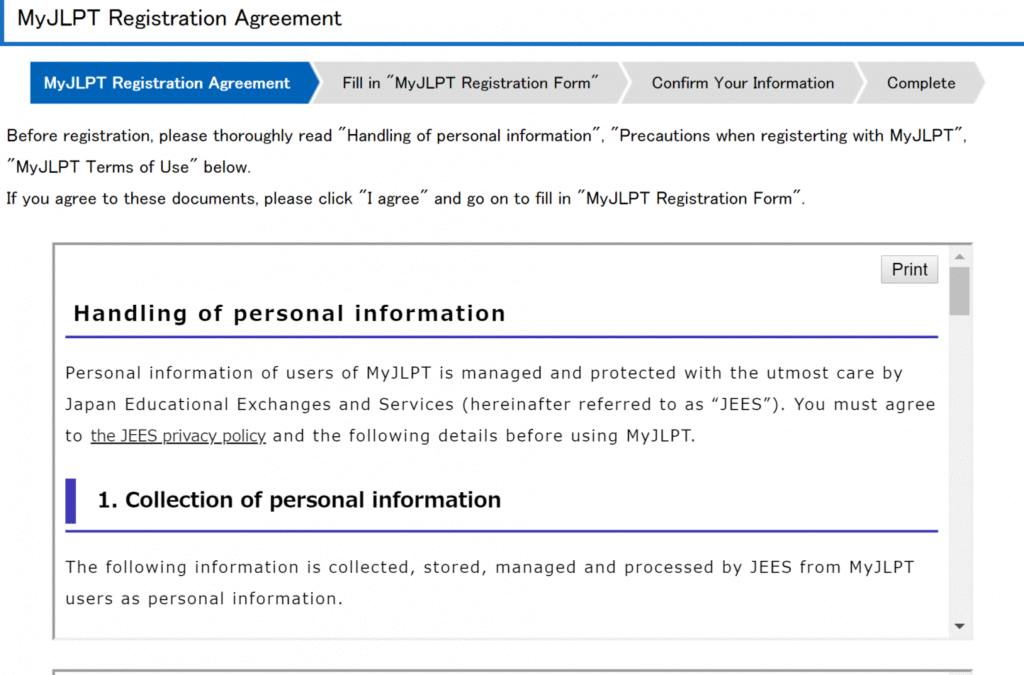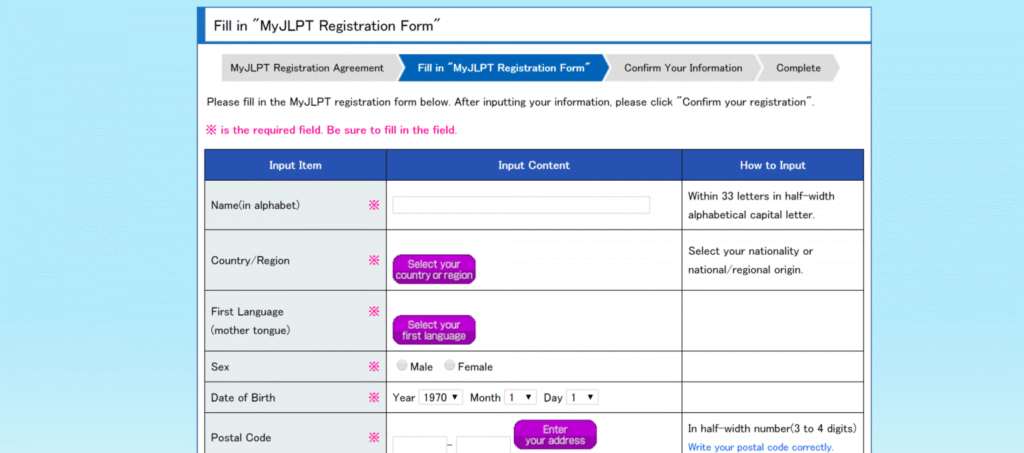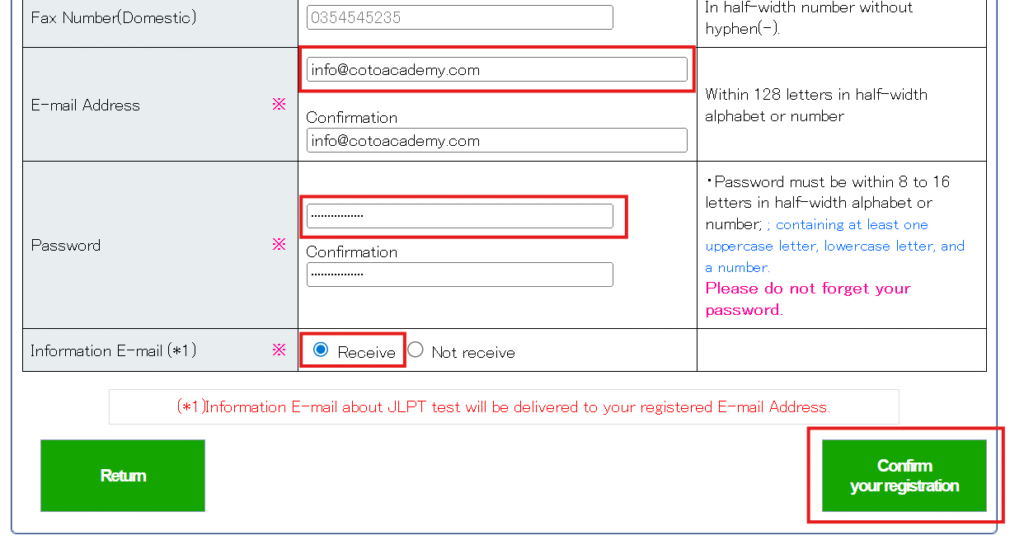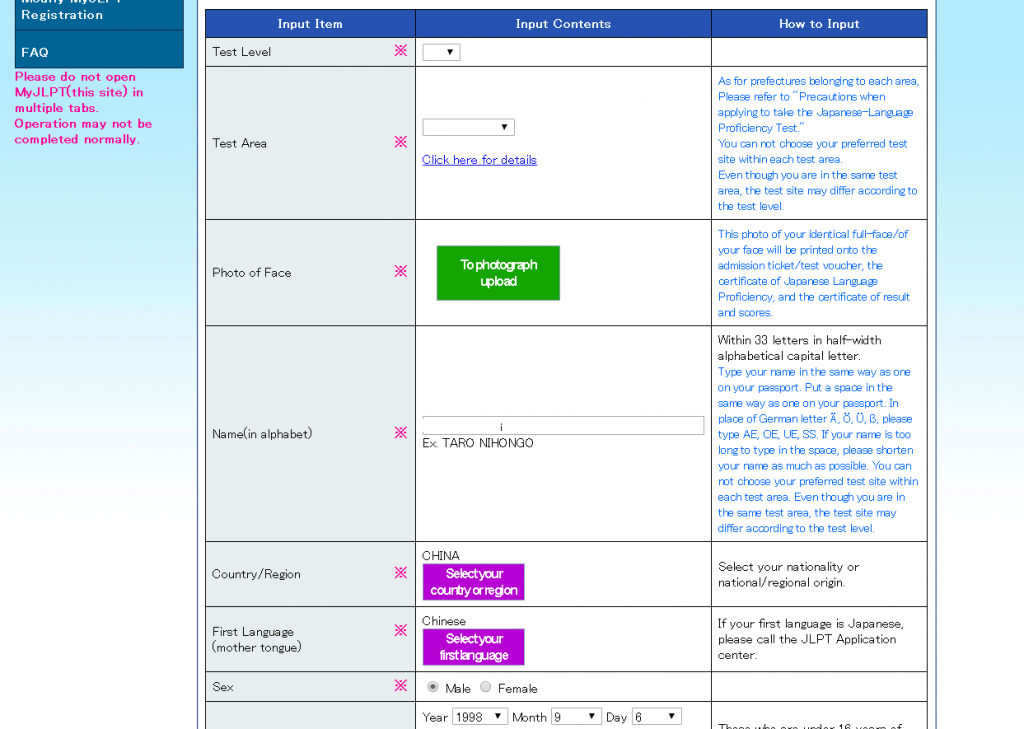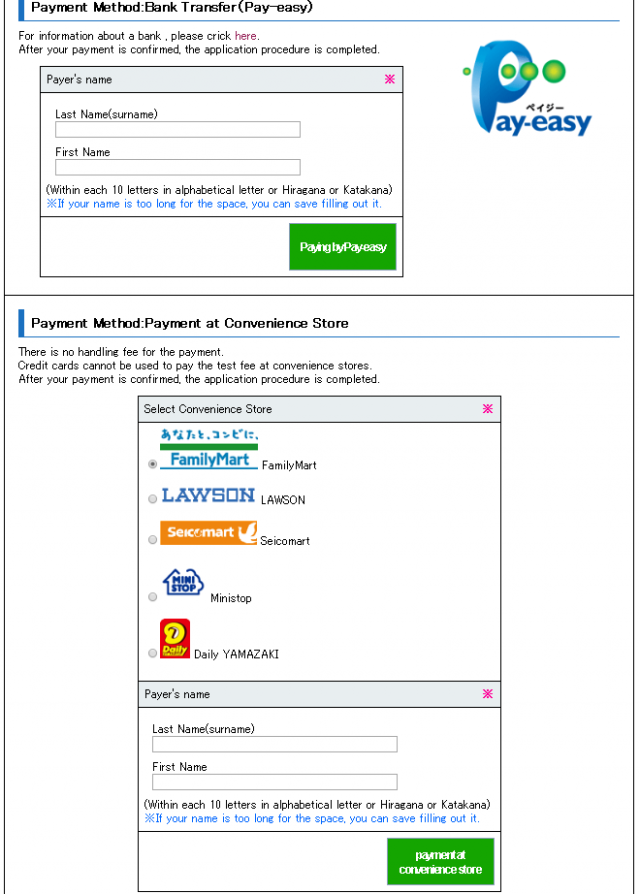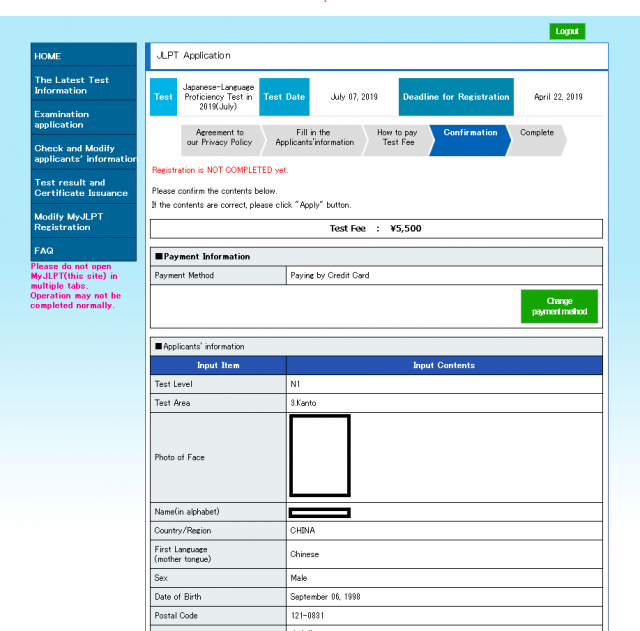

Taking the 2026 JLPT and wondering how and when you can check the results online? The JLPT results are usually available online around two months after the test day. If you want to check your JLPT results online, the test result announcement will be available for a limited time on the JEES website within your MyJLPT portal. With that, we thought we would provide a step-by-step guide to checking your JLPT results.

Keep in mind that during the day, JLPT results are available online; there may be a delay between the announcement date and the results becoming available. You might even encounter a website crash, so it is best to open your results a few hours after the official announcement is made.

For more information and updates, kindly refer to the official JLPT website.

Study the JLPT Smarter with Coto Academy!

Are you planning to take the JLPT this July or December? While self-study is a great start, the JLPT is notorious for its strict time limits and tricky reading sections.

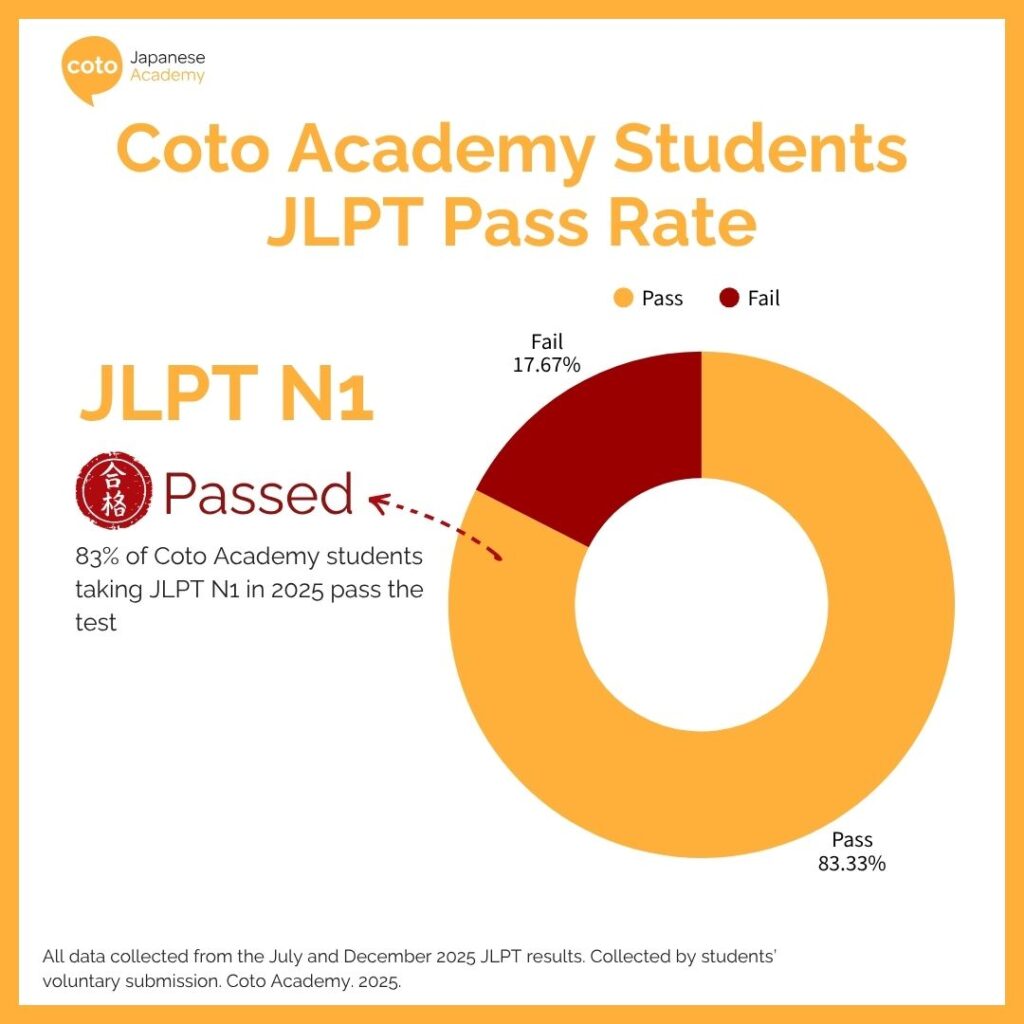
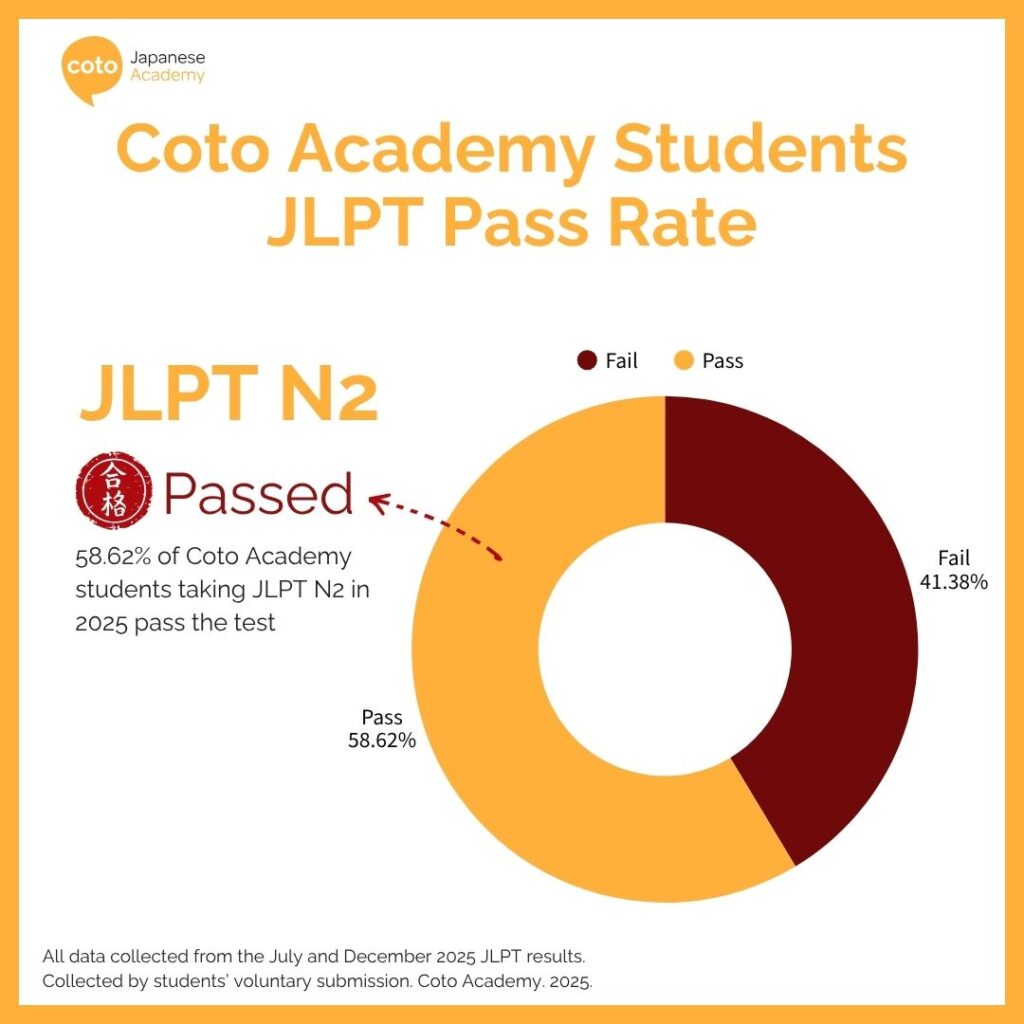
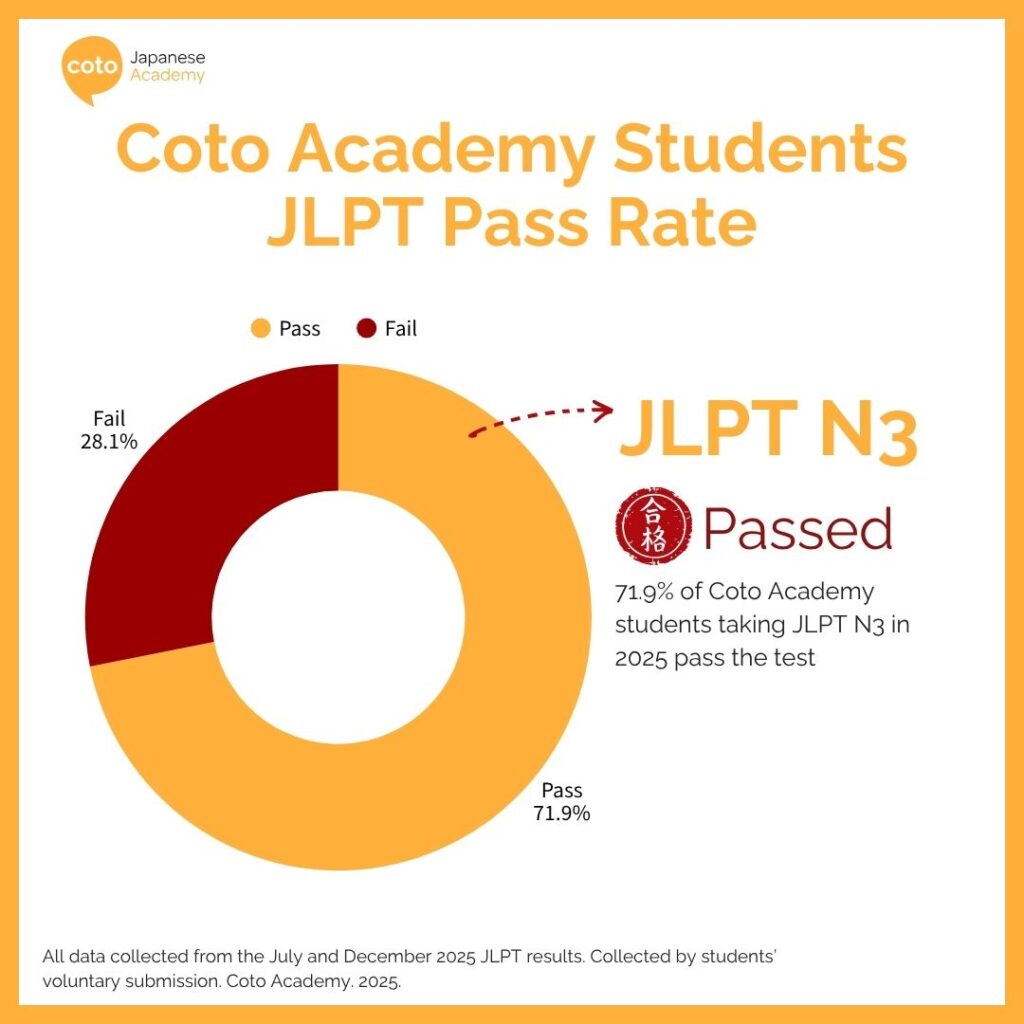
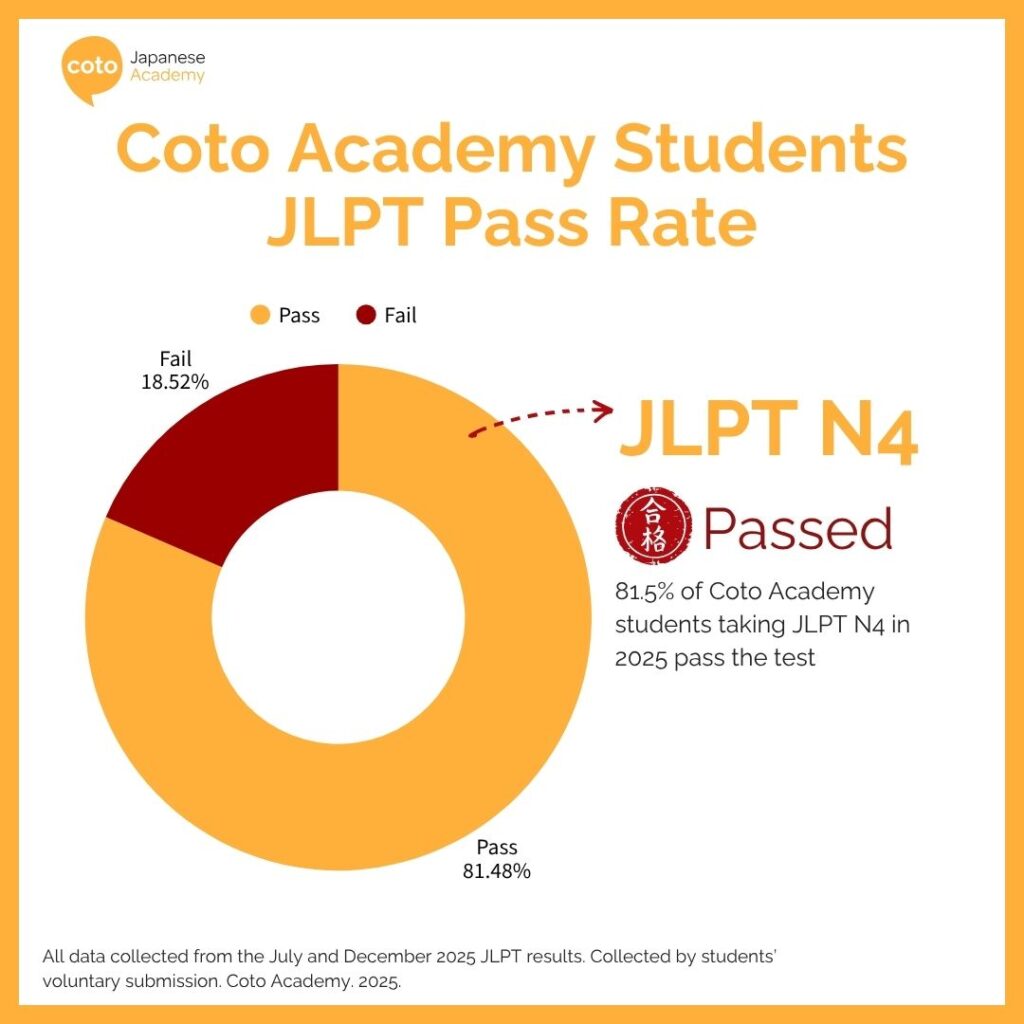
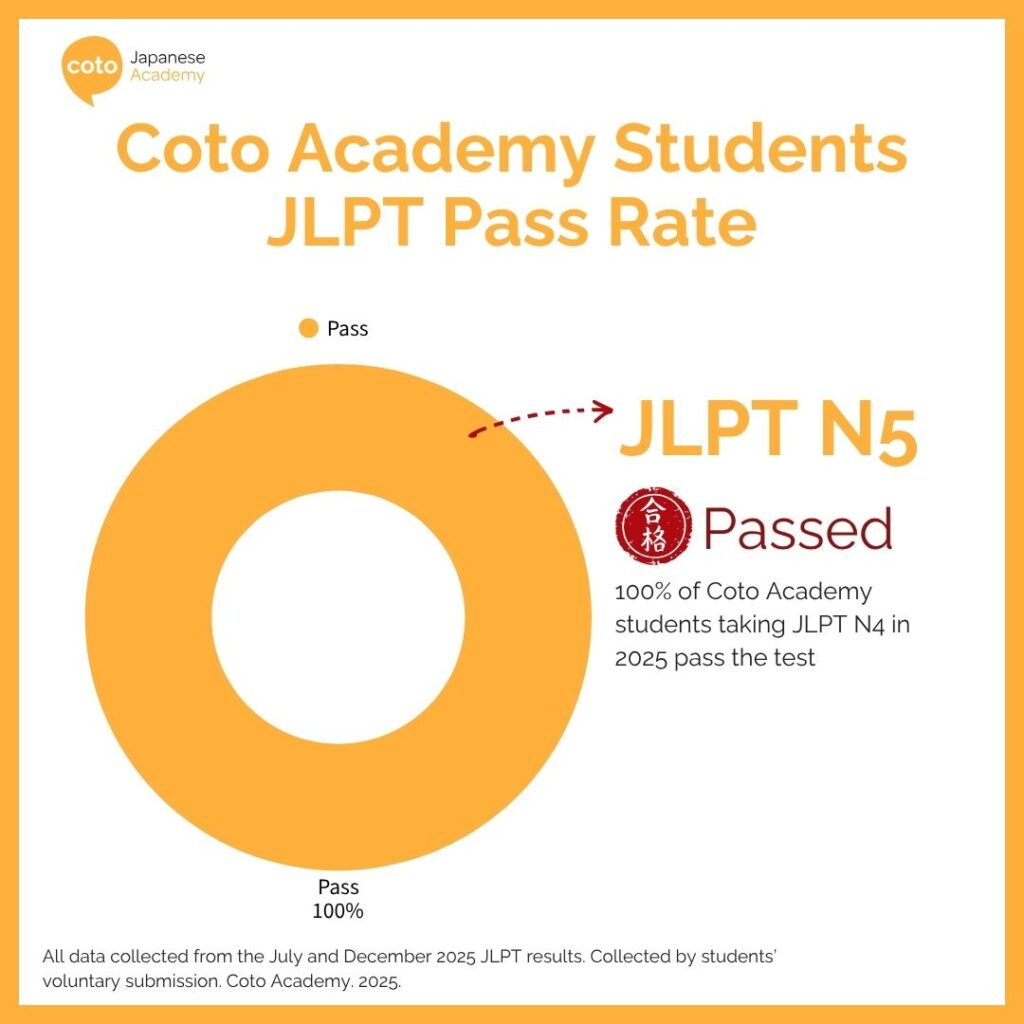
Let this be your sign to join Coto Academy’s JLPT Prep Course. Coto Academy students have twice the pass rate as the national average, thanks to our proven method. We offer two flexible options: a year-round JLPT course and an intensive 3-month sprint course timed perfectly before test day. What makes these classes stand out is the teachers, who specialize in teaching JLPT. They will give you tips and techniques you simply won’t get from self-study. Join our class today!

When Are The JLPT Results Out?

JLPT results are usually released online about two months after the test date. This allows candidates to check their scores and pass/fail status before the official score report arrives by mail.

For the July 5, 2026 JLPT, online results are expected to be available around late August or early September 2026. For the December 6, 2026 JLPT, online results are typically released in late January 2027.

It is important to note that the online results and the official score report are separate. The online results provide your pass/fail status and detailed section scores, while the official score report is a physical document that is mailed to the address you provided during registration. Delivery times for the score report can vary depending on your location and local postal services.

If you take the JLPT in Japan, you will generally need a valid Japanese mailing address when registering. This requirement exists because official documents, including score reports, are sent by post. As a result, applicants who do not reside in Japan are usually expected to take the test in their home country or region, where registration and result delivery are handled by the local JLPT organizer.

How to Check Your JLPT Results Online on MYJLPT

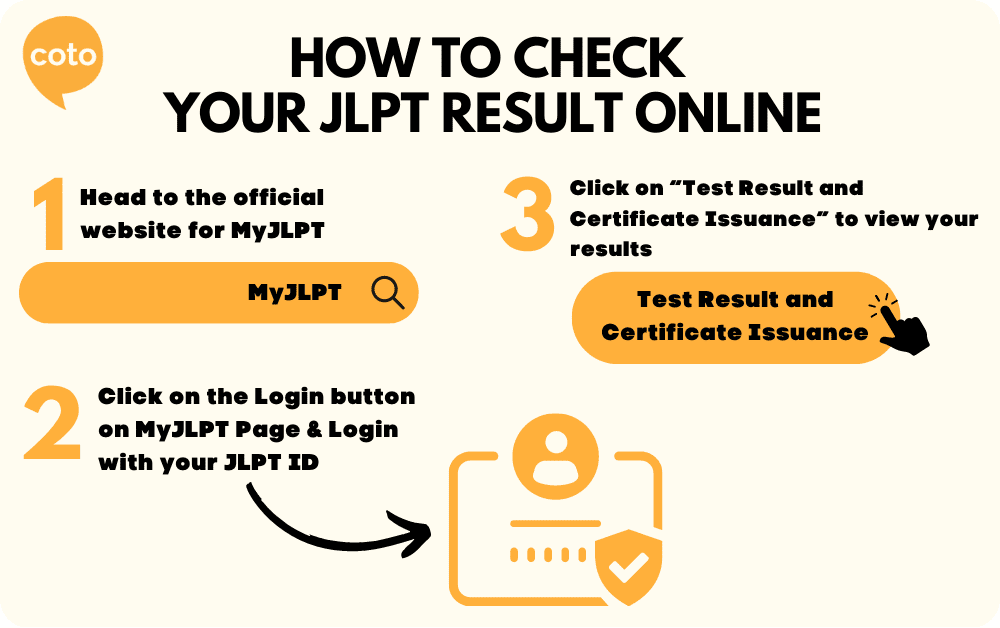
4 Steps to check your JLPT result online

While you can view your results online immediately, your physical JLPT result certificate will be delivered on a later date for international residents in Japan. You can also issue a transcript, which will be immediately sent after the resulting certificate is received. Students who are in a hurry to get the transcript may apply for an express delivery request.

With that in mind, here is a detailed step-by-step guide to check the results, with screenshots.

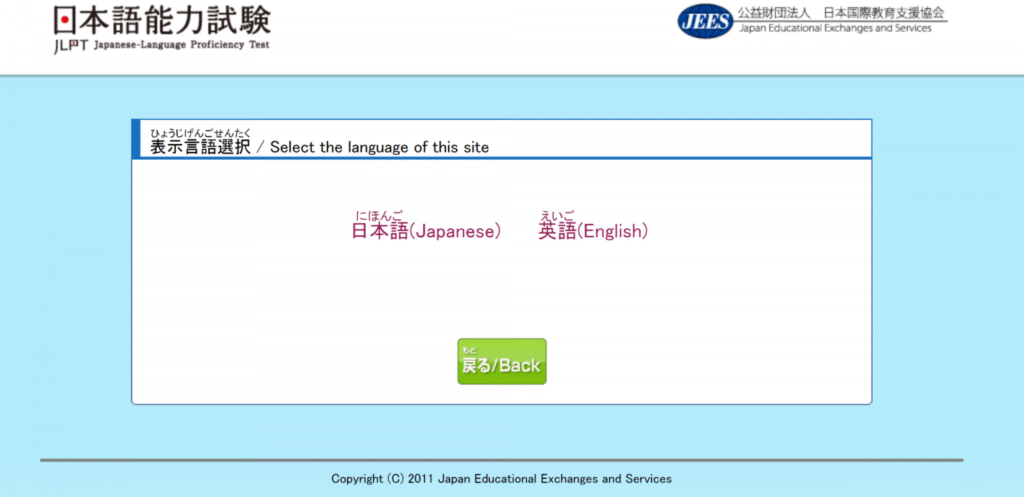
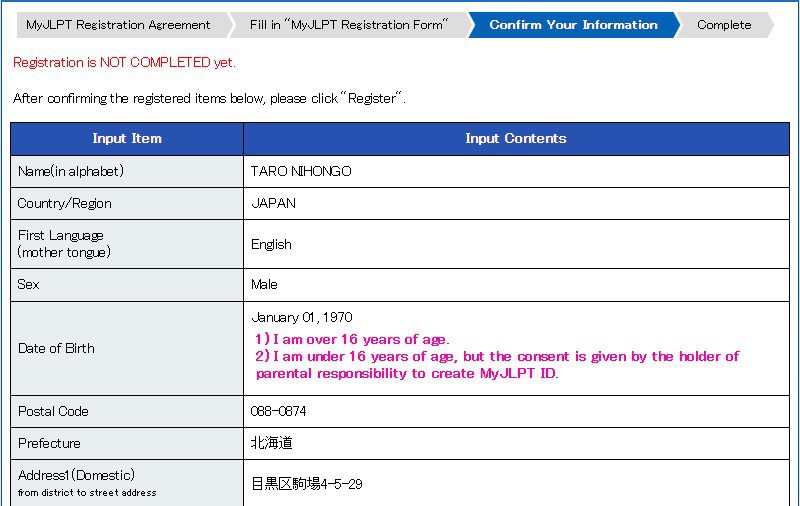
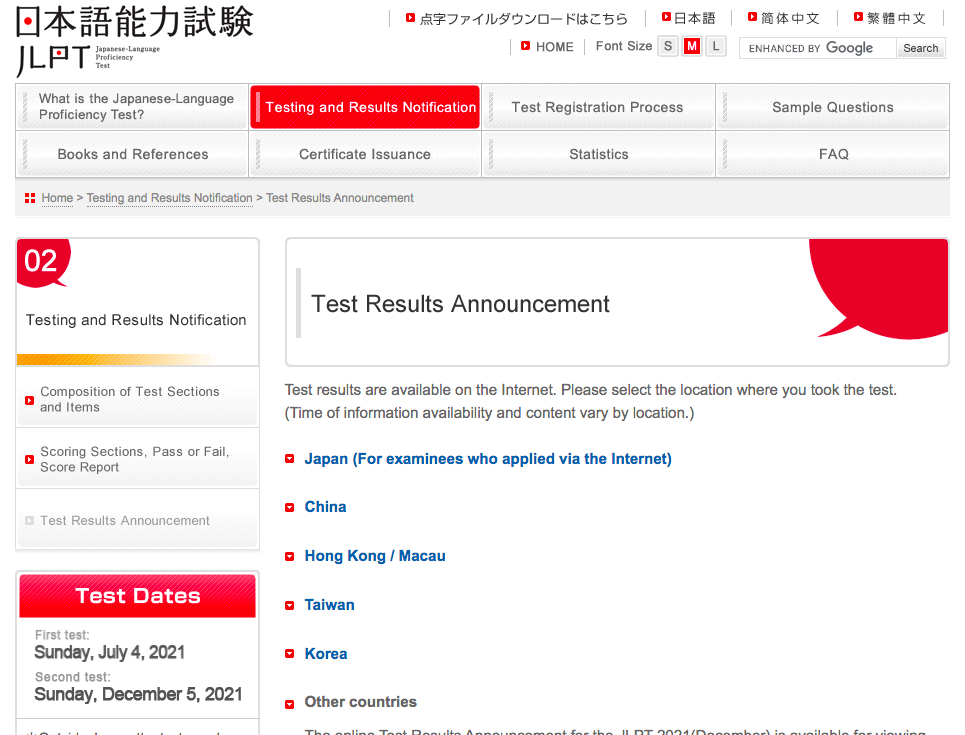
1. Head to the official website for MyJLPT

Depending on where you take the JLPT, you must select the appropriate country to be directed to the correct webpage. Putting your MyJLPT ID on the wrong landing page may not be possible. For example, if you are taking the JLPT in Korea, make sure your MyJLPT page domain is set to the correct country!

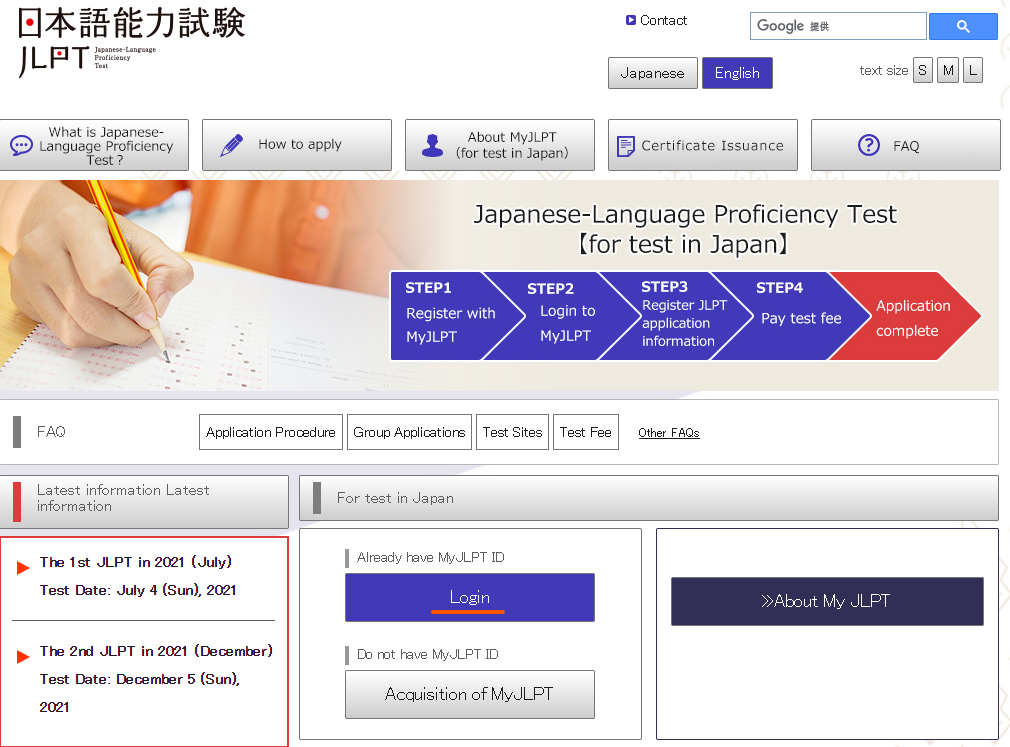
2. Click on the Login button on the MyJLPT Page.

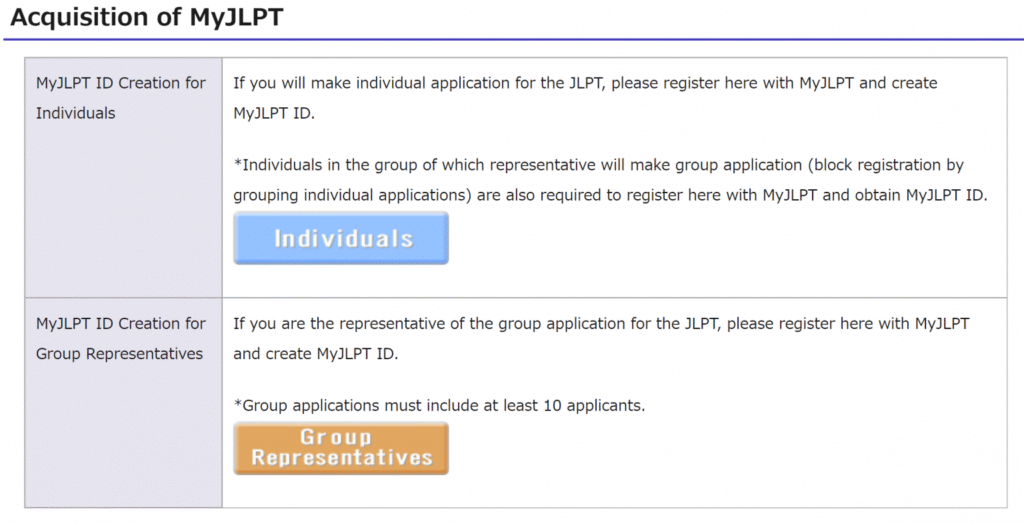
Head to this page to go to the official page for MyJLPT. For test-takers, you should be able to log in to your MyJLPT account, which was created when you applied for the JLPT.

MyJLPT homepage
Click on the Login button on the homepage

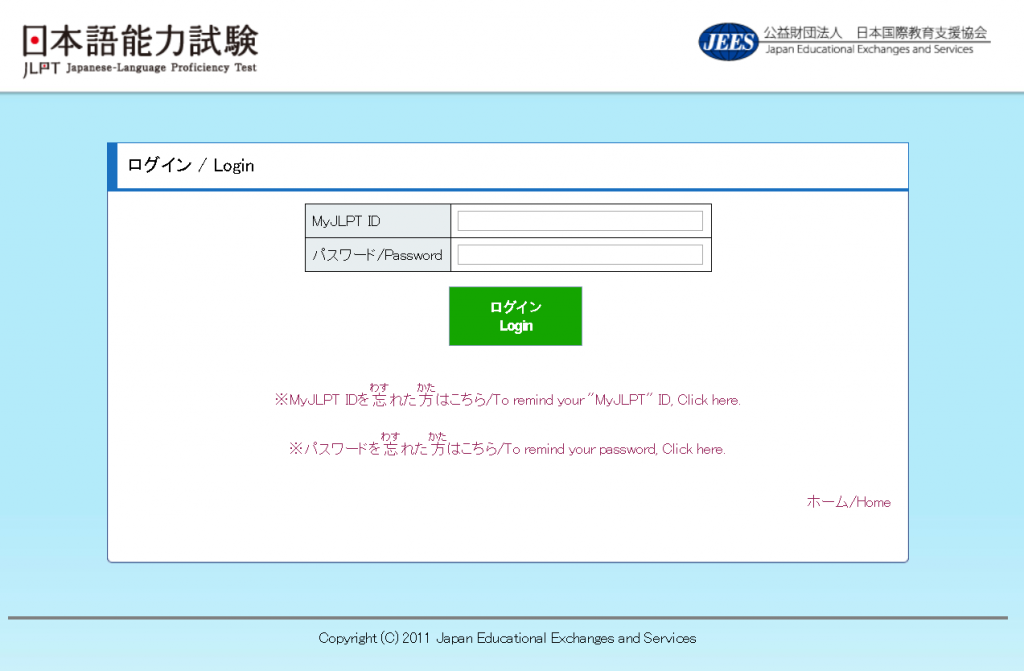
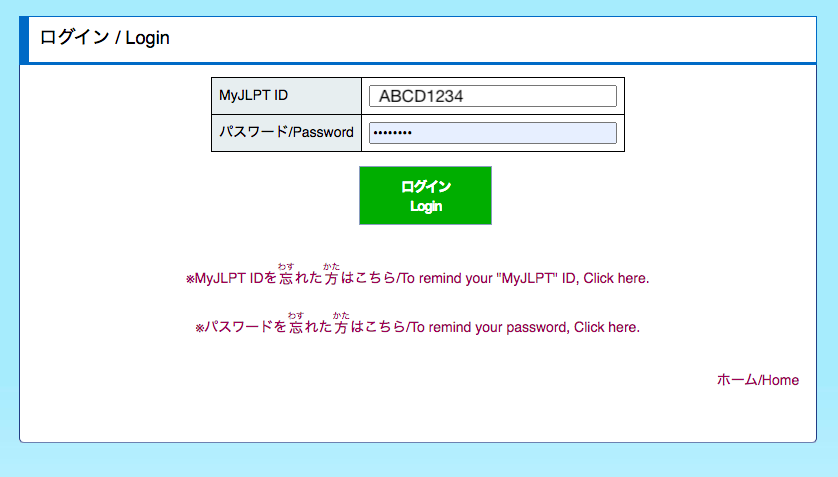
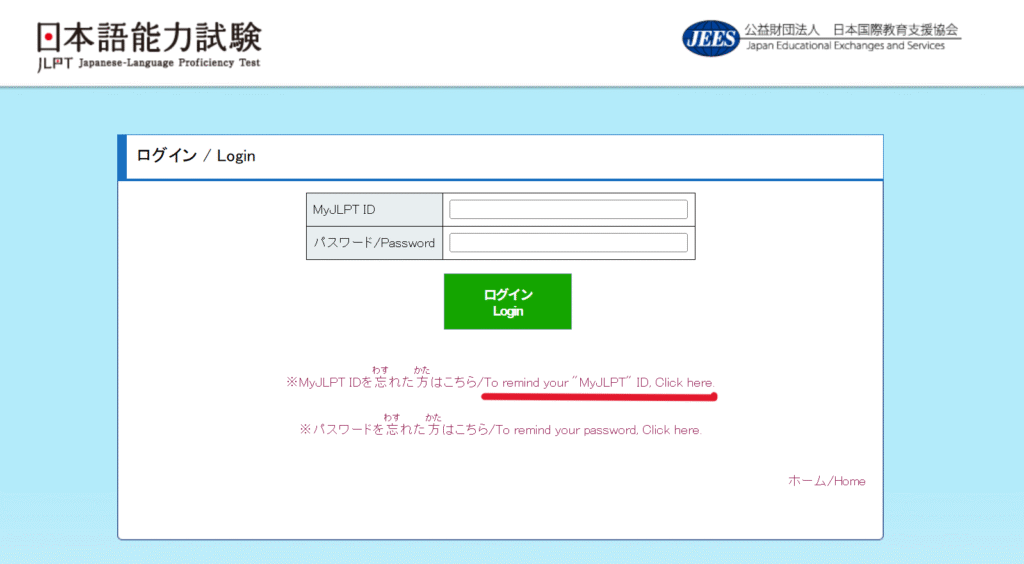
3. Log in with your JLPT ID

Click this link to be directed to the login page.

MyJLPT Login
Login page

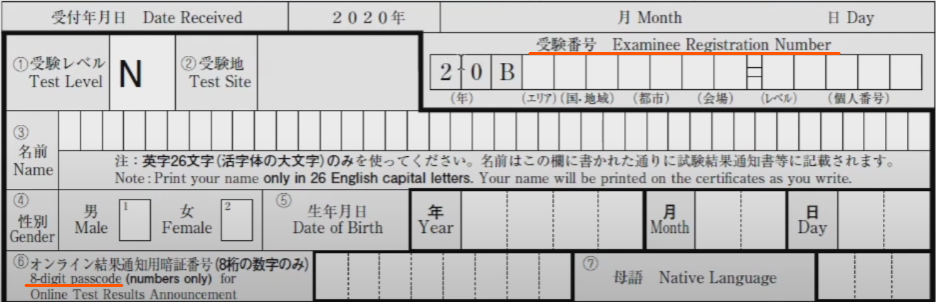
To retrieve your login credentials, you can refer to your application.

Find your JLPT ID
Find your JLPT ID here

Your MyJLPT ID is auto-generated and most likely cannot be changed, so be sure to store it somewhere safe. This same MyJLPT ID will be used for any future JLPT tests you take, so don’t lose it!

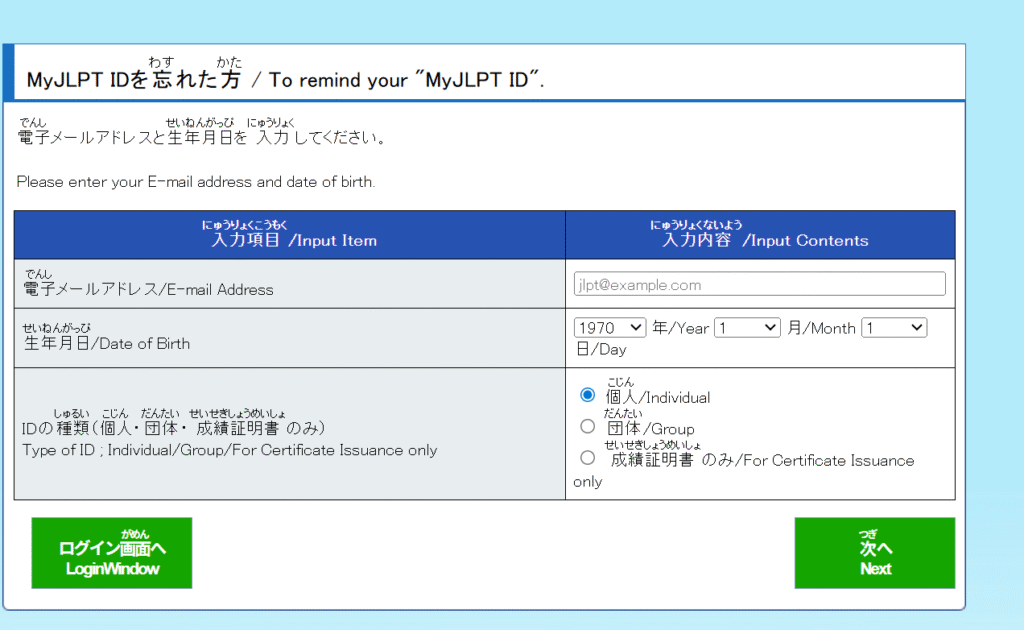
If you forget your MyJLPT ID, you can retrieve it. Simply click the link that says “To remind your MyJLPT ID, click here”.

This will take you to a new page where you’ll need to:

  • Select the type of application. If you are applying alone, choose 個人 (kojin), meaning “individual.”
  • Enter the email address you used when registering.
  • Input your date of birth (which must match the one on your ID).

After that, you will get an email from myjlpt@jees.or.jp to remind you of your MyJLPT ID. You can also reset your password using the same method.

Note: The MyJLPT portal can only be open in one browser tab at a time. If you duplicate the page or open it in multiple tabs, you may encounter an error.

Want to study Japanese with us?

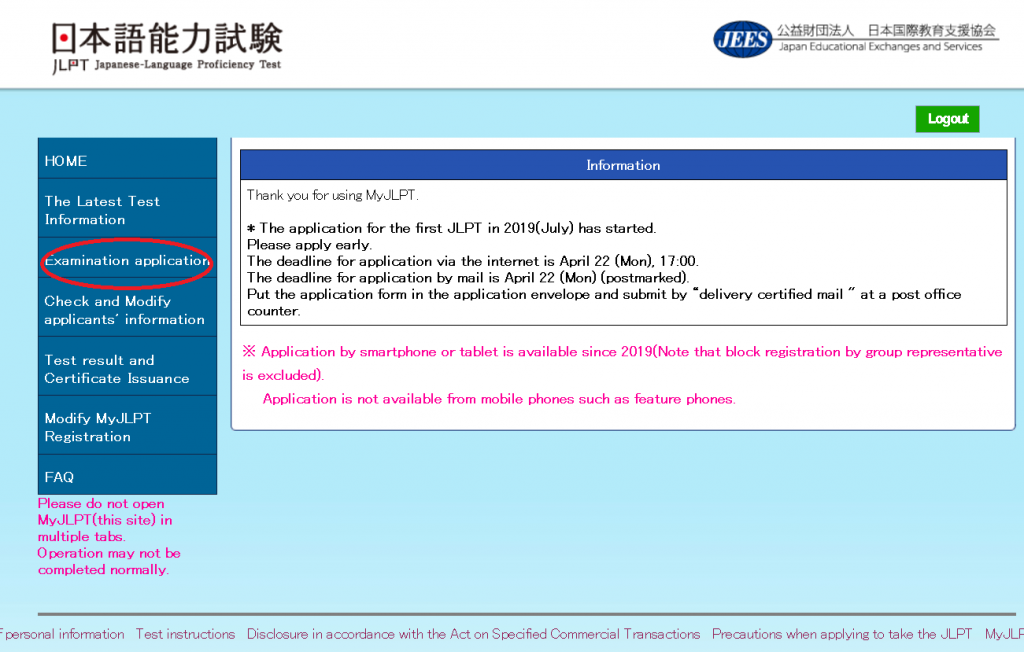
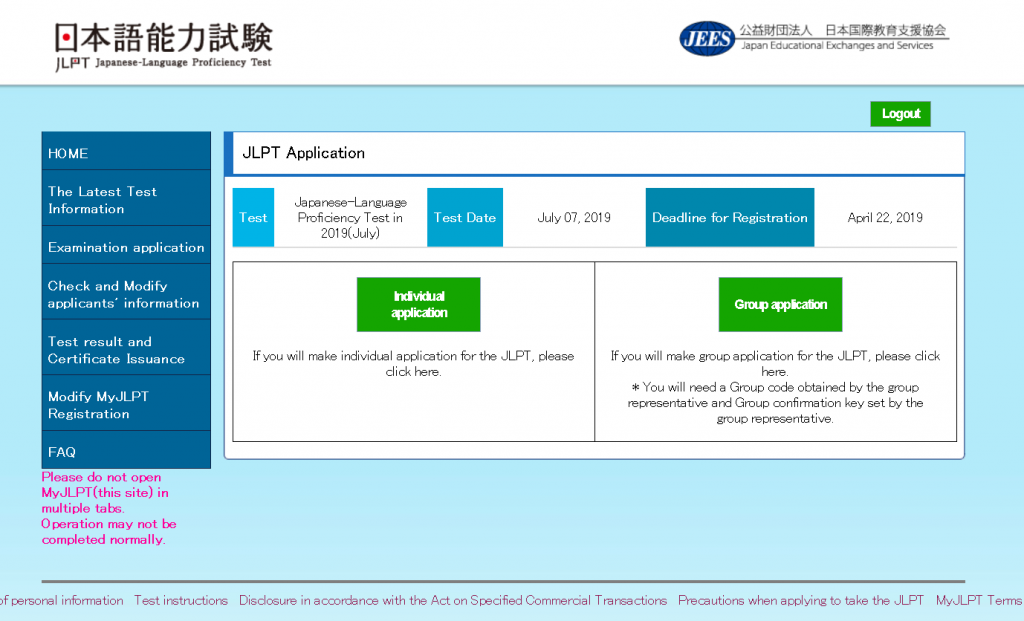
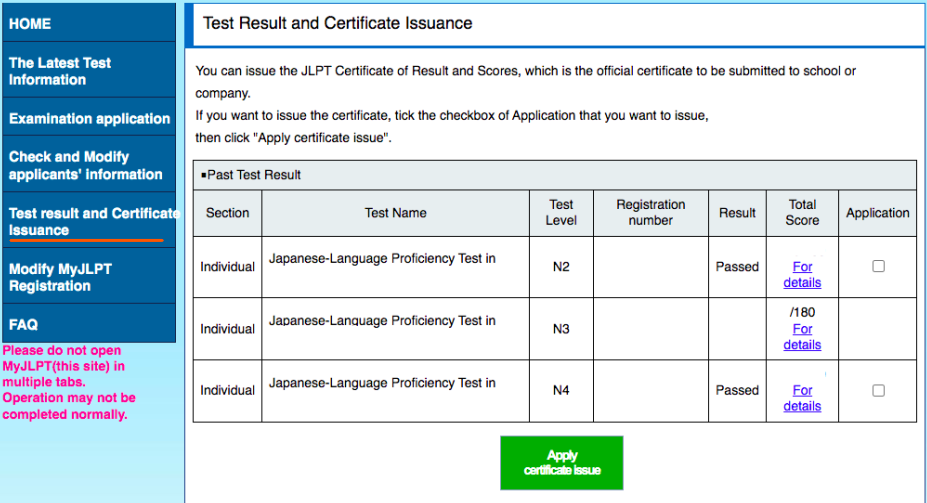
4. Click on “Test Result and Certificate Issuance” to view your results

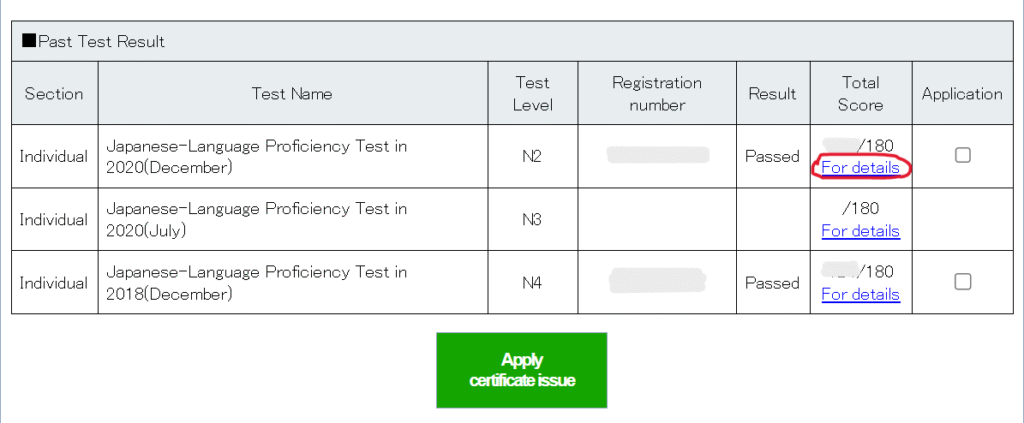
Your results for the JLPT will be immediately available on the Test Result and Certificate Issuance page. Looking at the results is pretty straightforward. A table will display your test level(s), registration number, result, and total score. If you have taken other JLPTs in the past using the same MyJLPT ID and personal information, that record will also be displayed on the same page.

If you passed a test, the result will show “Passed”. Be careful not to get confused—especially if you have taken the same level more than once. For example, if you previously attempted JLPT N3 and failed, but passed it this time, you may see two N3 results: one marked “Failed” and another marked “Passed”.

JLPT results page
View your results here

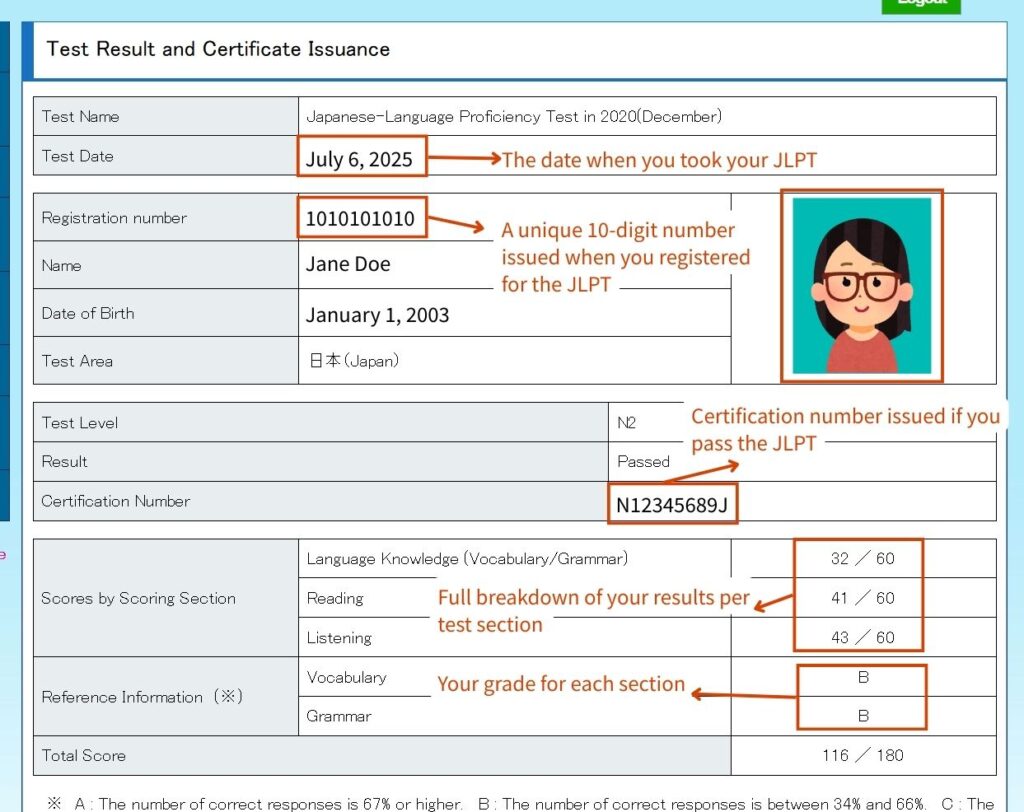
5. View the full breakdown of your score

The score listed on the page is your total score of all test sections. If you want a full breakdown, click the “For details” link.

jlpt result breakdown infographic

Once you click that, you will be directed to a page that shows you a clear breakdown of each part of the JLPT result, as well as more detailed information about your registration.

  1. Your basic information, such as your name, date of birth, and test area (where you took your JLPT) will be indicated. Your passport-style photo, which is used to verify your identity during the test day, will also be displayed.
  2. You will also find your registration number, which is a unique 10-digit number given when you registered for the exam. It’s used to identify your application and results.
  3. Your result and certification number. Your certification number is issued only if you pass. This number appears on your official certificate and can be used for verification.
  4. Besides the scores by test section, you will also get grades, which range from A (correct responses are 67% or above), B (correct responses are between 34 – 66%), and C (anything below that). This will be shown regardless of whether you passed or failed the test.

Things to Note About Viewing Your JLPT Results

If your test results are not displayed on the ‘Test Result and Certificate Issuance’ screen, don’t panic. Note that they only display results for tests that are applied using your MyJLPT ID. Tests taken before 2012, overseas, or applied by mail will not display their results.

If the test was applied with another MyJLPT ID or the group representative used to block registration, results will also not be displayed.

You can change the address you registered for the JLPT application within the specified period after the test. The period when changes can be made will be announced on the MyJLPT site.

If you move after this period, you must submit a notification of change of address to the post office.

Changes can be made on the ‘Check and Modify applicants’ information’ page. If you require a change after the time period ends, you must mail your updated information to the post office.

What is The Score Required to Pass the JLPT?

For JLPT N1 to N5, one can get scores between 0 and 180 points. Depending on your level, the passing scores also change accordingly.

JLPT LevelPassing marks (Total)
N580 out of 180
N490 points out of 180
N395 points out of 180
N290 points out of 180
N1100 points out of 180

There are also score requirements for individual sections of the test.

For N5 and N4, the sectional passing mark for Listening is 19 points out of 60 points. The passing mark for Language Knowledge (Vocabulary/Grammar) and Reading is 38 points out of 120 points.

For N3, N2, and N1, the sectional passing mark for Language Knowledge (Vocabulary/Grammar), Reading, and Listening is 19 out of 60 points for every section.

Should examinees not meet the required passing mark for any of the sections, they will be deemed to have failed the entire exam. They will also be unable to pass if they miss a test section. No score result will show for the completed test sections on the score report. For more information about the passing scores, click here.

Minimum sectional score for JLPT N3, N2 and N1

JLPT LevelVocabulary and GrammarReadingListening
Total scorePassing scoreTotal scorePassing scoreTotal scorePassing score
N1196019601960
N2196019601960
N3196019601960

Minimum sectional score for JLPT N4 and N5

JLPT LevelVocabulary, Grammar and ReadingListening
Total scorePassing scoreTotal scorePassing score
N4120381960
N5120381960

About the JLPT 2026

The JLPT 2026 will be held in early July (first test) and early December (second test). The application period will be open between March and April for the first test and August and September for the second test. More details will be announced next year on the MyJLPT website. Individual and Group applications must be completed within the application period as stated.

Check out our guide on how to register for the JLPT for more information!

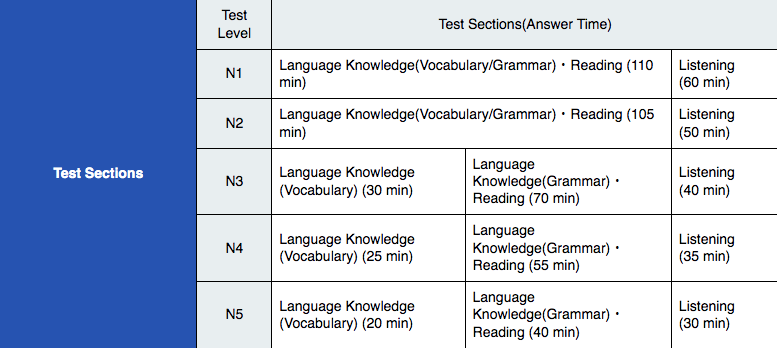
JLPT test sections
The JLPT Test Sections

Understanding JLPT Score Report and Certificate of Proficiency

All JLPT examinees, regardless of whether they pass or fail the test, will receive an official Score Report. Those who pass will also be awarded a Certificate of Proficiency.

In Japan, score reports for the July 2025 test will be mailed in early September, while results for the December 2025 test will be sent in early February 2026.

For examinees outside Japan, results are distributed by local host institutions. Expect to receive your July test report in early October and the December test report in early March 2026.

Ready to Pass the JLPT? Join JLPT Lessons at Coto Academy!

If you’re thinking of taking the JLPT again or aiming for a higher level to boost your career in Japan, give yourself the best possible chance of success. Coto Academy students enjoy a higher pass rate than the national average thanks to our focused JLPT preparation courses.

Join Coto Academy’s highly popular JLPT prep course! Taught in Tokyo by experienced instructors who specialize in the JLPT, this course gives you the strategies, practice tests, and structured study approach to master every part of the exam. With expert guidance and proven methods, you’ll walk into your next JLPT feeling confident and ready to pass.

Currently, we offer:

Contact us for a Japanese-level check and a free consultation on the best JLPT prep course for you!

(more…)

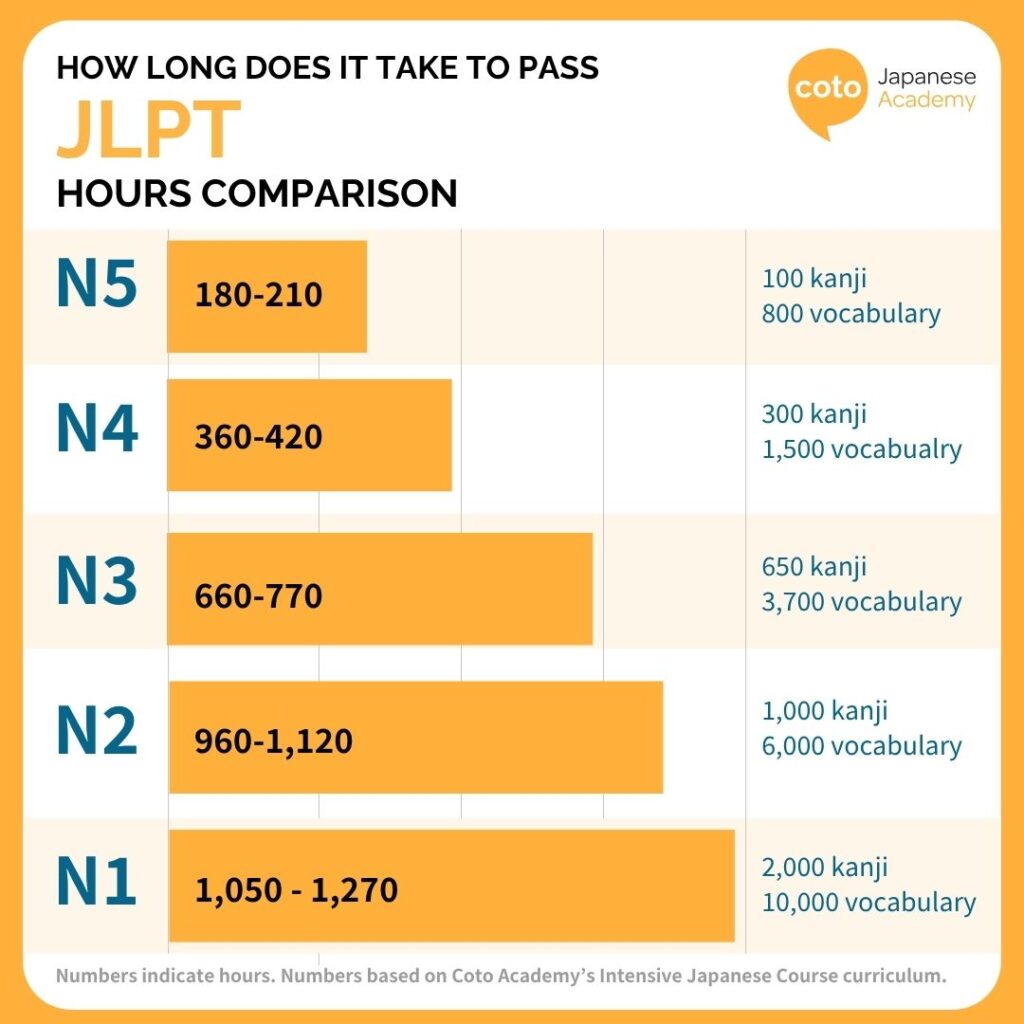
How many study hours do you need to pass the JLPT? The Japanese Language Proficiency Test is the benchmark for your knowledge of the Japanese language. One of the first questions that probably comes to mind is: “How long do I need to prepare for the JLPT?”

The answer isn’t the same for everyone. It depends on things like your current level, how you study, and whether you’ve learned the language before. Still, having a rough idea of the time commitment for each level (from N5 to N1) can really help with planning and staying motivated.

In this post, we will show you some interesting comparisons of the number of JLPT study hours it will take you to pass each exam level.

Aiming for the July or December JLPT?

Getting ready for the JLPT? Boost your chances of passing with Coto Academy’s JLPT Prep Course. We have a special 3-month program specifically dedicated to helping you learn and succeed in grammar, vocabulary, kanji, and reading strategies. You’ll learn with native instructors who have years of experience teaching Japanese. Historically, our students have had double the passing rate compared to the global average. We don’t just teach Japanese; we teach you how to beat the test.

Study Hours Needed from JLPT N5 to N1

how many hours needed to pass the jlpt
JLPT level Hours needed to study
With kanji knowledgeWithout kanji knowledge
N5350 hours400 – 500 hours
N4550 hours800 – 1,000 hours
N3900 hours1,325 hours
N21,500 hours2,200 hours
N12,150 hours3,900 – 4,500 hours

The number of study hours needed to pass the JLPT can vary a lot depending on the learner. If you’re living in Japan or regularly exposed to Japanese, especially kanji, you may be able to progress more quickly thanks to daily practice and immersion. Similarly, learners who already know Chinese or Korean often need fewer hours because of shared kanji or grammar patterns.

Note that the numbers above are cumulative totals. For example, to reach JLPT N2, you need about 1,500–2,200 hours total, not just 1,000 hours after passing N3. If you have already passed N4 and are aiming for N3, you’d need around 250–400 more hours, depending on your level.

To help you plan, here’s a breakdown of the estimated total study hours for each JLPT level, along with how many days it might take if you study 1 hour a day. We’ll also include how those numbers change if you study 2 hours daily.

How Many Days Do You Need to Study for the JLPT?

There is no definitive answer to how many days or months it takes to study for the JLPT, as it depends on how many hours you put in and how consistently you study. That said, we have broken down some basic assumptions based on studying for one hour or more per day.

For example, if you invest one hour a day in JLPT N5 preparation, you may be able to pass within six months. However, if you increase your study time, you could cut that down to around three months.

JLPT levelDays needed (1 hour/day)Days needed (2 hours/day)
N5250 – 400 days125 – 200 days
N4600 – 750 days300 – 375 days
N3950 – 1,100 days475 – 550 days
N21,600 – 2,200 days800 – 1,100 days
N12,150 – 4,500 days1,075 – 2,250 days

What do these numbers mean?

Some learners can reach JLPT N5 in just 6 months, and with intensive study, it’s even possible to pass JLPT N1 within 2 years. But how long it takes depends on how consistently you put in time. Here’s a general breakdown based on studying 1 hour per day:

  • N5: If you study just 1 hour per day, you could be ready in under a year.
  • N4: Builds on N5 with more vocabulary and grammar. Studying 1 hour a day means about 1.5 to 2 years of study.
  • N3: Intermediate level, with a big jump in vocabulary and kanji. It can take around 3 years at 1 hour per day.
  • N2: Upper-intermediate, where you handle complex grammar and real-world materials. This level often takes 4.5 to 6 years at 1 hour per day.
  • N1: It may take around 6 years of 2 hours per day study, or up to 12+ years if you’re studying lightly!

Can You Pass JLPT N2 in Just 2 Years?

There is a lot of chatter online suggesting that passing JLPT N2 in two years is the golden standard for students attending a Japanese language school. Is it really possible?

The short answer is yes. Japanese language schools typically offer intensive, JLPT-focused programs where students study at least three hours a day in class. On top of that, most students put in additional hours reviewing and self-studying outside of school.

Some people even manage to pass JLPT N1 within two years, though this requires an even greater level of dedication, given the heavier kanji knowledge demands at that level.

Want to study JLPT with the best native tutors?

JLPT N5: Skills & Study Hours Needed

study hours jlpt n5
Study Hours Per DayEstimated Time to Pass N5
1 hour~12–17 months
2 hours~6–8 months
3 hours~4–6 months
4 hours~3–4 months
5 hours~2–3 months

Estimated study time: 350 – 500 hours

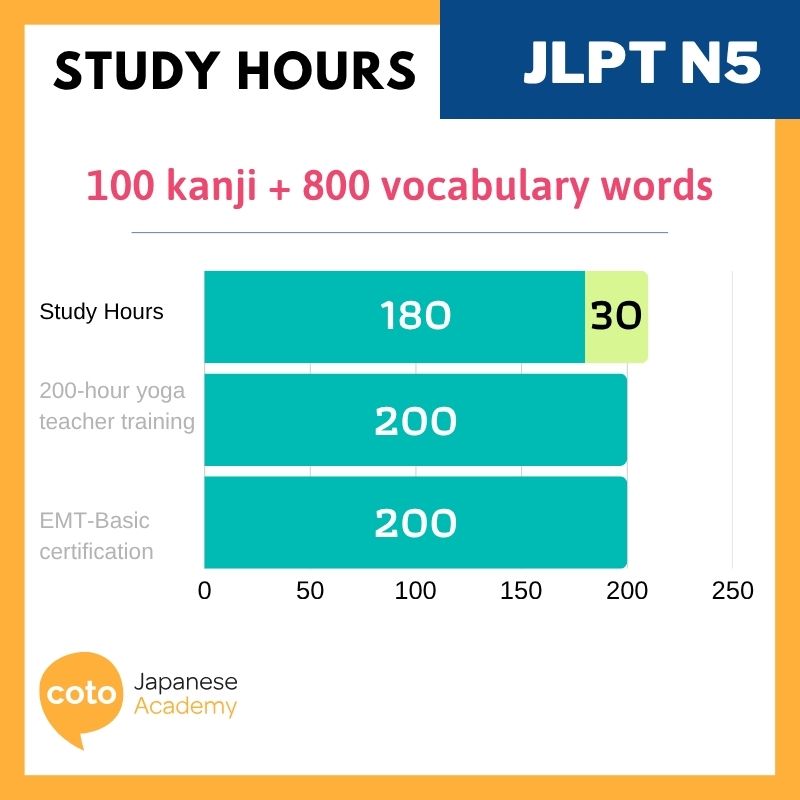
Passing the JLPT N5 would require knowing around 100 kanji and 800 vocabulary words, so by this level, you will need to know fundamental language skills. You will be tested on your ability to understand and use basic Japanese expressions, such as greetings, in mostly hiragana or katakana. So, for students with kanji knowledge, the estimated time it would take to pass is around 350 hours, around the same amount of time needed to spend preparing for a driver’s license in Japan. But keep in mind, the kanji for this level is rather minimal, so hiragana and katakana knowledge should be prioritized.

For other students who don’t have prior knowledge of kanji, it takes 400-500 hours. That is about the same as if you were to take a course to obtain a pastry diploma in Le Cordon Bleu, which is around 453 hours! The number of study hours may vary depending on whether you’re starting Japanese completely from scratch, how well you take tests (testing anxiety can really be a hurdle), or just how quickly you can acquire new languages.

JLPT N4: Skills & Study Hours Needed

jlpt n4 study hours
Study Hours Per DayEstimated Time to Pass N4
1 hour~18–33 months
2 hours~9–17 months
3 hours~6–11 months
4 hours~5–8 months
5 hours~4–7 months

Estimated study time: 550 – 1,000 hours

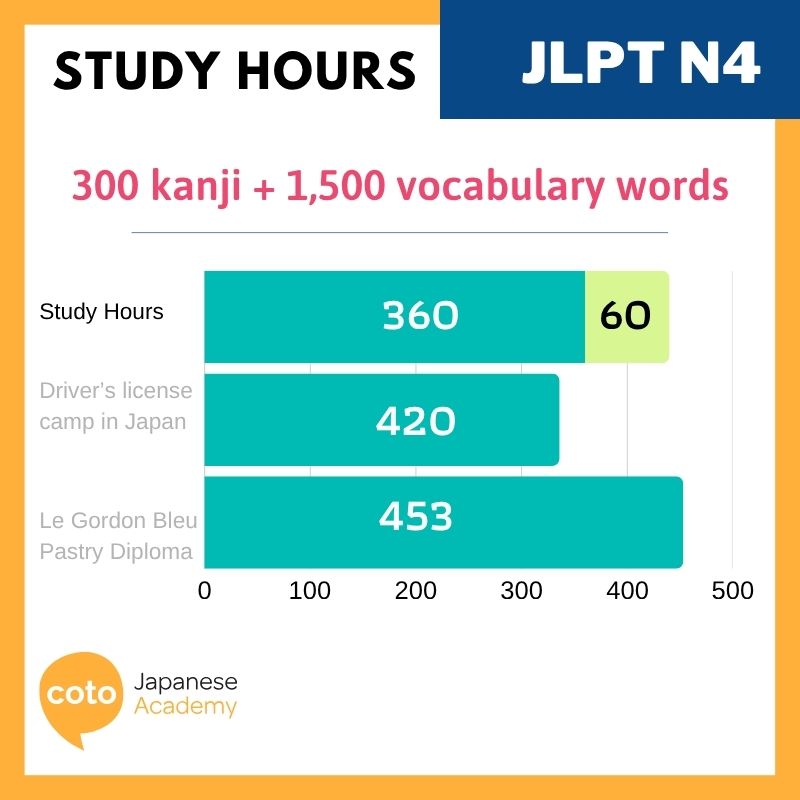
JLPT N4 builds upon what you learned in N5. You’ll expand your vocabulary to around 1,500 words and know about 300 kanji. The test will consist of Grammar with a bit more complexity, and you’ll begin to understand more conversational Japanese, such as simple instructions or casual dialogue.

This means that for students with kanji knowledge, it could take an estimated 550 hours to pass the test. For comparison, if you are a non-native English speaker, that is about the same as studying to improve your TOEIC score from 500 to 700.

For other students, it can take around 780 hours before they’re ready to pass. With this time, you can become a train driver in Japan!

JLPT N3: Skills & Study Hours Needed

jlpt n3 study hours
Study Hours Per DayEstimated Time to Pass N3
1 hour~30–44 months
2 hours~15–22 months
3 hours~10–15 months
4 hours~8–11 months
5 hours~6–9 months

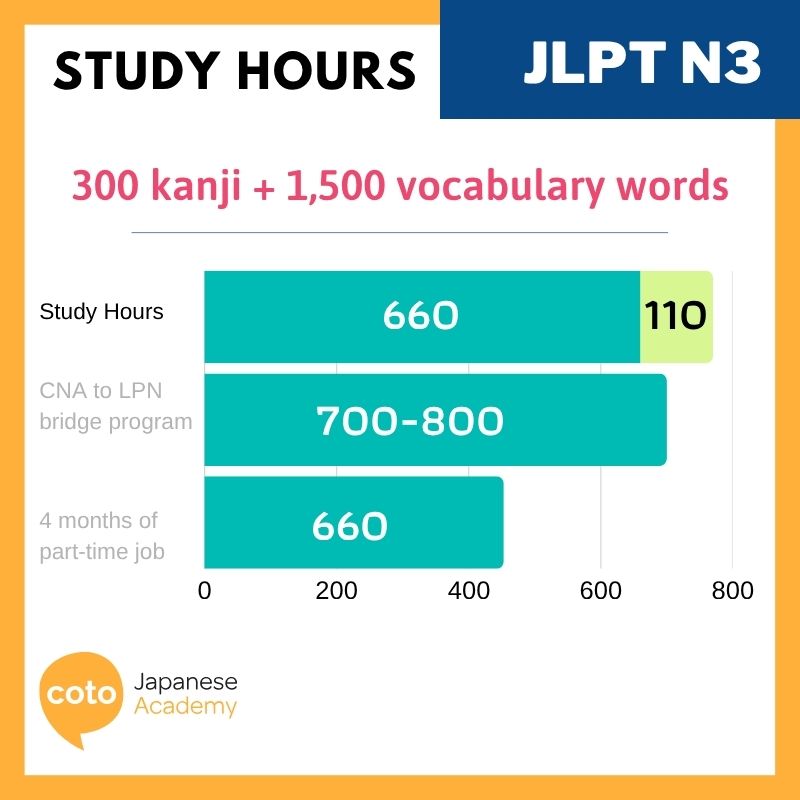
Estimated study time: 900 – 1,325 hours

N3 represents a big jump in difficulty and marks the transition to intermediate Japanese. You’ll need to know around 650 kanji and 3,700 vocabulary words. At this level, you should be able to understand written and spoken content on everyday topics with some abstract language. Therefore, to pass, you will have to be able to understand a variety of different grammatical structures, vocabulary, and be able to comprehend more complicated texts.

For students with kanji knowledge, it takes 900 hours. This amount of hours is the same as getting a Spanish Food Le Cordon Bleu diploma, which requires around 880 hours!

For students with no prior kanji knowledge, it would take around 1,325 hours to study for JLPT N3. With this amount of time, you can become an architect, which is a course that takes 1500 hours.

JLPT N2: Skills & Study Hours Needed

study hours jlpt n2
Study Hours Per DayEstimated Time to Pass N2
1 hour~50–73 months
2 hours~25–37 months
3 hours~17–25 months
4 hours~13–18 months
5 hours~10–15 months

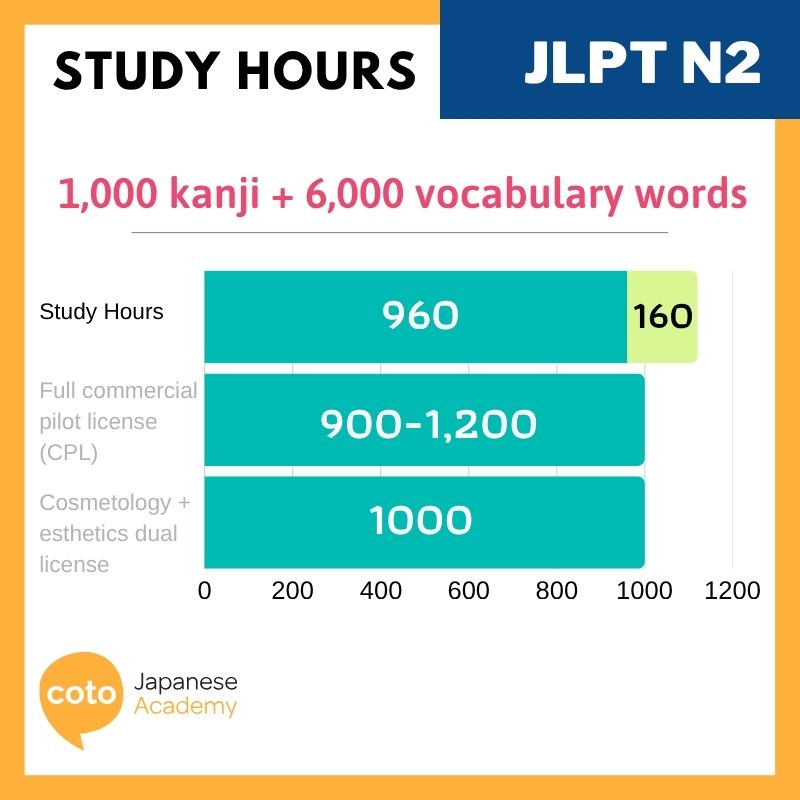
Estimated study time: 1,500 – 2,200 hours

The N2 is often required for working in Japan or entering a Japanese university since it’s seen as an indicator of decent Japanese proficiency. You’ll be expected to know about 1,000 kanji and 6,000 vocabulary words. The test includes more complex texts, nuanced grammar, and fast-paced spoken Japanese. By this level, you should be able to understand and speak Japanese in a wide variety of contexts, from newspapers and TV shows to business meetings.

So, for students with kanji knowledge, it takes approximately 1475 hours to study and pass the JLPT N2. This number is equivalent to becoming a co-pilot of an aircraft! For other students, it’s 2200 hours, which is almost the same time it would take to get a USCPA (Certified Public Accountant).

JLPT N1: Skills & Study Hours Needed 

study hours jlpt n1
Study Hours Per DayEstimated Time to Pass N1 (No Kanji Background)Estimated Time to Pass N1 (With Kanji Knowledge)
1 hour~130–150 months~72 months
2 hours~65–75 months~36 months
3 hours~43–50 months~24 months
4 hours~33–38 months~18 months
5 hours~26–30 months~14 months

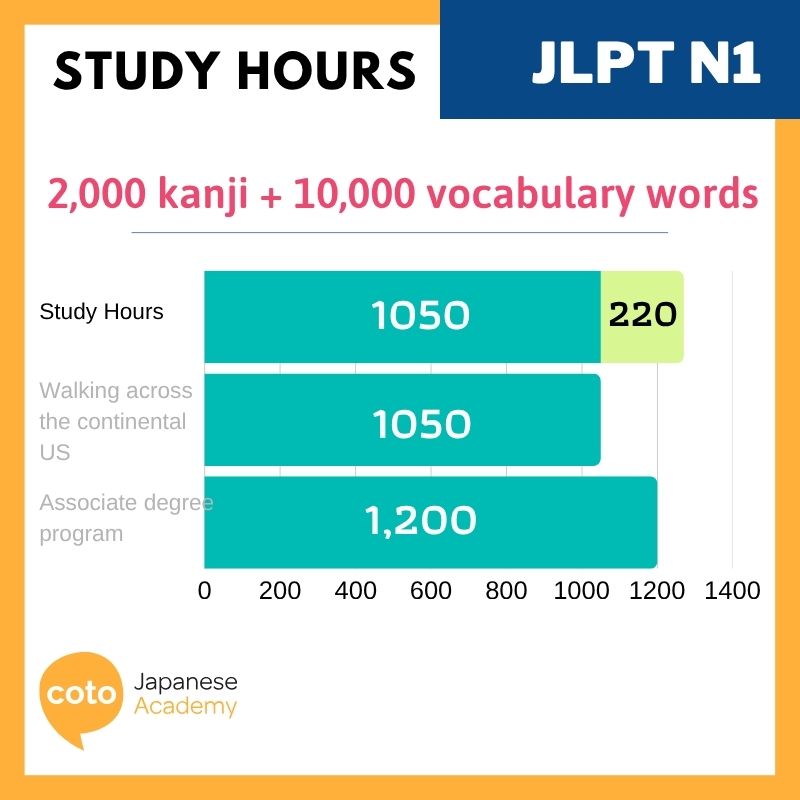
Estimated study time: 2,150 – 4,500 hours

To pass JLPT N1, it generally takes 3,900 – 4,500 hours to study without any prior kanji knowledge. If you already know most of the kanji, it requires around 2,150 hours.

You might notice there’s a big jump between JLPT N2 and N1. The difficulty gap is significant, with N1 requiring a much deeper understanding of grammar, vocabulary, and kanji. The N1 is often seen as the most academic, with passages and materials that include significantly more scholarly language, such as scientific terms. Because of this, many learners spend one to three years just moving from N2 to N1, even after years of study to reach N2.

To put that into perspective: 2150 hours is about the same amount of time it would take to walk from the southern tip of Yamaguchi Prefecture to the northern edge of Aomori Prefecture, which is a journey across the length of Japan’s main island, Honshu. And 4,500 hours? That’s roughly the time it would take to travel around the world on a cruise ship!

How to Study Most Efficiently for the JLPT

We’ve been throwing around a lot of numbers, which can vary from person-to-person, but there are ways for anyone to study more efficiently and reduce the amount of time you spend relearning forgotten material. The most important part of studying is not the amount of time you spend, but rather, how you can actually ingrain the knowledge into your long-term memory. So, here are some of our top tips for studying smarter and not harder!

1. Using Flash Card Apps

Flash card apps are one of the most efficient ways to review new kanji, vocabulary and even new grammar structures, especially ones that use spaced repetition to ensure you keep reviewing new material over different intervals. This prevents you from forgetting material you recently learned, and helps train your brain for better recall. If you use apps like Anki, you can download Anki decks specifically for your JLPT level, so you don’t have to spend time making your deck from scratch!

These apps also offer a convenient way to study and review Japanese anytime or anywhere, so they can really be a powerful tool in studying for the JLPT while reducing time.

2. Japanese Immersion

Immersion is probably one of the most common tips you’ll hear for picking up Japanese naturally and effectively. Obviously, not everyone can just book a flight to Japan to immerse themselves in Japanese. Additionally, the JLPT mostly focuses on testing your reading comprehension, vocabulary, kanji, and listening, so how would you “immerse” in those areas as well?

Reading will actually help quite a lot! Reading as much as you can in Japanese will expose you to different words, and you naturally start picking up new vocabulary and kanji. Reading manga could actually be one of the best ways to learn Japanese, since the visuals will give context to the new words you’ll be learning, making them easier to remember, and will actually teach how they are used in different situations. And for listening practice, anime works very well for similar reasons as manga! First try with subtitles paired with active listening, then challenge yourself by dropping the subtitles!

NHK news apps and videos are also powerful tools, especially since many JLPT reading passages are based on or read like news articles or headlines.

3. Japanese Lessons

While self-study can be quite effective on its own, learning with a Japanese teacher can provide the structure and training needed to learn more efficiently. Having an actual native Japanese instructor can explain different nuances, support you in areas you struggle most, and coach you to ensure you understand each area of the JLPT sufficiently. Japanese teachers can be invaluable in helping you pass the JLPT since they know the language in and out. Here at Coto Academy, we have classes dedicated to JLPT preparation, including the full-year course and the more intensive 3-month course meant to have you test-ready in, you guessed it, just 3 months! Sign up now if you’re interested!

4. JLPT Mock Tests & Other Study Materials

Directly practicing JLPT mock tests is a very effective way to prepare for the JLPT since you will start to develop an understanding of how the test works and the types of questions you will likely run into. Practicing different questions might also help ease the stress and make you more comfortable with the test itself. However, just taking mock tests over and over might lead to the same results, so other materials will also help with mastering each area, such as JLPT textbooks, Japanese learning apps, and websites.

Check out our top JLPT N3 textbook recommendations!

Common JLPT Study Mistakes

Looking at the study hour estimates above, it is tempting to think that passing the JLPT is simply a matter of clocking enough hours.

1. Investing Too Much Time in One Test Section

It is easy to over-focus on one area of study, such as kanji or vocabulary, while neglecting grammar, reading, or listening. For example, there is little point in spending 300 out of your expected 350 study hours for JLPT N5 purely on memorizing vocabulary if you have not touched grammar or reading. If your goal is to pass the JLPT, keep in mind that you need to achieve the minimum passing score in every section of the test.

JLPT tests all skills equally, so an imbalanced study approach can hurt your overall score even if you excel in one area. Make sure your study plan covers all sections consistently.

2. Not Doing Mock Tests and Timed Practice

Many learners study content thoroughly but never simulate actual test conditions. The JLPT is strictly timed, and running out of time is one of the most common reasons people fail. Regularly taking full mock tests under timed conditions helps you build speed, manage exam anxiety, and identify weak spots before test day.

3. Studying Alone Without Any Output Practice

Passive study, such as reading textbooks and reviewing flashcards, only takes you so far. Without practicing output through conversation, writing, or even explaining grammar points out loud, it is difficult to truly internalize the language. Joining a study group, finding a language partner, or attending classes can make a significant difference in retention and confidence.

Conclusion: Studying is About Quality Over Quantity

Studying for each level of the JLPT requires lots of hours, but the exact amount can depend on the person, how much prior knowledge you already have, and most importantly, how you study. There’s a famous quote that goes, “Don’t count the days, make the days count.” So, it’s best not to get too worried about the number of hours, and be sure that the hours you do study count. Passing the JLPT is far from impossible, and just studying little by little every day, the hours will accumulate, and before you know it, you will have a JLPT certificate!

Pass the JLPT with Coto Academy!

Now that you know how much time it takes to prepare for the JLPT, it’s time to make a plan! The best way to pass the JLPT is by studying at a top language school like Coto Academy.

Coto Academy offers both online and in-person JLPT preparation courses in Tokyo, led by experienced instructors who will guide you through every section of the exam. Whether you’re aiming for N5 or N1, our focused, supportive environment will help you stay motivated and on track. Ready to pass the JLPT with confidence? Join Coto Academy!

Want more tips on how to pass the JLPT? Check out our other in-depth guides and start preparing smarter today!

FAQ on JLPT study hours

How many hours does it take to pass the JLPT N5?

It typically takes around 350 to 500 hours of study to pass the JLPT N5. This level covers basic grammar, vocabulary, and hiragana/katakana.

Can I pass the JLPT by studying on my own?

Yes, many learners pass the JLPT through self-study, but joining a structured course like those at Coto Academy can significantly improve your efficiency and chances of success.

Is it possible to become fluent in Japanese in 2 years?

Yes, it’s possible if you study consistently and immerse yourself. To reach conversational fluency, aim for 1.5–3 hours of study per day, practice speaking regularly, and expose yourself to real Japanese (TV, podcasts, books).

Can I pass JLPT N3 in 1 year?

Yes, you can pass JLPT N3 in 1 year if you study around 3 hours per day consistently. It takes around 900 – 1,325 hours to study for JLPT N3.

What are some of the things to keep in mind when you take the actual JLPT? You’ve studied the JLPT for months, reading grammar books, making flashcards, and taking mock exams. You feel like you’re all set to take the test. There’s nothing that can go wrong when you have all that knowledge locked in, right? At the end of the day, how well you prepare for the JLPT the night before is just as important as your six-month study plan.

Avoid saying, “I should have done that,” after the JLPT ends. From what to avoid to useful advice, check out these realistic JLPT tips that can mean the difference between a full-blown panic attack in the exam center and a smooth test session.

Why It’s Important to Be Prepared During the JLPT Test Day

While we focus most of our attention on studying Japanese, we tend to overlook the practical elements of taking the JLPT: what to prepare, what to bring, and what to anticipate.

Like any standardized exam, the JLPT, or Nihongo Nouryoku Shiken (日本語能力試験) is not just a test of the theoretical Japanese language, but of how well you do under pressure. They usually fall on a Sunday, giving you ample time to do any last-minute reviews and cramming on Saturday. This also gives you enough space for mental preparations. 

At the same time, this also means that a lot of things can go wrong.

Getting ready for the JLPT? Boost your chances of passing with Coto Academy’s JLPT Prep Course — designed for busy learners. With just 3 focused hours per week, you’ll turn your current Japanese skills into real test results in 3 months. We focus on the high-frequency kanji and the specific logic needed to beat the reading section’s strict time limits. Whether you join us in Tokyo or Online, you’ll get the exam-winning strategies you won’t find in a textbook.

When Is The JLPT?

In Japan, the JLPT is typically held twice a year—once in July and once in December. The frequency of the exam in your home country may vary, so we highly recommend checking the official JLPT website for the most up-to-date schedule in your region.

JLPT Test Day Tips

1. Have a Good Rest The Night Before JLPT

Though seemingly an obvious JLPT tip, having a good sleep before the JLPT is something a lot of test takers fail to do.

Late nights can be more harmful than helpful when cramming for exams. This is because staying up late to try to memorize new Japanese vocabulary, kanji, or grammar points has the opposite effect. You’re not letting your brain have “downtime” to let the new things sink in. 

If you’re trying to catch up on half of your study materials the night before, chances are you won’t even remember it the next day. Staying up late will only give you stress and sleep deprivation. Any final reviews or mock tests are okay, but make sure you get at least 8 hours of sleep. 

In other words, cramming doesn’t help. It can break your concentration the next day and lower your mood — something you don’t want during the most crucial day of the year. 

2. Bring an extra pencil and Eraser to The Test Site — and Shade Properly

This sounds like a “duh” JLPT tip, but you’d be surprised by how many examinees we’ve seen who brought pens instead of pencils and erasers to the JLPT exam location. You input your answers by shading the circle with a pencil. If you’re using a mechanical pencil, bring extra leads. If you’re using a wooden pencil, get a sharpener. 

Most importantly, bring a spare pencil and eraser. They might fall on the floor or break at any moment, so avoid the panic by staying prepared. 

Make sure they are at least 2B, a dark shade for the computer to read. Remember that the software can only read your answer when you’ve colored the circle properly.  

Pencil cases aren’t allowed during test sessions. Only bring the essentials: no highlighters or colored pens. 

Disclaimer: Some test sites might not allow mechanical pencils, so always check what the test voucher says. 

3. Make Sure To Bing Clear Bottled Water

While bringing your own water is not a required item to bring, even the Japan Education Exchange Center, which is the official JLPT administrator, advises you to bring “your own water,” as they state for the July 2025 JLPT.

Many test centers are located far from convenience stores and supermarkets. While you do get a break between test sessions, we generally don’t recommend using that time to run out and buy a bottle of water. Instead, bring one with you and have it packed in your bag before the test begins.

Just make sure that the water bottle is clear or has no labels to avoid raising any suspicions.

For more information, check out what other things you can bring to the JLPT test site.

4. Bring a (Wrist) Watch to The Exam Centre to Save Time

Every JLPT exam center is different, and that means you don’t know what you’re expecting. The JLPT sections are all timed, but during the tests, you’re not going to hear any countdowns or warnings. The proctors will only say, “Time’s up. Put your pencils down.” 

The only indicator of how much time you have left is through the wall clock — if they provide one. Some test centers may hang their clock on your back or somewhere where it’s hard for you to see it. Some might even cover the clock. Moving your head around will raise suspicion and waste your precious, limited time. Tough choice, right?

This is why you need to bring your own watch. Remember to budget your time. Make sure it’s an analog watch (anything digital is prohibited) with no alarms.

Check out our guides for the upcoming JLPT:

6. Speaking of Time, Manage It Well

One of the common pitfalls for test-takers is to submit their JLPT answer sheets half-finished because they’re shocked by how quickly the exam can go. The good news is that for every different test section (kanji-vocabulary, grammar, reading, or listening), you’ll have a short break in between. This means, at least, you have a softer cushion for time management. 

When you finish a few answers, see if you’re running out of time and adjust your pace from there. 

Want to study JLPT with us?

7. Don’t Get Stuck on One Question

Perhaps the most important JLPT tip is to never contemplate too long on one question. The JLPT is strictly timed, and you might feel like it’s okay to go slow at first.

The biggest mistake you can make is to skip skimming through the questions: how many are there? Which section will probably take the longest time? 

Chances are, you’re going to find a question (or many) that you don’t know. Don’t get stuck there. Instead, mark the question or take a rough guess and move on. 

Only when you’re done going through all the questions can you go back again. 

8. Filled Answers Are Always Better Than Blank

Despite our stress on time management during the JLPT, we know it’s easier said than done.

If you’re faced with unfavorable circumstances where you have a bunch of questions unanswered, with only one or two minutes to spare, we suggest doing what any desperate student would do: take wild guesses.

It seems counterintuitive, but writing something is always better than nothing. Statistically speaking, if you have 10 questions unanswered with only one minute left, you can blindly fill in the answers and still have 2-3 of them correct. If you only use that one minute to answer only one question, you’ll, well, only have one answer correct — if you do get it right. 

Besides that, the JLPT scoring system will not negatively mark a wrong answer, which is a common thing in other standardized exams (you get a minus 1 for every wrong answer, for example). This means you’re not risking your best score by answering wrong.

9. Listen to The Proctors

This isn’t just a JLPT tip. It’s a requirement. Coming from real experience, the proctors are very strict. They’re there to confirm your identity and make sure the test environment is conducive. The JLPT rules are typical: no talking, no suspicious activities, no cheating and no cellphones. 

But they also hold authority in the exam center to issue yellow and red cards — and they’re something you’d want to avoid at all costs. If you break one of the JLPT rules, they can give you a warning (yellow card) or, worst, expel you on-site, effectively failing you from the JLPT. 

In every exam hall, there’s almost one person who got kicked out because their phone rang or, more commonly, because they keep writing when the proctors tell them to put their pencils down. 

You’re not going to get away from sneaking in a few answers. The risk is simply not worth it. If they tell you to stop, stop. 

10. Use Question Papers for Note-taking for JLPT Listening Sections

You’re faced with another challenge in the JLPT listening section. Besides time, the audio will only be repeated once. At the same time, you need to know what’s happening in the scenario given, which means you don’t have a lot of time to comprehend and answer the question. 

Take notes as you listen to the audio. They will give you a brief moment to answer the questions, and you can use this period to review your notes. They don’t have to be long; just short reminders to refresh your memories

 It’s important to know the directions and what is going to happen on the test so you can focus purely on answering the questions. On most of the questions, they don’t give you a whole lot of time to think about it. You have to answer and keep going. If you don’t, you might find yourself halfway through the next question before you realize you haven’t made a decision yet.

Where possible, mark answers that are clearly not correct when you’re listening to whatever passage is playing. People lose marks for accidentally filling the wrong box.

Also check out: How to Check Your Results for the JLPT

11. Take Advantage of Restroom Breaks

This is your chance to reset your mind. Meeting your friend to talk about the past JLPT questions isn’t wrong, but prioritize your personal needs, too. Use this time to relax or do another final review. Go to the bathroom to avoid holding your pee during the next session. The whole test lasts around 3-4 hours, so prepare a meal so you don’t get hungry. 

Depending on where you are, there might not be a nearby convenience store. You may not be able to go and buy snacks and return on time, so pack some snacks from home just in case. 

12. Don’t Pack Too Many Things!

It’s always better to be overprepared, but avoid overpacking your bag with textbooks or unnecessary electronic devices. In Japan, JLPT test centers may require you to place electronic devices in a sealed envelope, which can only be opened after the test is finished.

For this reason, we recommend not bringing laptops or heavy electronic devices like iPads, as well as cameras or microphones. The JLPT is very strict about preventing recording or photographing during the exam, and such items may raise unnecessary suspicion.

At the same time, based on feedback from Coto Academy students, many test-takers who brought textbooks hoping for a last-minute review ended up not using them at all. You might be surprised by how quickly the exam day schedule moves, leaving little time to study during breaks.

Taking the JLPT? Join JLPT Lessons at Coto

Planning to take the JLPT? Maximize your chances of success with JLPT lessons at Coto Academy. Our 3-month, semi-intensive course meets every Saturday for 3 hours, covering everything from high-frequency kanji to the specific logic needed to ace the reading section. Whether you join us in-person in Tokyo or via our online classrooms, you’ll get the expert strategy and peer support needed to walk into the exam with confidence. Seats are limited to keep class sizes small and effective — secure your spot today, and let’s reach your goal together.

  • Flexible Learning: Join us in-person at our Tokyo campus every Saturday, or join from anywhere in the world via our Online sessions.
  • Comprehensive Coverage: 3 hours per class covering vocabulary, kanji, grammar, and specialized reading strategies.
  • Expert Guidance: Small class sizes with instructors who know exactly where students usually stumble.

FAQ

What is the JLPT?

The Japanese-Language Proficiency Test (JLPT) is a standardized exam that evaluates and certifies the Japanese language skills of non-native speakers.

Can I wear a watch to the JLPT test center?

Yes, you can wear a simple wristwatch, but there are strict rules. Smartwatches or watches with alarms, data storage, or sound functions are strictly prohibited.

What do I need to bring to the JLPT test center?

To take the JLPT, you must bring your test voucher, a valid photo ID, HB or B pencils, an eraser, and optionally a simple wristwatch, making sure all electronic devices are turned off and stored away.

Where is the JLPT test center located?

The location of your JLPT test center depends on where you registered, so please check your test voucher carefully for the exact address and room details.

When preparing for the JLPT, focus on packing only the necessities and essentials like your test voucher, ID, stationery, and snacks and drinks. To ensure a smooth test day experience, it’s important to have a checklist of items to bring to the JLPT test center. After all, you have spent the last few months preparing for the JLPT (Japanese Language Proficiency Test). You’ve reviewed everything you need to know the night before the test day. But now, you need to start packing — and now you’re wondering what to bring to the JLPT test center!

That’s why we’ve created the ultimate checklist of what to bring to the JLPT test center. From essentials to some extra things to bring just in case, we’ll guide you through the must-have items you should pack in your bag, along with some useful tips to help you stay calm and focused on the day of the test. So, let’s dive in and make sure you’re fully prepared and equipped to ace the JLPT!

Want to study Japanese with us?

What You Can Bring to The Desk at the JLPT Test Center

1. Your JLPT Test Voucher

If you are in Japan, you should have received a JLPT test voucher by mail. It’s a small slip that you can open, containing your JLPT test ID, your face (which you must submit when you register for the JLPT online), and personal information. It also includes confirmation of the test site and map. Your JLPT test ID will also help you find your exact seat in the exam room. There’s the test number on each table and possibly a map of the room layout printed outside so you can quickly locate where you need to sit. 

2. Valid Identification

This is arguably the most important thing that you’ll need to have; otherwise, you might need to retake the test another time. A proper identification that shows your face and name allows the exam proctors to confirm if you are the right person to take the test. From personal experience, they will usually double-check your face during the course of the exam. If you are in Japan, it’s good to bring your residence card or passport. 

Important: As of 2026, the JLPT administered in Japan is generally limited to people who are mid- to long-term residents of Japan or special permanent residents. Applicants are required to provide their Residence Card (在留カード) number and expiration date when applying. Tourists and other short-term visitors generally cannot take the JLPT in Japan.

Because of this, the JLPT adminstrator recently came up with some caveats:

If you applied with a Residence Card:
You need to bring your valid Residence Card, not a photocopy of it! Proctors want to see the real card in your hands.

If your Residence Card happens to be mid-renewal and you don’t have it with you, don’t panic. Just make sure you bring all three of these instead:

  • Documentation confirming your card is being held by the Immigration Services Agency or an administrative scrivener
  • A copy of your Residence Card
  • A government-issued photo ID — your passport, My Number Card, or driver’s license will all work

If you applied without a Residence Card:

Not all residence in Japan technically own a Residence Card. the original documents that apply to your situation. All documents must be valid. You will not be permitted to take the test without them.

CategoryRequired ID
Non-native Japanese speakers with Japanese nationalityJapanese passport, or My Number Card + certificate of residence (showing nationality)
Diplomat or Official visa holdersDiplomatic or Official passport
Provisional stay permission holdersProvisional Stay Permit
Covered under Japan–U.S. or UN Forces AgreementMilitary-issued ID card
Provisional release permission holdersProvisional Release Permit
Subject to a supervision measure decisionSupervision Measure Decision Notice

If you fall under categories 3–6, it’s worth bringing your passport or My Number Card along too if you have them. Better to have it and not need it than the other way around!

3. 2B Pencil (and extra pencils)

The JLPT answer sheet will be read on the computer, so you’ll have to make sure you’re bringing a pencil that is 2B or darker so the computer can scan it. 

One thing we recommend is that instead of using a traditional wood pencil, opt for a mechanical pencil! You’ll be doing a lot of shading and note-taking, so the tip of the pencils can get dull pretty quickly. It’s a hassle to sharpen them on your table!

Just make sure that even your mechanical pencils have extra leads. 

Keep in mind that using mechanical pencils may not be allowed in different countries or test sites, so make sure you confirm and have traditional wooden pencils as a backup!

4. An eraser

This is a no-brainer, but opt for a good-quality eraser instead of relying on the eraser tip on top of your pencil. 

5. Wristwatch

This is the one tip we recommend for the actual JLPT test day. Exam rooms usually have a wall clock somewhere — but that’s if they provide one at all. But be warned: these clocks can be placed at the back of the room, where you will need to turn your back every time to check the time. 

The JLPT proctors are very strict, so moving your head around will raise suspicions and possibly alert them to possible attempts to cheat.

When you’re rushing to answer the JLPT questions, time also becomes very critical. The proctors will not announce how many minutes you have left or give you any warnings. The proctors will only say, “Time’s up. Put your pencils down.” Time management is something you need to handle yourself. 

Do you want to spend every few minutes glancing at the wall clock and possibly lose focus?  After all, time is very critical when taking the JLP, especially on higher levels like N2 or N1 (where you have even less time to answer more questions)! 

The best way to handle this is by bringing your own wristwatch. With this, you can easily know how much time you have left. 

One thing, though: make sure that it’s an analog or traditional watch. Smart watches or anything digital or with alarms are not allowed. 

6. A water bottle with no label

Some JLPT test sites allow you to keep a water bottle on your desk during the exam, but only if the bottle has no label, writing, or branding on it.

The Japan Educational Exchanges and Services (JEES), which administers the JLPT in Japan, recommends that test-takers bring their own water. Since electronic devices such as smartphones may be sealed in an envelope for the duration of the test, mobile payment methods may not be available until the exam is over. Even if you have cash or a physical card, it is not ideal to leave the test site and rush to a nearby convenience store during breaks.

As JEES advises: “Please bring your own water.”

To stay comfortable and hydrated throughout the day, it is best to bring your own label-free water bottle

Study the JLPT Smarter with Coto Academy!

Are you planning to take the JLPT this July or December? Stop guessing if your self-study is enough. This is your sign to join Coto Academy’s JLPT Prep Course. Our 3-month, semi-intensive course meets every Saturday for 3 hours, covering everything from high-frequency Kanji to the specific logic needed to ace the reading section.

Whether you join us in-person in Tokyo or via our online classrooms, you’ll get the expert strategy and peer support needed to walk into the exam with confidence. Seats are limited to keep class sizes small and effective. Secure your spot today and let’s reach your goal together!

What You Need to Keep in Your Bag during the JLPT

The above items are allowed to be on your desk at all times. The rest of these items must be in your bag, but they’re handy for rests between test sections. 

1. Some snacks

Lastly, this is not an official requirement, but if you’re the type to get hungry or snackish in the middle of the day (JLPT exams are typically held from the morning until the afternoon), be sure to bring your own snacks. And if you’re running on little sleep after pulling an all-nighter (something the team at Coto Academy does not recommend), consider bringing an energy drink or some coffee as well.

The JLPT usually lasts 3 hours, with a short break between the vocabulary/reading sections and the listening sections. Many of us use this time to fuel up, go to the toilet, and do a last-minute review.

You can check if your test site has a nearby convenience store to grab a few food items. However, from personal experience, we noticed most exam takers would also be lining up at the konbini store. You can buy your snacks on the way in the morning or have them prepared beforehand, just in case you don’t have enough time to buy food, eat it, and come back to the exam room. 

2. Spare stationery

You never know when you’ll find a malfunctioning mechanical pen or when you’ll drop your eraser. Carry a small pouch containing spare stationery items like extra pencils, pens, erasers, and a pencil sharpener. This will help you avoid any last-minute panic if your primary writing instrument fails or breaks during the test.

3. Sweater or jacket

Test centers can be chilly, so consider bringing a light jacket or sweater to stay comfortable. 

4. Textbook or pocket dictionary (for review)

This is an option if you are still anxious about a few vocabulary or grammar points. Before the test begins or during the break, take a quick look at a few grammar points as a quick review. Additionally, I find it helpful to have a pocket dictionary on hand during the test to look up answers (although we recommend this after you finish all test sections to keep a positive mindset).

We’ve seen some students bring their own flashcards, too, which are far lighter than heavy textbooks.

5. Your phone

This goes without saying, but your phone needs to be on silent mode and in your bag! Better yet, the safest option is to turn it off altogether! We have heard cases, and our students have seen alarms go off during the JLPT exam! Be careful, even if you turn it to silent mode or airplane mode.

Test proctors are very strict. Violating any of the above may lead to misconduct charges!

Important: As of 2026, JLPT proctors may require all electronic devices to be placed in a designated envelope and sealed. You cannot open the envelope until the listening section has ended and the proctor announces

封筒をあけてもいいです。
Fuutou o aketemo ii desu.
You can open the envolope.

You can be disqualified from te JLPT test if you open the envelope mid-day. Because of this, it is best to avoid bringing large or unnecessary electronic devices to the test center.

6. Positive Mindset!

Although not a tangible item, maintaining a positive mindset is crucial for success in any examination. Believe in yourself and your abilities. Take a deep breath, stay calm, and approach the test with confidence. Remind yourself that you have prepared diligently and are ready to demonstrate your Japanese language skills.

What You Should Not Bring to the JLPT Test Center

1. Laptop, recording devices, microphones

Laptop computers, cameras, audio recorders, microphones, and other electronic devices are technically “allowed” but unnecessary for the JLPT. An important thing to know is that recording, photographing, or filming any part of the test is strictly prohibited. Electronic devices used for cheating or violating test rules may be confiscated by staff and could result in disqualification from the exam.

According to Japan Educational Exchanges and Services, “Any items used for cheating (cheat sheets, electronic devices, etc.) will be confiscated and not returned.”

While you may technically be able to bring some of these items to the test center, carrying large amounts of electronic equipment can attract additional attention from proctors or staff. To avoid misunderstandings and unnecessary hassle, it is best to bring only what you need for the exam.

Important: As of 2026, JLPT proctors may require all electronic devices to be placed in a designated envelope during the exam. Bringing large electronic devices can be inconvenient. Imagine having to shove your 13-inch Macbook in an envelope!

2. Too many textbooks

Reviewing notes or vocabulary during the breaks is perfectly fine, but most of your learning should already have been completed in the weeks and months leading up to the test. Last-minute cramming during the breaks is unlikely to make a significant difference in your score.

We have seen some examinees bring several textbooks, notebooks, and study guides to the test center. While there is nothing wrong with reviewing materials during breaks, carrying a large number of books often adds unnecessary weight and inconvenience.

Remember that JLPT test centers are often located some distance from where you live. Even though they are usually in urban areas, getting there may require a lengthy train or bus ride. Traveling with a lighter bag can make the day less tiring and help you stay focused on the exam.

Tips for a Successful JLPT Test Day

Now that you know what to bring and what not to bring, here are some additional tips to help you have a successful JLPT test day! For more practical tips for the JLPT test day, head to this article!

1. Arrive early

Plan to arrive at the test center at least 30 minutes before the scheduled start time. This will give you enough time to check in and get settled. You never know if you’ll have a hard time finding the test site, too. 

2. Get a good night’s sleep

Instead of attempting to cram everything the night before, ensure you have a restful night’s sleep before the test to stay alert and focused. 

3. Don’t skip breakfast

You’re going to be taking the JLPT for a few hours, so avoid getting hungry and out of focus by eating breakfast. Even if you’re not someone who eats breakfast, make the day an exception. 

4. Make sure your phone is silent and on airplane mode

Here’s a mistake we have seen way too often — and it’s one that can cost you the entire JLPT. Someone forgets to completely turn off their phone. Maybe they thought silent mode was enough, or they just missed the reminder. And then, right in the middle of the test — ding!

Even if it’s unintentional, the JLPT has a strict system: yellow cards are for warnings, but red cards? No second chances. Especially during the listening section, where even the smallest noise can throw off everyone’s focus.

To be safe, instead of setting it to silent or airplane mode, turn off your phone completely and keep it in your bag. It’s such a simple thing, but it could make the difference between passing and failing.
4. Follow instructions carefully

Take the time to read the instructions thoroughly before starting each section of the test. In Japan, the proctors might speak in English and maybe some Japanese appropriate to your level.

Also check out: How to Check Your Results for the JLPT

Conclusion

Preparing for the JLPT requires careful planning and organization. By following this ultimate checklist of what to bring to the JLPT test center, you can ensure a stress-free test day experience. Remember, being well-prepared will give you the confidence you need to perform your best. Good luck on your JLPT journey!

Start taking Japanese lessons and pass the JLPT exam!

Statistically, Coto Academy students are twice as likely to pass compared to the global average. If you are taking the N4, N3, N2, or N1 this July or December, self-study alone is a risk. Our 3-month JLPT Prep Course (3 hours/class) is designed to bridge the gap between “knowing Japanese” and “passing the test.”

We focus on the high-frequency kanji and the specific logic needed to beat the reading section’s strict time limits. Whether you join us in Tokyo or Online, you’ll get the exam-winning strategies you won’t find in a textbook.

  • Expert Tactics: Specialized training in vocabulary, grammar, and reading speed.
  • Double the Pass Rate: Proven strategies that work.
  • Saturday Intensive: 3 hours of focused prep that fits your work week.

Sign up for our upcoming online and in-person JLPT Prep courses (Tokyo and Yokohama)!

FAQ

What do you need to bring to JLPT?

The bare minimum things you need to bring to the JLPT test center are:

  • Test voucher (受験票)
  • Valid photo ID
  • 2B pencils
  • Eraser
  • Wristwatch (no smartwatches or alarms

What do you need for JLPT registration?

To register for the JLPT, you would need:

  • A MyJLPT account on the official JLPT website
  • A recent photo (digital)
  • Valid ID information
  • Payment method (credit card or convenience store payment if in Japan

How early should I arrive for JLPT?

Arrive at least 30 minutes early. Doors usually open about 45–60 minutes before start time. Late arrivals may be refused entry

What pencils do you need for JLPT exam?

Make sure you’re bringing a pencil that is 2B or darker so the computer can scan it. Bring extras in case of breakage

Check out our guides for other JLPT levels as well:

The JLPT N3 phrase, にしては, is often used to express a contrast or comparison of someone or something. It is similar to saying “for” or “considering that,” and it is often used to express how something or someone is somewhat different from the norm or what is expected.
So, let’s learn how to use this JLPT N3 grammar point by breaking down its meaning, structure, and example sentences. 

Make Sure to Watch Coto Academy’s YouTube Video About  〜にしては (~Ni Shite wa)

Before you continue reading, why not take a moment to watch a quick YouTube lesson with our Japanese teacher, Natsumi-sensei:

Meaning of にしては (Ni Shite wa)

にしては (nishitewa) closely translates “for (someone/something),” “considering that…” or in some cases “while.” It is often used to highlight an observation about someone or something that differs from a certain standard or norm. Let’s take a look at an example to demonstrate how it works:

ステーキにしては、安いですね。
Suteeki nishitewa, yasuidesu ne.
For a steak, it’s quite cheap.

You can see how にしては is used to highlight that the subject is cheap, given that it’s a steak. So, this grammar is used when you want to make a relative statement, since in this example, you are not necessarily saying the steak is cheap. Rather, you are saying that it’s cheap, given it’s a steak.

It is just like using the preposition “for” as in “he’s tall, for someone his age.” In the same way, にしては establishes a comparison of how something/someone is from what is expected or standard. Generally, you only use this grammar to express an observation about someone or something rather than to express something about yourself. 

Structure of にしては (Ni Shite wa)

The grammar pattern, にしては, can attach to virtually anything, including verbs, い- and な- adjectives, and nouns. 

TypeStructure
Verb (dictionary/plain form)Verb + にしては
い-Adjectiveい-Adjective + にしては
な-Adjectiveな-Adjective + にしては
NounNoun + にしては

When attaching にしては to verbs, the verbs must be in dictionary form. For example:

いつもマックを食べるにしては、細いですね。
Itsumo makku o taberu nishite wa, hosoidesune.
For someone who always eats hamburgers, he’s quite skinny.

Here にしては is attached to the verb 食べる (taberu), meaning to eat. You simply attach it to the verb in dictionary form, and you can also attach it to verbs conjugated in different forms, such as past, present, and negative. Let’s break down how this works with different verb conjugations.

FormPlain Form + のでMeaning
Present食べるにしてはConsidering I eat
Past食べたにしてはConsidering I ate
Negative食べないしてはConsidering I won’t eat
Past Negative食べなかったにしてはConsidering I didn’t eat

にしては (nishite wa) vs として (toshite)

にしては and として (toshite) can both be used to evaluate something in relation to a category or standard, but there is a difference in nuance, changing the meaning being expressed between the two.

Both にしては and として share a similar grammatical structure, the te-form of する (suru), which is して (shite). That means they both involve highlighting an aspect of something from which another thing follows. The distinction comes down to the particles に (ni) and と(to) that precede して.

として uses the particle と, which establishes a logical connection between the two statements, where the second statement is the result of the first. On the other hand, にしては uses the particle , which implies that both statements exist or happen at the same time. This reflects に’s role as a location particle where A is the setting or context in which B is observed. The particle は then takes the entire phrase attached to にしては and frames it as something being compared, which is where the evaluative and surprising nuance of にしては comes from. Here is a side-by-side example to illustrate this:

Using として:

医者として、患者を助けるのは当然だ。 
Isha to shite, kanja o tasukeru no wa touzen da. 
As a doctor, it is only natural to help patients.

The role of a doctor directly produces the expectation that follows. So, the second statement, “it is only natural to help patients,” is a result of being a doctor.

Using にしては:

医者にしては、体があまり丈夫じゃないですね
Isha ni shite wa, karada ga amari joubu ja nai desu ne. 
For a doctor, he isn’t very healthy, is he?

Here, being a doctor is the backdrop or location against which the observation is placed and compared. The result is surprising precisely because both statements exist at the same time but don’t align with expectations.

にしては is used when something is surprising or unexpected, given what we know about a person or thing. It sets up a standard based on a category and then highlights that the result doesn’t quite match that expectation, either better or worse than expected. 〜として, on the other hand, simply states that something is being considered in the role or capacity of something else, with no sense of surprise or contrast at all.

Example Sentences Using にしては

Now, let’s go through some example sentences to really understand how to use にしては in actual conversation.

Example 1:

3月にしては寒いです。
Sangatsu nishitewa samui desu.
It’s cold considering it’s March.

Example 2:

カレーを初めて作ったにしては、上手です。
Karee o hajimete tsukutta ni shite wa, jouzu desu.
For your first time making curry, it’s good.

Example 3:

日本語を勉強して一年にしては、上手に話せますね。
Nihongo o benkyou shite ichinen ni shite wa, jouzu ni hanasemasu ne.
For someone who has only studied Japanese for one year, you speak it quite well.

Example 4:

子供にしては、難しい本を読んでいますね。
Kodomo ni shite wa, muzukashii hon o yonde imasu ne.
For a child, you’re reading quite a difficult book.

Example 5:

値段にしては、品質がいいですね。
Nedan ni shite wa, hinshitsu ga ii desu ne.
For the price, the quality is quite good.

Learn More JLPT Grammar with Coto Academy!

If you want to practice using this JLPT grammar and many others in actual Japanese conversations, nothing beats practicing with a teacher who can offer practical guidance. So, consider signing up with us at Coto Academy!

Why Study at Coto Academy?

Coto Academy has been offering Japanese classes for over 25 years, with campuses in Shibuya, Yokohama, Iidabashi, Minato, Shinjuku, and online. Our courses focus on practical Japanese, so the grammar you learn is designed for real-life use.

We offer part-time, intensive, and fully online lessons to suit your schedule. Start learning Japanese effectively and confidently with Coto Academy today! Fill out the form below for a free level check.

FAQ:

What does にしては mean?

にしては means “for ~” or “considering that ~.” It is used when the result is surprising or unexpected, given a particular standard or category. The speaker sets up a baseline expectation from (A) and then observes that (B) doesn’t quite match it, either better or worse than expected.

Can にしては be used for both positive and negative contexts?

Yes, にしては works in both positive and negative contexts. The result can be better than expected or worse than expected. The key is simply that it is notable or surprising given the standard by the statement preceding にしては.

What is the difference between にしては and として?

として simply defines a role or capacity with no implied judgment, just that statement B logically results from A. にしては sets A as a context to compare B against, always carrying a nuance of surprise. If the sentence highlights something unexpected, use にしては. If it neutrally states a role, use として.

You may also be interested in reading:

JLPT N4 〜させてください (~Sasete Kudasai) “Please Let Me…”

JLPT N4 Grammar〜のに: Meaning, Structure & Examples

JLPT N4 Grammar: 〜しよう Shiyou (Volitional form – How to say “Let’s do…” in Japanese)

JLPT N4 Grammar ~ていく: Meaning, Structure & Examples

Welcome to your free JLPT N3 Kanji mock test! This test is designed to test your ability to use kanji in certain contexts, as well as build the skills necessary to take the actual JLPT N3 test with confidence.

While we provide an online quiz version for those who want to get their results instantly, we also offer a full written version of the quiz for those who want to learn manually. At the end of the test, there will be an answer key provided.

If you want to study for the JLPT with professional instructors, join Coto Academy’s JLPT Prep Course!

JLPT N3 Kanji Quiz

1 / 30

最近、外国人の数が( )してきました。

2 / 30

この問題の( )を説明してください。

3 / 30

彼は長い間の努力で成功を( )しました。

4 / 30

この二つの商品を( )てください。

5 / 30

試験の結果を( )してから帰ってください。

6 / 30

事故の( )を調べています。

7 / 30

このグループには外国人も( )まれています。

8 / 30

彼は自分の気持ちを言葉で( )すのが苦手です。

9 / 30

この仕事には多くの( )が必要です。

10 / 30

会社の環境を( )する必要があります。

11 / 30

彼はその問題に( )に対応しました。

12 / 30

会議で新しい計画が( )されました。

13 / 30

この問題はとても( )なので、時間がかかります。

14 / 30

彼の説明はとても( )で、わかりやすいです。

15 / 30

この結果には大きな( )があります。

16 / 30

このボタンを押すと機械が( )します。

17 / 30

彼は新しい環境にすぐ( )ました。

18 / 30

この仕事を最後まで( )ことが大切です。

19 / 30

彼はその事実を( )しました。

20 / 30

このデータをよく( )してください。

21 / 30

彼の意見には( )できません。

22 / 30

この機械は電気で( )しています。

23 / 30

会社の( )を守ることが大切です。

24 / 30

この計画にはまだ( )があります。

25 / 30

彼は多くの経験を( )でいます。

26 / 30

この仕事には高い技術が( )です。

27 / 30

彼は会議で自分の意見を( )しました。

28 / 30

この制度は来年から( )されます。

29 / 30

その問題についてもう一度( )してください。

30 / 30

彼はその仕事を( )に終えました。

Your score is

The average score is 0%

0%

JLPT N3 Kanji Mock Test

Q:1 最近、外国人の数が( )してきました。
A. 増加
B. 減少
C. 変更
D. 移動

Q:2 この問題の( )を説明してください。
A. 原因
B. 理由
C. 結果
D. 目的

Q:3 彼は長い間の努力で成功を( )しました。
A. 達成
B. 完成
C. 作成
D. 構成

Q:4 この二つの商品を( )てください。
A. 比べ
B. 選び
C. 集め
D. 調べ

Q:5 試験の結果を( )してから帰ってください。
A. 確認
B. 説明
C. 案内
D. 紹介

Q:6 事故の( )を調べています。
A. 原因
B. 結果
C. 影響
D. 状況

Q:7 このグループには外国人も( )まれています。
A. 含
B. 入
C. 加
D. 集

Q:8 彼は自分の気持ちを言葉で( )すのが苦手です。
A. 表
B. 示
C. 書
D. 作

Q:9 この仕事には多くの( )が必要です。
A. 経験
B. 実験
C. 実験
D. 状況

Q:10 会社の環境を( )する必要があります。
A. 改善
B. 改正
C. 改定
D. 変更

Q:11 彼はその問題に( )に対応しました。
A. 適切
B. 正確
C. 丁寧
D. 普通

Q:12 会議で新しい計画が( )されました。
A. 決定
B. 決心
C. 決断
D. 判断

Q:13 この問題はとても( )なので、時間がかかります。
A. 複雑
B. 単純
C. 普通
D. 簡単

Q:14 彼の説明はとても( )で、わかりやすいです。
A. 明確
B. 曖昧
C. 複雑
D. 不明

Q:15 この結果には大きな( )があります。
A. 影響
B. 印象
C. 感想
D. 状況

Q:16 このボタンを押すと機械が( )します。
A. 作動
B. 活動
C. 運動
D. 行動

Q:17 彼は新しい環境にすぐ( )ました。
A. 慣れ
B. 決め
C. 変え
D. 始め

Q:18 この仕事を最後まで( )ことが大切です。
A. 続ける
B. 続く
C. 続いて
D. 続いた

Q:19 彼はその事実を( )しました。
A. 否定
B. 肯定
C. 決定
D. 判断

Q:20 このデータをよく( )してください。
A. 分析
B. 説明
C. 案内
D. 紹介

Q:21 彼の意見には( )できません。
A. 同意
B. 同情
C. 同行
D. 同時

Q:22 この機械は電気で( )しています。
A. 動作
B. 操作
C. 作業
D. 活動

Q:23 会社の( )を守ることが大切です。
A. 規則
B. 規模
C. 規定
D. 規約

Q:24 この計画にはまだ( )があります。
A. 問題
B. 質問
C. 課題
D. 条件

Q:25 彼は多くの経験を( )でいます。
A. 積ん
B. 集め
C. 作っ
D. 選ん

Q:26 この仕事には高い技術が( )です。
A. 必要
B. 重要
C. 大切
D. 有名

Q:27 彼は会議で自分の意見を( )しました。
A. 述べ
B. 話し
C. 言い
D. 説明

Q:28 この制度は来年から( )されます。
A. 実施
B. 実行
C. 実験
D. 実現

Q:29 その問題についてもう一度( )してください。
A. 検討
B. 確認
C. 説明
D. 案内

Q:30 彼はその仕事を( )に終えました。
A. 無事
B. 安全
C. 健康
D. 普通

Answer key

1. A. 増加
2. A. 原因
3. A. 達成
4. A. 比べ
5. A. 確認
6. A. 原因
7. A. 含
8. A. 表
9. A. 経験
10. A. 改善
11. A. 適切
12. A. 決定
13. A. 複雑
14. A. 明確
15. A. 影響
16. A. 作動
17. A. 慣れ
18. A. 続ける
19. A. 否定
20. A. 分析
21. A. 同意
22. A. 動作
23. A. 規則
24. C. 課題
25. A. 積ん
26. A. 必要
27. A. 述べ
28. A. 実施
29. A. 検討
30. A. 無事

How many kanji should I memorize for the N3?

For the JLPT N3, you should know about 650 kanji (including the 300 kanji from the N5 and N4, so about 250 new kanji).

Is there a separate section for Kanji in the N3?

No, there’s no standalone kanji section in the JLPT. Instead, kanji knowledge will be tested across two sections: Language Knowledge (Vocabulary), where you’ll be tested on your kanji comprehension in vocabulary questions, and Language Knowledge (Grammar), where you’ll see kanji being used in both grammar and reading comprehension questions. That’s why it’s so important to know your kanji so that you can pass these sections with ease.

Pass the JLPT With Coto’s JLPT Preparation Course

Want to pass the JLPT N3 with flying colors? Come study Japanese with us at Coto! With over 25 years of experience in offering Japanese lessons, we also offer specialized JLPT prep courses as well as business Japanese courses.

Ready to start studying with us? Contact us below and get a free level check.

FAQ

How many study hours does it take to pass the JLPT N3?

It depends on the learner. Usually, it takes about 900 hours if you have prior kanji knowledge, otherwise it will take about 1325 hours.

How much kanji do you have to study for the JLPT N3?

Around 650 kanji, including the 300 kanji you need to remember from both the N5 and N4.

Can I pass the JLPT with just mock tests?

Mock tests are meant to test your preparedness for the real thing. We recommend that you combine your JLPT prep with workbooks, textbooks, and other self-study courses. We also have an online JLPT prep course for those who need help from a professional instructor.

Welcome to your free JLPT N3 Vocabulary mock test! This test is designed to test your vocabulary knowledge in certain contexts, as well as build the skills necessary to take the actual JLPT N3 test with confidence.

While we provide an online quiz version for those who want to get their results instantly, we also offer a full written version of the quiz for those who want to learn manually. At the end of the test, there will be an answer key provided.

If you want to study for the JLPT with professional instructors, join Coto Academy’s JLPT Prep Course!

JLPT N3 Vocabulary Quiz

1 / 30

来週の会議に必ず _______ してください。

2 / 30

最近、物の値段がどんどん _______ います。

3 / 30

彼の説明は少し _______ で、わかりにくいです。

4 / 30

新しい環境にもすぐ _______ ました。

5 / 30

この問題は思ったより _______ です。

6 / 30

約束の時間に彼は _______ 来ませんでした。

7 / 30

その話はとても _______ があって面白いです。

8 / 30

この方法はあまり _______ ではありません。

9 / 30

彼は _______ に問題を解決しました。

10 / 30

この料理は見た目が _______ ですが、おいしいです。

11 / 30

長い時間かかりましたが、 _______ 完成しました。

12 / 30

彼の話は _______ なので、あまり信じられません。

13 / 30

この仕事には _______ が必要です。

14 / 30

試験の結果は _______ よかったです。

15 / 30

この問題は _______ 難しいです。

16 / 30

彼は _______ 会社を辞めました。

17 / 30

この仕事は _______ があって楽しいです。

18 / 30

彼はとても _______ な人で、うそをつきません。

19 / 30

この計画についてもう一度 _______ してください。

20 / 30

時間を _______ にしないようにしましょう。

21 / 30

旅行の前にホテルを _______ しました。

22 / 30

この結果には大きな _______ があります。

23 / 30

この場合、どうすればいいか _______ ください。

24 / 30

その説明は少し _______ すぎます。

25 / 30

この問題は _______ 解決できました。

26 / 30

この店のサービスはとても _______ です。

27 / 30

彼は日本語が _______ です。

28 / 30

試験の前にノートを _______ しました。

29 / 30

彼はいつも _______ に話します。

30 / 30

この道をまっすぐ行くと、右に銀行が _______ 。

Your score is

The average score is 0%

0%

JLPT N3 Vocabulary Mock Test

Q1. 来週の会議に必ず _______ してください。
A. しゅっせき
B. けっせき
C. りょこう
D. けんがく

Q2. 最近、物の値段がどんどん _______ います。
A. あがって
B. あげて
C. あがりて
D. あげている

Q3. 彼の説明は少し _______ で、わかりにくいです
A. たんじゅん
B. ふくざつ
C. べんり
D. じゆう

Q4. 新しい環境にもすぐ _______ ました。
A. なれて
B. なれていて
C. なれる
D. なれ

Q5. この問題は思ったより _______ です。
A. やさしい
B. きびしい
C. かるい
D. あさい

Q6. 約束の時間に彼は _______ 来ませんでした。
A. なかなか
B. すぐ
C. もう
D. さっき

Q7. その話はとても _______ があって面白いです。
A. きょうみ
B. ようじ
C. りゆう
D. じゅんび

Q8. この方法はあまり _______ ではありません。
A. こうかてき
B. せっきょくてき
C. しょうきょくてき
D. きほんてき

Q9. 彼は _______ に問題を解決しました。
A. なんとか
B. たしかに
C. すでに
D. たぶん

Q10. この料理は見た目が _______ ですが、おいしいです。
A. じみ
B. はで
C. ていねい
D. せいかく

Q11. 長い時間かかりましたが、 _______ 完成しました。
A. とうとう
B. すぐ
C. たまに
D. ずっと

Q12. 彼の話は _______ なので、あまり信じられません。
A. あいまい
B. かんたん
C. めいかく
D. しずか

Q13. この仕事には _______ が必要です。
A. けいけん
B. じかん
C. ばしょ
D. てんき

Q14. 試験の結果は _______ よかったです。
A. そうとう
B. すこし
C. ほとんど
D. ぜんぜん

Q15. この問題は _______ 難しいです。
A. ひじょうに
B. すこし
C. あまり
D. ほとんど

Q16. 彼は _______ 会社を辞めました。
A. とつぜん
B. ふつう
C. じょじょに
D. つねに

Q17. この仕事は _______ があって楽しいです。
A. やりがい
B. じしん
C. きぶん
D. ばあい

Q18. 彼はとても _______ な人で、うそをつきません。
A. しょうじき
B. しんせつ
C. にがて
D. じゆう

Q19. この計画についてもう一度 _______ してください。
A. せつめい
B. しょうかい
C. あんない
D. れんらく

Q20. 時間を _______ にしないようにしましょう。
A. むだ
B. むり
C. むりょう
D. むじ

Q21. 旅行の前にホテルを _______ しました。
A. よやく
B. じゅんび
C. かくにん
D. れんらく

Q22. この結果には大きな _______ があります。
A. えいきょう
B. かんそう
C. いんしょう
D. じょうきょう

Q23. この場合、どうすればいいか _______ ください。
A. かんがえて
B. おしえて
C. きめて
D. つたえて

Q24. その説明は少し _______ すぎます。
A. ふくざつ
B. かんたん
C. じみ
D. べんり

Q25. この問題は _______ 解決できました。
A. やっと
B. すぐ
C. たまに
D. ずっと

Q26. この店のサービスはとても _______ です。
A. よい
B. わるい
C. たかい
D. ひくい

Q27. 彼は日本語が _______ です。
A. とくい
B. にがて
C. へた
D. きらい

Q28. 試験の前にノートを _______ しました。
A. かくにん
B. せつめい
C. しょうかい
D. あんない

Q29. 彼はいつも _______ に話します。
A. ていねい
B. はやく
C. おおきく
D. あかるく

Q30. この道をまっすぐ行くと、右に銀行が _______ 。
A. あります
B. います
C. いきます
D. きます

Answer key

Q1. A. しゅっせき 

Q2. A. あがって

Q3. B. ふくざつ

Q4. A. なれて

Q5. B. きびしい

Q6. A. なかなか

Q7. A. きょうみ

Q8. A. こうかてき

Q9. A. なんとか

Q10. A. じみ

Q11. A. とうとう

Q12. A. あいまい

Q13. A. けいけん

Q14. A. そうとう

Q15. A. ひじょうに

Q16. A. とつぜん

Q17. A. やりがい

Q18. A. しょうじき

Q19. A. せつめい

Q20. A. むだ

Q21. A. よやく

Q22. A. えいきょう

Q23. B. おしえて

Q24. A. ふくざつ

Q25. A. やっと

Q26. A. よい

Q27. A. とくい

Q28. A. かくにん

Q29. A. ていねい

Q30. A. あります

How Much Vocabulary Do You Need to Know for the JLPT N3?

You will need to remember 3750 vocabulary, including the 1500 vocabulary from the N5 and N4 combined. At this level, you should be able to understand Japanese in a variety of situations, including daily conversations. In addition, you should be able to understand complex written situations such as reading a newspaper headline.

Pass the JLPT with Coto’s JLPT Preparation Course!

Want to pass the JLPT N3 with flying colors? Come study Japanese with Coto! With over 25 years of experience in providing practical Japanese lessons, we also offer courses in JLPT preparation, as well as business Japanese courses. Whichever course you choose, we’re here to help you achieve your language learning goals.

Ready to start your Japanese learning journey? Contact us below and get a free level check!

FAQ

Is the equivalent of N3 CEFR B1 or B2?

We would say that obtaining the N3 is the equivalent of obtaining a CEFR B1 level.

How much vocabulary do you have to learn for the N3?

For the N3, you have to remember at least 3750 vocabulary, including the 1500 vocabulary learned from N5 and N4 combined.

How many study hours does it take to pass the JLPT N3?

It depends on the learner. For those with prior kanji knowledge, it takes about 900 hours, while those without prior kanji knowledge might take about 1325 hours to pass the JLPT.

The JLPT N4 phrase, 〜のに (~noni), is often used to contrast two opposing remarks, similar to saying “even though.”  You can use this phrase to express dissatisfaction, surprise, or regret over something unexpected or disappointing.

So, let’s learn how to use this JLPT N4 grammar point by breaking down its meaning, structure, and example sentences. 

Make Sure to Watch Coto Academy’s YouTube Video About  〜のに (~Noni)

Before you continue reading, why not take a moment to watch a quick YouTube lesson with our Japanese teacher, Yuka-sensei:

Meaning of 〜のに (~noni)

〜のに (~noni) means something similar to “even though,” “despite,” or “although” in English. You often use it to express a contradiction or your surprise at an unexpected outcome. The expression conveys a sense of irony or even disappointment.

The phrase is commonly used in a negative context, usually pairing contradictory statements to convey a sense of disappointment, such as:

ステーキが高いのに、美味しくなかったです。
Suteeki ga takainoni, oishikunakatta desu.
Even though the steak was expensive, it was not delicious.

However, it can be used in a more positive connotation to express an unexpected but pleasant surprise,

ステーキが安いのに、すごく美味しかったです。
Suteeki ga yasuinoni, sugoku oishikatta desu.
Even though the steak was cheap, it was so tasty.

Usually, following 〜のに is a statement that expresses regret or surprise; however, there are cases when it’s quite natural in conversation to leave the sentence ‘unfinished.’ The usage of 〜のに somewhat changes for emotional impact, generally, highlighting an emotion like regret. For example:

傘を持っていけばよかったのに
Kasa o motte ikeba yokattanoni
Should’ve brought an umbrella…

The conditional statement, 持って行けば良かった (motte ikeba yokatta) could be used alone to express how it would’ve been better if you had brought an umbrella. Attaching のに expresses a greater sense of regret, like saying “I really should’ve…” You could describe 〜のに as a rather emotionally loaded expression.

Structure of 〜のに (~noni)

So, you usually attach 〜のに to verbs, adjectives, and even nouns. You can only attach のに to verbs in plain form, for example:

毎日たくさん寝るのに、いつも疲れます。
Mainchini takusan nerunoni, itsumo tsukaremasu.
Although I get a lot of sleep every day, I’m always tired

In the case of both nouns and な-adjectives, you have to add a な; here are some examples using nouns and な-adjectives.

Using 〜のに with Nouns:

犬なのに、何を言っても分かります。
Inunanoni, nani o ittemo wakarimasu.
Even though it’s a dog, it understands everything you say.

Using 〜のに with な-adjectives:

故郷が安全なのに、住みたくないです。
Furusato ga anzen nanoni, sumitakunai desu.
Although my hometown is safe, I don’t want to live there.

TypeStructure
Verb (plain form)Verb + のに
い-Adjectiveい-Adjective + のに
な-Adjectiveな-Adjective + な + のに
NounNoun + な + のに

Note that 〜のに itself does not conjugate into past, present, negative, or positive. The word to which 〜のに attaches is what conjugates. Let’s break down how this works with different verb conjugations.

FormPlain Form + のでMeaning
Present雨が降るのにAlthough it will rain
Past雨が降ったのにAlthough it rained
Negative雨が降らないのにAlthough it won’t rain
Past Negative雨が降らなかったのにAlthough it didn’t rain

〜のに (~noni) vs 〜ても (~temo)

The grammar points 〜のに and 〜でも can both mean something like “even though,” but they convey different nuances and emotions. 〜のに deals with real situations that are actually happening or have happened, where 〜ても is generally used to express a hypothetical. 

They also differ in emotional nuance; のに carries emotional weight, such as surprise, frustration, regret, or complaint, when reality doesn’t meet expectations. On the other hand, 〜ても is emotionally neutral; it simply states a logical concession with no implied feeling. Here are a couple of examples to demonstrate the differences.

Using 〜のに:

せっかく作ったのに、食べてくれなかった。
Sekkaku tsukattanoni, tabete kurenakatta.
Although I went to the trouble of making it, they didn’t even eat it.

In this statement, you can see how のに describes a real situation that actually happened. Additionally, the use of 〜のに conveys a sense of disappointment that no one ate the food.

Using 〜ても:

雨が降っても、傘を持っていかない。
Ame ga futtemo, kasa o motte ikanai.
Even if it rains, he won’t take an umbrella.

Here, 〜ても is used more as hypothetical rather than describing an actual event. It also doesn’t have any inherent emotional weight and just states a neutral observation.

Example Sentences Using 〜のに

Now, let’s go through some example sentences to really understand how to use 〜のに in actual conversation.

Example 1:

今日はとても寒いのにTシャツを着ています。
Kyou wa totemo samui no ni T-shatsu o kiteimasu.
Even though it’s so cold today, he is wearing a t-shirt.

Example 2:

昨日たくさん寝たのに眠いです。
Kinou takusan neta no ni, nemui desu.
Despite sleeping so much last night, I’m still sleepy.

Example 3:

メロンは3千円なのに、美味しくなかったです。
Meron wa san zenen nanoni, oishikunakatta desu.
Even though the melon was 3000 yen, it was not delicious.

Example 4:

私は1時間前お昼ご飯を食べたのに、お腹が空きました。
Watashi wa ichi jikan maeni ohirugohan o tabetanoni, onaka ga sukimashita.
Although I ate lunch an hour ago, I’m already hungry.

Kanji / WritingFuriganaRomajiEnglish
今日きょうkyoutoday
とてもとてもtotemovery, so much
寒いさむいsamuicold
TシャツティーシャツT-shatsut-shirt
着ていますきていますkite imasuis wearing
昨日きのうkinouyesterday
たくさんたくさんtakusana lot / much
寝たねたnetaslept (past)
眠いねむいnemuisleepy
メロンメロンmeronmelon
3千円さんぜんえんsan zen en3,000 yen
美味しくなかったおいしくなかったoishiku nakattawas not delicious
わたしwatashiI / me
1時間前いちじかんまえichi jikan maeone hour ago
お昼ご飯おひるごはんohiru gohanlunch
食べたたべたtabetaate (past)
お腹が空きましたおなかがすきましたonaka ga sukimashitabecame hungry

Learn More JLPT Grammar with Coto Academy!

If you want to practice using this JLPT grammar and many others in actual Japanese conversations, nothing beats practicing with a teacher who can offer practical guidance. So, consider signing up with us at Coto Academy!

Why Study at Coto Academy?

Coto Academy has been offering Japanese classes for over 25 years, with campuses in Shibuya, Yokohama, Iidabashi, Minato, Shinjuku, and online. Our courses focus on practical Japanese, so the grammar you learn is designed for real-life use.

We offer part-time, intensive, and fully online lessons to suit your schedule. Start learning Japanese effectively and confidently with Coto Academy today! Fill out the form below for a free level check.

FAQ:

What does 〜のに (~noni) mean?

のに connects two clauses to express “even though” or “despite.” It highlights a contrast where the result is unexpected or disappointing given the premise. It almost always carries an emotional tone, such as surprise, frustration, or regret.

Can 〜のに (~noni) be used for hypothetical situations?

No, the grammar 〜のに requires a real, factual premise. You cannot use volitional statements such as “let’s” with the 〜のに. For hypothetical or general “even if” situations, use ても instead.

Can a sentence end with のに?

Yes, and it is very natural in speech. Leaving the sentence unfinished lets the emotional implication (disappointment, frustration, complaint) hang in the air. Completing the thought can actually sound more blunt.

What is the difference between のに and ても?

のに is used for real situations and carries emotional weight (frustration, regret, surprise). ても is emotionally neutral and used for hypothetical or general “no matter what” situations. If you feel like saying “but!” with feeling, use のに. If you mean “regardless,” use ても.