



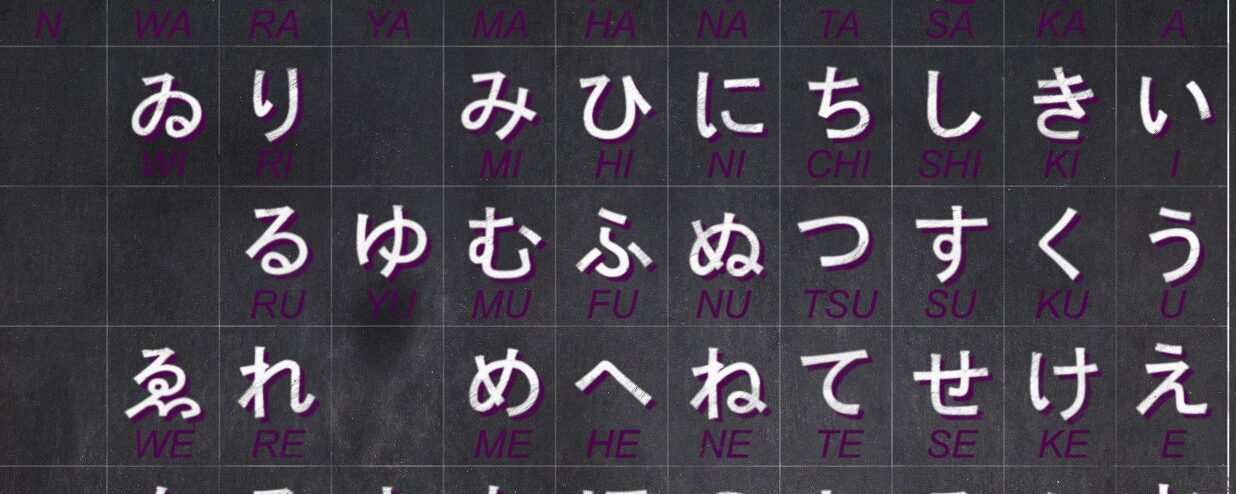


The Japanese particle に (ni) is one of the language’s most essential — and most versatile — building blocks. Used to mark location, destination, time, purpose, and more, に roughly corresponds to “in,” “at,” “to,” or “towards” in English, though its exact meaning always depends on context.
If you’re a beginner trying to get a handle on particle usage, or an intermediate learner looking to sharpen your instincts, this guide covers every major function of に with clear examples and grammar patterns.
Meaning & Uses Particle に (Ni)
に (ni) is a Japanese particle with a wide range of uses that changes based on context. Let’s go through its main uses and meanings:
1. Describing Where Something Exists
The particle に (ni) describes where something exists, for instance, like saying where you live or that your house is in a certain area like a city, state, or country. In this usage, に closely translates to the English preposition “in.” Let’s take a look at some examples to demonstrate how it works.
Example 1:
東京に住んでいます。
Tokyou ni sunde imasu.
I live in Tokyo.
So, here に is used to indicate where you live by attaching to a place, which in this case is 東京 (Tokyo).
Example 2:
公園にたくさん木があります。
Kouen ni ki ga arimasu.
There are many trees in the park.
Here に is used to indicate that lots of trees exist in the park. By attaching に to 公園 (kouen) or park, the sentence indicates that it is where the trees are located.
2. For Indicating Destination
に is also used for indicating a destination that you are going to, arriving at, or heading towards. In this context, it translates closely to the English preposition “to.” In this context, it’s often used with verbs like 行く (iku) or 来る (kuru).
Example:
学校に行きます。
Gakkou ni ikimasu.
I go to school
3. Using Particle に for Indicating Something Being Inside
に can be used to indicate that the subject is located inside of something, both physical or abstract. For instance, you can use ni to describe objects being inside a physical place (house, box, etc.), a category (genre, type, etc.), or even a time period, such as an era or a year.
Example 1:
果物は袋の中にあります。
Kudamono wa fukuro no naka ni arimasu.
The fruit is inside the bag.
Example 2:
寿司は江戸時代に初めて食べられました。
Sushi wa edojidai ni hajimete taberaremashita.
Sushi was first eaten in the Edo period.
4. Using Particle に for Indicating Time
に is used to mark specific points in time, such as days, dates, and hours. For example, for saying “on Monday,” you would say 月曜日に (getsuyoubi ni), or for saying 3 o’clock, you would say 三時に (sanji ni).
Example 1:
6月に旅行するつもりです。
Roku gatsu ni ryokou suru tsumori desu.
I plan on traveling in June.
5. に for Indicating the Recipient of an Action
に marks the person receiving something, as in the receiver of a gift or someone who is being told something. For instance, it marks who is receiving a gift or who is being asked a question.
Example 1:
友達にプレゼントをあげた
tomodachi ni purezento o ageta
I gave my friend a gift.
Example 2:
先生に聞いたほうがいいですね。
Sensei ni kiita houga iidesune.
It is better to ask the teacher.
6. Using Particle に for Indicating Purpose of Movement
に can express the reason or purpose for going somewhere, such as 買い物に行く (kaimono ni iku) or “to go shopping.” In this usage, it closely translates to “going to (do something),” which is why it is often paired with 行く (iku), meaning “to go.”
Example:
友達と彼女に会いに行く。
Tomodachi to kanojo ni to ai ni iku.
I’m going to meet my girlfriend with my friend.
Check out our video on how to use に (ni) for indicating the purpose of movement:
7. Using Particle に for Indicating the Agent in Passive Sentences
In passive constructions, に marks who performed the action. For this usage, に closely translates to “by” in English, identifying the person or thing responsible for what happened to the subject.
Example:
先生に褒められた。
Sensei ni homerareta.
I was praised by the teacher.
8. Using Particle に for Indicating Frequency
に can express how often something occurs within a given time period. For this usage, it closely translates to “per” or “a” in English, such as “three times a day” or “once a week.”
Example:
一日に三回薬を飲んでください。
Ichinichi ni sankai kusuri wo nonde kudasai.
Please take the medicine three times a day.
9. Using Particle に with なる (naru)
When using the verb なる (naru), which means “to become,” you actually need to use the particle に rather than a particle like を (o). You were probably taught that を is used to mark a direct object; however, in this phrase, に is used instead since it’s describing how the object is moving towards a state of being and isn’t directly being affected by the verb.
Example:
弟は怒っている時は静かになります。
Otouto wa okotte iru toki wa shizuka ni narimasu.
My younger brother becomes quiet when he’s angry.
Structure of Particle に (ni)
に attaches to nouns, な-adjectives, or verb stems to indicate certain information.
| Type | Structure |
| Noun | Noun + に |
| な- Adjective | な-adjective + に |
| Verb stem | Verb stem + に |
Noun + に (ni)
When attached to nouns, に can indicate that the noun is a place the subject lives, is going to, or is inside of. It doesn’t have to be just places, since に can attach to time expressions to indicate the year, month, day, hour, or frequency at which the subject did something.
Additionally, it’s also used to indicate who is receiving something like a reward or salary, as well as who is at the receiving end of an action in a passive expression, like who is being praised or scolded.
Adjective + に (Ni)
When attached to な-adjective, に transforms the adjective into an adverb, describing how an action is performed or how something is made or becomes a certain way. This is similar to adding “-ly” to an adjective in English, such as turning “clean” into “cleanly.” It is most commonly paired with either する (suru, to do/make) to express making something into a certain state, or なる (naru, to become) to express something naturally changing into a state.
Example 1:
部屋を綺麗にする。
Heya wo kirei ni suru.
To make the room clean.
Example 2:
日本語が上手になった。
Nihongo ga jouzu ni natta.
My Japanese has gotten better.
You probably noticed that に cannot attach to い-adjectives. That’s because the い conjugates to く, which plays the same role as に in certain contexts. For example, you wouldn’t say あたたかいになった (atatakai ni natta), meaning “became warm” since the あたたかい is an い-adjective. Instead you would say あたたかくなった (atatakaku natta).
Example:
スープは電磁レンジであたたかくなった。
Suupu wa denji renji de atataku natta.
The soup became warm in the microwave.
Verb + に (Ni)
When attached to a verb stem, に expresses the purpose or reason for movement, indicating that the subject is going somewhere to do something. In this structure, the verb is reduced to its stem form before に, and is almost always followed by a movement verb such as 行く (iku, to go), 来る (kuru, to come), or 帰る (kaeru, to return).
Example:
友達と彼女に会いに行く。
Tomodachi to kanojo ni ai ni iku.
I am going to meet my girlfriend with my friend.
Particle に (Ni) vs Particle で (De)
The difference between に and で is often a source of confusion for Japanese learners. They can indicate places where something happens, but they both express very different things.
に (ni) Expresses Destination or Existence
に expresses the destination you are heading to or existence, such as where you live or that Tokyo is in Japan. While で can also express existence somewhere, に expresses a more permanent existence, like long-term residence. So, で is more saying you are “at” a place, whereas に is expressing that you are “living in” a place.
Example 1:
夏休みにタイに行く。
Natsuyasumi ni tai ni iku.
I am going to Thailand during the summer break.
Example 2:
渋谷に住んでいる。
Shibuya ni sunde iru.
I live in Shibuya
で Expresses where an Action Happens
Unlike に、で designates where an action takes place rather than a place you are going to. You often use it to indicate the specific location where you did/will do something. However, keep in mind that で doesn’t generally describe your long-term residence somewhere.
渋谷で仕事をする。
Shibuya de shigoto o suru.
I work in Shibuya.
Particle に (Ni) vs Particle を (O)
に is often used with verbs, similar to the particle を; however, they are used for very different purposes. に doesn’t indicate a “direct object” that will be affected by the verb. Let’s break down what this means:
に (ni) Expresses Destination, Existence, or Purpose
に expresses the destination you are heading to, where something exists, or the purpose of movement. The noun or place marked by に is not being directly acted upon or changed by the verb — it simply provides context for where something is, where someone is going, or why someone is moving.
Example 1:
駅に行く。
Eki ni iku.
I am going to the station.
Example 2:
友達に会いに行く。
Tomodachi ni ai ni iku.
I am going to meet my friend.
を (o) Expresses the Direct Object of an Action
Unlike に、を marks the direct object of a verb — the thing that is being directly acted upon or affected by the action. Whatever is marked by を is receiving the full effect of the verb, whether it is being eaten, read, studied, or cleaned.
Example 1:
本を読む。
Hon o yomu.
I read a book.
Example 2:
部屋を掃除する。
Heya o souji suru.
I clean the room.
Using Particle に with にとって and によると
に forms the base of several important expressions that you’ll encounter frequently at the intermediate level. Two of the most useful are にとって and によると, both of which extend に beyond its basic uses into more nuanced territory.
にとって: “for” or “in terms of”
にとって is used to express how something is perceived or felt from a particular person’s perspective. It translates closely to “for,” “to,” or “from the standpoint of” in English, and is used to describe something that is true or significant for a specific person or group.
Structure: Noun + にとって
Example 1:
私にとって、日本語の勉強は楽しいです。
Watashi ni totte, nihongo no benkyou wa tanoshii desu.
Studying Japanese is enjoyable for me.
Example 2:
その決断は彼にとって簡単ではなかった。
Sono ketsudan wa kare ni totte kantan dewa nakatta.
That decision was not easy for him.
にとって is particularly useful when you want to express that something holds true from someone’s point of view, as opposed to being an objective fact. It personalizes a statement and is commonly used in opinions, advice, and reflective writing.
によると: “According to”
によると is used to cite a source of information. It translates directly to “according to” in English, and signals that what follows is based on something you heard, read, or were told, rather than your own direct knowledge.
Structure: Noun + によると / によれば
Example 1:
天気予報によると、明日は雨が降るそうです。
Tenki yohou ni yoru to, ashita wa ame ga furu sou desu.
According to the weather forecast, it will rain tomorrow.
Example 2:
先生によると、このテストはとても難しいらしい。
Sensei ni yoru to, kono tesuto wa totemo muzukashii rashii.
According to the teacher, this test is apparently very difficult.
You’ll notice that によると is often paired with そうです or らしい at the end of the sentence; these endings signal reported or hearsay information, which fits naturally with citing a source.
Using Particle に with Contact and Attachment Verbs
に is also used with verbs that describe physical contact, attachment, or placement, such as sitting on something, getting on a vehicle, or writing on a surface. In this usage, に marks the surface, object, or thing being directly contacted or attached to.
This is different from に marking a destination. While 学校に行く (gakkou ni iku) means you are going to school, 椅子に座る (isu ni suwaru) means you are making contact with the chair. The noun marked by に is not where you’re headed — it’s what your action lands on.
Structure: Noun + に + contact/attachment verb
Conclusion: The Particle に (Ni) Is a Versatile Tool Essential for Everyday Japanese
The particle に is one of the building blocks of the Japanese language, so it’s best to start incorporating this essential grammar point in your Japanese conversations. Therefore, we highly recommend practicing conversations with a teacher who can offer practical guidance at Coto Academy.
Study Japanese at Coto Academy!
Coto Academy has been teaching Japanese for over 25 years, with campuses in Shibuya, Yokohama, Iidabashi, Minato, and online. Our courses focus on practical Japanese, so the grammar you learn is designed for real-life use.
We offer part-time, intensive, and fully online lessons to suit your schedule. Start learning Japanese effectively and confidently with Coto Academy today!
Why join Coto Academy?
- Over 60+ different Japanese classes over 18 levels
- Small classroom of only up to 8 students for personalized support
- Professional, native Japanese teachers
- Ready to get started? Fill out the form below to contact us!
FAQ: Particle に
What is the particle に (ni) in Japanese?
に is one of the most common and versatile particles in Japanese. It is used to indicate location, destination, time, purpose, recipients, and more. Because it has so many uses, it is one of the most important particles for learners to get comfortable with early on.
What is the difference between に and で?
Both に and で can indicate location, but they are used differently. に expresses where something exists or where you are going, while で expresses where an action takes place. For example, 図書館に行く (toshokan ni iku) means “I am going to the library,” while 図書館で勉強する (toshokan de benkyou suru) means “I study at the library.”
What is the difference between に and を?
に marks the destination, existence, or purpose of an action, while を marks the direct object, the thing being directly acted upon by the verb. A simple way to check is to ask whether the noun is being directly acted upon. If it is, use を. If it is a destination, location, or recipient, use に.
Can に be used with both verbs and adjectives?
に can attach to nouns, な-adjectives, and verb stems. When attached to a な-adjective, it works similarly to adding “-ly” in English, and is commonly paired with する (suru) or なる (naru) to express making or becoming something.