Like anime, manga is a big part of Japanese culture, loved by both those in and outside Japan. And thanks to its growing popularity over the past decades, we’ve reached the point where newly published manga titles are immediately translated to English, allowing non-Japanese readers to enjoy both classic and lesser-known series.

Manga (pronounced man-ga), or 漫画 (まんが) essentially means comic or cartoon, but we refer to Japanese comics and graphic novels specifically. You may have heard of manhwa or manhua, which refer to Korean and Chinese comics respectively.  Much like anime, manga isn’t a genre, but rather a medium.

Ranging from lighthearted fun comedies to thought-provoking stories, manga caters to all groups of ages, gender and genres. Of course, everyone has different tastes, and manga’s wide variety means that everyone can find one read.

That being said, it’s hard to know where to start. While you could just pick up a random series and start from there, it can be hard to find a series that’s genuinely good. For every good manga, there are at least three bad ones, and it’s a problem that’s plagued the industry for a while. A lot of authors just copy whatever’s popular and try to put their own spin on it, leading to mediocre or bad results. This happened with the isekai (異世界 or いせかい) genre, a genre in which the protagonist would be transported to another world, where it was so overrun with the same ideas and characters to the point that the genre currently is pretty infamous.

So, we’ve taken it upon ourselves to recommend some good manga. Each entry on this list are great entry in their respective genres, so hopefully, you’ll come out of this with a better understanding of what you like. All of the manga listed here are translated to English from an official source, so you’ll be able to directly support the authors.

Jump to:

Image taken from Kodansha US site

Attack on Titan

An award-winning Japanese manga series with popular anime and film adaptations, Attack on Titan, also known as Shingeki no Kyoji (進撃の巨人), imagines a world where humanity is surrounded by man-eating Titans. First appeared 100 years ago, they had to hide behind massive walls.

The story centers around Eren, who saw one of the creatures ate his mother when the wall broke down. Vowing to kill every single Titan, he enlisted into Survey Corps.

We included its anime series in our 26 Anime on Netflix to Watch in 2022 article, but we also recommend reading the manga, as the ending for the anime differs from that of the manga. Read here.

Written by: Hajime Isayama
Date released: 2009 – 2021

Read more: 26 Anime on Netflix to Watch in 2022

Bakuman

From the author of Death Note, Bakuman (stylized バクマン。or BAKUMAN。) is a less grim story about two wannabe mangaka. Moritaka, the artist, and Takagi, the writer. Together, they team up and try to make it in the manga world. Part of the appeal of this manga is learning about the process of creating manga. 

This English-translated manga goes very in-depth with the detail of creating concepts and putting them into print. It also gives a lot of insight into the background work that goes on at major manga publications like Shounen Jump. The characters and developments are no slouch either, and make this a manga very worth your while, especially if you’re very into the medium. That being said, this manga has been described by many as being very text-heavy, so keep that in mind if you’re planning on getting it. Read here.

Written by: Tsugumi Ohba (writer) and Takeshi Obata (illustrator)
Date released: 1999 – 2006

Berserk

If you were to poll people on what they would say the best manga of all time is, the most common answer would always be “Berserk”. It follows Guts, the Black Swordsman, a mercenary, who gets picked up by Griffith, the leader of a mercenary group known as the Band of the Hawk. A dark fantasy series with inspiration from medieval Europe, Berserk is famous for its excellent story and characters. The art too is fantastic, incredibly detailed and beautiful. The manga contains some very dark elements like sexual assault and is a lot more graphic than most others. It’s still very much so worth your time and has influenced many, many works that have come after it.

Unfortunately, the author, Kentaro Miura, passed away last year in May of 2021. The manga will continue for a while, done by Miura’s friend, Kouji Mori, only with the parts Miura talked to him about. While it is terrible that Miura passed, it’s at least nice to know that the ending he envisioned will still be written. Read here.

Written by: Kentaro Miura
Date released: 2008 – 2012

Read more: 100 Japanese Anime Vocabulary Words You Can (Or Can’t) Use

20th Century Boys

20th Century Boys follows Kenji, who upon hearing about the death of one of his childhood friends, comes across a connection to both a large cult led by a man named “Friend” and a book made by him and his friends while they were kids. Together, Kenji and his childhood friends figure out how they are connected to the cult, and try to save the world. 20th Century Boys is a work by Urasawa Naoki, one of the best mangaka (manga authors) of all time. His works are gripping and enthralling. Read here.

Written by: Naoki Urasawa
Date released: 1999 – 2006
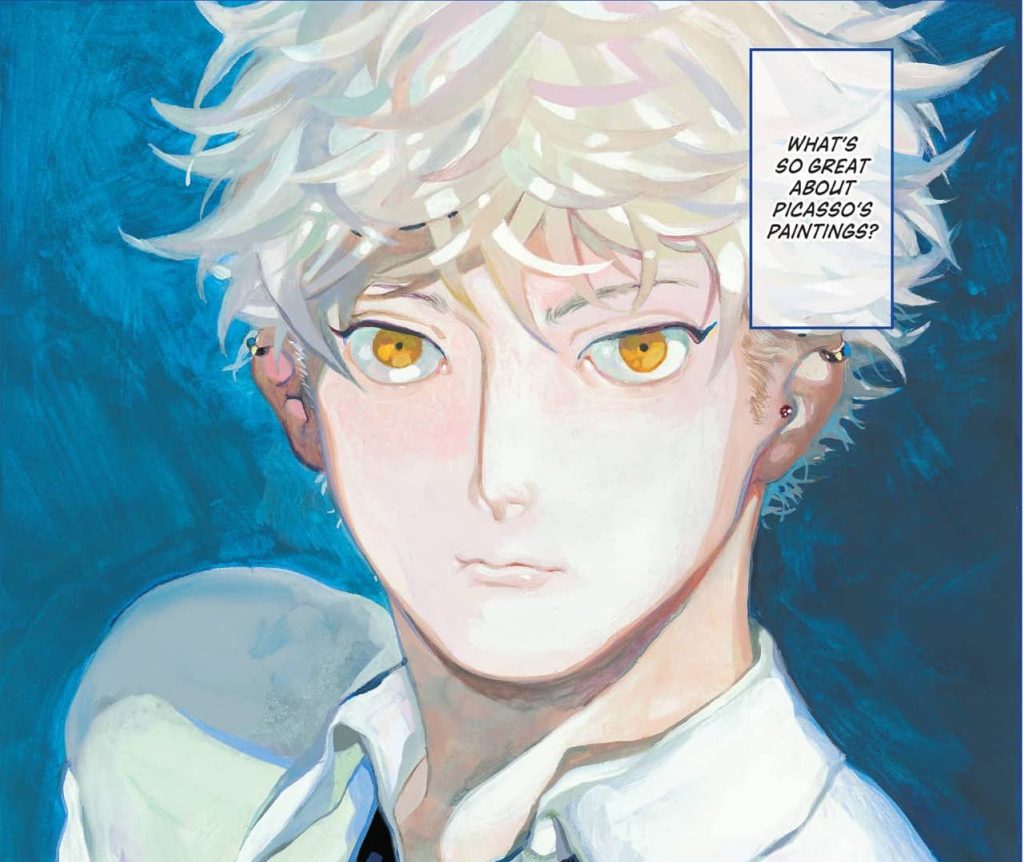
blue period manga
Blue Period © Tsubasa Yamaguchi/Kodansha Ltd.

Blue Period

Another we’ve covered in our Netflix list, Blue Period follows Yatora Yaguchi, a popular yet unsatisfied young boy who develops a passion for the arts. Follow him as he tries to pursue art and attend a prestigious art university. While the anime is good in its own right, there are some grievances that manga readers have had with the anime that might convince you to read the manga instead. The largest one is the pacing. 

Blue period’s anime, like every other anime, was restricted to 20-minute episodes, which resulted in cut content and having to shorten scenes. Most notably, they cut a lot out of the explanations of the art-making process, some of the best parts of the manga. The anime is still great though and is able to use colors and animation in a way manga never could, but on the character end, is a bit lacking. The manga is fantastic in its own right, and definitely worth checking out, especially if you enjoyed the anime. Read here.

Written by: Tsubasa Yamaguchi
Date released: 2017 – Present

Chainsaw Man

Chainsaw man is about a man who can transform into a Chainsaw devil. Denji, a homeless, broke young man gets merged with his pet, Pochita and can turn into a chainsaw devil. He is then picked up by the government and becomes a part of the Public Safety Devil Hunters, where he must hunt devils and work alongside his eccentric coworkers. 

Chainsaw Man has been praised for its uniqueness, there isn’t much like it. It’s a gory action series, a crass comedy, and a genuinely emotional read with some of its character moments. The characters are what really make it shine through, each one of them memorable and unique in their own right. It’s been awarded the best Shounen manga at multiple award shows in 2021 and has an anime adaptation coming up from Studio MAPPA. Read here.

Written by: Tatsuki Fujimoto
Date released: 2018 – Present

Haikyuu!!

Another one in our English-translated manga recommendations, Haikyuu!! (ハイキュー!!) is a sports-manga classic. Hinata Shoyuu, a junior high school student, fell in love with volleyball after watching a tournament on TV. Inspired by the short-wing spiker known as “Little Giant”, Hinata joined the same high school — only to discover that the school lost its athletic reputation. There, he reunited with his former opponent, Kageyama. The two formed a formidable setter-spiker duo.

Written by: Haruichi Furudate
Date released: 2012 – 2020

Delicious in Dungeon cover
Image taken from Yen Press site

Delicious in Dungeon

Delicious in Dungeon is a fun Fantasy Comedy about eating monsters. The manga follows a group of adventurers exploring a dungeon, who must rely on eating the monsters they encounter for sustenance. They’re not just roasting whatever meat they find either. The team leader, Laios, has a passion for cooking, and is very excited to try new dishes, monster included. 

The best part about the manga is that the dishes they create look delicious. They look like actual meals that would be prepared in a kitchen and even include recipes and instructions on how to make them. The party is great too, they bounce off of each other really well and have great chemistry. That combined with the contrast of modern food made in a fantasy setting makes it a very funny read. If you want to learn how to cook and eat monsters, you should definitely read this series. Read here.

Written by: Ryoko Kui
Date released: 2014 – Present

Read more: Top 10 Japanese phrases from Anime you should NOT use

Fullmetal Alchemist

After a ritual went wrong, brothers Edward and Alphonse Elric are horribly scarred. Edward lost an arm and leg, while Alphonse lost his body, only kept around because his soul is bonded with a suit of armor. To try and fix his mistake, Edward and his brother try to find the only thing that could help them – The Philosopher’s stone. 

This series is one of the best-selling manga of all time and has been regarded as one of the best Shounen manga of all time. Its writing and characters have been praised for being top-notch, especially for its female characters. Well-written women are (unfortunately) pretty rare in manga and anime, but Fullmetal Alchemist delivers, due in no small part to the mangaka being a woman. 

There’re also multiple anime adaptations of the manga if that’s more your thing, but hardcore fans recommend reading the manga – even if you’ve seen the anime. Read here.

Written by: Hiromu Arakawa
Date released: 2001 – 2010

Image taken from Yen Press site

Horimiya

A great Rom-Com, Horimiya follows Kyoko Hori and Izumi Miyamura, two opposites who have sides to them that they don’t want others to see. After discovering those sides of one another, the two become friends, and slowly fall in love. While there is an anime adaptation for it, much like a lot of anime adaptations, it leaves stuff out. Of course, the left-out parts aren’t vital, but they are fun chapters to read. The manga in general is a fun read, the romance is compelling and the chemistry between all of the characters is fantastic. While it’s a good romance, it’s also a great school comedy, and the characters are just fun to watch, especially in the shorter manga format. Read here.

Written by: Hero
Date released: 2007 – 2021

Hunter X Hunter

Hunter X Hunter follows a boy named Gon, who aims to become a hunter in order to find his father. Hunters are professionals who hunt down treasure, animals and outlaws. Along the way, he meets other hunters and befriends some of them. The series has been praised for its fantastic fights, with the Nen system being a great way for the author to get creative and show cool fights. The detail of the series is also great. The in-depth way they explain Nen, for example, helps you to understand what is going on in the series. The battles are very creative and fun to watch and the variety of the manga helps keep it fresh.

It also received an anime adaptation in 2011 that many fans of the series really like, so we recommend checking it out too. That being said, the manga has undergone multiple hiatuses due to the author’s health issues, though they have since recovered enough to announce that they would be putting out new chapters soon.

Written by: Yoshihiro Togashi
Date released: 1998 – Present

Jojo’s Bizarre Adventure

If you’ve been on the internet long enough, you’ve heard of Jojo’s Bizarre Adventure. The series has been ingrained into so many people’s consciousness and for good reason. The series is genuinely unforgettable. It’s so inventive and weird that it stands out among so many other series. The series is split into parts, each part following a different Jojo, usually a descendant or relative of the previous one. The most recent parts, 7 and 8, move away from this formula and are more self-contained stories with references to other parts.

Part of what makes it so unique is the Stands, manifestations of a person’s fighting spirit. The Stands in each part each have certain conditions or situations in which they are applicable. As a battle manga, this means that in each fight the protagonist has to figure out how to defeat their opponent as if they were a puzzle. Even the weakest foes have the potential to be deadly in the right situations, and it makes for a very exciting dynamic in every fight. The character designs are also fantastic and highly memorable, and the art style is incredibly unique and recognizable. There’s also an excellent anime adaptation of every part up to part 6, and we highly recommend those as they live up to the manga very well.

Written by: Hirohiko Araki
Date released: 1987 – Present

Kaguya-sama: Love Is War

Love is War follows the president and vice president of Shuchiin Academy, Miyuki Shirogane and Kaguya Shinomiya. Two genius students who everyone thinks make the perfect couple. The two of them are also in love with each other, yet neither of them wants to be the one who comes out and says it, as they think it would make them look weak. So, they engage in daily conflict, hoping to make the other confess their love. 

What makes Kaguya so unique when compared to other Rom–Coms is its humor. Its style of humor is a lot more absurd when compared to others in the genre, and the seriousness with which the two main characters tackle a very un-serious issue adds to the charm and hilarity of the series. It’s also very meta, making referential jokes to other games and media that the author, Aka Akasaka enjoys. If you’ve watched the anime, we recommend reading the manga too, as the comedy and comedic timing is more suited to the medium. Read here.

Written by: Aka Akasaka
Date released: 2015 – Present

One Piece

If you want to get into One Piece, the best time would be to start now. The series has gone on for years and is only going to get longer. How long? The series is currently at its 1053 chapter, with a new chapter being released every week. While this may seem daunting, don’t let that stop you. One Piece is one of the best Shounen series right now and has kept a high level of quality throughout all of its 1000 chapters. It follows Monkey D. Luffy and the Straw Hat Pirates on a quest to find the treasure “One Piece”. The best part of One Piece by far is the worldbuilding. The amount of effort and love put into every single side character and location is astonishing, and it makes even the smaller side characters have compelling backstories behind them. The amount of foreshadowing it has too really adds to the amount of detail in the series, within the 1000 chapters there are plot points set up hundreds of chapters before. You can really tell just how much care the author, Eiichiro Oda, has put into it.

Written by: Eiichiro Oda
Date released: 1997 – Present

Read more: Top 10 Easy Anime to Learn Japanese for Beginners

One Punch Man

One Punch Man is about Saitama, someone who is able to beat anything in one punch, hence the name. Based on the webcomic by the author, One, the One Punch Man manga illustrated by Yuusuke Murata is absolutely beautiful. If you’ve seen the anime, you probably know that the first season’s animation and the art style are fantastic, and Murata is able to match and even surpass how good-looking it is. The art is fantastic and incredibly detailed, some of the spread pages looking like actual paintings. The manga slightly differs from the webcomic, but is still fantastic, maintaining the webcomic’s excellent humor while adding on beautiful fights. Read here.

Written by: Ona
Date released: 2012 – Present

Spy x Family

On a less serious note, Spy x Family is a lighthearted wholesome story about a temporary family. The spy Twilight must go undercover as Loid Forger and marries an (unbeknownst to him) assassin, Yor. Together, they both adopt a daughter, Anya. Anya is a telepath, and thus knows about both her dad and mom’s secrets, but, as a child, doesn’t think much of it. What makes the manga so good is the family dynamic. Loid trying to teach and raise Anya while Yor acts as the mom make for a very fun read. The manga has been adapted to an anime, which has proven to be a great adaptation, but we still recommend the manga if you want to read ahead or prefer the pacing of manga.

Written by: Tatsuya Endo
Date released: 2019 – Present

The Way of the Househusband

The Way of the Househusband is about “The Immortal Dragon” Tatsu, an ex-yakuza who retired from a life of crime and now lives with his wife as a househusband. The series follows him going about his day-to-day, doing his chores with his yakuza demeanor, doing the most mundane of tasks in a serious manner. Along the way, he meets his old yakuza friends and makes friends with the neighborhood association. While not the most groundbreaking series, The Way of the Househusband is a fun slice of life that you’re sure to find some enjoyment with. While not the most serious, its humor and episodic nature make this an excellent series to both binge and keep up with. Read here.

Written by: Kousuke Ono
Date released: 2018 – Present

Vinland Saga

A historical manga based on Vikings, Vinland Saga follows Thorfinn, a young man raised by the Vikings that killed his family. He aims to avenge his father by killing the Viking band’s leader, only kept going by his pride in his family and his dream of Vinland, a land without war and slavery. Vinland Saga is a historical epic, filled with strong characters, fantastic art and a gripping story that makes you want to keep reading. The anime adaptation was lauded as one of the best anime of its year, and fantastic in its own right, but the manga exceeds that reputation, promising you a thrilling drama. Read here.

Written by: Makoto Yukimura
Date released: 2005 – Present

Witch Hat Atelier

Witch Hat Atelier is about Coco, a girl who wants to be a witch, despite not being born one. After meeting Qifrey, a traveling magician, she discovers that you do not need to be born a witch to do magic, and her dream of being a witch could be fulfilled. Reminiscent of Studio Ghibli, Witch Hat Atelier is a beautiful love letter to fantasy that no one should miss out on. The artwork is simply stunning. The detail in the background, the way magic is drawn and the paneling makes reading it such a joy. The characters are great too. Coco’s love for magic is infectious, and Qifrey is just enthralling as a character. It makes you want to read more to find out what happens, and combined with the fantastic art makes this manga a fantastic recommendation for all ages. 

Written by: Kamome Shirahama
Date released: 2016 – Present

Yotsuba&!

Yotsuba&! centers on Yotsuba Koiwai, a five-year-old described as strange by even her adoptive father. She’s cheery and energetic, and the manga follows her on her day-to-day, as she grows and learns more about the world around her. This cute and wholesome manga is sure to awaken your inner child and is just a fun read overall. Like the author’s previous work, Azumanga Daioh, Yotsuba&! has a great comedic and lighthearted tone. As a slice of life, it’s very peaceful and fun. Yotsuba just has a childlike innocence that makes everything seem fun to her, and that fun extends to the reader. Overall it’s a great manga, a perfect heartwarming series.

Written by: Kamome Shirahama
Date released: 2016 – Present

Read more: 20 Phrases From Japanese Anime You Can Actually Use!
Learn to Read and Speak Japanese with us at Coto Academy! Fill out the form below to learn more!

For many of us, our love for Japan began with manga, whether it was action-packed cult classics like One Piece or something more niche in the shoujo (genre for young women) comics. So why not turn that passion into a way to learn Japanese? We get it—you might be thinking: Is that even possible? Don’t I need to know a ton of kanji to be able to read manga?

Similar to using anime to learn Japanese, reading untranslated Japanese manga can be a great tool to aid your study. Like anime, it is packed with conversational Japanese while also providing visual aid. The visual artwork helps you understand the context without needing to know every word being said. But the best part about manga is you don’t have to worry about pausing when you miss something. 

Whether you’re a fan of manga or looking for a place to start, we will provide recommendations of stories that you can sink into while learning Japanese. We will separate the categories from beginner, intermediate, to advanced. Two birds with one stone, right?

Getting Started with Japanese Manga 

Different from Western comic books, manga (漫画) refers to Japanese comic books or graphic novels. It’s a hugely popular form of entertainment in Japan and around the world, covering a wide range of genres, from action, romance, and fantasy to slice-of-life, horror, and even business or cooking.

Can I Learn Japanese with Manga?

Absolutely! Manga can be a fun and surprisingly effective way to learn Japanese, especially if you’re already a fan.

One of the biggest advantages is that many manga include furigana: small hiragana characters written alongside kanji. This helps readers understand the pronunciation without constantly reaching for a dictionary, making it ideal for learners still building their kanji skills.

Since most manga are driven by dialogue, the sentences are usually short and conversational. That means you’ll get exposed to natural Japanese in bite-sized, manageable chunks, unlike dense textbook passages. And unlike anime, there’s no need to pause and rewind. You can take your time, reread tricky lines, and even jot down new vocabulary as you go.

Of course, manga is best used as a complement to your studies. It won’t replace structured learning, but it’s a great way to reinforce grammar, grow your vocabulary, and make studying feel more enjoyable.

Here are a few ways you can learn and read manga:

1. Start off with easier manga, such as slice of life manga

This part is very important and is skipped more often than not. If you are starting from scratch, perhaps Naruto might not be the best starting point. It’s very easy to get excited and try to read your favorite titles, but not understanding any of the language will defeat the purpose of reading in Japanese and having fun doing it. But don’t worry! There are plenty of captivating manga you can read that contain more entry-level Japanese. 

2. Find manga with furigana

Most manga written for younger audiences will feature furigana or hiragana written above kanji and sometimes katakana. Since children still can’t read many kanji, manga written for them will have hiragana to help them read through the whole manga. 

3. Use the artwork to understand context

Rather than looking up every word you don’t understand, try seeing if you can understand the text based on the visual artwork. 

4. Keep your phone handy to translate

If the visuals aren’t enough to understand specific terms, keep your phone or translator handy while reading. There might be one word or so that you need to know to understand the whole context, so don’t be afraid to translate when needed. 

The best manga are ones that are interesting and keep you coming back and reading consistently. So at the end of the day, choose based on your preferences. This is also why we tried to vary the genres on this list. 

Where to Buy Japanese Manga

Of course, we’re talking about manga in its untranslated form. If you’re living overseas, the most popular manga are likely already translated into your native language—or at least English!

Don’t worry—the great news is that whether you’re in Japan or abroad, there are plenty of convenient ways to get your hands on manga. In general, if you live overseas, you can probably get manga through online stores like Amazon. 

Where to buy manga online 

  • Amazon Japan: Ships internationally for many titles. Some manga also provide a digital version, which you can download on Kindle!
  • CDJapan: Specializes in Japanese media, including manga.
  • BookWalker: Official digital manga store, great for ebooks.
  • Kinokuniya: International bookstore chain with an online shop.

Where to buy manga in Japan

If you’re in Japan, it’s the opposite: most manga are naturally in Japanese, giving you the perfect chance to practice the language. Local bookshops and major department stores usually have manga sections.

  • Book Off:  Popular secondhand bookstore chain.
  • Tsutaya: Large bookstore with a good manga selection.
  • Kinokuniya:  Found in major cities and airports.

Best Manga To Learn Japanese For Beginners

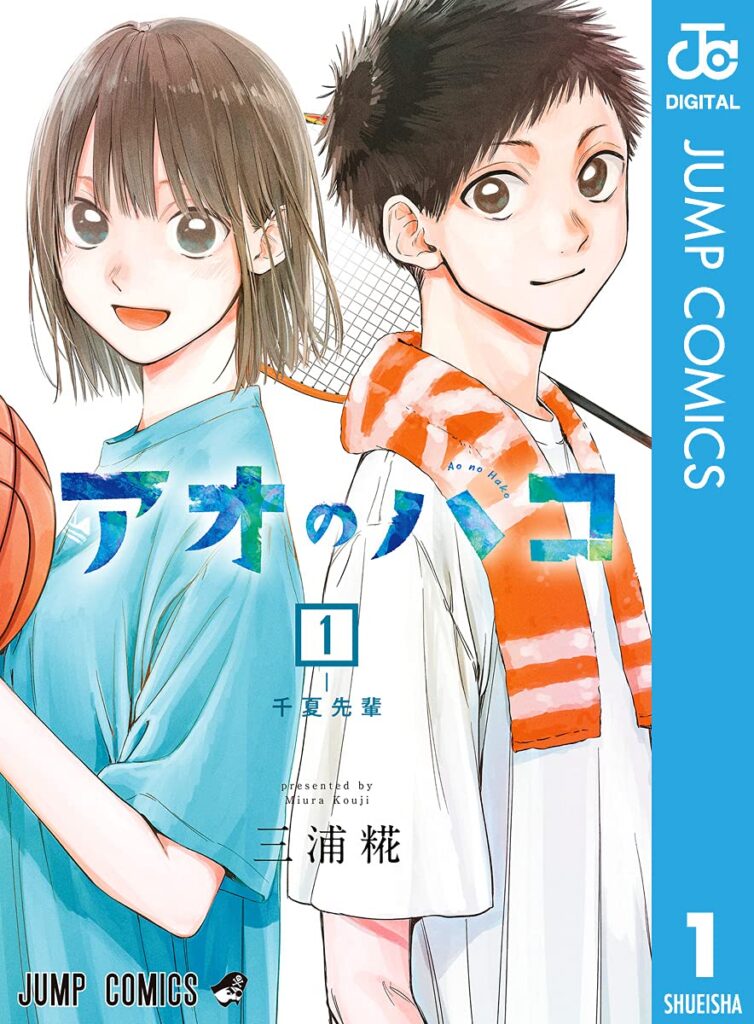
1.  Blue Box (アオのハコ)

blue box manga
  • Genre: Sports, Romance
  • JLPT Level: N5 – N4
  • Length: 20 volumes

Blue Box is a beloved romantic-comedy sports manga by Koji Miura, serialized in Weekly Shonen Jump since April 2021. Blue Box follows Taiki, a high school badminton player, who develops feelings for Chinatsu, a basketball star.

This manga is a blend of innocent romance and gripping sports genres, making a captivating read you can’t put down. The sports aspect of the manga is extremely inspiring and emotionally satisfying as you see the characters progress their skills and, of course, their relationships with each other. 

The Japanese texts are easy to understand and do not dive too deep into sports-related terms. So, it makes for a fun, action-packed story that you can fly through while picking up practical Japanese.

Buy Blue Box on Amazon.

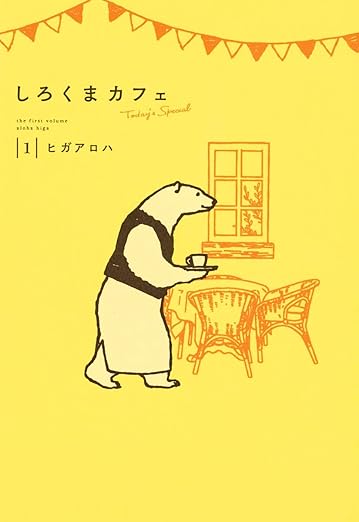
2. Shirokuma Cafe (しろくまカフェ)

2. Shirokuma Cafe (しろくまカフェ)
  • Genre: Slice of Life, Comedy
  • JLPT Level: N4 & above
  • Length: 5

This light-hearted manga follows a lazy panda who befriends a polar bear running a cafe. Filled with puns and a delightful atmosphere of anthropomorphic animals, this quirky manga is an amazing introduction to how to use Japanese with more humor and figurative speech.

However, the puns do make references that some of us might not understand. So, keep your phone handy to look up certain words or puns that might fly over your head!

Buy Shirokuma Cafe Volume 1 on Amazon

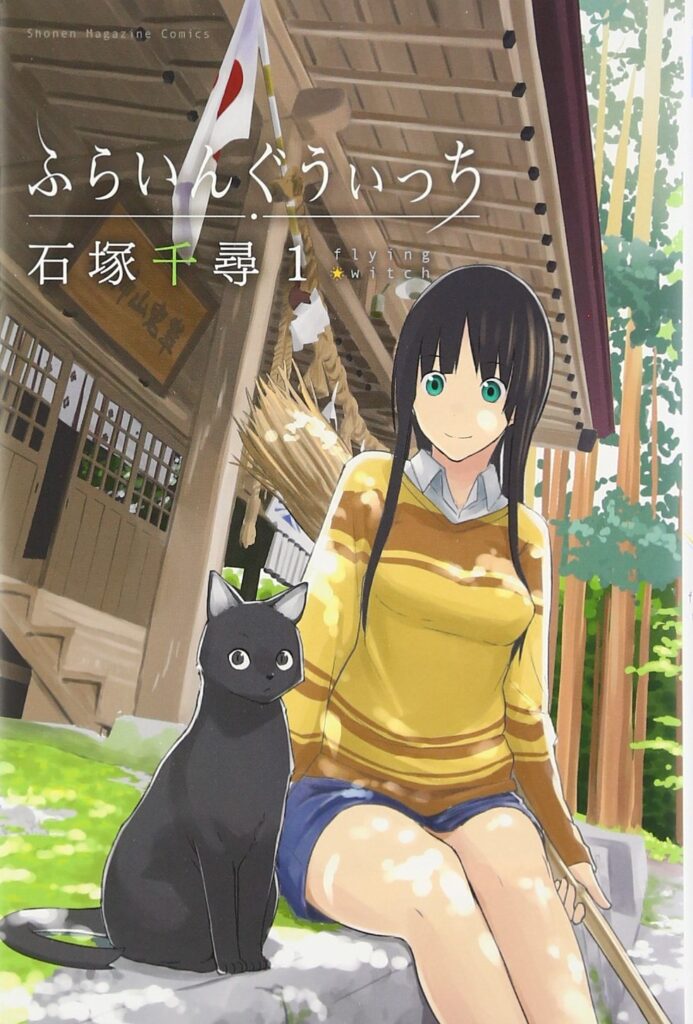
3. Flying Witch (ふらいんぐうぃっち)

3. Flying Witch (ふらいんぐうぃっち)
  • Genre: Comedy, Supernatural, Slice of Life
  • JLPT Level: N4 – N3
  • Length: 14 volumes

This is a light-hearted, comedic, fantasy manga that follows the daily life of a witch who has just moved to rural Aomori Prefecture. This manga is essentially if Studio Ghibli’s Kiki’s Delivery Service meets more comedy. The Japanese language is pretty easy to read while still being quite fun, and will definitely make you giggle. 

There’s just one character who might be tricky to understand because of his strong dialect, but don’t worry, even the main character struggles with him! Luckily, another character usually “translates” his lines into standard Japanese, so we can follow along easily.

Buy Flying Witch Volume 1 on Amazon

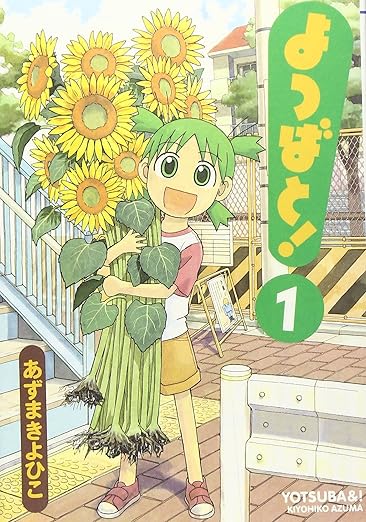
4. Yotsuba&! (よつばと!)

4. Yotsuba&! (よつばと!)
  • Genre: Slice of life
  • JLPT Level: N5 – N4

We couldn’t possibly exclude Yotsuba&! on this list. It’s one of the most popular manga for Japanese learners. The manga follows a 5-year-old girl whose curiosity takes her on different adventures and has her asking about everything. Through the lens of this child, we are able to pick up new vocabulary along with her. 

There are a few things to keep in mind: the manga does sometimes have colloquial or even purposely incorrect grammar and words meant to be played for humor. A complete beginner might miss this or mistakenly believe everything written is correct. 

Another thing to consider is that since the story follows a young child in her daily life, it won’t have any crazy action, drama or deep plots. It’s a very simple, light-hearted story. This may or may not be your cup of tea.

Buy Yotsuba&! Volume 1 on Amazon

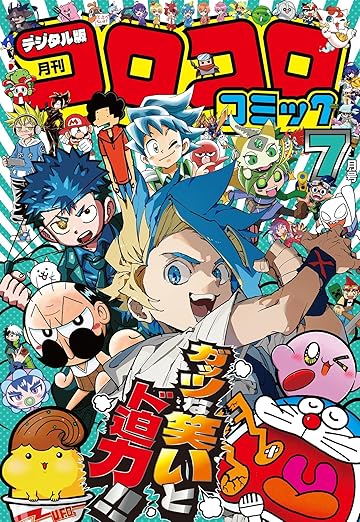
5. Coro Coro Comics (コロコロコミく)

5. Coro Coro Comics (コロコロコミく)
  • JLPT Level: N4 – N3
  • Length: Around 750 pages each, the magazine is ongoing

This is not really a manga series but rather a manga magazine releasing new issues monthly. It features stories from popular franchises such as Doraemon, Pokemon, and Detective Conan. This magazine is intended for children mostly below junior high, so the Japanese is at a much easier level. You can find a variety of fun stories from titles you recognize, and they can be great Japanese reading practice.

Buy Coro Coro Comics July 2025 Edition on Amazon

Best Manga To Learn Japanese For Intermediate

If you have a couple of years of Japanese learning experience and can read at around an N3 level, then you are probably ready for something a bit more challenging. The manga in this list still mostly have furigana but have more complex language and vocabulary.

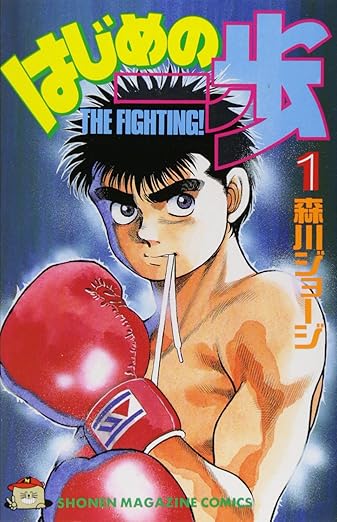
6. Hajime no Ippo (はじめの一歩)

6. Hajime no Ippo (はじめの一歩)
  • Genre: Sports
  • JLPT Level: N3 & above
  • Length: 143 volumes

Hajime no Ippo is about a small high school boy who was often bullied — until he discovered boxing. Even if you’re not a sports fan, this manga (and anime) is incredibly inspiring, with a passion that’s truly contagious. Like Slam Dunk or Haikyu!!, Hajime no Ippo will make you see a sport you knew little about in a whole new light.

The manga is packed with sports and boxing terms, which can be helpful if you want to do combat sports in Japan. Overall, Japanese is not too complicated, and most of the kanji have furigana. It is still ongoing, and there is tons of material for Japanese practice.

Get Hajime no Ippo Volume 1

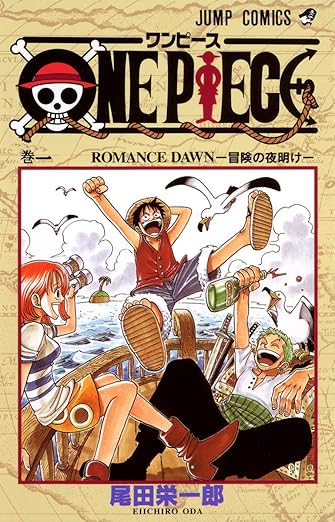
7.  One Piece (ワンピース)

7.  One Piece (ワンピース)
  • Genre: Adventure, Comedy, Action
  • JLPT Level: N3 & above
  • Length: 112 volumes

One Piece is a manga about the free-spirited Monkey D. Luffy with powers making him as elastic as rubber or ガムガム (gamu gamu). The series almost needs no introduction since anyone can recognize its unique and quirky art that immediately hooks you in. The series’ simple but character-driven plot allows for a story that connects you to everyone you meet and will keep you reading.

The One Piece anime is one of the longest-running anime ever, but the manga is shorter and reads much faster. You will keep getting new material to immerse yourself in, with the added benefit of practicing your Japanese. 

Get One Piece Volume 1

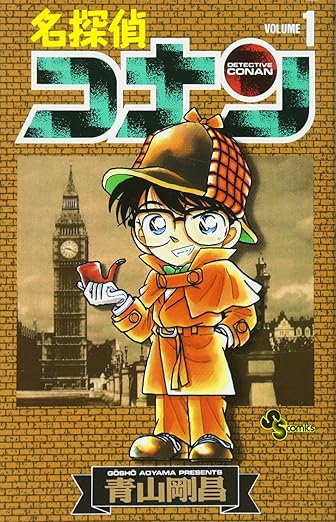
8. Detective Conan (名探偵コナン)

8. Detective Conan (名探偵コナン)
  • Genre: Crime, Detective, Mystery, Drama
  • JLPT Level: N3 & above
  • Length: 107 volumes

Detective Conan is one of the most popular anime and manga series in Japan, and for good reason. The crime cases are riveting. It follows a brilliant high school detective who’s mysteriously turned into a child. As he solves cases in his younger form, he must keep his true identity a secret while chasing the biggest mystery of all.

While manga has a lot of crime and detective-related vocabulary, there is plenty of useful Japanese to pick up for daily life. Even when cases get somewhat complicated, the visuals in the artwork provide enough context to understand what is being described. With the TV show being just as long, learning Japanese with the anime is also great for comprehension practice!

Get Detective Conan Volume 1 on Amazon

Best Manga To Learn Japanese For Advanced Learners

Get ready to jump into stories that don’t hold back in terms of language and kanji. The manga in this list are primarily written for an adult audience, so don’t expect much furigana and expect language that dives into more complex themes.

9. Akira (アキラ)

  • Genre: Sci-fi, Cyber-punk
  • Length: 6 volumes
  • JLPT Level: N2

If you have seen and loved the movie, you should check out the manga since it expands on the world and plot substantially more. Set in a post-apocalyptic, futuristic Tokyo called “Neo-Tokyo”, the story set in the Akira universe plays with motifs of identity, economic inequality, and corruption within the backdrop of cyberpunk aesthetics. Some would argue that Akira is one of the most influential pioneers of the cyberpunk genre!  

The story deals with heavy socio-economic, psychological, and philosophical themes, so expect rather high-level Japanese and mature topics. If you haven’t seen the movie, it’s all the more reason to read one of the most influential stories to have ever come from Japan.

Get Akira Volume 1 on Amazon

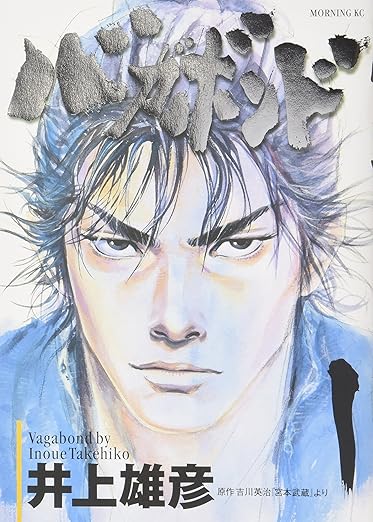
10.  Vagabond (バガボンド)

10.  Vagabond (バガボンド)

Genre: Period, Samurai, Martial arts

Length: 37 volumes

JLPT Level: N2 – N1

In a fictionalized story about the real-life sword master, Musashi Miyamoto, we are taken along a gifted swordman’s journey of growth and self-realization. The artwork is not only beautiful, drawing you in on every panel, but there is a poetic nature to each page and profound lessons we learn through the lens of our protagonist. 

The philosophy is just as intriguing as its action scenes since it doesn’t shy away from themes of life & death, morality, and humanity. With that being said, the Japanese will be more complex, using more figurative language and sometimes more archaic terms due to the period setting. This manga is a must-read if you’re an advanced Japanese learner who loves the samurai genre.

Get Vagabond Volume 1 on Amazon

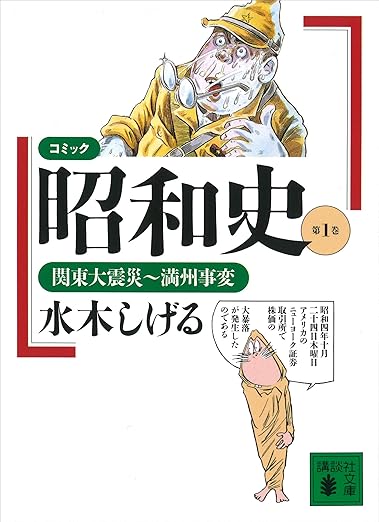
Bonus Manga:  A History of Japan (コミック昭和史 Showa)

Bonus Manga:  A History of Japan (コミック昭和史 Showa)
  • Genre: Historical
  • Length: 8 volumes
  • JLPT Level: N2

This is one for the history buffs. This manga is an autobiography of the author’s experience living through the Showa period, which spans from 1936 to 1989. The author details the daily life of living through World War II, which he tries to show as normal and yet surreal. He highlights this surreal feeling by drawing the main characters in a very cartoonish style, which contrasts sharply with the hyper-realistic depictions of the environments, battleships, and everything related to the war.

This manga is considered by many as a masterpiece in historical literature. It doesn’t hold back in showing the raw emotions and moods of the Japanese during the war. It does dive into rather heavy themes of military power and its implications. The reading level is not extremely complex, but there will be a lot of military, strategy, and political terminology that might be difficult to read. If you want to learn a ton of history and Japanese, this manga should be on your reading list.

Showa: A History of Japan Volume 1

Closing Thoughts On Manga For Learning Japanese

At the end of the day, the best manga for you to learn Japanese is the one you’re the most interested in. Our list is just some of our top picks based on the language and how much we love these stories (in our humble opinion). However, we do recommend starting off at a reading level that matches your current abilities in Japanese. 

To get more practice and perhaps reach the level needed to read your favorite manga, take a look at our Coto Academy’s courses. We offer part-time or intensive Japanese lessons!

Want to study Japanese with us?

FAQ

Can you learn Japanese with manga?

Yes, it is possible to learn Japanese with manga. It is normal to feel overwhelmed with the Japanese and to not know all of the language even if you’ve been studying for a while. With manga you can use the artwork to better understand the context of the text, which can actually help you ingrain new terminologies.

Which manga is best for learning Japanese as a complete beginner?

Manga that are written or geared towards children are best for total beginners to learn Japanese. For example, Yotsuba&!, Ao no Hako, Shirokuma Cafe, Flying Witch, and Coro Coro Manga magazine are great for beginners to pick up due to the simpler dialogue.

What level of Japanese would be needed to read most manga?

The level of Japanese would depend on the manga since some have more layered plots and complex themes. However, to read some of the most popular manga, such as One Piece, Naruto, or Bleach, being able to read and comprehend at an N3 level is most recommended to actually understand the story without looking up every other word.

Does Manga have a lot of kanji? Do they have furigana?

Many popular manga like One Piece are shonen, aimed at younger readers, so they include furigana: small hiragana that show how to read the kanji. In contrast, seinen manga for adults usually have little or no furigana, making them harder to read.


Many people are surprised to learn that Japanese hand gestures don’t always mean what they expect — and in some cases, they mean the exact opposite of a similar gesture back home. Body language might seem more universal than spoken language, but it’s still shaped by culture, and Japan has plenty of its own unique rules.

So let’s break down some common Japanese hand gestures and what they really mean — because chances are, a few will surprise you!

Do Japanese People Use Hand Gestures?

Yes, Japanese people do use some hand gestures, but generally less than people from more expressive cultures like Italy, Brazil, or the Middle East. Japanese communication tends to rely more on facial expression, tone, and aizuchi. Many gestures are also smaller and more subtle, like a small wave near the face instead of a big arm wave, for example.

That said, hand gestures absolutely exist and matter in Japan. Some are used in daily life (like beckoning someone or apologizing), some are tied to etiquette (like pointing with an open hand instead of a single finger), and some show up specifically in business or formal settings.

In this blog, we will focus primarily on hand gestures rather than the full scope of Japanese body language. Now, let’s dig into Japanese hand gestures to keep in mind, especially the ones that might be flipped in your home country!

Common Japanese Hand Gestures to Know and Try

1. Big “O” Hand Gesture: “Okay” Sign

Japanese hand gesture for saying "okay!"

The “Big O” is a Japanese hand gesture made by raising both arms above your head and forming a large circle, signaling “okay!” or approval. Because it’s such a big, visible gesture, it’s especially useful when you’re too far away to be heard — a visual shortcut for “yes, we’re good.”

Why a circle, specifically? This is actually a great example of something very Japanese. If you’ve ever taken a class at a school like Coto Academy and gotten your homework graded, you’ll notice correct answers aren’t marked with a checkmark — they’re marked with a circle, called a maru (○). Wrong answers, on the other hand, get an X. So a big “O” shape naturally reads as “correct” or “good” to Japanese people, the same way a check mark would to most English speakers.

You generally use it to convey approval or enthusiastic agreement.

2. Pointing At Your Nose: Me?

Image showing the gesture where you point at your noise. It's the same as asking "who, me?"

This gesture, where you point at your nose with your index finger, simply communicates “me,” usually in the context of asking who the speaker is referring to. It basically communicates questions like “Who me?” or “You mean me?”

Often, when speaking Japanese, you drop personal pronouns, so this gesture is quite useful for making sure the question or topic is addressed to you.

3. Crossing Your Finger Into an X: Get The Check

A Japanese hand gesture where you make a small x with your fingers, used for asking for the bill.

Instead of miming a check-writing motion in the air (like you might in the US), you make an X shape with your index fingers in Japan when you want to ask for the bill at a restaurant or cafe. The X shape isn’t random — it doubles as a signal to staff that you don’t need anything else brought to the table.

So next time you’re done eating and ready to head out, just cross your fingers into an X to let the staff know you’re ready to pay.

4. Big “X”: No

A common gesture where you cross your forearms to make a big X. It means "not permitted."

This sign, made by crossing your arms to form a big X, just means “no” or “not allowed.” It is essentially the body-language equivalent of ダメ (dame), which indicates that something is not permitted. It’s actually quite useful to understand this hand gesture, especially if you’re planning to drive or get a driver’s license in Japan, since public staff use this gesture to communicate that you can’t enter or drive in a certain area. 

5. Upside Down Okay: The Money Hand Gesture

A Japanese hand gesture that looks like an upside down okay sign. It's means something was expensive or someone has a lot of money.

While it looks like an upside-down “okay” hand gesture, it actually means お金 (okane) or money. You usually use this gesture when something costs a pretty penny, when someone has paid a lot of money for it, or when someone just has a lot of money. Generally, you can use this unique Japanese hand gesture if something has to do with a lot of money.

6. Japanese Counting Hand Gestures

Just like in many places, it’s common to count or indicate the number of something using your fingers in Japan. But they count using different hand signs than the more straightforward finger counting used in places like the United States. But don’t worry, while confusing in the beginning, counting the Japanese way will become pretty intuitive very quickly. Rather than counting from a closed fist, you just count from an open hand instead. 

counting  1 with finger in japanese

To make the number 1, you simply fold your thumb, which may look like a 4, but is a common way to start counting from 1 in Japan.

The Japanese hand gesture for 2 is just to fold your index finger with your thumb.

counting  with finger in japanese

To make the hand sign for 3, you also fold your middle finger.

counting  with finger in japanese

For 4, you leave your pinky finger up. 

counting  with finger in japanese

Then, to make 5, you just make a closed fist.

From 6 to 10, you can either do the same with your other hand, or if only one hand is free, you can just unfold starting from your pinky to make 6 and continue from there.

counting using your finger in japanese

Japanese people also count the way you’re used to, starting with a closed fist and raising a certain number of fingers for each number. Just note, starting from 6, Japanese people tend to place their hand in front of the hand indicating 5.

7. Come Here Wave (Not Go Away!)

Japanese hand gesture for come here!

This hand gesture is done by pointing your arm towards the person you’re communicating with, facing your palm down, and waving your fingers towards you. This gesture to the person to follow or come towards you. This might be the opposite of what you would think, since waving your fingers with your palm down often indicates someone or something to go away, like saying “shoo!” 

However, it’s not recommended to use this hand gesture with your boss or someone considered to be of a higher social status.

8. The “Stinky” Hand Wave

Hand gesture that looks like you're saying it stinks but is actually says "no, no, that's true" in Japan

Since you do this gesture by waving your hand in front of your face, often near your nose, it might look like you’re saying that something is stinky. But that couldn’t be further from the truth; this gesture actually means something like “no, no” or “that’s not true.” It is often accompanied by a polite response to someone getting something wrong about you (like getting your native country wrong) or humbly rejecting someone’s kind compliments.

9. The “Tengu” Hand Gesture

Japanese hand gesture that mimics the Tengu deity by putting your hand in front of your nose to imitate its long nose. Used for saying that someone is conceited

Tengu is a popular spirit or creature from Japanese folklore, and while they are often revered, they can also be associated with arrogance or conceit. Thus, the hand gesture where you place your hand in front of your nose to mimic the long nose of the Tengu. You can use this gesture to communicate how arrogant or full of themselves someone is.

10. Sesame Grinder or Brown Noser

A unique gesture to Japan, it mimics grinding sesame seeds in a bowl. It means someone is kissing up to a superior.

This hand gesture imitates grinding sesame seeds by shaping one hand into a bowl and using the other to mimic the grinding motion. Grinding sesame seeds generally indicates that someone is the teacher’s pet or a kiss-up to the boss. It basically communicates that the person you’re talking about is polishing or grinding sesame seeds for a superior just to get their approval. 

11. Pulling Your Eyelid

A childish Japanese hand gesture where you expose your lower eyelid to mock or tease someone.

This hand gesture involves using your index finger to pull down your lower eyelid, exposing the red inner lining of someone you want to mock or tease. It’s usually used playfully by children to tease or be mischievous to someone on the playground. It’s also common for children to stick out their tongue at the same time. 

12. Notice Me, Senpai

The popular gesture where you poke your index fingers together. It plays on the nervous or shy anime and manga tropes.

While this is not the official name for the hand gesture, “notice me senpai” definitely captures the energy. The real name in Japanese is actually 指ツンツン (yubi tsun tsun), with yubi meaning “finger” and tsun tsun being a Japanese onomatopoeia for poking or touching repeatedly. When doing this gesture, you’re conveying nervousness or shyness. It is often done in reference to shy, nervous, and even cute character tropes from anime and manga. It’s usually done with a sense of irony and is even popular in the West these days.

Speaking of manga and anime, did you know they both can be effective for learning Japanese? Check out our blogs to find out how you can learn Japanese with anime or learn Japanese with manga!

Hand Gestures in Japan You Should Not Use

While there are plenty of fun hand gestures you can try out, there are a few you should avoid. Some can come across as condescending or confrontational — like pointing at someone with one finger, or using the “come here” finger-curl gesture to beckon someone over.

Other gestures aren’t necessarily rude, but require a bit more nuance. For example, when receiving a gift or item from someone, it’s polite to use both hands instead of just one. This is especially important during meishi koukan (business card exchange) — when receiving someone’s business card, you’ll want to take it with both hands as a sign of respect.

Conclusion: Learn Japanese Hand Gestures For Even Smoother Communication

Japanese hand gestures are often different than what you might expect, so they’re worth remembering so you don’t think someone is shooing you away! Plus, they’re another way to communicate non-verbally to someone, whether it’s because using spoken words isn’t possible or you want to say something more subtly. Try to remember some of these and use them next time you meet your Japanese friends!

Learn Japanese with Coto Academy!

Learn the subtleties of Japanese communication from proper hand gestures and body language to knowing what to say at the right time at Coto Academy! We offer a variety of courses, from conversation and business Japanese to comprehensive, intensive courses covering every area of the language. You can join us at one of our campuses in Tokyo or Yokohama, or take classes online from anywhere in the world! Ready to sign up or want to get in touch for a free consultation? Simply fill out the short form below!

FAQ:

Are Japanese hand gestures similar to the ones in Western Countries?

Not always, many Japanese gestures look familiar but mean something completely different. For example, waving fingers downward toward yourself means “come here,” not “go away.” It’s worth learning the key differences to avoid misunderstandings.

Is there a Japanese hand gesture to ask for the bill?

Yes, there is! You simply cross your fingers into an X shape. This is called okaike and signals to the staff that you’re ready to pay. It also means you don’t want any more food or drinks, hence the “X.”

What does the "okay" circle gesture mean in Japan?

The small OK sign (thumb and index finger forming a circle) actually means money (お金, okane). To show approval or agreement, Japanese people make a much bigger gesture, raising both arms and connecting the hands to form a large circle above the head.

Why do Japanese people wave their hand in front of their face?

Despite looking like a “something stinks” reaction, this gesture actually means “no, no” or “that’s not true.” It’s commonly used to humbly deflect a compliment or politely correct a misunderstanding about yourself.

Is it okay to gesture "come here" to anyone in Japan?

Be mindful of context. The palm-down beckoning wave is fine with peers or people below you in social rank, but it’s considered rude when directed at a boss or someone of higher status. Japan’s social hierarchy matters even in gestures.

Check out our other blogs; you may be interested in:

Japanese Kanji Emojis: What Do They Actually Mean?
21 Japanese Internet Slang & Texting Terms (And What They Mean)
Top 30 Japanese Slang to Learn in 2026
16 Top Gen Z Japanese Slang and What They Mean

Pokémon is undoubtedly one of our favorite franchises ever; however, you may have noticed that many of the names of the Pokémon we know and love in English are completely different in Japanese. So, why is that? Turns out Pokémon names are not translated directly from Japanese to English, since the names wouldn’t make much sense if they were. 

So, let’s find out how the names for your favorite Pokémon are actually translated into English and, of course, how to actually say your favorite Pokémon in Japanese! Since there are over 1000 Pokémon, we will just go over some of the most popular pokémon!

Why are Pokémon Names Different in Japanese vs English

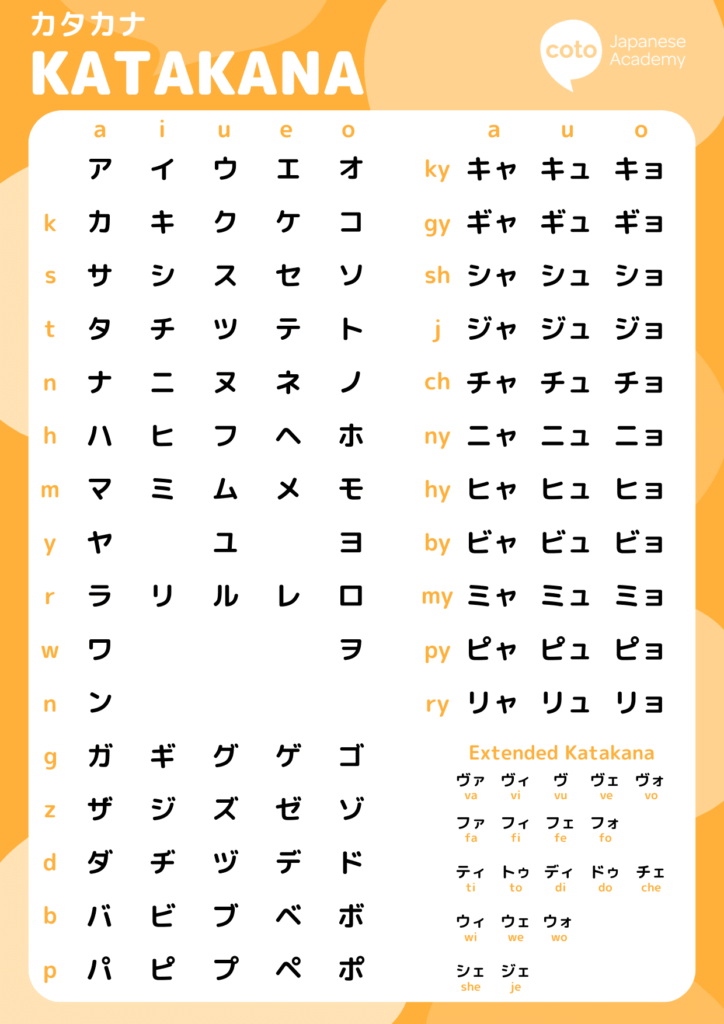
While all pokémon names are written in katakana, the Japanese writing system often used for foreign words, most names do not translate directly to English, even if they borrow some English words. The Japanese language is inherently structured differently from English, so to make the names more culturally relevant to English speakers, they had to localize them extensively. Let’s explore how literal Japanese descriptions and wordplays make it essentially impossible to simply translate the names into English.

1. Pokémon Names are Literal Descriptions in Japanese

Most Japanese pokémon names are literal descriptions of their personality, characteristics, abilities, or origin, which often might not make sense or won’t roll off the tongue as well in an English context. For instance, the pokémon Snorlax’s Japanese name is actually カビゴン (kabigon) with カビ (kabi) being the Japanese word for “mold.” This is referring to the fact that Snorlax will eat just about anything, even moldy food. 

The name also comes from the Pokémon’s original nickname, “Kirby” (not a Pokémon!), after another Nintendo video game character, for the way it eats. The name English Snorlax focuses more on its sleepy characteristics and sounds much better than something to do with mold.

2. Pokémon Names are Based on Japanese Play-on-Words 

Many original Japanese pokémon names are also based on specific Japanese wordplays, which you probably can guess don’t translate to English very well. The popular pokémon, Bulbasaur, is actually called フシギダネ (fushigidane) with fushigi meaning “mysterious” or “strange” and dane or tane meaning “seed.” Together, the name literally translates to “mysterious seed.” However, it’s actually a double entendre, where “dane” is a verb ending that attaches to “fushigi” to make the phrase “strange, isn’t it?”

The name of this Pokémon plays on its unknown origin, evoking a sense of wonder and mystery. In English, the name Bulbasaur focuses on its physical characteristics, with bulb referring to the plant bulb that forms the back of Bulbasaur. In Japanese, フシギダネ makes sense given the language’s structure, but it would need to be localized to a completely different name for English speakers.

3. Direct Translation Exceptions

Some pokémon names are directly transposed from Japanese to English, which may be an exception rather than the standard. Likely the most popular example would be Pikachu, ピカチュウ, who, despite having a name that doesn’t mean anything in English, has become one of the popular icons for pokémon around the world. The name actually comes from the Japanese onomatopoeia ピカピカ (pika pika), which means “shiny” or “sparkly”, referencing Pikachu’s electric powers. It also comes from another onomatopoeia, チューチュー (chuu chuu), which is a sound that mice make. 

In Japanese, you could say Pikachu’s name means “sparkly mouse,” but really, it was just made up specifically for the character. The creators actually put a lot of thought into creating a name that would sound cute even to an American audience. They also wanted the character to be memorable and unique so it could be the mascot of pokémon. In fact, the name was actually created before the character was even designed. For these reasons, Pikachu is one of the few pokémon that have the same name all over the world.

How Are Pokémon Names Adapted into English

Rather than using literal translations of pokémon names, they are adapted into English and other languages as well. As we mentioned, Pokémon names in Japanese consist of wordplays, cultural references, and word blends that really only make sense in Japanese. As a result, most localization occurs in different regional Nintendo locations. Nintendo of America and the Pokémon Company International handle most of the English localization and often work closely with Nintendo’s headquarters in Kyoto. 

This allows the pokémon names, moves, powers, and dialogue to adapt to a context that makes sense to English speakers. Most Pokémon names are localized portmanteaus, a fancy word for word blends. For instance, the name Charmander comes from the word char (as in to burn), referencing its fire powers, as well as salamander, since it essentially looks like a big salamander/lizard-like creature. In Japanese, the name is quite similar: ヒトカゲ (hitokage), which literally translates to “fire lizard,” with ヒ (hi) meaning “fire” and トカゲ (tokage) meaning “lizard.” 

They aren’t direct translations, but the localized English name makes Charmander sound like an actual species unique to the Pokémon world. Much of the localization involves creating memorable, unique names that fit the in-game universe.

However, certain things like pokémon categories tend to align more closely to the original; for instance, ネズミポケモン (nezumi Pokémon) was directly translated to “mouse pokémon” in English. But the word ネズミ can mean either “mouse” or “rat,” so the localization team likely chose “mouse” because it carries more positive associations in English. 

Localization has to consider a variety of factors to ensure that Pokémon names capture the spirit of the original while drawing on culturally relevant English expressions to describe something recognizable yet unique to English speakers.

List of Pokémon Names in Japanese

Below is a list of some of the most popular pokémon’s official English and Japanese names, so you can find out how to say your favorite pokémon in Japanese! We also wrote each Japanese name in Romaji.

NumberEnglish NameJapanese NameRomaji
1BulbasaurフシギダネFushigidane
2IvysaurフシギソウFushigisou
3VenusaurフシギバナFushigibana
4CharmanderヒトカゲHitokage
5CharmeleonリザードRizādo
6CharizardリザードンRizādon
7SquirtleゼニガメZenigame
8WartortleカメールKameeru
9BlastoiseカメックスKamekkusu
10CaterpieキャタピーKyatapī
11MetapodトランセルToranseru
12ButterfreeバタフリーBatafurii
13WeedleビードルBiidoru
14KakunaコクーンKokuun
15BeedrillスピアーSupiaa
16PidgeyポッポPoppo
17PidgeottoピジョンPijon
18PidgeotピジョットPijotto
19RattataコラッタKoratta
20RaticateラッタRatta
21SpearowオニスズメOnisuzume
22FearowオニドリルOnidoriru
23EkansアーボAabo
24ArbokアーボックAabokku
25PikachuピカチュウPikachuu
26RaichuライチュウRaichuu
27SandshrewサンドSando
28SandslashサンドパンSandopan
29Nidoran♀ニドラン♀(メス)Nidoran mesu
30Nidorina二ドリーナNidoriina
31NidoqueenニドクインNidokuin
32Nidoran♂ニドラン♂(オス)Nidoran osu
33Nidorino二ドリーノNidoriino
34NidokingニドキングNidokingu
35ClefairyピッピPippi
36ClefableピクシーPikushii
37VulpixロコンRokon
38NinetalesキュウコンKyuukon
39JigglypuffプリンPurin
40WigglytuffプクリンPukurin
41ZubatズバットZubatto
42GolbatゴルバットGorubatto
43OddishナゾノクサNazonokusa
44GloomクサイハナKusaihana
45VileplumeラフレシアRafureshia
46ParasパラスParasu
47ParasectパラセクトParasekuto
48VenonatコンパンKonpan
49VenomothモルフォンMorufon
50DiglettディグダDiguda
51DugtrioダグトリオDagutorio
52MeowthニャースNyaasu
53PersianペルシアンPerushian
54PsyduckコダックKodakku
55GolduckゴルダックGorudakku
56MankeyマンキーMankii
57PrimeapeオコリザルOkorizaru
58GrowlitheガーディGaadi
59ArcanineウインディUindi
60PoliwagニョロモNyoromo
61PoliwhirlニョロゾNyorozo
62PoliwrathニョロボンNyorobon
63AbraケーシィKeeshii
64KadabraユンゲラーYungeraa
65AlakazamフーディンFuudin
66MachopワンリキーWanrikii
67MachokeゴーリキーGoorikii
68MachampカイリキーKairikii
69BellsproutマダツボミMadatsubomi
70WeepinbellウツドンUtsudon
71VictreebelウツボットUtsubotto
72TentacoolメノクラゲMenokurage
73TentacruelドククラゲDokukurage
74GeodudeイシツブテIshitsubute
75GravelerゴローンGoroon
76GolemゴローニャGoroonya
77PonytaポニータPoniita
78RapidashギャロップGyaroppu
79SlowpokeヤドンYadon
80SlowbroヤドランYadoran
81MagnemiteコイルKoiru
82MagnetonレアコイルReakoiru
83Farfetch’dカモネギKamonegi
84DoduoドードーDoodoo
85DodrioドードリオDoodorio
86SeelパウワウPauwau
87DewgongジュゴンJyugon
88GrimerベトベターBetobetaa
89MukベトベトンBetobeton
90ShellderシェルダーSherudaa
91CloysterパルシェンParushen
92GastlyゴースGoosu
93HaunterゴーストGoosuto
94GengarゲンガーGengaa
95OnixイワークIwaaku
96DrowzeeスリープSuriipu
97HypnoスリーパーSupriipaa
98KrabbyクラブKurabu
99KinglerキングラーKinguraa
100VoltorbビリリダマBiriridama
101ElectrodeマルマインMarumain
102ExeggcuteタマタマTamatama
103ExeggutorナッシーNasshii
104CuboneカラカラKarakara
105MarowakガラガラGaragara
106HitmonleeサワムラーSawamuraa
107HitmonchanエビワラーEbiwaraa
108LickitungベロリンガBeroringa
109KoffingドガースDogaasu
110WeezingマタドガスMatadogasu
111RhyhornサイホーンSaihoon
112RhydonサイドンSaidon
113ChanseyラッキーRakkii
114TangelaモンジャラMonjyara
115KangaskhanガルーラGaruura
116HorseaタッツーTattsuu
117SeadraシードラShiidora
118GoldeenトサキントTosakinto
119SeakingアズマオウAzumaou
120StaryuヒトデマンHitodeman
121StarmieスターミーSutaamii
122Mr. MimeバリヤードBariyaado
123ScytherストライクSutoraiku
124JynxルージュラRuujyura
125ElectabuzzエレブーErebuu
126MagmarブーバーBuubaa
127PinsirカイロスKairosu
128TaurosケンタロスKentarosu
129MagikarpコイキングKoikingu
130GyaradosギャラドスGyaradosu
131LaprasラプラスRapurasu
132DittoメタモンMetamon
133EeveeイーブイIibui
134VaporeonシャワーズShawaazu
135JolteonサンダースSandaasu
136FlareonブースターBuusutaa
137PorygonポリゴンPorigon
138OmanyteオムナイトOmunaito
139OmastarオムスターOmusutaa
140KabutoカブトKabuto
141KabutopsカブトプスKabutopusu
142AerodactylプテラPuten
143SnorlaxカビゴンKabigon
144ArticunoフリーザーFuriizaa
145ZapdosサンダーSandaa
146MolotresファイヤーFaiyaa
147DratiniミニリュウMiniryuu
148DragonairハクリューHakuryuu
149DragoniteカイリューKairyuu
150MewtwoミュウツーMyuutsuu
151MewミュウMyuu

The full list of all the Pokémon names in English and Japanese can be found on Bulbapedia here!

Conclusion: Pokémon Names were Adapted for an English Context

The localization teams adapted the Pokémon names to be more culturally relevant and capture the spirit of the original Japanese names for English speakers. Translating the names directly into English actually wouldn’t communicate the same intended purpose of their originals, and wouldn’t even make the Pokémon feel the same as we know it. This is why there was so much effort into localizing the pokémon names into English. Even when the names weren’t changed from the originals, as in the case of Pikachu, they were created to be palatable to a global audience. Try to remember some of these pokémon’s Japanese names, and see what it’s like to play the video games in Japanese!

Learn Japanese at Coto Academy to Play Pokémon in Japanese!

If you want to learn enough Japanese to play Pokémon in its original language, join our Japanese classes at Coto Academy! We offer courses to improve your reading, listening, writing, and, of course, speaking. Our small classes allow for the courses to be tailored to each student, ensuring their needs are met. If you’re coming to Japan short or long-term, join one of our campuses in Shibuya, Shinjuku, Iidabashi, Minato, or Yokohama! Or you can join us online from anywhere around the world! Ready to join or want to have a free consultation? Fill out the form below!

FAQ:

Why are Pokémon names different in Japanese and English?

Pokémon names are not directly translated from Japanese to English because most Japanese names are literal descriptions, wordplays, or cultural references that simply would not make sense to an English-speaking audience. Instead, the names are localized, adapted into English in a way that captures the spirit of the original while feeling natural and memorable to English speakers. 

Are Pokémon names written in katakana in Japanese?

Yes, all Pokémon names in Japanese are written in katakana, the writing system most commonly used for foreign words, loanwords, and onomatopoeia. This gives Pokémon names a distinctive, slightly exotic feel in Japanese, which suits the franchise’s fantastical nature. Even names with Japanese origins are written in katakana rather than kanji or hiragana.

What does Pikachu mean in Japanese?

Pikachu’s name comes from two Japanese onomatopoeia, ピカピカ (pika pika), meaning “shiny” or “sparkly,” referencing its electric powers, and チューチュー (chuu chuu), the sound mice make in Japanese. Together, the name loosely translates to “sparkly mouse.” Pikachu is one of the rare exceptions where the Japanese and English names are identical, largely because the creators deliberately designed the name to sound cute and appealing to international audiences.

Who is responsible for localising Pokémon names into English?

English localization is handled primarily by Nintendo of America and the Pokémon Company International, who work closely with Nintendo’s headquarters in Kyoto. Their job is to adapt not just Pokémon names but also moves, powers, and dialogue into versions that feel culturally relevant and natural to English speakers, while still capturing the spirit and personality of the original Japanese names.

You may be interested in our other blogs:

Learning Japanese with Anime: Does it actually work?
Learning Japanese with Anime – Naruto
Learning Japanese With Anime – Detective Conan 名探偵コナン
15 Best J-Pop Songs to Learn in Japanese
10 Best Manga to Learn Japanese

Ever wanted to learn some Japanese swear words? Much like in any language exchange, the topic of “what are the swear words in your language?” inevitably comes up — and Japanese is no exception. While Japan is often imagined as an extremely polite and quiet country, with its keigo and culture of respect, behind that veneer lies a rich and surprisingly fierce array of Japanese profanity, some of which can rival, or even surpass, English in intensity.

Japanese swear words are super fun to learn, especially if you’ve got a good basis of Japanese under your belt. It is one of the things you need to know them to avoid saying them, too. It’s rare for strangers to use Japanese curse words or slang casually. In fact, even if you’re friends with a Japanese person, you still need to be cautious about using a swear word, even if it’s mild.

That is to say, don’t really swear in public, or in general. Still, these are fun Japanese swear words to know, and we can’t blame you for wanting to learn. And it’s not like you can never say these. Around your friends, go for it, but with someone you don’t really know, maybe watch your tongue. Here, we will cover as many Japanese swear words as we can!

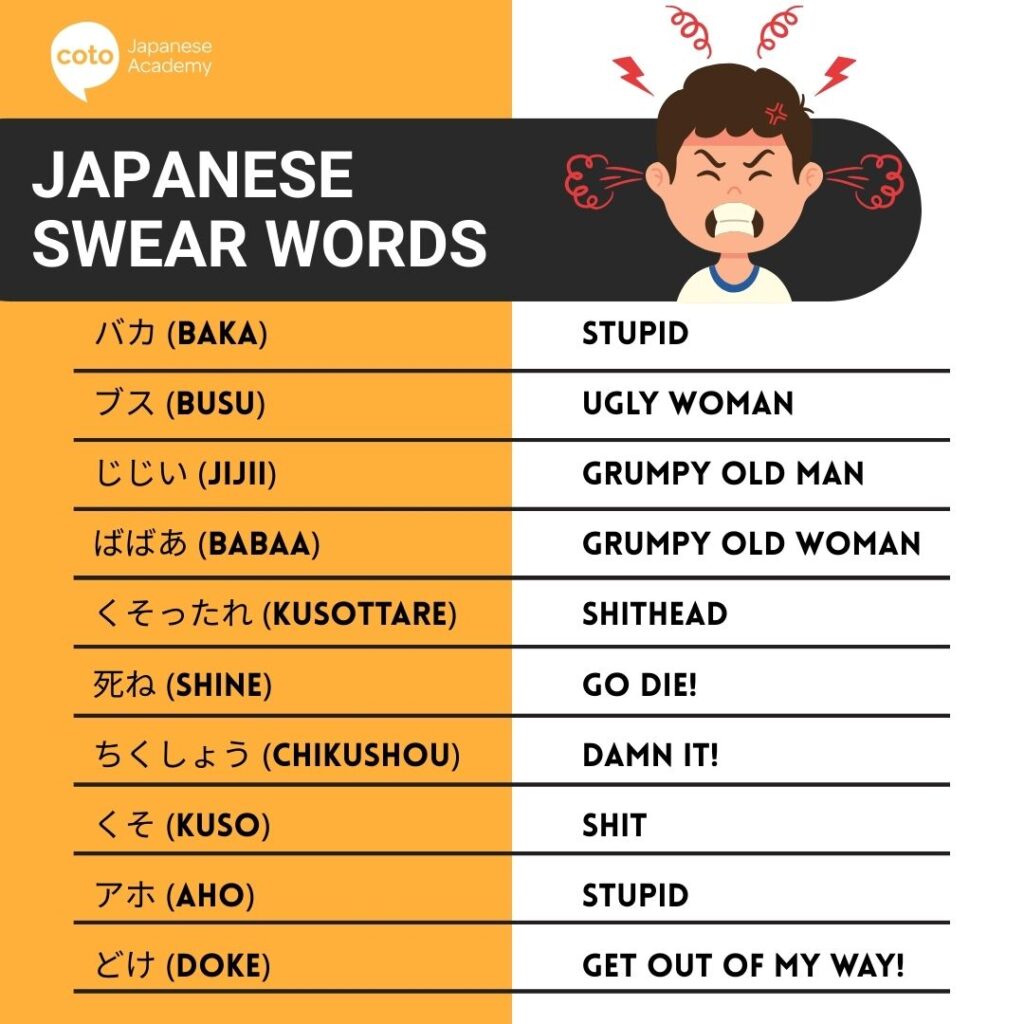
infographic of japanese swear words

1. 馬鹿 (Baka): Stupid

The Japanese word baka (ばか) basically means “fool” or”idiot”. Depending on the tone and situation, it can range from a playful “dummy” to a harsh insult that stings.

The kanji is 馬鹿. 馬, meaning “horse” (uma), and 鹿, which means “deer” (shika). You might also see it written in katakana as バカ.

お前はバカなの?
Omae wa baka na no?
Are you stupid?

2. アホ (Aho): Stupid

Aho means idiot or stupid. If you watch a lot of anime, you probably know another way to call someone an idiot, 馬鹿 (aka), so what’s the difference between the two? While the two share the same meaning, アホ is more commonly used in the Kansai region, where it can range from playful teasing to outright insults, while 馬鹿 is used more in the Kanto region. Funnily enough, this results in either being more offensive in the region they’re used less.

In contrast, in the Kanto region, アホ feels harsher, and 馬鹿 is the preferred term for calling someone stupid.

お前、アホちゃう?
Omae, aho chau?
Are you an idiot?

3. ブス (Busu): Ugly Woman

Busu is an extremely ugly woman, and it is used specifically for women to insult their physical appearance; it’s a cruel and offensive term. It’s not the word you should use to a stranger — unless you want to crush their self-esteem.

It’s a demeaning term, so even if you intend to joke around, consider how people might feel about it.

The male version of ブス (Busu) is ブ男 (Buotoko). When someone mutters “busu” or “buotoko” under their breath, you’ll know the meaning and possibly how to react.

お前、ブスだよ。
Omae, busu da yo.
You’re ugly

4. 畜生 (Chikusho): Damn It!

Chikushou (ちくしょう) is an exclamation usually used out of frustration. It’s similar to saying “Damn!” or “Damn it!” in English. Sometimes, the translation goes, “For Christ’s sake!” It also has meaning outside of as an exclamation, that being “Beast” or “Brute”.

You don’t direct this Japanese swear word to someone. Rather, you use it when facing an unfortunate event or anything remotely inconvenient.

ちくしょう、パンクだ!
Chikushou, panku da!
Damn it! I’ve got a flat (tire)!

5. 黙れ (Damare): Shut up!

Like the phrase うるさい (Urusai), damare is used to say “Shut up!” The word stems from the Japanese verb 黙る (damaru), which means “to be quiet.” However, this is the Japanese command form used to express strong orders or demands.

Unlike using ください (kudasai) or お願いします (onegaishimasu), which are closer to a request or soft demand, this command form is not exactly polite.

This Japanese swear word is often interchangeable with うるさい (urusai), but they mean two different things, with the same implication. うるさい is a Japanese adjective that means “noisy.”

If you hear someone say this, it’s more to passively shut someone up: “You’re noisy! (So shut up)!” They will typically take it as a sign to tone it down.

だまれ, on the other hand, is much more of a command, so it is much more impolite to use it.

だまれ、このやろう!
Damare, kono yarou!
Shut up, you bastard!

6. どけ (Doke): Get out of my way!

Similar to だまれ, どけ (doke) is a Japanese command form from the verb どく, which means to step aside or move out of the way. When you’re pissed off and have to make the people move out of your path, you might lash out and say, “Get out of my way!”

It’s an extremely rude way of ‘asking’ someone to make way for you, and you shouldn’t use it in normal circumstances — like when you’re trying to get out of a packed train car.

どけ、邪魔だよ!
Doke, jama da yo!
Move, you’re in my way!

7. ふざけるな (Fuzakeru na): Don’t Mess With Me!

Any Japanese verb with a “na” な on the end is usually taken as an aggressive negative command of “don’t”.

ふざけるな comes from the phrase ふざける (fuzakeru), meaning to mess around. When used with な, it becomes a negative command, telling someone to stop messing around. It has since been translated to mean either “Stop messing around/with me”, or the more direct “Screw off”. The more casual version of this is the shortened ふざけんあ (Fuzakenna) often used in anime or informal settings.

ふざけるな、マジで!
Fuzakeru na, maji de!
Don’t mess with me, seriously!

8. うざい (Uzai): Annoying!

The word うざい, stylized as ウザイ (uzai), is short for うるさい (urusai), which means “noisy”, and うざったい, which means “annoying”. If you’re the type who gets annoyed at the slight public disturbance, you can use this for a not-so-subtle diss.

Think of this word as the English equivalent of saying that someone is being a pain in the ass.

If you want to stress the swear word more, you can end the word ウザイ (uzai) with a long ‘e’: ウゼェー (uzee)!

田中先生がウザくない?
Tanaka-sensei ga uzakunai?
Isn’t Tanaka-sensei a pain in the ass?

9. クソ (Kuso): Shit!

Kuso means “Poo”. Much like chikushou, it is used as an exclamation out of anger. While it can be used independently, it also sees a lot of use with other words. In these cases, it is used as an adjective. For example クソガキ (kusogaki), meaning “Shitty brat”.

クソ!なんでこうなるんだ?
Kuso! Nande kou narun da?
Shit! Why does this always happen?

10. お前 (Omae): You

These are both very rude ways of saying “you” in Japanese. In anime, particularly the shounen genre, male characters may use this second-person pronoun. It’s often translated as “bastard”, but most people wouldn’t really say it in real life.

This is similar to another word not on this list 貴様 (きさま), another rude way of saying “You,” which is commonly used in anime but never in real life.

Omae can be considered a rude way to refer to someone. It used to be considered honorific, but that was a long time ago. Of course, real life is not like anime, so try not to use it with just anyone.

お前が言うな.
Omae ga iu na.
Look who’s talking.

11. 手前 (てめえ/Temee): You (Bastard)

Not necessarily a Japanese swear word, but it is a very rude word that is hardly used by anyone in real life, though it can be commonly found in Japanese media like manga and anime.

Fictional characters use it to address others when they are angry, as it is considered less rude than in real life.  

手前、何様のつもりだ?
Temee, nani-sama no tsumori da?
Who do you think you are, bastard?

12. 死ねえ (Shinee): Go Die!

Another swear word very popular in anime, しねえ means ”Die!” or “Go die!” Can’t get much worse than that. Of course, because it’s so commonly used, it’s kind of lost its severity, making it a fun word to throw around among friends.

Again, make sure not to use it against anyone you don’t know too well.

死ねえ、もう我慢できない!
Shinee, mou gaman dekinai!
Die, I can’t take it anymore!

13. やろう (Yarou)

Yarou technically just means ”Guy” (gender). It’s commonly used towards men and as a way to refer to someone.

As a Japanese swear word, it usually doesn’t stand alone. Rather, you’ll pair it with other words like baka or kuso. ばかやろう(baka yarou). You should not use やろう (yarou) to address women, as the usage would be wrong.

だまれこのやろう 
Damare konoyarou
Shut up you bastard!

14. くたばれ (Kutabare): Drop Dead / Go to Hell

This is one of the stronger insults in Japanese, used to express extreme anger. It’s far more intense than common words like baka (idiot) or damare (shut up). This phrase isn’t something you’d hear in everyday conversation but might appear during heated arguments or in dramatic movie scenes. Its use is rare, but when it’s said, the intention is clear: the speaker is furious.

It’s used only in extreme situations, usually when someone loses control and wants to lash out verbally.

くたばれ、この野郎! 
Kutabare, kono yarou!
Go to hell, you bastard!

15. ばばあ (Babaa) / じじい (Jijii): Grumpy Old Woman / Cranky Old Man

These words are used to insult older people, with babaa directed at women and jijii at men. In a culture where elders are usually treated with respect, using these words can be particularly offensive. While they might be used jokingly in anime or manga, in real life, they’re more likely to upset or insult someone.

Often spoken in frustration or anger. These words are also common in fictional works to portray rude or rebellious characters.If you’re a fan of Studio Ghibli’s Spirited Away, you might recognize the character Yubaba. Her name cleverly incorporates ばば (baba), which is a nod to ばばあ (babaa), meaning “old woman.” While it’s not intended as an insult in the film, her personality, stern, controlling, and a bit unpleasant, ties into the connotations of the word. This is an example of how language can be used creatively in storytelling without the usual negative implications

16. カス (Kasu): Scum / Worthless Person

Kasu is a deeply insulting term that likens someone to residue or waste, which is its literal meaning. It’s often used to demean someone’s character, implying they have no value. This word is not just offensive; it carries a lot of weight when spoken, so it’s best avoided altogether.

Usually heard in heated arguments, where emotions run high, and the speaker intends to seriously insult someone.

あのばばあ、また文句ばかり言ってるよ。 
Ano babaa, mata monku bakari itteru yo.
That old hag is complaining again.

17. ボケ (Boke): Fool

Boke (ボケ) means “fool” or “idiot.” It’s often used humorously in conversations, but it can also come off as an insult depending on the tone.
In a more casual sense, it’s often paired with other words, like ボケナス (bokenasu), which means “stupid eggplant.”

お前、ボケてんの? 
Omae, boketen no?
Are you being stupid?

18. くさい (Kusai): Smelly

Kusai (くさい) means “smelly” or “stinky.” It can be used to describe something that literally smells bad or as an insult to say someone reeks.
This term can also imply someone has a figurative stench, like being shady or suspicious.

お前、くさすぎるよ! 
Omae, kusa sugiru yo!
You stink too much!

19. きもい (Kimoi): Gross

Kimoi (きもい) is slang for “gross” or “creepy.” It’s short for 気持ち悪い (kimochi warui), meaning “disgusting.”
This word is often used casually among friends, but can be offensive depending on the context.

あいつ、本当にきもいね。
Aitsu, hontou ni kimoi ne.
That guy is really gross.

20.   ハゲ (Hage): Baldy

This word is mostly used as a jab at men, hitting a sensitive spot — after all, few people like having their receding hairline or thinning crown pointed out. ハゲ literally means “bald” or “bald person.” It can sometimes be funny or teasing, but depending on how you use it, it can easily come off as offensive.

Fun fact: ハゲ can also be a verb. The verb ハゲる (hageru) means “to go bald” or “to become bald.”

彼はハゲてる
Kare wa hageteru
He is bald. 

21. あばずれ (Abazure): Bitch

If you’ve ever heard the word あばずれ (abazure) in Japanese, you might want to brace yourself — it’s not exactly a compliment. This term is a pretty harsh insult, usually directed at women, implying that they’re shameless, immoral, or just plain wild. 

Fun fact: The word can technically apply to men, too, but these days, it’s mostly aimed at women. Historically, it had a broader meaning, but the modern use is definitely more pointed.

22. クズ男 (Kuzu Otoko): Scumbag

Kuzu otoko (クズ男) translates to “scumbag man” in Japanese. The word kuzu literally means “trash” or “worthless,” and typically this label is reserved for guys who treated girls poorly in the dating scene.

For example, a kuzu otoko could be the guy you go on a date with who “accidentally” forgets his wallet. He absolutely loves women — a little too much. He has a tendency to cheat. Another common trait is that he spends money recklessly. He often gets himself into financial trouble, such as gambling. It’s one thing if he gambles with his own money, but he might end up in debt. He may also borrow money from friends and never pay it back.

23. クソジジイ (Kuso Jijii): Shitty Old Ma

The word jiji is slang for an older Japanese man. It’s written as “爺” or “ジジイ.” Its original meaning is “elderly man” or “grandfather,” but usually it’s understood more like “old geezer.”

Kuso jijii (クソジジイ) is a much stronger insult. The word kuso means “shit” or “damn,” so the phrase emphasizes disgust or anger. It is commonly used to describe a mean, stubborn, or ill-behaved elderly man.

“Kuso jiji” (shitty old man) is a much stronger insult. Adding kuso (which means “shit” or “damn”) makes it more aggressive. It’s commonly used to describe a mean, stubborn, or badly behaved elderly man.

Weirdly enough, in very specific situations, kuso jiji can be used in a humorous or affectionate way — but only if you’ve known the person for a long time and things are super casual between you. For example, imagine you’ve had the same old neighbor for 20 years. He’s always outside watering his plants and complaining about how “things were better back in the day.” But at the same time, he gives you vegetables from his garden and keeps an eye on your house when you’re away.

One day, he starts grumbling because you came home late again and made noise with your car. You laugh and say, “You’re still spying on the whole street, huh, you kuso jiji?” In that kind of long-term, joking relationship where there’s mutual understanding, it can come off as playful teasing. If you said it to a random elderly man, though, it would be seriously rude.

Want to study Japanese with us?

Do you need to learn Japanese curse words?

At the end of the day, Japanese swear words are a normal part of the culture, much like in any other country. But if you don’t plan on ever using them, why bother learning them?

1. Know it to understand 

The most straightforward reason: learning Japanese swear words helps you actually understand them, so you won’t be caught off guard. Imagine someone calls you something in Japanese that sounds like a curse, and you have no idea what it means. You’ll look completely clueless.

2. Avoid offending people

If you spend a lot of time watching anime or reading manga aimed at adults, it’s easy to pick up words without realizing their strength. Knowing what’s considered rude keeps you from unintentionally offending others.

3. Understand Japanese culture more

Many Japanese swear words are tied to physical traits — being old, bald, overweight, or smelly — and reflect cultural attitudes. Learning them gives insight into how Japanese people express insult, humor, and social judgment.

If you want to learn Japanese, contact the friendly team at Coto Academy and we will recommend you the best class and campus!

Being Offensive in Japan Without Even Meaning It

Japanese culture is rooted in indirect communication, where the “true” meaning is often found between the lines. For students of the language, this creates a hidden minefield. Even if you never utter a single explicit swear word, the intentional (or accidental) misuse of social cues can be just as offensive to a Japanese listener as a string of profanities.

Here are the two most common ways learners accidentally cause offense:

1. Using “Anata”

In English, “you” is a functional, neutral pronoun. In Japanese, however, the word anata (あなた) carries a heavy weight. Why? Because Japanese relies on pronoun avoidance, “you” can feel confrontational, sounding more like an accusation than a simple address.

For example, imagine you want to see if a co-worker can help with an additional task. You walk over to their desk and, before making the request, you ask them what they are doing.

The English Thought: “What are you doing?” (Neutral)

あなたは、何をしていますか?
Anata wa, nani o shite imasu ka?
What are you doing?

To a native speaker, this doesn’t sound like a curious question. It sounds like a finger pointed at their chest. It carries the energy of: “And just what do you think you’re doing?” 

Work around this by softening the blow. In Japanese, it is always safer to use the person’s name with the right Japanese suffix or omit the subject entirely.

2. Using the wrong degree of formality

In Japanese, “profanity” isn’t always about using bad words, either. It’s often about the misuse of honorifics (keigo). Dropping into casual speech with a stranger or a superior is a linguistic way of signaling a total lack of respect.

This is particularly dangerous when you are still “socially blind” to the Japanese hierarchy. Imagine this scenario:

You are in the elevator with your company’s CEO. As the doors open, you accidentally bump into them. No physical harm is done, but you want to apologize quickly. You recently learned how to say “sorry” in your Japanese class, so you blurt out the first thing that comes to mind: “Gomen ne!” (ごめんね!)

In English, “Sorry!” works for almost anyone. But in Japanese, gomen ne is what you say to a very close friend. By saying this to your CEO, you have effectively “leveled” them to you or your junior. 

To avoid sounding shockingly rude, you should have used “Sumimasen” (すみません) or the even more formal, “moushiwake gozaimasen” (申し訳ございません).

Do Japanese People Curse in General?

Japanese people do curse, but they do it a bit differently from English speakers. For one thing, Japanese “cursing” often relies more on tone of voice than on specific swear words. Japanese profanity does not usually involve direct equivalents of English f-words; instead, the perceived offensiveness depends heavily on tone, intonation, and the situation in which a phrase is used.

For example, the phrase 何見てんだよ (nani mitenda yo) can simply mean “What are you looking at?” when said in a neutral tone. However, if it is delivered harshly and aggressively — 何見てんだよ!— it can come across more like “What the hell are you looking at?” in English.

Ready to speak more (or less) Japanese profanity? Be fluent in Japanese with Coto Academy’s fun, flexible courses!

Let’s face it: no standard textbook is going to teach you how to curse in Japanese. That’s where Coto Academy comes in. With conversation-focused, practical Japanese lessons, we give you the tools to recognize, understand, and navigate Japanese swear words in real life. That way, when someone drops a word you’ve never heard, you won’t be left staring blankly.

Learn the language as it’s really spoken, not just what’s in textbooks, and never get caught off guard again by joining our part-time or intensive Japanese lessons! If you’re ready to dive deeper into Japanese language and culture, why not take a class with us and learn the right way to express yourself?

Ready to start learning Japanese? Fill out the form below for a free level check!

FAQ

How insulting is baka?

Baka means “fool” or “idiot,” and how insulting it is really depends on how and where it’s used. In casual, playful conversations, it’s often harmless, but if said with a harsh tone, it can definitely offend someone.

Is kuso a curse word?

Yes, kuso means “shit” and is considered a mild curse word. It’s often shouted when frustrated, like saying “damn it!” in English, or combined with other words for insults.

Is it rude to say oi in Japanese?

Yes, oi is a pretty rude way to get someone’s attention. It can come across as aggressive or impatient, so it’s not something you’d use in polite situations.

What is a rude word for “you” in Japanese?

Words like omae, temee, and kisama are all considered rude ways to say “you.” They’re mostly used in arguments or seen in anime and are not appropriate for polite settings.

Does the f-word exist in Japanese?

Not exactly. There isn’t a direct Japanese equivalent of the F-word, but phrases like kutabare (go to hell) or kuso (shit) come close in terms of intensity.

Is the middle finger rude in Japan?

Yes, the middle finger is considered rude in Japan, especially if it’s used in an aggressive or confrontational way. While it might not have the exact same cultural weight as in Western countries, it’s still seen as disrespectful, so it’s best to avoid using it.

What is yabai?

Yabai is a super versatile slang word. It can mean anything from “awesome” to “terrible” or even “risky,” depending on the tone and situation.

Why are there so many Japanese insults in anime?

Anime exaggerates language for drama or humor. A lot of these words are rarely used in real life, but they make characters stand out or add tension to stories.

How do you politely express frustration in Japanese?

Instead of swearing, you can say things like taihen (this is tough) or mou yappari (ugh, I knew it) to vent your feelings without offending anyone.

Read more:

Hiragana, katakana, and kanji make up the Japanese writing system. When you start learning Japanese, figuring out how to read and write can feel overwhelming; after all, Japanese is completely different from the Roman alphabet! You then learn that there are three different writing systems used all at once. How is that even possible? Not to worry. These systems are simpler than you might expect! Each one has unique, defining characteristics and uses; once you learn more about these, reading and writing Japanese will be a breeze!

We’ve covered smaller articles for each Japanese writing system. In this guide, we will explain to you the basics of the Japanese writing system, what they are, and some important pointers to keep in mind. Don’t forget to check out our downloadable hiragana chart and quiz for a more detailed guide and resource recommendation.

Want to study Japanese with us?

Basics of Japanese Writing Systems

Japanese writing is often considered one of the most complex systems in the world, but it’s also incredibly logical once you see how the pieces fit together. It uses three distinct scripts: hiragana, katakana, and kanji.

In a standard Japanese sentence, you will often see all three scripts working together:

私の名前はコトです。
Watashi no namae wa Koto desu.
My name is Coto.

Why do we still use three different scripts? It might seem easier to just use one alphabet, but the combination serves a very specific purpose: visual clarity. Japanese does not use spaces between words. Without different scripts, a sentence would be a confusing string of identical-looking characters.

Using the same example above, we can easily break down parts of the sentence based on its writing system.

ScriptJapaneseFunction
Kanji私, 名前Represents the core meaning (I, Name).
Hiraganaの, は, ですRepresents grammar and sentence structure.
KatakanaコトRepresents foreign names or loanwords.

By the way, if you want to start learning Japanese, Coto Academy offers beginner-friendly Japanese lessons in Tokyo and Yokohama. Get in touch with our friendly team to get started!

Origins of the Japanese Alphabet

Do you know about the history and the origin of hiragana and katakana? Originally, the Japanese ancestors did not have a writing system. Around the fifth century, they started using kanji, ideograms that were adopted from China and Korea. They only used the phonetic reading of the kanji, regardless of their meaning. At that time, the ideograms were called manyogana (万葉仮名).

However, kanji’s characters are composed of many strokes. They take longer to write, as you have noticed by now! Due to their difficulty, those ideograms were slowly simplified into kana alphabets, namely hiragana and katakana. They are called syllabograms, as each character corresponds to one sound in the Japanese language. According to historians, the change was initiated by Buddhist priests who thought kanji could not accurately represent the Japanese language and that a phonetic alphabet would be better.

On the left is the manyogana, and on the right are simplified hiragana and katakana forms.

  • 安 →あ 阿 → ア (a)
  • 以 →い 伊 → イ(i)
  • 宇 →う、ウ(u)
  • 衣 →え 江 → エ(e)
  • 於 →お、オ(o)

This change is thought to have occurred between the eighth and ninth centuries.  Hiragana can be considered a simplified calligraphy form of the kanji’s strokes. On the other hand, katakana is taken from a single element of a kanji. In some cases, the hiragana and katakana are created from different ideograms.

Some hiragana and katakana express the same sound and have similar shapes, such as り and リ. However, some can be dissimilar, such as あ and ア. Hiragana is said to be cursive, while katakana is more angular. Do take note that one sound can have more than one hiragana. In 1900, the two kana scripts, hiragana and katakana, were codified. This led to the clear establishment of rules for the Japanese system in 1946.

Japanese Writing System #1: Hiragana

Whenever you just start out learning Japanese, hiragana is usually the first writing system you learn. Hiragana is technically a syllabary or a way of writing where symbols represent whole syllables (such as “ba” and “to”) instead of individual sounds (such as “b” or “t”)5. This is because all Japanese words are made up of these small syllables, so there’s no need to write out individual sounds!

In Japanese, there are 46 basic syllables:

  • The basic vowels: a, i, u, e, o.
  • The k-line: ka, ki, ku, ke, ko.
  • The s-line: sa, shi, su, se, so. (Notice that the “si” sound is instead replaced by “shi.”)
  • The t-line: ta, chi, tsu, te, to. (Notice that the “ti” and “tu” sounds are instead pronounced closer to “chi” and “tsu.”)
  • The n-line: na, ni, nu, ne, no.
  • The h-line: ha, hi, fu, he, ho. (Notice that the “hu” sound is actually said as “fu.”)
  • The m-line: ma, mi, mu, me, mo.
  • The y-line: ya, yu, yo.
  • The r-line: ra, ri, ru, re, ro.
  • Wa, o/wo, and n. (These sounds are unique, so they are generally placed together. The “o/wo” symbol can be pronounced either way and “n” is considered a whole syllable in Japanese.)

There are also 23 additional syllables in Japanese; these are formed with additional marks that we’ll cover in a minute.

  • The g-line: ga, gi, gu, ge, go.
  • the z-line: za, ji, zu, ze, zo. (Notice that “ji” is used instead of “zi.”)
  • The d-line: da, ji, zu, de, do. (“ji” and “zu” are pronounced the same way as in the z-line but have different uses.)
  • The b-line: ba, be, bu, be, bo.
  • the p-line: pa, pi, pu, pe, po.

How to Write in Hiragana

So, now that we’ve covered the basic sounds, let’s see how these syllables are written down in hiragana:

hiragana chart

Hiragana is generally round in shape, with lots of curves and bends. This characteristic is a key way to tell what symbols are hiragana! You can also combine a consonant with a / ya / yu / yo / sound by attaching a small 「や」、「ゆ」、or 「よ」 to the / i / vowel character of each consonant.

Now, let’s take a look at those 23 additional sounds:

  • the g-line: が(ga), ぎ(gi), ぐ(gu), げ(ge), ご(go).
  • the z-line: ざ(za), じ(ji), ず(zu), ぜ(ze), ぞ(zo).
  • the d-line: だ(da), ぢ(ji), づ(zu), で(de), ど(do). 
  • the b-line: ば(ba), べ(be), ぶ(bu), べ(be), ぼ(bo).
  • the p-line: ぱ(pa), ぴ(pi), ぷ(pu), ぺ(pe), ぽ(po).

Did you notice something about the above sounds? The hiragana for the g-line is identical to the k-line, and the same goes for the z-line and s-line, the t-line and the d-line, the h-line and the b- and p-lines! The only difference is the addition of diacritical marks; these marks go to the upper right of the hiragana and can be either two short diagonal marks (called a dakuten) or a small circle (called the handakuten). This is pretty nice, as you don’t have to memorize even more symbols!

There are also contracted sounds in Japanese. These sounds are basically combinations of sounds ending in “-i” and the y-line and are considered one syllable as well. All you have to do for these is add a small y-line hiragana after the main hiragana! (Notice that not all of these syllables keep the “y” sound.)

  • the k-line: きゃ(kya), きゅ(kyu), きょ(kyo)
  • the s-line: しゃ(sha), しゅ(shu), しょ (sho)
  • the t-line: ちゃ(cha), ちゅ(chu), ちょ(cho)
  • the n-line: にゃ(nya), にゅ(nyu), にょ(nyo)
  • the h-line: ひゃ(hya), ひゅ(hyu), ひょ(hyo)
  • the m-line: みゃ(mya), みゅ(my) みょ(myo)
  • the r-line: りゃ(rya), りゅ(ryu), りょ(ryo)
  • the g-line: ぎゃ(gya), ぎゅ(gyu), ぎょ(gyo)
  • the z-line: じゃ(ja), じゅ(ju), じょ(jo)
  • the b-line: びゃ(bya), びゅ(byu), びょ(byo)
  • the p-line: ぴゃ(pya), ぴゅ(pyu), ぴょ(pyo)

So, that is the basics of how hiragana is written. However, there are also double consonants and long vowels, which are written with variations in hiragana (and katakana). We recommend checking out our full-length article about double consonants and long vowels to learn more about those!

When Do We Use Hiragana?

Hiragana can be used for many things; it’s like the all-rounder of writing Japanese, and it represents all the syllables of the Japanese language! Hiragana is used when writing verb endings, particles, grammar words (such as conjunctions), and many native Japanese words, as well as for words that do not have a corresponding kanji character. Hiragana is also used in furigana; this is when hiragana is written in a small font above kanji for those who don’t know the kanji’s reading.

Long Vowels and Double Consonants in Hiragana

In Japanese hiragana, double consonants are represented by adding a small “tsu” character (っ) before the consonant that is doubled. For example, the word “katta” (勝った), meaning “won”, would be written as かった, with a small “tsu” between the two “t” characters.

Long vowels in hiragana are done by extending a consonant or vowel with another vowel, depending on the vowel, in accordance with the following chart.

For example, the word “ookii” (大きい), meaning “big”, would be written as おおきい.

Vowel SoundExtended byExample
aおばあさん
i, eおおきい、きれい
u, oこうこう、くうき

Let’s start off with a simple sentence – “My pet’s name is Bob.” (What a funny name for a pet!) In Hiragana, this looks like this:

わたしの ぺっと の なまえ は  ぼぶ です。
Watashi no petto no namae wa bobu desu.

So, we can write a whole Japanese sentence just using hiragana! This is how most people (including native speakers) start off reading and writing Japanese. Of course, as you learn about katakana and kanji, some of these words will be replaced.  However, you will see that the particles (の [no] and は [wa]) and the native verb です(desu) will remain the same, as these are some of the things that specifically use hiragana!  

Now that you’ve learned the basics, it’s time for practice! Head on over to our list of practice sheets, apps, and quizzes to make sure you’ve got a solid understanding of hiragana!

Japanese Writing System #2: Katakana

Katakana  Chart for Japanese learners

After hiragana, it’s a good idea to learn katakana next; katakana works the exact same way that hiragana does, just using different characters; some katakana symbols even look similar to their hiragana counterparts!  In fact, hiragana and katakana are often collectively referred to as kana, since they are so similar!

How to Write Katakana  

the basic vowelsア(a), イ(i), ウ(u), エ(e), オ(o)
the k-lineカ (ka), キ(ki), ク(ku), ケ(ke), コ(ko)
the s-lineサ(sa), シ(shi), ス(su), セ(se), ソ(so)
the t-lineタ(ta), チ(chi),ツ(tsu), テ(te), ト(to)
the h-lineハ(ha), ヒ(hi), フ(fu), へ(he), ホ(ho)
the n-lineナ(na), ニ(ni), ヌ(nu), ネ(ne), ノ(no)
the m-lineマ(ma), ミ(mi), ム(mu), メ(me), モ(mo)
the y-lineヤ(ya), ユ(yu), ヨ(yo)
the r-lineラ(ra), リ(ri), ル(ru), レ(re), ロ(ro).
ワ(wa), ヲ(o/wo), and ン(n).

Now, let’s take a look at those 23 additional sounds:

  • the g-line: ガ(ga), ギ(gi), グ(gu), ゲ(ge), ゴ(go).
  • the z-line: ザ(za), ジ(ji), ズ(zu), ゼ(ze), ゾ(zo).
  • the d-line: ダ(da), ヂ(ji), ヅ(zu), デ(de), ド(do). 
  • the b-line: バ(ba), ビ(bi), ブ(bu), べ(be), ボ(bo).
  • the p-line: パ(pa), ピ(pi), プ(pu), ぺ(pe), ポ(po).

The contracted sounds are also formed in the same way as in hiragana. However, katakana has additional combinations with small vowel letters to transcribe foreign sounds that did not originally exist in Japanese. These are generally easy to pronounce, as you simply combine the consonant of the main katakana symbol with the vowel of the smaller one.

Examples of this include the フェ (fe) in カフェ (kafe), the ティ (ti) in パーティー (paatii), and the ウィ (wi) in ハロウィーン (harowiin)!

You can see that katakana is simpler and has more straight lines than hiragana; this is one major way to tell them apart!

If you want to learn more about katakana, check out our article below and get a free, downloadable PDF of our chart!

Read More: What is Katakana? Free Katakana Chart and Learning Guide

How and When to Use Katakana

Another way to tell them apart is by their usage. Katakana is used for foreign loanwords or words from different languages. ハンバーガー (hanbaagaa, hamburger) and アルバイト (arubaito, part-time job) are examples of Japanese words taken from English and German, respectively. Many non-Japanese names are spelled using katakana as well!

Katakana is also often used for onomatopoeic words, which are words that imitate sounds, such as “pikapika” (sparkling), “gacha” (clacking sound), or “wanwan” (dog’s bark).

Katakana can also be used to emphasize words, similar to how words might be italicized or bolded in English. You can usually see this more in signs or advertisements, like メガネ, megane (glasses) or ラーメン (raamen, glasses).

Long Vowels and Double Consonants in Katakana

Long vowels in katakana are so much simpler than hiragana. All long vowel sounds are denoted by a simple dash: ー.

For example, the word “アート” (aato), meaning “art”, has a long “a” sound represented by the horizontal line over the “a” character.

Double consonants in Katakana are represented using a small “tsu” character (ッ) just like in Hiragana. For example, the word “バッグ” (baggu), meaning “bag”, has a double “g” sound represented by the small “tsu” character.

Remember the pet with the funny name? Let’s take another look at that sentence, this time adding in katakana – try to guess where the katakana will be!

わたしのペットのなまえは ボブ です。
Watashi no petto no namae wa bobu desu.

Did you guess petto and bobu? Both of these words are English loanwords and names, so they would be written in katakana. Including katakana when writing Japanese is also a great way to make the words easier to distinguish from each other; writing in all hiragana could make it hard to tell words apart, since Japanese doesn’t normally use spaces!

Difference Between Hiragana and Katakana

Why are there 2 syllabic Japanese scripts? In the event that the difference is stylistic, you will learn that hiragana is used to write native Japanese words. Those words will have no kanji representation, and the ideogram will be too ancient or too difficult to write. This kana script is also the one used to write grammatical elements such as particles: を (wo)、に (ni)、へ (he;e)、が (ga)、は (ha).

On the contrary, the Japanese use katakana to write words of foreign origin and foreign names. If you like to read manga in Japanese, you will certainly notice that katakana is also used to represent onomatopoeia and emphasis.

Have you heard of the word “furigana”? Furigana are hiragana and katakana characters written in small forms above kanji in order to show the pronunciation. Furigana is used in kids’ books and Japanese language textbooks for learners, in order to teach the reading of unknown kanji.

Japanese Writing System #3: Kanji

Kanji is usually the last system to be learned, even for native Japanese speakers! Kanji are Chinese characters and were Japan’s first writing system. They were first introduced to Japan over 1,500 years ago; hiragana and katakana actually evolved from these symbols!

Kanji are complex characters that represent words or ideas, and they form the backbone of the Japanese writing system. In fact, it is estimated that there are over 50,000 kanji characters, although only a fraction of those are commonly used.

Reading Kanji

Kanji is different from hiragana and katakana in that there are multiple ways to pronounce a single character. This is because there is a Chinese way to read a character (called the on-yomi) and a Japanese way (the kun-yomi). The on-yomi was the original way, but when kanji started to be used to write native Japanese words, new pronunciations were added1. So, if you see a character pronounced one way in one word, but differently in another, this is why!

  1. Kunyomi (訓読み): This is the Native Japanese reading. It is usually used when a janji stands alone as its own word.
  2. Onyomi (音読み): This is the Sino-Japanese reading (derived from Chinese). It is almost always used when two or more kanji are joined together to form a compound word. You might also notice that onyomi readings tend to sound similar to their Chinese counterpart. For example, the word library in Japanese and simplified Chinese are toshokan (図書館) and tú shū guǎn (图书馆). This is one of the reasons why Chinese native speakers tend to learn Japanese faster than most of us.

To better understand see the difference, let’s take a look at the table below that breaks down a few basic kanji and their reading in kunyomi and onyomi.

KanjiMeaningKunyomiOnyomi
WaterMizuSui
PeopleHitoJin/nin
BelowShitaKa/ge
AboveUeJou

How to Write Kanji

All kanji are made up of one or more radicals. A radical is simply a small symbol that, either by itself or when combined with other symbols, makes up a complete kanji character. Take, for instance, the radical 一. By itself, this is the complete kanji for ichi (one). But, it can be added with the radical亅to form the kanji 丁! There are 214 total radicals used in 13 different positions when forming kanji, though some radicals and positions are used more frequently than others. If you think of all kanji as being made up of these smaller radicals, then they will be easier to learn!

There are roughly four main types of kanji, based on how and why the radicals are arranged1:

1. Pictograms

These kanji originally came from pictures, simply drawing the object itself to represent it in writing1. It’s like writing “😊” to represent “smiley face” – just like emojis today! Take a look at 山 (yama, mountain) for example; doesn’t the character 山 remind you of how a mountain looks, with a pointy peak at the top?

2. Simple Ideograms

These kanji originally used lines and dots to “represent numbers or abstract concepts.1” So, instead of drawing an object, you would try to visually represent the idea you wanted to convey. Take “up” and “down” for instance; drawing a dot above a line could represent “up” while a dot below a line would signify “down.” This is where 上 (ue, up) and 下 (shita, down) came from!

3. Compound Ideograms

Basically, these are kanji formed by combining two or more simpler kanji1. The kanji used in 休む (yasumu, to rest), for example, is a combination of 人 (hito, person [often written as ⺅ when used as a radical]) and 木 (ki, tree)1. A lot of the time, the two simpler kanji are chosen because of their connection to the resulting character. For 休, a person leaning against a tree would be resting – which is why 人 and 木 were chosen to form this character!  

4. Phonetic-ideographic Characters

These kanji are usually found when a character’s original on-yomi sounded like a native Japanese word, but the kanji associated with the sound didn’t represent the word’s meaning. So, to remedy this, those in the past added an additional kanji to clarify the meaning. In other words, these kanji are formed by combining one kanji that has the word’s pronunciation and another kanji that represents the word’s meaning. One example of this is the character for sei (clean). Water is generally associated with cleaning, so the kanji for water 水 (mizu, often written as ⺡) is added to the kanji 青 (sei, blue) to get 清 sei (clean).

As you can see, kanji are definitely more complex than hiragana or katakana, but don’t worry – there are plenty of simple kanji too! Plus, knowing the radicals and kanji types will help to make learning and remembering kanji easier. Knowing the stroke order, or the steps in which each character is written, can help make memorization easier too; check out this site to look up any kanji and see its stroke order (and other helpful information)!

What is the Use of Kanji?

Kanji is used for nouns, verb stems, and adjectives. So, kanji are used for most major words that you will encounter in everyday Japanese! While hiragana and katakana are crucial, you also can’t rely on just those when reading and writing; you have to learn kanji as well!

Kanji Example

Let’s take one last look at Bob, this time reading the sentence as it would be written in everyday Japanese:

私のペットの名前はボブです。
Watashi no petto no namae wa bobu desu.

Well, using kanji certainly makes the Japanese sentence shorter! In this case, the pronoun watashi (I) and the noun namae (name) use kanji. If there were a different verb in this sentence (like “look” or “ate”), then there would most likely be kanji there as well. Finally, using these new symbols makes the sentence even easier to read, as they are visually quite different than hiragana or katakana!

While all of this might seem overwhelming at first, it’s nothing you can’t handle with a little practice! Simply writing the kanji out is a great way to see how the radicals work together and to memorize their combinations, but if you’re looking for something a little bit more high-tech, there are also some kanji apps we recommend you can use to practice as well!

Tips for Writing in Japanese

Switching from a Latin alphabet to Japanese is like moving from a “linear” way of thinking to a “grid-based” one. Since you’re already familiar with the sounds, here are the most important practical tips to keep in mind when you start putting pen to paper (or fingers to keys).

1. There are no spaces in the Japanese writing system

Japanese is written with no spaces, so a combination of hiragana, kanji, and katakana helps distinguish words within a sentence. As you improve your Japanese writing and reading skills, you’ll start to feel that reading kanji is often easier than reading a sentence that consists solely of hiragana.

2. Be careful of hiragana characters that sound and look similar

Pay more attention when pronouncing “tsu” and “su”. Beginner-level students also have a hard time discerning ro (ろ), re (れ), ru (る), and nu (ぬ) and me (め) because they look similar.

3. Correct stroke order and direction are important

Writing hiragana with the correct stroke order and direction will help you intuitively know how to write new characters, and it has a big effect on how readable it ends up looking.

The Fourth Japanese Writing System: Romaji

Have you heard of romaji? If you have never heard of it, chances are you have already used it either way!

Romaji is the representation of Japanese sounds using the Latin (Roman) alphabet. While it is not a traditional Japanese script, it serves as a bridge for learners before they memorize hiragana, katakana, and kanji. For example, writing “Watashi no namae wa Coto desu” uses romaji to make the sentence readable to anyone who has not yet mastered the three primary Japanese scripts.

We only recommend using romaji as a learning aid when you are just starting out, but you should not become dependent on it. Because Japanese has many homophones (words that sound the same but have different meanings), relying solely on romaji can be confusing. A lot of Japanese words are homophones. For instance, the romaji word “hashi” could mean bridge (橋), chopsticks (箸), or edge (端).
More importantly, romaji is how most Japanese people interact with technology. To type the word “Ssakura,” a user typically types the Roman letters s-a-k-u-r-a on a standard QWERTY keyboard, which the software then converts into hiragana (さくら) or kanji (桜).

Conclusion

Well, we certainly covered a lot of ground today! Let’s review everything to make sure you remember what we learned.

Japanese has three types of writing systems: hiragana, katakana, and kanji. Hiragana is curvy, represents small syllables, and is used for grammatical information, particles, and native Japanese words! Katakana is straight, also represents small syllables, and is used for loanwords from other languages. Kanji are complex characters made up of radicals, represent a concept, a sound, or a mixture of the two, and are used for nouns, verb stems, and adjectives.

And those are the main points! Not so bad, right? You are now ready to start reading and writing Japanese like a pro! If you feel like you need more help, though, feel free to reach out to us or join one of our many Japanese language classes here!

FAQ

What is the Japanese writing system?

The Japanese writing system uses Hiragana, Katakana, and Kanji scripts.

What does Hiragana represents?

Hiragana represents native Japanese words, grammatical particles, and verb endings.

What does Katakana represents?

Katakana represents foreign words, loanwords, onomatopoeic words, and emphasis.

How many characters are there in hiragana and katakana?

There are 46 characters in each of the Hiragana and Katakana scripts.

What is the closet thing to English chracters?

There is no such thing as the Japanese alphabet, but the closest things would be called hiragana and katakana.

How many kanji I should learn?

To be considered fluent in Japanese, you must learn from 1500 to 2500 kanji characters.

If you have started learning Japanese or thinking about doing it soon, you might ask yourself: How long does it take to learn Japanese? It’s an honest question, and probably the most important. Between people’s fascination with Japanese culture and the desire to live in Japan, Japanese has become one of the most popular languages to learn – but also the hardest, too.

The answer to this question is, “it depends”. Understandably, no one likes to hear that — but it’s an honest answer because there’s no one-size-fits-all when it comes to how long it takes to learn Japanese. The factors that affect how long you’ll get to your goal include your prior language experience, learning style, motivation, and dedication

That’s why we see a lot of people who seem to be passing JLPT N2 or N2 effortlessly, while others re-taking N5 or N4 tests.

In this response, we’ll explore the different factors that can impact the time it takes to learn Japanese and provide some estimates on how long it may take for a beginner to become proficient in the language.

Defining Fluency in Japanese Language Learning

To the majority, language fluency is a spectrum. You can talk to your Japanese friends in casual Japanese and call it fluent. You might think that to be one means being able to lead a meeting with your coworkers in full keigo.

A good rule of thumb is if you find yourself constantly translating between Japanese and your own native language and forming sentences quickly, you’d be hard-pressed to describe yourself as fluent. In its academic definition made by Dr. Paul Nation and Asuza Yamamoto, fluency is ‘being able to receive and produce language at a reasonable rate’. You should ask yourself, “Am I at ease when I speak Japanese? Do I get constantly worried about the next question from my partner?”

On the other hand, this number begs the question: Can I call myself fluent if I am able to watch anime without subtitles? Talk to your Japanese friends without any fillers like eto or ano? Or write a foolproof business email to your Japanese boss?

Remember that there’s more to communication than speaking and listening! There are also four aspects that make up Japanese language fluency: speaking, listening, reading, and writing. You may be excellent at conversing in Japanese, but barely able to write a single kanji.

So depending on how you define fluency, you might get to that point faster or slower! And don’t worry: we’ve broken down the study hours based on your goal and the desired level below. 

How Long Does it Take to Learn Japanese Based on Your Goal?

The FSI of the US State Department estimates that it takes 88 weeks, or 2,200 study hours, to reach what most people define as Japanese fluency. This is probably a fairer assessment than saying it takes 2 years to speak Japanese. The more hours you put into practicing Japanese in a day or stay consistent throughout the week, the faster you’ll learn.

Ultimately, achieving a high level in Japanese takes time, as with other languages. A lot of people who live in Japan and studied the language for years might still say they have a long way to go, so you can’t expect instant results in a matter of weeks. 

As a reference, we’ve broken down how long it takes to learn Japanese based on what you’re using the language for. Depending on your goal, you might want to focus on one language aspect (like speaking) more than the other. 

GoalHow you’ll use JapaneseStudy Hours
TravelAsk for directions, order food, and make basic greetings.7 – 30 days
Make friendsDaily conversations, expressing thoughts and opinions, holding natural conversations in a wider range of circumstances.900-1,300 study hours (6 months – 1 year)
Work part-time job in JapanSpeak basic keigo to customers, interact with Japanese coworkers900-1,300 study hours (6 months – 1 year)
Get a job in JapanTake the EJU (Japanese entrance examination) and JLPT (N2 or N1), take Japanese tests, and make a presentation2,000 – 4,000 study hours (2 years)
Go to universityTake the EJU (Japanese entrance examination, and JLPT (N2 or N1), take Japanese tests, make a presentationUse keigo (Japanese honorifics), business Japanese, manners, and cultural awareness, JLPT (N2 or N1)

How Many Hours a Day Should You Study Japanese

You might notice we’ve been using “study hours” instead of exact days or months, which can be frustrating if you want a straightforward answer on how long it takes to learn Japanese. 

Days and months can vary in length and can be influenced by external factors, such as holidays or personal schedules, making it difficult to accurately track progress. There are people who might study 30 minutes a day. Some dedicate 3 hours a day, while a few people spend 6-7 hours studying full-time. This isn’t the best-standardized unit of time.

If you are learning as a hobby, dedicating 15 to 30 minutes a day to studying is fine. In 6 months, you’ll be able to read basic texts and hold limited conversations. 

Most people recommend studying for 3 to 4 hours every day on a set schedule, which allows your brain to work at its full capacity and avoid burnout. Even intensive courses at Coto Academy and Japanese language classes at other Japanese language schools only have 3-hour classes on weekdays. 

So if you think studying 9 hours a day to achieve the “study hour goal” is a good idea, think again! You’ll most likely experience burnout and have trouble holding onto the information that you have learned.

how long to study jlpt
Head here full our guide on how long it takes to study for each JLPT level!

How Long it Takes to Learn Japanese: Beginner

When we think of Japanese levels, we tend to associate it with JLPT, or the Japanese Language Proficiency Test, as the ultimate benchmark for how much Japanese you know. Beginner-level Japanese ranges from JLPT N5 (beginner) to N4 (upper beginner). 

According to the official JLPT administrator, JLPT N5 and N4 “prove your ability to understand some basic Japanese.” You should be able to listen and comprehend conversations about daily life and classroom situations — provided that they are spoken slowly.

Reading-wise, this means you’re already familiar with daily topics written in basic vocabulary and kanji.

For students with kanji knowledge, it takes 350 study hours to pass JLPT N5, and 462 hours if you have no prior kanji knowledge. For JLPT N4, it will take 550 hours and 787 hours under the same conditions.

Keep in mind that the JLPT does not test your conversational skills, so while your written Japanese skills are good, this doesn’t necessarily reflect your practical fluency during day-to-day conversations.

If you want to learn the most basic kanji and have no prior experience with Japanese, it should take you around a month. This is if you learn 10 kanji a day every day. 

How Long it Takes to Learn Japanese: Intermediate 

Japanese intermediate level is around JLPT N3, which can take 900 – 1,500 study hours to get to. Many Japanese learners are at this level, and you should be able to get a part-time job at this point. You are able to get around Japan with ease, and while you may still encounter difficulties in understanding and expressing certain ideas, you should be able to engage in conversations on a wide range of topics with a degree of fluency and accuracy.

Typically, studying for JLPT N3 takes about 6 months to one year, depending on how many hours you dedicate each day and how hard you commit to your study plan. 

Around N3, you should already know around 650 kanji, which can take anywhere from 2 months to four months if you learn 5-10 kanji each day. 

How Long it Takes to Learn Japanese: Advanced 

In order to get a high level of Japanese proficiency for work, you’ll want to achieve JLPT N1 and have sufficient written and spoken ability to effectively communicate in various settings, such as in-person interactions, emails, presentations, and meetings, with a mastery of the formal Japanese register (keigo). Acquiring the JLPT N2 or N1 certification can take anywhere from 2,200 hours to 3,900 hours of study, which would require at least 2 years of full-time study. Even after obtaining an N1 certification, many learners continue to study more kanji and vocabulary to further improve their proficiency.

You can achieve the same advanced level in 3-5 years of learning Japanese part-time. This is when you can get jobs that require native-level Japanese skills, like interpreters, translators, customer service, and Japanese teachers. 

In most cases, the amount of exposure to the Japanese language and culture plays a big part in truly reaching an advanced level. At this point, it’s not just about knowing a lot of grammar points, vocabulary, or kanji; it’s also about understanding the culture and context in which the language is used.

Ways to Speed up Japanese Learning

Most of us have different learning preferences, like taking notes, using visuals or graphics, or speaking words out loud. There are numerous ways to acquire proficiency in Japanese, but selecting the most effective method for yourself will enable you to enhance your learning speed and quality. Here are a few tips we always recommend to those who are starting to learn Japanese.

1. Find a language partner

Studying alone can be boring unless you’re an introvert. Not only does it provide an opportunity to practice speaking and listening in a natural setting, but it also offers insight into Japanese culture, values, and customs. Interacting with native speakers can expose you to a variety of regional dialects, idiomatic expressions, and slang that are not commonly found in textbooks or language courses. Moreover, it allows you to receive immediate feedback on your language usage, pronunciation, and grammar, which is invaluable in accelerating your language acquisition.

Engaging in conversations with Japanese friends or exchange partners can also make language learning more enjoyable, provide new social connections, and lead to a deeper understanding and appreciation of Japanese culture. We recommend checking out our curated list of Japanese language exchange apps and where to find language exchange events.

2. Study Japanese in Japan for Total Immersion

This one is probably obvious, but hear us out: you learn Japanese most effectively when you’re studying the language in Japan — or at least when you are constantly exposed to Japanese culture. Besides, what better way to reward yourself for your hard work than to visit a country we all love?

Immersing yourself in Japanese culture and making friends with native speakers can be almost impossible outside Japan. Being in Japan will boost your progress considerably. You’re conditioned to always use Japanese, and you’ll inevitably hear Japanese words and phrases every day. 

3. Define your motivation and goal

Want to learn Japanese as a hobby? Find new job opportunities in Japan from overseas? Watch your favorite anime. It’s good to define your goal in learning Japanese for a couple of reasons; the first being that these goals are your motivators. A lot of people lose interest in learning Japanese because it gets too hard or boring. Knowing why you want to study in the first place helps you to keep the traction going.

Second, and probably more importantly, it helps you identify which language element you need to focus on. Learning Japanese to take the JLPT for university entrance? You should do a well-balanced study plan covering listening, speaking, reading, and vocabulary. Want to be able to make small talk? Try to do more conversation practice instead.

4. Use a mix of Japanese study materials

Perhaps you’re an auditory learner. Or maybe you notice you hate using textbooks. No matter what kind of Japanese learner you are, studying Japanese can be more effective when you’re genuinely enjoying it — or even making it fun!

And the good news is, you can learn from things you already enjoy in Japanese. For example, if you like playing video games, you can switch the language to Japanese, especially with games like Pokémon, where the language is simple and easy to change when starting a new game.

Enjoy reading manga? Challenge yourself to read a bit each day in Japanese, and as you progress, it will become easier. Additionally, watching your favorite shows in Japanese, like anime series or Terrace House on Netflix, is a fun way to pick up new vocabulary and slang. Initially, try watching without subtitles and actively listening, taking notes, and then watching again with subtitles on to see what you understood and learned.

We have a huge list of articles dedicated to different learning resources: Anki, podcasts, YouTube, TikToks and TV shows, so check them out on our blog!

5. Join a Japanese course

It’s important not to overlook the significance of getting the right professional support and establishing a study routine. This is where taking a Japanese course comes in.

One of the main benefits of taking a Japanese class is having access to a qualified instructor who can answer questions, provide feedback, and offer guidance tailored to your individual needs. Additionally, studying with a group of peers can create a sense of accountability and motivation, as well as the opportunity to practice speaking and listening skills with others.

If you’re considering taking a Japanese class, we recommend checking out Coto Academy. They offer a wide range of courses, from beginner to advanced levels, taught by experienced and knowledgeable instructors. Their curriculum is designed to be engaging and interactive, and they use a variety of teaching methods to cater to different learning styles. Additionally, their flexible scheduling options and online classes make it easy to fit language learning into your busy schedule.

Conclusion

Learning to speak Japanese involves many factors, but by developing good study habits, managing your time effectively, and staying committed, you can become conversational in a few months. This may come as a surprise, as you may have had different expectations about the process of learning Japanese.

It’s important to find joy and a sense of satisfaction throughout your journey, not just at the end goal. Celebrate each small accomplishment along the way and try not to focus too much on how far you still have to go. One day, you’ll be glad that you persevered and didn’t give up!

Want to learn Japanese? Join the No. 1 language school in Tokyo, Coto Academy!

If you want to start learning Japanese, consider starting at a top language school like Coto Academy. At Coto, you’ll gradually ease into both the Japanese language and culture, learning real Japanese as it’s spoken in everyday life.

We offer both part-time and intensive courses across four campuses in Tokyo and Yokohama. We also have interactive online lessons so you can learn Japanese wherever you are.

Our classes are small — just 8 students per room — so you’ll enjoy plenty of speaking practice, personalized attention, and a curriculum tailored to your goals. Whether you want to sharpen your business Japanese, prepare for the JLPT, or become more confident in daily conversations, we’ll create a learning plan that works for you.

Ready to begin? Fill out the form below for a free level check, book a free consultation, or chat with our team to find your best path to fluency.

If you’re interested in learning more about Japan and exploring offline or online Japanese lessons, be sure to visit the Coto Academy website! Fill out the form below for a free level check and course consultation!

Want to study Japanese with us?

How long does it take to learn Japanese for beginners?

The FSI of the US State Department estimates that it takes 88 weeks, or 2,200 study hours, to reach what most people define as Japanese fluency. However, the amount of time it takes to learn Japanese for beginners depends on various factors, such as how often and how long you study, the quality of your study materials, your motivation, and your natural ability to learn languages.

How many hours a day should I study Japanese to become fluent?

The number of hours a day you need to study Japanese to become fluent depends on your personal goals, your current level of proficiency, and your preferred learning style. Generally, it’s recommended to study at least 1-2 hours a day, every day, to make steady progress. As a reference, intensive Japanese courses typically 3 hours a day. Studying 6 hours or more in a day may lead to burnout.

Can I become fluent in Japanese in six months?

While it’s possible to make significant progress in six months of intensive study, becoming fully fluent in Japanese within such a short period is unlikely. Achieving fluency in Japanese requires a deep understanding of the language, which takes time to develop. You can achieve conversational fluency in six months.

How long does it take to pass the JLPT N5, N4, N3, N2 or N1 level?

On average, it takes 6 months to 1 year of dedicated study to pass each level of the JLPT. However, some people may take longer or shorter depending on their individual circumstances.

Can I learn Japanese faster with a tutor or language exchange partner?

Working with a tutor or language exchange partner can help you learn Japanese faster and more effectively. A tutor can provide personalized instruction and feedback, while a language exchange partner can offer opportunities to practice speaking and listening skills with a native speaker.

How long does it take to learn Japanese kanji?

On average, it takes about 2-3 years of consistent study to master the basic set of 2,136 Joyo kanji (commonly used characters in Japan).

Can I learn Japanese on my own without a teacher?

Yes, it’s possible to learn Japanese on your own without a teacher. However, self-study requires a lot of discipline, motivation, and the right resources. You’ll need to find quality textbooks, online resources, and study materials, and you’ll need to develop a consistent study routine to make progress.

Is it difficult to learn Japanese compared to other languages?

Japanese is considered to be a logical and consistent language with a relatively simple sound system, but it’s considered one of the hardest languages to learn for English speakers. FSI considered Japanese a “super-hard language”, categorizing it in the same group as Arabic, Korean, Mandarin, and Cantonese.

Living in Japan, I’ve always faced the uncertainty of whether to use keigo or “casual” Japanese (tameguchi). Beyond social hierarchy (as in who’s higher than you), the degree of intimacy and relationship plays a big role in how you should communicate. It’s not just the literal word that conveys the meaning, but the delivery and tone of speech that reveal your intentions. 

Unlike English (or your native tongue), Japanese has a very clear and rigid distinction between formal and casual language. You can think of Japanese as having 2 main categories: 敬語 (keigo), which is formal Japanese, and 普通話 (futsutsutai), which is casual language. 

This won’t be a full breakdown of keigo, as we have a very thorough section dedicated to helping you understand the formal Japanese language (like knowing Japanese honorifics). This won’t be a list of Japanese slang or swear words. Instead, this will be a more general guide to the differences between using keigo and tameguchi. 

If you’ve studied Japanese, you might be thinking that you have to learn a whole new way of speaking, but worry not! You probably already got a taste of keigo since most teachers will have you learn more polite speech to begin with. But let’s break down what formal and casual Japanese are, their differences, and how they compare with English!

English vs Japanese Formal & Casual Language

Before we discuss formal and casual language in Japanese, let’s break the ice with how and why it’s so different from English. 

When you think of formal language in English, you might think of expressions that sound more “polite,” such as saying “would you like…?” rather than the more casual “do you want…?” So, using language to show respect is more about word choice, where “would” sounds softer, almost passive.

This is the right idea in Japanese, but it takes it a step further; formal language is about conjugation, in addition to word choice.   

Japanese keigo actually has many levels of conjugation that express greater formality, or rather humility. In Japan, social hierarchy is a core part of its cultural fabric, so showing humility to those considered to have a higher social status than you is built into the language. Throughout Japanese history, showing humility and respect to those who are older, to your teacher, or to your lord was seen as essential for maintaining mutual coordination and harmony. 

Keigo operates as a rather implicit way of communicating respect for someone. Without directly addressing that someone may be older or generally deserving of greater respect, using keigo shows your understanding of their social position relative to yours. The Japanese language is designed for this type of social structure, which in English might not be as strictly defined. 

Keigo (敬語) vs Tameguchi (タメ口)

Going back to the first sentence, I’ve had a bunch of awkward conversations at the konbini where I would bounce between keigo and tameguchi with the employee. Here’s an example:

袋がいらないだけど。レシートをいただけますか?
Fukuro ga iranai da. Reshiito o itadakemasuka?
I don’t need a plastic bag, but can I get the receipt?

In the first sentence, I’m (involuntarily) using tameguchi: using da instead of desu. This makes my statement feel blunter. The second sentence uses the basic keigo rule: replacing morau (to receive) with its most humble form, itadaku. 

Meaning-wise, you can bet that you get the message across, but imagine you’re talking with a mix of old, Victorian-era English with Gen-Z lingo. Yikes. 

Generally, keigo Japanese shows respect and politeness to strangers, but when you’re using it in every conversation with store staff and employees, you can sound as if you’re trying too hard — which, frankly, you are. At the same time, using a too-casual form can easily make someone frown. The easiest way is to stick with formal Japanese. 

However, as you get more comfortable with speaking Japanese, you may want to ‘upgrade’ said skill. After all, how can you prove you’re advanced in speaking the language when you don’t speak like a native?

What is Casual Japanese or 普通対 (Futsuutai)?

Casual Japanese, known as タメ口 (tameguchi) or 普通体 (futsuutai), is the informal speech style used in relaxed, everyday situations among people who are close to each other. It uses the plain verb form, also called the dictionary form, rather than the polite ます/です (masu/desu) endings found in formal speech.

Casual speech feels natural and warm between friends or family, but using it with the wrong person can come across as rude or presumptuous. It is the most common language used in casual conversation, and it forms the grammatical base upon which all other speech levels are built.

Example 1:

ご飯食べた?
Gohan tabeta?

Did you eat?

Example 2:

これ、すごくない?

Kore, sugoku nai?

Isn’t this amazing?

Who Should You Use Casual Japanese With?

As in English, you can generally be more relaxed and use more casual language with people you know, and be more formal with people you are less familiar with. In Japanese, they have specific words for this concept: 内 (uchi) meaning “in-group” and 外 (soto) meaning “out-group”. Of course, you use casual speech within your close inner circle or 内.

This could include friends, family members, close classmates, or younger children. However, you should avoid casual Japanese with strangers, teachers, coworkers you are not close to, customers, anyone older or senior, and anyone you have just met (as a general rule). When in doubt, it is always best to default to formal speech. 

What is Formal Japanese or 敬語 (Keigo)?

敬語 (keigo) is defined largely by verb form conjugations that express greater respect to the listener. Formal Japanese is an essential part of Japanese business etiquette and is the go-to language in meetings and especially job interviews. That may sound complex, but you probably were already exposed to keigo. The most basic formal language consists of simply adding です (desu) or using a verb in ます (masu) form at the end of a sentence: 

Example 1:

チョコレートは美味しいです。

Chokoreeto wa oishiidesu. 

The chocolate is delicious.

Example 2:

This is called 丁寧語 (teineigo), which is considered the standard polite form, but there are more levels to Japanese keigo. You can think of keigo as expressing respect to someone both by using the language that elevates the listener, called 尊敬語 (sonkeigo) or honorific form, and language that shows humility 謙譲語 (Kenjougo), called humble form.

ケーキを食べます。

Keeki o tabemasu. 

I eat cake.

1. 尊敬語 (Sonkeigo) or Honorifics

尊敬語 (sonkeigo), or honorifics in English, is a form of language that “honors” or elevates the person you are speaking to or speaking about. When using sonkeigo, you are linguistically placing the other person or listener above yourself. For example, when you’re at a restaurant, you probably hear staff say:

店内で召し上がりますか?
Tennai de meshi agari masuka?

Will you be eating at the restaurant?

This question is in honorific form, since you are the customer, they will use language that elevates your status relative to them. The expression 召し上がります (meshi agarimasu) is the honorific conjugation of 食べる・飲む (taberu/nomu) meaning “to eat or drink.” Since they are describing an action that you will be doing, they use the honorific form to express deep respect for what you are doing and who you are. 

However, keep in mind, you do not use the honorific form when describing your own actions, which would be grammatically incorrect and socially inappropriate, plus would just sound very unnatural to native speakers.

EnglishCasualPolite FormHonorific Form
To eat/drink食べる・飲む (taberu / nomu)食べます・飲みます (tabemasu / nomimasu)召し上がります (meshi agarimasu)
To go/come/exist行く・くる・いる (iku / kuru / iru)行きます・来ます・います (ikimasu / kimasu / imasu)いらっしゃいます (irasshaimasu)
To doする (suru)します (shimasu)なさる (nasaru)
To look見る (miru)見ます (mimasu)ご覧になる (goran ni naru)

When Do You Use Honorific Form?

When should you use the honorific form? Generally, you should always use it when speaking to or about your client, boss, teacher, and in certain cases, senpais  (note that often honorifics are dropped with senpais you are close to). This is because each of these people is considered to be of a higher social status relative to you; therefore, you should respect their status and actions by using the honorific form. 

Also, when you are speaking to or about your customers, you should use honorifics no matter their age or other relative status. Even the word for customer in Japanese, お客様 (okyakusama), is an honorific term that consists of the suffix 〜様 (~sama), which highly elevates the listener.

2. 謙譲語 (Kenjougo) or Humble Forms

On the other side of formal Japanese language, you have 謙譲語 (kenjougo) or humble form. This type of language is used to place yourself below the listener when describing yourself and your actions. You probably heard the humble form when interacting with service staff who are basically saying they “humbly” do something in your favor. For example:

席にお持ち致します。

Seki ni omochi itashimasu.

I will (humbly) take to your seat.

You probably heard an expression like this when eating at a restaurant. お持ちいたします (omochi itashimasu) is the humble form of 持つ (motsu) meaning “to take/bring.” By using this expression, they are essentially saying they will “humbly” bring your items to your seat. This works to lower their social status relative to you. 

Another 謙譲語 form you probably used plenty of times before is よろしくお願いします (yoroshiku onegaishimasu), which is often used in self-introductions. But it’s also common at the end of emails or when asking a colleague for a favor. The phrase よろしい (yoroshii) is actually the kengougo version of いい (ii), meaning good. So, the whole expression literally translates to “please be good to me.” Take a look at our list of common kenjougo conjugations and how they compare to casual and teinego language:

EnglishCasualPolite FormHonorific Form
To eat/drink/receive食べる・飲む・もらう(taberu / nomu / morau)食べます・飲みます・もらいます (tabemasu / nomimasu / moraimasu)いただきます (itadakimasu)
To go/come行く・来る (iku / kuru)行きます・来ます (ikimasu / kimasu)参ります (mairimasu)
To be present/existいる (iru)います (imasu)おります (orimasu)
To doする (suru)します (shimasu)致します (itashimasu)
To ask/hear聞く(kiku)聞きます (kikimasu)伺う (ukagau)
To say言う (iu)言います (iimasu)申します (moushimasu)

When Do You Use 謙譲語 (Kenjougo) or Humble Form?

Kenjougo or humble form is commonly used when speaking about yourself to people who are of a higher social status, like your boss, senpai, or teacher, as well as with people you do not know very well. It’s also common to use humble form when speaking about yourself or your company to customers and clients, since you want to lower your status to express that you are below them as a way of showing respect and even gratitude.  

The humble form is very common in formal situations, especially involving business partners, clients, or people you don’t know very well, even if they are a similar age or share a similar job title. To be on the safe side, humble form is often preferred in order to show respect and appreciation.

Note, kenjougo is commonly used in conjunction with sonkeigo (honorific form) to simultaneously elevate the listener and lower the status of the speaker. In a formal situation or whenever you would like to show respect to someone, you would never just use one or the other. 

For more details on how to use keigo in Japanese conversation, check out our blog: Introduction to Japanese Keigo: Honorific & Humble Form

When You Shouldn’t Use Keigo

While it is okay to use keigo to strangers who might be younger than you, if you are an adult talking to an obvious kid in keigo, you’ll get a few raised eyebrows. They’ll probably understand (although some younger Japanese children may not know keigo yet), but they will feel strange. 

The most important thing is not to use exaggerated keigo speech that you hear and read in Japanese pop culture: anime, manga, or historical movies. Remember that the Japanese used in these media are totally different than the ones in real life. You don’t want to sound like a low-caste farmer talking to a feudal lord during the samurai era

What’s Tameguchi? Casual Japanese Form

Tameguchi is a form of Japanese used to address someone as an equal, without using humble, honorific, or formal language. Tameguchi” means a way of talking that doesn’t contain polite expressions in Japanese conversation. 

The ため in this word was originally a gambling term, referring to when a pair of dice landed on the same number. The word “guchi” comes from the kanji kuchi (口), which means mouth or way of talking. The other name for Tameguchi is Tamego (タメ語) — 語 meaning “language”. 

Tameguchi is casual and, if used in the wrong scenario, impolite. One of the easiest ways to spot the difference between polite, formal and casual Japanese is the length. 

やっば〜!宿題忘れちゃった!
Yabbaa! Shukudai wasurechatta!
Oh no! I forgot my homework! 

Tameguchi, or casual Japanese, tends to be shorter compared to keigo. Let’s take a look at a scenario where you are asking someone to pass you the salt.

お塩を回していただけますでしょうか。(Keigo)
Oshio o mawashite itadakemashouka?

塩ちょうだい。(Tameguchi)
Shio choudai.

Notice the first sentence is way longer than the second? This is because it incorporates all the basic rules of keigo: adding the honorific prefixes of o (お) or go (ご) and いただく.

Another example is written below. 

大阪へはどうやっていけますか?(Teineigo)
Oosaka e wa dou yatte ikemasuka?
How do you get to Osaka?

大阪へはどうやって行くの? (Tameguchi)
Oosaka e wa dou yatte iku no?

When Can You Use Tameguchi?

When you’re talking to someone younger, it’s usually okay to use casual Japanese — even if you are meeting them for the first time. Remember that seniority plays a big part in Japanese society. Elders will use it when they’re talking to kids. It is, however, a big red flag when you reverse the situation. You should never use tameguchi to someone you’re trying to show respect to.  

Japanese people adopt a high-context culture, which means there are many factors taken into consideration in communication: status, social relationships, social environment, formality, non-verbal gestures, and even silence. Because of this, you might come across a few trials and errors before you can discern the appropriate time to use tameguchi and keigo.

When you are not sure, formal Japanese is probably the best form of the Japanese language. 

When Should You Not Use Tameguchi?

If you have just met a person and they talk to you as if they’ve known you all their life, you might feel a bit uncomfortable. 

In Western culture, ‘casual’ language is a great way to break the ice and help relax the mood. However, you don’t want to present yourself as ‘too friendly’ in front of a stranger. There’s not really an exact point when you can use tameguchi, but generally, you both need to establish a good, intimate relationship. 

Where to Learn — and Not to Learn — Tameguchi

The same thing goes for tameguchi. You wouldn’t want to imitate the slang and way of talking from anime or manga, particularly if it’s the shounen (young boy’s) genre.

Think of anime dialogue as the sort of dialogue you’d hear among 12-year-olds at recess, where they’re just shouting “Baka!” While some shows do take place in business seating and incorporate more polite, realistic characters, most of them tilt towards one extreme: super polite or super rude.

In most cases, dialogue in anime is very direct. Used outside the context of anime, it comes off as coarse, insulting, and even derogatory. The easiest way to look at it is this: even anime voice actors don’t speak like that. Instead, they often overexaggerate the words and manipulate the tone of their voice depending on the character’s personality. 

Learning Japanese from anime might make you more comfortable with the language and its structure, but taken by itself, it can really throw off your progress. The last thing you want to do is default your Japanese speaking skills to super-casual. 

Learning Japanese casual forms is a bit trickier than learning keigo, as there are seldom formal lessons about it. JLPT N2 and N1 examine your ability to use Japanese in the business setting, so keigo is usually part of the curriculum of many JLPT prep courses and advanced-level classes. 

However, tameguchi is not often taught in classroom lessons as often as in formal forms. Your best bet is to learn from comics, social media, and Japanese people. Try listening to your Japanese friends when they’re talking to one another. Slowly, you’ll start to adopt a few informal Japanese phrases and obtain enough fluency to interact with them on a more personal, casual level. This is what’s known as immersion-based learning, where you learn a new language in the most natural way by interacting directly in the environment.  

Conclusion

Japanese is very clearly organized between casual and differing levels of formal language, and there are specific situations when you should use each. Casual language is great for expressing warmth and comfort to those you are closer to, while formal language is ideal for business/office settings, when speaking to your boss, or when you’re in meetings or interviews. Just remember to use sonkeigo (honorific form) when speaking to or about others and kenjougo (humble form) when speaking about yourself! 

To really learn Japanese and how to use casual or formal Japanese properly, we highly recommend taking our conversation or business Japanese courses at Coto Academy. These courses will have you practice speaking Japanese to build confidence and language fluency. Our business course focuses on preparing foreigners to work and do interviews in Japanese! If this sounds right for you, sign up below!

FAQ

What is tameguchi?

Tameguchi is a form of Japanese language used to refer to speaking to someone else as an equal — without using humble, honorific or even formal Japanese expressions.

What is keigo?

Keigo refers to words, phrases, and conjugations in the Japanese language that are used in formal or official situations.

When should we use keigo?

You use keigo when you’re talking to someone who is older than you or has a higher social status. You may also use them when you are talking to a stranger.

When should you use formal or casual Japanese?

Generally speaking, formal Japanese is always safe whenever you are unsure, especially with strangers, in professional settings, or when meeting someone for the first time. But amongst friends, close colleagues, or just anyone you’re close to, speaking casually would feel less cold and more natural.

What is the difference between casual and formal Japanese?

The most visible difference is verb endings. Casual Japanese uses plain dictionary forms like 食べる (taberu), while formal Japanese uses polite ます endings like 食べます (tabemasu). Casual speech also tends to be shorter, drop pronouns, and feel more direct overall.

How many levels of politeness are there in Japanese?

There are three main levels within the keigo system: teineigo (polite), sonkeigo (honorific), and kenjougo (humble). Below that sits casual speech. For most learners, understanding these four covers the vast majority of real-world situations.

Is it rude to use casual Japanese in certain situations?

Speaking casually to a superior, customer, or someone you have just met can come across as disrespectful or inappropriate. When in doubt, default to formal; it is always easier to relax your language than to recover from offending someone.