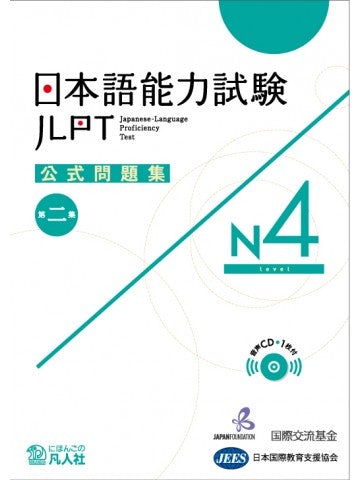
Preparing for the JLPT N3 in 2025? This intermediate level is a significant milestone on your Japanese language journey, bridging the gap between beginner and advanced proficiency.

Before you dive into studying for the JLPT N3, you’ll need the right textbooks to guide you. With so many options out there, choosing the best ones can feel a bit overwhelming. But don’t worry! Picking the right materials is key to keeping your study plan balanced and effective. To make things easier, we’ve put together a list of 20 highly recommended textbooks for JLPT N3 prep in 2025, covering everything from grammar, vocabulary, and kanji to listening, reading, and practice tests.

About JLPT N3

The JLPT N3 covers four parts: vocabulary (including kanji), grammar, reading, and listening. To take the exam, you should be very familiar with basic Japanese (N4 and N5), understand reading materials discussing topics about everyday life, grasp summary information such as newspaper headlines, and understand daily conversational Japanese.

Simply memorizing words and kanji is not enough, as you will need to show aptitude in your grammar knowledge, reading comprehension, and listening skills.

When you start browsing for JLPT textbooks, you might notice that they generally fall into two categories: all-in-one series, which cover all sections of the test, and specialized books, which focus on specific areas such as grammar, kanji, or vocabulary. Some of these books lean more toward a workbook format, offering numerous exercises and mock tests rather than in-depth explanations.

Alternatively, if you are looking for a more comprehensive way to study for the examination, you can check out our study tips to pass the N3 JLPT. If you are looking to take lower levels of the JLPT, we also have recommendations for JLPT N4 textbooks and JLPT N5 textbooks.

Study the JLPT Smarter with Coto Academy!

Getting ready for the JLPT? Boost your chances of passing with Coto Academy’s JLPT Prep Course. We offer two flexible options: a year-round course and an intensive 3-month sprint course timed perfectly before test day. What makes these classes stand out is the teachers, who specialize in teaching JLPT. They will give you tips and techniques you simply won’t get from self-study. The class also covers mock tests, reading practices, and explanations of essentials such as Japanese grammar, vocabulary, kanji, and more! 

20 Best JLPT N3 Textbooks

Here is our ultimate list of N3 textbooks that we love and feel can help you most prepare for the exam. As mentioned, some textbooks focus on certain areas, use mock tests, or use different tools to help you study. So, we divided our recommendations into the following categories: All-in-one Comprehensive, Focused Skills, Mock Exam Workbooks, and Bridge to Advanced Japanese. 

All-in-one Comprehensive JLPT N3 Textbooks/Series

These N3 textbooks are the most comprehensive and well-rounded, covering all skills and areas that will be on the N3 exam.

1. New Kanzen Master N3
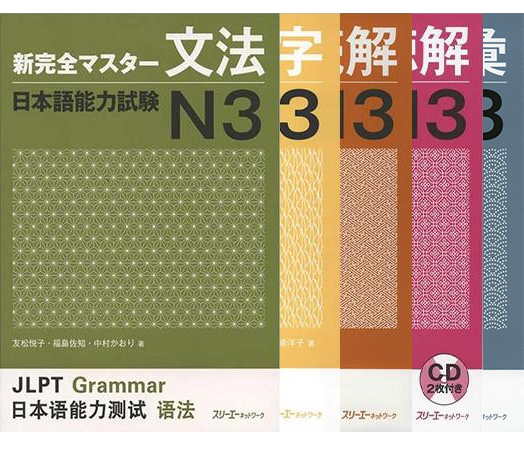
Pros: Provides thorough, in-depth coverage of every section of the JLPT N3 test.

Cons: Each book must be purchased separately, which can be more expensive.

New Kanzen Master is one of the most used resources to ace the JLPT N3. The textbook has been split into 5 major components: kanji, vocabulary, grammar, listening, and reading. The downside is that this means you will need to buy all separate books, but it might be a good thing for some Japanese learners. Because each book only focuses on one element, this makes learning much more comprehensive. It’s also a good option for individuals who only want to focus on certain areas that may be their weak points. For example, if you’re good at kanji, you can opt away from buying the New Kanzen Master JLPT N3: Kanji.

The JLPT N3 textbooks include example sentences and in-depth explanations of their focus areas. The textbooks can be purchased individually or as a set of five.

The N3 level currently has 5 series:

  • New Kanzen Master JLPT N3: Listening (with CD)
  • New Kanzen Master JLPT N3: Grammar
  • New Kanzen Master JLPT N3: Kanji
  • New Kanzen Master JLPT N3: Reading Comprehension
  • New Kanzen Master JLPT N3: Vocabulary

Price (set of 5 books): $91.01 (¥10,428 JPY)

Purchase the book now!

2. Nihongo So-Matome JLPT N3
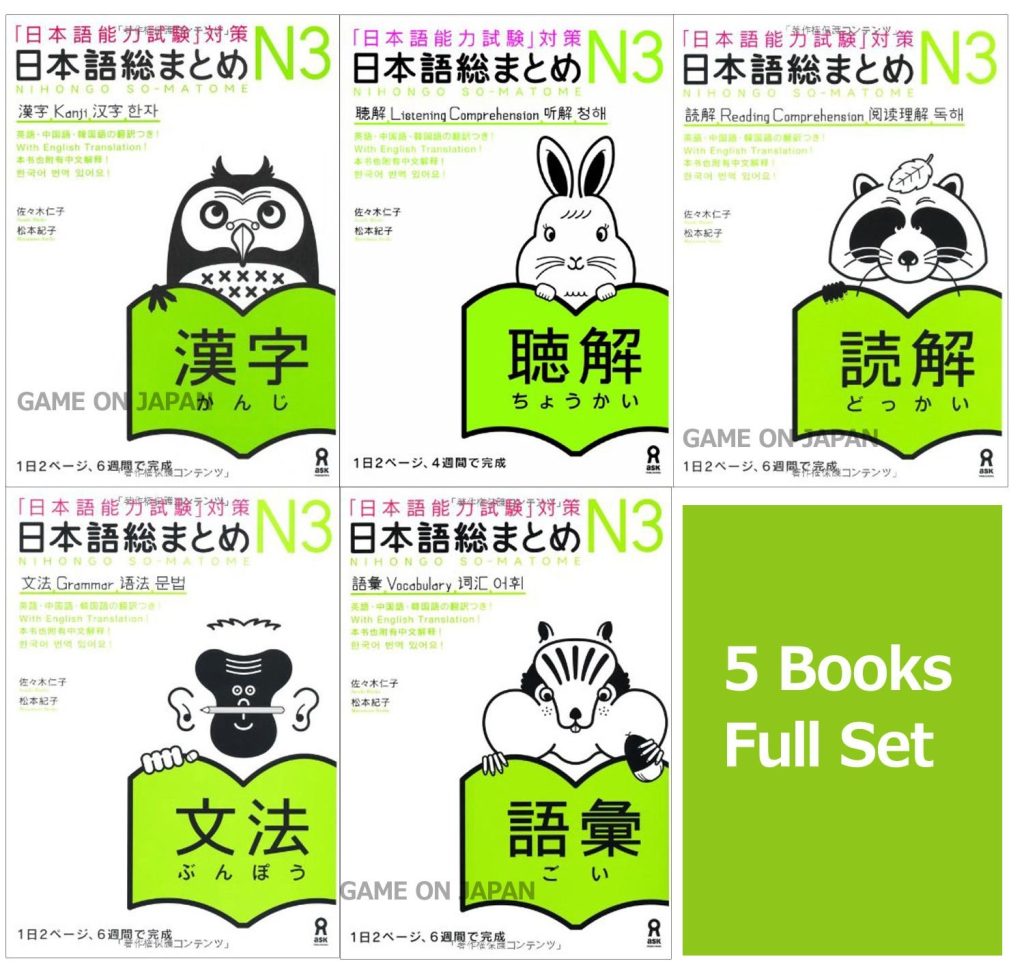
Nihongo So-Matome JLPT N3

Pros: Each book is designed for a 6-week study plan, which helps to guide learners.

Cons: To fully benefit from the series, you may need to purchase multiple books for different skills

The Nihongo So-Matome JLPT N3 series book is a perfect study guide for intermediate-level learners. The JLPT N3 textbook can be considered to be one of the easiest Japanese textbooks to master, as the content has been broken down to ‘daily digests.’

Each book in the series has been designed to finish within 6 weeks, with a practice test available at the end of every week. This means that you would have to go through at least 1 exercise a day if you want to be able to complete it within the 6 weeks. Similar to the New Kanzen Master, each test section is separated into different books.

The book currently has 5 series:

  • Nihongo So-matome JLPT N3: Grammar
  • Nihongo So-matome JLPT N3: Kanji
  • Nihongo So-matome JLPT N3: Reading Comprehension
  • Nihongo So-matome JLPT N3: Vocabulary
  • Nihongo So-matome JLPT N3: Listening Comprehension (w/CD) 

Price (Set of 5 Books): $93.00 (¥10,656 JPY)

Purchase the book now!

3. An Integrated Approach to Intermediate Japanese
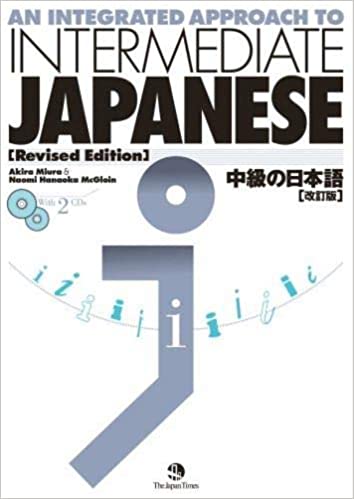
JLPT N3 textbooks An Integrated Approach to Intermediate Japanese

Pros: Offers practical Japanese lessons that are applicable beyond the JLPT to improve real-world language skills.

Cons: May not align perfectly with the JLPT curriculum, potentially leading to gaps in test-specific content.

This is one of the most extensive and comprehensive textbooks for intermediate learners. It is an all-in-one textbook that has all the major components of the JLPT: reading, vocabulary, grammar, and listening, with subsections for all the components. Every chapter contains day-to-day conversations and reading passages that are based on Japanese culture, which helps you to better understand the situations presented. Practice exercises are included at the end of every chapter.

Price: $39.00 (¥4,459 JPY)

Click on this link to purchase the book.

4. Quartet: Intermediate Japanese Across the Four Language Skills Vol. 1
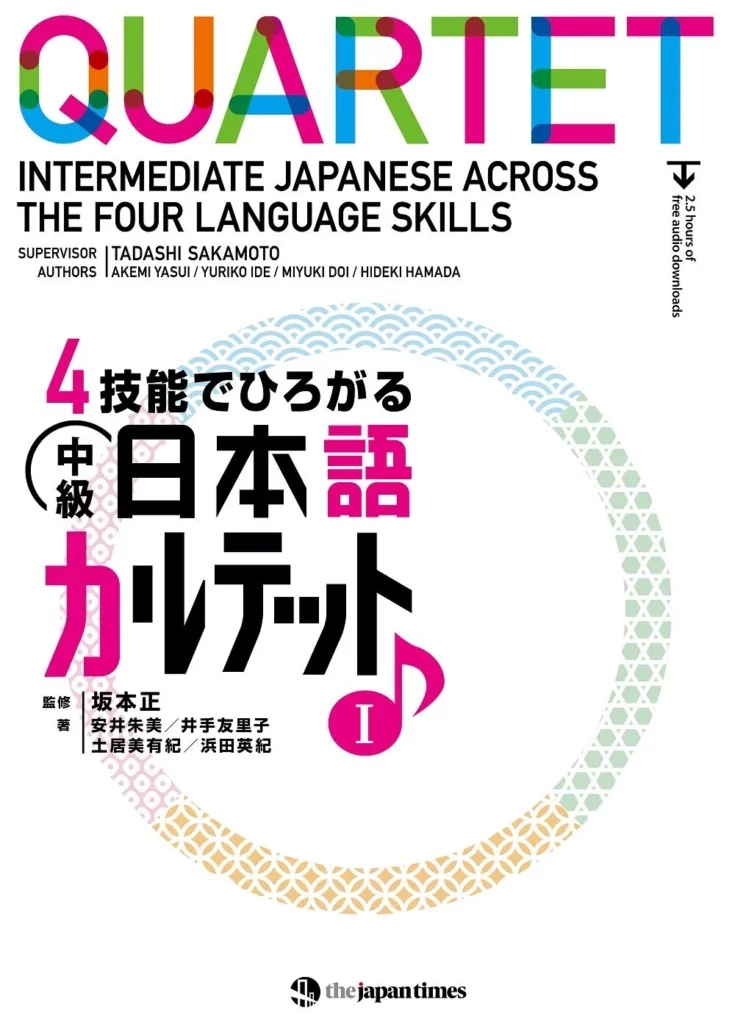
Pros: Comprehensive approach to intermediate Japanese by integrating reading, writing, speaking, and listening skills within each lesson.

Cons: The textbook is primarily in Japanese, with English explanations for grammar and vocabulary

This textbook offers a comprehensive study approach for the 4 Japanese language skills: reading, writing, listening, and speaking. It has 6 lessons, with a total of 55 grammatical patterns and expressions, 327 new kanji, and at least 700 new words. You also get a chance to write compositions based on the model texts and practice conversations using model dialogues that you can find in the book. There is also an additional 64-page supplementary book that contains vocabulary and kanji lists.

Price: $37.00 (¥4,218 JPY)

Purchase the book now!

Focused Skills N3 Textbooks: Reading, Grammar, Vocabulary, Kanji and More

These JLPT N3 textbooks provide a much deeper dive into specific skills tested on the exam, such as grammar, vocabulary, kanji, and others. These books are highly recommended for those who feel they need more practice in specific areas. 

5. JLPT N3 Points & Practice
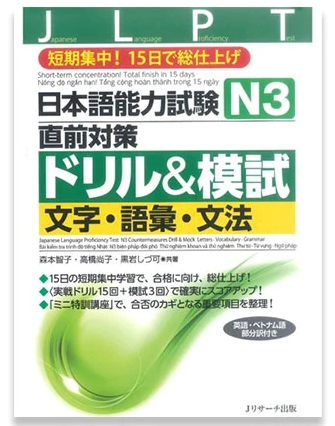
jlpt n3 textbook 15-day Intensive JLPT N3 Workbook (Kanji, Vocabulary, and Grammar)

The JLPT Points & Practice Japanese N3 textbook is perfect for individuals who are seeking to expand only N3-level vocabulary knowledge. New Japanese words and kanji are broken down into 30 chapters, all sorted based on topics and relevant context. There are also mock-test questions that mimic the real JLPT text.

Price: $16.99 (¥1,946 JPY)

Purchase the book now!

6. Mastering Kanji: Guide to JLPT N3 Kanji
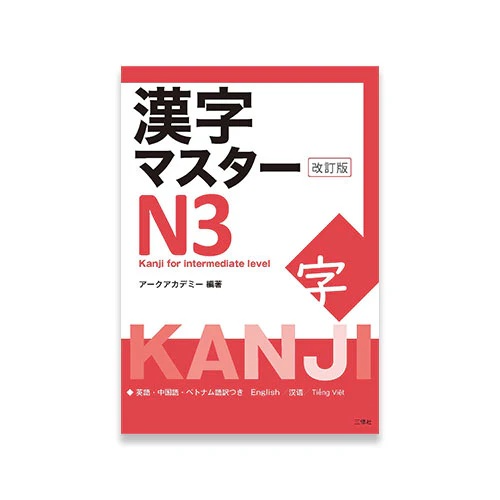
Kanji is commonly the biggest concern among test takers, as memorizing them takes longer time than memorizing the hiragana and katakana. The kanji test will often provide multiple choices of characters that look similar, too, so learners consider it a tricky section. The Kanji Master has 18 different units, with each chapter focusing on a topic. At the end of every chapter, you can find an achievement test to check your progress.

There are also illustrations and fun mini-quizzes that make learning interactive and interesting.

Price: $26.99 (¥3,969 JPY)

Purchase the book now!

7. The Best Vocabulary Builder for the JLPT N3
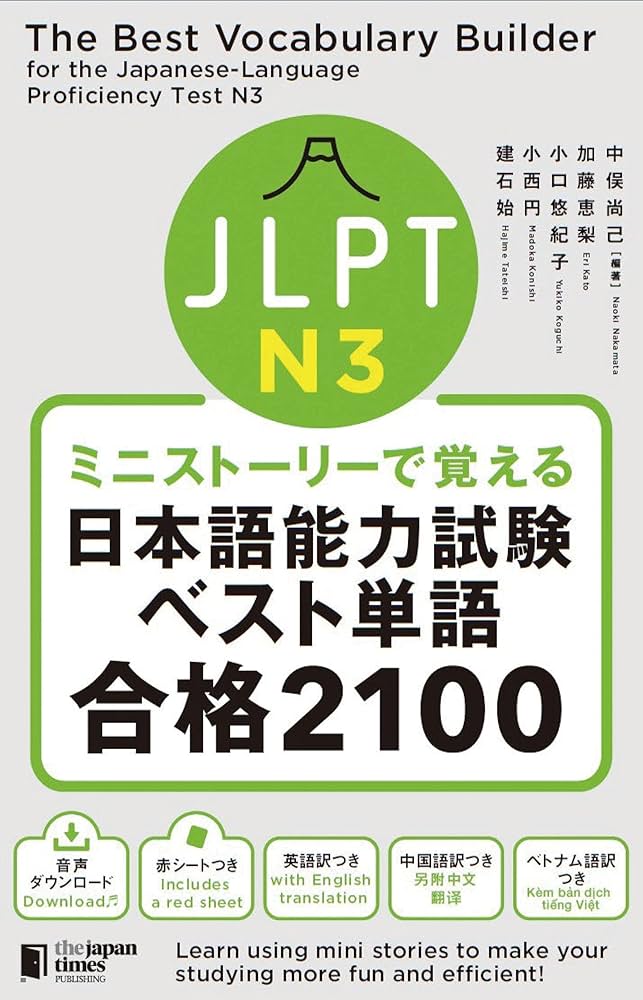
7. The Best Vocabulary Builder for the JLPT N3

The Best Vocabulary Builder is created by The Japan Times, the same accredited newspaper company that also published the Genki book series. Divided into 18 different topics, there are over 2,100 Japanese words to learn. There is also an accompanying app that you can download to listen to the audio of the vocabulary and examples.

Price: $17.99 (¥2,061 JPY)

Click on this link to purchase the book.

8. 55 Reading Comprehension Tests for JLPT N3
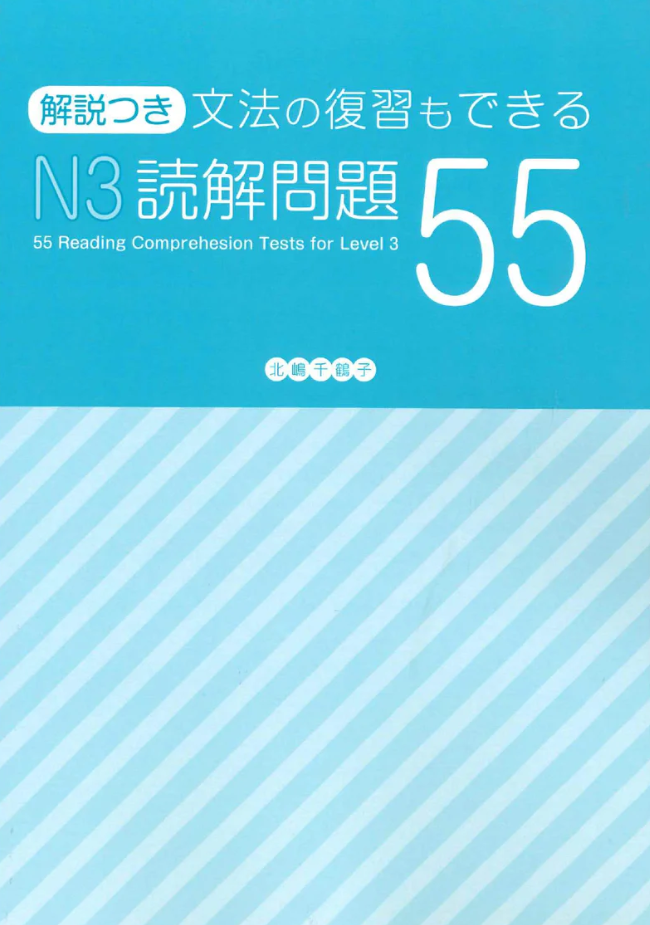
8. 55 Reading Comprehension Tests for JLPT N3

Many test-takers often get stressed once they reach the reading section of the exam. This is because the lengthy text passages can be time-consuming and are filled with new kanji and vocabulary. This textbook helps students maneuver the section easily, helping them develop a better ability to comprehend and find answers. Through 55 different reading passages and mock-up questions, you are conditioned to properly analyze content and find information in the passage efficiently.

Price: $24.99 (¥2,863 JPY)

Click on this link to purchase the book.

Read More: Best Mobile App to Learn Japanese.

9. Nihongo Dokkai: Speaking and Writing Through Reading Comprehension (Intermediate)
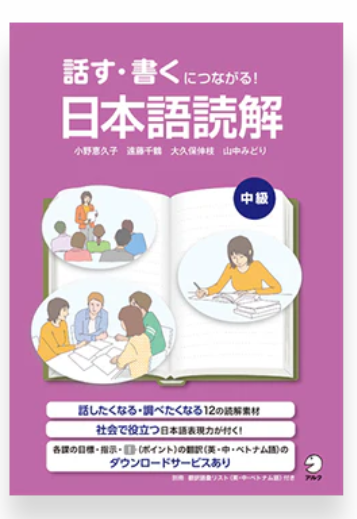
9. Nihongo Dokkai: Speaking and Writing Through Reading Comprehension (Intermediate)

Nihongo Dokkai (meaning Japanese reading) is another option for learners who want to strengthen their Japanese reading skills. There are 12 stories in total. We’ve tried it before, and while the topics are interesting, the overall study experience can be very challenging. You’ll encounter a lot of new and niche vocabulary on science, life, and media.

However, it’s a great way to get accustomed to reading in Japanese. It’s also a great tool for individuals looking to practice conversations; after the reading, you’ll find thought-provoking questions.

Price: $25.36 (¥2,905 JPY)

Click on this link to purchase the book.

10. Try! Japanese Language Proficiency Test N3
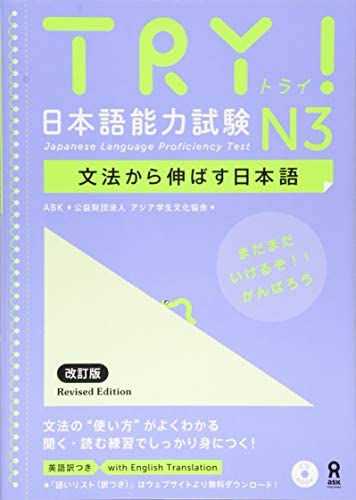
Try! Japanese Language Proficiency Test N3

The Try! series has been specifically designed to help students focus on Japanese grammar. Written as a fun and engaging book, there are 11 chapters that cover different real-life situations. The textbook has many great reviews from past readers who have mentioned that the book has a refreshing take on learning grammar.

The book includes an audio CD for listening exercises alongside an answer key pamphlet to review questions and practice tests. You can head over to the website for a free-to-download vocabulary list.

Price: $20.50 (¥2,348 JPY)

Click on this link to purchase the book.

11. Nihongo Power Drill Grammar

jlpt n3 textbooks Nihongo Power Drill Grammar

The Nihongo Power Drill Textbook is ideal for JLPT learners looking for additional grammar practice. The textbook has over 30 chapters with 580 questions in total, each designed to be finished within 10 minutes. The book includes a study schedule chart where learners can track their progress as they go through the book. They also have a textbook for N3 vocabulary, too.

Price: $15.00 (¥1,715 JPY)

Click on this link to purchase the book.

12. 2000 Essential Vocabulary for the JLPT N3
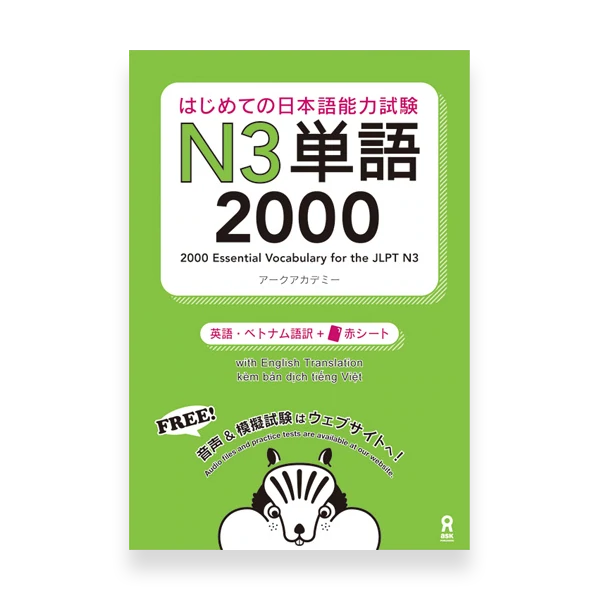
2000 Essential Vocabulary for the JLPT N3

As we mentioned, to pass the JLPT N3, you would need to know about 3,750 words (including 800 words for the N5 level and 700 words from the N4 level). This book has pretty much every new word you’ll need to be around N3, making it the perfect resource for someone looking to sharpen their vocabulary skills. The book is structured with 12 different topics about daily life, romance, sports, and place-specific settings. There are also links to their online tests and audio files that are free to download. Similar to the N4 and N5 versions of the book, there’s a red sheet to block the Japanese word (for a quick mini-quiz) and a checkbox for you to tick.

You’ll see a lot of JLPT participants bringing this book everywhere. That’s because the book’s size is one of its strong points, too. It’s small, compact, and relatively lightweight, making it perfect for someone to carry around.

Price: $16.99 (¥1,942 JPY)

Click on this link to purchase the book.

13. Kanji Look and Learn 

kanji look and learn jlpt n3 textbook

Kanji Look And Learn is a kanji learning textbook that has tons of illustrations and mnemonic hints that makes learning fun and interactive. It acts as a companion book for textbooks from the Genki series. The book has over 512 kanji and 3,500 essential vocabulary to learn. It explains everything about kanji from the history behind it to the number of strokes of each introduced character. This helps you to memorize the kanji easily and more efficiently.

Price: $25.00 (¥2,858 JPY)

Click on this link to purchase the book.

14. New JLPT N3 Taisaku-mondai & Yoten-seiri
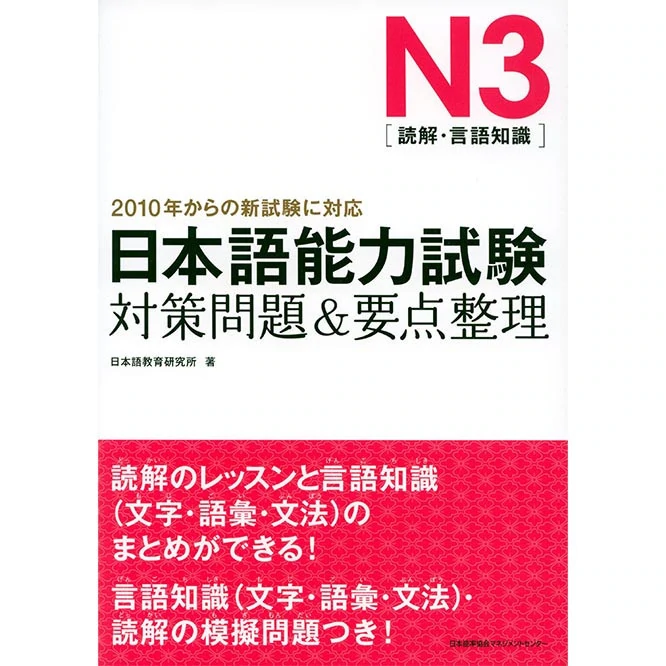
New JLPT N3 Taisaku-mondai & Yoten-seiri

You will be presented with various types of texts that you’d come across on a daily basis in Japan, such as event flyers and situational emails. The book gives you explanations to properly understand them and you will learn new vocabulary and grammar. There is also an additional section in the book that teaches you Japanese onomatopoeia, idiomatic expressions and sentence connectors.

Price: $15.00 (¥1,710 JPY )

Click on this link to purchase the book.

15. Nihongo Tadoku Books Vol. 5
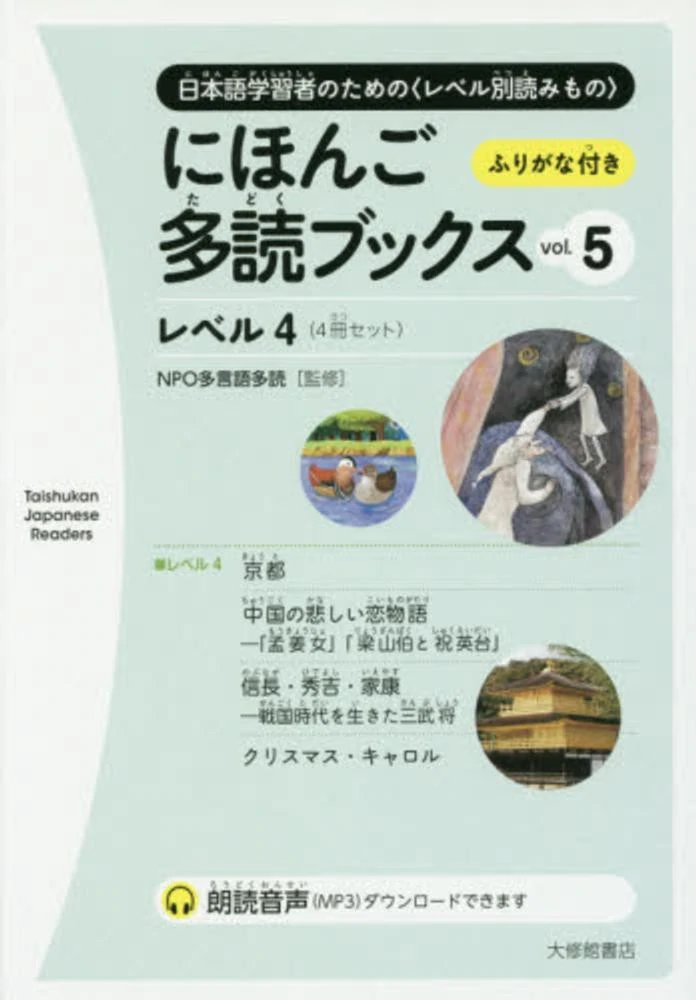
jlpt n3 textbook Nihongo Tadoku Books Vol. 5

The Nihongo Tadoku Book features 4 different stories that progressively get more difficult and longer. With the aim of stimulating more advanced reading techniques, this book is targeted at learners who want to improve their Japanese reading skills. You can find links to the audio files of the story passages in the book that are read by native speakers.

Price: $32.90 (¥3,751 JPY)

Click on this link to purchase the book.

N3 Mock Exam Workbooks

While many of the textbooks mentioned on this list consist of mock tests, the textbooks listed here are for those who just want practice questions. Just pure practice without any fluff.

16. JLPT N3 Mock Test
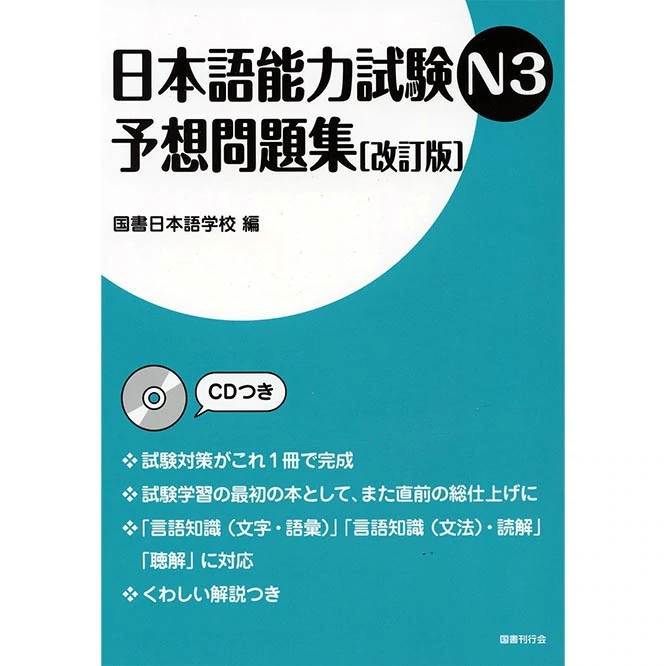
JLPT N3 Mock Test

Pros: Provides full-length practice tests that closely mimic the actual JLPT N3 exam format.

Cons: Lacks detailed answer explanations.

Once you are confident that you’ve learned everything needed for the exam, you can start doing mock tests through the JLPT N3 Mock Test. A mock test is a great practice tool because it mimics real-life JLPT questions, and it removes the shock factor. The book covers every aspect of the exam, but we recommend timing your sessions as you take the tests, too. This way, you can assess whether or not you’re answering at the right pace — and on time.

Price: $22.50 (¥2,572 JPY)

Click on this link to purchase the book.

17. Pattern-Betsu Tettei Drill JLPT N3
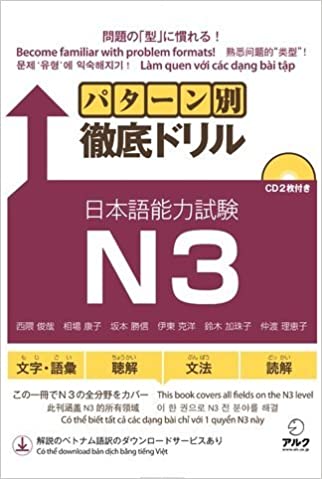
JLPT N3 textbooks  Pattern-Betsu Tettei Drill JLPT N3

Pros: Targeted practice by categorizing exercises into specific question patterns,

Cons: The book is entirely in Japanese, which may pose a challenge for learners who are not yet comfortable with reading Japanese texts.

The Pattern-Bestu Tettei Drill is a textbook full of a series of quizzes and practice tests that have been modeled to represent the actual JLPT exam. The book is composed of four units for practice: kanji and vocabulary; listening, grammar, and reading comprehension. If you have studied the necessary information for the examination, this book will give you a realistic experience and prepare you to ace the JLPT.

Price: $31.00 (¥3,534 JPY)

Click on this link to purchase the book.

Bridge to Advanced Japanese Textbooks

These textbooks are best suited for learners who are ready to start testing their skills for the next level. If you are already comfortable with N3 level material and would like to challenge yourself with material that will expose you to N2 or even N1 level content, these books are perfect for you.  

19. Academic Japanese for International Students: Listening Comprehension (Intermediate)
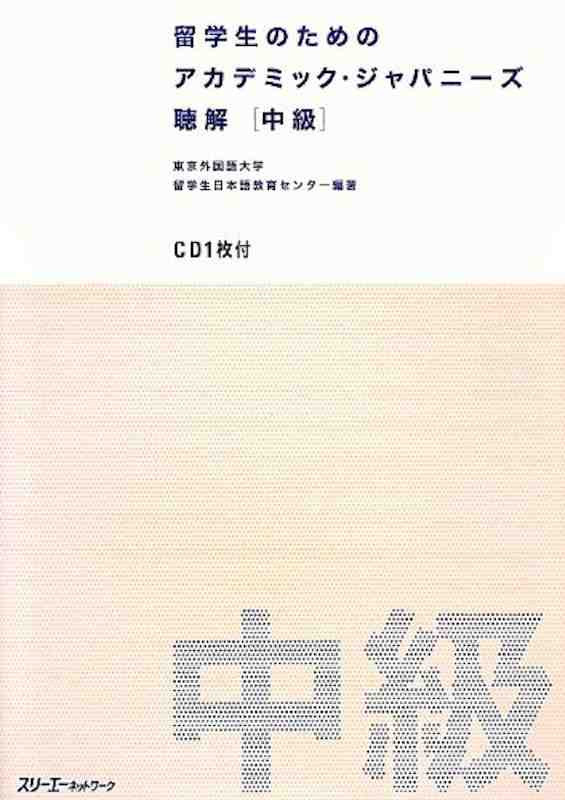
JLPT N3 Academic Japanese for International Students: Listening Comprehension (Intermediate)

Pros: The 15 units cover broad topics to provide more cultural context about Japan.

Cons: The book’s focus is on listening comprehension in academic contexts, which may not align with the specific requirements of the JLPT N3 exam.

This book is specifically designed for international students who are planning to enter a university in Japan, undergraduate and graduate students included. It focuses on enhancing your listening comprehension ability for university-level classes. You’ll find the topics more complex and multilayered.

In total, there are 15 topics, each with more mature themes that you would not usually find in normal textbooks. This includes topics on Christianity in Japan and traditional Japanese musical instruments. Each topic comes with the main listening passage and practice questions, from multiple-choice questions to 150-to-200-character paragraph writing. There are also links included for you to access their additional online material.

Price: $25.99 (¥2,963 JPY)

Click on this link to purchase the book.

20. Tobira: Gateway to Advanced Japanese
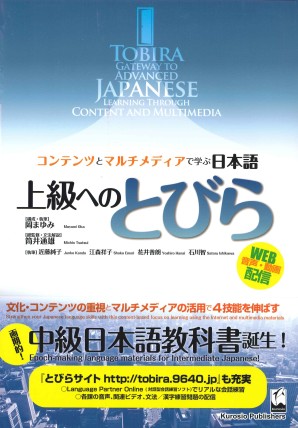
jlpt n3 textbook Tobira: Gateway to Advanced Japanese

Pros: Offers comprehensive coverage of grammar, kanji, vocabulary, and cultural topics. Covers all four language skills.

Cons: May be challenging for those who have not yet mastered the N3 level, as it is designed for learners transitioning to advanced proficiency.

Are you looking to challenge yourself with something more advanced (but still for intermediate-level learners)? The Tobira textbook might be the right choice. As the gap between JLPT N3 to N2 is big, you can think of this book as a ‘bridge’ to advanced Japanese.

The textbook explores a wide range of topics from Japanese geography and history to modern-day culture. It allows development of skills in reading, listening, writing, and speaking. Since there are no translations for most of the content in the book, it pushes you to understand Japanese at a proficient level right from the first page. You can visit the Tobira website for their free-to-download supplemental learning materials.

Price: $44.85 (¥5,138 JPY)

Click on this link to purchase the book.

Final Thoughts: Pass JLPT N3 with Coto Academy!

Preparing for the JLPT N3 is a big step: it marks the transition from beginner to intermediate Japanese and proves you can handle everyday conversations, understand news headlines, and comprehend everyday writing materials. Choosing the right textbook can make the difference between studying aimlessly and progressing with focus.

At the end of the day, the “best” textbook depends on your learning style, your timeline, and your weaknesses. The good news is that every resource on this list has helped thousands of learners pass the JLPT N3, so you can’t go wrong.

Ready to Pass the JLPT? Join JLPT Lessons at Coto Academy!

Currently, we offer:

Contact us for a Japanese-level check and a free consultation on the best JLPT prep course for you!

FAQ

How many words and kanji do you need for JLPT N3?

You will need to know around 650 kanji and 3,700 vocabulary words.

What is passing score for the JLPT N3?

You would need a minimum of 95 points to pass the JLPT N3.

How long will it take you to pass the JLPT N3?

It should take roughly 900 study hours

What are the benefits of taking the JLPT N3?

Passing the N3 will allow you to live fairly comfortably in Japan. You will also get much more job opportunities in Japan. This certification proves to an employer that you are able to read and understand Japanese with specific contents that concern everyday topics.

How can you study effectively for the JLPT N3?

There are plenty of useful resources out there to study for the JLPT. One effective studying method is using Anki. Anki is basically a free, open-source, spaced-repetition flashcard app and has become increasingly popular in the Japanese learning community.

Studying for the JLPT N3? Check out our guide on:
You’ve decided to take on JLPT N5, but looking for the right Japanese N5 textbook can feel more overwhelming than actually studying the language.

So, read this guide to find out the top 20 N5 textbooks for beginners to ace the JLPT with flying colors — or to start your studies on the right foot. When you’re ready to jump to the next level, we have also JLPT N3 textbook and JLPT N4 textbook recommendations!

Should I take the JLPT N5 Exam?

If you plan to study Japanese for the long term, signing up for the JLPT N5 helps you set a concrete goal. As a matter of fact, many Japanese language schools require students to have at least a JLPT N5 certificate, or fulfill the 150-hour study requirement of an official Japanese language course. Even though it will only cover the very basics, it’s the perfect way for beginners to stay motivated. JLPT N5 requires you to master at least 800 Japanese vocabulary words and 100 kanji, so you can also assess your ability and level appropriately.

Even if you’re not taking the JLPT N5, these textbooks are great for learners to soak in all the important beginner-level Japanese language components: hiragana, katakana, key vocabulary, and basic kanji. But what’s the best one you can find online?

Don’t know where to start with the JLPT? Check out our full guide on how to study for the JLPT!

What Will I Need To Pass the JLPT N5?

In order to pass the JLPT N5, you will need to know hiragana, katakana, kanji (around 100 characters), and master some essential grammar. You will also need to understand basic conversation in Japanese since there is a listening section. So, the best textbooks often prepare you specifically for the JLPT N5 or focus on one of the key areas, such as vocabulary, fundamental grammar, etc. There are a variety of options out there, but here are our top 20 picks!

Read More: Top 100 JLPT N5 Vocabulary List

Study the JLPT Smarter with Coto Academy!

Getting ready for the JLPT? Boost your chances of passing with Coto Academy’s JLPT Prep Course — designed for busy learners. This class is perfect for students who plan to take the JLPT exam and work optimally towards their objectives. It covers exam practices and explanations of essentials such as Japanese grammar, vocabulary, kanji, and more! 

Top JLPT N5 Textbooks

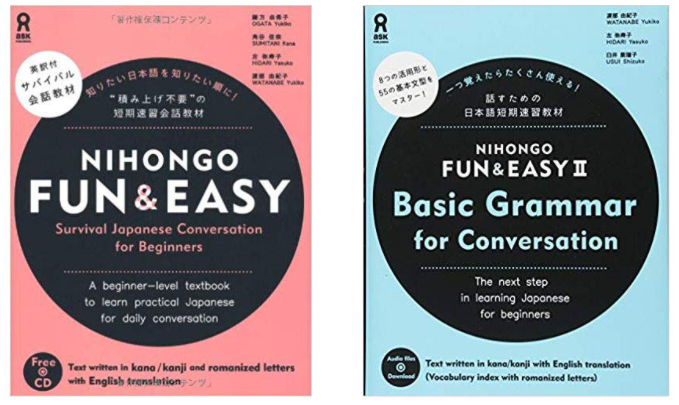
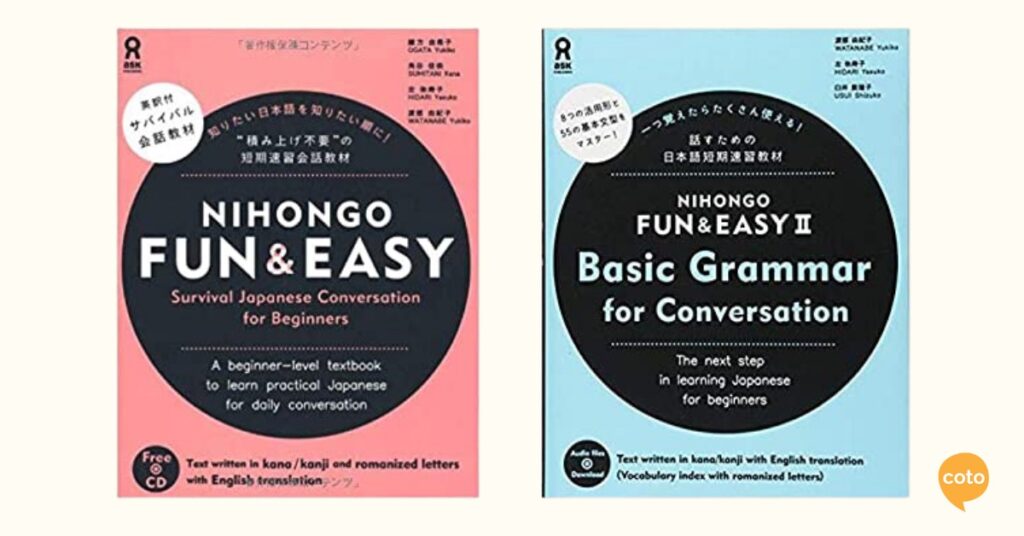
1. Nihongo Fun and Easy

Nihongo Fun & Easy Textbooks

Nihongo Fun and Easy is Coto’s self-developed study book. This book is designed to help students who are new to Japanese, including those with no prior knowledge of the language, to acquire natural-sounding, essential Japanese that can be used immediately in daily conversation. It’s a great option for beginners who want to study on their own. All practice and examples come with full English translation. You don’t have to worry about knowing hiragana and katakana first, too. The textbook comes with romaji, and you will learn the alphabet along the way.

The book includes lessons on simple Japanese words and a list of verbs and adjective conjugations. You’ll also receive an audio CD for learning dialogues in both Japanese and English. The book comes with an audio CD for learning conversational dialogues in both Japanese and English.

The book currently has two volumes:

  • Nihongo Fun & Easy: Survival Japanese Conversation for Beginners
  • Nihongo Fun & Easy 2: Basic Grammar for Conversation for Beginners

Price: $24 (¥2,782)

Click on this link to purchase the book.

Many of our courses use this textbook as well. Feel free to contact us about our JLPT Courses and more!

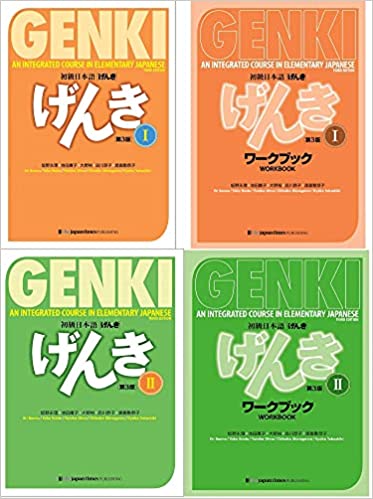
2. Genki

Genki is one of the most used Japanese language textbook series for beginners. Lesson chapters don’t focus on the JLPT itself but on everyday real-life situations and dialogues. For example, in the first lesson, they first teach you about conversations that can happen during the day, combined with clear and concise explanations about grammar and vocabulary.

Keep in mind that Genki is a textbook that was specifically designed for classroom teaching, so it may not be perfect for self-learners.

Price: $39.90 (¥4,601)

Click this link to purchase the book.

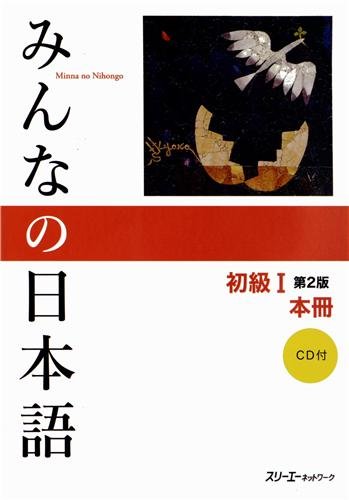
3. Minna No Nihongo

Minna no Nihongo is another popular classroom textbook. Lesson chapters include Japanese grammar, vocabulary, listening, and speaking skills. The text in the book is also fully in Japanese, so you will have to know hiragana and katakana in advance.

Price: $28.80 (¥3,920)

Click this link to purchase the book.

Want to study JLPT with the best native tutors?

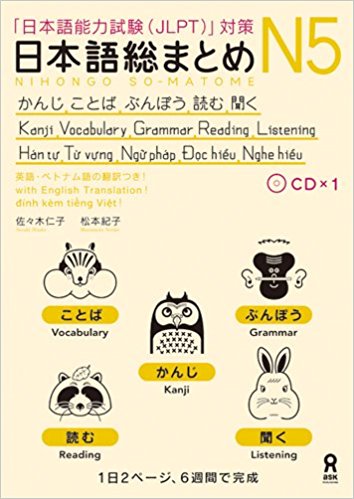
4. Nihongo So-Matome N5

The Nihongo So-Matome N5 is an all-inclusive textbook. The book features 42 daily Japanese lessons that are categorized as kanji, vocabulary, grammar, and reading. It’s designed as a 6-week self-study aid. You’ll find common grammar points, guides on syntax and a list of kanji and vocabulary commonly found in the JLPT N5 exam. The textbook also includes a reading and listening practice with a pre-recorded audio CD.

Some popular topics covered in the textbook are

  • What’s your name?
  • What are you doing?
  • Hands and feet

Price: $21.99 (¥2,535)

Click this link to purchase the book.

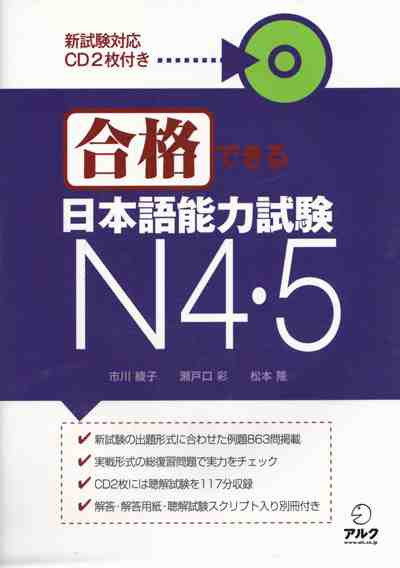
5. Goukaku Dekiru JLPT N4 & N5

Gokaku dekiru jlpt prep textbook image

While the Minna no Nihongo or Genki are N5-level, they’re not necessarily targeted to students who want to take the JLPT. For that, the Goukaku Dekiru JLPT book series is by far the most popular choice for test-takers. The textbook breaks down the JLPT into two parts. Part one focuses on all grammar and vocabulary, with 863 questions to help you tackle the language knowledge section. Part two is a collection of mock tests in the official format of JLPT.

The book includes two CDs for the listening section and an answer book.

Price: $29.89 (¥3,446)

Click this link to purchase the book.

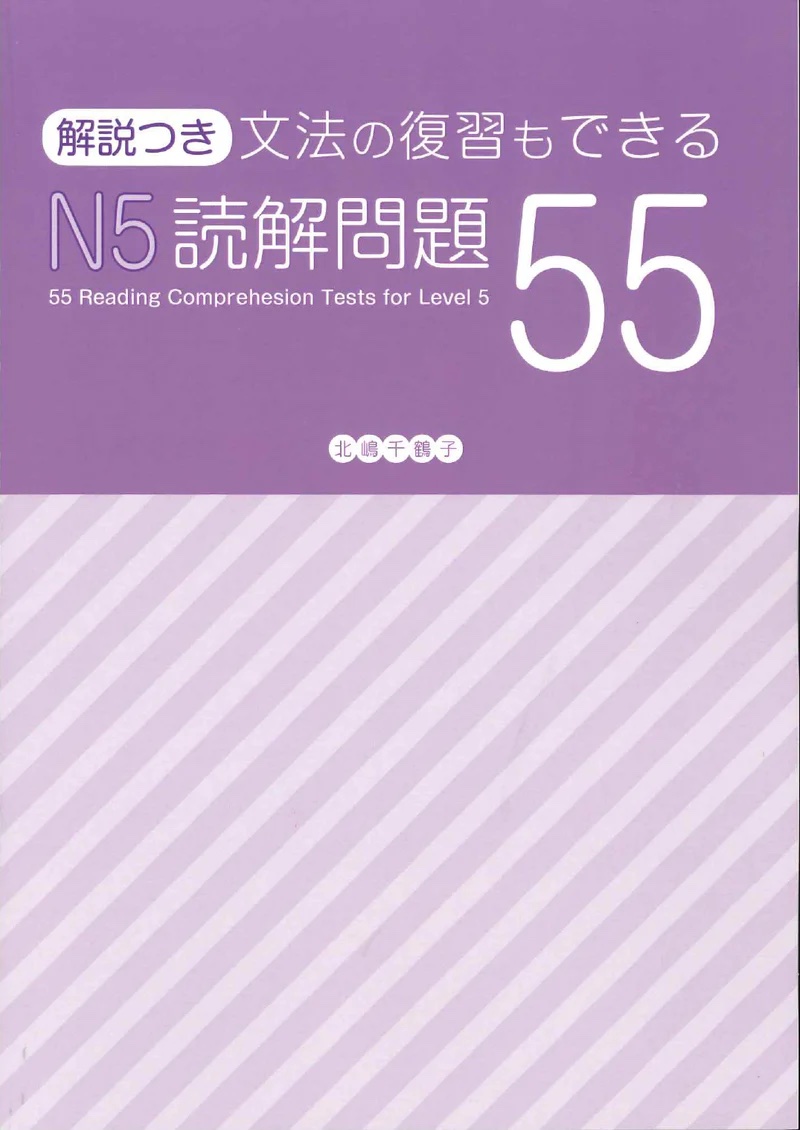
6. 55 Reading Comprehension Tests for JLPT N5

The textbook includes 55 different N5-related Japanese readings with over a hundred questions. You will learn to analyze passages by understanding how to break down sentences into simple words to better comprehend them sentences. Questions in the book are modeled to represent the actual JLPT exam.

Price: $24.99 (¥2,881)

Click this link to purchase the book.

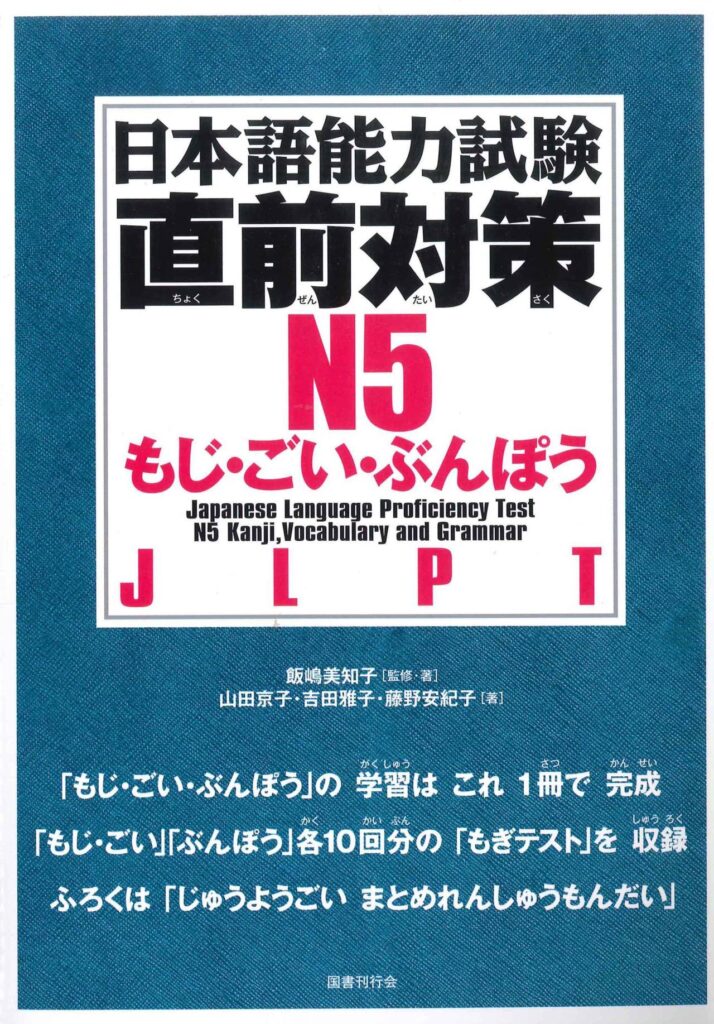
7. JLPT N5 Kanji, Vocabulary & Grammar Chokuzen-Taisaku

JLPT N5 Kanji, Vocabulary & Grammar Chokuzen Taisaku is a workbook perfect for anyone who is looking to take mock tests for the JLPT N5 exam, focusing on vocabulary, kanji, and grammar questions. Included is also an appendix section that contains important verbs, adverbs, and adjectives related to the N5.

Price: $17.73 (¥2,044)

Click this link to purchase the book.

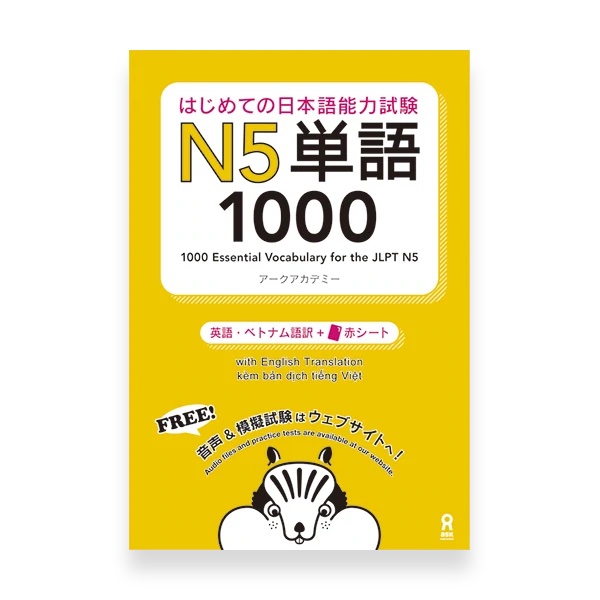
8. 1000 Essential Vocabulary for the JLPT N5

1000 Essential Vocabulary JLPT N5 Text book

To pass the JLPT N5, you will need to know 800 vocabulary, so learning 1,000 is a safe bet that you’ll ace the test. The textbook is broken down into 10 different chapters. Vocabularies are sorted based on their function and related contexts, like friends, food, hobbies, shopping, living, and health. This allows for better word retention.

There’s also a link to audio files for learners who want to hear the words and example sentences. Because of the small size of the vocabulary book, many learners will conveniently carry it around. There’s a red sheet to block the Japanese word (for a quick mini-quiz) and a checkbox for you to tick.

Price: $14.99 (¥1,728)

Click this link to purchase.

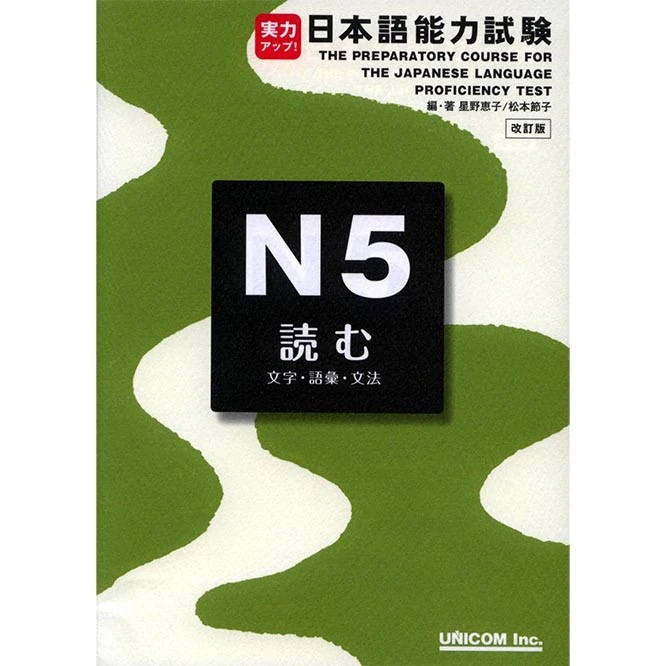
9. The Preparatory Course for the JLPT N5 Reading, Kanji, Vocabulary, and Grammar

Image for the textbook: preparatory course for the jlpt n5

This textbook is a study guide for the JLPT N5. Chapters of the book include all material related to N5 kanji, grammar, forms of speech, and model sentences with simple explanations, making it easy to study on your own. There are multiple practice problems that allow you to check your comprehension level as well.

Price: $25.80 (¥2,974)

Click this link to purchase.

10. Tanki Master JLPT N5

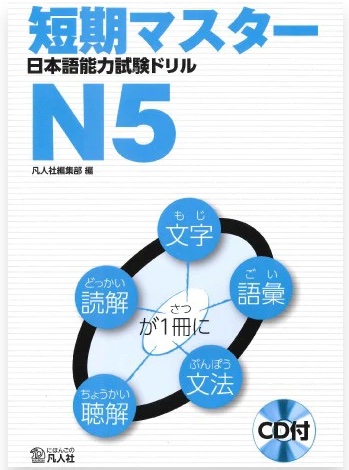
With an audio CD, the Tanki Master JLPT N5 has five different categories of Japanese Learning: Japanese characters, vocabulary, grammar, listening, and reading. The contents cover questions for every section of the test. The book is especially effective when used to help you review. It’s separated into two parts: practice questions and practice tests for mockups,s for learners to see how they did.

Price: $20.00 (¥2,304)

Click this link below to purchase.

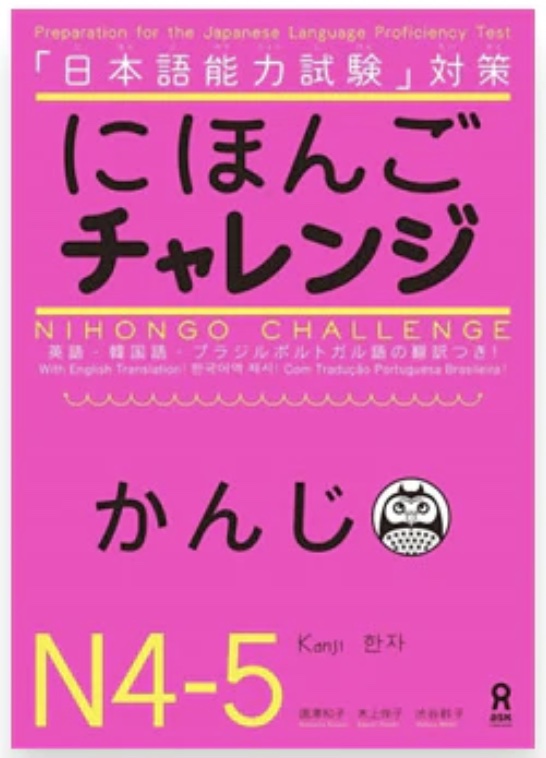
11. Nihongo Challenge for JLPT N4 & N5 Kanji

Nihongo Challenge N4 - N5 textbook

Each chapter in the Nihongo Challenge series teaches about 10 new kanji, complete with their stroke orders and free blank spaces to practice writing them. What is unique about this textbook is that each kanji has its own illustration and explanation.

Price: $19.00 (¥2,189)

Click this link to purchase the book.

12. Mastering Kanji: Guide to JLPT N5 Kanji

Mastering Kanji N5

All kanji is thoughtfully introduced with a number of illustrations, which makes your learning more interesting and effective, too. At the end of every chapter, there will be review questions to assess your progress. You can also check your level in a separate “achievement”.  

Price: $25.00 (¥2,881)

Click this link to purchase the book.

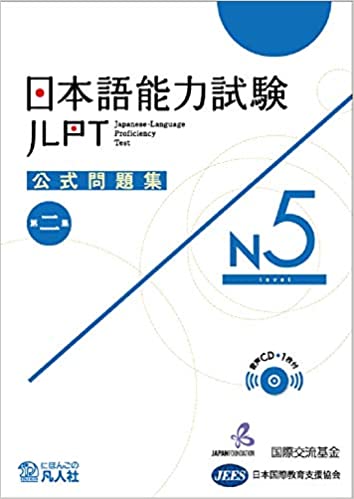
13. JLPT Official Practice Workbook

JLPT Official Practice Workbook

Once you’re confident that you’ve learned everything needed for the test, you can start doing mock tests through the official JLPT practice workbook.

Acting as a revision guide, the workbook is perfect if you wish to practice before the actual exam. There’s an audio CD for the listening section. The workbook has over 33 vocabulary and kanji sections, as well as 26 grammar and 6 reading questions.

Price: $14.00 (¥1,613)

Click the link below to purchase the book.

14. Basic Kanji Book

image of the Basic Kanji Book

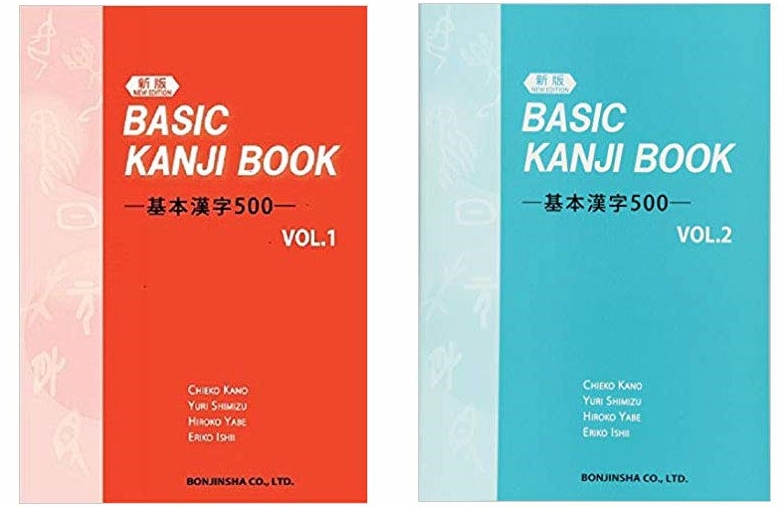
As one of the classic books for learning kanji, Basic Kanji Book Vol. 1 & Vol. 2 gives 500 fundamental kanji. You will learn to memorize kanji and write them according to their correct stroke order. Each unit has simple practice exercises to practice writing the kanji.

Price: $29.00 (¥3,344)

Click this link to purchase the book.

15. Try! Japanese Language Proficiency Test N5

Image of the Try! Japanese Language Proficiency Test textbook

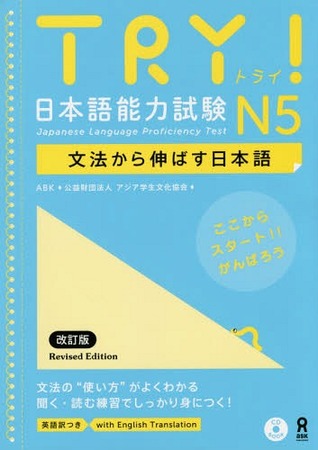
As part of the Try! series, the N5 volume covers nine different chapters of everyday life conversations. The Try! series is specifically designed to help students focus on Japanese grammar. In total, there are nine chapters, each equipped with practice questions and a final review.

Price: $24.50 (¥2,825)

Click the link below to purchase the book.

16. Drill and Drill JLPT N5 Kanji, Grammar, Vocabulary, Reading and Listening

Image for Drill And Drill JLPT N5 textbook

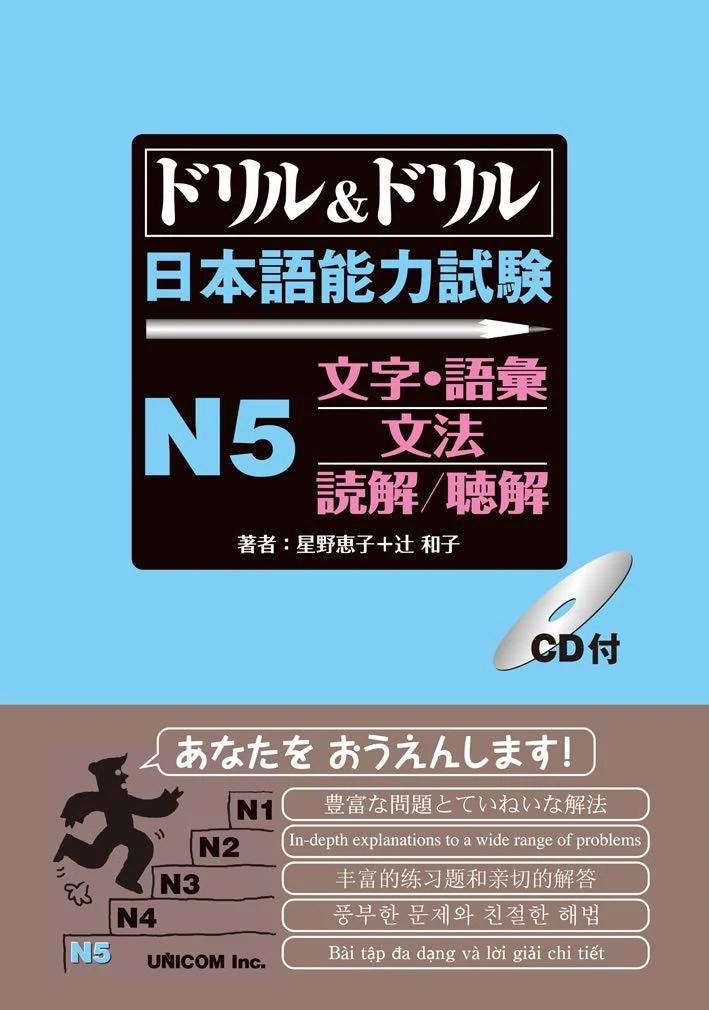
The Drill and Drill JLPT N5 has over 250 questions on vocabulary, grammar, reading, and listening. Answers to the questions are provided in a separate booklet at the back of the book. The booklet contains detailed explanations of each question as well as example sentences and tips to answer each question. You can also find an audio CD for the listening section of the test.

Price: $28.00 (¥3,229)

Click this link to purchase the book.

17. JLPT Preparation Book Speed Master – Quick Mastery of N4 & N5 Vocabulary

JLPT vocabulary speed master

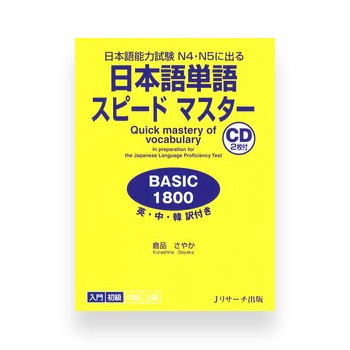
This is a book that combines N5 and N4 vocabularies. There are 1,800 words in total, separated into 50 units based on their relevant topics. Readings of the words are shown in both kanji and hiragana and have translations in English and Chinese. Every new word learned has a checkbox that makes it easy to continue where you left off.

Price: $19.99 (¥2,305)

Click this link to purchase the book.

18. JLPT Study Guide

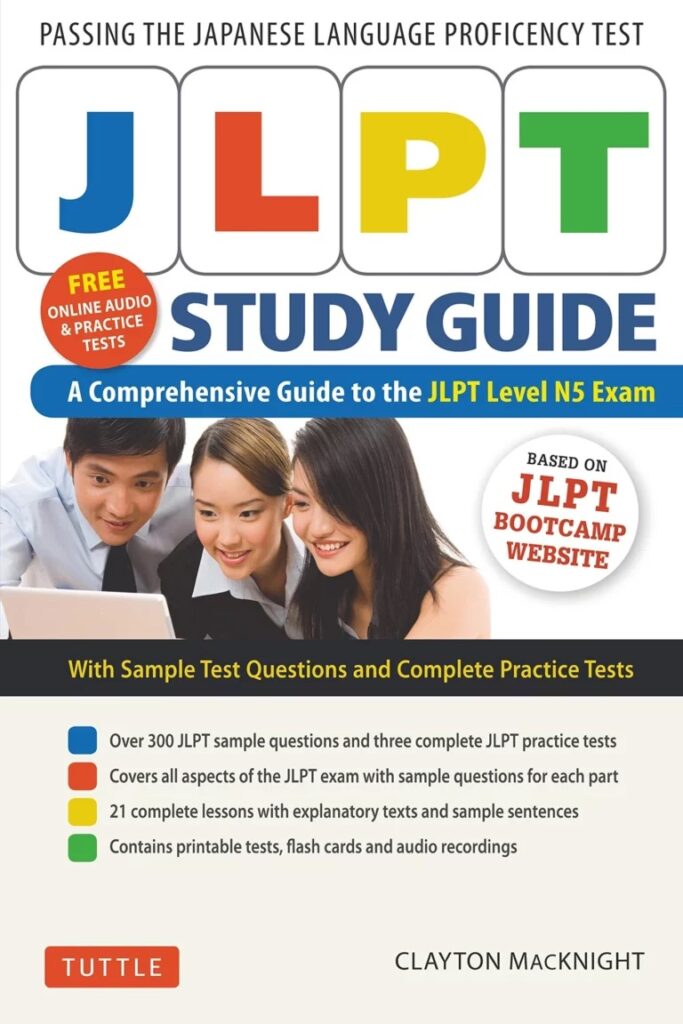
Created by a popular JLPT mockup test website, JLPTBootCamp.com, the book has over 300 practice test questions with printable flashcards for vocabulary, hiragana, katakana, and kanji.

Price: $25.00 (¥2,883)

Click this link to purchase the book.

19. Yookoso! Invitation to Contemporary Japanese Student

Textbook called Yookoso! a contemporary Japanese introduction

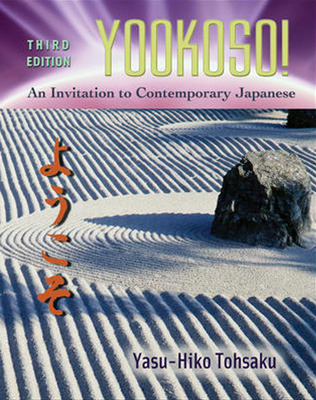
This book serves as a two-volume series for basic Japanese. It’s known to be the first to integrate all the Japanese language technical skills. The book is comprehensive but simple to follow. Although it’s more on the expensive side, there are a lot of example sentences and detailed explanations to help break down complex sentences into simpler words and phrases.

Price: $146.01 (¥17,692.15) 

Click this link to purchase the book.

20. Japanese Kanji Mnemonics JLPT N5

JLPT Kanji mnemonics N5 textbook

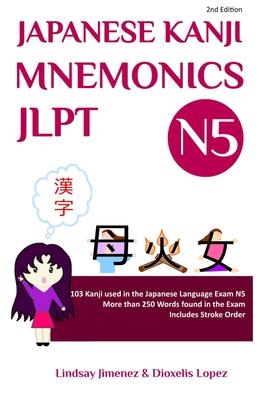
Centered to help readers pass the exam, the book focuses on the 103 most common Kanji found on the N5 level test. The book is mostly used as flashcards as readers will be able to find the kanji mnemonic on the front page and the kanji information on the back of the page. Each mnemonic has its own drawing as well as a sentence example and explanations for better memorization.

Price: $16.91 (¥1,937)

Click this link to purchase the book.

What’s Next After Finding The Best JLPT N5 Textbook

Once you have found the best JLPT Textbook, use you will need to it to help strategize how to pass the JLPT N5. It’s a pretty long test and your chosen textbook(s) should cover every area from reading to listening in Japanese.

While finding JLPT learning resources is great for self-learning, we also recommend finding the right support from a professional instructor. We offer both JLPT self-study courses as well as online or in-person JLPT Courses taught by an experienced teacher who can help you dissect the N5 exam and be fully equipped to pass!

Want to learn JLPT N5?

FAQ

How many words and kanji do you need for JLPT N5?

You will need to know about 100 kanji and about 800 vocabulary words.

How long does it take to pass the JLPT N5?

It should take roughly 100 – 200 class hours, depending on how you study and what resources you use.

How can you prepare for the JLPT N5?

Both the JLPT N5 and N4 levels have been designed to test classroom Japanese. The best way to prepare is to take an introductory or beginner course in Japanese. We also recommend you buy N5 textbooks and workbooks and work through them on your own to better prepare yourself.

When I register for the JLPT N5?

The JLPT is held twice a year, usually in July and December. If you’re outside Japan, the test may be held only once a year, in July or December. Registration is usually open until mid-March (for July) and mid-August (for December)

How can JLPT N5 help you in Japan?

It does not help you that much.

Passing the different levels of the JLPT can provide you with great opportunities to work in Japan. However, simply passing the N5 is not enough to help you since the N5 is just a test of basic knowledge of the Japanese language. You would require at least a JLPT N3 certificate if you want to work comfortably in Japan. If you are planning to take the JLPT, we would recommend that you go through all 5 levels until you feel comfortable having conversations in Japanese fluently.

Shhould I take JLPT lessons?

Taking JLPT lessons can significantly boost your chances of success by providing structured learning with experienced Japanese teachers. With Coto Academy, you’ll benefit from expert instruction, flexible schedules, and a proven track record of helping students pass levels N5 to N1.

Check out our guides for other JLPT levels as well:

The N1 is considered the most challenging level of the JLPT to master. It is so difficult to the point that even Japanese native speakers would struggle with the questions and often fail to get the 50 percent score needed to pass.

Similar to studying for the other JLPT levels, the test covers four parts: vocabulary (including kanji), grammar, reading and listening. Just memorizing words and kanji is not enough, as you will need to become fluent in grammar and pronunciation, as well as constantly practice your reading comprehension and listening skills. To pass the test, you will need to know about 10,000 Japanese words and 2,000 kanji.

As you go on your journey of mastering the N1, textbooks are not the only way to study for the JLPT. You should also listen to news reports on television as well as read Japanese books and newspapers to better enhance your Japanese.

But if you are looking for the more traditional way of studying using a textbook, check out our guide on the 10 best N1 JLPT textbooks.

If you are looking for a more comprehensive way how to study for the examination at your own time and pace, you can check out our study tips to pass the N1 JLPT.

While finding JLPT learning resources is great for self-learning, we also recommend finding the right support from a professional instructor. We offer online JLPT self-study courses for motivated individuals to help them pass the exam. By subscribing at 900 JPY a month (around 8 USD), you’ll get full access to all our JLPT self-study bundles.

1. 3000 Essential Vocabulary for the JLPT N1

1. 3000 Essential Vocabulary for the JLPT N1

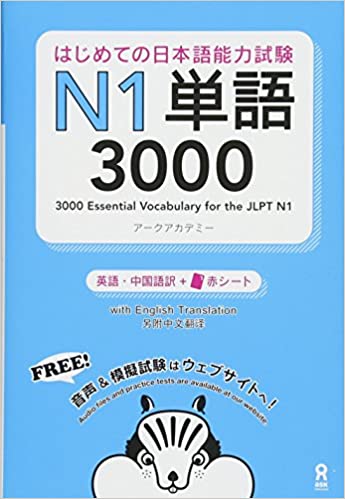
This is one of the conducive JLPT N1. Besides being known for its small and compact size, which is easy to carry around, it has all the vocabulary that you would need to learn to ace the exam. It is the perfect resource for someone looking to prepare for the JLPT N1.

The book has been structured with 14 different chapters about topics on relationships, living, home, school and more. There are also links to their free-to-download audio files and practice tests which can be found on their website. Similar to the JLPT levels of the book, there is also a red sheet to block the Japanese word (for a quick mini-quiz) and a checkbox for you to tick.

Price: $17.59 (¥2,025 JPY)

Click on this link to purchase the book.

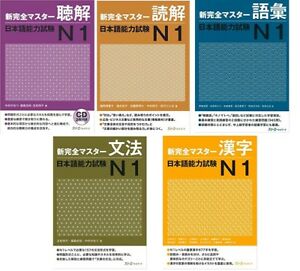
2. New Kanzen Master N1

2. New Kanzen Master N1

If you are looking to take the N1 level of the JLPT, New Kanzen Master is one of the most used resources to ace the examination. The book has 5 different versions, each with content on kanji, vocabulary, grammar, listening and reading. However, this means that you would have to purchase all 5 of the books in order to learn all test elements from this textbook and enhance your overall ability at the advanced level.

Each book has also been spilled into different parts, each focusing on a different aspect of the particular component of kanji, vocabulary, grammar, listening and reading. Once you have studied with this textbook, you can come out feeling confident and ready to ace the exam.

Price: $15.59 (¥1,794 JPY)

Click on this link to purchase the book.

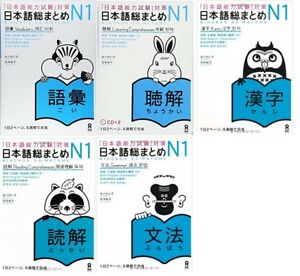
3. Nihongo So-Matome N1

3. Nihongo So-Matome N1

Passing the N1 can be known as a battle that requires tons of patience, hard work, and commitment. If you think you are up for the challenge and are looking for a weapon to help you in this battle, the Nihongo So-Matome series is the perfect tool for you.

The contents in the book have been broken down into ‘daily digests’ making it simple and easy to study with. Similar to the books from the other JLPT levels, the book has been designed to finish within 6 weeks, with a practice test available at the end of every week. 

The book currently has 5 series:

  • Nihongo So-matome JLPT N1: Grammar
  • Nihongo So-matome JLPT N1: Kanji
  • Nihongo So-matome JLPT N1: Reading Comprehension
  • Nihongo So-matome JLPT N1: Vocabulary
  • Nihongo So-matome JLPT N1: Listening Comprehension (w/CD) 

Price: $15.60 (¥1,796 JPY)

Click on this link to purchase the book.

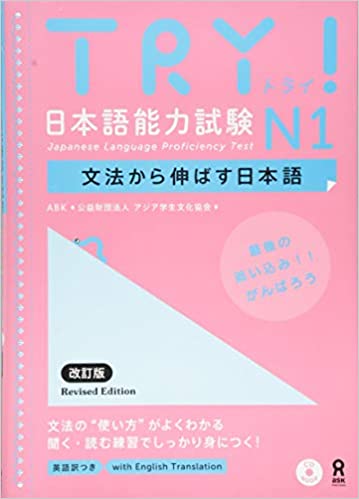
4. Try! Japanese Language Proficiency Test N1

4. Try! Japanese Language Proficiency Test N1

Different from other JLPT N1 textbooks, this book has been designed specifically for students to learn to practice their grammar. The Try! has been written as a fun and interactive book with intense drill practice to help you perfect your Japanese grammar. The book has over 10 chapters that will reinforce your knowledge through newspaper articles and heavy dialogues.

You can also head over to their official website for their free-to-download vocabulary list and audio files that can be used alongside the book.

Price: $23.60 (¥2,717 JPY)

Click on this link to purchase the book.

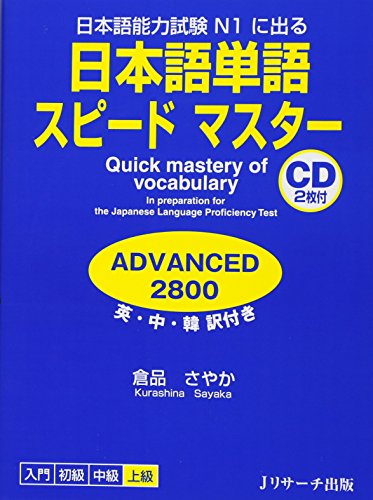
5. JLPT Preparation Book Speed Master – Quick Mastery of N1 Vocabulary (Advanced 2800)

5. JLPT Preparation Book Speed Master - Quick Mastery of N1 Vocabulary (Advanced 2800)

Aimed at advanced learners of the JLPT, this book will teach you 2,800 vocabulary for you to ace the examination. Readings of the words are shown in both kanji and hiragana and have translations in English and Chinese. There is also an included CD that allows you to study vocabulary wherever you go.

Price: $23.20 (¥2,670 JPY)

Click on this link to purchase the book.

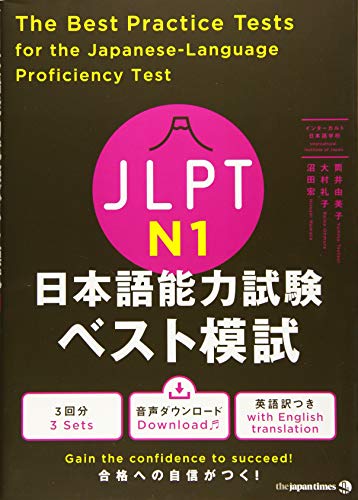
6. The Best Practice Tests for the Japanese Language Proficiency Test N1

6. The Best Practice Tests for the Japanese Language Proficiency Test N1

Are you ready to face the challenge of the N1 examination? If you are ready and would like to practice on mock tests first, this is the book for you! Through 3 different mock-up tests, you will be able to try out practice tests that have been modified to present the actual exam and check your readiness before the big day. With English translations, it will be easy to check against the answers as well as get explanations for the questions which you are incorrect.

Price: $24.00 (¥2,753 JPY)

Click on this link to purchase the book.

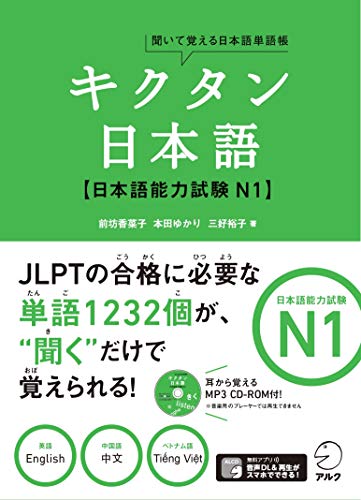
7. Kikutan Japanese Japanese Language Proficiency Test N1

7. Kikutan Japanese Japanese Language Proficiency Test N1

Looking to a compact-enough book to memorize Japanese vocabulary related to the N1? This book teaches you ways to master 1,232 words in just 2 minutes a day, but because it’s small, you can carry it around everywhere. You will learn 16 words every day for 11 weeks. The book also comes with an application that you can download to access the audio files for example sentences that have been recorded by native Japanese speakers

Price: $58.32 (¥2,420 JPY)

Click on this link to purchase the book.

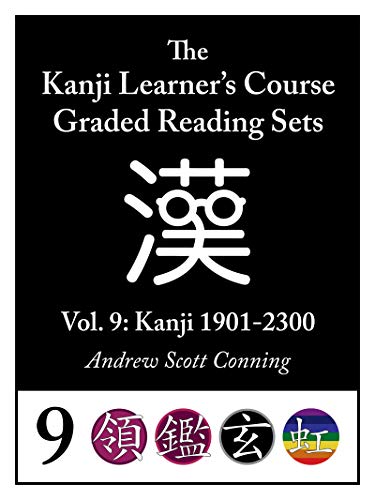
8. Kanji Learner’s Course Graded Reading Sets, Vol. 9: Kanji 1901-2300

jlpt n1 book Kanji Learner's Course Graded Reading Sets, Vol. 9: Kanji 1901-2300

With over 5,347 exercises and 66,000 kanji, proper pronunciation guides, character-by-character Kanji learning as well as extensive grammar support, the Kanji Learner’s Course is one of the most comprehensive Japanese reading comprehension tools. You will gain knowledge on how to apply each kanji you learn to real-life situations, and continuously review what you have already studied.

There are also links in the book for you to access their website that has downloadable content as well. If you are using an Apple device, you will be able to look up any unfamiliar words in the built-in J-E dictionary.

Price (E-Book): $9.99 (¥1,146 JPY)

Click on this link to purchase the book.

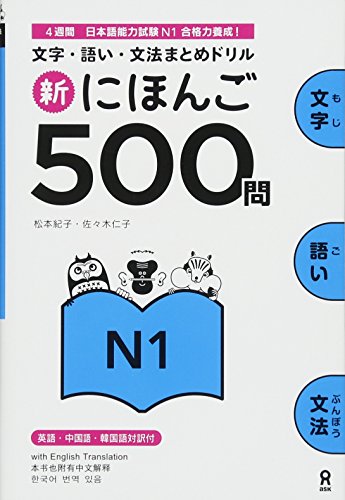
9. Shin Nihongo 500 Mon – JLPT N1

Shin Nihongo 500 Mon - JLPT N1

Coming as a highly recommended book by many people, this compact and easy-to-carry book from the popular 500 questions series offers you bite-sized drills that you can complete within 20 minutes a day. Through a series of multiple-choice questions aimed at the N1 level of Japanese studying, the book has been designed to be used every day for 4 weeks, finishing 5 kanji, 5 vocabulary, and 5 grammar questions a day.

The book also contains detailed answers with explanations in English, Chinese, and Vietnamese and an appendix with lists of kanji, vocabulary, and grammatical structures to make learning more effective.

Price: $14.80 (¥1,698 JPY)

Click on this link to purchase the book.

10. JLPT N1 Official Practice Workbook

JLPT N1 Official Practice Workbook

If you want to practice before the actual examination, you can start doing mock tests through the official JLPT practice workbook. It is the perfect revision guide for those looking to review the topics and questions beforehand. The book has been divided into 3 parts. Part 1 is the shiken mondai which are the test questions. Part 2 contains the answer key with detailed explanations. Finally, Part 3 explains the test structure with updated information about the JLPT. 

Price: $14.00 (¥1,606 JPY)

Click on this link to purchase the book.

How many words and kanji do you need for JLPT N1?

 You will need to know around 2,000 kanji and 10,000 vocabulary words in total.

How long does N1 JLPT take?

It should take roughly 2,150 hours of JLPT study to pass.

How hard is JLPT N1?

The N1 is the most advanced level of the JLPT. This is because it requires thousands of hours of memorizing kanji, reading kanji, and listening to and reading Japanese. You will need full focus when studying for the N1. You won’t find regular, day-to-day situations in their reading section either. Instead, expect science-related and academic texts filled with advanced kanji and industry-specific vocabulary.

What is the passing score the JLPT N1?

The overall passing score of the N1 is 100/180 (55.55%). However, you will still need to pass each section of the test to pass. For example, if you score below 19 points for one section (like the reading comprehension), you’ll still fail JLPT — even if you score 120 in total.

Not sure about your Japanese level? Take our free Japanese language assessment test

If you are planning to take the JLPT 2022 and would like help in mastering the JLPT from professional instructors, we recommend signing up for our upcoming online and in-person 2022 JLPT Prep course (Tokyo and Yokohama).

Want to take the 2022 JLPT but are not sure about your level? Get in touch with us and find out how we can help you achieve your Japanese language target. If you’re unsure where you are, we provide a free Japanese level check. You can also contact us at info@cotoacademy.com for any questions about course options and details.

Coto Japanese Academy is a unique Japanese Language School in Iidabashi Tokyo. We offer relaxed and fun conversational lessons for all levels of Japanese learners. If you are interested in our courses, please visit our contact page.

What’s next after completing JLPT N5? If you want to continue brushing up on your Japanese language skills, it is now time to take and pass the JLPT N4. Of course, it’s best when they have handy resources that can help improve their learning. Read on to learn more about our JLPT N4 textbook recommendations. 

We also have separate posts on JLPT N3 textbooks and JLPT N5 textbooks recommendations.

Study the JLPT Smarter with Coto Academy!

Taking the JLPT this July or December? Our JLPT Prep Course is designed to help you study efficiently and pass with confidence. In the past, Coto Academy students had double the chance of passing the JLPT, and we’d love to support you on your journey as well.

This 3-month, semi-intensive course meets every Saturday and covers all test sections, including vocabulary, kanji, and reading strategies. Classes are held in person in Tokyo, with an online option available.

Ready to get started? Enroll now and prepare for the JLPT with expert guidance from Coto Academy.

Best JLPT N4 Textbooks

Nihongo Fun and Easy 

nihongo fun and easy jlpt n4 textbooks

Nihongo Fun and Easy are suitable for beginners, even those with no prior knowledge of Japanese knowledge. It allows you to learn natural-sounding, essential Japanese by only including phrases that are used by native speakers. With this book, English translations and romaji are provided, so you don’t need to study hiragana and katakana in advance. For those who are auditory learners, an audio CD for learning conversational dialogues will be provided in both English and Japanese.

The book currently has two volumes:

  • Nihongo Fun & Easy: Survival Japanese Conversation for Beginners 
  • Nihongo Fun & Easy 2: Basic Grammar for Conversation for Beginners

Price: ¥2,743 (you can save 10% if you order both together)
Click here to purchase!

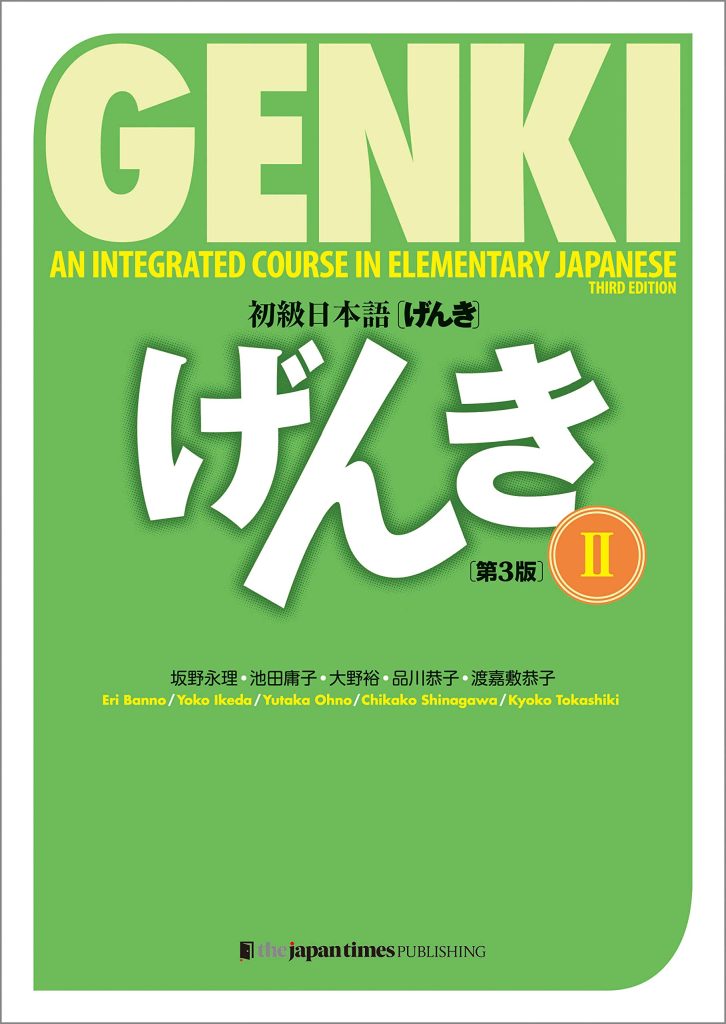
Genki II

genki jlpt n4 textbooks

Genki is a very popular Japanese textbook series, used commonly by beginners trying to learn Japanese. After completing Genki Volume Two, your Japanese language abilities will be at N4 level. The textbook was first released in 1999 and is currently updated to the third edition. It focuses a lot on conversation and grammar with corresponding reading and writing exercises for every chapter. This book is recommended for those learning under supervision or in a group environment. While it’s not the number one choice for self-learners, it’s been trusted by a lot of Japanese teachers and language schools in Japan.

Price: ¥3,960
Click here to purchase!

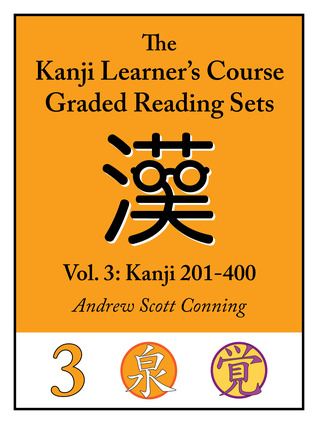
Kanji Learner’s Course Graded Reading Sets, Vol 3: Kanji 201-400

the kanji learner's course

Following the character sequence of Kodansha’s widely acclaimed Kanji Learner’s Course (KLC), this is a must-have for everyone. With over 30,000 reading exercises, this volume consists of 2,071 exercises with 11,800 kanji. The kanji in this book have all been previously introduced in the beginner kanji books and help with reading kanji and understanding kanji-based vocabulary and grammatical concepts. If you have a kindle, feel free to purchase their kindle version to access the built-in J-E dictionary. 

Price: Kindle (Digital) ¥699 | Paperback ¥1,539
Click here to purchase!

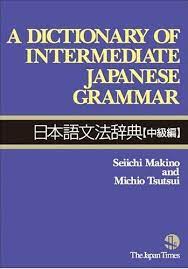
A Dictionary of Intermediate Japanese Grammar 

a dictionary of intermediate japanese grammar

If you want to brush up on your Japanese grammar, this book is the perfect choice for you. There are in-depth English and Japanese explanations for the grammatical concepts. Around 200 concepts that are the foundation of the language can be found here. This book covers almost everything there is to know about every single grammatical point and includes thorough explanations of common pitfalls to avoid. There are also versions of this book for basic and advanced level students, a must-have for students and teachers.

Price: ¥5,758 JPY
Click here to purchase!

Want to learn JLPT N4 grammar in a more interactive course? Join our N4 grammar course that comes with 67 quizzes and 68 lessons and our JLPT N4 grammar PDF workbook. The course is on sale for a limited time, with price cut from ¥2,000 to ¥1,000!

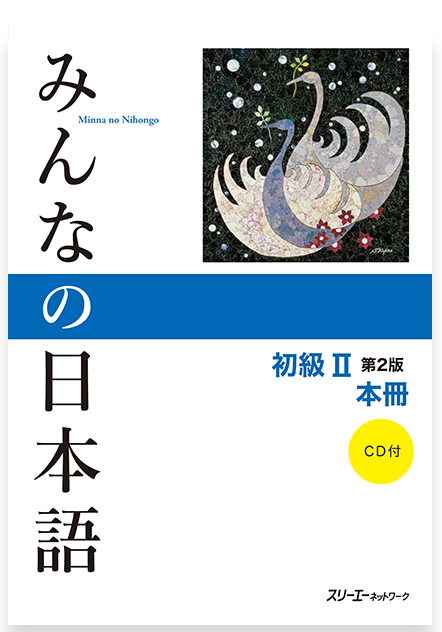
Minna no Nihongo Shokyu 2 Honsatsu 

minna no nihongo 2

Minna no Nihongo is a popular textbook used both in classrooms and by individuals. It includes essential grammar, vocabulary, listening and speaking skills that can help students vastly improve their communication skills in Japanese. Shokyuu 2 is perfect for those who are trying to improve their Japanese from the upper-beginner level. This is the second edition of Shokyuu 2 where the vocabulary and conversational settings have been updated with new frequently used expressions. The book now comes with a CD and an increase in illustrations for reviewing.

Price: ¥3,780 JPY
Click here to purchase!

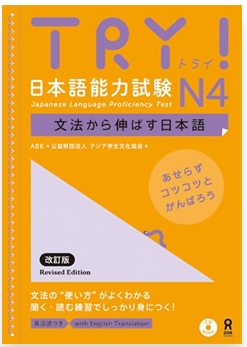
Try! Japanese Language Proficiency Test N4

try jlpt n4 textbook

You’ll hone your grammar skills and learn about grammar strategies and practice reading comprehension. All the mock test chapters are formated similarly to the real JLPT. This book breaks down the learning process of grammar into three steps. You’ll learn how Japanese grammar is used in real-life communication, practice fundamentals and apply grammar points in questions involving listening and reading Japanese. The book includes an audio CD for listening exercises and an answer key pamphlet for all review questions and their practice test.

Price: ¥3,151 JPY
Click here to purchase!

New Kanzen Master JLPT N4: Vocabulary 

nihongo kanzen master jlpt n4 textbook

The latest addition to the Kanzen Master Series is the JLPT N4 Vocabulary version. The book consists of two sections, Jitsuryoku Yoseihen (practical training) and Mogi Shiken (mock test). In the first section, vocabulary is studied in terms of themes and situations, followed by in terms of parts of speech and usage. You will be able to test your knowledge with the basic exercise and practical exercise section that is in the same format as JLPT examinations. Their N4 textbooks also includes Grammar, Listening Comprehension, Reading Comprehension and Kanji.

Price: ¥2,233 JPY
Click here to purchase!

Want to study Japanese with us?

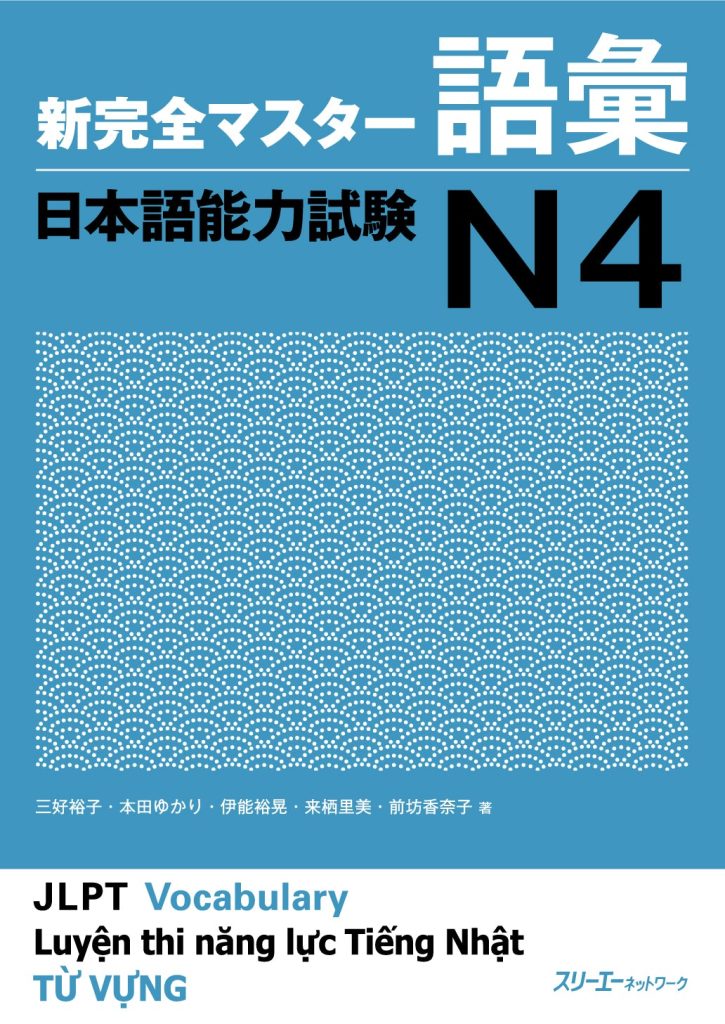
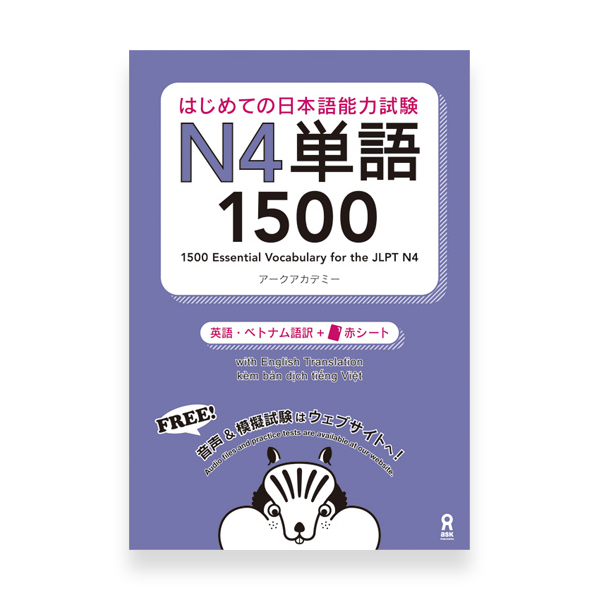
1500 Essential Vocabulary for the JLPT N4

n4 tango 1500 jlpt n4 textbooks

To pass the N4, you will need to know about 1,500 vocabulary words, which makes this book the right length for test-takers. In fact, it’s the most popular choice for learners who want to focus on vocabulary; all the words are commonly found and tested on the JLPT. The textbook comes with English and Vietnamese translation, too.

After you’re done memorizing, you can check the box and test your skill by covering the word with a provided red translucent sheet — the Japanese vocabulary will ‘disappear’, only allowing you to look at English translations for a ‘mini-quiz’. Words are categorized based on their contextual use. You can head over to their website to access free audio files and practice tests.

Price: ¥1,832 JPY
Click here to purchase!

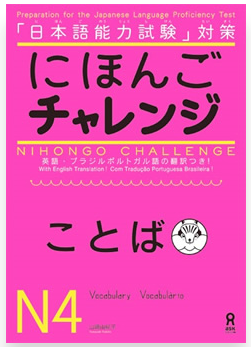
Nihongo Challenge JLPT N4 

nihongo challenge jlpt n4 textbook

Learn about the frequently used expressions used in daily life under the N4 level. Multiple illustrations and notes are provided to learn the 600 words in this book. Review practices are in the same format as examinations to help you prepare for the JLPT. Translations can be found in English and Portuguese. If you want to learn more about Grammar, you can check out their Grammar and Reading Practice version. They also have a version for JLPT N4 and N5 Kanji combined.

Price: ¥2,062 JPY
Click here to purchase!

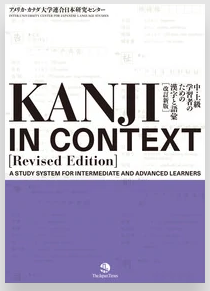
Kanji in Context Reference Book

The Kanji in Context is a series that is meant for intermediate and advanced learners, but it’s great to have an all-in-one textbook, even if you’re just a beginner. You’ll receive 2136 kanji and kanji-based vocabulary that is essential for advanced Japanese communication. They have multiple indexes consisting of on-kun, form, stroke and vocabulary. Each kanji has 3-6 useful vocabulary words to learn and reading guides. In this series, they also have Workbook Volume 1 and Workbook Volume 2. Save 10% when you order the full set in a bundle.

Price: ¥4,526 JPY
Click here to purchase!

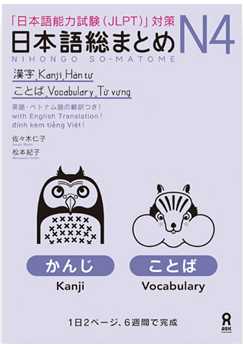
Nihongo So-matome JLPT N4: Kanji and Words 

nihongo matome n4 jlpt n4 textbooks

The perfect study guide for intermediate-level Japanese students, this book is sectioned into vocabulary, kanji and reading comprehension. It is designed for students to learn 200 kanji characters and 300 vocabulary words in just six weeks. You’ll soak all study material on the left page and apply your knowledge with practice questions on the right page. Reinforce your knowledge with review tests after each section to track your progress. This book comes with English and Vietnamese translations and kanji and vocabulary indexes. They also have a copy for Reading, Grammar, and Listening

Price: ¥2,519 JPY
Click here to purchase!

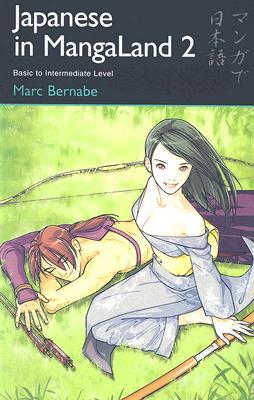
Japanese in Mangaland 2: Basic to Intermediate Level 

japanese in mangaland 2 jlpt n4 textbook

If you are looking for something different, try out this textbook and learn Japanese through manga! Volume 2 helps beginners to master the basics of conversational Japanese, grammar patterns and about 360 Kanji characters. Four conversational lessons allow tourists to learn phrases useful for airports, hotels, shops and restaurants. This book also has a culture notes section, giving insight into daily life in Japan.

Price: ¥4,786
Click here to purchase!

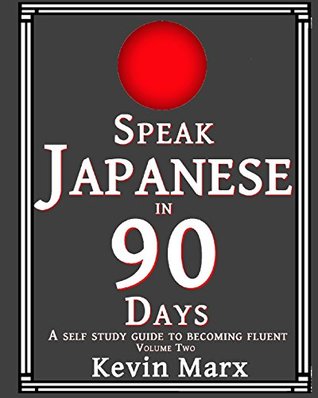
Speak Japanese in 90 Days: A Self-study Guide to Becoming Fluent

speak japanese in 90 days

This is volume two of Speak Japanese in 90 Days. Although they are not technically N4 textbooks, they teach students how to effectively study Japanese, giving them tips to increase fluency to intermediate and advanced levels. There are regular short reading exercises and new vocabulary lists. Aside from learning how to speak, you will also practice your grammar skills and master the fundamentals of intermediate Japanese Grammar.

Price: ¥1,869
Click here to purchase!

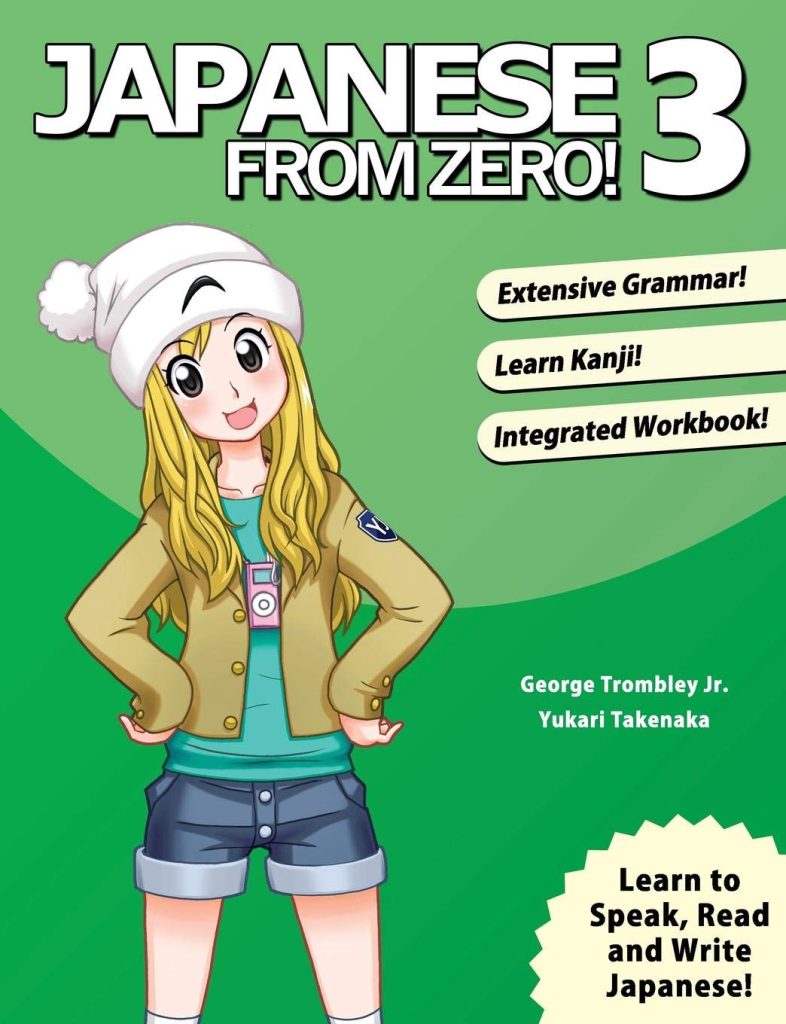
Japanese from Zero! 3

japanese from zero 3 jlpt n4 textbook

Using up-to-date grammar and vocabulary lessons, it features new grammar concepts with over 1,000 new words and expressions. Book 3 is suitable for beginners with basic kanji, and it is a continuation of the previous grammar chapters on Book 1 and 2. Answer key is provided at the back so students can cross-reference their answers and ensure that they are on the right track. Simple example dialogues are taught and this book includes romaji and kana. You will also learn interesting facts about Japan and its culture.

Price: ¥5,728 JPY
Click here to purchase!

Workbooks

Besides JLPT N4 textbooks, make sure to browse our top picks for workbooks. After all, the JLPT doesn’t consist of theories, but questions taken from real situations.

Marugoto Pre-intermediate A2/B1 

jlpt n4 textbooks marugoto

This is a coursebook based on the JF Standard for Japanese Language Education that teaches language and culture. You will know how to understand commonly used sentences and frequently used expressions used in daily life. Students will be able to communicate about simple and routine tasks and their personal backgrounds. Complete this coursebook and understand essential Japanese conversational skills about work, school, leisure, dreams, events and plans.

Price: ¥2,520 JPY
Click here to purchase!

JLPT N4 Official Practice Workbook Volume 2 

jlpt n4 textbook nihongonouryoku shiken jlpt

The JLPT N4 Official Practice Workbook allows you to practice under real exam conditions. This book is recommended for those who have already learned the necessary kanji, vocabulary and grammar needed and want to revise. The test is split into three sections, where the vocabulary and kanji section has 34 questions and is meant to be completed in 30 minutes. The grammar and reading section has 35 questions and is meant to be completed in 50 minutes. The listening section has 21 questions and is done with the included CD and illustrations, meant to be completed in 35 minutes.

Price: ¥1,604 JPY
Click here to purchase!

Ready to Pass the JLPT? Join JLPT Lessons at Coto Academy!

If you’re thinking of taking the JLPT again or aiming for a higher level to boost your career in Japan, give yourself the best possible chance of success. Coto Academy students enjoy a higher pass rate than the national average thanks to our focused JLPT preparation courses.

Join Coto Academy’s highly popular JLPT prep course! Taught in Tokyo by experienced instructors who specialize in the JLPT, this course gives you the strategies, practice tests, and structured study approach to master every part of the exam. With expert guidance and proven methods, you’ll walk into your next JLPT feeling confident and ready to pass.

Currently, we offer:

Contact us for a Japanese-level check and a free consultation on the best JLPT prep course for you!

Coto Japanese Academy is a unique Japanese Language School in Iidabashi Tokyo. We offer relaxed and fun conversational lessons for all levels of Japanese learners. Coto Japanese Academy prides itself on its community atmosphere and fun lessons that focus on the creation of opportunities to speak and learn Japanese. If you are interested in studying Japanese in Tokyo, please visit our contact page.

How many words and kanji do you need for JLPT N4?

You will need to know roughly 300 kanji and about 1,500 vocabulary words (200 more kanji and about 700 more vocabulary than the N5)

How many sections are there in the JLPT N4?

The test consist of 4 major sections: vocabulary & kanji, grammar, reading, and listening

Is JLPT N4 Easy?

The JLPT N4 is the second easiest difficulty for JLPT. Similar to the N5, The N4 focuses on teaching you basic understanding of Japanese that one would learn in class.

What are some resources to study for the JLPT

There are many great resources to study Japanese from traditional textbooks to mobile games. You should ultimately find a resource that best suits your needs and preference to make the most out of your learning. Do check out our article for some of the best learning resources to study Japanese.

Many of our students ask for recommendations about which textbooks are best for Business Japanese.
As time and resources change – we want to give you an updated list of some suggested textbooks you can use to learn business Japanese.
We hope that this list helps you – and if you have a recommendation for a textbook that we could add to our list – we would appreciate you emailing us or leaving a comment on our facebook!

Beginner Japanese Business Textbooks

Intermediate and Advanced Japanese Business Textbooks


Business Japanese Textbooks for Beginners

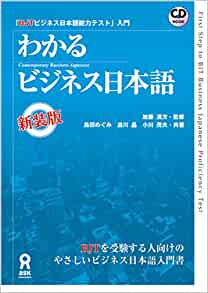
わかるビジネス日本語 BJTビジネス日本語能力テスト入門


Buy it on Amazon
This book – わかるビジネス日本語 (Understand Business Japanese) is an easy entry level textbook that learners with a basic understanding of Japanese Grammar can use and appreciate.  It includes English explanations and headings – so its a great first foray into learning business Japanese.


We recommend this textbook for Japanese learners with around N4 level  –  who can discuss basic daily situations on a wide range of topics.  In other words,  this may be too simple for someone who can comfortably pass the JLPT N3 – but it will give you a good basic understanding of common phrases used in Japanese business settings.
 

NIHONGO EXPRESS Practical Conversation in Japanese Basic 1 & 2


Buy it on Amazon


Learn practical business expressions and grammar through practical exercises in this beginner focused business textbook.  If you are just starting with Japanese, for instance – this is a better option for a complete beginner.  With english explanations – this book covers very basic expressions and grammar that you would encounter in a Japanese office.
 

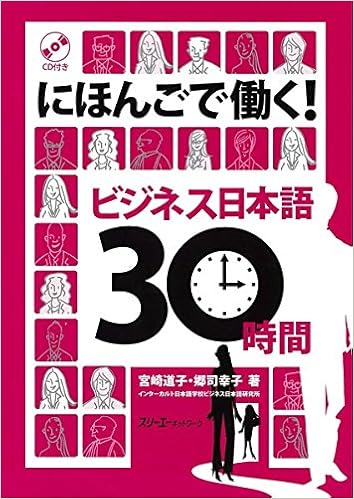
にほんごで働く!ビジネス日本語30時間 Work in Japan – Business Japanese in 30 Hours


Buy it on Amazon


This popular beginner Japanese Textbook is also good for new Japanese learners who are interested in learning practical Japanese for the workplace.  Additionally – we currently use this textbook in our Coto Courses.


Business Japanese Textbooks for Intermediate or Advanced Japanese Learners

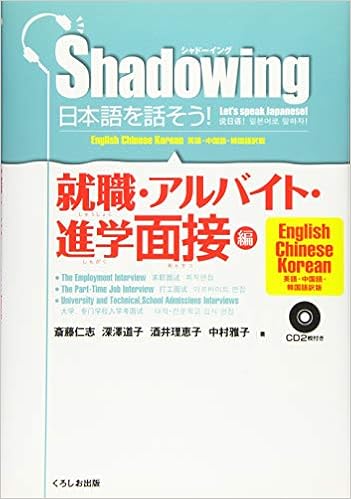
シャドーイング 日本語を話そう 就職・アルバイト・進学面接編

(Shadowing – Let’s Speak Japanese – Employment / Part-time Job)


Buy it on Amazon


This is a great first step towards working in Japan and will be very useful for students that have studied some Japanese – but would like to learn polite Japanese that they can use with customers.  This book also teaches you valuable phrases you can use with your coworkers.

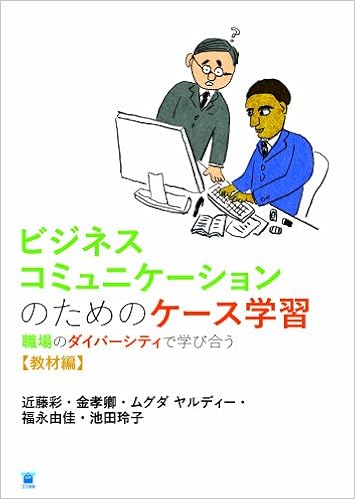
ビジネスコミュニケーションのためのケース学習:職場のダイバーシティで学び合う【教材編】(Case Learning for Business Communication: Learn from each other through workplace diversity)

Buy it on Amazon


This book is unique because it covers practical case studies of cross cultural communication in a business setting.  This may be a more interesting way to learn Japanese for management professionals as it will give more insight into the mind of Japanese business people from an insider perspective.

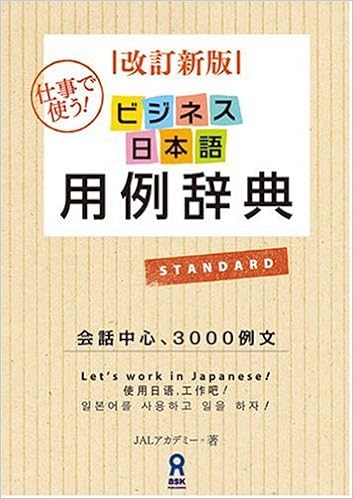
改訂新版 ビジネス日本語用例辞典

[Revised Edition] Bijinesu Nihongo Youreijiten


Buy it on Amazon
This one is not really a textbook – but we wanted to include it because it’s quite useful.  It includes over 3,000 words commonly used in a Japanese business setting along with several example sentences in Japanese.  Futher,  it’s good to use as a learning device because it also includes furigana – so this book can be used for beginner learners as well as advanced learners.
What do you think?
Do you have a suggestion for a good Japanese textbook?  If so, please do let us know.

If you are interested in studying Japanese in Tokyo, find out more about our school by filling out the form below. Courses can be found here

Looking for a quiet place in Tokyo to study Japanese without having to pay any money?  Want to be able to loan free study materials – such as Japanese learning textbooks, and dictionaries?
If you are a short-medium term resident with a resident card in Japan – you can register for a free library card at most Japanese libraries.  And one of the best kept secrets of these libraries is that there are often comprehensive selections of Japanese learning textbooks available for rental.
In this blog article, we will be sharing with you about five free public libraries in Tokyo you can go to! Whether it is to study Japanese or find new books to read, this list of libraries is great for you to explore!

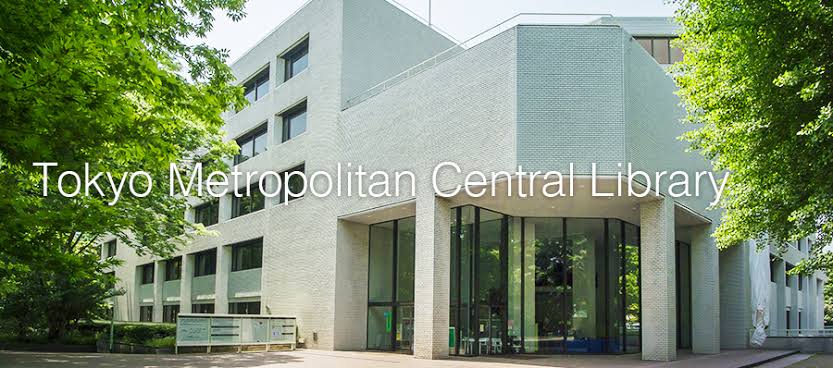
1. Tokyo Metropolitan Library (Central Library)

free public libraries in tokyo to learn japanese - tokyo metrapolitan central library
With 2 libraries, Central Library and Tama Library, Tokyo Metropolitan Library has around 2.59 million volumes of books, 10% of them being foreign language books. Most volumes are freely available on open stacks, however, individuals are not allowed to loan these materials out of the libraries.
Address: 5 Chome-7-13 Minamiazabu, Minato City, Tokyo 106-0047, Japan
Nearest Station: Hiro-o Station
Operating Hours: Monday to Friday 10 AM to 9 PM, Saturday, Sunday and Holidays 10 AM to 5.30 PM
Phone Number: 03-3442-8451
Website: https://www.library.metro.tokyo.jp/english/
*Are there Japanese learning materials? -> Yes!
 

2. National Diet Library (Tokyo Main Library)

free public libraries in tokyo to learn japanese - national diet library ndl (tokyo main library)
Established in 1948, the National Diet Library is the national library of Japan. It is Japan’s biggest library and even one of the largest libraries in the world! In this library, only individuals aged 18 years and older are eligible to visit and request services. Although not required, registering as a user allows you to use the library in more convenient ways! One example is being able to assess the materials in closed stacks. With a user card, you are able to search, request, receive, return and have materials photocopied.

To register for a user card, do make sure you bring a driver’s license, health insurance card or other forms of identification indicating your name, address, and date of birth. If you do not intend on making a user registration, you are still required to apply for a One Day User Card in order to enter the library and use its materials.

Address: 1-10-1, Nagatacho, Chiyoda-ku, Tokyo, 100-8924, Japan
Nearest Station: Nagatacho Station
Operating Hours: Monday to Friday 9.30 AM to 7 PM, Saturday 9.30 AM to 5 PM, Closed on Sundays
Phone Number: 03-3581-2331
Website: https://www.ndl.go.jp/en/index.html
*Are there Japanese learning materials? -> Yes!
 

3. Minato City Library (Mita Library)

free public libraries in tokyo to learn japanese - minato city library mita library

Minato City Library has a total of 7 libraries in Tokyo. Mita Library, conveniently located near the JR line and various subway stations, has the most visitors amongst the 7. There are many seats available for reading and studying in this library, and borrowing of library materials is available.

To borrow books in this library, you are required to receive a library card. As long as you live in Tokyo, you are eligible to apply. To do so, you would have to visit the library reception window to register. Do make sure you bring proof of identification with your address on it!

Address: 5-28-4 Shiba, Minato City, Tokyo 108-0014, Japan
Nearest Station: Tamachi Station, Mita Station
Operating Hours: Monday to Saturday 9 AM to 8 PM, Sunday and Holidays 9 AM to 5 PM
Phone Number: 03-3452-495
Website: https://www.lib.city.minato.tokyo.jp/e/index.cgi
*Are there Japanese learning materials? -> Yes!
 
4. Japan Foundation Library
free public libraries to learn japanese - japan foundation library

Japan Foundation Library belongs to the Japan Foundation, a special legal entity dedicated to cultivating friendship and ties between Japan and the world. Japan Foundation Library has a vast collection of books and materials on Japan, and is open to all members of the public.

To borrow books from this library, you have to be 18 years of age or older. If you are a foreigner, you are able to borrow as well as long as you live at a fixed address for 2 months or longer. Before borrowing, you have to make a library registration with your own proof of identification.

Address: 4-4-1 Yotsuya, Shinjuku-ku, Tokyo 160-0004, Japan
Nearest Station: Yotsuya-Sanchome Station
Operating Hours: Monday to Friday 10 AM to 7 PM, Closed on weekends and holidays
Phone Number: 03-5369-6086
Website: https://www.jpf.go.jp/e/about/jfic/lib/
*Are there Japanese learning materials? -> Yes!
 

5. Chiyoda Public Library

free public libraries in tokyo to learn japanese - chiyoda public library

Chiyoda Public Library has a collection of over 160,000 materials and many facilities available for public use. There are online database booth, internet use booth as well as many self-study and reading seats.

Anyone can make a library identification card as long as they reside in Japan and provide proof of identification during registration. With this card, you can borrow and reserve materials, book a seat in any of the library’s facilities and access online materials on the library website.

Address: 1 Chome-2-1 Kudanminami, Chiyoda City, Tokyo 102-8688, Japan
Nearest Station: Kudanshita Station
Operating Hours:

Monday to Friday 10 AM to 10 PM, Saturday 10 AM to 7 PM, Sunday and Holidays 10 AM to 5 PM

Phone Number: 03-5211-4289
Website: https://www.library.chiyoda.tokyo.jp/
*Are there Japanese learning materials? -> Yes!
 

Useful Question Sentences when at a Library in Japan


  • この本は どこで 見つける ことが できますか? Kono hon wa dokode mitsukeru kotoga dekimasuka? (Where can I find this book?)
  • この本を 見つけるのを 手伝ってもらえますか? Kono hon o mitsukeruno o tetsudattemoraemasuka? (Can you help me find this book?)
  • 図書館のカードを 作りたいです。Toshokan no ka-do o tsukuritai desu. (I want to make a library card.)
  • 図書館のカードを 作れますか? Toshokan no kaado o tsukuremasu ka? (Can I make a library card?)
  • この本を どうやって 借りられますか。Kono hon o douyatte kariraremasuka? (How can I borrow this book?)
  • この本を 返却する 方法は? Kono hon o henkyakusuru hohowa? (How can I return this book?)

Interested in taking up a Part-Time Japanese course? Check out the link below for more details!
 

If you’ve registered for the JLPT and hit the point where self-study isn’t cutting it anymore, you’ve probably already started searching for a JLPT prep course. And that search gets harder fast if you’re taking the exam outside Japan or hoping to study online.

While there are plenty of online Japanese lessons out there, there are surprisingly few actual JLPT-focused courses. Even when you find one, there’s still the matter of finding a class with the right schedule: navigating time zones and pricing structures that aren’t always clear upfront.

So we did the legwork. Below are the best JLPT online courses available right now, with pricing, pros, cons, and what to weigh before you commit.

How Are JLPT Courses Different from Regular Japanese Courses?

So what’s the difference between a JLPT course and a regular Japanese course?

The short answer: a regular Japanese course teaches you to use the language; a JLPT course teaches you to pass a specific test. They overlap, but their priorities are different.

Regular courses (like Coto Academy’s typical Japanese lessons) are built around speaking and practical use. You’re learning to hold a conversation, order food, get through a job interview, and get that transfer to daily life in Japan. They don’t map cleanly onto how the JLPT actually tests you.

JLPT courses are built around one goal: passing the JLPT. On the content side, JLPT courses lean into grammar and analytical reading, which most conversation-based courses skip entirely, since it has little to do with speaking ability but a lot to do with passing. 

On the practice side, expect regular mock tests under timed conditions rather than casual exercises, so you get used to the actual pacing before test day. And layered around all of that are exam-specific tips. Since it is usually taught by JLPT instructors, you will get tips like how to eliminate wrong answers fast, how to budget your time per section, and how question types tend to repeat across past exams.

Best JLPT Online Course

CourseLevelDurationBest For
Coto AcademyN3–N11 year or 6 months (flexible)Learners who want live instruction with flexible scheduling and the option to focus on specific sections (grammar/reading vs. kanji/vocab)
J-StandardN5–N1FlexibleSelf-paced learners who want structure without a live class schedule. Good for beginners through upper-intermediate
PreplyFlexibleFlexibleLearners who want fully personalized 1-on-1 tutoring and don’t mind vetting tutors themselves
SNGN3, N23 monthsLearners who want a short, all-around intensive with a final practice exam
Kudan InstituteN3–N12 monthsLearners near Japan-friendly time zones who want a short, grammar-only review.
Japonin (JOI)N1–N4 (N5 private)Flexible (book lesson by lesson)Learners outside Japan who need scheduling flexibility over a fixed cohort

Coto Academy

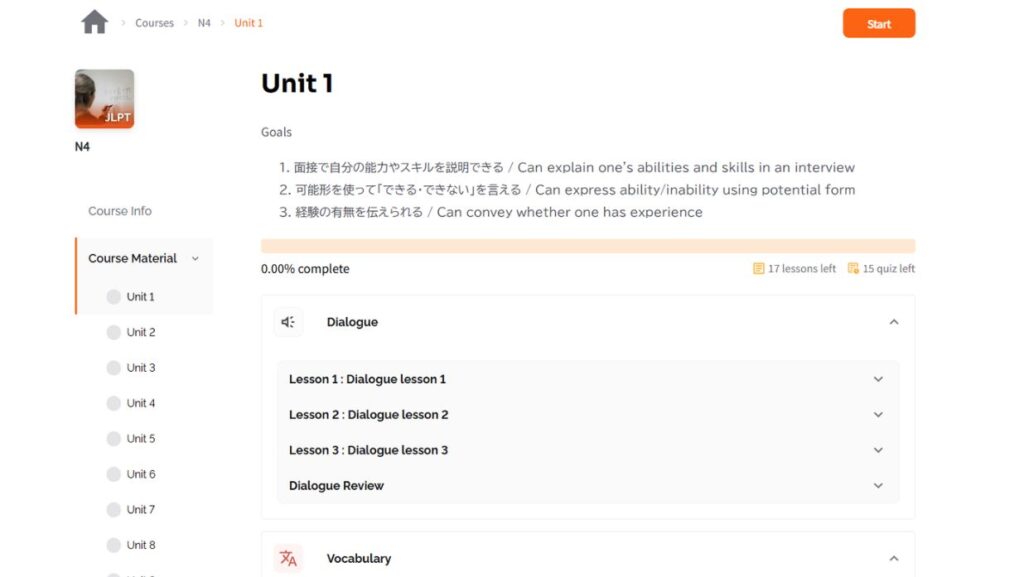
jstandard jlpt online course

Best for: Learners who want live instruction with flexible scheduling and the option to focus on specific sections (grammar/reading vs. kanji/vocab).

Available levelJLPT N3 to N1
Duration1 year or 6 months
PricePoint-based subscription. Each lesson costs 2 points. The recommended plan is 16 points per 28 days at ¥16,800, or 8 points per 28 days at ¥9,600 on the monthly plan.
HighlightsJLPT lessons tailored to your focus area, flexible scheduling, and instruction taught only by professional instructors.

Coto Academy offers a fully online JLPT preparation course through its learning platform, online.cotoacademy.com. You purchase lesson points and can book a class immediately.

The course is currently offered at the N3 and N1 levels, with two format options.

The one-year course focuses on grammar and reading, and you can join anytime. It’s built for steady, ongoing progress and includes interactive exercises throughout, which makes it useful even if you’re not specifically preparing for the JLPT.

The six-month course is split into two tracks: grammar and reading, or kanji and vocabulary. This one is lecture-style and designed to support self-study. Classes are taught primarily through instructor explanations in a group Zoom session, where students can ask and answer questions through chat. Through this course, you’ll watch instructors break down key vocabulary, expressions, and problem-solving strategies for each level, then practice with questions formatted just like the real JLPT.

Because the course is divided by test section, you can customize your prep. If you’re already covering vocabulary through something like Anki, you can skip that track and focus only on grammar and reading.

J-Standard

Best for: Self-paced learners who want structure without a live class schedule.

Available levelJLPT N5 to N1
DurationFlexible
Price$69/3 months, or $180/year
Highlights1,200+ lessons and quizzes, real-world dialogues, teacher-led, on-demand video instruction

J-Standard is built for learners who want steady, structured progress without being tied to a class schedule.

It’s not a live online JLPT course, but that’s kind of the point. If you’ve ever sat down to study JLPT by yourself and had no idea where to start or what to focus on next, J-Standard takes that guesswork off your plate. It walks you step by step through every unit and level, so instead of piecing together your own study plan from scratch, you just follow the path. It covers everything from hiragana and katakana through N5 to N2 grammar and vocabulary, all in one platform, all at your own pace.

The learning journey follows four steps. You start by watching teacher-led videos to learn new grammar and vocabulary, then apply it through real, practical dialogues based on everyday situations in Japan. 

From there, you move into JLPT-style drills and quizzes to lock in what you’ve learned, and track it all on a simple dashboard that keeps your study hours and progress visible.

Currently, the platform has over 1,200 lessons and quizzes covering grammar, vocabulary, listening, and reading. We recommend it if you want something affordable and flexible enough to fit into a busy schedule, without sacrificing structure.

Get a 14-day Free Trial 

Preply

Best for: Learners who want fully personalized 1-on-1 tutoring and don’t mind doing some legwork to find the right tutor.

Available levelFlexible
DurationFlexible
Price$20 – 70/hour, depending on tutor
HighlightsPersonalized plan since it is typically 1-on-1 tutoring, but not always with professional instructors 

You’ve probably already heard of Preply, a language platform that connects you with independent tutors. You can find tutors who specialize in JLPT prep and build a lesson plan around your specific goals.

The trade-off is consistency. Most tutors are native speakers, but not all of them are trained instructors, so teaching quality and JLPT-specific expertise can vary a lot from one tutor to the next. If you go this route, we recommend reading reviews and trying a few tutors before committing, since the experience depends on who you end up with.

Pricing varies and isn’t always affordable. Preply’s community tutors, meaning native speakers without formal certification, typically run $20 to $40 an hour. However, certified instructors cost more, usually $40 to $70 an hour, which adds up fast for private, one-on-one sessions.

The great thing is that because Preply usually only does 1-on-1 tutoring, it can work well if you want maximum flexibility and don’t mind doing some legwork to find the right fit, but it’s a less structured option compared to a dedicated JLPT platform like Coto Academy or J-Standard.

Want to double your chances of passing JLPT? Join Coto Academy!

SNG

Best for: Learners who already have a Japanese base and want a short, all-around intensive with a final practice exam.

Available levelJLPT N3 and N2
Duration3 months, 30 hours across 10 lessons
Price¥39,600 for new students
HighlightsAll-around JLPT prep course on a short duration

SNG’s Online JLPT Preparation Course covers all test sections: vocabulary, kanji, grammar, reading comprehension, and listening. Lessons use digital content to track your understanding as you go, and instructors focus extra time on whatever you’re struggling with most. You’ll get 30 hours of class time across 10 lessons, wrapping up with a final practice exam to confirm you’re ready for test day.

By the end of the course, you’ll have mastered the vocabulary, grammar, and kanji needed to pass the JLPT, built the listening skills to comprehend short conversations, and picked up test-taking strategies and tips to boost your overall score.

Note that this course isn’t for beginners. You’ll need at least 300 study hours of Japanese under your belt before enrolling in N3, or 600 hours for N2.

Want to study Japanese with us?

Kudan Japanese Institute

Best for: Learners in Japan-friendly time zones who want a short, grammar-only review before test day.

Available levelJLPT N3 to N1
Duration2 months 
Price¥49,500
HighlightsAll-around JLPT prep course in a short duration

Kudan Institute takes a narrower approach than most JLPT courses on this list: it covers grammar only. Rather than splitting attention across vocabulary, reading, and listening, the course drills grammar patterns intensively over a six-week run, timed right before the JLPT exam. 

The structure centers on pattern recognition. Grammar questions are broken down and sorted into recognizable question types, so instead of memorizing textbook entries in isolation, you learn to spot what a question is actually testing. Each session pairs that analysis with strategy review, and then interactive practice with the target grammar so it doesn’t stay theoretical. 

Enrollment is open mid-course, so joining in week three is a genuine option if you’ve only just realized grammar is your weak point.

The catch is that lessons run in the evening Japan time on weekdays. If you’re in Europe or the Americas, evening JST lands in your morning on a workday: early morning for much of Europe and the middle of the night for parts of North America.

Japonin

Best for: Learners outside Japan who need scheduling flexibility more than they need a fixed cohort.

Available levelJLPT N1 to N4 (N5 via private lessons)
DurationFlexible — book lesson by lesson
PriceFrom ¥1,280 per lesson (group) / ¥3,380 per lesson (private)
HighlightsAll-around JLPT prep with bookable time slots and 2 free trial lessons

Best for: Learners outside Japan who need scheduling flexibility more than they need a fixed cohort.

Japonin’s online JLPT space. Classes run on Zoom in 50-minute blocks with a maximum of seven students, and teachers average around 15 years of experience. 

Group classes cover N1 through N4, with N5 handled through private lessons. Rather than focusing on grammar alone, the curriculum integrates grammar, vocabulary, kanji, reading, and listening, with grammar as the backbone, which suits learners who want their JLPT prep to double as general language study rather than pure exam drilling.

Instead of committing to a fixed weekly slot, you book each class individually from multiple time options each week, so the course bends around a shifting work schedule or an awkward time zone, not the other way around. Most lessons use Japonin’s own slides built from classroom experience rather than a commercial textbook, with published materials reserved for the final prep courses. Pricing sits at roughly ¥1,280–¥1,320 per lesson for small-group FlexLessons and from ¥3,380 for private one-on-one, and you can take up to two free 50-minute trial lessons at any level before committing.

Unfortunately, that same flexibility means no cohort moves through a syllabus alongside you, so you’re responsible for building a consistent study rhythm. 

Want to study JLPT online? Join Coto Academy!

Ready to Start Your JLPT Prep?

Of all the options on this list, Coto Academy’s JLPT course is the one built to flex around you. Whether you want a full year of steady grammar and reading practice or a focused six-month sprint through the exact sections you’re weakest in, you pick the format, book lessons instantly with points, and learn from instructors who teach JLPT prep professionally — not tutors picking it up on the side.

If you’re serious about passing, don’t leave your prep to a platform that treats JLPT as an afterthought. Start with a course that was actually built for the exam.

FAQ

What is the best JLPT online course?

It depends on what you need. Coto Academy is the strongest all-around pick if you want live instruction, professional JLPT instructors, and flexible scheduling. J-Standard is best if you want a self-paced, affordable option without live classes. Preply suits learners who want 1-on-1 tutoring and are willing to vet tutors themselves. There’s no single “best” course for everyone — the right one depends on your level, budget, time zone, and whether you want live or self-paced instruction.

Are JLPT online courses actually effective?

Yes, as long as the course is built around the exam rather than general conversation. A good JLPT course gives you timed mock tests, exam-specific strategy, and focused practice on the sections the real test weights heavily, like grammar and reading — things self-study and conversation-based classes typically don’t cover in depth.

How long does it take to prepare for the JLPT with an online course?

It varies by level and course. Short intensives like Kudan Institute or SNG run 2–3 months and are designed as a final push before the exam. Longer programs like Coto Academy’s one-year track suit learners building proficiency from the ground up. As a rule, the higher the level (N2, N1), the more prep time you should budget.

How much do JLPT online courses cost?

Pricing ranges widely: J-Standard starts around $69 for 3 months, Japonin runs from about ¥1,280 per lesson, and structured short-term intensives like SNG or Kudan run roughly ¥39,600–¥49,500 for a 2–3 month course. Live 1-on-1 tutoring through Preply is the most expensive per hour ($20–$70), since you’re paying for individual attention.

Do I need to already know Japanese to join a JLPT online course?

Most courses assume some prior study. J-Standard is the exception, starting from hiragana and katakana for true beginners. Others, like SNG, require a minimum number of self-study hours (300+ for N3, 600+ for N2) before enrolling.

The Japanese writing system uses three types of script: hiragana, katakana, and kanji. The unique thing is that it is a mixed logographic and syllabic system. Logographic is a writing system based on meanings or ideas, and the syllabic is based on sounds (syllabic).

When you first start learning Japanese, you might start off using romaji, which is the alphabetized version of this. But eventually, you will have to learn all three. Kanji is perhaps going to be an ongoing learning process up until you reach JLPT N1, and even until today, a lot of Japanese people still struggle with it. Hiragana and katakana are things you will learn soon.

We’ve covered smaller articles for each Japanese writing system. In this guide, we will explain to you the basics of the Japanese writing system, what they are, and some important pointers to keep in mind. Don’t forget to check out our downloadable hiragana chart and quiz for a more detailed guide and resource recommendation.

Want to study Japanese with us?

Basics of Japanese Writing Systems

Japanese writing is often considered one of the most complex systems in the world, but it’s also incredibly logical once you see how the pieces fit together. It uses three distinct scripts: hiragana, katakana, and kanji.

In a standard Japanese sentence, you will often see all three scripts working together:

私の名前はコトです。
Watashi no namae wa Koto desu.
My name is Coto.

Why do we still use three different scripts? It might seem easier to just use one alphabet, but the combination serves a very specific purpose: visual clarity. Japanese does not use spaces between words. Without different scripts, a sentence would be a confusing string of identical-looking characters.

Using the same example above, we can easily break down parts of the sentence based on its writing system.

ScriptJapaneseFunction
Kanji私, 名前Represents the core meaning (I, Name).
Hiraganaの, は, ですRepresents grammar and sentence structure.
KatakanaコトRepresents foreign names or loanwords.

Origins of the Japanese Alphabet

Do you know about the history and the origin of hiragana and katakana? Originally, the Japanese ancestors did not have a writing system. Around the fifth century, they began using kanji, ideograms adopted from China and Korea. They only used the phonetic reading of the kanji, regardless of their meaning. At that time, the ideograms were called manyogana (万葉仮名).

However, kanji’s characters are composed of many strokes. They take longer to write, as you have noticed by now! Due to their difficulty, those ideograms were slowly simplified into kana alphabets, namely hiragana and katakana. They are called syllabograms, as each character corresponds to one sound in the Japanese language. According to historians, the change was initiated by Buddhist priests who thought kanji could not accurately represent the Japanese language and that a phonetic alphabet would be better.

On the left is the manyogana, and on the right are simplified hiragana and katakana forms.

  • 安 →あ 阿 → ア (a)
  • 以 →い 伊 → イ(i)
  • 宇 →う、ウ(u)
  • 衣 →え 江 → エ(e)
  • 於 →お、オ(o)

This change is thought to have occurred between the eighth and ninth centuries.  Hiragana can be considered a simplified calligraphy form of the kanji’s strokes. On the other hand, katakana is taken from a single element of a kanji. In some cases, the hiragana and katakana are created from different ideograms.

Some hiragana and katakana express the same sound and have similar shapes, such as り and リ. However, some can be dissimilar, such as あ and ア. Hiragana is said to be cursive, while katakana is more angular. Do take note that one sound can have more than one hiragana. In 1900, the two kana scripts, hiragana and katakana, were codified. This led to the clear establishment of rules for the Japanese system in 1946.

Japanese Writing System #1: Hiragana

Whenever you just start out learning Japanese, hiragana is usually the first writing system you learn. Hiragana is technically a syllabary or a way of writing where symbols represent whole syllables (such as “ba” and “to”) instead of individual sounds (such as “b” or “t”)5. This is because all Japanese words are made up of these small syllables, so there’s no need to write out individual sounds!

In Japanese, there are 46 basic syllables:

  • The basic vowels: a, i, u, e, o.
  • The k-line: ka, ki, ku, ke, ko.
  • The s-line: sa, shi, su, se, so. (Notice that the “si” sound is instead replaced by “shi.”)
  • The t-line: ta, chi, tsu, te, to. (Notice that the “ti” and “tu” sounds are instead pronounced closer to “chi” and “tsu.”)
  • The n-line: na, ni, nu, ne, no.
  • The h-line: ha, hi, fu, he, ho. (Notice that the “hu” sound is actually said as “fu.”)
  • The m-line: ma, mi, mu, me, mo.
  • The y-line: ya, yu, yo.
  • The r-line: ra, ri, ru, re, ro.
  • Wa, o/wo, and n. (These sounds are unique, so they are generally placed together. The “o/wo” symbol can be pronounced either way and “n” is considered a whole syllable in Japanese.)

There are also 23 additional syllables in Japanese; these are formed with additional marks that we’ll cover in a minute.

  • The g-line: ga, gi, gu, ge, go.
  • the z-line: za, ji, zu, ze, zo. (Notice that “ji” is used instead of “zi.”)
  • The d-line: da, ji, zu, de, do. (“ji” and “zu” are pronounced the same way as in the z-line but have different uses.)
  • The b-line: ba, be, bu, be, bo.
  • the p-line: pa, pi, pu, pe, po.

How to Write in Hiragana

So, now that we’ve covered the basic sounds, let’s see how these syllables are written down in hiragana:

hiragana chart

Hiragana is generally round in shape, with lots of curves and bends. This characteristic is a key way to tell what symbols are hiragana! You can also combine a consonant with a / ya / yu / yo / sound by attaching a small 「や」、「ゆ」、or 「よ」 to the / i / vowel character of each consonant.

Now, let’s take a look at those 23 additional sounds:

  • the g-line: が(ga), ぎ(gi), ぐ(gu), げ(ge), ご(go).
  • the z-line: ざ(za), じ(ji), ず(zu), ぜ(ze), ぞ(zo).
  • the d-line: だ(da), ぢ(ji), づ(zu), で(de), ど(do). 
  • the b-line: ば(ba), べ(be), ぶ(bu), べ(be), ぼ(bo).
  • the p-line: ぱ(pa), ぴ(pi), ぷ(pu), ぺ(pe), ぽ(po).

Did you notice something about the above sounds? The hiragana for the g-line is identical to the k-line, and the same goes for the z-line and s-line, the t-line and the d-line, the h-line and the b- and p-lines! The only difference is the addition of diacritical marks; these marks go to the upper right of the hiragana and can be either two short diagonal marks (called a dakuten) or a small circle (called the handakuten). This is pretty nice, as you don’t have to memorize even more symbols!

There are also contracted sounds in Japanese. These sounds are basically combinations of sounds ending in “-i” and the y-line and are considered one syllable as well. All you have to do for these is add a small y-line hiragana after the main hiragana! (Notice that not all of these syllables keep the “y” sound.)

  • the k-line: きゃ(kya), きゅ(kyu), きょ(kyo)
  • the s-line: しゃ(sha), しゅ(shu), しょ (sho)
  • the t-line: ちゃ(cha), ちゅ(chu), ちょ(cho)
  • the n-line: にゃ(nya), にゅ(nyu), にょ(nyo)
  • the h-line: ひゃ(hya), ひゅ(hyu), ひょ(hyo)
  • the m-line: みゃ(mya), みゅ(my) みょ(myo)
  • the r-line: りゃ(rya), りゅ(ryu), りょ(ryo)
  • the g-line: ぎゃ(gya), ぎゅ(gyu), ぎょ(gyo)
  • the z-line: じゃ(ja), じゅ(ju), じょ(jo)
  • the b-line: びゃ(bya), びゅ(byu), びょ(byo)
  • the p-line: ぴゃ(pya), ぴゅ(pyu), ぴょ(pyo)

So, that is the basics of how hiragana is written. However, there are also double consonants and long vowels, which are written with variations in hiragana (and katakana). We recommend checking out our full-length article about double consonants and long vowels to learn more about those!

When Do We Use Hiragana?

Hiragana can be used for many things; it’s like the all-rounder of writing Japanese, and it represents all the syllables of the Japanese language! Hiragana is used when writing verb endings, particles, grammar words (such as conjunctions), and many native Japanese words, as well as for words that do not have a corresponding kanji character. Hiragana is also used in furigana; this is when hiragana is written in a small font above kanji for those who don’t know the kanji’s reading.

Long Vowels and Double Consonants in Hiragana

In Japanese hiragana, double consonants are represented by adding a small “tsu” character (っ) before the consonant that is doubled. For example, the word “katta” (勝った), meaning “won”, would be written as かった, with a small “tsu” between the two “t” characters.

Long vowels in hiragana are made by extending a consonant or vowel with another vowel, depending on the vowel, in accordance with the following chart.

For example, the word “ookii” (大きい), meaning “big”, would be written as おおきい.

Vowel SoundExtended byExample
aおばあさん
i, eおおきい、きれい
u, oこうこう、くうき

Let’s start off with a simple sentence – “My pet’s name is Bob.” (What a funny name for a pet!) In Hiragana, this looks like this:

わたしの ぺっと の なまえ は  ぼぶ です。
Watashi no petto no namae wa bobu desu.

So, we can write a whole Japanese sentence just using hiragana! This is how most people (including native speakers) start off reading and writing Japanese. Of course, as you learn about katakana and kanji, some of these words will be replaced.  However, you will see that the particles (の [no] and は [wa]) and the native verb です(desu) will remain the same, as these are some of the things that specifically use hiragana!  

Now that you’ve learned the basics, it’s time for practice! Head on over to our list of practice sheets, apps, and quizzes to make sure you’ve got a solid understanding of hiragana!

Japanese Writing System #2: Katakana

Katakana  Chart for Japanese learners

After hiragana, it’s a good idea to learn katakana next; katakana works the exact same way that hiragana does, just using different characters; some katakana symbols even look similar to their hiragana counterparts!  In fact, hiragana and katakana are often collectively referred to as kana, since they are so similar!

How to Write Katakana  

the basic vowelsア(a), イ(i), ウ(u), エ(e), オ(o)
the k-lineカ (ka), キ(ki), ク(ku), ケ(ke), コ(ko)
the s-lineサ(sa), シ(shi), ス(su), セ(se), ソ(so)
the t-lineタ(ta), チ(chi),ツ(tsu), テ(te), ト(to)
the h-lineハ(ha), ヒ(hi), フ(fu), へ(he), ホ(ho)
the n-lineナ(na), ニ(ni), ヌ(nu), ネ(ne), ノ(no)
the m-lineマ(ma), ミ(mi), ム(mu), メ(me), モ(mo)
the y-lineヤ(ya), ユ(yu), ヨ(yo)
the r-lineラ(ra), リ(ri), ル(ru), レ(re), ロ(ro).
ワ(wa), ヲ(o/wo), and ン(n).

Now, let’s take a look at those 23 additional sounds:

  • the g-line: ガ(ga), ギ(gi), グ(gu), ゲ(ge), ゴ(go).
  • the z-line: ザ(za), ジ(ji), ズ(zu), ゼ(ze), ゾ(zo).
  • the d-line: ダ(da), ヂ(ji), ヅ(zu), デ(de), ド(do). 
  • the b-line: バ(ba), ビ(bi), ブ(bu), べ(be), ボ(bo).
  • the p-line: パ(pa), ピ(pi), プ(pu), ぺ(pe), ポ(po).

The contracted sounds are also formed in the same way as in hiragana. However, katakana has additional combinations with small vowel letters to transcribe foreign sounds that did not originally exist in Japanese. These are generally easy to pronounce, as you simply combine the consonant of the main katakana symbol with the vowel of the smaller one.

Examples of this include the フェ (fe) in カフェ (kafe), the ティ (ti) in パーティー (paatii), and the ウィ (wi) in ハロウィーン (harowiin)!

You can see that katakana is simpler and has more straight lines than hiragana; this is one major way to tell them apart!

If you want to learn more about katakana, check out our article below and get a free, downloadable PDF of our chart!

Read More: What is Katakana? Free Katakana Chart and Learning Guide

How and When to Use Katakana

Another way to tell them apart is by their usage. Katakana is used for foreign loanwords or words from different languages. ハンバーガー (hanbaagaa, hamburger) and アルバイト (arubaito, part-time job) are examples of Japanese words taken from English and German, respectively. Many non-Japanese names are spelled using katakana as well!

Katakana is also often used for onomatopoeic words, which are words that imitate sounds, such as “pikapika” (sparkling), “gacha” (clacking sound), or “wanwan” (dog’s bark).

Katakana can also be used to emphasize words, similar to how words might be italicized or bolded in English. You can usually see this more in signs or advertisements, like メガネ, megane (glasses) or ラーメン (raamen, glasses).

Long Vowels and Double Consonants in Katakana

Long vowels in katakana are so much simpler than hiragana. All long vowel sounds are denoted by a simple dash: ー.

For example, the word “アート” (aato), meaning “art”, has a long “a” sound represented by the horizontal line over the “a” character.

Double consonants in Katakana are represented using a small “tsu” character (ッ) just like in Hiragana. For example, the word “バッグ” (baggu), meaning “bag”, has a double “g” sound represented by the small “tsu” character.

Remember the pet with the funny name? Let’s take another look at that sentence, this time adding in katakana – try to guess where the katakana will be!

わたしのペットのなまえは ボブ です。
Watashi no petto no namae wa bobu desu.

Did you guess petto and bobu? Both of these words are English loanwords and names, so they would be written in katakana. Including katakana when writing Japanese is also a great way to make the words easier to distinguish from each other; writing in all hiragana could make it hard to tell words apart, since Japanese doesn’t normally use spaces!

Difference Between Hiragana and Katakana

Why are there 2 syllabic Japanese scripts? In the event that the difference is stylistic, you will learn that hiragana is used to write native Japanese words. Those words will have no kanji representation, and the ideogram will be too ancient or too difficult to write. This kana script is also the one used to write grammatical elements such as particles: を (wo)、に (ni)、へ (he;e)、が (ga)、は (ha).

On the contrary, the Japanese use katakana to write words of foreign origin and foreign names. If you like to read manga in Japanese, you will certainly notice that katakana is also used to represent onomatopoeia and emphasis.

Have you heard of the word “furigana”? Furigana are hiragana and katakana characters written in small forms above kanji in order to show the pronunciation. Furigana is used in kids’ books and Japanese language textbooks for learners, in order to teach the reading of unknown kanji.

Japanese Writing System #3: Kanji

Kanji is usually the last system to be learned, even for native Japanese speakers! Kanji are Chinese characters and were Japan’s first writing system. They were first introduced to Japan over 1,500 years ago; hiragana and katakana actually evolved from these symbols!

Kanji are complex characters that represent words or ideas, and they form the backbone of the Japanese writing system. In fact, it is estimated that there are over 50,000 kanji characters, although only a fraction of those are commonly used.

Reading Kanji

Kanji is different from hiragana and katakana in that there are multiple ways to pronounce a single character. This is because there is a Chinese way to read a character (called the on-yomi) and a Japanese way (the kun-yomi). The on-yomi was the original way, but when kanji started to be used to write native Japanese words, new pronunciations were added1. So, if you see a character pronounced one way in one word, but differently in another, this is why!

  1. Kunyomi (訓読み): This is the Native Japanese reading. It is usually used when a janji stands alone as its own word.
  2. Onyomi (音読み): This is the Sino-Japanese reading (derived from Chinese). It is almost always used when two or more kanji are joined together to form a compound word. You might also notice that onyomi readings tend to sound similar to their Chinese counterpart. For example, the word library in Japanese and simplified Chinese are toshokan (図書館) and tú shū guǎn (图书馆). This is one of the reasons why Chinese native speakers tend to learn Japanese faster than most of us.

To better understand see the difference, let’s take a look at the table below that breaks down a few basic kanji and their reading in kunyomi and onyomi.

KanjiMeaningKunyomiOnyomi
WaterMizuSui
PeopleHitoJin/nin
BelowShitaKa/ge
AboveUeJou

How to Write Kanji

All kanji are made up of one or more radicals. A radical is simply a small symbol that, either by itself or when combined with other symbols, makes up a complete kanji character. Take, for instance, the radical 一. By itself, this is the complete kanji for ichi (one). But, it can be added with the radical亅to form the kanji 丁! There are 214 total radicals used in 13 different positions when forming kanji, though some radicals and positions are used more frequently than others. If you think of all kanji as being made up of these smaller radicals, then they will be easier to learn!

There are roughly four main types of kanji, based on how and why the radicals are arranged1:

1. Pictograms

These kanji originally came from pictures, simply drawing the object itself to represent it in writing1. It’s like writing “😊” to represent “smiley face” – just like emojis today! Take a look at 山 (yama, mountain) for example; doesn’t the character 山 remind you of how a mountain looks, with a pointy peak at the top?

2. Simple Ideograms

These kanji originally used lines and dots to “represent numbers or abstract concepts.1” So, instead of drawing an object, you would try to visually represent the idea you wanted to convey. Take “up” and “down” for instance; drawing a dot above a line could represent “up” while a dot below a line would signify “down.” This is where 上 (ue, up) and 下 (shita, down) came from!

3. Compound Ideograms

Basically, these are kanji formed by combining two or more simpler kanji1. The kanji used in 休む (yasumu, to rest), for example, is a combination of 人 (hito, person [often written as ⺅ when used as a radical]) and 木 (ki, tree)1. A lot of the time, the two simpler kanji are chosen because of their connection to the resulting character. For 休, a person leaning against a tree would be resting – which is why 人 and 木 were chosen to form this character!  

4. Phonetic-ideographic Characters

These kanji are usually found when a character’s original on-yomi sounded like a native Japanese word, but the kanji associated with the sound didn’t represent the word’s meaning. So, to remedy this, those in the past added an additional kanji to clarify the meaning. In other words, these kanji are formed by combining one kanji that has the word’s pronunciation and another kanji that represents the word’s meaning. One example of this is the character for sei (clean). Water is generally associated with cleaning, so the kanji for water 水 (mizu, often written as ⺡) is added to the kanji 青 (sei, blue) to get 清 sei (clean).

As you can see, kanji are definitely more complex than hiragana or katakana, but don’t worry – there are plenty of simple kanji too! Plus, knowing the radicals and kanji types will help to make learning and remembering kanji easier. Knowing the stroke order, or the steps in which each character is written, can help make memorization easier too; check out this site to look up any kanji and see its stroke order (and other helpful information)!

What is the Use of Kanji?

Kanji is used for nouns, verb stems, and adjectives. So, kanji are used for most major words that you will encounter in everyday Japanese! While hiragana and katakana are crucial, you also can’t rely on just those when reading and writing; you have to learn kanji as well!

Kanji Example

Let’s take one last look at Bob, this time reading the sentence as it would be written in everyday Japanese:

私のペットの名前はボブです。
Watashi no petto no namae wa bobu desu.

Well, using kanji certainly makes the Japanese sentence shorter! In this case, the pronoun watashi (I) and the noun namae (name) use kanji. If there were a different verb in this sentence (like “look” or “ate”), then there would most likely be kanji there as well. Finally, using these new symbols makes the sentence even easier to read, as they are visually quite different than hiragana or katakana!

While all of this might seem overwhelming at first, it’s nothing you can’t handle with a little practice! Simply writing the kanji out is a great way to see how the radicals work together and to memorize their combinations, but if you’re looking for something a little bit more high-tech, there are also some kanji apps we recommend you can use to practice as well!

Tips for Writing in Japanese

Switching from a Latin alphabet to Japanese is like moving from a “linear” way of thinking to a “grid-based” one. Since you’re already familiar with the sounds, here are the most important practical tips to keep in mind when you start putting pen to paper (or fingers to keys).

1. There are no spaces in the Japanese writing system

Japanese is written with no spaces, so a combination of hiragana, kanji, and katakana helps distinguish words within a sentence. As you improve your Japanese writing and reading skills, you’ll start to feel that reading kanji is often easier than reading a sentence that consists solely of hiragana.

2. Be careful of hiragana characters that sound and look similar

Pay more attention when pronouncing “tsu” and “su”. Beginner-level students also have a hard time discerning ro (ろ), re (れ), ru (る), and nu (ぬ) and me (め) because they look similar.

3. Correct stroke order and direction are important

Writing hiragana with the correct stroke order and direction will help you intuitively know how to write new characters, and it has a big effect on how readable it ends up looking.

The Fourth Japanese Writing System: Romaji

Have you heard of romaji? If you have never heard of it, chances are you have already used it either way!

Romaji is the representation of Japanese sounds using the Latin (Roman) alphabet. While it is not a traditional Japanese script, it serves as a bridge for learners before they memorize hiragana, katakana, and kanji. For example, writing “Watashi no namae wa Coto desu” uses romaji to make the sentence readable to anyone who has not yet mastered the three primary Japanese scripts.

We only recommend using romaji as a learning aid when you are just starting out, but you should not become dependent on it. Because Japanese has many homophones (words that sound the same but have different meanings), relying solely on romaji can be confusing. A lot of Japanese words are homophones. For instance, the romaji word “hashi” could mean bridge (橋), chopsticks (箸), or edge (端).
More importantly, romaji is how most Japanese people interact with technology. To type the word “Ssakura,” a user typically types the Roman letters s-a-k-u-r-a on a standard QWERTY keyboard, which the software then converts into hiragana (さくら) or kanji (桜).

Conclusion

Well, we certainly covered a lot of ground today! Let’s review everything to make sure you remember what we learned.

Japanese has three types of writing systems: hiragana, katakana, and kanji. Hiragana is curvy, represents small syllables, and is used for grammatical information, particles, and native Japanese words! Katakana is straight, also represents small syllables, and is used for loanwords from other languages. Kanji are complex characters made up of radicals, represent a concept, a sound, or a mixture of the two, and are used for nouns, verb stems, and adjectives.

And those are the main points! Not so bad, right? You are now ready to start reading and writing Japanese like a pro! If you feel like you need more help, though, feel free to reach out to us or join one of our many Japanese language classes here!

FAQ

What is the Japanese writing system?

The Japanese writing system uses Hiragana, Katakana, and Kanji scripts.

What does Hiragana represents?

Hiragana represents native Japanese words, grammatical particles, and verb endings.

What does Katakana represents?

Katakana represents foreign words, loanwords, onomatopoeic words, and emphasis.

How many characters are there in hiragana and katakana?

There are 46 characters in each of the Hiragana and Katakana scripts.

What is the closet thing to English chracters?

There is no such thing as the Japanese alphabet, but the closest things would be called hiragana and katakana.

How many kanji I should learn?

To be considered fluent in Japanese, you must learn from 1500 to 2500 kanji characters.