
Japanese slang is ever-evolving, often combining Japanese and English words to create casual, playful expressions. Knowing these phrases will help you feel connected in informal conversations, but remember — slang should be for close friends and peers. Using it with seniors or in formal settings may come across as disrespectful.

New abbreviations and phrases are constantly being coined and created every day and as the New Year is approaching, here are some of the must-know Japanese slang to get you one step closer to sounding — and feeling — like a native.

若者言葉 (Wakamono Kotoba) – Used by Young People

若者言葉 (Wakamono Kotoba) is a Japanese slang that is mainly said by — you guessed it — young people. The literal translation? Words of the young people. Here are the more common wakamono kotoba that are short forms of Japanese words and phrases.

っす(っす)

っす(ssu) is the short form of the copula”です” in oral Japanese and is usually used by young men. “っす” is not a “polite” form of speech, hence it can sound rude to certain people.

Some examples of how to use “っす”

Your senpai: “このあとゲーセンに行こう。”
Konoato ge-senni ikou。
Let’s go to the game center later

You: おお、いいっすね!
Ooh, iissune!
Sounds great!

アザッス / オザマス / オナシャス

These short forms first started as text messages but slowly grew to be said in-person to close friends and relatives. These are not said to strangers or people superior to them because they can be considered rude and offensive. Pro tip: think the longer the sentence is, the more polite it sounds.

アザッス(Azassu) is the short form for ありがとうございます(arigatougozaimasu).
オナシャス(Onashasu) is the short form for お願いします(onegaishimasu).
オザマス(Ozamasu) is the short form forおはようございます(ohayougozaimasu).

チル (Chiru) – Chill

Comes from the English word “chill”, チル means to relax or take it easy.

Example:

今日は家でチルしよう。
Kyou wa ie de chiru shiyou.
Meaning: “Let’s just chill at home today.

びびる (Bibiru) – Surprised, Scared or Shocked?

bibiru cat

びびる (Bibiru) is a slang word perfect to express feelings of “nervous”, “surprised”, “frightened”. In English, this can mean either “to get cold feet” or “to be on edge”. びびる (Bibiru) is more often part of conversations with friends, close ones and family as it is a casual word.

Example:

びっくりしたよ!またびびっている!
Bikkuri shita yo! Mata bibitteiru! Meaning: “I was surprised! I am still shaking/frightened”.

マザコン (mazakon) – Mummy’s Boy

マザコン (mazakon) is a term coming directly from “マザーコンプレックス” (mazaa konpurekkusu) in Japanese katakana. The slang mazakon means “inferiority complex”, in which “complex” can be easily also mean by “dependance” or “attachment”. In other words, this means that a person has a deep attachment to his mother that continues all the way into adulthood.

How can マザコン (mazakon) be used in a conversation? (About Husbands)

女性の友達同士の会話
Josei no tomodachi doushi no kaiwa

A:うちの旦那、いつも自分の母親の味方ばっかりなの。
Uchino danna, itsumo jibun no hahaoya no mikata bakkari nano.
My husband always takes his mother’s side in everything.

頑張ってご飯を作ってあげても、いつも「お母さんが作った方がおいしい」って
Gambatte gohan o tsukutte agetemo, itsumo “okaasan ga tsukutta houga oishitte.
Even though I try hard to cook food for him, he always says that his mother’s cooking tastes better.

もう完全にマザコンだよ!
Mou kanzen ni mazakon dayo!
He has a total mazakon!

Moto Kare (元カレ) and Moto Kano (元カノ)

Moto Kare (元カレ) and Moto Kano (元カノ) is a Japanese slang to describe a past relationship. 元 (Moto) is referred to like the term “previous” hence, this slang is translated from the word for girlfriend “kanojo” and the word for boyfriend “kareshi” which are shortened to “kano” and “kare”.

Moto Kare (元カレ) : Ex-boyfriend Moto Kano (元カノ) : Ex-girlfriend

Japanese Example 1 A:別れてから半年がたつのに、まだ元カノのことが忘れられない。 A:Wakaretekara hantoshi ga tatsu no ni, mada moto kano no koto ga wasurerarenai.
B:辛いお気持ちだ。忘れられない気持ちがすごく分かる・・・
B:Tsurai o kimochida. Wasurerarenai kimochi ga sugoku wakaru…

English Translation A: We split up 6 months ago, but I can’t get over my ex-girlfriend.
B: It is a painful feeling. I really understand that you feel like you cannot forget…

エモい (Emoi) – Emotional or Nostalgic

Derived from “emotion,” this slang describes something that brings up strong feelings or nostalgia.

Example:
この写真、エモいな。
Kono shashin, emoi na.
Translation: “This photo gives me all the feels.”

ダメもと (Damemoto)

ダメもと (Damemoto) is a Japanese slang for there is nothing to lose so you might as well give it a go. In other words, It expresses an act of doing something with little expectation.

How is “damemoto” used in a conversation between colleagues: A:今年の夏に、できれば一週間休みを取って海外旅行をしたいんだけど、部長が何て言うか心配…。
B:いいって言うかもしれないでしょ。ダメもとで聞いてみなよ。

In romaji: A: Kotoshi no natsu ni, dekireba isshuukan yasumi wo totte kaigairyokou wo shitai nda kedo, buchō ga nan teyuuka shinpai…
B: Iitte iu kamo shirenaidesho. Dame moto de kiite mi na yo.

Let’s read the English translation:
A: I want to see if I can take a week off this summer to travel abroad but I’m not really sure what to say to my boss…
B: He might say yes. Just ask, you’ve got nothing to lose

ガチ (Gachi)

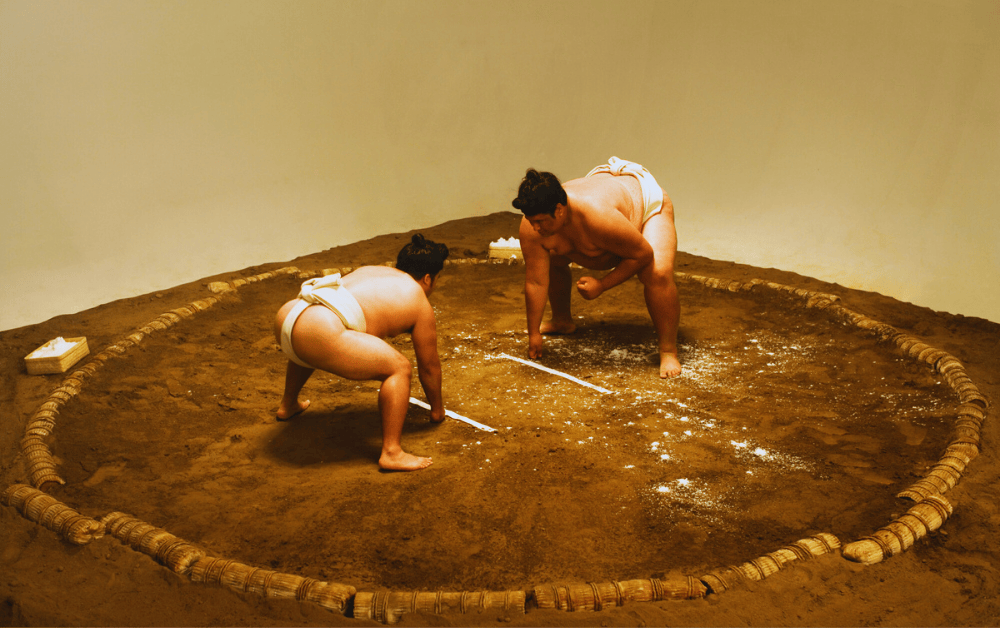
Gachi (ガチ) a Japanese slang derived from sumo wrestling

Have you ever seen a sumo match where the rikishi (sumo wrestlers) rushes into the fight? The fight is usually over seconds but not without a noise! The Japanese onomatopoeia for that noise is “gatsun” (“crash”, “thump”).

It is said that “gatsun” is the etymology for the word “gachinko” which meant “A heated battle”. However, from 2000s, young Japanese people started to use “gachi” and “gachide” in conversation. This referred to terms like “super” and “serious”. ガチ Gachi is the short form of gachinko and is a prefix, often with the particle 「で」”de”. The term Gachi refers to reinforcing your opinion of something or to highlight a critical situation.

Japanese Example Sentences

例:「このお笑いコンビ、ガチで面白い!」
Rei: Kono owarai konbi, gachi de omoshiroi!
Example: This comedy duo is super fun!

例:「○○大学の学食のカツカレーって、ガチで辛いよね。」
Rei: Daigaku no gakushoku no katsukarē tte, gachi de tsurai yo ne.
Example: The cutlet curry of our University’s cafeteria is seriously spicy!

例:「ここのお店のたぬきうどん、ガチでしこってるな~」
Rei: Koko no o-ten no tanuki udon, gachi de shikotteru na.
Example: This shop’s tanu gyudon are super tasteful!

チンする (Chin Suru) – Sound of a Microwave

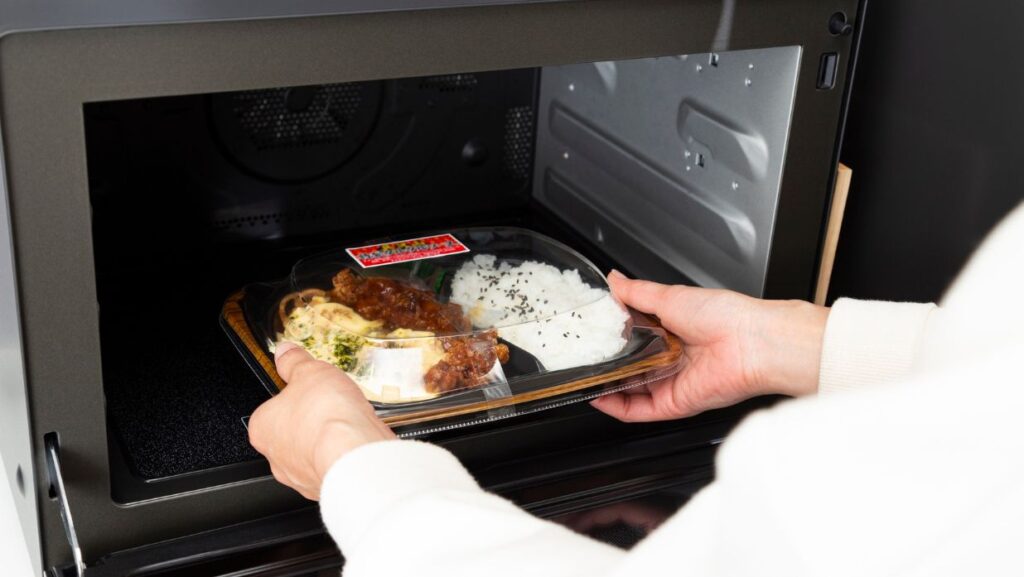
With the Covid 19 Pandemic taking over the world and people work from home, takeout or home-packed meal, commonly known as “bentō” 「弁当」in Japanese cuisine have been becoming increasingly popular. チンする (Chin Suru) is a Japanese slang for warming up your bentō in a microwave oven.

Let’s see the use of this Japanese slang in a casual conversation!

【朝、夫婦の会話】
夫: じゃあ、いってきまーす。
妻: あ、ちょっと待って!今夜、友達と食事する予定だから、昨日の残り物のおかずで悪いんだけど、チンして食べてくれる?冷蔵庫にいろいろ入ってるから。
夫: あ、そうなんだ。分かった。

Asa, fufu no kaiwa】
Otto: Jaa, itte kimasu!
Tsuma: Ah, chotto matte. Konya tomodachi to shokuji suru yotei dakara, kinou no nokorimono okazude waruindakedo, chin shite tabete kureru? Reizouko ni iroiro haitteiru kara.
Otto: Ah, sou nanda. Wakatta.

【Morning conversation between husband and wife】
Husband : Well, I am off, see you later.
Wife : Oh, wait a minute! I am going out for dinner with a friend tonight, would you mind to warm up (chin suru) yesterday’s leftovers and eat them? There are various things in the refrigerator.
Husband : Oh, I see. Ok, sure. 

おつぼね (Otsubone)

お つぼね (Otsubone) is a Japanese slang for Japanese women who like to keep working, despite the few chances to get a promotion, and do not get married. These women are often perceived as intimidating and is well influential from behind in the office but the word ostubone has a negative image and is used when gossiping behind someone’s back.

Japanese Conversation Example

A: 昨日、おつぼねに結婚の報告をしたら、予想通り嫌味を言われたの。
B: やっぱりねー。本当、あの人苦手。。。。

A: Kinō, otsu bone ni kekkon no hōkoku o shitara, yosō-dōri iyami o iwa reta no.
B: Yappari nee. Hontō, ano hito nigate…

A: Yesterday, when I informed that Ms. Bossy Pants about my marriage she said something rude, just as I expected she would.
B: That’s not surprising. I really can’t stand that woman …

はまる (hamaru)

はまる(hamaru) is a Japanese slang for “”To be infatuated with” or “Totally crazy into something”. Hamaru is mainly related to describing hobbies such as video games, tv-shows and so on. Hamaru can also describe a person who is obsessively in love with the object of their affection.

Example:

  • 趣味にはまる「shumi ni hamaru」to be crazy with a hobby
  • 私はあの歌手にはまるwatashi ha ano kashu ni hamaru」I’m obsessed with that singer.

Japanese Conversation Example – Conversation between friends

A: 久しぶり。最近どう?
B: 実はさ、最近オンラインゲームにハマってて。
休みの日は10時間はやってるかも。
A:え~!めちゃくちゃハマってるね。

A: Hisashiburi. saikin dou?
B: Jitsu hasa, saikin onrain geemu ni hamattete.
Yasumi no hi ha 10 jikan hayatteru kamo.
A: E~! mechyakuchya hamatteru ne.

English Translation
A: It has been a while. How are you doing lately?
B: The truth is, lately I’ve been addicted to online games. On my days off I play for maybe ten hours.
A: What?! You must be addicted like crazy.

まったりする (Mattari Suru) for Chilling Out!

まったりする (Mattari Suru) is a Japanese slang for being relaxed and laid-back. Japanese people often work overtime. This can cause things to get really hectic and intense. That being said, Japanese people do care a lot about rest and relax.

Japanese Conversation Example – Conversation between friends

A: ねぇ、ちょっと疲れちゃった。
どっかでまったりお茶でもしない?
B: いいね、そうしよう。
A: Ne~e, chotto tsukare chatta. Dokka de mattari ocha demo shinai?
B: Ī ne, sō shiyou.

English Translation
A: I’m pretty tired. Do you want to relax somewhere and maybe get some tea or something?
B: Good idea. Let’s do that.

できこん (dekikon)

できこん (dekikon) is a term that can be described as “Shotgun Wedding”. Shotgun Wedding describes a wedding that is arranged due to an unplanned pregnancy and is a term that is used casually with close friends and family.

Japanese Conversation Example – Conversation between friends

A:実は、再来月に結婚することになったんだ。
B:え?それはおめでとう。ずいぶん急だな。もしかして、でき婚
A:うん、そう…。
A: Jitsuwa, saraigetsu ni kekkon suru koto ni natta nda.
B: E? Soreha omedetō. Zuibun kyūda na. Moshikashite, dekikon?
A: Un,-sō…

English Translation
A:To tell the truth, in two months  I am getting married.
B : Wow, that is great news! Congratulations! That was pretty quick. Wait. Don’t tell me it’s a shotgun wedding?
A:Actually… Yeah.

ナンパする (Nanpa Suru) and 逆ナンす る (Gyakunan Suru)

Picking up girls and boys have been a trend along Tokyo’s night districts for a long time. The Japanese Slang for this type of attracting attention with pick-up lines is nanpa suru” 「ナンパする for men and  “gyaku nan suru逆ナンする for women.

Japanese Conversation Example – Two guy friends are having a conversation

A:昨日、クラブでめっちゃタイプの子がいたんだけど。
B:おぉ。
A:ナンパしようとしたら、他の奴に先こされちゃったんだよー。
A: Kinō, kurabu de metcha taipu no ko ga itandakedo.
B: O~o.
A: Nanpa shiyou to shitara, hoka no yatsu ni saki kosa re chatta nda yoo.

English Translation
A: There was a super hot girl at the club yesterday.
B: Oh.
A: I tried to pick (nanpa) her up, but another guy beat me to it.

自己中 (Jikochuu) – Being Egocentric/Selfish/Self-centered

自己中 (Jikochuu) is an abbreviation of the word 自己中心的 (jiko chuu shin teki) which is used to talk about someone who is selfish, egocentric, or self-centered. They think that the world only evolves around them. As it does not have a positive meaning, jiko chuu should only be used casually with friends, family or those close to you.

例:彼は他人のことを気にしない。言いかえれば、自己中だ。

Rei: kannojo ha hokano hito no koto wo ki ni shinai. Iikaereba, jiko chuu da.

Example: She doesn’t pay attention to others; In other words, she is selfish.

If you wish to express the selfishness of someone in formal language, you should use “waga mama“(わがまま).

  • 「彼はわがままです」 (kare ha waga mama desu): He is selfish.
  • わがままな子供」 (waga mamana kodomo): A selfish child.

ドタキャン (Dotakyan)

ドタキャン (Dotakyan) refers to ” Cancelling an appointment at the last minute”. The word “dotanba” means “last minute” in Japanese while “kyan” is short for the word “kyanseru” 「キャンセル」which means “cancel“ in English.

If you are the one canceling, you should use “dotakyan suru”. If you are the one who got stood up, you should use “dotakyan sareru” 「ドタキャンされる」.

Japanese Conversation Example – Conversation between friends

A:あれ、どうしたの?何かあった?
B:ちょっと、聞いてよ。明日デートの約束してたのに、またドタキャンされちゃった!

A:are? doshitano? nanika atta?
B:Chotto kiiteyo. Ashita deeto no yakusoku shitetanoni mata dotakyan sarechatta

English translation
A : Oh, what’s going on? Did something happen?
B : Listen to this. I had a date tomorrow, but, it got canceled at the last moment again!

ムカつく (mukatsuku)

ムカつく (mukatsuku) is a popular term used by young Japanese people and it refers to describing something or a situation as ‘frustrating’ or ‘irritating’. mukatsuku should be used only in an informal situation and should not be said to people with higher positions.

Examples of using “Mukatsuku”
夫(おっと)のすること一(ひと)つ一(ひと)つにムカつく。 Otto no surukoto hitotsu hitotsu ni mukatsuku.
Everything my husband does is irritating.
友達(ともだち)が昨日(きのう)とは違(ちが)うことを言(い)っていてムカつく。 Tomodachi ga kinou towa chigau koto wo itte ite mukatsuku.
What my friend says is different from yesterday which makes me irritated.

ドンマイ (Donmai)

ドンマイ (Donmai) is a slang often used by friends or family, at work, or in sports scenarios and is said to express feelings of cheering for someone when they make a small mistake. It is a slang similar to the phrase ‘Not a big deal” or “No worries” in English.

Example How to use ドンマイ (Donmai) :

Donmai!(どんまい:ドンマイ)
It’s okay!

Donmai, ki ni shinaide!(ドンマイ、気(き)にしないで!)
Never mind!

Donmai, kondo wa ganbatte!(ドンマイ、今度(こんど)は頑張(がんば)って!)
You can do better next time!

盛れる (もれる, moreru)

盛れる (もれる, moreru) is a slang that literally translates to “to make one look better ; to beautify”.  It is commonly used when people discuss about photo filter apps and which filter will make the photograph look the most aesthetic.

Examples of using “Mukatsuku”  

このアプリのフィルター、盛れるね! Kono apuri no firuta, moreru ne! The filter on this app makes the picture look great!

きまず (Kimazu) – Awkward

This is a shortened form of きまずい (kimazui), which means “awkward” or “uncomfortable.” It’s commonly used among young people to describe socially uncomfortable situations.

Example:
昨日の会話、きまずかったな。
Kinou no kaiwa, kimazukatta na.
Translation: “Yesterday’s conversation as so awkward.”

ぴえん (Pien)s

ぴえん (Pien) is a Japanese slang that expresses the crying emoji “🥺”. The slang is often mainly used by young girls when there is something to be depressed or sad about. “Pien” is said at the end of the sentence to show sadness about the situation instead of having to say “I am sad”.

Japanese Conversation Example

A: 最近食欲が止まらないんだよねぇ。
B: そういやなんかいっつも食べてるよね。
A: やせたいわー
B: いや、無理っしょ…
A: ぴえん

A: Saikin shokuyoku ga tomaranai nda yo nē. B: Sōiya nanka ittsumo tabe teru yo ne. A: Yasetai wa ̄ B: Iya, murissho… A: Pien

A: I can’t stop eating recently.
B: Year, you are eating something always.
A: I want to lose my weight.
B: No, you can’t…
A: Pien

推し (oshi)

推し (oshi) refers to person whom you support. If someone asks you Dare oshi(誰推し)?”, it means “Who is your oshi(推し)” or “Who’s your favorite?”. This term is often used to talk about favorite idols, anime characters, and classmates.

Japanese Conversation Example

A: 実は私もモーヲタなんだよね。
B: まじで!?早く言ってよ!!え、誰推し?
A: まーちゃん推し!誰推し?
B: 前は推しメンいたけど、今は箱推しなんだよね。

A: Jitsuwa watashi mo mōwotana nda yo ne. B:Maji de! ? Hayaku itte yo! ! E, dare oshi? A: Ma ̄-chan oshi! Dare oshi? B: Mae wa oshimen itakedo, ima wa hako oshina nda yo ne.

A: Actually, I’m morota(モーヲタ) too.
B: Seriously? You should have told me earlier! Dare oshi(誰推し)?
A: Marchan oshi!! Dare oshi(誰推し)?
B: I used to have a oshi mem(推しメン), but now I’m hako oshi(箱推し).

飛ぶぞ (Tobuzo)

飛ぶぞ (Tobuzo) is an exclamation that is used to describe food as being ridiculously delicious and mind-blowing.

Example sentence: 
これ食ってみな、飛ぶぞ Kore kutte mina, Tobuzo
Try eating this. It’s amazing. 

ワンチャン (wan chan)

ワンチャン (wan chan) comes from the English phrase “One chance” and it means “There is a chance/possibility”. ‘Wanchan‘ was used as a mah-jong term originally and is somewhat similar to the phrase “YOLO” in English.

Example sentence:  明日の試験、あの問題が出るならワンチャン受かるかも Ashita no shiken, ano mondai ga derunara wanchan ukaru kamo If that problem comes up in tomorrow’s test I might actually pass.

それな (sore na)

Originally an internet Japanese slang, それな (sore na) is used mainly by young adults and children. “Sore na” is almost identical to the English slang “ikr” or “I know right.”

Japanese Conversation Example

A: 暑すぎてマスクつらいんだけど
B: わかる。でもマスクしてないと非国民扱いされるから、しないわけにはいかないんだよね
A: それな!

A: Atsu sugite masuku tsurai ndakedo B: Wakaru. Demo masuku shi tenaito hikokumin atsukai sa rerukara, shinai wake ni wa ikanai nda yo ne

A: Sore na!

A: It’s too hot to wear a face mask…
B: I know. But if we don’t wear it, people will treat me as unpatriotic, so we have to…
A: Sorena!

タメ (Tame) – Same Age

“Tame” is used to describe someone who is the same age as you.

Example sentence: 
タメだから話しやすいね。
Tame dakara hanashiyasui ne.
Translation: “It’s easy to talk to you since we’re the same age.”

Check out some of our other Japanese Slang Articles :

FAQ

To deepen your understanding of Japanese slang, consider engaging with native speakers or consuming media like anime, dramas, or YouTube videos. Resources like WaniKani and BunPro offer structured learning paths that include slang.


Absolutely! Anime and manga are rich sources of colloquial language, including slang. Websites like MyAnimeList and Crunchyroll offer access to various series where you can hear slang in context.


One common mistake is using slang in inappropriate contexts, such as formal situations or with people of higher status. To avoid this, familiarizing yourself with the nuances of Japanese social hierarchy will help to understand what language is appropriate to use. Generally, with people who are older, strangers, and especially your boss, you should avoid using slang.

Want to study Japanese with us?

Like lol, jk, and even XD; Japanese people have their own version of internet slang and texting lingo — also known as ネットスラング (netto surangu). Have you ever tried using social media, like Facebook, YouTube, or Twitter, in Japanese? Scoured across comments sections, posts, and message boards are letters and symbols being used in ways you’ve never encountered before. You may recognize the English letters, but they don’t make a lick of sense to you. So you may be thinking, what on earth does everything mean?

You have just been exposed to Japanese internet slang, and just like English internet slang, it looks more like secret codes rather than language you would learn in the classroom. While they are widely used to communicate online, Japanese internet slang terms are often not officially recognized in the Japanese language, nor are they found in Japanese textbooks. 

However, despite this, in order to use the most common social media platforms or text your friends, Japanese internet slang is essential to know. So, let’s learn some of the most common internet slang you will come across so you can navigate the internet in Japanese and actually understand what people are saying!

Basics of Japanese Internet Slang

スラング (surangu) is a loanword from English that means “slang” and ネット (netto) is just “net” from “internet”. As with any language, you’ll come across numerous words, expressions, and abbreviations that are exclusively used on the internet or in text messages. Japanese internet slang terms can be challenging to understand because they don’t follow the same rules as standard Japanese.

Unlike the regular Japanese writing systems, Japanese internet and texting slang use romaji (ローマ字), or the roman alphabet, much more frequently. They are often shorter and more casual, incorporating English words and expressions. Additionally, they can change rapidly over time, making it essential to stay up-to-date with the latest trends.

If you want to learn more practical Japanese, one of the best ways to understand this slang and lingo is by practicing with native speakers. Schools like Coto Academy focus on conversational Japanese and can help you build confidence through real-life practice.

Why Japanese Slang is Difficult to Understand

Japanese slang often employs wordplay, abbreviations, acronyms, and puns that may be difficult to decipher without some understanding of Japanese culture and context. For example, a typical Japanese slang term “JK” refers to “joshi kousei,” which means high school girl, but the abbreviation itself doesn’t necessarily indicate its meaning to non-native speakers.

Take a look at an example to demonstrate how Japanese internet slang might not make sense despite its use of English letters:

どこかから DQN が 現れて わりこんでいったよ!ムカつく!
Doko ka kara DQN ga arawarete warikonde itta yo! Mukatsuku!
A DQN appeared out of nowhere and cut in line! So annoying!

You might have noticed the word “DQN” sticks out among Japanese characters. Pronounced ‘Dokyun’, it came from a variety show called Mugumi! Dokyun, which gave life advice to struggling couples. Now, it’s used to describe someone who is stupid and acts without thinking. Because it’s written in romaji, you might assume it’s a typo, but it was completely intentional. However, please note that this term can be seen as insulting or even derogatory.

Just like in English, saying texting slang out loud might be a little out of place, so for in-person conversations, check out our blog: Top 30 Japanese Slangs

Popular Japanese Internet Slang Terms Used on Social Media

Using social media platforms such as Twitter, Facebook, Instagram, and YouTube is super fun (and addicting), but it’s essential to know the text slang terms that are everywhere. This is especially true for Twitter, where brevity is key and phrases need to be shortened, or in text messages, where speed is essential. Let’s check out some awesome Japanese text slang terms frequently used online!

1. 飯テロ (Meshi Tero)

Reading: meshi tero
Meaning: food terror

Do you ever see a photo of really delicious food and get upset that you can’t eat it? This is exactly what 飯テロ is talking about! 飯 (meshi) means food, and テロ (tero) means terror or terrorist; combined, they refer to the act of uploading such pictures on social media that make people hungry (especially late at night)! The more appetizing the food, the more テロ (tero) is unleashed!

Example:

彼はパスタの写真をあげて、飯テロした。
Kare wa pasuta no shashin o agete, meshi tero shita.
When he uploaded those photos of pasta, he did “food terror.”

2. リア充 (Riajuu)

Reading: riajuu
Meaning: Someone who has a fulfilling life offline

We all know it’s not good to spend too much time on the internet. But, for many of us, the internet is key to countless hobbies and interests. However, for リア充, most of their happiness comes from the real world.

Taken from the phrase リアルが充実している (riaru ga juujitsu site iru), which means one’s real-world life is fulfilling, リア充 are usually characterized by having significant others, many friends irl, non-internet-based hobbies, and active lifestyles. In other words, they have a satisfying life away from the internet!

Example:

彼女はピアノを弾いたり、絵を描くのが好きです。リア充です!
Kanojo wa piano o hiitari, e o kakitari suru noga suki desu. Riajuu desu!
She likes to play piano and paint; she is a riajuu!

3. w or 笑 (Wara)

Reading: wara
Meaning: laughing

This is the Japanese version of LOL! The “w” or 笑 (wara) is taken from the beginning part of the verb 笑う (warau), which means “to laugh.” Just like LOL, it’s usually used at the end of a sentence, and the more w’s you add (i.e., wwww), the harder you are laughing. 笑 is usually seen as the more “mature” way to write this, but many just use “w” instead.

Example:

うちの猫、私の枕で寝てるwwww
Uchi no neko, watashi no makura de neteru wara
My cat is sleeping on my pillow lolll

4. 草 (Kusa)

Reading: kusa
Meaning: lol / something hilarious

草 literally means “grass.” It became slang because many “w” characters (wwwww) used for laughter look like grass growing on the screen. So 草 became shorthand meaning “that’s hilarious.” This is very common on forums, gaming chats, and TikTok comments.

Example:

その写真は草生える
Sono shashin wa kusa haeru.
That picture is hilarious (lit. “grass is growing”).

5. 888 (Pachi-pachi-pachi)

Reading: pachi-pachi-pachi
Meaning: clapping sound effects

No words, or even letters, what could a phrase made up of only 8’s mean? Remember that the Japanese love to use onomatopoeia. The onomatopoeia for “clapping” is pachi-pachi-pachi, and eight can be read as either hachi or pachi. So, if you put a bunch of 8’s next to each other, you get the clapping sound when you read it! Most of the time, you will use this to denote congratulations. Just like with “w”, the more 8’s you write, the more clapping you are doing.

Example:

言語学の学位をとったんですね! 888
Gengogaku no gakui o tottan desune! Pachi pachi pachi
You got your degree in Linguistics! (clap, clap, clap)

6. フロリダする (Furorida Suru)

Reading: furorida suru
Meaning: to leave a conversation to have a bath

Yes, this does sound like Florida, but it has nothing to do with the state. Instead, this particular verb is actually a combination of the words furo (bath) and ridatsu (to withdraw), and refers to leaving a conversation (either online or through text) to hop in the tub or shower. A lot of Japanese people soak in the bath before bed, so this word probably came about because so many people take a break from the conversation for their routine bath.

Example:

彼女は、8:45にフロリダした。
Kanojo wa 8:45 ni furorida shita.
She left the conversation to shower at 8:45.

7. KY (Keiwai)

Reading: keiwai
Meaning: A person who cannot read the room

It may be strange to see the Roman alphabet here, but it will make sense in a little bit! KY comes from the expression 空気読めない (kuuki yomenai); this literally means to be unable to read the air. Instead of typing all this out, however, many Japanese people just take the “k” from kuuki and the “y” from yomenai to make this abbreviation!

People who are KY tend to behave in ways considered inappropriate for the situation at hand or are simply oblivious to what is happening around them. This is definitely not something you would want to be called!

彼氏と別れたばかりの友だちの前で、自分の彼氏自慢とか、あの子、KYすぎ。
Kareshi to wakareta bakari no tomodachi no mae de, jibun no kareshi jiman toka, ano ko, KY-sugi.
In front of a friend who just broke up with her boyfriend, she boasts about her boyfriend, and that girl (can’t read the room).

Want to start learning Japanese?

8. なう or ナウ (Nau)

Reading: nau
Meaning: Doing something right now, at a place right now

A lot of people like to use social media to show people what they’re up to. Sometimes, this means letting people know what they’re doing as they’re doing it! If you want to say what you’re doing now, you can just use the word なう (nau)… which sounds almost like now. This makes it pretty easy to remember!

Example:

京都なう/ たこ焼きナウ
Kyouto nau / takoyaki nau
I’m in Kyoto now / I’m eating takoyaki right now

9. 乙 (Otsu)

Reading: otsu
Meaning: Good job! Well done!

Ever want to congratulate someone online, maybe for a good round in a game or in a video comment? 乙 is perfect for this! 乙 stands in for the Japanese phrase お疲れ様でした (otsukare sama deshita), which means thank you for your hard work. Many times, this is said at the end of a workday or after a big task. The kanji 乙 doesn’t have any relation to this phrase; it’s just used for its reading!

10. 炎上 (Enjou)

Reading: enjou
Meaning: to be roasted on social media

Social media can be a wonderful place, but it can also be a harmful one as well; we’ve all seen how common it is for someone to be heavily criticized, or “roasted” online. Leaning into the fire (or roasting) analogy, Japanese netizens started using the word 炎上, which actually means flaming, to describe when this happens.

Example:

彼はそのパンツを履いて炎上した。
Kare wa sono pantsu o haite, enjou shita.
When he wore those pants, he got roasted.

11. オワコン (Owakon)

Reading: owakon
Meaning: Dated content, no-longer-current media

With new content and trends being created every minute, things can get dated on the internet pretty quickly. To talk about content that has already passed its prime, オワコン is the perfect word. It’s formed from a combination of 終わった (owatta, meaning finished) and コンテンツ (kontentsu, meaning contents).

Simply put, it’s content that’s finished being relevant! Now, I wonder how long it will take before this word goes out of date.

Example:

ゾンビ映画はオワコンになってしまった。
Zonbi eiga wa owakon ni natteshimatta.
Zombie movies became dated content.

12. △ (Sankakkei)

Reading: sankakkei
Meaning: Mr./Mrs.___ is cool.

We’ve gone through Japanese internet slang using Japanese abbreviations, Roman letters, and even numbers, but what on earth is a shape doing here? Well, it’s a little complicated. The Japanese word for a triangle is sankakukei, but most people pronounce it as sankakkei, as it’s easier.

The san- in the beginning is pronounced the same as さん, or the honorific title meaning Mr. / Mrs. Then, –kakkei is a short form ofかっこいい (kakkoii), which means cool or attractive. So, put them together, and you get a reading of a triangle that can also mean so-and-so is cool. It’s a play on words that also saves time typing! Japanese netizens often use it to refer to celebrities or anime characters.

Example:

みどりや△ 。
Midoriya san-kakkee.
Mr. Midoriya is cool.

13. ずっ友

Reading: zuttomo
Meaning: friends for life

We all know the abbreviation for BFF – Best Friends Forever. But what if you want to say this in Japanese? Turns out you can call your closest friends ずっ友! Like a lot of words on this list, ずっ友 is a combination of two words: ずっと (zutto), meaning forever, and 友達 (tomodachi), meaning friends. It was first used by young girls taking pictures together, but now everyone uses it, making it the perfect alternative to saying “cheese” when taking pictures with your closest friends!

Example:

旅行の後、ずっ友になりました。
Ryokou no ato, zuttomo ni narimashita.
After their trip, they became BFFs.

14. Wkwk (Waku Waku)

Reading: wakuwaku
Meaning: to be excited

If you’re a fan of the series SPYxFAMILY, one of the popular anime series on Netflix, you might already be familiar with ワクワク (wakuwaku). The all too adorable titular character, Anya, says all the time! ワクワク is an onomatopoeic word meant to imitate excitement!

However, if you’re really excited about something, you may not have the patience to type out the whole word! So many Japanese netizens just type wkwk instead, which is the first letter of each kana (wa, ku, wa, ku). You can use wkwk in a myriad of situations, such as starting a new hobby or finding out your adoptive dad is really a spy in disguise!

Example:

アニャはピーナッツを食べたがっています wkwk。
Anya wa piinattsu wo tabetagatteimasu wakuwaku.
Anya wants to eat peanuts!

15. バズる (Bazuru)

Reading: bazuru
Meaning: to go viral

バズる comes from the English word “buzz,” referring to online hype. If a tweet, TikTok, or video spreads rapidly and gets tons of engagement, people say it “buzzes.” This term is especially popular among influencers or anyone active on X (Twitter). 

Example:

この動画、めっちゃバズってる!
Kono douga, meccha bazutteru!
This video is totally going viral!

This term can also be used irl (in real life), too, but mostly among Gen Zs. Check out our blog to keep up with your Gen Z friends: 16 Top Gen Z Japanese Slang and What They Mean

16.りょ / りょ (Ryo)

Reading: ryo
Meaning: got it / okay

りょ(ryo) is a super-short version of 了解 (ryoukai), meaning “Roger that!” or “Understood!” It’s extremely common in casual text messages, especially among teens and young adults. Very similar to texting “k” or “got u” in English.

Example:

6時に駅集合で!
Roku-ji ni eki shuugō de!
Meeting at the station at 6!

りょ!
Ryo!
Got it!

17. 尊い (Toutoi)

Reading: toutoi
Meaning: precious/divine/too pure (often used for fandoms)

尊い is a common slang term used especially in anime, idol, BL, or VTuber fandoms. It expresses feeling overwhelmed by how cute, beautiful, perfect, or emotionally powerful someone or something is. It’s closer to “I can’t handle this, it’s too precious.”

Often paired with crying emojis or kaomoji.

Example:

この2人のシーン、尊すぎる…
Kono futari no shin, toutosugiru…
This scene with these two is way too precious…

18. ググる (Guguru)

Reading: Guguru
Meaning: To Google or to search online

This internet slang comes directly from the Japanese word for Google, グーグル (Guuguru), but it’s a bit shortened and transformed into a verb. You can use this phrase just like you would in English, when something like “we can just Google it.”

You can also conjugate it just like a typical Japanese verb: ググった (gugutta), ググらない (guguranai), ググります (gugurimasu), etc.

Example:

その映画の時間、ググってみて。
Sono eiga no jikan, gugutte mite.
Try Googling the showtime for that movie.

19. サムネ (Samune)

Reading: Samune
Meaning: Thumbnail

サムネ (Samune) is short for the Japanese word for thumbnail, サムネール. You will often see this word on video-sharing platforms, such as YouTube and TikTok. Whenever you want to talk about a video’s preview image, just refer to it as the サムネ.

Example:

そのビデオのサムネがすごく良かったから、バズったよ。
Sono bideo no samune ga sugoku yokatta kara, bazutta yo.
The thumbnail for that video was really good, that’s why it went viral.

20. Ksk (Kasoku)

Reading: Kasoku
Meaning: Faster

Ksk comes from the word Kasoku, 加速, which means to accelerate or go faster. It’s used very frequently across the internet, especially on messaging boards like 2chan or on live video chats. People often use it when they want something to go faster or speed up. It’s similar to saying “go, go, go!” or “faster!”

Example:

コメントもっとkskして!
Komento motto ksk shite!
Everyone, comment faster

21. Ktkr (Kita Kore)

Reading: kita kore
Meaning: “It’s here!!” / “Yes!!” / “Finally!!!”

ktkr is an abbreviation of キタコレ (kita kore), which is a colloquial, excited way of saying “it’s here!” in Japanese! People use it when something they’ve been waiting for finally happens: a game update, a teaser drop, a favorite streamer coming online, etc.

Example:

新しいPV出た!? ktkr!!
Atarashii PV deta!? ktkr!!
The new promo video dropped!? It’s finally here!

Japanese Texting Culture: Kaomojis (*^_^*)

Finally, we can’t finish an article about Japanese internet and texting slang without touching on kaomoji. Kaomojis, or literally face characters, are simple faces or facial expressions created using different elements and symbols found on your keyboard. You can almost think of them as old-school emojis! Just like emojis, kaomojis help to make the meaning of your words clear and to emphasize certain feelings. There’s a lot of focus placed on the kaomoji eyes, which makes them very expressive and particularly appealing to Japanese netizens. Many users place them at the end of a sentence or idea, or even just by themselves!

A lot of kaomojis are clear as to what they mean, for example:

  • (^_^; ) – means being embarrassed 
  • (-_-)zzz – means being asleep 
  • (T_T) – means crying

Some aren’t as intuitive, for instance:

  • m(_ _)m – means being apologetic (bowing) with the “m” representing your hands and the “(_ _)” representing your head.
  • (#`Д´) – meaning angry. This symbol, `Д´, represents an angry face with the “#” representing yelling. 

However, the more you see kaomojis and get used to them, the more you will be able to pick up on their meaning! Check out the Kaomoji: Japanese Emoticons website if you ever need to find out what a particular kaomoji means!

Have you ever wondered what the Japanese kanji emojis meant? Check out our blog to learn everything you need to know: Japanese Kanji Emojis: What Do They Actually Mean?

Conclusion

Whether it’s on social media, online games, or just chatting with friends, slang is bound to pop up everywhere you go. Being well-versed in Japanese slang will not only help you navigate Japanese internet communities but also make new Japanese friends. Hopefully, now that you have this list of Japanese internet and texting slang, navigating the Japanese web will be a bit easier! The next time you reach that one word, you’ll already know what it means. 

Want to talk more like a Japanese native and get more practice in speaking Japanese? Why not check out some of our classes at Coto Academy? We focus on fun, practical lessons. We also have online courses, which would be the perfect place to practice what you’ve just learned! Fill out the form below for a free level check and course consultation.

FAQ:

What are some popular Japanese internet slang terms and expressions used on social media platforms?

Some popular Japanese internet slang terms and expressions used on social media platforms include “w” (short for “warai” meaning laugh), 888 (pachi pachi pachi, meaning clapping), pkpk (pakupaku, meaning excited), and りょ(ryo, meaning “got it!).

Why is it important to know Japanese internet and text slang terms when communicating online with Japanese speakers?

Unlike Japanese spoken in real life, internet slangs make more use of abbreviations, acronyms, and even emoticons, which can be hard to understand if you don’t actually understand online Japanese lingo. Although these slang phrases aren’t found in textbooks (though they should start to be), they are essential if you want to actually communicate and engage people online in Japanese.

How do Japanese internet and text slang terms differ from traditional Japanese language?

Japanese internet and text slang terms differ from the traditional Japanese language in various ways. They are often shorter and more casual, incorporating English words and expressions. Additionally, they can change rapidly over time, making it essential to stay updated with the latest trends.

Can Japanese internet and text slang terms be offensive or inappropriate to use in certain situations?

Yes, some Japanese internet and text slang terms can be offensive or inappropriate to use in certain situations. It is crucial to understand the context and appropriateness of these terms to avoid offending others or using them in an inappropriate way. It’s always best to err on the side of caution when using internet slang in any language. Like any slang used across the internet, it’s best to understand the full context before deciding to use it yourself.

What’s the difference between kaomoji and emojis?

While both generally represent facial expressions, emojis are pictograms embedded in text, whereas kaomoji (lit. face characters) are created by the writer using symbols on the keyboard. They both serve a similar purpose to use emoticons to represent general emotions, but kaomoji can be harder to understand if you’re not used to recognizing what facial expression or emotion is being conveyed.

Like reading this blog? We recommend that you check out:

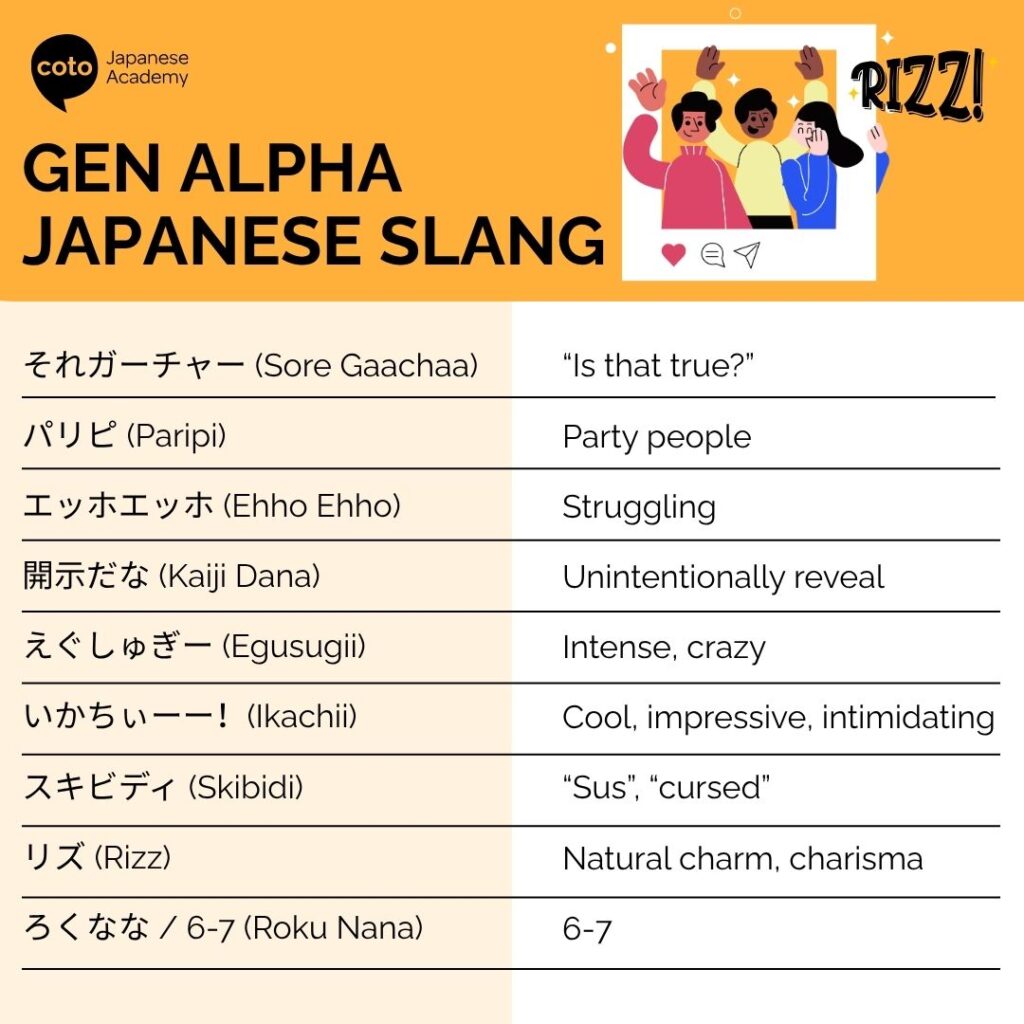
The words rizz, no cap, and slay might be taking over Gen Z lingo in English, but did you know that Japanese Gen Z has its own unique set of slang and phrases? Language is fluid, constantly evolving with each generation, and Japan is no exception. Gen Z has developed a variety of expressions that might leave you scratching your head.

You might wonder why, when you hang out with your Japanese friends—especially younger ones—you don’t understand many of the words they use. Just like in English, sometimes the younger generation can seem like they’re speaking an entirely different language.

But don’t worry! Most of these expressions come from common words you’ve probably already learned (and some even come from English). Let’s dive into the Gen Z phrases you should know to keep up with conversations with younger crowds in Japan!

What is “Gen Z” in Japan?

Just like most other places in the world, the word Gen Z, or Z世代 (zetto sedai) in Japanese, refers to anyone born from 1996 to 2015. Like everywhere else in the world, they are known as the generation that grew up in an unprecedented digital age where exposure to smartphones, YouTube, TikTok, and social media was very dominant. This likely shaped their language as well as made this language become widespread more rapidly. 

Japanese Gen Z are known for their creative use of slang, shortening words (a phenomenon called 略語 or ryakugo), and borrowing expressions from the internet or English. Below are 15 popular and current Japanese Gen Z words and phrases that will help you sound more in-the-know, or at least understand what your Japanese friends are texting or talking about.

1. やばい (Yabai)

This phrase has been used far before Gen Z was born, originally meaning “dangerous.” However, since then, this phrase has evolved to capture a wide range of different meanings. So, it is often used by Gen Z, especially on the internet, to quickly express something like “crazy,” “awesome,” “dangerous,” or “terrible”, depending on context. They use it for anything extreme, from something really cool to totally disastrous.

Example:

あの先生の宿題の量がやばいですよね。
Ano sensei no shukudai no ryou ga yabai desu yo ne.
The amount of homework that the teacher assigns is crazy!

Words with multiple meanings are very common in Japanese, so read this blog to learn about common words with multiple meanings in Japanese.

2. キュン (Kyun)

This is a Japanese onomatopoeia describing a tightening, fluttering feeling in the chest or heart, and often has a romantic connotation. However, the phrase is also commonly used as another word for かわいい (kawaii) or cute.  

The phrase “kyun” is a term that spread primarily on TikTok, thanks to a trend where creators paired the phrase “kyun desu” with catchy poses set to music that went viral. In fact, it was so popular that in the 2020 “Gal Buzzword Awards,” it ranked in third place.

If you cross your index finger and thumb to form a tiny heart, you’re striking the signature “kyun desu” pose.

Example:

猫の寝顔を見てきゅんです!
Neko no negao o mite kyun desu!
Seeing a cat’s sleeping face makes my heart melt!

3. それな (Sore na)

Meaning “exactly!” or “so true”, this Gen Z Japanese slang is a go-to agreement word when someone says something relatable. It may come from the Kansai dialect, but the origins are somewhat uncertain. Today, it’s adopted by the youth to enthusiastically agree, similar to saying “I know” or “facts!”

Example:

Friend: コーヒーはこのチーズケーキと合うな
Friend: koohii ha kono chiizu keeki to auna.
Friend: Coffee pairs so well with cheesecake.

You: それな!
You: Sore na!
You: I know!

4. ガチ (Gachi)

The word “ガチ” (gachi) is the Gen Z equivalent of “マジで” or “本当に”, meaning “seriously,” “for real,” or “really.” It originally comes from the sumo term “ガチンコ (gachinko),” which referred to a serious, genuine, or real situation. Nowadays, “ガチ” is casual slang used usually among friends or people you’re close to.

You can pair the word ガチ (gachi) with other words, instead of just using it on its own. For example, ガチ勢 (gachi-zoku) refers to people who are seriously dedicated to a hobby or activity, like “game gachi-zoku” or “anime gachi-zoku.” When combined with a noun, such as in ガチ中華 (gachi chuuka), it emphasizes authenticity or seriousness, meaning authentic Chinese food. ガチ恋 (gachi-koi) is used when someone is seriously in love with an idol or celebrity, while ガチで (gachi de) works as an adverb meaning “seriously” or “for real.” Similarly, ガチ推し (gachi-oshi) describes someone who wholeheartedly supports an idol or character.

Example:

これはガチで美味しい。
Kore wa gachi de oishii.
This is so delicious.

5. チル (Chiru)

The word “chill” has made its way into Japanese Gen Z slang, and it’s used almost exactly like it is in English. Originally from the phrase “chill out,” it basically means to relax, take it easy, or tell someone to calm down.

You’ll see it used in all sorts of ways, like “chill,” “chilling,” or “just chilling.” It’s the perfect word for those moments when you just want to hang out, kick back, and enjoy life without stress.

Interestingly, “chill” has been especially popular among millennials and Gen Z. Some think the COVID-19 pandemic may have played a role in its rise. After all, who didn’t want to slow down and relax during lockdowns?

Example:

今日はチルしよう。
Kyou ha chiru shiyou.
Let’s just chill today.

6. エモい (Emoi)

The word エモい (emoi) comes from the English word “emotional” and is used to describe feelings that deeply move you or resonate on a personal level. It doesn’t just mean happiness or sadness. It can capture complex emotions like nostalgia, loneliness, heartbreak, sentimentality, or a bittersweet sense of beauty. You might call a stunning landscape, an old song, a photo, or a fleeting moment “emoi” when it evokes an indescribable emotional response. In English, it’s similar to words like “emotional,” “nostalgic,” or “vibey.”

The origins of エモい are somewhat debated. One theory traces it directly to the English “emotional,” while another suggests it comes from the old Japanese phrase えもいわれぬ (emoiwarenu), which means “indescribable” or “hard to put into words.” 

The term has been around in the music world since the 1980s, but it became popular among youth around 2006. Its spread was further boosted when it was selected as one of “This Year’s New Words” by Sanseido in 2016!

Example:

この写真めっちゃエモい。
Kono shashin meccha emoi.
This picture is very emotional or nostalgic.

7. ワンチャン (Wanchan)

Not to be confused with the word for a dog, which is also ワンチャン (wanchan), this slang phrase actually means “there’s a chance” or “maybe.” 

Wanchan comes from the English phrase “one chance.” It’s a shortened form of ワンチャンス (one chance) and is used to suggest that there’s a small possibility something might happen.. In Japanese slang, it’s often used when talking about a slim but real chance to win, get something, or make something happen. Interestingly, in English, the phrase “one chance” isn’t used to mean “maybe,” so the slang usage is uniquely Japanese.

Example:

ワンチャン受かるかも。
Wanchan ukaru kamo.
There’s a chance I might pass.

8. 草 (Kusa)

This is the Japanese Gen Z equivalent of “LOL.” It comes from Japanese internet slang: “w” or “www,” which resembles blades of grass. Because of this visual similarity, the kanji 草 (kusa), meaning “grass,” was adopted as a shorthand way to show that something is funny or that you’re laughing.

The original “w” or “www” actually comes from the first letter of “wara (笑),” the Japanese word for “laugh.” So when you see 草 in comments or online chats, it’s not talking about plants. It’s simply a playful way of saying “haha” or showing that something made you laugh.

Example:

それ草。
Sore kusa.
That’s hilarious.

9. ぴえん (Pien)

Have you seen people using “pien” online lately? It’s basically a cute way of saying you’re sad or about to cry. The term actually comes from the crying face emoji 🥺, which shows that slight, watery-eyed “I might cry” vibe.

“Pieen” is thought to be the direct translation of that emoji, and “pien” is just the shorter, catchier version. It’s onomatopoeia (basically the sound of a tear falling), and it’s used to show sadness or disappointment in a sweet, playful way.

People usually pair it with emojis like 🥺 or 😢, so next time you want to say “I’m sad… but cute about it,” just drop a pien.

Example:

テスト落ちた…ぴえん。 
Tesuto ochita…pien.
I failed the test…😢

10. リアコ (Riako)

The word “リアコ” (riako) is short for “リアルに恋してる”, which basically means “really in love.” But there’s a twist: it’s not about having a crush on a friend, coworker, or someone you actually meet in real life. Instead, it’s used for being deeply in love with someone who’s basically out of reach, like a 2D anime character, a celebrity, or an idol you can only interact with as a fan!

In other words, riako describes the feeling of truly wanting a relationship with someone you can’t realistically date. It’s a kind of intense, “unreachable” love that’s become a popular slang term online. The word seems to have started popping up on social media around 2019, especially in communities focused on anime, games, and idol culture.

You should not use it for real crush. Take a look at an example below.

新入社員のやまだくんにリアコ中なの!
Shinyuushain no yamada kun ni riakonchuu nano!
I am totally riako over the new employee, Yamada!

That wouldn’t really count. Since the new employee exists in real life, the “riako” term doesn’t really apply.

The key difference between riako and more common fan terms like “oshi” (favorite) or just being a fan is the level of seriousness. Fans of an idol, celebrity, or 2D character usually admire them from afar—they might like them a lot, but they don’t necessarily want to actually date them.

Riako, on the other hand, is all about being truly, deeply in love. It often comes with strong feelings of jealousy toward other fans and a desire to “claim” the person for yourself. 

Example:

ジャングくにリアコしてる。
Janguku ni riako shiteru.
I have a big crush on Jung Kook。

11. 推し (Oshi)

Originally coming from the term 推しメン (oshi men), meaning the most popular member of an idol group. The shortened 推し (oshi) means “my favorite (idol, character, or person I support).” The word 推す (osu) itself actually means “to support,” so when using this phrase, you are expressing that a certain idol or work is your favorite, so you are a big fan. 

Example:

私の推しはジブリのハウル!
Watashi no oshi wa jiburi no hauru!
My favorite is Studio Ghibli’s “Howl’s Moving Castle!”

12. タピる (Tapiru)

“タピる” (tapiru) is a fun verb that came about during Japan’s bubble tea boom. It comes from タピオカ (tapioca) + る, which basically turns it into “to go drink bubble tea.” It’s a great example of how Gen Z in Japan likes to make new verbs by adding る to trendy words.

Even though the bubble tea craze has calmed down a bit, tapiru is still a part of 2010s youth culture and pops up casually among young people. You’ll see it a lot on social media platforms like Twitter and Instagram. Using the abbreviation makes it easier to fit into character limits, and adding a hashtag like #tapiru can make your posts more visible. Bonus: searching #tapiru is a fun way to find popular tapioca shops in your area through other people’s posts!

Example:

学校帰りにタピろ!
Gakkou kaeri ni tapiro!
Let’s get bubble tea after school!

13. わかりみが深い (Wakarimi ga fukai)

This Gen Z Japanese slang is a playful, exaggerated way to say “I deeply relate.” It comes from わかる (to understand) but is transformed into a more dramatic expression. It comes from the verb 分かる (wakaru), meaning “to understand” or “to relate,” but adds a slangy twist with -み, which turns verbs or adjectives into nouns expressing a feeling or quality. So わかりみ becomes something like “the feeling of understanding or relating.”

The が深い (ga fukai) part literally means “is deep.” Put together, it’s a fun, dramatic way to say you totally get something, and it’s especially popular online and among young people.

Gen Z uses it in response to emotional lyrics, memes, relationship takes, or anything highly relatable. 

Example:

この歌詞はわかりみが深い。
Kono kashi wa wakarimi ga fukai.
These lyrics hit so hard.

14. あざまる (Azamaru)

This is a playful, cute way to say “thank you,” formed from あざす (a shortened version of ありがとうございます) and まる (“circle,” often added for emphasis or cuteness). Gen Z often uses it humorously or casually with friends, similar to saying “thanksies” or “thx!” in English.

Example:

今日手伝ってくれてあざまる!
Kyou tetsudatte kurete azamaru! 
Thanks for helping today!

15. おつ (Otsu)

Short for お疲れ様 (otsukaresama), which is a standard phrase for showing appreciation after work or effort. Among Gen Z, おつ is used casually between friends after events, school, gaming sessions, or online streams. It’s a warm, friendly way to acknowledge someone’s effort or say “good job.”

Example:

今日のライブ最高!おつ!
Kyou no raibu saiko! Otsu! 
Today’s concert was the best! Good job!

16. バズる (Bazuru)

The word バズる (bazuru) means that a post or topic on social media spreads explosively in a short period of time. The word is technically a loanword from the English “buzz,” like the buzz of excitement or a rumor, plus the Japanese verb ending -る (ru), turning it into an action: “to buzz” or “to go viral.”

There’s no strict rule on how a post might be considered viral. That said, what counts as “viral” really depends on the account. For example, a post going viral for a small account might have far fewer views than a viral post from a big influencer, but it still generates the same kind of explosive attention!

While Gen Z words are great to use with younger people, what are some terms you should avoid? Find out by reading our blog: Japanese Swear Words You Shouldn’t Use

Should I Use These Japanese Gen Z Slang?

Now that you know all this slang, you might be thinking: “Should I start using it everywhere?” Well, not so fast. Imagine your grandparents suddenly dropping words like rizz or no cap in conversation. It would feel a little off, right? The same goes for Japanese Gen Z slang. Using it out of context can come across as awkward, especially if your Japanese isn’t very strong and you suddenly start sprinkling a bunch of slang into your sentences.

Think of these words more as a way to understand how young people talk, rather than something you have to use to fit in. Different generations use slang naturally, and sometimes it just doesn’t translate the same way for learners. You don’t need to use these words to impress your Gen Z Japanese friends — though, of course, if you use them sparingly and in the right context, it can be fun and show that you know the lingo.

Conclusion: The Ever-Evolving Language of Japan’s Gen Z

Japanese Gen Z slang is playful, expressive, and constantly evolving. Many of these terms come from a digital world where young people communicate heavily on social media, making the language dynamic and fun.

But to really speak naturally, whether using trendy Gen Z phrases or more traditional Japanese, it helps to learn from professional teachers. They can guide you to speak confidently and fluently, so you can hold conversations with friends in Japanese without hesitation.

Take this as your sign to start learning Japanese at Coto Academy! As Tokyo’s #1 Japanese language school, we focus on practical conversations, helping you feel confident speaking with millennials, Gen Z, or any generation. You can choose from our full-time Intensive Courses or part-time courses, both tailored to your level and personal goals. 

Don’t wait. Start your journey to Japanese fluency today by filling out the form below!

FAQ about Japanese Gen Z Slang:

Do Japanese people actually say these slang terms in real life?

Yes, especially among young people. Words like やばい, ガチで, and それな are extremely common in speech, while 草 and ぴえん are more common online. Some slang (like チル or エモい) appears both online and offline.

How fast does Gen Z slang change in Japan?

Very fast. New slang spreads quickly through TikTok, YouTube, LINE, and X (Twitter). Some words stay for years (like やばい), while others trend for a short period before disappearing. It’s a constantly evolving part of modern Japanese culture.

Are these slang expressions used everywhere in Japan?

Mostly in urban areas with strong youth culture, like Tokyo, Yokohama, Osaka, and Fukuoka. In more rural or traditional regions, slang may be recognized but used less frequently.

Is it okay for Japanese learners to use Gen Z slang?

Yes, as long as you use it in the right context. It’s great for casual conversation with friends or understanding modern Japanese media. Just avoid using slang in formal situations or with someone you’ve just met.

Will these words help me understand anime, J-pop, or Japanese pop culture?

Definitely. Gen Z phrases commonly appear in social media posts from Japanese artists, J-pop lyrics, anime dialogue (especially school-life, romcom, or comedy series), variety shows, and influencer content.

Learning these helps you understand modern Japanese culture far better.

What is Gen Z called in Japan?

Gen Z in Japan is commonly called Z世代  (Z sedai), literally “Generation Z.”

What is 893 slang for?

The number 893 is a slang term for the Yakuza (Japanese organized crime). This comes from a Japanese wordplay: 8 = ya (八), 9 = ku (九), 3 = za (三).

What are some Gen Z slang phrases?

 Here are some popular Japanese Gen Z slang terms:

  • リアコ (riako) – Really in love with a 2D character or celebrity.
  • タピる (tapiru) – To go drink bubble tea.
  • バズる (bazuru) – To go viral on social media.
  • わかりみが深い (wakarimi ga fukai) – “I really relate” / “I feel this deeply.”
  • ぴえん (pien) – Cute way to say you’re sad or about to cry.

Love reading content like this? Don’t forget to check out:

We’ve already presented the Japanese slang “nanpa” and “gyakunan” to describe flirting with someone – in particular on the street. This time, let’s get more serious and develop important words for dating in Japanese. Whether you live in Japan for a short time or for a few years, you never know what might happen. Who knows, maybe you will have a date with a Japanese friend tomorrow! So, how would you say dating in Japanese?

How to say “do you have a boyfriend/girlfriend” in Japanese?

First thing first, you might want to know if the lucky one is single. How would you ask “if he or she is already in a relationship? or If she has a boyfriend/he has a girlfriend?” in Japanese?

A natural, idiomatic way to say it would be 「つきあっている人がいますか?」”Tsukiatte iru hito ga imasu ka?”. Literally, “Is there someone you are dating?”. The verb “tsukiau” 「つきあう」「付き合う」is pretty much the same meaning as “dating” in English.

Example:

A:「つきあっている人がいますか?
B: 「彼氏・彼女がいます。」

A: tsuki atte iru hito ga imasu ka
B: kareshi / kanojyo ga imasu.

A: Are you dating someone?
B: I have a boyfriend / girlfriend.

Asking to go on a Date with someone in Japanese, image, boy and girl talking, photo, picture, illustration
Boy asking the girl if she is dating someone

How to say “wanna go out with me?” in Japanese?

If he or she is single, you might wonder how to ask, “Will you go out with me?” in Japanese. Once again, the verb “tsukiau” will be one natural way to ask.

A: 「ぼくと/わたしとつきあってもらえませんか?
A:  Boku to / Watashi to tsukiatte moraemasen ka?

However, it is important to be careful with the verb “tsukiau”. While the broad definition is “to socialize,” the meaning changes greatly according to the context. Let’s review two of the most important nuances.

The main one is “to accompany somebody somewhere”, without any romantic involvement. It can be translated as “to be associated with”, “to go around together”, “to keep somebody’s company”.

  • 今日の帰りに本屋さんに行くんだけど、付き合ってくれない?
  • Kyou no kaeri ni honya-san ni iku n da kedo, tsukiatte kurenai?
  • “I’m going to the bookshop on the way home today. Would you like to come along with me?”
  • 「人と付き合うのを嫌う」
  • Hito to tsukiau no wo kirau.
  • To be insociable (to prefer one’s own company).

The second meaning is specific to love, as it means “to be in a boyfriend-girlfriend relationship.”

  • 3年付き合ってた彼と別れたばかりで、今付き合ってる人はいません。
  • San-nen tsukiatteta kare to wakareta bakari de, ima tsukiatteru hito wa imasen.
  • I’m not going out with anyone at the moment. I’m just broken up with a guy I was with for three years.
  • 君達はいつからつきあっているのですか。
  • Kimitachi wa itsu kara tsukiatte iru nodesu ka
  • How long have you been dating?

Another word for dating in Japanese

Another way to talk about dating in Japanese would be through the word “deeto” 「デート」 which derived from the English word “date”. The word was first introduced to the Japanese language at the end of the 19th century and became popular among the young generation of the middle class during the 20th century. It was used to express the day and time a man and a woman decide to meet. The introduction of the American dating culture was a culture shock, as previously, Japanese did not go on dates casually but always with the mindset of marriage.

  • デートする」”deeto suru” to go on a date with
  • 彼氏・かのじょとデートがある」”kareshi/kanojyo to deeto ga aru” = to have a date with your boyfriend/girlfriend”
  • デートに行ってくれますか?」”deeto no itte kuremasen ka?” = Will you go on a date with me?
  • 彼女をデートに誘った。」”kanojyo wo deeto ni sasotta” = I asked her for a date.

You might wonder if there is a difference between “deeto” and “tsukiau”. Well, deeto would be used for a few casual dates with someone, whereas “tsukiau” implies a deeper relationship with that person. How many dates you should have before it’s a relationship is still a mystery!

  • 付き合うまで何回デートする?」”tsukiau made nan kai deeto suru?” “how many date before being in a relationship?”

Now, that you have learnt how to say dating in Japanese, you are ready to go out asking someone on a date! If that date is successful, how would you ask to meet again?

  • 今度いつ会えますか。
  • Kondo itsu aemasuka?
  • When can I see you next time?
Asking to go on a Date with someone in Japanese, boy asking girl, image, photo, picture, illustration
Boy asks the girl if he can meet her next time

If someone decides to cancel on you last minute, do you know what it’s called in Japanese slang? Find out more here!

Dating Culture in Japan – Valentine’s Day and White Day

Valentine’s Day (バレンタインデー) and White Day (ホワイトデー) are two significant romantic holidays in Japan, each with its unique traditions. Valentine’s Day is on February 14th, and White Day is on March 14th. 

Unlike in many Western countries where men and women exchange gifts on February 14th, Valentine’s Day in Japan is primarily a day for women to give chocolates to men. There are different types of chocolates given on this day: “honmei choco” (本命チョコ) is meant for romantic partners, “giri choco” (義理チョコ) is given to colleagues and male friends out of obligation, and sometimes “tomo choco” (友チョコ) is shared among female friends. To read more about this, read our blog here.

Exactly one month later, on March 14th, White Day, men who received chocolates are expected to return the favor with a gift typically valued at two to three times the amount they received. Common gifts on White Day include chocolates, cookies, marshmallows, jewelry, and even plush toys, depending on the nature of the relationship. Usually, reciprocating also means that the man has accepted the woman’s feelings for him, meaning he accepts to become a couple together or start dating!

Valentine’s Day and White Day remain culturally important. They add a structured element to Japanese romantic customs, emphasizing thoughtfulness and reciprocity in relationships.

Dating Sites or Apps in Japan

Online dating in Japan has grown significantly in recent years, with more people turning to dating apps and websites to find relationships. While traditional matchmaking methods like 合コン gokon (group blind dates) and お見合い omiai (arranged meetings for marriage) still exist, dating apps have become a mainstream way to meet potential partners, especially in urban areas. 

Regarding using these dating sites or apps in Japan, Japanese users prefer detailed profiles with clear photos and descriptions of hobbies, jobs, and interests, favoring selfies or professional-looking pictures over group photos. Good to note is that many apps nowadays require identity verification to reduce fake accounts. In Japan, messaging your interest tends to start formally (です・ます form) before gradually becoming casual, with users taking time to get to know each other before meeting. If the chat went well, it is about time to meet in person. First dates are usually low-pressure, often at a café, with some preferring group outings first. Most importantly, punctuality and politeness are important, and being too forward can be off-putting.

Most Popular Dating Sites in Japan

There are a couple dating apps and sites that are used widely in Japan, here are a few suggestions:

  • Pairs (ペアーズ) – This app focuses on long-term relationships.
  • Omiai (お見合い) – Similar to Pairs, but more marriage-focused.
  • Tapple (タップル) – More casual and fun, great for younger users.
  • with (ウィズ) – Uses personality tests to match users.
  • Tinder – More popular among foreigners and those looking for casual dating.
  • Bumble – Similar to Tinder.

FAQ

How do I ask someone on a date in Japanese?

  • デートに行きませんか? (Dēto ni ikimasen ka?) – “Would you like to go on a date?”
  • 今度、一緒にご飯でもどうですか? (Kondo, issho ni gohan demo dō desu ka?) – “How about grabbing a meal together sometime?”

How do I ask someone out casually in Japanese, without making it sound too serious?

  • 今度、一緒に遊びに行かない? (Kondo, issho ni asobi ni ikanai?) – “Want to hang out sometime?”
  • お茶でもどう? (Ocha demo dō?) – “How about some tea?” (Casual and light)

What if I want to ask someone out formally or politely in Japanese?

  • よろしければ、食事に行きませんか? (Yoroshikereba, shokuji ni ikimasen ka?) – “If you’d like, shall we go for a meal?”
  • お時間があれば、お茶でもいかがですか? (Ojikan ga areba, ocha demo ikaga desu ka?) – “If you have time, how about some tea?”

How do I respond if someone asks me out in Japanese?

Yes (Accepting the Date)

  • いいですね!行きましょう! (Ii desu ne! Ikimashou!) – “That sounds great! Let’s go!”
  • 楽しみです! (Tanoshimi desu!) – “I’m looking forward to it!”

No (Declining Politely)

  • すみません、その日は予定があります。 (Sumimasen, sono hi wa yotei ga arimasu.) – “Sorry, I have plans that day.”
  • ごめんなさい、ちょっと忙しいです。 (Gomen nasai, chotto isogashii desu.) – “Sorry, I’m a bit busy.”

What are some good date spots to suggest in Japan?

  • カフェ (Cafe) – Casual and relaxed
  • 公園 (Kōen – Park) – Nice for a walk and conversation
  • 映画館 (Eigakan – Movie theater) – Classic date idea
  • 水族館 (Suizokukan – Aquarium) – Romantic atmosphere
  • 神社・お寺 (Jinja / Otera – Shrine/Temple) – Cultural and scenic

How do I ask someone if they are free on a specific day in Japanese?

  • 〇〇日は空いていますか? (〇〇-nichi wa aite imasu ka?) – “Are you free on [date]?”
  • 週末は暇ですか? (Shūmatsu wa hima desu ka?) – “Are you free this weekend?”

How do I confirm the time and place for the date in Japanese?

  • 何時にどこで待ち合わせしますか? (Nanji ni doko de machiawase shimasu ka?) – “What time and where shall we meet?”
  • 〇〇駅の前でいいですか? (〇〇 eki no mae de ii desu ka?) – “Is in front of [station] okay?”

Featured image by Kelly Sikkema on Unsplash

What is Wakamono Kotoba? (Japanese Slang used by Young People)

Is there such a thing as Japanese slang? In Japanese, the phrase for words and expressions that young people use is known as 若者言葉(Wakamono kotoba). It literally means “words of the young people”. The concept is like a form of Japanese slang but differs in terms of the user. As such words are not frequently heard, you won’t see this type of Japanese slang in any Japanese textbooks.
We have introduced some Japanese slang in our previous articles. Today, you will be learning some wakamono kotoba that are short forms of Japanese words and phrases.

っす(っす)

You may have heard this from a conversation among a group of high-school students in Japan. っす(ssu) is the short form of the Copula”です” in oral Japanese. It is usually used by young men.
Do be misled by its origin “です”. “っす” strictly speaking is not considered as a form of polite speech. Although “っす “itself does not have any negative meanings and shows a certain level of respectfulness to the listener. To some people, “っす” sounds rude. So, why would young people still use it?
Neither too casual or polite
When talking to people of similar ages who you are not too close with, it may be too formal to speak in Keigo. It may also be inappropriate to use タメ口 (Tameguchi, casual Japanese). Therefore, っす, a word in-between Keigo and tameguchi can be used to avoid these problems. Moreover, you may also use it when talking to a superior whom you are really close with and is easy-going.
Some examples of how to use “っす”
Your senpai: “このあとゲーセンに行こう。”
Konoato ge-senni ikou。
Let’s go to the game center later
You: おお、いいっすね!
Ooh, iissune!
Sounds great!

アザッス / オザマス / オナシャス

There are other wakamono kotoba that are short forms of some word phrases.
Such as:
アザッス(Azassu) is the short form for ありがとうございます(arigatougozaimasu).
オナシャス(Onashasu) is the short form for お願いします(onegaishimasu).
オザマス(Ozamasu) is the short form forおはようございます(ohayougozaimasu).
These phrases appeared a few years ago on the internet and were used only on SMS. Today, not many but some young people have started using them in daily conversations with friends.
Because they are literally “words of the young people”. It is generally inappropriate to use them when talking or messaging to your superiors. However, you can use these words to your close friends and they will make you sound more like a native!
If you have the dream of living in Japan for a period of your life, start now by learning Japanese in Tokyo!

If you are interested in studying Japanese, find out more about our school by filling out the form below.

Who doesn’t like to learn more about slangs? We believe that when you are learning a foreign language, studying slang is a nice and fun way to widen your vocabulary. Not only will you speak more fluently but you will sound more like a native speaker. Bibiru is a funny word to pronounce, and an interesting point of view on Japanese society!

Expressing yourself when you’re Nervous/Surprised/Frightened
Use during Conversations
When to use it?

Expressing yourself when you’re Nervous/Surprised/Frightened

People who love the Japanese Culture would know this very well, that Japanese people like the thrill of a scary story. A quick dive in Japanese culture and you will notice all the stories about mystical creatures, ghost, demons, and all the kami – gods. Japanese people love the thrill of a haunted hospital or even a haunted school and since they’d love to test their bravery in general! Well, in Japanese there is a slang word perfect to express your self-consciousness and that you feel “nervous”, “surprised”, “frightened” and that is: bibiru! This little word also means “to get cold feet” , “to be on edge”.

例:『びっくりしたよ!またびびっている!』
Rei: Bikkuri shita yo! Mata bibitteiru!
Example: “I was  surprised! I am still shaking / frightened”.


Use during Conversations

But on does not need the scariest urban legends and their monsters to experience stress and fear! The perspective of a presentation during a meeting is a perspective scary enough for many of us:

先輩社員に話す時:
A:明日、重要な会議で発表するから、ちょっとビビってます。

Senpai shain ni hanasu toki:
Ashita jyuyou na kaigi de happyou surukara, chotto bibitte masu.

Speaking to a Senior Employee…

A: I’m a bit nervous because I have a presentation during an important meeting tomorrow.

Unfortunately, Nature is also a reminder of how small and fragile we are in front of natural disaster. Japan is quite affected by natural disasters, earthquakes, tsunami and hurricane… and that is scary as hell!

友達同士の会話:
A:昨日の地震、大きかったよね。
B:うん、ちょっとビビった。

Tomodachi doushi no kaiwa:
A:Kinou no jishin ohkikatta yone.
B:Un, chotto bibitta.

In a Conversation between Friends
A: Yesterday’s earthquake was big, don’t you think?
B: Yeah, I was a bit scared.

Finally, other people can also be a source of fear, let’s not forget that!

例:レストランにやくざが入って来た時はビビってしまった。
Rei: Resutoran ni yakuza ga haitte kita toki wa bibitte shimatta.
Example: When a yakuza entered the restaurant I got nervous.
 

When to use it?

Of course, bibiru being a casual word, Japanese people will us it more likely during conversation with their friends, close ones and family. It is also important to note that Japanese is a gendered language and “bibiru” will sounds unrefined when used by a woman. Instead, it would be better to say “I am feeling anxious”, “I was startled” (“bikkuri shimashita”) or “I felt flustered” (“bikubikushita”).

先輩社員に話す時:
A:明日、重要な会議で発表するから、ちょっと不安です。

Senpai shain ni hanasu toki:
Ashita jyuyou na kaigi de happyou surukara, chotto fuan desu.

When speaking with a senior employee:
A: I’m feeling anxious because I have a presentation during an important meeting tomorrow.

例:彼女は首になるかもしれませんとびくびくしている。
Rei: Kanojo wa kubi ni naru kamoshiremasen to bikubiku shiteiru.
Example: She is fearful of being fired.

Now you are able to express casually your fear in Japanese! Perfect time to experience the haunted attraction of Fuji-Q Highland (Fuji region).

Click this link and learn more about the Japanese slang: damemoto!

Credit (Public Domain): shu kana
Title: お化け屋敷
source: Flickr

Coto Japanese Academy is a unique Japanese Language School in Iidabashi Tokyo, we offer relaxed and fun conversational lessons for all levels of Japanese learner. Coto Japanese Academy prides itself on its community atmosphere and fun lessons that focus on creation of opportunities to speak and learn Japanese. If you are interested in studying Japanese in Tokyo – please visit our contact page here.


If you are interested in studying Japanese in Tokyo, find out more about our school by filling out the form below.

When you are learning a foreign language, studying slang is a nice and fun way to widen your vocabulary. Not only will you speak more fluently but you will also sound more like a native speaker and surprise your Japanese friends! It also provides an insight into the Japanese culture. Let’s learn the expression “mazakon”.

A Psychological Problem?
Talking about your Husbands
Talking about your Boyfriends
 

A Psychological Problem?

Oedipus complex, or more simply “mother complex”, is a psychology term that was invented by the psychoanalyst Sigmund Freud at the end of the ninetieth century. Directly translated by “マザーコンプレックス” (mazaa konpurekkusu) in Japanese katakana, the term gave birth to a Japanese English made expression: “マザコン”, “mazakon”.

Not far from the original meaning, the slang mazakon has for meaning an “inferiority complex”, in which “complex” could be very well replaced by “dependance” or “attachment”. In other words, mother complex means that a person has a strong attachment to his mother that continues into adulthood. The expression is used quite broadly by Japanese and mazakon can refer to the following kinds of people:

1. A person who is spoiled by his mother and cannot gain independence from his parents.
2. A person who cannot stand up to his mother and does whatever he is told.
3. A person who wants his female love interests to look like his mother.
4. A person who has romantic feelings toward older women who are close to his mother’s age.

As for a more polite but not less hurtful alternative to Mazakon, an expression known as “まま大好き”, “mama daisuki” can often be used. Daiksuki in this case, means to like / love something very much.

You would be surprised to know that this topic is very often brought by Japanese magazines and websites, wondering about Japanese men’ tendency to stay close to their mother! Indeed, it would seem that the “mazakon mentality” is commonly observed in Japanese men and women are very concerned about dating one!


Talking about your Husbands

【女性の友達同士の会話】
【Jyosei no tomodachi doushi no kaiwa】
A:うちの旦那、いつも自分の母親の味方ばっかりなの。
Uchino danna, itsumo jibun no hahaoya no mikata bakkari nano.
頑張ってご飯を作ってあげても、いつも「お母さんが作った方がおいしい」って
Gambatte gohan o tsukutte agetemo, itsumo “okaasan ga tsukutta houga oishii”tte.
言うし。本当、腹立つ!
Iishi. Hontou, haratatsu!
B:え~、それは頭に来るね。
Eee! Sorewa atama ni kurune.
A:でしょう?もう完全にマザコンだよ!
Deshou? Mou kanzen ni mazakon dayo!

【A conversation between friends】
A: My husband always takes his mother’s side in everything. Even though I try hard to cook food for him, he always says that his mother’s cooking tastes better. It really makes me mad!!
B: Wow, that must drive you crazy.
A: You see? He has a total mazakon!


Talking about your Boyfriends

【女性の友達同士の会話】
【Jyosei no tomodachi doushi no kaiwa】
A:ちょっと、ちょっと、聞いてよ! 彼って相当なマザコンだったのよ!
Chotto, chotto, kii te yo! Kare tte soutouna mazakon datta no yo!
B:え~、マザコンだったの?
E ~, mazakon datta no?
A:最近一緒に暮らしはじめたんだけど、「母さんだったらやってくれるのに」って言ってばっかりで、もう我慢できない!
Saikin issho ni kurashi hajimeta nda kedo, “kaasan dattara yatte kureru no ni” tte itte bakkari de, mou gaman dekinai!
B:あ〜、やっぱりマザコンはちょっと・・・
A 〜, yappari mazakon wa chotto

【A conversation between friends】
A: Hey, listen! My boyfriend really is a momma’s boy!
B: Eh, he had a mother complex?
A: Although we recently started living together,  I am always told “if it was my mother, she would do it”, I cannot take it anymore!
B: Yeah, really momma’s boy… 

Credit CC BY-SA 2.0: A.L.P.H.A
Title: ママはどこだよ、食事はどこだよ
source: Flickr

Coto Japanese Academy is a unique Japanese Language School in Iidabashi Tokyo, we offer relaxed and fun conversational lessons for all levels of Japanese learner. Coto Japanese Academy prides itself on its community atmosphere and fun lessons that focus on creation of opportunities to speak and learn Japanese. If you are interested in studying Japanese in Tokyo – please visit our contact page here.


If you are interested in studying Japanese, find out more about our school by filling out the form below.

When you are learning a foreign language, studying slangs is a nice and fun way to widen your vocabulary. Not only will you speak more fluently but you will sound more like a native speaker. Moreover, slang gives you an interesting point of view on society. Let’s learn more about the expression “moto kare【元カレ】 and “moto kano”【元カノ!

Talking about Exes?
Example Sentences

Talking about Exes?

We frequently read in the news that Japanese people are less and less interested in love story and date. Well whether the statistics are sounded or not, the fact remains, some Japanese are indeed having some love life! We previously wrote about the slang for picking up someone in the street to share a drink or to go to karaoke and how to ask someone out in Japanese. But sometimes love doesn’t work out as it should and couples break apart. How do Japanese people refer to their exes?

With the Prefix “元 (Moto)“!

Moto covers a lot of meaning, but there is the idea of origin and “previous” with the kanji “元”. In this context it is used in the same way as the prefix “ex-” is in both English and French. The word for girlfriend “kanojyo” and the word for boyfriend “kareshi” are then shortened to “kano” and “kare”.


Example Sentences

Japanese Example 1
A:別れてから半年がたつのに、まだ元カノのことが忘れられない。
B:辛いお気持ちだ。忘れられない気持ちがすごく分かる・・・
Romaji
A:Wakaretekara hantoshi ga tatsu no ni, mada moto kano no koto ga wasurerarenai.
B:Tsurai o kimochida. Wasurerarenai kimochi ga sugoku wakaru…
English Translation
A: We split up 6 months ago, but I can’t get over my ex-girlfriend.
B: It is a painful feeling. I really understand that you feel like you cannot forget…
 
Japanese Example 2
A:学生時代に数年付き合った元カレに2年ぶりに偶然出会いました。
B:そうですか。大丈夫でしたか。
A:本当に少ししか話すことが出来ませんでしたが、とても嬉しかったです。
B:それは良かったですね。
Romaji
A: Gakusei jidai ni sū-nen tsukiatta moto kare ni 2-nen-buri ni gūzen deaimashita.
B: Sōdesu ka. Daijōbu deshita ka.
A: Hontōni sukoshi shika hanasu koto ga dekimasen deshita ga, totemo ureshikatta desu.
B: Sore wa yokatta desu ne.
English Translation
A: Yesterday, I met by accident for the first time in two years my ex-boyfriend that I dated a few years in college.
B: Is that so? Were you okay?
A: We could only speak a little but I was really happy.
B: This is good then.
 
Japanese Example 3 
A:電話よ。
B:誰から?
A:あなたの元カノからよ。怒ってるみたい。
B:いないって言ってよ。
Romaji
A: Denwa yo.
B: Dare kara?
A: Anata no moto kano kara yo. Okotteru mitai.
B: Inai tte itte yo.
English translation
A: You have a call.
B: Who is it?
A: It’s your ex. She sounds angry.
B: Just tell her I’m not here.

Moto kare and moto kano are broadly used by Japanese. If you enjoy watching drama (Japanese TV Shows) or reading manga, you will come across this slang very often. If you want to speak about your current lover, you will use “kareshi” or “kanojyo” but in colloquial context, you can use a structure similar to “moto+kare”, with the word “ima” which means “now”.

  • Imakare, 今カレ: Current Boyfriend
  • Imakano, 今カノ: Current Girlfriend


Click on this link to learn more about a common mistake in Japanese: the use of anata

Credit CC BY 2.0: TANAKA Juuyoh (田中十洋)
Title: Fall / 秋(あき)
source: Flickr

Coto Japanese Academy is a unique Japanese Language School in Iidabashi Tokyo, we offer relaxed and fun conversational lessons for all levels of Japanese learner. Coto Japanese Academy prides itself on its community atmosphere and fun lessons that focus on creation of opportunities to speak and learn Japanese. If you are interested in studying Japanese in Tokyo – please visit our contact page here.


When you are learning a foreign language, studying slangs is a nice and fun way to widen your vocabulary. Not only will you speak more fluently but you will also sound more like a native speaker and surprise your Japanese friends! It also provides an insight into the Japanese culture. Let’s learn the expression “tame”.

A quick peak into Japanese society and culture will show you how much Japanese people care for social hierarchy. Social status and age matters to the way you address other people and to the way you behave around them. For example at school or at the office, younger or inexperienced Japanese will be called “kouhai” 「後輩、こうはい」while the older or experienced one will be called “senpai”「先輩、せんぱい」. Japanese people pay attention to the social position of others before addressing them carefully and do so from a very young age.

In such context, how would a young Japanese address someone of the same age ? Well, with friend he might casually use the Japanese slang “tame” 「ため/タメ」.

Originally, tame was a gambling word used prior to the Showa Era. It was refering to two dices showing the same number. Such combination is also called “the same number of eyes”, “Zorome” 「同目(ゾロ目)」. From the Showa Era, the meaning of tame started to change to mean “equal”.

However, among the yakuza (Japanese mob) of the 60’s  tame’s meaning completely change for “the same” and became similar as the word “onnaji”「同じ」.

The expression was then quickly borrowed by young deliquents during the 70’s and by the end of the 80’s, this new meaning was popular among all young people and even appeared in the newspapers.

In a general context, tame will convey the same meaning as “onnajidoshi” 「同じ年」, the “same age”. It can also be a reference not to the age but to the school year for students:  “tame dōkyūsei”,「タメ 同級生」,  “same year classmates”. But beyond that meaning, tame convey an image of comradeship: you are not only the same age (or in the same school year) but you are peers.

Considering its origin and its meaning, Japanese people would be quite shocked to hear a non native Japanese speaker say the word “tame”!

Let’s read a conversation with the word tame:

例:飲み会で
A: Bさんっていくつ?
B: 25だけど。
A: じゃ、私とためじゃないですか!私も25です~。

In romaji:

Rei: Nomi-kai de
A: B-san’tte ikutsu?
B: Nijyu-go dakedo.
A: Jaa, watashito tame janaidesuka!  Watashi mo nijyu-go desu.

English Translation:

Example: At a drinking party
A: B-san, how old are you?
B: I am 25.
A: That is the same age as me! I am also 25!

From the word “tame” is born a quite interesting expression: “tameguchi”「ため口」. Combining “tame” with the kanji for “mouth”, tameguchi litteraly means the “same mouth”. This expression refers to a casual way of speaking, considering the speaker as an equal, when you shouldn’t. Some Japanese people,  without any consideration for their speaker (age, status…) will address them with casual Japanese, ommitting polite forms. So… Being “tameguchi” means a person is really rude!

Click this link to read about Japanese slang dotakyuan ドタキャン

Credit CC BY 2.0: Melanie Tata
Title: No Dice?
source: Flickr

Coto Japanese Academy is a unique Japanese Language School in Iidabashi Tokyo, we offer relaxed and fun conversational lessons for all levels of Japanese learner. Coto Japanese Academy prides itself on its community atmosphere and fun lessons that focus on creation of opportunities to speak and learn Japanese. If you are interested in studying Japanese in Tokyo – please visit our contact page here.


If you are interested in studying Japanese, find out more about our school by filling out the form below.

What’s ダメもと (Damemoto)?
Conversational Uses…

When you are learning a foreign language, studying slangs is a nice and fun way to widen your vocabulary. Not only will you speak more fluently but you will sound more like a native speaker. Moreover, slang gives you an interesting point of view on society. Let’s learn more about the expression “damemoto”.

What’s ダメもと (Damemoto)?

In life, no matter what you choose to do, you will not make things worse for yourself or create a situation that you are at a disadvantage. Let’s simplify things with a perfect example: a job offer. You read an interesting job offer online and you would like to apply, but you are not sure if your profile matches the job requirements. Well, why don’t you apply and see what happened next? Because…

You’ve got nothing to lose!

The Japanese slang has a perfect expression for that concept and it is easy to remember: “damemoto de __ suru”. You will say “damemoto” whenever you think something probably can’t be done, but there is nothing to lose if you go for it. It expresses the act of doing something with little expectation.

“Damemoto” is a contraction of “dame de moto moto.” Where “ダメ (Dame)” originally meant no good, hopeless or can even be used to disallow something from happening. 元々 (もともと/Moto Moto), on the other hand, refers to “from the start” so there’s nothing that’s hopeless nor bad from the start! 

“Dame de moto moto” can sometimes also be used instead of “damemoto”. You can translate it in many ways: there is nothing to lose, might as well give it a go or there is no reason not to try.

Conversational Uses…

First, let’s see the slang “damemoto” used in a conversation between colleagues:
A:今年の夏に、できれば一週間休みを取って海外旅行をしたいんだけど、部長が何て言うか心配…。
B:いいって言うかもしれないでしょ。ダメもとで聞いてみなよ。
In romaji:
A: Kotoshi no natsu ni, dekireba isshuukan yasumi wo totte kaigairyokou wo shitai nda kedo, buchō ga nan teyuuka shinpai…
B: Iitte iu kamo shirenaidesho. Dame moto de kiite mi na yo.
Let’s read the English translation:
A: I want to see if I can take a week off this summer to travel abroad but I’m not really sure what to say to my boss…
B: He might say yes. Just ask, you’ve got nothing to lose.
And now, let’s read a conversation between friends:
A: 2クラスで転送女の子はすごく可愛いよな。
B: 話しかけてみれば?
A: う~ん、そういうの苦手なんだよね。
B: ダメもとでさ! 行ってみろよ!
A: わかったよ。えぇい、ダメもとだ!
In romaji:
A: Kurasu de tensou on’nanoko wa sugoku kawaii yo na.
B: Hanashikakete mireba?
A: Un, souiu no nigatena nda yo ne.
B: Dame motode sa! Itte miro yo!
A: Wakatta yo. Eei, dame motoda!
Let’s read the English translation:
A: The transferred girl in 2-class is very cute.
B: Go and talk to her, then.
A: Well, I’m no good at chatting girls up.
B: What’s to lose? Go, man! Go!
A: All right ! Might as well give it a go!

Damemoto is a very useful expression, however, as you have all understood by now, you can only use it in casual context with colleagues you know well or your friends! And remember… Whether you wonder if you can ask a girl out on a date or if you can make a reservation at a popular restaurant, you have nothing to lose trying!

Damemoto da! ダメもとだ!

Credit CC BY 2.0: Tomoyuki Kawashima
Title: bud
Flickr

Coto Japanese Academy is a unique Japanese Language School in Iidabashi Tokyo, we offer relaxed and fun conversational lessons for all levels of Japanese learner. Coto Japanese Academy prides itself on its community atmosphere and fun lessons that focus on creation of opportunities to speak and learn Japanese. If you are interested in studying Japanese in Tokyo – please visit our contact page here.