






You’re strolling through the streets of Shibuya at night when a young Japanese man approaches you and says, “Karaoke ikanai?” (“Want to go to karaoke?”). If that’s ever happened to you, you’ve just experienced what’s known as nanpa. Nanpa in Japan is essentially equivalent to pick-up artists in Western countries, where strangers try to “pick up” or flirt with girls on the street. The act often happens randomly and is almost always unsolicited. This is probably raising some alarms about personal safety, especially for women in Japan, and whether you need to worry about it.
While nanpa is rarely dangerous and is generally considered annoying at worst, we will cover everything you need to know about it, from what it is to how to avoid it and, most importantly, how to stay safe.
What is Nanpa?
So what is nanpa, or ナンパ, exactly? Well, if the word “pick-up artist” elicits second-hand embarrassment, then you already have a pretty good idea of what nanpa entails in Japanese. It is a colloquial, or Japanese slang, phrase that describes the (usually futile) attempt to pick up female strangers from the street. In Japanese, it’s often used as a verb, ナンパする (nanpa suru), meaning “to pick up (girls)” or literally “to do nanpa.” Usually, the act of nanpa is rather direct and seen as obtrusive or even unsolicited. The term has a rather negative connotation, rarely being used in a positive light.
Here is how you might hear nanpa being used in Japanese:
Example:
いつでも渋谷に行く時に、誰かにナンパされるよ。
Itsumo shibuya ni iku toki ni dareka ni nanpa sareru yo.
Whenever I go to Shibuya, I’m always getting nanpa’ed.
As you can see, the usage of nanpa describes an unsolicited act that the speaker finds annoying. It’s generally in this context that you would hear the term nanpa. It is quite similar to the phrase “pick up,” especially since its connotation revolves around “unruly” behavior.
Nanpa doesn’t exclusively happen on the streets of Kabukicho at 11 pm, either. It can occur anywhere people meet, like at the bar.
Origin of the Term Nanpa
The word nanpa actually derives from the kanji 軟派, which literally translates to “soft school.” It is a relatively new term, coined in the Meiji era, to describe a person who doesn’t have strong opinions. Over time, the meaning of the phrase would evolve to describe a person who is more interested in what was considered frivolous pursuits, such as chasing after the opposite sex, buying nice clothes, or indulging in entertainment. It was mostly used negatively, usually in contrast with those who pursue “positive” activities such as academics or athletics.
Eventually, nanpa would come to describe “pick up artists” or the act of hunting for girls in public. Although the meaning has changed drastically through the years, it was always associated with negative traits.
To this day, when most women talk about being on the receiving end of nanpa, they generally have a tone indicating how it was annoying and not very pleasant. Often, nanpa experiences end up being funny stories where the person doing nanpa is the source of laughter.
Is Nanpa Dangerous?
So, now to address the elephant in the room: Is nanpa dangerous? Generally speaking, nanpa is rarely a danger, but it can sure be a nuisance, and some nanpa doers are very persistent. The act of nanpa really just refers to flirting or “picking up” a female stranger. In the right place, nanpa might be somewhat expected or even flattering, like at a club or bar, but it can be a problem when the person doesn’t really take no for an answer or attempts to do nanpa in places where it would be more of a nuisance.
The truth is, a lot of nanpa, especially in Kabukicho, has less to do with genuine flirtation and more to do with business. Many of the men approaching you are hosts looking to lure new customers into their club and get them spending.
You probably heard from someone you know, or you yourself have experienced nanpa randomly while walking on the public streets of Shibuya. This is understandably quite annoying, since you usually have plans to head to your destination.
How to Avoid Nanpa
Nanpa can get quite annoying, especially when the person doing them is too persistent and doesn’t take any hints or even clear rejections. Often, a simple “no” or いいえ、大丈夫です (daijoubu desu) in Japanese would often suffice, but there are times when you might need to be more creative. Often, I’ve heard from foreigners living here that speaking their native tongue in response to nanpa usually does the trick. However, if you need a stern phrase in Japanese to get them off your back, here are a few that you can try:
1. 日本語ができません (Nihongo ga dekimasen): I Don’t Speak Japanese
Sometimes, directly saying in Japanese, 日本語ができません or “I don’t speak Japanese,” can be effective in getting rid of unwanted attention, even if you do speak Japanese. However, it might not be as effective as speaking just your native language and acting like you don’t know what they are saying.
Sometimes, speaking in Japanese may seem like you’re giving them a chance, even though you aren’t. So, by speaking in a completely different language, they won’t have a chance of communicating anything to you.
2. 彼氏がいます (Kareshi ga Imasu): I Have a Boyfriend
Whether or not you have a boyfriend, if someone is being overly persistent, sometimes just simply saying “I have a boyfriend” or 彼氏がいます (kareshi ga imasu) is the best way to let them know you’re not available. In most cases, this phrase is pretty effective in shaking them off your tail, but they may still try to talk to you, since you engaged with them. But if you remain stern, even just repeating the same phrase, they’ll likely go away.
3. 私にもう話さないで (Watashi ni Mou Hanasanaide): Don’t Talk to Me
If nothing is working, this phrase should communicate very directly and sternly that you do not want to be bothered. You can say “don’t talk to me” or 私にもう話さないで (watashi ni mou hanasaide), which is a rather direct, perhaps rude, way to get them to go away. But if nothing else works, using this expression in a stern tone will probably dissuade them from trying to pursue you any further.
4. 触らないで (Sawaranaide): Don’t Touch Me
Usually, people who attempt to do nanpa won’t touch you, but in the case they do, you can 触らないで (sawaranaide), meaning “don’t touch me.” This phrase is very direct, but given the context, it is important to communicate that your boundaries need to be respected, so this phrase, coupled with a serious, unyielding tone, should do the job.
Notorious Nanpa Locations in Tokyo
1. Shibuya
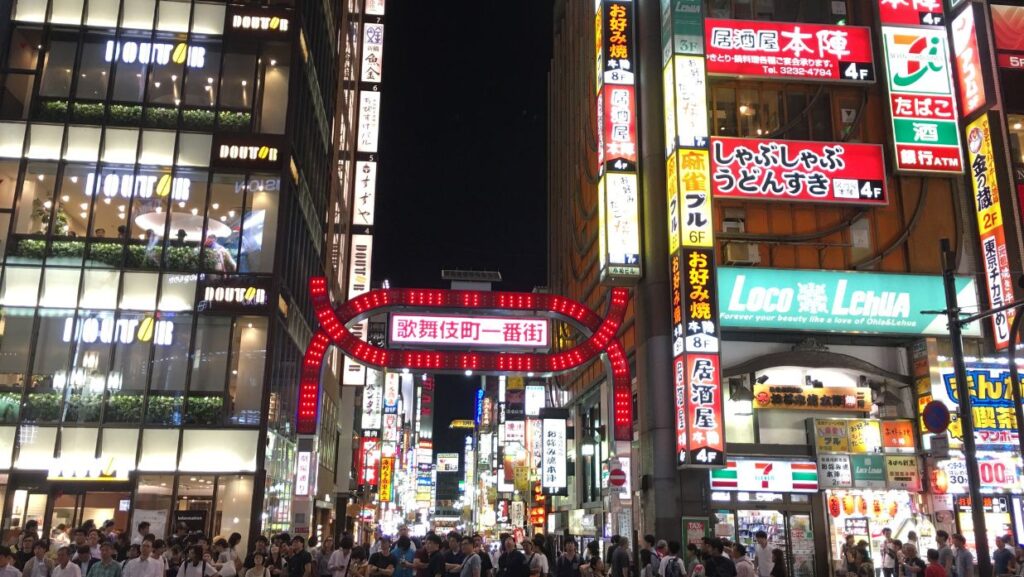
Shibuya is quite popular with the youth, so it’s no wonder it became a hot spot for nanpa. Particularly around Hachiko Square, the Scramble Crossing, and the Center Gai is where nanpa is most concentrated. If you are waiting for a friend in these areas, you might end up receiving unsolicited nanpa. So, you might be bothered less if you wait inside a store instead.
2. Shinjuku
Shinjuku is another notorious location for nanpa, especially around Kabukicho. Kabukicho is known for its booming nightlife and entertainment (including adult ones), so simply walking along the streets might end up attracting unwanted nanpa as well as salespeople. The busy, bustling streets can be difficult to navigate while still dodging all the unsolicited attention, but remaining stern and walking away should be enough.
3. Roppongi
Roppongi is very popular for its clubs, premier bars, and restaurants, and is particularly popular among foreigners. Due to these reasons, it’s also a common nanpa spot as well. Usually, when people warn about safety in Japan, they are referring to Roppongi. It is a busy area with an elaborate night entertainment scene that attracts large crowds, so personal safety is a legitimate concern. It’s always best to bring a friend and be aware of your surroundings, whether it’s here or anywhere you go during the night in Japan.
3. Beaches
Unfortunately, beaches are becoming hotspots for nanpa, which can really take away from the relaxing atmosphere of waves, cold drinks, and the company of friends. Whenever girls are sitting at the beach alone, men think it’s okay to try to do nanpa. Generally speaking, beaches are mostly enjoyed with friends or family, and not exactly a place where one would enjoy getting unsolicited flirting. If it happens to you and it’s unwanted, ignoring them might do the trick.
You Can Never Be Too Safe
As mentioned, nanpa is rarely a danger to your personal safety, but it never hurts to be too safe. There is definitely a fine line between asking someone out and harassment. One is annoying, and the other can really make someone feel unsafe and violated. So, here are some general tips to follow to help you stay as safe as possible:
- When going out at night, try to bring a friend or two if possible
- Avoid following people you don’t know well to secluded areas lacking visibility from bystanders
- Avoid accepting drinks from someone you don’t know, unless you see the drink come straight from the bartender.
- Trust your instincts; if a situation feels uncomfortable or unsafe, it is completely okay to walk away without explanation. Your comfort comes first
- Keep your phone charged and have a trusted contact you can reach quickly if you need help or feel unsafe
- If someone is being overly persistent and ignoring clear rejections, do not hesitate to enter a nearby store or café and ask staff for help. Most establishments in Japan will be happy to assist
Nanpa Phrases to Look Out For
If you have spent any time in Japan and ventured out at night, you may have noticed groups of guys stationed on the street, approaching girls who pass by. They are not particularly subtle, and they tend to rely on a fairly predictable set of opening lines. Knowing these phrases ahead of time means you will recognize them immediately and can brush them off with confidence. Here are some of the most common lines people doing nanpa use:
1. Casual Invites
カラオケ行かない?
Karaoke ikanai?
Do you want to go to karaoke?
Karaoke is one of the most common nanpa openers because it sounds fun and low-pressure. Do not be fooled by how casual it sounds; if it is coming from a stranger on the street, it is almost certainly nanpa.
2. The drink or dinner invite
一緒に飲みに行かない?
Issho ni nomi ni ikanai?
Do you want to go for a drink together?
Another extremely common opener. Going for drinks sounds harmless, but accepting can make it harder to disengage later, especially if the person becomes persistent.
3. Complimenting
ねえ、ちょっといい?可愛いから声かけちゃった。
Nee, chotto ii? Kawaii kara koe kakechatta.
Hey, do you have a sec? I just had to say something because you’re cute.
This is one of the most frequently used nanpa openers in Japan. It is designed to sound spontaneous and flattering, but it is a very standard line. 声をかける (koe o kakeru) literally means “to call out to someone” and is often used to describe the act of nanpa itself.
4. Asking Where You’re Going
どこ行くの? 一人?
Doko iku no? Hitori?
Where are you headed? Are you alone?
A very direct opener designed to quickly determine whether you are alone and available. If you are with friends, they will often target the group anyway, but knowing you are alone makes you a more likely target.
5. The Foreigner Angle
外国人?日本語上手だね!どこ出身?
Gaikokujin? Nihongo jouzu da ne! Doko shusshin?
Are you a foreigner? Your Japanese is great! Where are you from?
Foreigners in Japan are sometimes targeted specifically because the person doing nanpa hopes curiosity or politeness will keep you engaged. Complimenting your Japanese is a common way to flatter and disarm you. A polite smile and walking away is always a perfectly valid response.
What is Gyakunan?
Usually, nanpa is an activity men engage in; however, when it’s a woman instead, this is known as gyakunan, written as 逆ナン in Japanese. The term literally translates to “reverse nanpa”, but refers to nanpa being done by a woman instead of a man. However, it can also refer to nanpa in an LGBTQ context as well.
Generally, in reference to a girl approaching a man, the connotation might not be as negative. When guys, or girls, use the term gyakunan, the tone is lighter and generally seen as more funny and harmless, compared to the regular nanpa. However, do keep in mind, this doesn’t mean gyakunan cannot make a male-identifying person feel uncomfortable or feel that the act is unsolicited.
Also, note that just because Japanese girls are interested in speaking with you, it doesn’t necessarily mean it’s gyaku-nan. Nowadays, the youth, including girls, are curious about foreigners in general and may choose to speak to you, seemingly out of nowhere, at bars or clubs. Japan is relatively homogenous, so people may naturally be curious about you and where you’re from.
Example:
A: さいきん、彼氏ができたんだ。
B: どこで知り会ったの?
A: 渋谷で逆ナンした!?
A: Saikin, kareshi ga dekita nda.
B: Doko de shiri atta no?
A: Shibuya de gyaku Nan shita !?
A: I got a boyfriend recently.
B: Where did you meet him?
A: I picked him up (gyaku nanpa) in Shibuya.
Alternative Phrases to Use for Asking Out Your Crush
Rather than being seen as doing nanpa, there are more polite ways to ask someone out on a date in Japanese. The key difference is context and familiarity; these phrases work best when you already know the person, whether it is a classmate, coworker, or someone you have been introduced to through friends.
Here are some casual, low-pressure ways you can ask someone out in Japanese:
1. Suggesting a casual activity together:
今度、一緒にご飯でも食べに行かない?
Kondo, issho ni gohan demo tabe ni ikanai?
Would you want to grab something to eat together sometime?
2. Inviting to do a specific activity:
今週末、一緒に映画でも見に行かない?
Konshuumatsu, issho ni eiga demo mi ni ikanai?
Would you want to see a movie together this weekend?
3. A more direct approach for when you know them well:
今度、二人でどこかに行かない?
Kondo, futari de dokoka ni ikanai?
Would you want to go somewhere together sometime, just the two of us?
二人で (just the two of us) makes the romantic intention clear without using the word デート, which can sometimes feel too direct or formal depending on the situation.
Speaking of dating, Japan has a very unique Valentine’s Day tradition, actually being split into 2 days. To learn more, check out our guides: Valentine’s Day and White Day!
Conclusion: Nanpa is Usually a Harmless Nuisance
Many women we’ve spoken to who live in Japan have reported feeling safe in general, even though they also report experiencing nanpa. Nanpa is usually at worst a nuisance when unwanted, but can even be flattering or acceptable in the right place and context. In most cases, nanpa ends up being a funny story shared with friends to laugh at how ridiculous the nanpa’s attempts were. Of course, being safe is what matters most, so as always, trust your instincts and take necessary precautions to be as safe as possible.
If you really want to learn how to navigate dating culture in Japan or what phrases to use to avoid nanpa, take our classes at Coto Japanese Academy! We have conversation-focused courses that allow you to practice real-life Japanese, gain confidence in speaking for a variety of situations, perhaps even dating!
Come visit our campuses in Shibuya, Shinjuku, Iidabashi, Minato, or Yokohama! If you’re not in the area, feel free to join our online courses from anywhere around the world! Ready to sign up or have more questions? Fill out the form below to get started and get a free consultation:
FAQ:
What is nanpa in Japan?
Nanpa (ナンパ) is a Japanese term for the act of approaching strangers on the street to flirt with or ask them out. It is most commonly associated with men approaching women in busy public areas, though the reverse, known as gyakunan (逆ナン), also exists. The term carries a generally negative connotation and is roughly equivalent to the concept of a pick-up artist in Western cultures
Is nanpa dangerous?
In most cases, nanpa is more of a nuisance than a genuine danger. The vast majority of nanpa encounters involve someone simply trying to start a conversation, and a firm 大丈夫です (daijoubu desu) or walking away is usually enough to end the interaction. That said, some individuals can be persistent, and it is always a good idea to stay aware of your surroundings, avoid secluded areas at night, and go out with a friend when possible.
Where does nanpa happen most in Japan?
Nanpa is most commonly found in busy areas with high foot traffic, particularly at night. In Tokyo, the most well-known nanpa hotspots are on popular streets in Shibuya, Shinjuku (particularly Kabukicho), Roppongi, and recently on beaches during the summer.
How do you avoid or reject nanpa in Japan?
The most effective approach is usually to keep walking and avoid making eye contact, as engaging at all, even to say no, can sometimes encourage persistence. If you need to say something, 彼氏がいます (kareshi ga imasu — I have a boyfriend) or, if necessary, 私にもう話さないで (watashi ni mou hanasanaide — don’t talk to me) might do the trick.