
Can you learn Japanese with Detective Conan? Let’s investigate how this captivating detective anime can actually help you learn Japanese. This show is a clever work teeming with crime-solving, puzzles, and a plethora of daily situations, which may prove to be an excellent tool for studying Japanese. This article is a continuation of our “Learning Japanese with Anime” series, where we’ve broken down some of the most iconic anime, Attack on Titan, Naruto, One Piece, and My Hero Academia. This time, we will be putting Detective Conan on trial.

Why Learn Japanese with Detective Conan?

Anime often has a reputation for being unrealistic for learning practical Japanese, however, most do give you exposure to a lot of natural conversation. Detective Conan is no exception, being filled with useful dialogue and language that is very effective for natural Japanese practice.

If you are pursuing the immersion method for language learning, the show has over 1000 episodes, providing plenty of material to dive into. It’s an engaging language reservoir for a wide range of social situations, regional dialects, and everyday conversation. This makes the show perfect for both beginners and intermediate-level learners.

Dialogue:

The anime title consists of very useful dialogue that centers around daily life, work/school, and even introduces new topics since each episode would be about different characters, their interests, and lifestyles. Also, due to the crime-solving theme, there is a lot of conversation about animate/inanimate objects, space, measurements, and moving parts. This is great practice for understanding how to properly use language regarding these everyday things and objects.

Varied Speech Styles And Accents:

Certain characters, such as Heiji Hattori who is from Osaka, have regional accents. This can be useful exposure to different dialects in Japan. In addition to the recurring cast, each episode introduces unique characters of differing ages, backgrounds, and personalities allowing for a wide range of speech styles we can learn from.

Formal And Casual Language:

Detective Conan frequently uses both formal and casual forms of speaking which are important distinctions in Japanese. Adult characters often speak formally to other adults especially those considered of high social position. One of the most frequent words in the show is 社長(shachou) meaning president/director. You can expect to hear a lot of formal language around these ‘important’ characters.

Wide Range of Vocabulary:

The vocabulary reflects more relatable settings one would likely be exposed in day to day life in Japan. It also has many words surrounding police work and crime solving. It consists of language that isn’t too complicated for younger audiences but it doesn’t talk down to them either. This enables the show to be a great resource to introduce lots of new words. Below is a short list from the 100 most frequently used words from the show:

JapanesePronunciationEnglish
犯人はんにん han’ninCulprit
部屋へや heyaRoom
事件じけん jikenCrime case, incident
おと otoSound, noise
電話でんわ denwaPhone, call
警部けいぶ keibuPolice inspector
遺体いたい itaiCorpse, remains
殺害さつがい satsugaiTo kill, murder
被害ひがい higaiInjury, harm
社長しゃちょう shachouCompany president, manager

Getting Started Learning Japanese with Detective Conan

Detective Conan is great for both beginners and intermediate learners due to its family-oriented nature while still containing more complex dialogue.

For Beginners:

For absolute beginners, starting off with subtitles would allow you to make the most out of learning Japanese with Detective Conan. However, listening actively and paying attention to the actual dialogue is the most effective for picking up new words. We recommend using an app or a notebook to record new vocabulary you pick up and drill into your memory.

For Intermediate Learners:

If you already have some Japanese abilities, try going without the subtitles. I know it can be intimidating at first and may take time to adjust. But stick with it and don’t worry about understanding every single word. You can always pause and go back to see if you missed something. The show is meant for all audiences, including kids around 10 and older, so the show utilizes repetitive language and ideas to help younger audiences keep up while still being appealing to adults. This makes the show a perfect balance of complex and simple dialogue for intermediate learners.

Key Phrases and Expressions

Here are some common phrases and expressions that could prove useful to familiarize when watching the show:

犯人はあなただ!(hanin wa anatada): The culprit is you!

名探偵 (meitantei): Great or famous detective and is used in the Japanese name of the show, 名探偵コナン(meitantei conan). 探偵(tantei) by itself means private detective.

刑事 (keiji): Police detective or police investigator, they often handle criminal investigations

捜査 (sousa): Criminal investigations, another term often used for investigating is 調査(chousa) which can be used outside of crime.

わかったんだよ!この事件の真相が… (wakattandayo! konojiken no shinsou ga…): I know the truth behind this case!

Key Japanese Quotes from Detective Conan

Shinichi’s Catchphrase: There’s Always One Truth
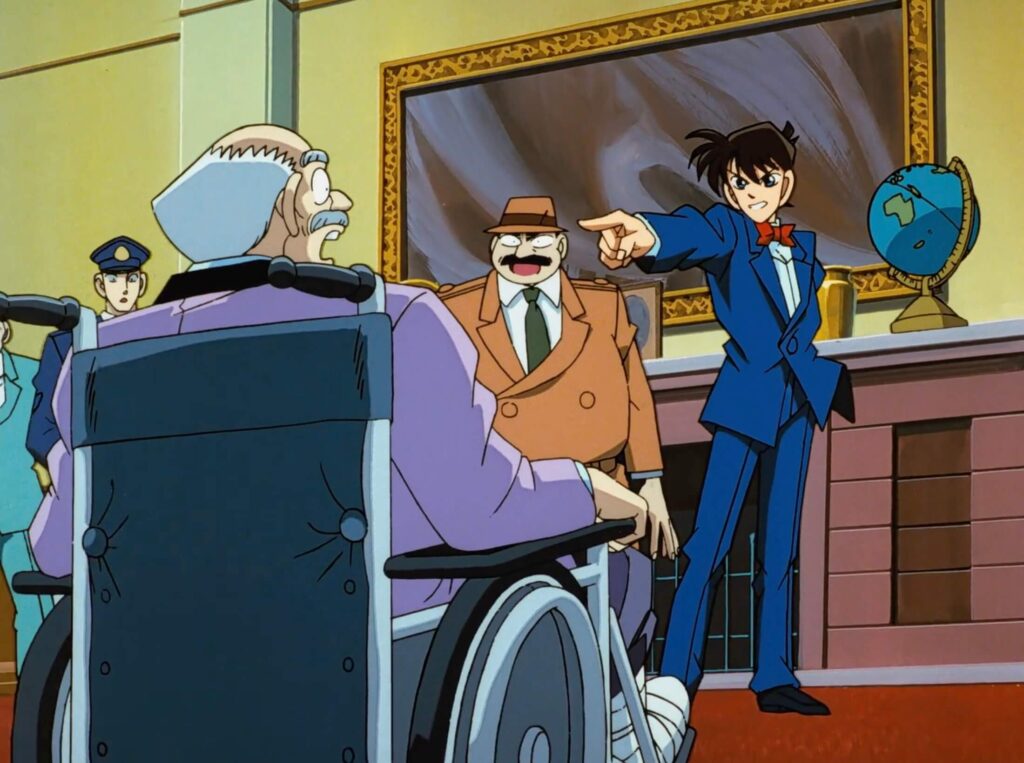
Image showing Shinichi right before he say's his famous catchphrase, "There's Always One Truth". This is great for learning Japanese with Detective Conan.
Still From Detective Conan

Shinichi’s most memorable and quotable catchphrase, best translated as “One truth will always prevail!”. He says this throughout the show since he knows there is one truth to the case and it is up to him as a detective to find it.

  • Japanese: 真実はいつも一つ!
  • Romaji: Shinjitsu wa itsumo hitotsu!
  • English: There is always one truth!

Breaking down the sentence:

真実はいつも一つ!

真実いつも一つ
shinjitsuwaitsumohitotsu
TruthSubject particleAlwaysOne (count)

Conan’s Ripoff From Sherlock Holmes

Image of Conan wearing a Sherlock inspired outfit. The background seems to be a vintage photo of London.
by Dream Variants

A recurring theme of the show is how much Conan admires Sherlock Holmes. Even the name he gives himself comes from the author, Sir Arthur Conan Doyle. The line by our main protagonist, Conan, echoes a quote from the famous Sherlock Holmes novels:

  • Japanese: 不可能な物を除外していって残った物が、たとえどんなに信じられなくても、それが真相なんだ。
  • Romaji: fuganouna mono wo jogai shiteitte nokotta monoga, tatoe donna ni shinjirarenakutemo, sore ga shinso nanda. 
  • English: When you eliminate the impossible, whatever’s remaining, no matter how unbelievable, is the truth.
  • Original Sherlock Holmes Quote: When you have eliminated the impossible, whatever remains, however improbable, must be the truth

Breaking Down The Sentence:

不可能な物を除外していって

不可能な除外していって
fuganounamonoojogaishiteitte
ImpossibleThingsObject particleEliminate/exclude

残った物が、たとえどんなに信じられなくても、それが真相なんだ。

残った物たとえどんなに信じられなくてもそれ真相なんだ
nokottamonogatatoedonnanishinjirarenakutemosoregashinsounanda
Remaining thingssubject particleEven it, althoughno matter howunbelievablethatsubject particle(is the) truth

Heiji Hattori’s Famous Quote

Image of Heiji Hattori, a famous high school detective from Osaka. He speaks in the Kansai dialect making him a great character for learning Osaka-style Japanese with Detective Conan.
by Detective Conan Fandom

Heiji Hattori is close friend to Conan and a famous highschool detective from Osaka. His most popular line couldn’t have been said more eloquently as it shows his intelligence, maturity, and even his regional dialect:

  • Japanese: 命には限りがあるから大事なんや… 限りがあるからがんばれるんやで…
  • Romaji: Inochi ni wa kagiri ga arukara daijinan ya… kagiri ga arukara ganbareru n’yade…
  • English: Life is limited, that’s why it’s so important. Since there’s a limit, we can do our best.

Breaking down the sentence:

命には限りがあるから大事なんや…

には限りがあるから大事なんや
Inochiniwakagiriga arukaradaijinanaya
LifeSubject paricleLimit, finitehas/havesince, becauseimportantOsaka/Kansai Regional nuance

限りがあるからがんばれるんやで…

限りがあるから頑張れるんやで
kagiriga arukaraganbarerunyade
LifeHas, there isbecause, sinceto do one’s bestOsaka/Kansai Regional nuance

Tips To Successfully Learning Japanese With Detective Conan

Based on the quotes I shared earlier, there are plenty of really cool, well-written lines you can try to learn and remember to level up your Japanese. If you really want to get serious about reinforcing new language with Detective Conan, here are a few tips that could help:

  • Use Flashcard Apps (Like Anki): Detective Conan may introduce a lot of new vocabulary and grammar, so in order to ingrain them into memory, using flashcard apps that use spaced repetition is a very effective method of memorizing and drilling new material.
  • Take Note of Character Personalities: Different characters will have different mannerisms, regional dialects, and unique linguistic nuances. This makes the show a great resource for a wide range of Japanese language exposure, but keeping track of characters who speak differently and why (like Heiji Hattori speaking in Kansai-ben) may help clear up some confusion.  
  • Visual Learning: In addition to great dialogue around solving criminal cases, there is plenty of visuals to go along with the explanations. This allows you to see exactly what is being described which will no doubt be helpful in picking up the language.
  • Pay Attention To Context And Humor: It shows the daily life of Japan and the different cultural contexts involved in different situations. There is also plenty of humor, which will help to pick up more playful and organic language.
  • Pause and Repeat: Feel like you missed something or heard a new word? Pausing and repeating scenes is a great way to reinforce new material or ensure you’re understanding everything you need to. If one scene is just going way over your head, try that scene alone with subtitles and see what you’re missing (this does still help with picking up the language).

Closing Thoughts On Learning Japanese With Detective Conan

Learning Japanese with Detective Conan not only provides plenty of Japanese language practice but it’s very entertaining and rewarding. The series consists of great storytelling overflowing with well-written mysteries and puzzles that you feel like you’re solving alongside the characters. This, along with each episode featuring different situations, events, and unique characters, the show is a rich resource for a wide range of language in everyday Japan.

So, as Conan likes to say, 「真実はいつも一つ! (shinjitsu wa itsumo hitotsu)」or “One truth always prevails!” and the truth in this case is that Detective Conan is a remarkable instrument for practicing Japanese! If you want to practice what you learn and hear from Detective Conan, try out our classes!

FAQ

Is Detective Conan good for learning Japanese?

Yes, Detective Conan is an amazing resource for learning Japanese. It offers a wide range of characters with different regional dialects, interests, and personalities. Each episode features different situations usually involving daily life activities in Japan. The language in the investigations involves words for police, detectives, and how to describe specific objects and moving parts. These are all excellent for practicing natural Japanese conversation.

Is Detective Conan Japanese difficult?

The Japanese contains a mix of complex and simple language. The show is meant to be appealing to both children and adults so there is more repetitive language and a lot of visuals to go along with dialogue. So, it’s perfect listening practice for intermediate level Japanese learners but beginners can learn a lot too with help of subtitles.

Is Detective Conan popular in Japan?

Yes, Detective Conan is one of the most popular anime in Japan today. They consistently rank one of the highest views weekly. And the movies are some of the highest grossing animations to hit Japan’s theaters.

What is the hardest level of Japanese?

On the JLPT (Japanese Language Proficiency Test) scale, the N1 is the most difficult level. This level consists of very rigorous academic vocabulary, reading material, and kanji.

How intelligent is Detective Conan?

Detective Conan, before he was transformed into a child, was a prodigy high school detective (which is still quite young). So, he is basically a genius as a child detective since he still has the brains of his former self. As a child/highschool kid, he is able to solve complicated cases with very little information before any adults do. This makes him far beyond average intelligence.

Want to study Japanese with us?

Feature Image from Seiyu Wiki

In our final episode of the “Learning Japanese with Anime” series, following our guides on Naruto, One Piece, and My Hero Academia, we dive into the dark and gripping world of Attack on Titan 進撃の巨人, Shingeki no Kyojin. Known for its intense story, deep character development, and complex themes, Attack on Titan is an excellent anime for learning Japanese, especially for those interested in more formal and dramatic language styles. Let’s explore how this popular series can enhance your language skills.

A Quick Jump To…

Why Learn Japanese with Attack on Titan?

Attack on Titan provides a rich learning environment for Japanese learners because of its:

Dramatic Dialogue: The anime features intense conversations filled with determination, fear, and strategy, which helps you understand more formal and emotional language.

Varied Speech Styles: Characters range from civilians to military personnel, offering a range of speech patterns from casual to highly formal.

Historical and Military Vocabulary: The series introduces unique vocabulary related to warfare, history, and military ranks, which is helpful for advanced learners.

Getting Started with Attack on Titan

To get the most out of Attack on Titan while learning Japanese, follow these steps:

Choose Your Viewing Style: If you’re a beginner, begin with Japanese audio and English subtitles. As you progress, switch to Japanese subtitles, and eventually watch without subtitles to challenge your listening comprehension.

Focus on Key Phrases and Expressions The series is filled with recurring phrases that reflect its intense themes. Here are some examples:

  • 進撃 Shingeki – Advancement” or “Attack” (as in Shingeki no Kyojin – Attack on Titan).
  • 自由 Jiyū – “Freedom.” This word is central to the story’s themes of liberation and autonomy.
  • 人類の希望 Jinrui no kibō – “Humanity’s hope,” often referenced by characters discussing their fight against the Titans.
  • 駆逐してやる Kuchiku shite yaru! – “I’ll exterminate them!” This is Eren Yeager’s signature declaration against the Titans.

Understand Character Speech Styles: Different characters have distinct speaking styles that reflect their personalities and backgrounds. Eren speaks passionately and informally, while characters like Captain Levi use a more formal, commanding tone.

Practice with Intense Scenes: Select high-stakes scenes featuring complex dialogue. These moments are great for learning military and formal language and practicing listening skills under stress.

Learn Key Kanji and Vocabulary: Keep a list of new kanji and vocabulary you encounter—practice writing and using these words in sentences to reinforce your learning.

Examples from Attack on Titans

Example 1: Eren’s Determination

by CBR

Eren Yeager is known for his fierce determination and desire to defeat the Titans:

  • Japanese: 駆逐してやる!この世から一匹残らず!
  • Romaji: Kuchiku shite yaru! Kono yo kara ippiki nokorazu!
  • English: I’ll exterminate them! Every last one of them is from this world!

Breaking down the sentence:

  • 駆逐 (Kuchiku): Exterminate
  • してやる (shite yaru): Will do (with strong determination)
  • この世 (Kono yo): This world
  • から (kara): From
  • 一匹残らず (Ippiki nokorazu): Not a single one left

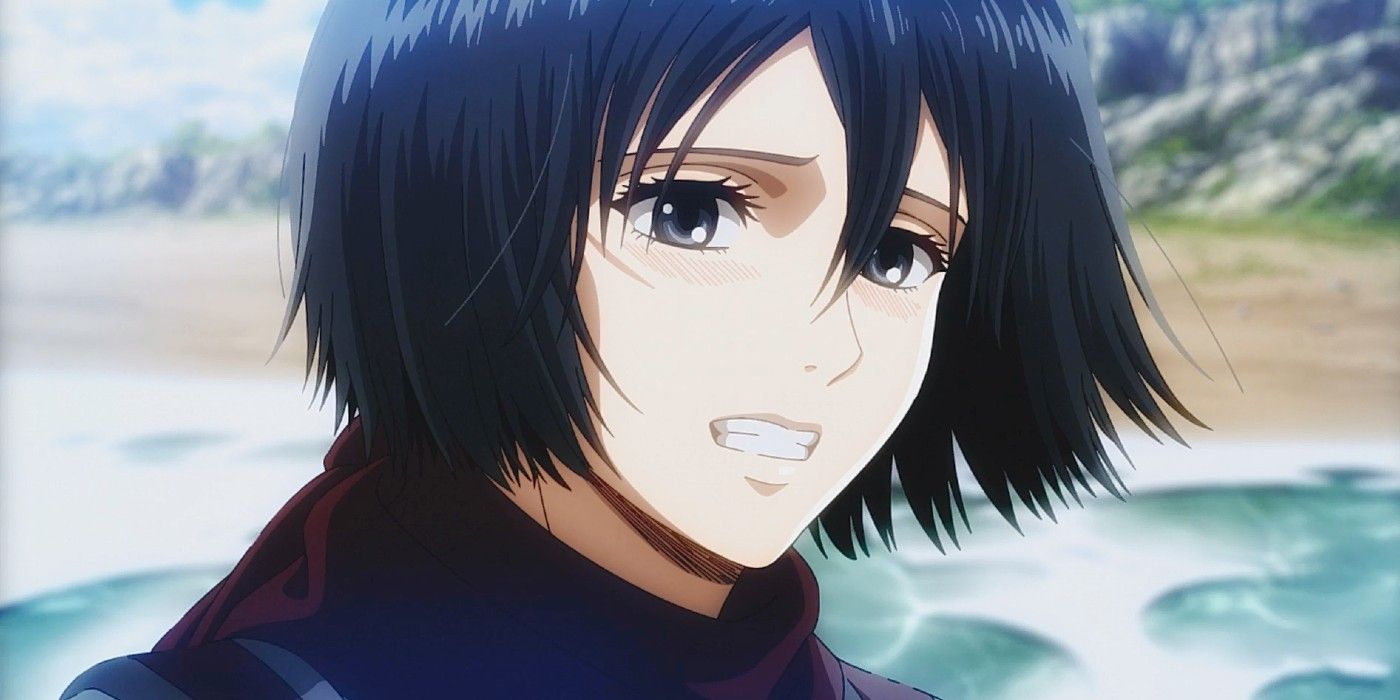
Example 2 Mikasa’s Loyalty

by CBR

Mikasa Ackerman is fiercely loyal to Eren and often expresses her resolve to protect him:

  • Japanese: エレンを守る。それが私の使命だ。
  • Romaji: Eren o mamoru. Sore ga watashi no shimei da.
  • English: Protecting Eren. That is my mission.

Breaking down the sentence:

  • エレン (Eren): Eren
  • (o): Object marker
  • 守る (Mamoru): To protect
  • それ (Sore): That
  • (ga): Subject marker
  • (Watashi): I, me
  • (no): Possessive particle
  • 使命 (Shimei): Mission
  • (da): Is (informal)

Example 3  Armin’s Hope

by Sideshow

Armin Arlert often speaks about hope and the future of humanity:

  • Japanese: 人類には未来がある。それを信じることが、我々の唯一の希望だ。
  • Romaji: Jinrui ni wa mirai ga aru. Sore o shinjiru koto ga, wareware no yuiitsu no kibō da.
  • English: Humanity has a future. Believing in that is our only hope.

Breaking down the sentence:

  • 人類 (Jinrui): Humanity
  • には (ni wa): Topic marker (for emphasizing)
  • 未来 (Mirai): Future
  • がある (ga aru): Exists (there is)
  • それ (Sore): That
  • (o): Object marker
  • 信じる (Shinjiru): To believe
  • こと (koto): Thing (concept)
  • (ga): Subject marker
  • 我々 (Wareware): We, us (formal)
  • (no): Possessive particle
  • 唯一 (Yuiitsu): Only, unique
  • 希望 (Kibō): Hope
  • (da): Is (informal)

Important Kanji in Attack on Titan

The series includes several key kanji that are essential for understanding the story’s themes and dialogues:

  • 巨人 (Kyojin) – Titan | Example: 超大型巨人 (Chō-ōgata Kyojin) – Colossal Titan
  • 自由 (Jiyū) – Freedom | Example: 自由を勝ち取る (Jiyū o kachitoru) – To win freedom
  • 調査兵団 (Chōsa Heidan) – Survey Corps | Example: 調査兵団の一員 (Chōsa Heidan no ichi-in) – A member of the Survey Corps
  • (Kabe) – Wall | Example: 壁の中 (Kabe no naka) – Inside the wall
  • 戦闘 (Sentō) – Battle | Example: 戦闘準備 (Sentō junbi) – Battle preparations
  • (Inochi) – Life | Example: 命を懸ける (Inochi o kakeru) – To risk one’s life

Recommended Episodes for Beginners

For those new to Japanese or Attack on Titan, here are some recommended episodes:

Episode 1: “To You, in 2000 Years: The Fall of Shiganshina, Part 1”

This episode introduces the main characters and provides simple dialogue and vocabulary.

Episode 5: “First Battle: The Struggle for Trost, Part 1”

Features action-packed scenes and military vocabulary.

Episode 25: “Wall: Assault on Stohess, Part 3”

Offers more complex dialogue and intense character interactions.

Tips for Success

  • Use Flashcards for Military Terms: Since Attack on Titan includes a lot of military vocabulary, creating flashcards can help you remember these terms.
  • Study Character Motivations: Understanding why characters say certain things can help with comprehension and provide context to the language used.
  • Engage with the Community: Discuss episodes with other fans to reinforce your learning and gain new insights.
  • Pause and Repeat: Don’t hesitate to pause and repeat scenes to catch every detail and improve your listening skills.

Learning Japanese with Attack on Titan is an intense and rewarding experience. The series offers rich vocabulary, varied speech styles, and cultural insights, making it a great tool for advancing your language skills. Remember to practice regularly, pay attention to character dialogue, and use this anime to deepen your understanding of Japanese. Stay committed, enjoy the journey, and embrace the challenge like the characters in Attack on Titan!

Good luck、 and 勇気を持て! (Yūki o motte!) – Have courage!

You Might Be Wondering…

What level of Japanese should I have to learn from Attack on Titan?

Attack on Titan is best suited for intermediate to advanced learners due to its complex vocabulary, formal language, and dramatic dialogues. However, beginners can still benefit by focusing on commonly used phrases and building their vocabulary over time.

Are there any specific grammar points I can learn from Attack on Titan?

Yes, Attack on Titan uses a variety of grammar structures, including formal and polite forms, commands, and passive forms. Pay attention to how characters speak in different situations to learn the nuances of these grammatical points. Learn more Basic Japanese Grammar

In our ongoing journey of learning Japanese through anime, we’ve already explored the worlds of Naruto and My Hero Academia. Now, let’s dive into One Piece. One Piece is a great way to improve your Japanese with its exciting world, unique characters, and endless adventures. This guide will help you learn practical phrases, essential kanji, and memorable quotes from the series.

Quick Jump To…

Why Learn Japanese with One Piece?

One Piece (ワンピース, Wan Pīsu) is an excellent resource for learning Japanese due to its extensive dialogue, diverse vocabulary, and engaging storyline. Here’s why it stands out:

Diverse Speech Styles: With a large cast of characters, One Piece showcases various speech styles, from the formal language of marines to the casual banter of pirates.

Rich Vocabulary: The series introduces a wide range of vocabulary, including nautical terms, battle language, and everyday phrases.

Cultural References: One Piece is filled with cultural references and idiomatic expressions, providing deeper insights into the Japanese language and culture.

Getting Started with One Piece

Here’s how you can use One Piece to enhance your Japanese language skills:

Choose Your Version: Start with English subtitles if you’re a beginner, and gradually switch to Japanese subtitles or no subtitles as you improve. This helps bridge the gap between listening and comprehension.

Focus on Common Phrases: Pay attention to frequently used phrases and words in One Piece. Some examples include:

  • おれは海賊王になる(Ore wa Kaizoku-Ō ni Naru!) – “I will become the Pirate King!”
  • 仲間 (Nakama) – Comrade/Companion. Used frequently among the Straw Hat Pirates to refer to each other.
  • いくぞ (Iku zo!) – “Let’s go!” A phrase often used before launching into action.
  • 覚悟しろ (Kakugo shiro!) – “Prepare yourself!” Often heard during battles.

Note Character Speech Styles: Characters in One Piece have distinctive speaking styles. For instance, Luffy uses casual and straightforward language, while characters like Zoro and Sanji may speak with more formality or unique quirks. This helps you understand different levels of politeness and regional dialects.

Practice with Scenes: Select specific scenes to watch repeatedly. Start with subtitles to understand the context, then gradually watch without subtitles to focus on listening and comprehension. Repeating dialogues aloud can also help with pronunciation.

Examples from One Piece

Example 1: Luffy’s Declaration

Luffy often declares his goal to become the Pirate King. Here’s an iconic line from him:

  • Japanese: おれは海賊王になる(Ore wa Kaizoku-Ō ni naru!)
  • Romaji: “Ore wa Kaizoku-Ō ni naru!”
  • English: “I will become the Pirate King!”

Breaking down the sentence:

  • おれ (Ore): I (informal, used by males)
  • (wa): Topic marker
  • 海賊王 (Kaizoku-Ō): Pirate King
  • になる (ni Naru): To become

Example 2: Zoro’s Resolve

Zoro, known for his strong sense of duty and determination, often expresses his resolve to become the world’s greatest swordsman:

  • Japanese: おれは世界一の剣豪になる(Ore wa sekai ichi no kengo ni naru!)
  • Romaji: “Ore wa sekai ichi no kengo ni naru!”
  • English: “I will become the world’s greatest swordsman!”

Breaking down the sentence:

  • おれ (Ore): I (informal, used by males)
  • (wa): Topic marker
  • 世界一 (sekai ichi): World’s best
  • 剣豪 (kengo): Swordsman
  • になる (ni naru): To become

Example 3: Sanji’s Dedication

Sanji, the cook of the Straw Hat Pirates, often speaks passionately about food and his dream:

  • Japanese: オールブルーを見つけるために、何でもする(Ōru Burū o mitsukeru tame ni、 nandemo suru!)
  • Romaji: “Ōru Burū o mitsukeru tame ni, nandemo suru!”
  • English: “I’ll do anything to find the All Blue!”

Breaking down the sentence:

  • オールブルー (Ōru Burū): All Blue (a legendary sea in One Piece)
  • (o): Object marker
  • 見つける (mitsukeru): To find
  • ために (tame ni): For the purpose of
  • 何でもする (nandemo suru): I’ll do anything

Important Kanji in One Piece

One Piece is filled with kanji related to the themes of pirates and adventure. Here are some critical kanji to look out for:

  • 海賊 (Kaizoku) – Pirate | Example: 海賊船 (Kaizokusen) – Pirate ship
  • 仲間 (Nakama) – Comrade/Companion | Example: 仲間たち (Nakama-tachi) – Comrades/Friends
  • 冒険 (Bōken) – Adventure | Example: 冒険者 (Bōkensha) – Adventurer
  • (Fune) – Ship | Example: 船長 (Senchō) – Captain (of a ship)
  • (Chikara) – Power/Strength | Example: 悪魔の実の力 (Akuma no Mi no Chikara) – Power of the Devil Fruit
  • 財宝 (Zaihō) – Treasure | Example: 伝説の財宝 (Densetsu no Zaihō) – Legendary Treasure

Here are some recommended episodes from One Piece that are great for beginners:

Episode 1: “I’m Luffy! The Man Who Will Become the Pirate King!” – Introduction to the main character and his goal, with basic vocabulary.

Episode 4: “Luffy’s Past! The Red-Haired Shanks Appears!” – Learn about Luffy’s backstory and the motivation behind his dream.

Episode 101: “Showdown in a Heat Haze! Ace vs. the Gallant Scorpion!” – This episode features a variety of vocabulary related to battles and character interactions.

Tips for Success!!

Use Nautical Terminology: One Piece frequently uses nautical terms, so familiarize yourself with these to enhance your understanding of the series.

Character Profiles: Create profiles for your favorite characters, noting their speech patterns, favorite phrases, and unique vocabulary.

Visual Learning: Since One Piece is visually rich, use the visuals to connect words with actions, objects, and expressions.

Cultural Research: Investigate the cultural references and historical figures that inspire characters and settings in One Piece. This will deepen your understanding of the language and context.

Watch for Humor: One Piece is full of humor, which can help you learn playful language and puns. Try to catch the jokes and understand how wordplay is used in Japanese.

Learning Japanese with One Piece is exciting and effective. Focus on character dialogue, new vocabulary, and cultural insights to boost your skills. Keep practicing, enjoy the journey, and stay tuned for our next anime in this series!

Happy learning, and 頑張って (ganbatte)!

FAQ

What are some other anime that are good for learning Japanese?

While One Piece is an excellent choice, other anime series also offer great opportunities for learning Japanese. Some recommendations include:

  • Attack on Titan (進撃の巨人, Shingeki no Kyojin): Known for its intense story and dialogue, this anime is great for learning more complex and dramatic Japanese.
  • Naruto (ナルト): With its extensive vocabulary and cultural depth, Naruto is ideal for language learners.
  • Spirited Away (千と千尋の神隠し, Sen to Chihiro no Kamikakushi): This Studio Ghibli film offers beautiful animation and simple, everyday language, making it perfect for beginners.
  • My Hero Academia (僕のヒーローアカデミア, Boku no Hīrō Akademia): This modern anime features contemporary Japanese with a variety of character speech patterns.

How can I improve my Japanese pronunciation using anime?

To improve your pronunciation:

  • Shadowing Practice: Repeat the dialogues you hear in the anime. Try to match the pronunciation, intonation, and rhythm.
  • Record Yourself: Record your voice while repeating the lines and compare it with the original. This can help identify areas of improvement.
  • Mimic Characters: Pay attention to the way characters speak and try to imitate their speech patterns and accents.

In the first episode of our series, we discovered how Naruto can be an engaging and effective tool for learning Japanese. For language learners, anime offers a compelling and enjoyable way to immerse themselves in Japanese. In this series, we’ll explore how popular anime can be used effectively to learn Japanese. Let’s continue our journey with another highly acclaimed anime: My Hero Academia.

Quick Jump To…

Why Learn Japanese with My Hero Academia?

My Hero Academia (僕のヒーローアカデミア, Boku no Hīrō Akademia) is an excellent resource for Japanese language learners due to its modern setting, diverse vocabulary, and character-driven dialogue. Here’s why it stands out:

1. Modern Japanese: The dialogue in My Hero Academia uses contemporary Japanese, making it relevant and practical for everyday conversations.
2. Variety of Characters: The series features a wide range of characters, each with a unique speaking style, which helps you understand different speech patterns and personalities.
3. Engaging Story: The captivating story and intense action scenes keep you motivated and interested in learning.

Getting Started with My Hero Academia

Here’s how you can use My Hero Academia to enhance your Japanese language skills:

1. Choose Your Version

Decide whether to watch with English, Japanese, or no subtitles. Beginners may start with English subtitles and gradually switch to Japanese subtitles or none as their skills improve.

2. Focus on Common Phrases

Pay attention to frequently used phrases and words. In My Hero Academia, you’ll often hear phrases like:

  • 行くぞ (Iku zo) – Let’s go. Example: 行くぞ、みんな!(Iku zo, minna!) – Let’s go, everyone!
  • やった (Yatta) – I did it / We did it. Example: やったぞ!(Yatta zo!) – I did it!
  • 気を付けて (Ki o tsukete) – Be careful. Example: 気を付けて、デク!(Ki o tsukete, Deku!) – Be careful,  Deku!
  • 助けて (Tasukete) – Help me. Example: 助けて、誰か!(Tasukete, dareka!) – Help me, someone!
  • すごい (Sugoi) – Amazing / Incredible. Example: すごい、オールマイト!(Sugoi, Ōru Maito!) – Amazing, All Might!
  • 行け (Ike)- Go! Example: 行け、デク!(Ike, Deku!) – Go, Deku!
  • 信じられない (Shinjirarenai) – Unbelievable. Example: 信じられない!(Shinjirarenai!) – Unbelievable!
  • 本当に (Hontou ni) – Really / Truly. Example: 本当に強い!(Hontou ni tsuyoi!) – Really strong!

Note Character Speech Styles

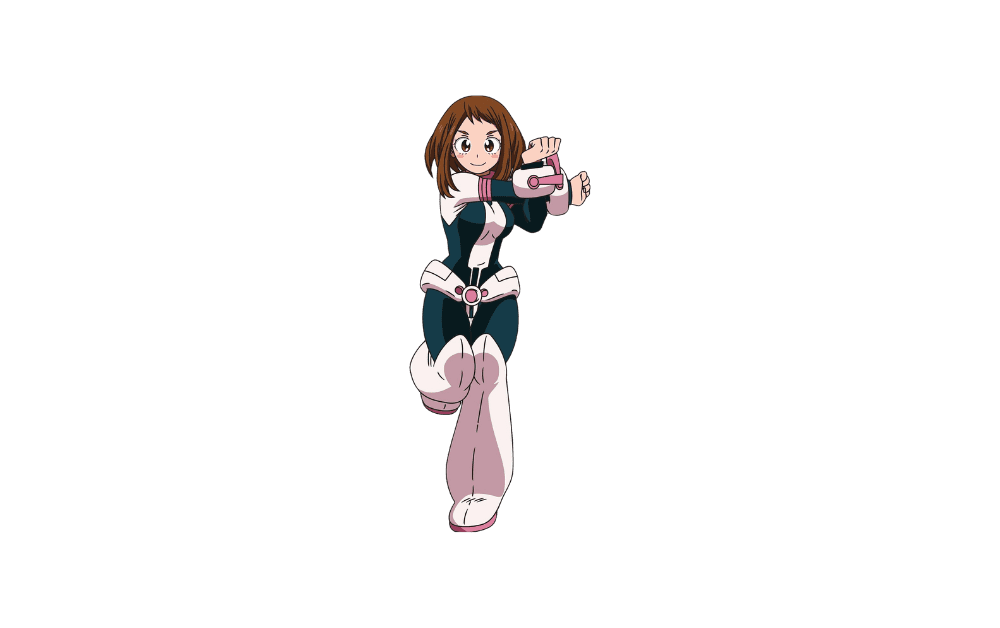
Characters in My Hero Academia have distinctive ways of speaking. For example, Bakugo uses rough and aggressive language, while Uraraka speaks more politely. Notice how different characters express themselves to understand formal and informal speech.

Practice with Scenes

Pick a scene and watch it multiple times. First, watch it with subtitles, then without, and finally, try to repeat the dialogue. This exercise will improve your listening and speaking skills.

Learn Kanji and Vocabulary

Keep a notebook handy to jot down new words and kanji. Use online dictionaries or language apps to look up meanings and practice writing regularly.

Example 1 Deku’s Introduction

Izuku Midoriya (Deku) often introduces himself humbly and determinedly. Here’s an example line from Deku:

  • Japanese: 僕は緑谷出久です。
  • Romaji: Boku wa Midoriya Izuku desu.
  • English: I am Izuku Midoriya.

Breaking down the sentence:

  • (Boku): I (informal, used by males)
  • (wa): Topic marker
  • 緑谷出久 (Midoriya Izuku): Izuku Midoriya (name)
  • です (desu): Is/am (polite form)

Example 2 All Might’s Signature Line

All Might often uses his catchphrase to inspire and reassure others. Here’s an example line from All Might:

  •  Japanese: 私はここにいる
  • Romaji: Watashi wa koko ni iru!
  • English: I am here!

Breaking down the sentence:

  • (Watashi): I (formal)
  • (wa): Topic marker
  • ここに (koko ni): Here
  • いる (iru): Am (to exist, used for animate objects)

Example 3 Bakugo’s Declaration

Katsuki Bakugo often declares his intent to win with fierce determination. Here’s an example line from Bakugo:

  • Japanese: 俺がナンバーワンだ!
  • Romaji: Ore ga nanbā wan da!
  • English: I am number one!

Breaking down the sentence:

  • (Ore): I (informal, used by males)
  • (ga): Subject marker
  • ナンバーワン (nanbā wan): Number one
  • (da): Is/am (informal form)

Quotes from My Hero Academia Characters

Izuku Midoriya (Deku)

Izuku Midoriya Cartoon Illustration

  • ” 僕が君を救う!それがヒーローとしての役目だから!”
  •  Boku ga kimi o sukuu! Sore ga hīrō to shite no yakume dakara!
  • I will save you! Because that is the duty of a hero!
  • ” ヒーローになりたいなら、夢を持ち続けるんだ!どんなに困難でもあきらめるな!”
  • Hīrō ni naritai nara, yume o mochitsuzukeru n da! Donna ni konnan demo akirameru na!
  • If you want to become a hero, keep holding onto your dream! No matter how difficult it is, never give up!
  • ” 僕はヒーローになるためにここに来たんだ!他の誰でもない、僕自身の力で!”
  • Boku wa hīrō ni naru tame ni koko ni kita n da! Hoka no dare demo nai, boku jishin no chikara de!
  • I came here to become a hero! With my power, not anyone else’s!

Ochaco Uraraka quotes

  • ” 私はヒーローになりたい!お金のためじゃなく、みんなを笑顔にしたいから!”
  • Watashi wa hīrō ni naritai! Okane no tame janaku, minna o egao ni shitai kara!
  • I want to become a hero! Not for the money, but because I want to make everyone smile!
  • ” 困っている人がいるなら、私は絶対に助ける!それが私の夢であり、ヒーローとしての使命だ!”
  • Komatte iru hito ga iru nara, watashi wa zettai ni tasukeru! Sore ga watashi no yume de ari, hīrō to shite no shimei da!
  • If there are people in trouble, I will help! That is my dream and my mission as a hero! 

All Might

All Might Cartoon Representation
  • ” 平和の象徴として、私は最後まで戦う!どんなに傷ついても、守るべきものを守り続ける!”
  • Heiwa no shōchō to shite, watashi wa saigo made tatakau! Donna ni kizutsuite mo, mamoru beki mono omamori tsuzukeru!
  • As the symbol of peace, I will fight until the end! No matter how hurt I get, I will continue to protect what must be protected!
  • ” プルス・ウルトラ!自分の限界を超え、さらにその先へ!”
  • Purusu Urutora! Jibun no genkai wo koe, sarani sono saki e!
  • Plus Ultra! Go beyond your limits and even further beyond!
  • ” 次は君だ、若きヒーローたちよ。君たちの力で、この世界を照らし続けてくれ!”
  • Tsugi wa kimi da, wakaki hīrō-tachi yo. Kimitachi no chikara de, kono sekai o terashitsuzukete kure!
  • You’re next, young heroes. With your power, keep lighting up this world!

Important Kanji in My Hero Academia

Understanding the key kanji used in My Hero Academia can deepen your appreciation for the series and improve your reading skills. Here are some important kanji:

  • 火 (Hi) – Fire | Example: 爆豪勝己の個性 (Bakugo Katsuki no Kosei) | Bakugo Katsuki’s Quirk (Explosion)
  • 雄英 (Yūei) – U.A. High School | Example: 雄英高校 (Yūei Kōkō) | U.A. High School
  • 無個性 (Mukosei) – Quirkless | Example: 彼は無個性です (Kare wa mukosei desu) | He is Quirkless
  • 平和 (Heiwa) – Peace | Example: 平和の象徴 (Heiwa no shōchō) | Symbol of Peace
  • 力 (Chikara) – Power | Example: 個性の力 (Kosei no chikara) | Quirk Power
  • 学校 (Gakkō) – School | Example: 雄英高校 (Yūei Kōkō) | U.A. High School
  • 友達 (Tomodachi) – Friend | Example: 親友 (Shinyū) |Best Friend
  • 勝利 (Shōri) – Victory | Example: 勝利の条件 (Shōri no jōken) | Conditions for Victory
  • 挑戦 (Chōsen) – Challenge | Example: 新たな挑戦 (Aratana chōsen) | New Challenge

Here are some recommended episodes from My Hero Academia that are great for beginners:

Episode 1: “Izuku Midoriya”

Origin Introduction to key characters and basic vocabulary.

Episode 5: “What I Can Do for Now”
Focus on interactions and common phrases used in training.

Episode 13: “In Each of Our Hearts”
Learn phrases related to encouragement and teamwork.

Tips for Success!!

  • Break Down Episodes: Focus on small segments of an episode. Translate and understand each part fully before moving on to the next.
  • Active Listening: While watching, consciously listen for specific words or grammar structures you’re trying to learn.
  • Use Flashcards: Create flashcards for new words and kanji you encounter. Review them regularly to reinforce your memory. Doing it online can easily help you remember to take a look at the Guide to Learning Japanese with Anki FlashCards. It will be a great support tool for your study journey. 
  • Character Journals: Write down quotes or lines from your favorite characters. This can help you remember the context and usage of phrases.

In this second episode, we’ve explored how My Hero Academia can enhance your Japanese learning journey. Building on our first episode with Naruto, we’ve looked at modern phrases, character speech styles, and key kanji in the My Hero Academia universe.

To improve your language skills, keep practicing regularly, watching scenes, and noting down new vocabulary. Stay tuned for our next episode, where we’ll dive into another beloved anime with more tips and insights. 

Happy learning, and 頑張って (ganbatte)!

FAQ

Can watching anime improve my understanding of Japanese culture?

Yes, watching anime can improve your understanding of Japanese culture:

  • Cultural References: Anime often includes cultural references, traditions, and societal norms.
  • Daily Life: Provides insights into daily life and interactions in Japan.
  • Language in Context: This helps you understand how language is used in various cultural contexts.

What are some other anime that are good for learning Japanese?

While My Hero Academia is an excellent choice, other anime series also offer great opportunities for learning Japanese. Some recommendations include:

  • Attack on Titan (進撃の巨人, Shingeki no Kyojin): Known for its intense story and dialogue, this anime is great for learning more complex and dramatic Japanese.
  • One Piece (ワンピース, Wan Pīsu): With its long run and extensive cast, you’ll encounter a wide range of vocabulary and expressions.
  • Spirited Away (千と千尋の神隠し, Sen to Chihiro no Kamikakushi): This Studio Ghibli 

Anime has become a global phenomenon, captivating audiences with its unique storytelling, vibrant animation, and deep cultural roots. For language learners, anime offers a compelling and enjoyable way to immerse themselves in Japanese. In this series, we’ll explore how popular anime can be used effectively for learning Japanese, starting with the beloved series Naruto.

Why Learn Japanese with Anime?

Before diving into Naruto, let’s discuss why anime is a fantastic resource for language learners:

  • Contextual Learning: Anime provides real-life contexts, helping you understand how words and phrases are used in different situations. Check out one of our very first blogs about Learning Japanese With Anime.
  • Listening Practice: Watching anime improves your listening skills and helps you get accustomed to different accents and speaking speeds. We recommend some Anime on Netflix that you should watch.
  • Cultural Insight: Anime is deeply rooted in Japanese culture, offering insights into traditions, social norms, and daily life.
  • Engagement: Engaging stories and characters keeps you motivated and makes learning enjoyable.

Getting Started with Naruto

Naruto is a perfect starting point for learning Japanese due to its popularity, extensive vocabulary, and cultural depth. Here’s how you can use Naruto to enhance your Japanese language skills:

Choose Your Version

Could you decide whether to watch with English, Japanese, or no subtitles? As their skills improve, beginners may start with English subtitles and gradually switch to Japanese subtitles or none.

Focus on Common Phrases

Pay attention to frequently used phrases and words. In Naruto, you’ll often hear phrases like:

  • ありがとう (Arigatou) – Thank you. Example: ありがとう、カカシ先生!(Arigatou、 Kakashi-sensei!) – “Thank you、Teacher Kakashi!” 
  • すみません (Sumimasen) – Excuse me / I’m sorry. Example: すみません、ナルトくん!(Sumimasen、 Naruto-kun!) – “Sorry, Naruto!” 
  • 大丈夫 (Daijoubu) – Are you okay? / It’s okay. Example: ナルト、大丈夫か?(Naruto, daijoubu ka?) – “Naruto, are you okay?” 
  • がんばれ (Ganbare) – Do your best! Example: がんばれ、ナルト!(Ganbare, Naruto!) – “Do your best、Naruto!” 

Note Character Speech Styles

Naruto’s characters have distinctive ways of speaking. Naruto often uses “dattebayo” at the end of his sentences, a fictional speech pattern unique to him. Notice how different characters express themselves to understand formal and informal speech.

Practice with Scenes

Pick a scene and watch it multiple times. First, watch it with subtitles, then without, and finally, try to repeat the dialogue. This exercise will improve your listening and speaking skills.

Learn Kanji and Vocabulary

Keep a notebook handy to jot down new words and kanji. Use online dictionaries or language apps to look up meanings and practice writing.

Example 1 from Naruto: “Dattebayo!”

Naruto Uzumaki is famous for his catchphrase “だってばよ (dattebayo),” which doesn’t have a direct translation but emphasizes his energetic personality. Here’s an example line from Naruto:

  • Japanese: 俺は絶対に諦めないってばよ!
  • Romaji: “Ore wa zettai ni akiramenai dattebayo!”
  • English: “I will never give up, believe it!”

Breaking down the sentence:

  • 俺 (Ore): I (informal, used by males)
  • 絶対に (zettai ni): Absolutely
  • 諦めない (akiramenai): Will not give up
  • ってばよ (ttebayo): Emphatic ending unique to Naruto

Example 2 Ninja Mission Talk

Here’s a common phrase you’ll hear regarding ninja missions:

  • Japanese: 次の任務は何ですか。 (Tsugi no ninmu wa nan desu ka?)
  • Romaji: “Tsugi no ninmu wa nan desu ka?”
  • English: “What is our next mission?”

Breaking down the sentence:

  • 次の (tsugi no): Next
  • 任務 (ninmu): Mission
  • は (wa): Topic marker
  • 何 (nan): What
  • ですか (desu ka): Is it? (question marker)

Example 3  Using Ninjutsu

In battles, you often hear characters mention ninjutsu:

  • Japanese: 影分身の術!(Kage Bunshin no Jutsu!)
  • Romaji: “Kage Bunshin no Jutsu!”
  • English: “Shadow Clone Technique!”

Breaking down the phrase:

  • 影 (kage): Shadow
  • 分身 (bunshin): Clone
  • の (no): Possessive particle
  • 術 (jutsu): Technique/Art

Ninja Expressions and Vocabulary in Naruto

Naruto is rich with ninja-specific vocabulary and expressions that can give you insight into Japanese culture and the world of ninjas. Some essential terms and phrases include:

  • 忍者 (Ninja) – Ninja. Example: 俺は木の葉隠れの忍者だ!(Ore wa Konohagakure no ninja da!) – “I am a ninja of the Hidden Leaf Village!”
  • 任務 (Ninmu) – Mission. Example: 次の任務は何ですか。(Tsugi no ninmu wa nan desu ka?) – “What is our next mission?”
  • 忍術 (Ninjutsu) – Ninja techniques. Example: 彼は火遁忍術が得意だ。(Kare wa Katon ninjutsu ga tokui da.) – “He is skilled in fire-style ninjutsu.”
  • 影分身の術 (Kage Bunshin no Jutsu) – Shadow Clone Technique. Example: 影分身の術!(Kage Bunshin no Jutsu!) – “Shadow Clone Technique!”
  • 手裏剣 (Shuriken) – Throwing star. Example: 手裏剣を使え!(Shuriken o tsukae!) – “Use the shuriken!”
  • 師匠 (Shishou) – Master/Teacher. Example: ジライヤ師匠はどこですか?(Jiraiya-shishou wa doko desu ka?) – “Where is Master Jiraiya?”
  • 戦闘 (Sentou) – Battle. Example: 戦闘の準備をしろ!(Sentou no junbi o shiro!) – “Prepare for battle!”

Learning these ninja-specific terms and expressions can make watching Naruto even more enjoyable and educational, as you’ll start to understand the language and culture of the ninja world.

Uzumaki Naruto’s quote

  • このオレはいずれ火影の名を受け継いで、先代のどの火影をも超えてやるんだ!
  • kono ore wa izure hokage no na o uketsuide, sendai no dono hokage o mo koete yarun da.
  • One day I’ll take over the Hokage’s name and surpass all the previous Hokages!

Iruka’s quotes

  • クラスでよくバカやった。人の気をひきつけたかったから。
  • kurasu de yoku baka yatta. hito no ki o hikitsuketakatta kara.
  • I acted like an idiot in class to get people’s attention.

Important Kanji in Naruto

Understanding key kanji used in Naruto can deepen your appreciation for the series and improve your reading skills. Here are some important kanji:

  1. 忍 (Shinobi) – Endure/Stealth (Ninja) | Example: 忍者 (Ninja) – Ninja | This kanji represents the essence of being a ninja.
  2. 火 (Hi) – Fire | Example: 火遁 (Katon) – Fire Style | This kanji frequently appears in fire techniques.
  3. 水 (Mizu) – Water | Example: 水遁 (Suiton) – Water Style | This kanji is used in water techniques.
  4. 風 (Kaze) – Wind | Example: 風遁 (Fūton) – Wind Style | This kanji appears in wind-related techniques.
  5. 土 (Tsuchi) – Earth | Example: 土遁 (Doton) – Earth Style | This kanji is used in earth-related techniques.
  6. 雷 (Kaminari) – Lightning | Example: 雷遁 (Raiton) – Lightning Style | This kanji appears in lightning-based techniques.
  7. 影 (Kage) – Shadow | Example: 影分身 (Kage Bunshin) – Shadow Clone | This kanji is significant in Naruto’s famous technique.

Learning these kanji helps you understand specific techniques and gives you insight into the thematic elements of the Naruto series.

Here are some recommended episodes from Naruto that are great for beginners:

Episode 1: “Enter: Naruto Uzumaki!”
Introduction to key characters and basic vocabulary.

Episode 3: “Sasuke and Sakura: Friends or Foes?”
Focus on interactions and common phrases used among friends.

Episode 5: “You Failed! Kakashi’s Final Decision”
Learn phrases related to school, training, and encouragement.

Tips for Success!!

  • Consistency is Key: Make watching anime a regular study routine. Even 15-20 minutes a day can make a significant difference.
  • Supplement Your Learning: Use language learning apps, textbooks, and online resources to complement your anime-based studies.
  • Engage with the Community: Join online forums or social media groups of fellow Japanese learners and Naruto fans. Sharing insights and tips can enhance your learning experience

Learning Japanese with anime like Naruto can be a fun and effective way to immerse yourself in the language. Focusing on common phrases, practicing scenes, and understanding character speech styles will help you develop a deeper understanding of Japanese while enjoying an iconic series. Stay tuned for the next episode in this series, where we’ll explore another popular anime and uncover more tips for learning Japanese.

Happy learning, and がんばって (ganbatte)!

FAQ


Yes, Naruto is popular and provides extensive vocabulary, cultural depth, and various speech styles, making it ideal for language learners.


While Naruto is an excellent choice, other anime series also offer great opportunities for learning Japanese. Some recommendations include:

  • Attack on Titan (進撃の巨人, Shingeki no Kyojin): Known for its intense story and dialogue, this anime is great for learning more complex and dramatic Japanese.
  • One Piece (ワンピース, Wan Pīsu): With its long run and extensive cast, you’ll encounter a wide range of vocabulary and expressions.
  • My Hero Academia (僕のヒーローアカデミア, Boku no Hīrō Akademia): This series features modern Japanese with a variety of characters and their unique speech patterns.

  • Spirited Away (千と千尋の神隠し, Sen to Chihiro no Kamikakushi): This Studio Ghibli film offers beautiful animation and simple, everyday language, making it perfect for beginners.
  • Your Name (君の名は, Kimi no Na wa): A modern romantic fantasy film that uses contemporary Japanese, making it great for understanding everyday conversation.

Want to study Japanese with us?

Unfortunately, nont of us are omniscient like Saiki K. (The Disastrous Life of Saiki K.), which means that we have to study hard to get better at Japanese. Or do we? Some people say learning Japanese with Anime works for them, which seems like a dream come true!

This tactic has become one of Japanese students’ favorite study methods, but does it actually help you learn? If it is, how do you effectively use anime to become better at Japanese? Never fear – we may not be a strong superhero like All Might (My Hero Academia), but we are here to help save the day (and your study session)!

So Can We Learn Japanese with Anime?

Well, the short answer is yes… and no. The long answer is a bit more complicated; like all study methods, using anime may work for some and not others.

There are both benefits to using anime to study as well as some issues.

However, it can be said for sure that you should not try to learn Japanese by using anime alone; not only will this make it hard for you to pick up complicated grammar, but the language that is used in anime is not always the same as in real life.

On the other hand, anime can be used as a tool when studying, which is what we’ll take a look at now.

Benefits of Using Anime for Japanese Learning

One of the biggest benefits of anime is that it can be great listening practice! Although you may not pick up every detail the first time something is said like L (Death Note), it’s a good way to get used to hearing spoken Japanese in actual conversations.

You can always replay sections (or slow them down) and check the subtitles if you need to. Additionally, anime can expose you to a variety of Japanese accents and other ways of speaking that you wouldn’t normally hear in a classroom. You also may be able to pick up on some new vocabulary words along the way!

Another benefit is that characters often use informal and gender-specific speech. Usually, whenever you start learning Japanese, you begin with a formal, neutral speech before eventually moving on to different honorific levels and pronouns.

Whenever you reach this point, watching anime can be helpful to practice distinguishing between these. Who uses what honorific level at what time? When do characters refer to themselves as わたし (watashi) as opposed to おれ (ore) or うち (uchi)? (If you’re confused about the pronouns we just mentioned, try checking out our article about that here

Finally, using anime is simply a great way to keep learning fun! If all you do is read textbooks and quiz yourself over kanji, then studying is bound to become tedious very quickly. The more you dislike studying, the less likely you are to keep doing it – so finding fun things to engage with is important.

Shortcomings

However, using anime does have its drawbacks. For one thing, it’s very easy to rely on subtitles and not actually pay attention to the Japanese. You can get caught up in the story and the characters and, next thing you know, you’ve completely forgotten to listen to the Japanese!

This is especially true if you’re still a beginner, as it is hard to understand spoken dialogue with limited knowledge and vocabulary.

Similarly, it’s also easy to watch too much anime under the guise of studying and not spend time working on other things. While listening is a very important skill to have, reading, writing, and speaking are all just as important. You can’t practice these other elements of Japanese if you are spending all of your time watching a show!

Lastly, the Japanese that is used in anime is usually not the same as in real life. Pronunciations are often exaggerated, words can be made up, and characters may use stronger words and expressions than what is actually socially acceptable.

Thus, anime isn’t a great guide for how to properly speak Japanese. You can see some examples of this in our article about anime phrases to avoid.

How to Use Anime to Learn Japanese – The Right Way!

So, should you use anime to study Japanese? The answer is yes – but only if you do it properly. There are a few key elements to remember when using anime, which we’ll outline for you below.

Luckily, they are easier than Saitama (One Punch Man)’s workout routine of 100 push-ups, 100 sit-ups, 100 squats, and a 10K run daily!

Use Subtitles to Your Advantage

While we did just say that subtitles are bad, they can also be good too! There are a variety of ways that you can use subtitles, but here’s a general idea of what we would recommend: first, watch the episode with English (or your native language) subtitles turned on. Enjoy the story and become familiar with what happens.

Then, if you’re at an advanced level of Japanese, turn off the subtitles completely and watch the episode again; this way, you are forced to rely on the Japanese to follow with the story. If this is too hard, you can also turn on Japanese subtitles and read along.

Sometimes, you can download the subtitles for specific anime. Doing this allows you to easily search online for vocabulary or grammar items you don’t understand.

Make sure you don’t skim over items you don’t understand – that defeats the whole purpose of studying! Treat these items the same as you would ones from a textbook (memorize them, practice them, etc.); then, when these items pop up again, you can pick them up easier.

It’s a good idea to then rewatch the episode again after studying with the subtitles to hear (and understand!) that new vocab or grammar in context.

Try Shadowing

No, this isn’t a move from Naurto. Shadowing with language is the practice of reading a text out loud along with a native speaker – in this case, reading the Japanese subtitles along with the characters or narrator1.

This is a great way to get a feel for pacing, tone, pronunciation, and intonation in spoken Japanese. BUT! You’ll have to be careful; as we said before, sometimes the Japanese in anime isn’t an accurate reflection of normal Japanese. Some characters use extremely high pitches or draw out syllables for dramatic effect.

This method is probably best used by those at the advanced and intermediate levels, as you’ll have a better idea of “normal” Japanese by then. If you do try shadowing, it is also a good idea to follow along with someone similar to yourself (gender, age, etc.); that way, you get a good practice using the correct honorifics.

You can also record yourself while shadowing to get a better idea of how you actually sound.

Be Picky With Your Anime

Another important point is to watch the right kind of anime. While shows like Mob Psycho 100 and Tokyo Ghoul are fun, they tend to be filled with vocabulary that is highly specific or made up for specific concepts.

This is pretty typical of fantasy or sci-fi anime! Instead of spending your all time picking up those types of words, try to watch anime that includes more “normal” vocabulary that you can use in daily life. Genres like romance, slice-of-life, mystery, and high school dramas are safer bets.

Anime made for children is also useful! You can get a head start on picking out a show like what we mentioned with our recommendations here.

Check Out the Source Material

As you probably already know, many anime are actually based on manga. Not in just a general idea of the plot and characters, but many take dialogue and images directly from the original comics.

If you’re struggling to maintain good study habits with anime alone, this may be a good option for you. Being able to read the story in Japanese instead of just listening can help you see the vocabulary and grammar in a new light – especially if you are a visual learner. You’ll be able to easily highlight new items and review old ones.

It can also give you something to compare: where does the anime change the dialogue and how? Is the manga easier or harder to understand than the anime? Being able to find these differences may give you extra motivation and make you say waku waku like Anya (SPYxFAMILY)!

Conclusion

Sadly, watching anime isn’t a magical technique that will make you suddenly fluent in Japanese. In order to see results, you’ll still have to put in some serious hours studying and practicing.

However, using anime can be a great way to engage with the language and have fun while doing it. With the above pointers and some resolve, anime can be the tool that will boost your level of Japanese to the next level.

As Koro Sensei (Assassination Classroom) says, “Stay determined – not impatient nor discouraged – and with repeated trial and error, you’re bound to reach a splendid outcome eventually.”

Want to learn more Japanese? Take our free Japanese language assessment test

Get in touch with us and find out how we can help you achieve your Japanese language target. If you’re unsure where you are, we provide a free Japanese-level check. You can also contact us at info@cotoacademy.com for any questions about course options and details.

We’ve all had our fair share of awkward and embarrassing Japanese language mistakes. It usually goes like this: you brain-farted and blurted out something that resulted in snickers and a few raised eyebrows from nearby oji-sans. 

On a few occasions, it’s a killer icebreaker. On the other end, you risk offending your Japanese friends — or worse, your coworkers. 

Making language errors is a common theme and, in a way, a natural part of learning Japanese. After all, the Japanese language only has five vowel sounds. Due to this, a lot of words overlap each other. Phonetic sure is enough to give any Japanese learner a headache.

Sometimes, we can avoid them. Sometimes, we just can’t. Still, take a look at some of these hilarious Japanese language mistakes and face-palm moments. 

1. Am I cute, scary or sad?

japanese language mistakes kawaii and kowai

If we’re ranking them based on the most to least common Japanese language mistakes, this would be it: kawaii and kowai. That one vowel is the difference between making or wrecking someone’s day.

Kawaii (かわいい) is Japanese adjective for cute. A lot of people — even non-learners — have probably heard the word before. In fact, かわいい culture plays a major part in Japanese entertainment. You’ll encounter them in anime, manga and TV programs. 

It’s also the go-to choice when complimenting someone or something. That said, when you’re not careful, you can end up saying “kowai” (こわい), which means the total opposite of cute or adorable. It means “scary” or “intimidating”. 

This is also a bit more advanced, but the word かわいい has two i. Make sure you pronounce the “ka” and add a longer i-tail at the end. Think ka-wai-i. 

今日吉野さんはめっちゃ可愛い!
Kyou yoshino san meccha kawaii!
Yoshino looks very cute today!

今日吉野さんはめっちゃ怖い!
Kyou yoshino san meccha kowai.
Yoshino looks very scary today!

Advanced learns can be tempted to add a “sou” (そう), too. Normally, this would mean something “seems to be”. For example, oishisou (おいしょそう) translates to “looks delicious”. 

Now, you might want to say “looks cute” instead of, well, cute. However, the “kawaisou” (かわいそう) means poor, pathetic or pitiful. No one wants a pity party. 

今日吉野さんめっちゃ可哀想!
Kyou yoshino san meccha kawaisou!
Yoshino looks very pathetic today. 

2. I’m going to the hospital — or is it the beauty salon?

japanese language mistakes biyouin and byouin

Japanese might have fewer vowels than English, but that doesn’t make it easier for us to nail the right pronunciation. One of the comical Japanese language mistakes is the word byouin and biyouin. Take a look at a scenario of someone asking for directions below.

A: すみません。病院はどこですか?
A: Sumimasen. Byouin wa doko desu ka?
A: Excuse me. Do you know where byouin is?

B: 病院ですよね。右に曲がると、左手にあります。医者は今日休んでいるかもしれませんが…
B: Byouin desu yo ne. Migi ni magaru to, hidarite ni byouin wa arimasu. Isha wa kyou yasundeiru kamoshiremasen ga…
B: Byouin, right? Turn right and you will see on your left. The doctor may be absent today, though…

A: あれ?医者?
A: Are? Isha?
A: What? The doctor?

If you understand what was happening in the completely made-up (but realistic) situation, you have one less problem to worry about. Byouin (びょういん) means hospital (病院). On the other hand, biyouin (びよういん) means beauty salon (美容院). The person asking for directions was probably looking to get a haircut rather than a checkup. 

B: あぁ!美容院ですか?まっすぐ行って、左に曲がると、美容院は右手にあります。
B: Aa! Biyouin desu ka? Massugu itte, hidari ni magaru to, biyouin ha migite ni arimasu.  
B: Oh! Do you mean the beauty salon? Go straight and turn left and the beauty salon will be on your right.

3. He’s my prince, uncle and grandpa – all at once

The Japanese language has long vowels called the chouon. As the name implies, it’s double the length of a normal vowel (think “a” and “aa”). It’s important to know that there are many Japanese vocabularies that look similar, like oji-san (uncle) and ojii-san (grandpa), but they’re not the same. The definitions might even be related — no pun intended. The only difference is that one has a long vowel and one doesn’t. Missing that extended pronunciation will change the meaning entirely. 

It’s easy to detect them in written form. The kanji isn’t the same. Even in romaji, there’s a chance you can quickly see the doubled vowel.  However, your listeners can’t read them in a conversation.

あの人はケンのお祖父さんだ。
Ano hito wa ken no ojii san da. 
That person is Ken’s grandpa. 

あの人はケンの伯父さんだ。
Ano hito ha ken no oji san da.
That person is Ken’s uncle. 

あの人はケンの王子さんだ。
Ano hito ha ken no ouji san da. 
That person is Ken’s prince. 

4. My brother is a monster

japanese language mistakes ouji and oji

This is another confusing long-voweled pair: brother and monster. Oni (鬼 or おに) is a Japanese demon On better days, they’re only depicted as wrathful spirits who like to bring chaos to mankind. On worse days? You’ll hear some nasty stuff said about their appearance: troll, pink-faced, horned and with three toes and fingers.  

Ani (兄), on the other hand, means older brother. You would usually use it to refer your relative as a third person to a stranger. It’s never used for calling your own brother when he’s there. For that, opt for onii-san (お兄さん). Again, extend the end vowel: oni-i-san. 

Of course, you won’t be calling a demon oni-chan or oni-san, but what’s a better way to study phonetics than by expecting worst-case scenarios? 

鬼はコックになった。
Oni wa kokku ni natta.
The demon became a cook. 

兄はコックになった。
Ani ha kokku ni natta.
My brother beame a cook. 

5. It’s okay to make mistakes. We’re carrots after all. 

japanese language mistakes ningen and ninjin

This is totally acceptable (we think). The kanji for 人 can be both read as nin and jin. Together, they make ninjin. By logic, it should mean “human beings”, right?

Nope. Ninjin (人参, にんじん) means carrot. What you’re looking for is the word ningen (人間・にんげん). When you’re trying to say a word of wisdom in Japanese, just make sure no vegetables are involved. 

人間は誘惑にかかりやすい。
Ningen wa yuuwaku ni kakariyasui.
Men are subject to temptation. 

にんじんは誘惑にかかりやすい。
Ninjin wa yuuwaku ni kakariyasui.
Carrots are subject to temptation. 

6. Or are we fruits?

This is closer to a Japanese tongue-twister than it is a homophone. You may mix the word kodomo (子ども) with kudamono (果物), which can steer the conversation to a completely different route. 

毎日朝ごはんを食べていますか?
Mainichi asagohan o tabete imasuka?
Do you eat breakfast every day?

うん。好きな子どもを食べている。
Un. Suki na kodomo o tabete iru. 
Yeah. I eat the children I like. 

Case by point: it’s not a good idea to tell someone you like eating children for breakfast. Take another breath and say くだもの (fruit) instead. 

7. To use, to put or to make — that is the question 

When you’ve only just begun learning Japanese, it’s easy to mix up some similar-sounding verbs. Be very careful when using つける (tsukeru, to attach), つかう (tsukau, to use), つくる (tsukuru, to make).

A friend who was visiting her host family had asked: トイレを作っていいですか (toire o tsukutte ii desu ka) instead of トイレを使っていいですか (toire o tsukatte ii desu ka), which mean she was asking to make (tsukuru) a toilet rather than using it (tsukau). 

8. You’ll love the taste of red bean

At one point, we like to blurt the first Japanese vocabulary that pops into our head. Anko (あんこ) is a red bean paste loved by many. 

It’s good to express appreciation for the tast, but don’t get it mixed with another Japanese word that means something more — let’s just say — offputting. The word  unko (うんこ) means human stool. If you say, confidently, “うんこの味大好き!” (unko no aji daisuki), prepare to make some ghastly trauma.

9. This cake is weird 

This is another language mishaps all beginner Japanese learners know. Long vowels and homophones are tricky things. The good news is that, because they sound similar, you’re not at risk of getting mistranslated. 

The word お菓子 (おかし, okashi) means sweet, which includes anything from cakes and cookies to candies and small treats. 

We also have おかしい (okashii), which translates to “weird”, “strange” or “ridiculous”.

このお菓子はおかしい。
Kono okashi wa okashii.
This cake is weird. 

Most Japanese people will quickly pick up the minor error and continue the conversation without an eyebat. When you say the word alone, however, is a completely different thing. Better be safe than sorry: keep the okashi short, and the okashii a tad longer (o-ka-shi-i). 

10. Well, this is awkward.. 

japanese language fail suwaru and sawaru

It’s easy to get tongue-tied in the head of the moment. As a good member of society (you totally are), you offer a seat to the elderly on a train. It might have been a rush hour and, in the spur of goodwill, you stand up and gesture an oba-san to take your seat. You then confidently announce, “どうぞ触ってください (douzo sawatte kudasai),” which means “Touch me!” 

Make sure it’s su instead of sa. Suwaru (座る) is the verb you’re looking for. Sawaru (触る) means “touch”. 

どうぞ座ってください。
Douzo suwatte kudasai.
Please take a seat.

Conclusion

We’ve all had private face-palm moments. As bad as things get, it helps us be better at speaking Japanese. Everyone needs a bit of hilarious Japanese language mistakes, too. Plus, we recall bad memories more easily and in greater detail than good ones, so think of it as a learning experience. 

Don’t go too hard on yourself. After the cringe stops, no one will probably remember it except you. Save yourself some face: don’t forget to apologize and clarify afterward. 

Got another minute to spare? Challenge yourself to a series of fun Japanese tongue twisters, or learn the cool Japanese slang words.

Studying Japanese? Take Free Japanese Level Assessment Test

At Coto Japanese Academy (our Tokyo, Yokohama and online language school), we focus on practical and conversational Japanese. For that, we want to hear more about your goal, preference and Japanese level. Sign up to get a free level assessment and lesson consultation.

Coto Japanese Academy is a unique Japanese Language School in Iidabashi Tokyo. We offer relaxed and fun conversational lessons for all levels of Japanese learners. Coto Japanese Academy prides itself on its community atmosphere and fun lessons that focus on the creation of opportunities to speak and learn Japanese. If you are interested in studying Japanese in Tokyo, please visit our contact page.

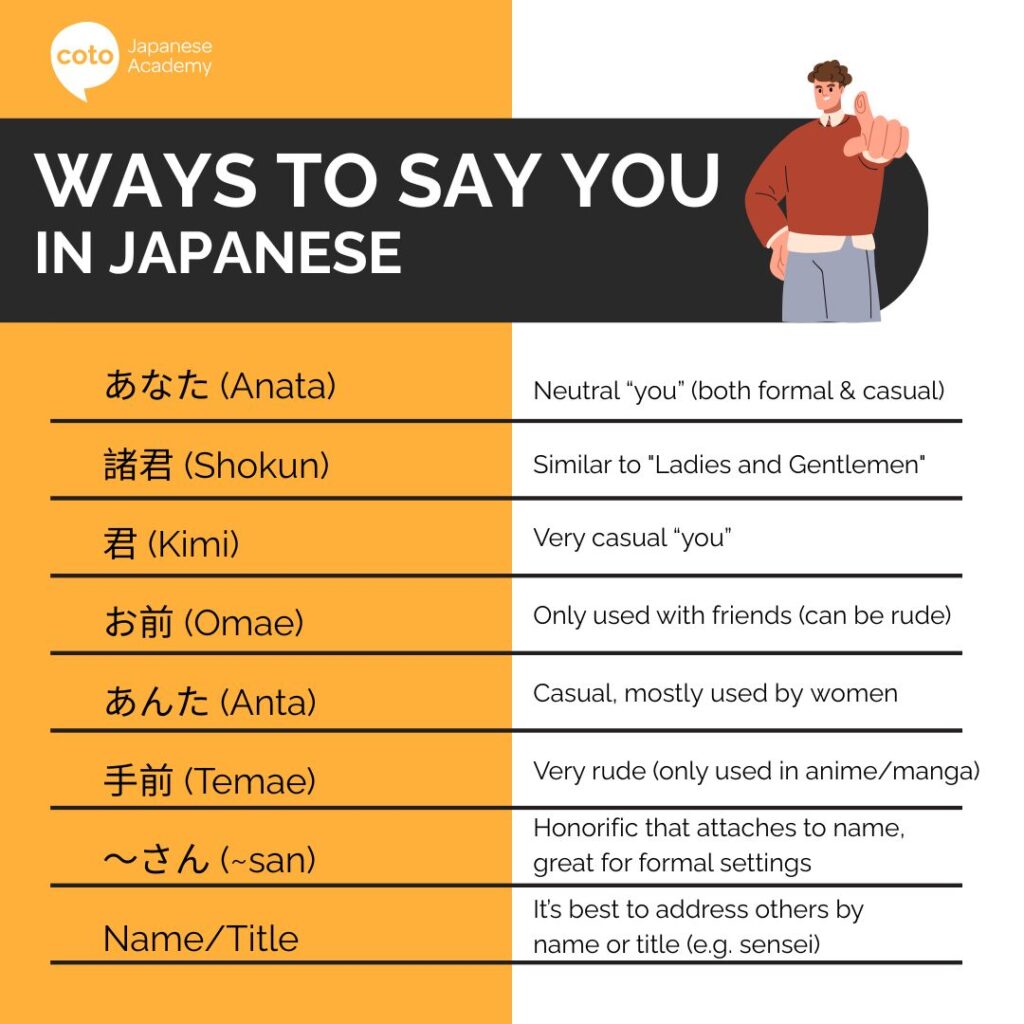
In Japanese, just like any other language, saying “you” or addressing someone properly is one of the most important basics. However, there are multiple ways to address others, with many words that mean “you” in Japanese, and the trickiest part is using the right word in the right context while being polite and respectful.

While most of these words refer to one word, “you” in English, the wrong word can be considered rude or offensive in Japanese. That’s why it is important to understand what context is appropriate for addressing someone correctly. For example, you probably want to avoid calling your boss something like “darling” in Japanese.

But worry not! It’s not as overwhelming as it seems, so let’s find out how you can respectfully address others in Japanese!

Polite Ways to Say “You” in Japanese

1. 貴方 (あなた) Anata

Found in textbooks, あなた (anata) is the most basic word for ‘you.’ It is usually used by strangers who do not know the name or anything else about the person they are addressing. It can also mean “darling” when used by wives to address their husbands. Because of that, it is inappropriate to call someone you know あなた, such as your boss.

Directly referring to people as あなた can also come across as direct and rude. Japanese culture tends to value indirectness since it’s seen as less direct and more respectful. This might be why passive voice is more common in Japanese compared to English. So, the most respectful way to refer to someone is to drop the “you” altogether, but we will discuss how you can do that in a bit.

Note that the kanji, 貴方, is rarely used; usually it is written in hiragana as あなた.

2. 諸君 (しょくん) Shokun

諸君 literally translates to “you people,” which sounds a bit rude in English, so it more closely conveys something like “ladies and gentlemen.” It is a very polite way of addressing a group of people.

Casual Ways to Say “You” in Japanese

3. 君 (きみ) Kimi

Occasionally used to address others, 君 can be considered condescending if used in inappropriate situations. 君 is meant to be used by people of a higher status than those below them, such as adults to children and teachers to students. It can also be used to represent intimacy romantically, such as in 君の名は (Kimi no Na wa) Your Name, a romance anime. Thus, it is also a word used by couples. 

4. お前 (おまえ) Omae

Commonly used between friends in informal situations, it is rude to address someone outside of your social circle お前. Being a masculine word, it is also used romantically by husbands to address their wives. 

5. あんた Anta

A shortened form of 貴方, it is also considered less formal. Previously used to address people of a higher status, it is considered disrespectful today. Mostly used by women and people in a close social circle in informal conversations.

Rude Ways to Say “You” in Japanese (Should Avoid Saying)

6. 手前 (てまえ) Temae

This is a very rude word that is hardly used by anyone in real life, though it can be commonly found in Japanese media like manga and anime. You often see fictional characters use it to address others when they are angry or even want to insult them. You would rarely hear it being used in actual Japanese conversation, even in a heated argument.

If you do happen to use it, people might find it kind of funny or just out of place and think you watch too many cartoons. Overall, we wouldn’t recommend using this term at all. 

7. 己 Onore

Similar to 手前, it is mostly seen only in Japanese media used to curse at others. However, depending on context, onore can also mean ‘oneself’ or ‘myself’. 

8. 貴様 (きさま) Kisama

Even though it used to be a respectful term, it is now considered very rude to address someone as 貴様 and is mostly only used in Japanese media; you might recognize it from popular Japanese video game characters like Kazuya or Heihachi. It is an extremely derogatory word, often used by powerful villains or kings who think themselves above others.

Dialects 

Different regions in Japan have their own dialects, and some words can have different meanings depending on where they are spoken. Here are some examples.  

  1. あんた Anta: In Kinki (Western Japan), it is a friendly and endearing word, but in Kanto (Eastern Japan), it is considered rude and insulting
  2. わい Wai: Depending on the region, it can mean either ‘I’ or ‘You.’ 
  3. 自分 (じぶん) Jibun: Kansai dialect that means ‘You’ depending on the context. Originally, it means ‘I’. 
  4. きさん Ki san: Kyushu dialect that is a variation of 貴様 (きさま) but is considered less rude and not used against enemies 

Most Common Ways to Say “You” in Japanese

Infographic showing different ways to say you in Japanese

In Japan, more often than not, people address each other through context where they completely omit pronouns such as “you”. It might be weird when translated into another language like English, but this is how Japanese is naturally spoken.

When people address each other, they do so using the other person’s name, title, or position. Many Japanese people use this in formal and informal conversations, depending on the context. Honorifics are added behind their names as a form of politeness and respect. 

Besides “you”, there are other ways to say “I” or “myself” in Japanese, including ore, boku and watashi. Read our blog to find more: How to Refer to Yourself in Japanese

When in Doubt, Alternative Ways of Saying “You” in Japanese

Luckily, most Japanese people don’t use “you” as it’s often unnecessary, and it might be better not to since it can be seen as rather rude. So, when in doubt, just don’t say “you” at all.

Instead, here are a few easier ways to avoid unnecessary glares and question marks.

Use their honorifics

9. さん (San)

さん is an honorific title which translates to “Mr”, “Mrs”, “Miss”, and “Ms ” in English. It is a polite way to address someone and the most common since it is neutral and widely applicable to just about any situation. 

10. ちゃん (Chan)

ちゃん (chan) is used by people familiar with one another. It communicates a sense of cuteness and is usually used to refer to young women, close friends, children, lovers, or pets. It’s generally used to express endearment to someone.

11. くん (Kun)

A male honorific is generally used to refer to men and by superiors addressing those below them. It is not a very polite honorific and is only used between men and women who are close.

Want to learn more about Japanese honorifics? Also, check out our more complete guide on Japanese honorific titles!

12. さま (Sama)

さま is the most formal honorific and is a higher version of さん. It is only used in specific situations, such as addressing Japanese deities or customers. It is a form of Japanese Keigo that is commonly used in the Japanese workplace.

Formal Japanese can be confusing and complex; so check out our guide to learn everything you need to know: Japanese Keigo ( Formal Japanese)

Addressing Someone with their First Name, Last Name, or Title

13. Last name

Using the last name alone is usually done in a casual and friendly context, such as between classmates. It is considered impolite to call someone by their last name alone; thus, honorifics are added. For instance, with your manager, it is better to use their last name along with the suffix, 〜さん (~san).

14. First name

First-name basis is considered a big deal to Japanese people. The rule of thumb is this: never address them by their first name unless they allow it. People usually use first names when they are family members, friends, or romantic partners. Among colleagues of the same level, usually a suffix is used, even if it’s 〜ちゃん (~chan), since using a first name alone can feel a bit cold.

15. Title

It is also common to address others by their titles, especially when you need to express respect to someone of higher status.

  1. 先生 (せんせい). Sensei isn’t just for teachers. Rather, view it as a title. Whenever you’re talking or addressing doctors, lawyers, authors, artists, or politicians, always add “sensei” after their last name.
  2. 先輩 (せんぱい). Use senpai to talk to your seniors, be it at school or the workplace.
  3. 社長 (しゃちょう) Shacho, which translates to president.

Conclusion: Addressing Others in Japanese Usually Doesn’t Involve “You”

In Japanese, it is often best to avoid saying “you” at all. It’s common in Japanese to omit certain words, especially subject terms like “you.” It may feel unnatural at first, but Japanese people will easily understand who you are referring to based on context. But in cases when referring to the listener is completely unavoidable, you can refer to their name with a suffix (san, sama, etc.) or title, especially when you want to show respect to the person you’re talking to!

Learning Japanese? Make It Easy with Coto Academy

Want to learn how to refer to others naturally like a native? Join Coto Academy to learn Japanese you won’t get from the textbook! Our courses immerse you in actual Japanese conversation that you would use in real life. We aim to have you develop an intuition for how natural language sounds and reads rather than just memorizing endless words and phrases.

Coto Academy is one of Japan’s leading language schools, with campuses in Shibuya, Yokohama, Iidabashi, Minato, and a fully online school. We offer flexible Japanese lessons, whether you’re looking for intensive, part-time, or online courses, so you can reach your language goals faster. 

FAQ:

Is it rude to say "you" in Japanese such as "anata"?

Using words for “you” like anata can come across as direct and slightly rude in Japanese. The Japanese language tends to value indirect communication, so it’s better to avoid using “you” in Japanese. You can either drop the pronoun or just use the person’s name or title.

Does Kimi and Anata mean "you" in Japanese?

Yes, both kimi and anata both mean “you” in Japanese. Anata is seen as more neutral, whereas kimi is usually used by adults to address someone younger, like children. Kimi can also be used between couples.

What words should you avoid using for "you"?

You should generally avoid using the word お前 (omae), which is considered pretty rude but can be used playfully with friends you are close to. The terms 手前 (temae) and 貴様 (kisama) should never be used, since they are seen as extremely rude and rather cartoony or even embarrassing. They are rarely used in actual Japanese conversation despite how common they seem to be in anime and manga.