



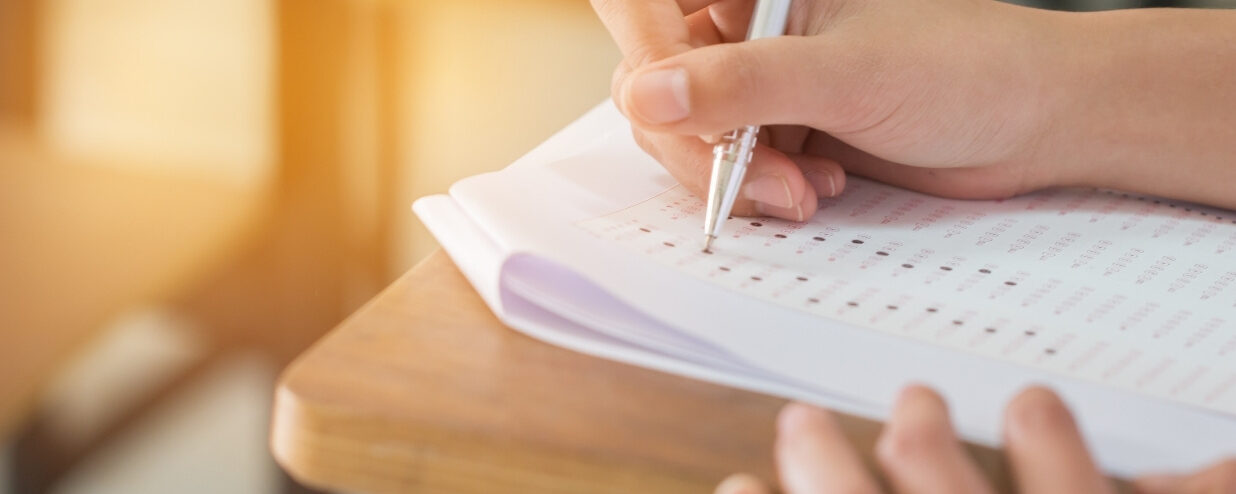


What are some of the things to keep in mind when you take the actual JLPT? You’ve studied the JLPT for months, reading grammar books, making flashcards, and taking mock exams. You feel like you’re all set to take the test. There’s nothing that can go wrong when you have all that knowledge locked in, right? At the end of the day, how well you prepare for the JLPT the night before is just as important as your six-month study plan.
Avoid saying, “I should have done that,” after the JLPT ends. From what to avoid to useful advice, check out these realistic JLPT tips that can mean the difference between a full-blown panic attack in the exam center and a smooth test session.
Why It’s Important to Be Prepared During the JLPT Test Day
While we focus most of our attention on studying Japanese, we tend to overlook the practical elements of taking the JLPT: what to prepare, what to bring, and what to anticipate.
Like any standardized exam, the JLPT, or Nihongo Nouryoku Shiken (日本語能力試験) is not just a test of the theoretical Japanese language, but of how well you do under pressure. They usually fall on a Sunday, giving you ample time to do any last-minute reviews and cramming on Saturday. This also gives you enough space for mental preparations.
At the same time, this also means that a lot of things can go wrong.
Getting ready for the JLPT? Boost your chances of passing with Coto Academy’s JLPT Prep Course — designed for busy learners. With just 3 focused hours per week, you’ll turn your current Japanese skills into real test results in 3 months. We focus on the high-frequency kanji and the specific logic needed to beat the reading section’s strict time limits. Whether you join us in Tokyo or Online, you’ll get the exam-winning strategies you won’t find in a textbook.
When Is The JLPT?
In Japan, the JLPT is typically held twice a year—once in July and once in December. The frequency of the exam in your home country may vary, so we highly recommend checking the official JLPT website for the most up-to-date schedule in your region.
JLPT Test Day Tips
1. Don’t bring heavy and big electronic devices
A new protocol introduced for the JLPT has caught many Coto Academy students by surprise. At least at test sites in Japan, all electronic devices, including your smartphone, must now be placed inside a special envelope before the exam begins.
The important thing to know is that you will not be allowed to open this envelope until the entire JLPT has finished. This means you won’t have access to your phone or any other electronic devices during the breaks between test sections.
Because of this, we recommend not bringing bulky devices such as laptops or tablets. If you normally use them for last-minute review, keep in mind that they won’t be accessible throughout the day. Instead, we see more students switching to physical flashcards for quick review during the breaks (they are inexpensive, easy to carry, and can be found at most 100-yen stores).
2. Have a good rest the night before the JLPT
Though seemingly an obvious JLPT tip, having a good sleep before the JLPT is something a lot of test takers fail to do.
Late nights can be more harmful than helpful when cramming for exams. This is because staying up late to try to memorize new Japanese vocabulary, kanji, or grammar points has the opposite effect. You’re not letting your brain have “downtime” to let the new things sink in.
If you’re trying to catch up on half of your study materials the night before, chances are you won’t even remember it the next day. Staying up late will only give you stress and sleep deprivation. Any final reviews or mock tests are okay, but make sure you get at least 8 hours of sleep.
In other words, cramming doesn’t help. It can break your concentration the next day and lower your mood — something you don’t want during the most crucial day of the year.
3. Bring an extra pencil and eraser to the test site — and shade properly
This sounds like a “duh” JLPT tip, but you’d be surprised by how many examinees we’ve seen who brought pens instead of pencils and erasers to the JLPT exam location. You input your answers by shading the circle with a pencil. If you’re using a mechanical pencil, bring extra leads. If you’re using a wooden pencil, get a sharpener.
Most importantly, bring a spare pencil and eraser. They might fall on the floor or break at any moment, so avoid the panic by staying prepared.
Make sure they are at least 2B, a dark shade for the computer to read. Remember that the software can only read your answer when you’ve colored the circle properly.
Pencil cases aren’t allowed during test sessions. Only bring the essentials: no highlighters or colored pens.
Disclaimer: Some test sites might not allow mechanical pencils, so always check what the test voucher says.
4. Make sure to bring clear bottled water
While bringing your own water is not a required item to bring, even the Japan Education Exchange Center, which is the official JLPT administrator, advises you to bring “your own water,” as they state for the July 2025 JLPT.
Many test centers are located far from convenience stores and supermarkets. While you do get a break between test sessions, we generally don’t recommend using that time to run out and buy a bottle of water. Instead, bring one with you and have it packed in your bag before the test begins.
Just make sure that the water bottle is clear or has no labels to avoid raising any suspicions.
For more information, check out what other things you can bring to the JLPT test site.
5. Bring a (Wrist) Watch to The Exam Centre to Save Time
Every JLPT exam center is different, and that means you don’t know what you’re expecting. The JLPT sections are all timed, but during the tests, you’re not going to hear any countdowns or warnings. The proctors will only say, “Time’s up. Put your pencils down.”
The only indicator of how much time you have left is through the wall clock — if they provide one. Some test centers may hang their clock on your back or somewhere where it’s hard for you to see it. Some might even cover the clock. Moving your head around will raise suspicion and waste your precious, limited time. Tough choice, right?
This is why you need to bring your own watch. Remember to budget your time. Make sure it’s an analog watch (anything digital is prohibited) with no alarms.
6. Speaking of Time, Manage It Well
One of the common pitfalls for test-takers is to submit their JLPT answer sheets half-finished because they’re shocked by how quickly the exam can go. The good news is that for every different test section (kanji-vocabulary, grammar, reading, or listening), you’ll have a short break in between. This means, at least, you have a softer cushion for time management.
When you finish a few answers, see if you’re running out of time and adjust your pace from there.
Want to study JLPT with us?
7. Don’t Get Stuck on One Question
Perhaps the most important JLPT tip is to never contemplate too long on one question. The JLPT is strictly timed, and you might feel like it’s okay to go slow at first.
The biggest mistake you can make is to skip skimming through the questions: how many are there? Which section will probably take the longest time?
Chances are, you’re going to find a question (or many) that you don’t know. Don’t get stuck there. Instead, mark the question or take a rough guess and move on.
Only when you’re done going through all the questions can you go back again.
8. Fill in any blank answers, even when you do not know the answer
Although the JLPT does not use a simple flat scoring system—meaning each question may be worth more or less depending on its difficulty—it does not deduct points for incorrect answers. Unlike some standardized exams that impose negative marking (for example, subtracting one point for every wrong answer), the JLPT only awards points for correct responses.
This means there’s no penalty for guessing. If you’re unsure of an answer, it’s always better to make an educated guess than to leave it blank, as a correct guess can only improve your score.
If you’re faced with unfavorable circumstances where you have a bunch of questions unanswered, with only one or two minutes to spare, we suggest doing what any desperate student would do: take wild guesses.
It seems counterintuitive, but writing something is always better than nothing. Statistically speaking, if you have 10 questions unanswered with only one minute left, you can blindly fill in the answers and still have 2-3 of them correct. If you only use that one minute to answer only one question, you’ll, well, only have one answer correct — if you do get it right.
9. Listen to the proctors
This isn’t just a JLPT tip. It’s a requirement. Coming from real experience, the proctors are very strict. They’re there to confirm your identity and make sure the test environment is conducive. The JLPT rules are typical: no talking, no suspicious activities, no cheating and no cellphones.
But they also hold authority in the exam center to issue yellow and red cards — and they’re something you’d want to avoid at all costs. If you break one of the JLPT rules, they can give you a warning (yellow card) or, worst, expel you on-site, effectively failing you from the JLPT.
In every exam hall, there’s almost one person who got kicked out because their phone rang or, more commonly, because they keep writing when the proctors tell them to put their pencils down.
You’re not going to get away from sneaking in a few answers. The risk is simply not worth it. If they tell you to stop, stop.
10. Use question papers for note-taking during listening sections
You’re faced with another challenge in the JLPT listening section. Besides time, the audio will only be repeated once. At the same time, you need to know what’s happening in the scenario given, which means you don’t have a lot of time to comprehend and answer the question.
Take notes as you listen to the audio. They will give you a brief moment to answer the questions, and you can use this period to review your notes. They don’t have to be long; just short reminders to refresh your memories
It’s important to know the directions and what is going to happen on the test so you can focus purely on answering the questions. On most of the questions, they don’t give you a whole lot of time to think about it. You have to answer and keep going. If you don’t, you might find yourself halfway through the next question before you realize you haven’t made a decision yet.
Where possible, mark answers that are clearly not correct when you’re listening to whatever passage is playing. People lose marks for accidentally filling the wrong box.
Also check out: How to Check Your Results for the JLPT
11. Take advantage of restroom breaks
This is your chance to reset your mind. Meeting your friend to talk about the past JLPT questions isn’t wrong, but prioritize your personal needs, too. Use this time to relax or do another final review. Go to the bathroom to avoid holding your pee during the next session. The whole test lasts around 3-4 hours, so prepare a meal so you don’t get hungry.
Depending on where you are, there might not be a nearby convenience store. You may not be able to go and buy snacks and return on time, so pack some snacks from home just in case.
12. Don’t Pack Too Many Things!
The JLPT is very strict about preventing recording or photographing during the exam, and such items may raise unnecessary suspicion.
At the same time, based on feedback from Coto Academy students, many test-takers who brought textbooks for a last-minute review ended up not opening them at all. You might be surprised by how quickly the exam day schedule moves, leaving very little time to study during the breaks.
Instead of filling your bag with multiple textbooks that may never leave your backpack, consider bringing a small set of physical flashcards or a one-page summary of key grammar and vocabulary points
13. Don’t drink too much water
One piece of feedback we’ve heard from Coto Academy students is that bathroom breaks can be more difficult than expected.
One student shared that although the break was scheduled for 30 minutes, it took around 10 minutes for the proctors to collect exam papers and complete the necessary checks before anyone was allowed to leave the room. By the time she reached the restroom, there were only a few toilet stalls available, and the line was so long that she had to skip using the bathroom altogether.
Of course, this depends on the test venue and can’t always be avoided. However, since the JLPT can last three hours or more, it’s a good idea to stay hydrated without drinking excessive amounts of water immediately before or during the exam. Aim to drink enough to stay comfortable, but avoid overdoing it so you’re less likely to find yourself needing the restroom if long lines or unexpected delays occur.
Taking the JLPT? Prepare for the JLPT with Coto Academ’s JLPT Course!
Planning to take the JLPT? Maximize your chances of success with JLPT lessons at Coto Academy. Our 3-month, semi-intensive course meets every Saturday for 3 hours, covering everything from high-frequency kanji to the specific logic needed to ace the reading section. Whether you join us in-person in Tokyo or via our online classrooms, you’ll get the expert strategy and peer support needed to walk into the exam with confidence. Seats are limited to keep class sizes small and effective — secure your spot today, and let’s reach your goal together.
- Flexible Learning: Join us in-person at our Tokyo campus every Saturday, or join from anywhere in the world via our Online sessions.
- Comprehensive Coverage: 3 hours per class covering vocabulary, kanji, grammar, and specialized reading strategies.
- Expert Guidance: Small class sizes with instructors who know exactly where students usually stumble.
FAQ
What is the JLPT?
The Japanese-Language Proficiency Test (JLPT) is a standardized exam that evaluates and certifies the Japanese language skills of non-native speakers.
Can I wear a watch to the JLPT test center?
Yes, you can wear a simple wristwatch, but there are strict rules. Smartwatches or watches with alarms, data storage, or sound functions are strictly prohibited.
What do I need to bring to the JLPT test center?
To take the JLPT, you must bring your test voucher, a valid photo ID, HB or B pencils, an eraser, and optionally a simple wristwatch, making sure all electronic devices are turned off and stored away.
Where is the JLPT test center located?
The location of your JLPT test center depends on where you registered, so please check your test voucher carefully for the exact address and room details.
Check out our guides for the upcoming JLPT: