



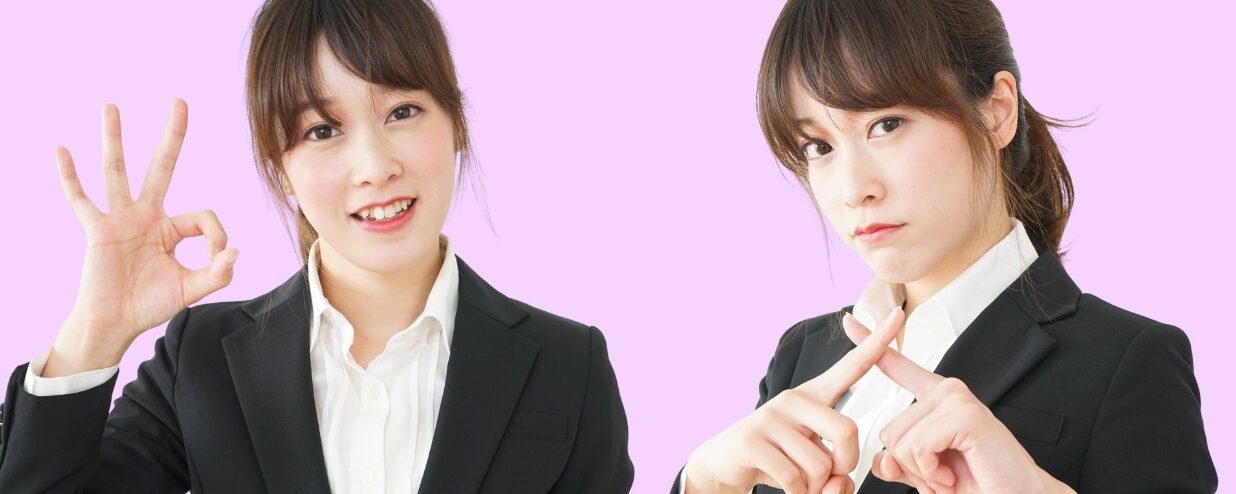


Many people are surprised to learn that Japanese hand gestures don’t always mean what they expect — and in some cases, they mean the exact opposite of a similar gesture back home. Body language might seem more universal than spoken language, but it’s still shaped by culture, and Japan has plenty of its own unique rules.
So let’s break down some common Japanese hand gestures and what they really mean — because chances are, a few will surprise you!
Do Japanese People Use Hand Gestures?
Yes, Japanese people do use some hand gestures, but generally less than people from more expressive cultures like Italy, Brazil, or the Middle East. Japanese communication tends to rely more on facial expression, tone, and aizuchi. Many gestures are also smaller and more subtle, like a small wave near the face instead of a big arm wave, for example.
That said, hand gestures absolutely exist and matter in Japan. Some are used in daily life (like beckoning someone or apologizing), some are tied to etiquette (like pointing with an open hand instead of a single finger), and some show up specifically in business or formal settings.
In this blog, we will focus primarily on hand gestures rather than the full scope of Japanese body language. Now, let’s dig into Japanese hand gestures to keep in mind, especially the ones that might be flipped in your home country!
Common Japanese Hand Gestures to Know and Try
1. Big “O” Hand Gesture: “Okay” Sign
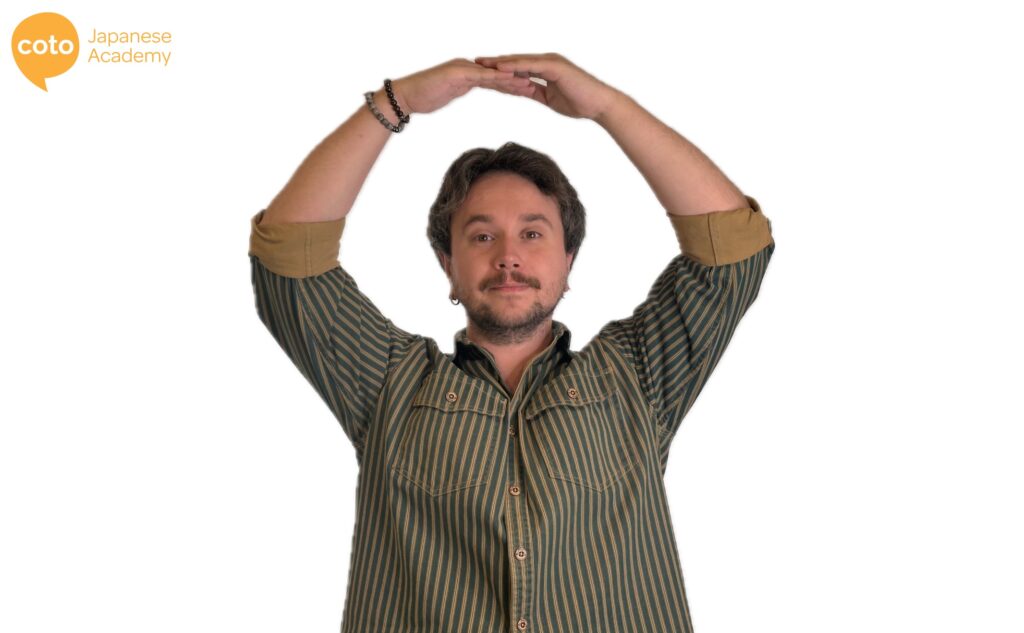
The “Big O” is a Japanese hand gesture made by raising both arms above your head and forming a large circle, signaling “okay!” or approval. Because it’s such a big, visible gesture, it’s especially useful when you’re too far away to be heard — a visual shortcut for “yes, we’re good.”
Why a circle, specifically? This is actually a great example of something very Japanese. If you’ve ever taken a class at a school like Coto Academy and gotten your homework graded, you’ll notice correct answers aren’t marked with a checkmark — they’re marked with a circle, called a maru (○). Wrong answers, on the other hand, get an X. So a big “O” shape naturally reads as “correct” or “good” to Japanese people, the same way a check mark would to most English speakers.
You generally use it to convey approval or enthusiastic agreement.
2. Pointing At Your Nose: Me?
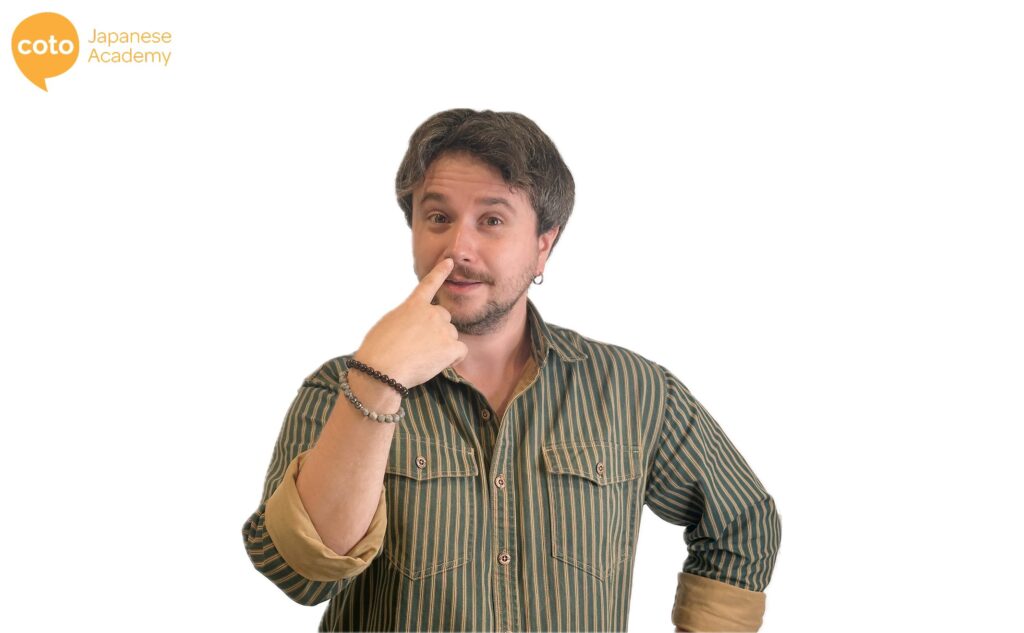
This gesture, where you point at your nose with your index finger, simply communicates “me,” usually in the context of asking who the speaker is referring to. It basically communicates questions like “Who me?” or “You mean me?”
Often, when speaking Japanese, you drop personal pronouns, so this gesture is quite useful for making sure the question or topic is addressed to you.
3. Crossing Your Finger Into an X: Get The Check
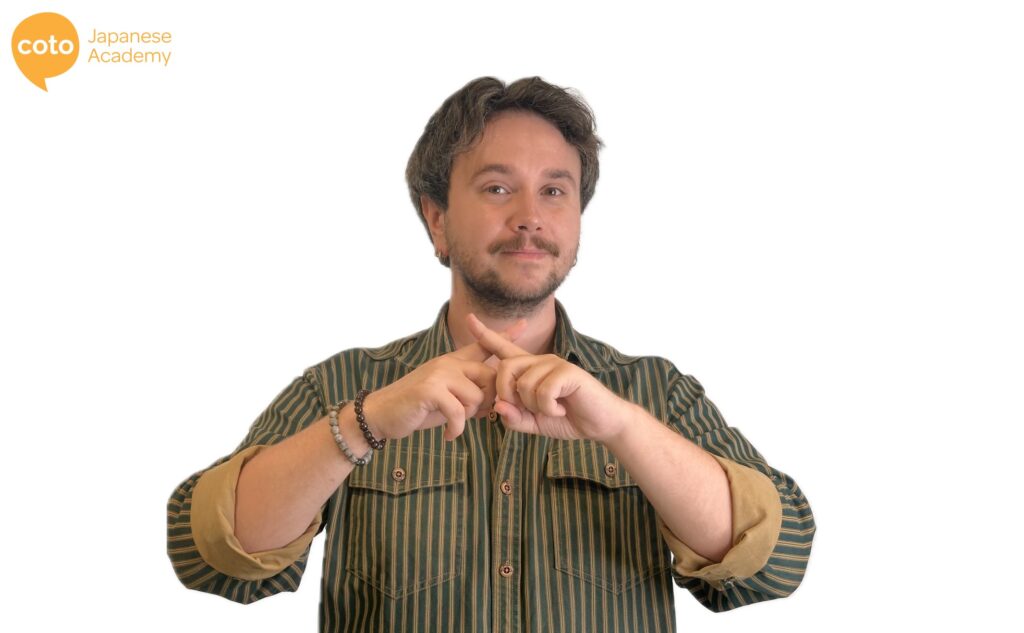
Instead of miming a check-writing motion in the air (like you might in the US), you make an X shape with your index fingers in Japan when you want to ask for the bill at a restaurant or cafe. The X shape isn’t random — it doubles as a signal to staff that you don’t need anything else brought to the table.
So next time you’re done eating and ready to head out, just cross your fingers into an X to let the staff know you’re ready to pay.
4. Big “X”: No
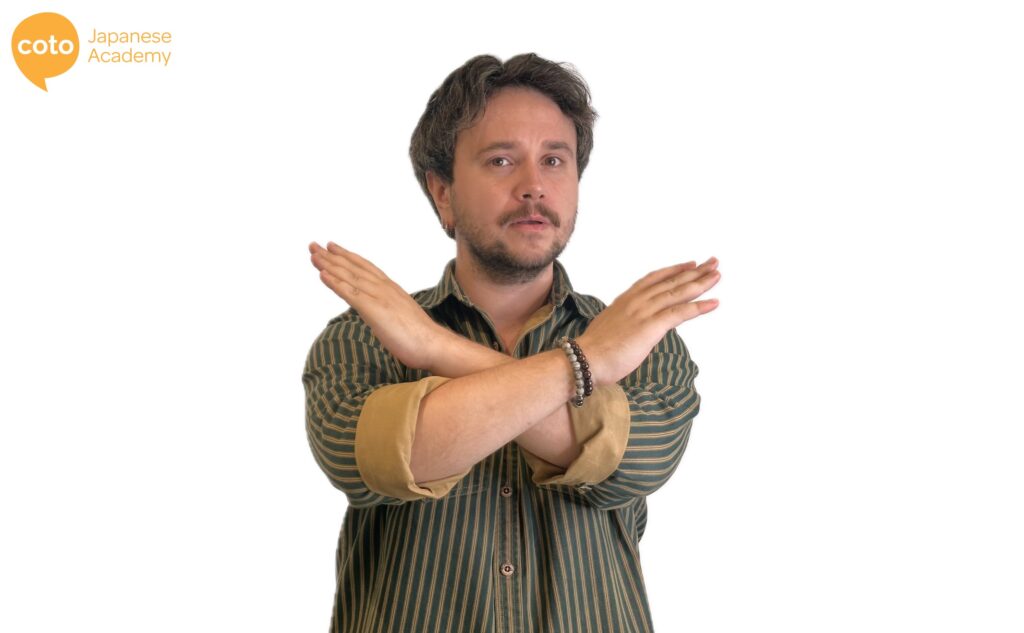
This sign, made by crossing your arms to form a big X, just means “no” or “not allowed.” It is essentially the body-language equivalent of ダメ (dame), which indicates that something is not permitted. It’s actually quite useful to understand this hand gesture, especially if you’re planning to drive or get a driver’s license in Japan, since public staff use this gesture to communicate that you can’t enter or drive in a certain area.
5. Upside Down Okay: The Money Hand Gesture

While it looks like an upside-down “okay” hand gesture, it actually means お金 (okane) or money. You usually use this gesture when something costs a pretty penny, when someone has paid a lot of money for it, or when someone just has a lot of money. Generally, you can use this unique Japanese hand gesture if something has to do with a lot of money.
6. Japanese Counting Hand Gestures
Just like in many places, it’s common to count or indicate the number of something using your fingers in Japan. But they count using different hand signs than the more straightforward finger counting used in places like the United States. But don’t worry, while confusing in the beginning, counting the Japanese way will become pretty intuitive very quickly. Rather than counting from a closed fist, you just count from an open hand instead.
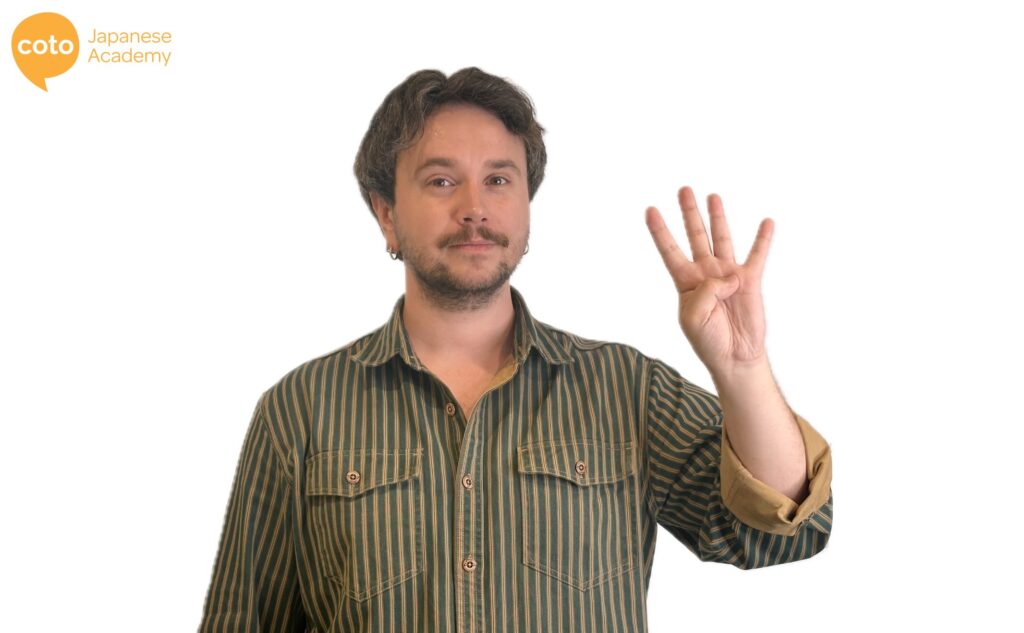
To make the number 1, you simply fold your thumb, which may look like a 4, but is a common way to start counting from 1 in Japan.
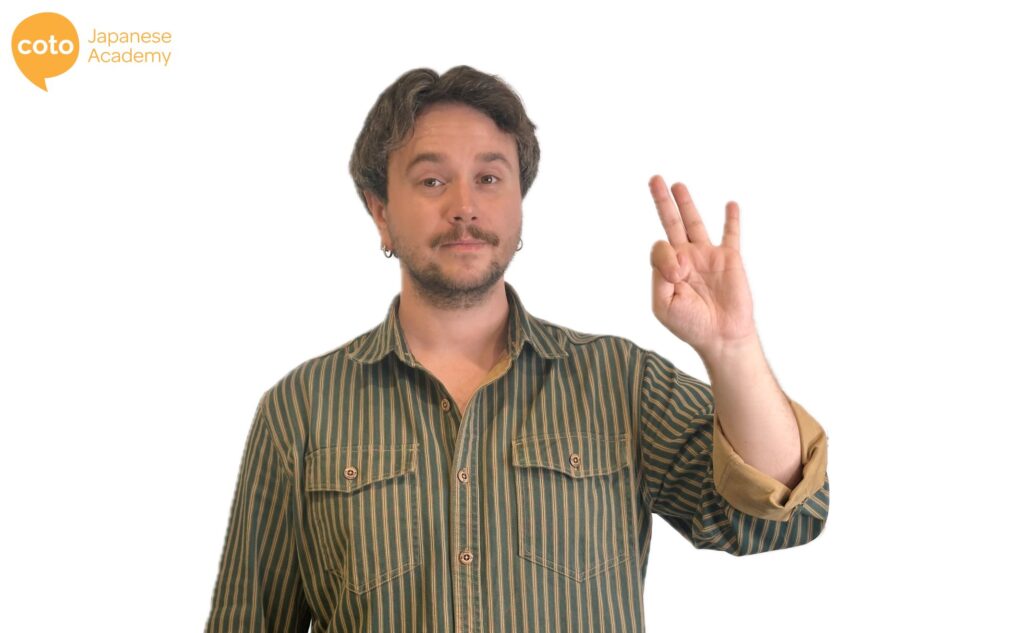
The Japanese hand gesture for 2 is just to fold your index finger with your thumb.
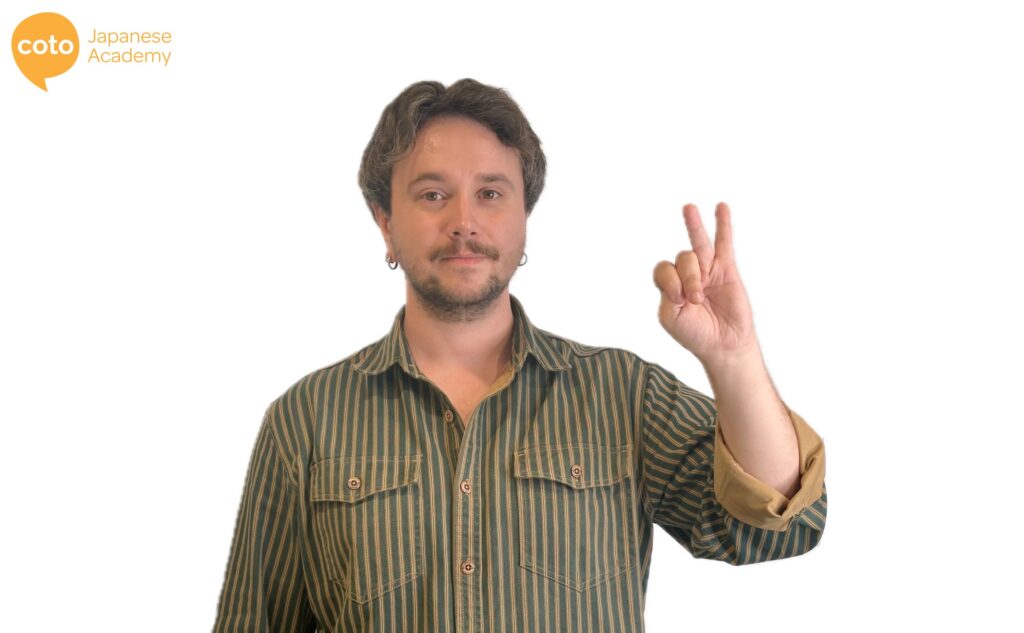
To make the hand sign for 3, you also fold your middle finger.

For 4, you leave your pinky finger up.

Then, to make 5, you just make a closed fist.
From 6 to 10, you can either do the same with your other hand, or if only one hand is free, you can just unfold starting from your pinky to make 6 and continue from there.
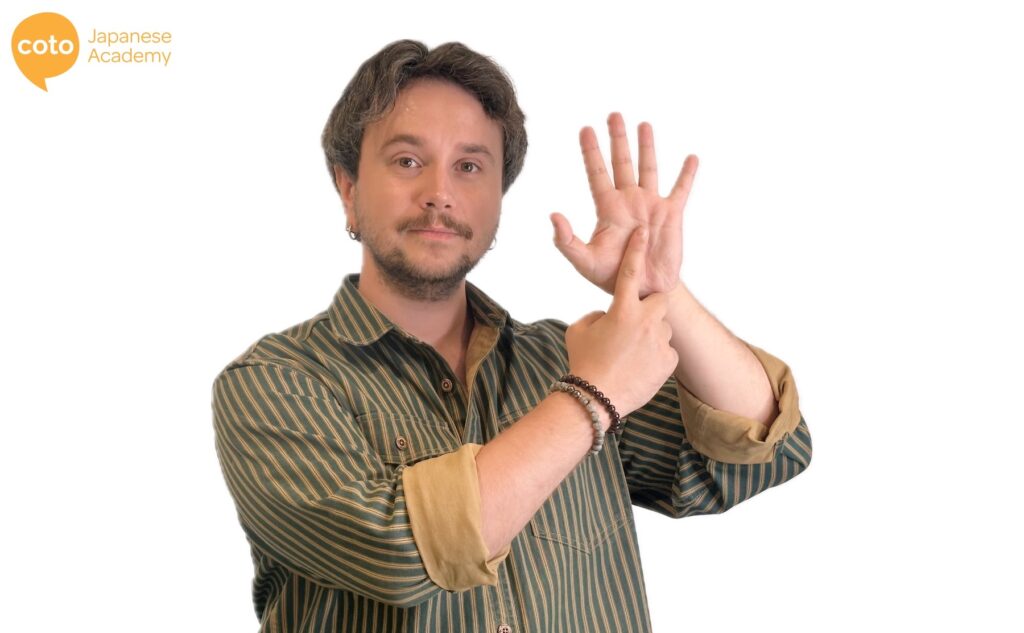
Japanese people also count the way you’re used to, starting with a closed fist and raising a certain number of fingers for each number. Just note, starting from 6, Japanese people tend to place their hand in front of the hand indicating 5.
7. Come Here Wave (Not Go Away!)
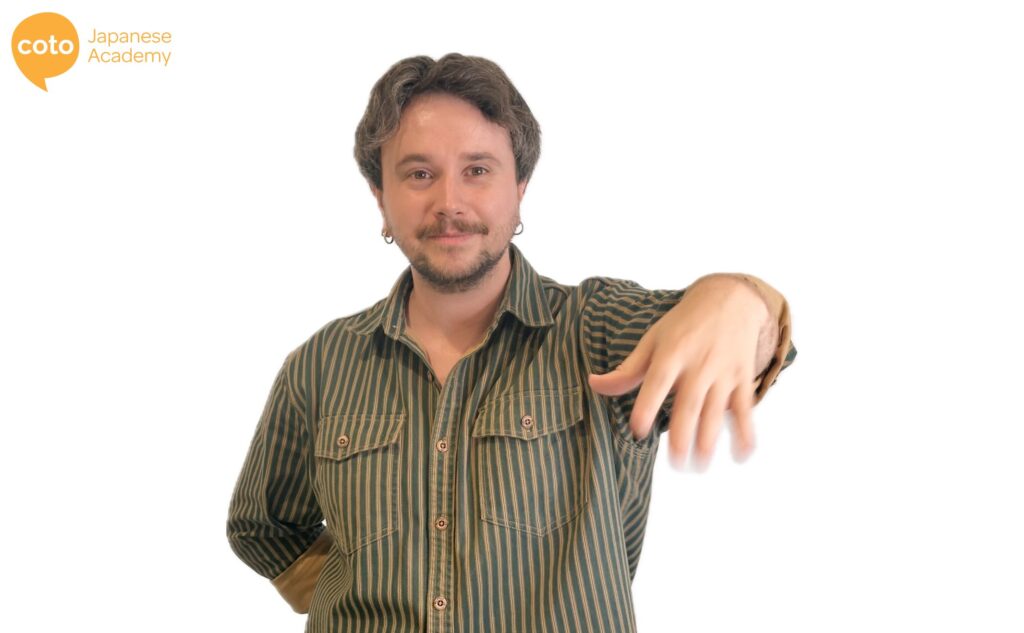
This hand gesture is done by pointing your arm towards the person you’re communicating with, facing your palm down, and waving your fingers towards you. This gesture to the person to follow or come towards you. This might be the opposite of what you would think, since waving your fingers with your palm down often indicates someone or something to go away, like saying “shoo!”
However, it’s not recommended to use this hand gesture with your boss or someone considered to be of a higher social status.
8. The “Stinky” Hand Wave
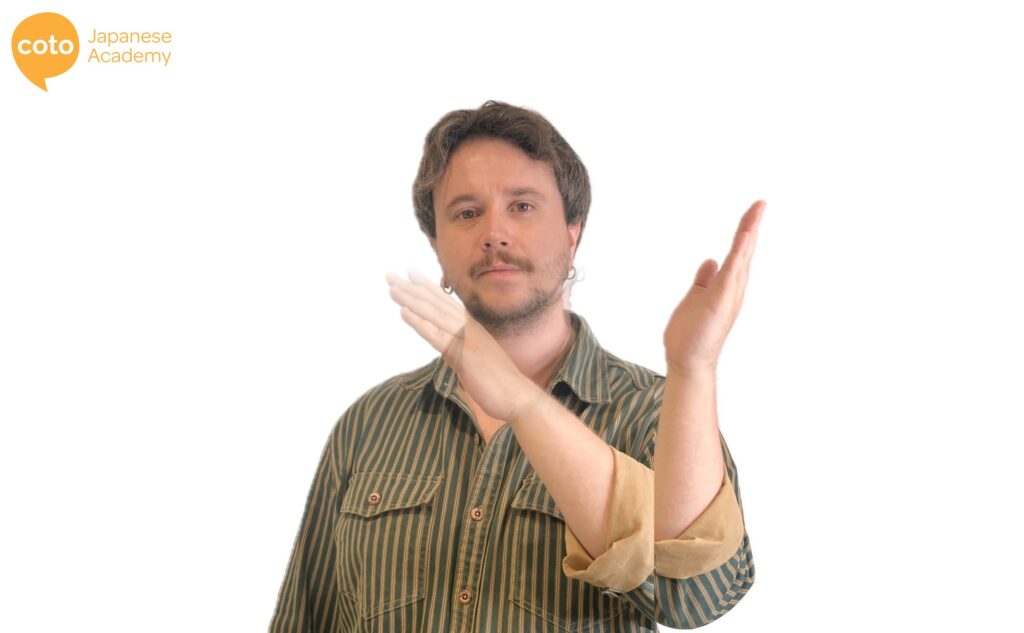
Since you do this gesture by waving your hand in front of your face, often near your nose, it might look like you’re saying that something is stinky. But that couldn’t be further from the truth; this gesture actually means something like “no, no” or “that’s not true.” It is often accompanied by a polite response to someone getting something wrong about you (like getting your native country wrong) or humbly rejecting someone’s kind compliments.
9. The “Tengu” Hand Gesture
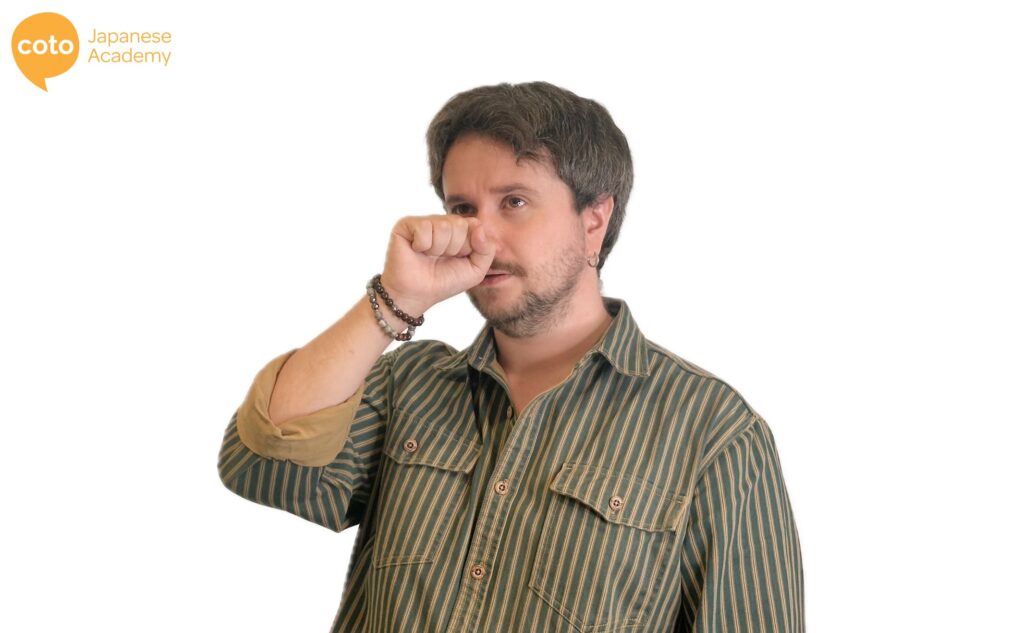
Tengu is a popular spirit or creature from Japanese folklore, and while they are often revered, they can also be associated with arrogance or conceit. Thus, the hand gesture where you place your hand in front of your nose to mimic the long nose of the Tengu. You can use this gesture to communicate how arrogant or full of themselves someone is.
10. Sesame Grinder or Brown Noser
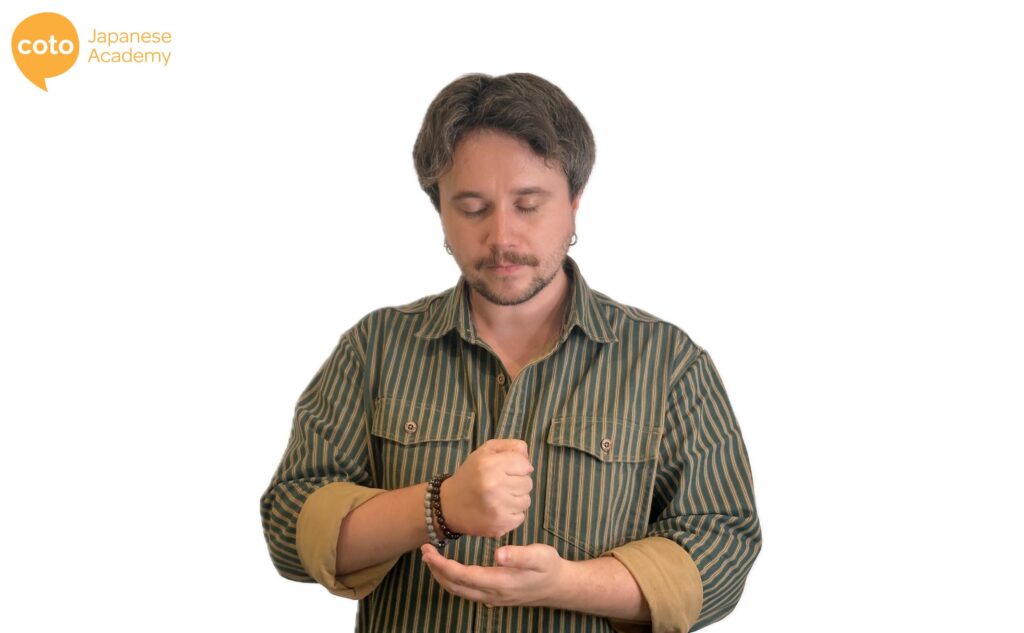
This hand gesture imitates grinding sesame seeds by shaping one hand into a bowl and using the other to mimic the grinding motion. Grinding sesame seeds generally indicates that someone is the teacher’s pet or a kiss-up to the boss. It basically communicates that the person you’re talking about is polishing or grinding sesame seeds for a superior just to get their approval.
11. Pulling Your Eyelid
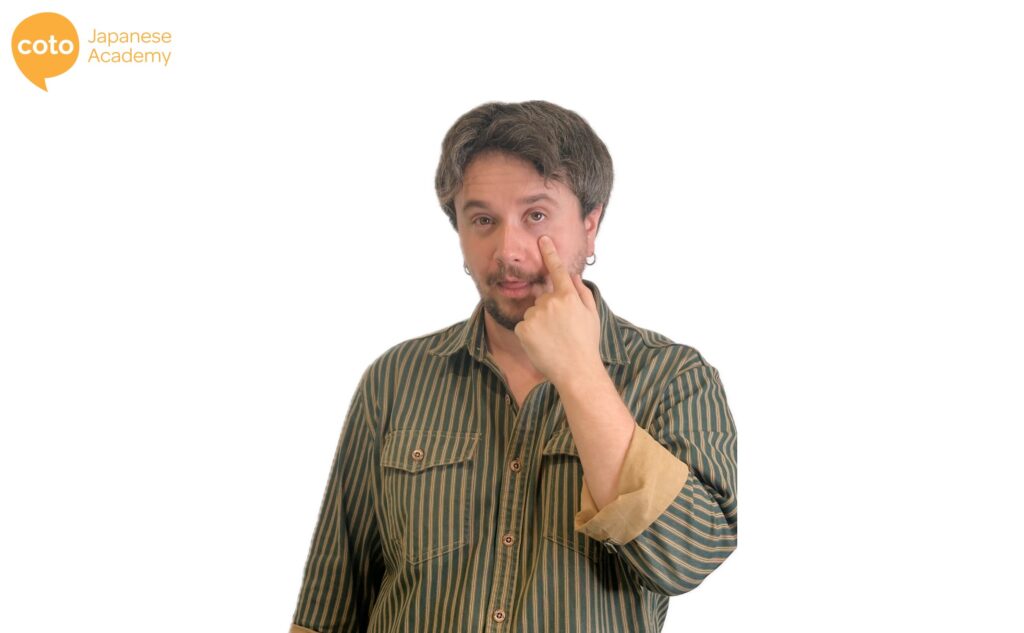
This hand gesture involves using your index finger to pull down your lower eyelid, exposing the red inner lining of someone you want to mock or tease. It’s usually used playfully by children to tease or be mischievous to someone on the playground. It’s also common for children to stick out their tongue at the same time.
12. Notice Me, Senpai
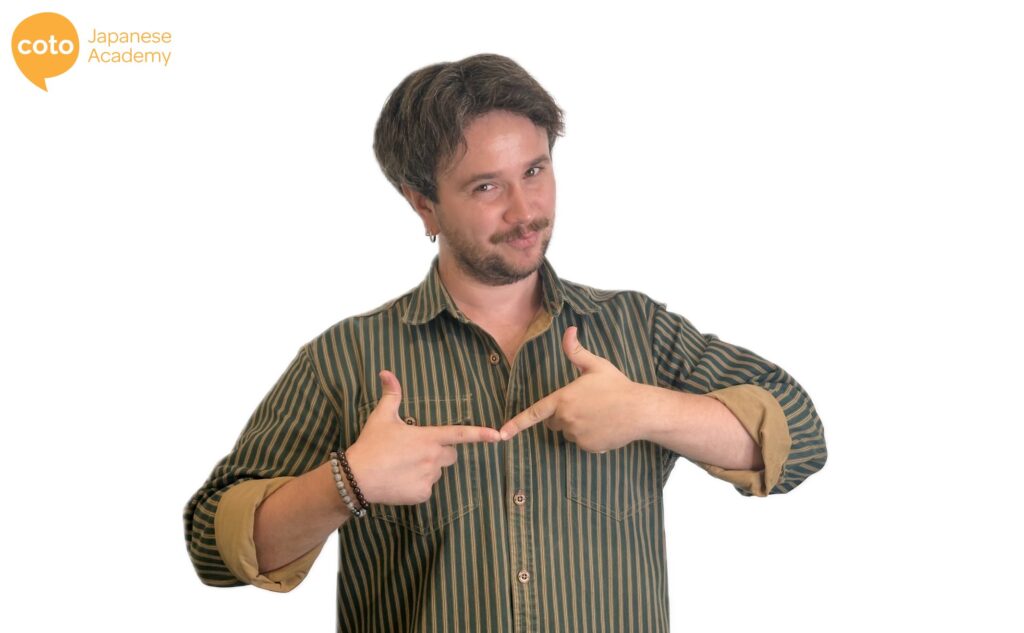
While this is not the official name for the hand gesture, “notice me senpai” definitely captures the energy. The real name in Japanese is actually 指ツンツン (yubi tsun tsun), with yubi meaning “finger” and tsun tsun being a Japanese onomatopoeia for poking or touching repeatedly. When doing this gesture, you’re conveying nervousness or shyness. It is often done in reference to shy, nervous, and even cute character tropes from anime and manga. It’s usually done with a sense of irony and is even popular in the West these days.
Speaking of manga and anime, did you know they both can be effective for learning Japanese? Check out our blogs to find out how you can learn Japanese with anime or learn Japanese with manga!
Hand Gestures in Japan You Should Not Use
While there are plenty of fun hand gestures you can try out, there are a few you should avoid. Some can come across as condescending or confrontational — like pointing at someone with one finger, or using the “come here” finger-curl gesture to beckon someone over.
Other gestures aren’t necessarily rude, but require a bit more nuance. For example, when receiving a gift or item from someone, it’s polite to use both hands instead of just one. This is especially important during meishi koukan (business card exchange) — when receiving someone’s business card, you’ll want to take it with both hands as a sign of respect.
Conclusion: Learn Japanese Hand Gestures For Even Smoother Communication
Japanese hand gestures are often different than what you might expect, so they’re worth remembering so you don’t think someone is shooing you away! Plus, they’re another way to communicate non-verbally to someone, whether it’s because using spoken words isn’t possible or you want to say something more subtly. Try to remember some of these and use them next time you meet your Japanese friends!
Learn Japanese with Coto Academy!
Learn the subtleties of Japanese communication from proper hand gestures and body language to knowing what to say at the right time at Coto Academy! We offer a variety of courses, from conversation and business Japanese to comprehensive, intensive courses covering every area of the language. You can join us at one of our campuses in Tokyo or Yokohama, or take classes online from anywhere in the world! Ready to sign up or want to get in touch for a free consultation? Simply fill out the short form below!
FAQ:
Are Japanese hand gestures similar to the ones in Western Countries?
Not always, many Japanese gestures look familiar but mean something completely different. For example, waving fingers downward toward yourself means “come here,” not “go away.” It’s worth learning the key differences to avoid misunderstandings.
Is there a Japanese hand gesture to ask for the bill?
Yes, there is! You simply cross your fingers into an X shape. This is called okaike and signals to the staff that you’re ready to pay. It also means you don’t want any more food or drinks, hence the “X.”
What does the "okay" circle gesture mean in Japan?
The small OK sign (thumb and index finger forming a circle) actually means money (お金, okane). To show approval or agreement, Japanese people make a much bigger gesture, raising both arms and connecting the hands to form a large circle above the head.
Why do Japanese people wave their hand in front of their face?
Despite looking like a “something stinks” reaction, this gesture actually means “no, no” or “that’s not true.” It’s commonly used to humbly deflect a compliment or politely correct a misunderstanding about yourself.
Is it okay to gesture "come here" to anyone in Japan?
Be mindful of context. The palm-down beckoning wave is fine with peers or people below you in social rank, but it’s considered rude when directed at a boss or someone of higher status. Japan’s social hierarchy matters even in gestures.
Check out our other blogs; you may be interested in:
Japanese Kanji Emojis: What Do They Actually Mean?
21 Japanese Internet Slang & Texting Terms (And What They Mean)
Top 30 Japanese Slang to Learn in 2026
16 Top Gen Z Japanese Slang and What They Mean