





Hospital visits are inevitable, no matter where you live, so what should you expect when going to Japanese hospitals? Thinking about the process of going to a hospital in Japan might sound daunting, but don’t worry; Japanese hospitals are very accommodating and do their best to ensure you get what you need, even if your Japanese isn’t so high-level.
So, don’t be discouraged from visiting the hospital if you have any reason to visit, especially if you’re feeling something is wrong. But to make your hospital visit as smooth and efficient as possible, let’s go over some key words and phrases you need to know!
Basic Japanese Terms and Phrases for Visiting a Hospital
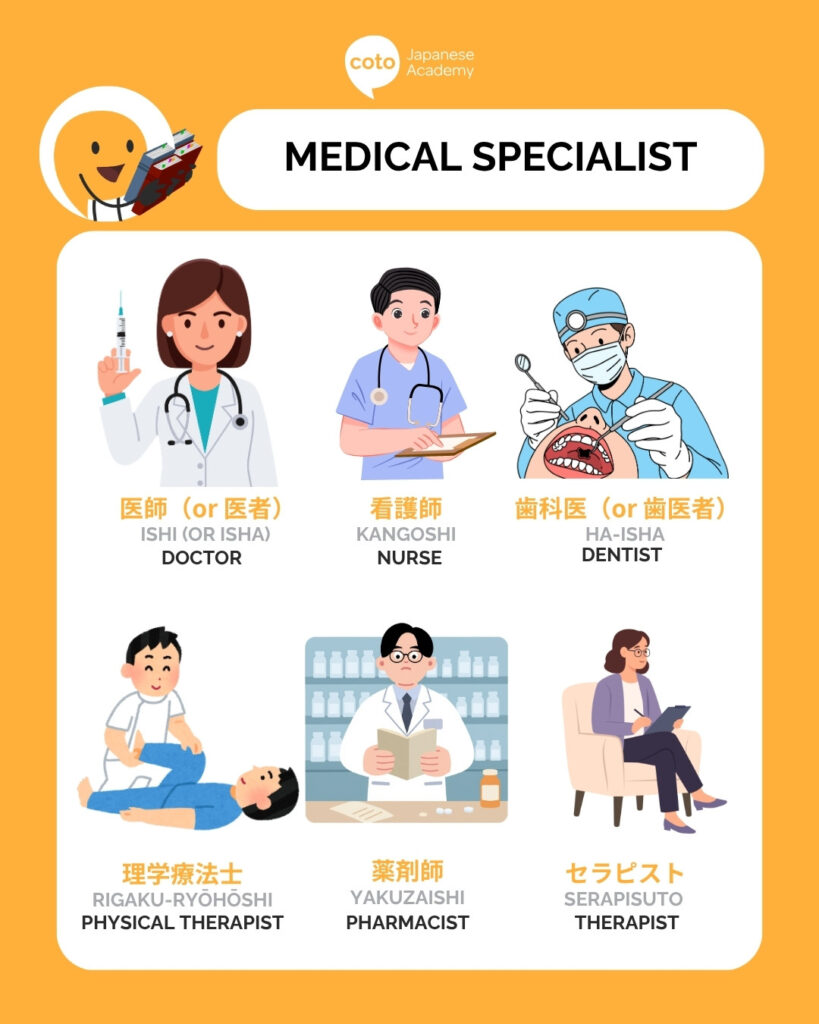
Before we dive into how to find the right hospital in Japan or how to describe your condition, we should cover some basic terms and phrases you need to know. It will be handy to know what doctor, nurse, or even medicine is in Japanese before you actually go to a hospital.
| English | Japanese | Furigana | Romaji |
|---|---|---|---|
| doctor | 医者 | いしゃ | isha |
| nurse | 看護師 | かんごし | kangoshi |
| insurance card | 保険証 | ほけんしょう | hokensho |
| patient’s registration card | 診察券 | しんさつけん | shinsatuken |
| weight | 体重 | たいじゅう | taijuu |
| height | 身長 | しんちょう | shinchou |
| blood pressure | 血圧 | けつあつ | ketsuatsu |
| blood type | 血液型 | けつえきがた | ketsuekigata |
| body temperature | 体温 | たいおん | taion |
| hospitalization | 入院 | にゅういん | nyuuin |
| vaccine | ワクチン | わくちん | wakuchin |
| treatment | 処置 | しょち | shochi |
| anesthesia | 麻酔 | ますい | masui |
| allergies | アレルギー | あれるぎー | arerugii |
Rather than going because you feel sick, sometimes you might just need to visit a hospital for something specific like getting a vaccination or getting a blood test, so knowing how to ask for that in particular will come in handy.
Finding the Right Hospital in Japan
Even if you are not comfortable speaking in Japanese, receptionists and nurses will try to help you no matter what. Every hospital and clinic’s main goal is to help patients, whether they speak Japanese or not, but, of course, knowing a few phrases can help them give you the care you need.
First, search for hospitals in your nearby area. In Japan, there are 総合病院 (sougou byouin), which are big hospitals with multiple departments, as well as small hospitals or clinics specializing in specific fields such as internal medicine and pediatrics. Here are some different types of hospitals you should know to help you find the right one.
| English | Japanese | Furigana | Romaji |
|---|---|---|---|
| Hospital | 病院 | びょういん | Byouin |
| Clinic | クリニック | くりにっく | Kurinikku |
| Internal medicine | 内科 | ないか | Naika |
| Surgical hospital | 外科 | げか | Geka |
| Orthopedics hospital | 整形外科 | せいけいげか | Seikeigeka |
| Pediatrics hospital | 小児科 | しょうにか | Shounika |
| Gynecologist | 婦人科医 | ぐじんかい | Fujinkai |
| Ear, nose & throat hospital | 耳鼻科 | じびか | Jibika |
| Dermatologist | 皮膚科 | ひふか | Hifuka |
| OBGYN | 産婦人科 | さんふじんか | Sanfujinka |
| Eye doctor | 眼医者 | めいしゃ | Meisha |
| Dentist | 歯医者 | はいしゃ | Haisha |
| Dental clinic | 歯科 | しか | shika |
You can usually go to a general hospital or clinic if you’re generally feeling unwell or if you’re experiencing symptoms you’re not too sure about. Usually, Japanese people go to smaller clinics rather than hospitals for anything that isn’t urgent, like if you are looking for medication to treat symptoms.
How Japanese Hospital Visits Work & What You Need to Bring
No matter where you go, the most important thing you need is your 保険証 (health insurance card), as well as cash or a card. Keep in mind some smaller Japanese clinics do not regularly accept credit cards for payment, but this is gradually becoming less common.
However, if you don’t live in Japan, you won’t have a Japanese health insurance card. But you can still very much visit a hospital without insurance, which generally costs around ¥5,000 to ¥10,000. Whether you live in Japan or not, hospitals and clinics will always provide service.
So, if you live in Japan, here is what you will need to bring:
- 保険証 (hokenshou): health Insurance card
- 在留資格 (zairyuu shikaku): residence card
- 現金・クレジットカード (genkin/kurejitto kaado): cash or credit card
For most general hospitals and clinics, you do not need to make an appointment in advance to see the doctor since Japanese hospitals usually have a walk-in system. However, for certain services like yearly check-ups, reservations would be required since clinics usually have specific time slots you have to choose from, but that’s often done through your company or school.
But for more specialized clinics like dentists or gynecologists, you will need to make a reservation.
Japanese Phrases When You Arrive at the Hospital
So, when you first enter the hospital, you have to inquire at the 受付 (uketsuke), meaning reception, which is usually when you explain the reason for visiting. When you speak to the receptionist, you can start off by saying the following:
昨日から熱がありますので、診察をお願いします。
Kinou kara netsu ga arimasu node, shinsatsu o onegaishimasu.
I’ve had a fever since yesterday, so I would like to see the doctor for an examination.
Although reservations aren’t needed, the receptionist might ask you if you have an appointment and if this is your first time at the hospital:
受付:予約はありますか?
Uke tsuke: yoyaku wa arimasuka?
Receptionist: Do you have an appointment?
あなた:いいえ、ないです。
Anata: iie, naidesu.
You: No, I do not.
受付:初診ですか?/初めてですか?
Uke tsuke: shoshindesuka? / hajimetedesuka?
Receptionist: Is this your first time here?
あなた:はい、初診です。/ はい、初めてです。
Anata: hai, shoshindesu / hai, hajimetedesu.
You: Yes, this is my first time.
Generally, you will need to fill out a medical questionnaire, known as 問診票 (monshin-hyou), that usually asks about why you’re visiting, your current health, what medication you’re currently taking, and your overall history of health conditions. Here are some terms you will likely run into on the form:
| English | Japanese | Furigana | Romaji |
|---|---|---|---|
| Name | 名前 | なまえ | Namae |
| Birth date | 生年月日 | せいねんがっぴ | Seinengappi |
| Gender | 性別 | せいべつ | Seibetsu |
| Age | 年齢 | ねんれい | Nenrei |
| Illnesses currently being treated | 現在治療中の疾患 | げんざいちりょうちゅうのしっかん | Genzai chiryouchuu no shikkan |
| Medications currently taking | 現在服用中の薬 | げんざいふくようちゅうのくすり | Genzai fukuyouchuu no kusuri |
| Pregnant / not pregnant | 妊娠している・していない | にんしんしている・していない | Ninshin shite iru / shite inai |
| Past illnesses | 既往症 | きおうしょう | Kioushou |
| Allergies | アレルギー | アレルギー | Arerugii |
Japanese Phrases for Talking to Your Doctor
Once you’ve completed the questionnaire and registered at the clinic, you will be asked to wait until you’re called into the examination room or 診察室 (shinsatsushitsu). Once you’re called, you can speak with a doctor, or お医者さん (Oisha-san), about your overall condition and the purpose you’re visiting the clinic. If you’re experiencing a particular condition like a fever or a stomachache, or if you feel like you caught something like the flu, this is when you can let the doctor know.
Here are some common conditions that you may need to describe to your doctor or nurse:
| English | Japanese | Furigana | Romaji |
|---|---|---|---|
| I have a fever | 熱がある | ねつがある | Netsu ga aru |
| I have a fever of 38 degrees (°C) | 38度の熱がある | さんじゅうはちどのねつがある | Sanjuu hachi do no netsu ga aru |
| I feel sick | 気分が悪い | きぶんがわるい | Kibun ga warui |
| I feel nauseous | 吐き気がする | はきけがする | Hakike ga suru |
| I have diarrhea | 下痢です | げりです | Geri desu |
| I have constipation | 便秘です | べんぴです | Benpi desu |
| I have been getting chills | 寒気がする | さむけがする | Samuke ga suru |
| I have the flu | インフルエンザです | いんふるえんざです | Infuruenza desu |
| I have hay fever | 花粉症がする | かふんしょうがする | Kafunshou ga suru |
Example:
お医者さん:どうしましたか?
Oishasan: doushimashitaka?
Doctor: What’s wrong?
あなた:今朝から38度の熱があります。
Anata: kesa kara san juu do no netsu ga arimasu.
You: I’ve had a fever at 38°C since this morning
Describing Your Symptoms in Japanese to Your Doctor
If you’re not completely sure what’s wrong or if you want to find out how to best treat your symptoms, you will need to figure out how to describe your symptoms to your doctor so he can diagnose you accurately. This can be difficult even in your own native tongue, since it can be challenging to communicate exactly what we are feeling.
Not to worry, doctors are very good at asking the right questions to get to the bottom of what’s ailing you. So, let’s go through some common symptoms or 症状 (shoujou) and how you can communicate them to your doctor.
| English | Japanese | Furigana | Romaji |
|---|---|---|---|
| Symptoms | 症状 | しょうじょう | Shoujou |
| Headache | 頭が痛い・頭痛がする | あたまがいたい・ずつうがする | Atama ga itai / Zutsuu ga suru |
| Stomachache | お腹が痛い・腹痛がする | おなかがいたい・ふくつうがする | Onaka ga itai / Fukutsuu ga suru |
| Sore throat | のどが痛い | のどがいたい | Nodo ga itai |
| Earache | 耳が痛い | みみがいたい | Mimi ga itai |
| I have hay fever | 花粉症がする | かふんしょうがする | Kafunshou ga suru |
| My nose is congested | 鼻詰まりがする | はなずまりがする | Hanazumari ga suru |
| My nose is congested | 鼻詰まりがする | はなずまりがする | Hanazumari ga suru |
| My eyes are irritated | 目が痒い | めがかゆい | Me ga kayui |
| Back pain | 腰痛 | ようつう | youtsuu |
| Cold | 風邪 | かぜ | kaze |
| Cough | 咳 | せき | seki |
| Sneeze | くしゃみ | くしゃみ | kushami |
| Dizzy | めまい | めまい | memai |
| Feel nauseous | 吐き気がする | はきけがする | hakike ga suru |
| Vomit | 嘔吐 | おうと | outo |
| I have a toothache | 歯が痛い | はがいたい | Ha ga itai |
| I have a cavity | 虫歯がある | むしばがある | Mushi ba ga aru |
| It hurts here | ここが痛い | ここがいたい | Koko ga itai |
When you share your symptoms with the doctor, they will usually ask follow-up questions such as how long you’ve been experiencing them or if you have other symptoms, which will help them to understand how to best treat them. Here are some questions your doctor might ask and how you can answer:
Example 1:
お医者さん:症状はいつから始まりましたか?
Oisha-san: Shoujou wa itsu kara hajimarimashita ka?
Doctor: When did your symptoms start?
あなた:2週間前からです。
Anata: Ni shuukan mae kara desu.
You: They started 2 weeks ago.
Example 2:
お医者さん:他の症状がありますか?
Oisha-san: Hokano shoujou ga arimasuka?
Doctor: Do you have any other symptoms?
あなた:喉の痛みもあります。
Anata: nodo no itami mo arimasu.
You: I also have pain in my throat.
Example 3:
お医者さん:3月ごろは、いつも花粉症の症状がありますか?
Oisha-san: san gatsu goro wa, itsumo kafunsho no shoujou ga arimasu ka?
Doctor: Do you usually experience hay fever symptoms around March?
あなた:はい、あります。
Anata: Hai, arimasu.
You: Yes, I do.
Talking About Injuries to Your Doctor
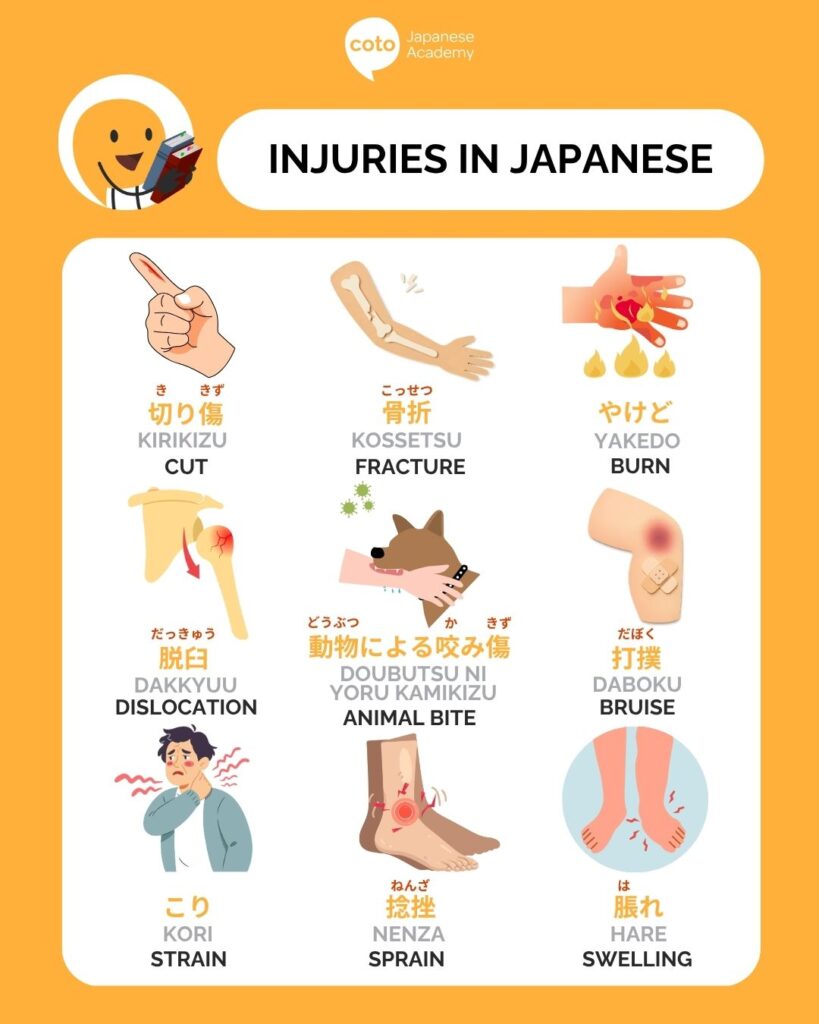
If you have hurt yourself and need to visit a hospital or clinic, knowing how to describe your injury clearly can make a big difference in getting the right treatment quickly. Whether it is a sprained ankle from hiking or a cut from a kitchen accident, here are the keywords and phrases you need to know:
| English | Japanese | Furigana | Romaji |
|---|---|---|---|
| Injury | 怪我 | けが | Kega |
| Sprain | 捻挫 | ねんざ | Nenza |
| Fracture / broken bone | 骨折 | こっせつ | Kossetsu |
| Cut/laceration | 切り傷 | きりきず | Kirikizu |
| Bruise | 打撲 | だぼく | Daboku |
| Burn | 火傷 | やけど | Yakedo |
| Swelling | 腫れ | はれ | Hare |
| Bleeding | 出血 | しゅっけつ | Shukketsu |
| Muscle pain | 筋肉痛 | きんにくつう | Kinnikutsuu |
| Dislocated joint | 脱臼 | だっきゅう | Dakkyuu |
| Wound | 傷 | きず | Kizu |
Here are some natural example exchanges you might have with your doctor when describing an injury:
Example 1:
お医者さん:どうされましたか?
Oisha-san: Dou saremashita ka?
Doctor: What happened?
あなた:階段で転んで、足首を捻挫してしまいました。
Anata: Kaidan de koronde, ashikubi o nenza shite shimaimashita.
You: I fell down the stairs and sprained my ankle.
Example 2:
あなた:ここがすごく腫れていて、動かすと痛いです。
Anata: Koko ga sugoku harete ite, ugokasu to itai desu.
You: This area is very swollen, and it hurts when I move it.
お医者さん:レントゲンを撮りましょう。骨折していないか確認します。
Oisha-san: Rentogen o torimashou. Kossetsu shite inai ka kakunin shimasu.
Doctor: Let’s take an X-ray. We will check whether there is a fracture.
Example 3:
あなた:料理中に火傷をしてしまいました。水ぶくれができています。
Anata: Ryouri chuu ni yakedo o shite shimaimashita. Mizubukure ga dekite imasu.
You: I burned myself while cooking. There are blisters forming.
You can use 怪我をしました (kega o shimashita) or “I injured myself” as a simple and natural catch-all expression at the reception before going into the details with your doctor. Paired with pointing to the affected area, you can communicate the basics of an injury even with minimal Japanese.
Japanese Hospital Phrases for Getting Treatments and Tests
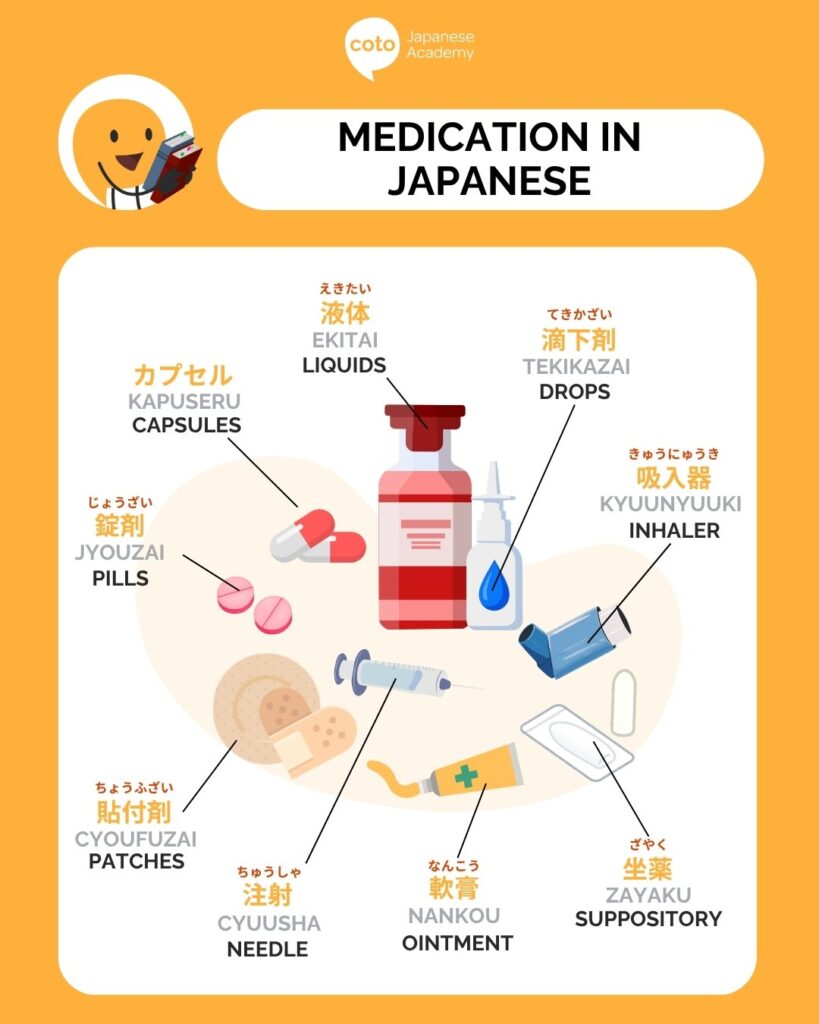
Once your doctor has assessed your symptoms and condition, they will let you know what kind of treatment or tests they recommend. This is when knowing a few key terms can really help you understand what is being prescribed or requested, and feel more confident about the care you are receiving. Here are some common treatments and tests you might hear about during your visit:
| English | Japanese | Furigana | Romaji |
|---|---|---|---|
| Prescription | 処方箋 | しょほうせん | Shohousen |
| Medicine/medication | 薬 | くすり | Kusuri |
| Tablet/pill | 錠剤 | じょうざい | Jouzai |
| Pain killer | 痛み止め | いたみとめ | Itamitome |
| Capsule | カプセル | かぷせる | Kapuseru |
| Ointment/cream | 塗り薬 | ぬりぐすり | Nurigusuri |
| Drops | 滴下剤 | てきかざい | Tekikazai |
| Inhaler | 吸入器 | きゅうにゅうき | Kyuunyuuki |
| Suppository | 坐薬 | ざやく | Zayaku |
| Drip / IV | 点滴 | てんてき | Tenteki |
| Test/check-up | 検査 | けんさ | Kensa |
| X-ray | レントゲン | れんとげん | Rentogen |
| CT scan | CT検査 | CTけんさ | CT Kensa |
| MRI | MRI検査 | MRIけんさ | MRI Kensa |
| Blood test (lab) | 血液検査 | けつえきけんさ | Ketsueki Kensa |
| Blood draw | 採血 | さいけつ | Saiketsu |
| Urine test | 尿検査 | にょうけんさ | Nyou Kensa |
| Shot/injection | 注射 | ちゅうしゃ | Chuusha |
| Pharmacy | 薬局 | やっきょく | Yakkyoku |
| Surgery | 手術 | しゅじゅつ | Shujutsu |
| Referral letter | 紹介状 | しょうかいじょう | Shoukaijou |
| Follow-up appointment | 再診 | さいしん | Saishin |
One very important thing you should keep in mind! So, after receiving your prescription at the hospital, you will need to take your 処方箋 (shohousen), a prescription slip from the Doctor, to a 薬局 (yakkyoku), which means a pharmacy, to pick up your medication. In Japan, hospitals and pharmacies are often separate, so do not leave without your prescription slip!
Usually you can find a pharmacy near the clinic or hospital, sometimes even in the same building since they tend to be affiliated. Now, here are some natural phrases your doctor might use when explaining your treatment, and how you can respond or ask for clarification:
Example 1:
お医者さん:薬を処方しますので、この処方箋を薬局に持っていってください。
Oisha-san: Kusuri o shohou shimasu node, kono shohousen o yakkyoku ni motte itte kudasai.
Doctor: I will prescribe you some medicine, so please take this prescription to the pharmacy.
あなた:わかりました。ありがとうございます。
Anata: Wakarimashita. Arigatou gozaimasu.
You: Understood. Thank you very much.
Example 2:
お医者さん:血液検査をしますので、少し血を採らせていただきます。
Oisha-san: Ketsueki kensa o shimasu node, sukoshi chi o torasete itadakimasu.
Doctor: We will do a blood test, so I will need to take a small amount of blood.
あなた:はい、わかりました。
Anata: Hai, wakarimashita.
You: Yes, understood.
Example 3:
あなた:この薬はどのように飲めばいいですか?
Anata: Kono kusuri wa dono you ni nomeba ii desu ka?
You: How should I take this medicine?
お医者さん:1日3回、食後に飲んでください。
Oisha-san: Ichinichi san kai, shokugo ni nonde kudasai.
Doctor: Please take it three times a day after meals.
Example 4:
あなた:また来院する必要がありますか?
Anata: Mata raiin suru hitsuyou ga arimasu ka?
You: Do I need to come back again?
お医者さん:はい、一週間後にまた来てください。
Oisha-san: Hai, isshuukan go ni mata kite kudasai.
Doctor: Yes, please come back in one week.
Conclusion: Only Minimal Japanese is Needed to Get Treatment at a Hospital
It can definitely be intimidating to go to a hospital in a completely different language, especially in Japanese, but don’t let that deter you from getting the treatment you need. Try to remember a few key phrases from this article, and that should be enough to let healthcare professionals know how to best treat you! Just know that no matter how much Japanese you can speak, no hospital will deny you treatment and will do what they can to ensure you get the care you need.
You can also find English-speaking hospitals and clinics across Japan, which could help reduce language barriers and stress when you visit.
Learn Practical Japanese for Daily Life with Coto Academy!
Practice using practical Japanese phrases for visiting the hospital and other daily life situations with Coto Academy! We offer conversation-focused courses that allow you to actually use real Japanese and develop a real intuition for how to speak naturally. On top of that, our curriculum is very structured, with progressing levels allowing you to see concrete skill development!
We offer a variety of courses, including comprehensive courses covering all skills from reading to speaking, business Japanese, and JLPT preparation. Join us at one of our campuses in Tokyo and Yokohama or online from anywhere around the world!
Ready to sign up or just want a casual chat for more details? Simply fill out the form below, and we will get in touch shortly!
FAQ:
How do you say I am sick in Japanese?
The most natural and widely used expression is 気分が悪いです (kibun ga warui desu), which means “I feel unwell / I feel sick”. For something more specific, you can describe your symptoms directly: 熱があります (netsu ga arimasu), meaning “I have a fever,” or 頭が痛いです (atama ga itai desu), meaning “I have a headache.”
How do you say I am injured in Japanese?
The most natural expression is 怪我をしました (kega o shimashita), meaning “I injured myself / I got hurt”. You can follow it up by pointing to the affected area and saying ここが痛いです (koko ga itai desu), meaning “it hurts here,” which together gives the doctor enough to start asking the right questions even if your Japanese is limited.
Do you need an appointment to visit a Japanese hospital?
For most general hospitals and clinics in Japan, walk-ins are accepted, and you do not need to make an appointment in advance. However, for more specialized clinics such as dentists or gynecologists, a reservation is usually required. When you arrive, head to the 受付 (uketsuke) or reception and explain your reason for visiting. You will likely be asked whether it is your first time at the clinic and asked to fill out a medical questionnaire called a 問診票 (monshin-hyou).
What do you need to bring to a Japanese hospital?
The most important thing to bring is your health insurance card, along with your 在留カード (zairyu kaado), meaning residence card, and cash or a credit card for payment. Note that some smaller clinics do not accept credit cards, so it is always worth having cash on hand. If you do not have Japanese health insurance, a hospital visit typically costs between ¥5,000 and ¥10,000 without coverage.
You May Be Interested in:
What Can You Do At A Kuyakusho: A Survival Guide for Foreigners in Japan
Japanese Words & Phrases to Know for Apartment Hunting in Japan
Guide to Going to the Dentist in Japan
How to Read Japanese Nutrition and Food Labels