






There are many reasons you might want to study Japanese: maybe you want to move to Japan someday or make Japanese friends. Maybe you even want to understand your favorite Japanese anime. But then there’s an issue: you might not have the resources to take an in-person lesson, maybe because there isn’t one nearby, or it might be too expensive, so you are considering studying the language on your own.
Is it really possible to learn Japanese by yourself? What if you don’t have the resources or time to learn Japanese, and if you do have time, what are some of the best ways to learn the language?
We are covering all of those questions in this long guide. By the end of this blog post, you’ll learn about the best tips for Japanese language self-study, common mistakes self-learners make, and whether self-study is effective. We’ll also cover some tips on how to improve your speaking skills, as well as tips for grasping the basics of Japanese.
Is It Possible to Learn Japanese on Your Own?
Pros and cons of self-study
The advantages of self-study include flexibility and cost-effectiveness. Unlike structured classes, self-study can suit those who don’t have much time to learn a language, allowing self-learners to adapt their schedules to their study time. In terms of cost, there are many free resources to learn Japanese, so almost anyone can learn It without sitting in an in-person classroom. You can also set your own goals according to what you want to learn in your Japanese learning journey.
That is not to say that self-study is without its problems. The disadvantages of self-study are that you can easily lose motivation, especially since there are no strict deadlines that you have to meet when you study Japanese on your own. Since you don’t have a deadline to meet, it can be tempting to put off your studies until an undisclosed amount of time. This will eventually lead you to not learn Japanese at all.
Want to study Japanese with us?
When self-study works best (and when it doesn’t)
Self-study works best if you stick to a regular schedule, such as studying every day or on specific days when you have free time. If you can’t find time to study Japanese, then you have to make time. It can even be as simple as studying for 30 minutes during your lunch break or practicing your listening on your commute to work or school (we have a breakdown of how long it would take you to pass the JLPT based on study hours).
Not only do you need to stick to a regular schedule, but you also need motivation and the effort to commit to self-study. The more motivated you are to study, the more effort you will put in. In terms of effort, the best thing you can do is to find the best study methods for yourself, because the last thing you want to do is to become unmotivated because your study methods don’t work or are too redundant.
Set realistic expectations
If you decide to learn Japanese on your own, that’s a great start! You’re going to want to set realistic expectations on your Japanese learning journey. Some things to keep in mind are that just because you’re going to be studying alone, it does not mean that you’re going to reach a high level of Japanese in a short period of time (unless you’re extremely skilled). In addition, don’t think that you’re going to have an easy time learning the language on your own; just like any language, you’re bound to experience plateaus in your studies.
Remember, learning Japanese will not be easy, but with time, practice, and effort, you will eventually reach your goals.
Set Clear Goals Before You Start
Before you start to learn Japanese, you need a clear goal to help you figure out what you need to learn, when you want to achieve that goal, and most importantly, why you want to learn Japanese in the first place. Whether you’re learning Japanese to prepare for the JLPT or to improve your conversation skills, you need to set a goal to motivate yourself. Keeping a study goal in mind will help you stay focused on what you need to learn to achieve it.
To better motivate you to learn Japanese, it might be best to set short-term and long-term goals. Short-term goals might include speaking basic sentences within a month, and long-term goals might include speaking Japanese at a near-native level in 2-3 years. Choose whatever goal best suits your needs and learning goals.
Learning Japanese Basics by Yourself
1. Hiragana and Katakana
Before jumping into any form of language study, you must master the basics. Hiragana and katakana are both Japanese writing systems that you’ll see when you first start learning the language, and these are basically the groundwork for reading in Japanese.
Ideally, you want to be able to master hiragana and katakana within a week, as most Japanese textbooks won’t teach you the writing system. We recommend using mnemonics to memorize each letter, as they can help with retention.
We also recommend watching videos on how to write each character. They will tell you the stroke order in which to write, which is important when you’re writing in Japanese.
2. Basic Pronunciation and Pitch Awareness
While Japanese only has five vowels — a, i, u, e, and o — the pronunciation of Japanese words is totally different from your native tongue. One thing people also forget is that Japanese has long vowels and double consonants. To get a grasp of Japanese pronunciation, it might be best to look up online videos on basic pronunciation.
Don’t spend too long learning how to pronounce words in Japanese; you can improve this later. Ideally, you would be able to learn how to pronounce all Japanese Hiragana and Katakana. Spend at least two to three hours on pronunciation.
2. Basic Kanji
Of course, you can’t learn Japanese without learning some basic kanji. This will take some time, as there are over 50,000 kanji in existence, but you need to learn at least 2,000-3,000 if your goal is to achieve near-native fluency in the language. That’s a lot of Kanji to learn, but since you’re a beginner, we recommend starting with basic Kanji, such as numbers. The more kanji you understand, the more vocabulary you will understand later as you progress through your studies.
How to Learn Japanese Effectively by Yourself
Now that you have grasped the foundations of the Japanese language, it’s time to buckle down and start putting in the real work of learning Japanese grammar and vocabulary, as well as reading, writing, listening, and speaking skills.
An important thing to consider when you’re studying Japanese is the frequency of your study sessions. Should you study Japanese daily or weekly? It depends on the individual and how intense they want their study sessions to be; some might benefit from 3 hours of intense study every day, while others might prefer to study 1 hour a week.
Another thing to consider is how you should approach your learning material. The difference between active learning and passive learning lies in how you engage with the material. Active learning can involve testing yourself on specific kanji, while passive learning can involve just reviewing a vocabulary list or listening to a podcast. While some may think passive learning is an unhelpful way to learn Japanese, others may find it helpful, as active learning can lead to burnout more quickly. Even so, there has to be a balance between active and passive learning.
One final thing to consider is balancing reading, writing, speaking, and listening. All these aspects of language learning are important, but you might find yourself utilizing your speaking skills more than your reading or writing skills. That doesn’t mean reading or writing will be less important than speaking; if anything, they’re just as important as you might find yourself reading and writing text messages in Japanese. So, we recommend balancing all of these aspects of Japanese by not emphasizing one skill over the other.
1. Vocabulary & Kanji Study Tips
When it comes to studying vocabulary, there is debate on how many words you should study per session. Some recommend studying 10-15 words a day, while others say they study 5 words a day to prevent burnout. Others say that you need to study more than 30 words a day, while others don’t keep track of how many words they learn per study session. Some Japanese textbooks, such as Genki, include at least 50 new vocabulary words for you to memorize, and for some, that can be too much.
In our opinion, for self-learners, it depends on the individual’s limits for how much new vocabulary they can handle in each study session. Find what works best for you.
Read More: 100 Basic Japanese Words Beginners Should Know
2. Spaced Repetition Systems (SRS)
Spaced Repetition is a study technique in which you review information at increasing intervals. The idea is that after you learn certain vocabulary, grammar, or kanji, your memory of these words will be high, but as time passes, you’re bound to forget about them. When you go to review the material that you studied, you increase the time in between reviews for material that you can recall without using your notes. This technique can help review material you have difficulty mastering.
We recommend SRS software like Anki to help you revise content, as its algorithm will sort cards based on how difficult you found it to memorize that card. What’s better is that you can customize each flashcard to have audio or images, so you can input an image associated with that particular word or even have the pronunciation of that word played out. (Don’t forget to check our guide on recommended Anki decks to learn Japanese.)
3. Common Mistakes
A common mistake when studying Japanese is learning unrelated vocabulary or kanji that you’re not going to use in your daily life. Of course, it’s important to learn a variety of vocabulary to help you navigate daily conversations in Japanese. Still, if you focus on learning extremely specific vocabulary that’s rarely used, or vocabulary that you’re not interested in, then it might be difficult to remember them.
We recommend learning specialized vocabulary related to your interests, in addition to the common vocabulary used by most Japanese people. Learning about specific vocabulary that is related to your interests may motivate you to learn more about a specific topic in Japanese.
How to Avoid Burnout

It can be difficult to avoid burning out when you’re learning Japanese, as you might feel tempted to reach your study goal faster than expected. You might feel like you need to study and memorize a ton of vocabulary because you want to immediately understand what native Japanese speakers are saying from the start, but that’s just going to lead to burnout faster.
If you want to avoid burnout, try adding variety to how you learn vocabulary. You could learn vocabulary from watching your favorite Japanese TV series, listening to Japanese music, or playing video games in Japanese. It can also come from listening to Japanese podcasts; find a way to make your learning more engaging rather than relying on flashcards or reading blocks of text. Most importantly, remember to take study breaks so you can return to your Japanese studies with a fresh mind.
How to Practice Speaking Japanese When Studying Alone
Speaking the language is important if you want to improve your Japanese skills, since you’re going to be interacting with other Japanese speakers in the future. Here are some ways that you can practice your speaking skills:
1. Shadowing
This is a technique that involves mimicking the target language that you’re listening to. It can improve your pronunciation and listening skills by helping you practice saying words correctly. In addition, you might also get an idea of how Japanese people speak to each other if you mimic how they talk as well.
To effectively shadow, we recommend playing your favorite Japanese TV series, movie, or anime in the background and mimicking the dialogue of your favorite character. You might have a hard time trying to mimic their dialogue at first, but remember, practice makes perfect, and you don’t have to mimic their dialogue perfectly. Repeat as many times as needed until you can keep up with the character.
2. Talk to Yourself
Okay, hear us out. Speaking to yourself might seem weird at first, but listening to yourself speak in Japanese is one way to improve your speaking and listening skills. Just talking to yourself about what you did on a specific day, such as studying or cooking, can help you get used to hearing the language every day. Not only that, but you can pay attention to your Japanese pronunciation so you can find out what you need to improve on in the future.
Talking to yourself can help with language output, but you need to supplement that with Japanese immersion, whether it be from consuming Japanese media or talking to others in Japanese.
3. Online Tutors
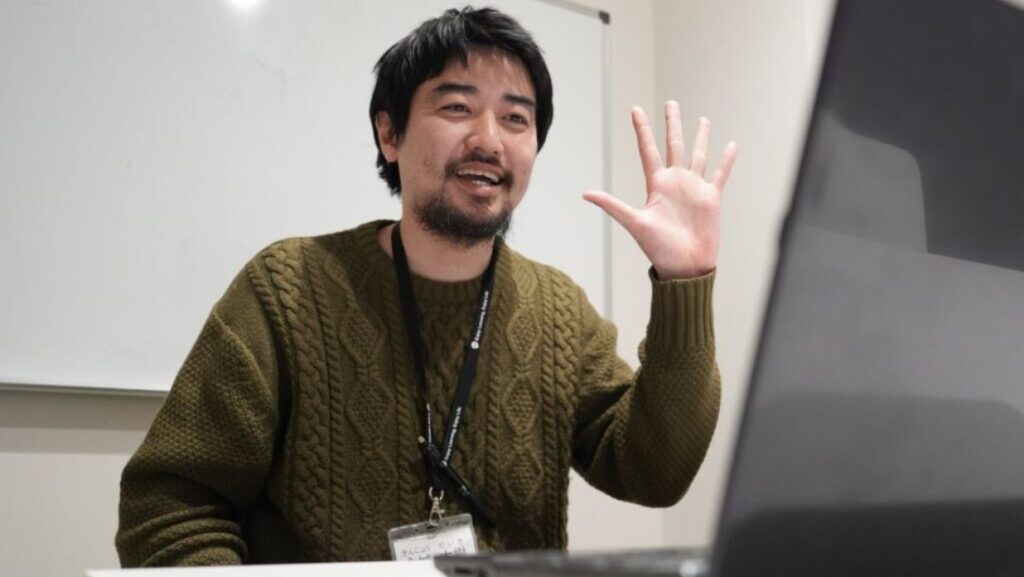
Speaking to yourself can only get you so far in terms of improving your Japanese. If you want to practice your speaking skills with another person, what better way to do so than to get an online tutor? For example, Coto Academy has an online school that offers private lessons with professional tutors. You can create a free account here.
Not only will you get feedback to improve your speaking skills, but you will also have a sense of structure since you can plan a lesson or a series of topics to talk about when you meet them regularly.
Want to study Japanese with us?
4. Language Exchange
Can’t afford a tutor? Language exchange is a cheaper yet effective way to improve your speaking skills. There are so many options for language exchange, from apps to in-person events. What’s better is that it can help you make language-learning friends through language exchange, too! Choose whatever option suits you the best.
Some apps that we recommend for language exchange include HelloTalk, Tandem, and Lingbe. Check out our guide on where to find Japanese language exchange events in Japan.
Common Mistakes Self-Learners Make When Learning Japanese
1. Studying too much grammar
Grammar is important to learn, but emphasizing learning too much grammar can make it difficult to form sentences based on the topics that are being discussed amongst your peers. This is why learning vocabulary is important, so that you can speak about a variety of topics in Japanese. We recommend balancing studying grammar and vocabulary so that, as you learn about the different ways to communicate your thoughts and feelings about a specific topic, you can also learn vocabulary that helps you talk about a range of topics in the future.
2. Ignoring listening and speaking
While reading and writing are important to learning a language, so are listening and speaking. In fact, since you’re going to be speaking and listening in Japanese more than you’re going to be reading and writing, ignoring those two aspects of language learning will make it difficult to comprehend the language. Listening to Japanese is essential for understanding it, and speaking it is important for daily conversations and social situations.
3. Not reviewing enough
Revision is important to learning Japanese. You can’t simply absorb information in your head and remember it indefinitely. You’re bound to forget certain vocabulary and grammar if you don’t use them often, so we recommend reviewing daily to help retain them. Programs like Anki can help you review grammar and vocabulary since they rely on spaced repetition to help you remember what you need to improve on.
4. Chasing “perfect” fluency
While reaching near-native fluency is not impossible when you’re self-learning, remember that learning a language is not a race; it’s a marathon. Chasing after perfection in your Japanese studies will eventually lead to burnout, and the last thing you want to do is give up on learning Japanese entirely, all because you couldn’t reach “perfect” fluency. Remember the original goal you set for yourself, work towards it no matter how long it takes, and don’t be afraid to make mistakes.
How Long Does It Take to Learn Japanese by Yourself?
The short answer to how long it takes to learn Japanese is: it depends on the learner and how much time and effort they spend on learning Japanese.
The long answer is that there are so many factors that can contribute to the speed at which you progress in your language studies. The beginner to conversational level timeline can vary from learner to learner, as some might have a better grasp of the basics than others. For example, Chinese native speakers might learn Japanese faster because they are well-acquainted with kanji, which is taken from the Chinese language.
In addition, time and effort spent on learning Japanese can affect how fast you learn the language, but even with time and effort, someone’s understanding of the learning material might affect progress as well.
What “fluency” realistically means
Some might define Japanese fluency as reaching a near-native level in all their skills. Others might define fluency as being able to pass a certain JLPT level or as being able to hold a conversation for long periods. Realistically, fluency is as you define it, as long as it’s within your study goals. You might be fluent in speaking, but you might struggle with reading or writing in Japanese, which could give you some ideas for what you need to improve. You don’t have to compare your fluency with others, because that will eventually lead to burnout.
Should You Combine Self-Study with Classes?
Sometimes, self-study can only get you so far in your Japanese learning. With self-study, there’s a chance that you might not see any improvements in your speaking, reading, or writing. You might want to consider taking classes if that’s the case.
Structured classes might help you to learn faster because you’ll be able to interact with not just the teacher, but your classmates as well. This is a great opportunity to improve your speaking with your peers, as the teacher will also give you feedback on how to improve. In some classes, you will also be given homework, which, to some, can help you apply the knowledge learned during the lesson. Getting feedback after completing your assignments can also help you identify your mistakes and improve, and in turn, accelerate your learning progress.
Benefits of conversation-focused schools
You’re going to speak Japanese more than you’re going to read or write in Japanese, so conversation-focused language schools like Coto Academy can help you to improve your speaking skills. The benefits of conversation-focused classes are that not only will you get to converse with your classmates, but also with the teacher. Such classes are structured to facilitate conversation amongst the class, allowing you to share your thoughts and feelings with others whilst receiving feedback on how to improve.
Want to take online courses to improve your Japanese?
Coto Academy’s online Japanese class allows you to take classes based on your skill level, intensity, and availability. All lessons have small class sizes and are taught live by native Japanese teachers, ensuring personalized attention for your studies. What’s even better is that you can choose what class suits your learning goals, so you might pick a class that focuses solely on JLPT preparation, or you might pick a class that focuses on improving your conversation skills!
Conclusion: Yes, it’s possible to learn Japanese by yourself.
Learning Japanese on your own doesn’t have to be impossible. With the right amount of effort, time, and commitment, you might be able to reach near-native fluency in Japanese.
However, you don’t have to do it entirely alone. When you’re ready to sharpen your speaking skills and gain the confidence to use Japanese in the real world, Coto Academy is there to help you cross the finish line. You can contact us below for a free consultation and level check, and talk directly with our staff about our courses and school locations!
FAQ
What are some resources you recommend for learning Japanese by yourself?
It depends on the individual. Some may want to use traditional textbooks, while others might want to use only apps to study Japanese. Choose what’s best for you.
Is 1 hour a day enough to learn Japanese?
It can depend on the individual; some may find it easy to study for more than an hour, while others need to spend less than an hour studying Japanese. Set an appropriate time limit to study Japanese according to your needs.
What if I don’t see improvement in my Japanese skills despite working hard?
If you don’t see any improvement in your Japanese ability, it might be time to switch up your study techniques or go for structured classes. Either way, keep trying until you find what study technique works for you.
When is the best time to start speaking Japanese?
There’s some debate as to when you should start speaking Japanese. Some recommend speaking the language as early as possible to immerse yourself and learn Japanese faster. Others recommend that you only start speaking Japanese when you’ve built a solid foundation in the language, and that can mean knowing some phrases, as well as some vocabulary and grammar. We recommend that you try to speak Japanese as soon as possible, using what you already know. Don’t try to talk using complex vocabulary or grammar that you don’t know just because you want to impress others.