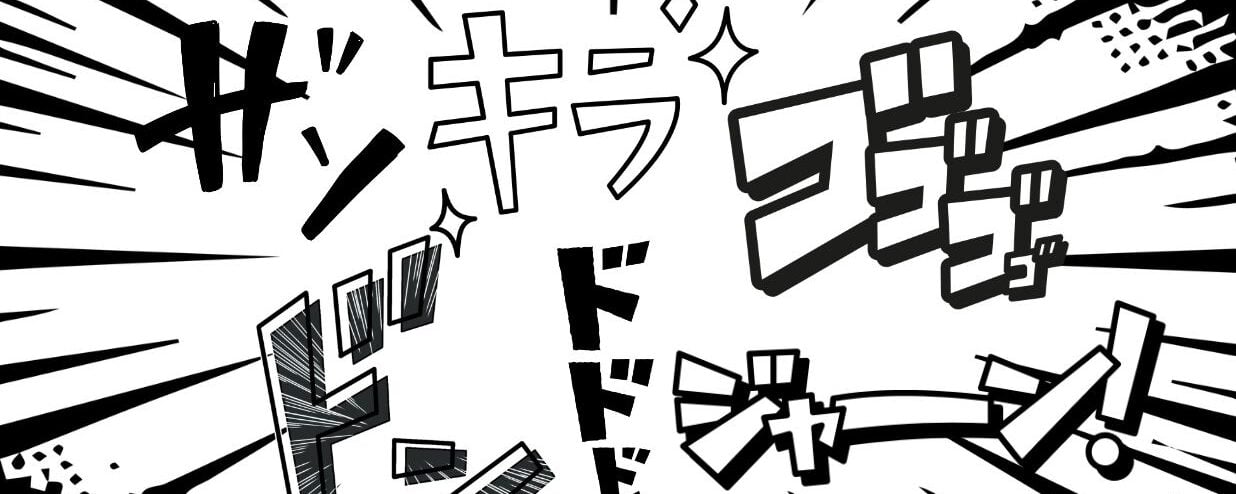


A big part of Japanese manga is the stylish typography mimicking sound effects that bring the panels to life, sometimes taking more space than the speech bubbles themselves. Manga sound effects come from the wide range of onomatopoeia that exists in the Japanese language.
Depending on the manga, you might see these sound effects written in katakana within the panels (sometimes spilling over to others). So, you might be wondering what they mean, or maybe you want to try reading manga in Japanese. Either way, let’s break down manga sound effects and find out what they really mean.
What are Manga Sound Effects?
As mentioned, manga sound effects are mostly Japanese onomatopoeia that mimic noises. However, that’s not all that they are; they also imitate emotions (like nervousness), states/moods, or actions like staring. You probably noticed them stylishly decorated across manga panels, and they are its common to leave them in their original Japanese since it could end up costing more to edit them into English.
Often, sound effects are part of the manga’s artwork, so changing them can alter the illustrator’s original artistic intent. Additionally, many Japanese onomatopoeia don’t actually have English equivalents. There is a wide variety of Japanese onomatopoeia beyond just mimicking sounds or noises. As a result, manga sound effects fall into 3 categories:
1. Giongo (擬音語): Real World Sounds
Giongo are manga sound effects that mimic the noises you may hear from nature or the external world in general, such as raindrops, something snapping, or physical objects thudding.
2. Giseigo (擬声語): Sounds of People or Animals
Giseigo imitate the sounds of people or animals, like laughing and crying, or, in the case of animals, barking or roaring.
3. Gitaigo (擬態語): Emotions/States/Visual Events
This category of sound effects is technically not even sounds or noises. They’re generally onomatopoeia that attempt to capture emotional states, or even visuals like something or someone “sparkling.”
Top 30 Common Manga Sound Effects You Need to Know
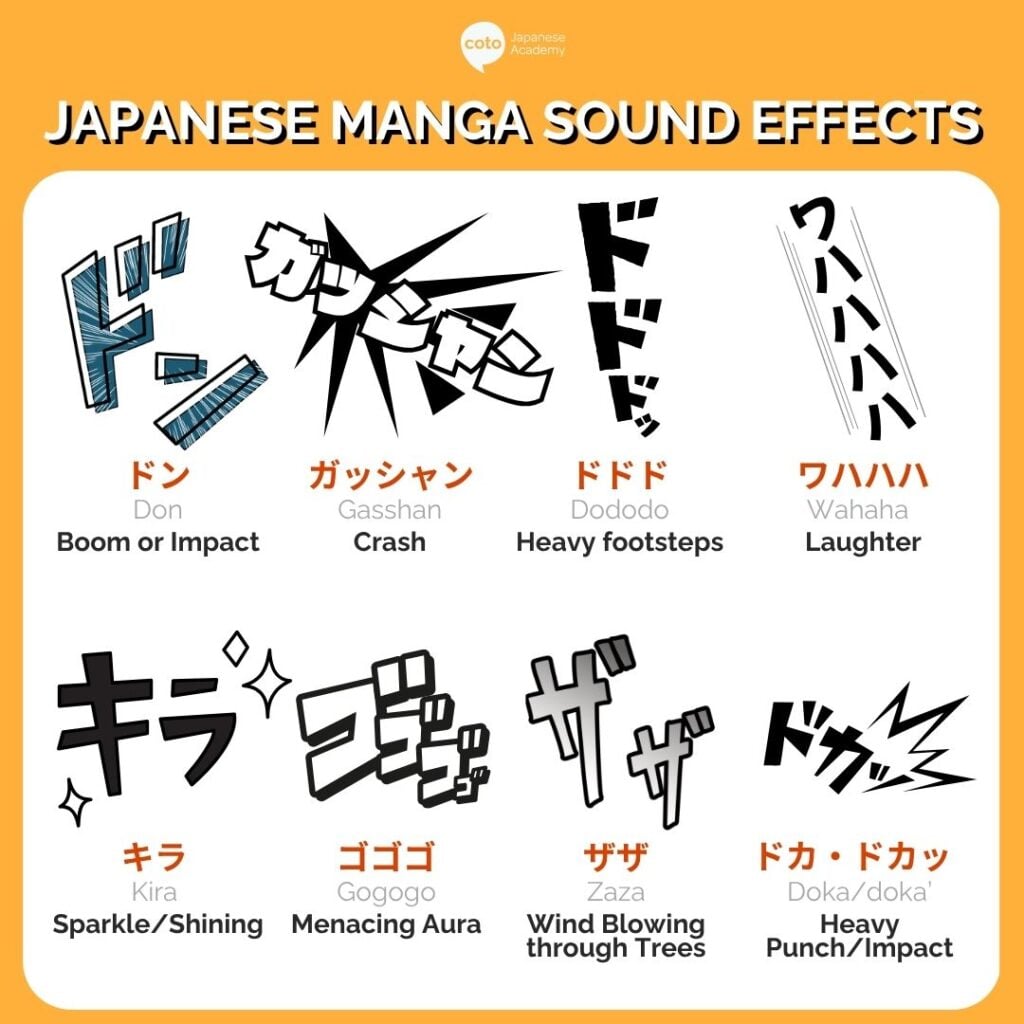
Now, let’s get into the most popular manga sound effects that you most likely ran into while reading different manga! Many of them might be familiar if you know some onomatopoeia, but there are some that are more common in manga.
We will divide the most common sound effects into the general categories: giongo, giseigo, and gitaigo.
Most Common Giongo Manga Sound Effects
1. スパン (supan): Sword Slashing
The sound of sword slashing through something, like a samurai slashing through their enemies. Similar to the English onomatopoeia “shpa.”
2. ドン (don): Boom or Impact
ドン is an onomatopoeia mimicking the sound of a boom or an impact. It’s not too surprising that this is a common sound effect in manga.
3. ボカ・ドカ (boka / doka): Punch/heavy punch
ボカ imitates the sound of a punch or thudding, while doka imitates the sound of a very heavy punch or impact. This sound effect is quite common in action-packed manga with lots of fighting.
4. ガッシャン (Gasshan): Crash
ガッシャン, often drawn in huge, dramatic text across the panel, is the sound effect for a huge crash, like metallic objects colliding, breaking glass, or destructive impact in general.
5. ドドド (dododo): Heavy footsteps
ドドド is a Japanese onomatopoeia that imitates the sound of loud or heavy footsteps, often moving rapidly. It can also be the sound of a rushing crowd or pounding impacts. However, in the manga Jojo’s Bizarre Adventure, it’s used to capture an eerie, unexpected, or bizarre occurrence rather than footsteps.
6. ザザ (zaza): Wind Blowing through Trees
ザザ is the sound of wind blowing through tree branches, causing the leaves to rustle. It’s common in manga sound effects to immerse the reader in the story’s atmosphere.
7. ダッ (da): Quick movement
ダッ is a very common manga sound effect that describes quick, sudden movement like dashing or someone taking off running or sprinting.
8. ザーザー (zaazaa): Heavy Rain/Pouring
Not to be confused with ざざ (zaza), ザーザー is the sound of heavy rain pouring down or rushing water. It’s a common manga sound effect to help establish the environment and make it feel alive.
9. バキ (Baki): Breaking/snapping
バキ is the sound of breaking or snapping, often used in the context of bones, wooden beams, or breaking something.
10. ピカッ (pika): Sudden Flash/Spark
You probably recognize this one from the Pokemon, Pikachu, whose name partly comes from this onomatopoeia. ピカッ describes the sound of a sudden flash or spark, like a camera flash or lightning bolt.
Most Common Giseigo Manga Sound Effects
11. ワハハ (wa ha ha): Hearty Laugh
The sound of a big, confident laugh. It’s often used for loud, cheerful characters or a boss-type character laughing at their own jokes, and it’s one of the most recognizable laughs in manga.
12. ゲラゲラ (gera gera): Laughing Out Loud
ゲラゲラ imitates someone laughing uncontrollably, like when something is so funny they can’t stop. You’ll often see it in comedy manga when a group of friends bursts out laughing together.
13. クスクス (kusu kusu): Giggling
クスクス is a quiet, muffled giggle, usually when someone is trying not to laugh out loud. It can be playful, or sometimes a bit mocking, like when a character is laughing at someone behind their back.
14. シクシク (shiku shiku): Quiet Sobbing
シクシク is the sound of someone crying softly. It’s common in emotional or dramatic scenes, and it’s often used for a character who is sad but trying to hold it in.
15. ヒソヒソ (hiso hiso): Whispering
The sound of people whispering or talking quietly to each other. It’s often used when characters are gossiping or sharing a secret, and it usually appears in small text to show the low volume.
16. ハァハァ (haa haa): Panting
ハァハァ is the sound of heavy breathing, usually because a character is exhausted after running or fighting. It’s very common in sports and action manga.
17. ゴクリ (gokuri): Gulp
ゴクリ is the sound of swallowing, especially when someone is nervous, scared, or anxious. It’s often used right before something dramatic happens, like a big reveal or a tense standoff.
18.ワンワン・ニャー (wan wan / nyaa): Dog Barking / Cat Meowing
A common onomatopoeia, ワンワン imitates a dog barking, while ニャー imitates a cat meowing. These are the classic animal sound effects in manga, and they’re often used for cute pet moments or to set a scene in a neighborhood.
19. ミンミン (min min): Cicadas
ミンミン imitates the buzzing of cicadas, which are famous for their loud summer chirping. In manga and anime, it’s a common way to show that a scene takes place in the middle of summer, even without any other hints.
20. ゲロゲロ (gero gero): Frog Croaking
ゲロゲロ mimics the croaking of frogs, similar to ribbit in English. While it’s usually used for frogs, it can also represent the sound of disgust, something gross, or vomiting.
Most Common Gitaigo Manga Sound Effects
21. ドキドキ (doki doki): Heart Pounding
Probably one of the most well-known onomatopoeia to Japanese learners, ドキドキ is the sound of a racing heartbeat, usually because a character is nervous, excited, or in love. It’s one of the most common onomatopoeia you’ll hear in daily conversation, but it’s also a very common sound effect in manga, often appearing right when a character meets their crush.
22. キラキラ (kira kira): Sparkling
キラキラ describes something sparkling or shining. In manga, you’ll often see it around characters or objects meant to look beautiful, like the eyes of a shoujo heroine.
23. ゴゴゴ (gogogo): Menacing Aura
Although it doesn’t imitate a real-life noise, it shows a threatening, intense atmosphere, usually when a powerful enemy appears or a big showdown is about to start. This manga sound became famous from the action manga, JoJo’s Bizarre Adventure.
24. シーン・しぃ… ん (shiin/shi… n): Silence
シーン, sometimes written in hiragana as しぃ… ん, is the sound of deafening silence. It’s used when the room goes completely quiet, such as after an awkward comment or an eerily silent village that was supposed to be full of people.
25. ジー (jii): Staring
ジー shows a character staring at someone or something intently. It’s often used when a character is watching someone closely, or when they’re being stared at and feel uncomfortable.
26. ニコニコ (niko niko): Smiling
ニコニコ describes someone smiling happily or cheerfully. It’s commonly used to show a friendly, cheerful character, but it can also describe a smile that hides something.
27. イライラ (ira ira): Irritated
イライラ captures the feeling of being annoyed or on edge. You’ll see it when a character is losing patience, like when they’re stuck waiting, or someone is getting on their nerves.
28. ワクワク (waku waku): Excitement
ワクワク shows the excited, fluttering feeling you get when looking forward to something. It’s common in adventure manga, usually when a character is about to start a new journey or try something new.
29. ゾクゾク (zoku zoku): Shivers or Chills
ゾクゾク describes a shiver running through the body, caused by fear, excitement, or a chill. It’s common in horror and thriller manga when something eerie happens.
30. ギク (giku): Sudden Guilt/Shock
ギク describes sudden guilt (like being caught red-handed), a startled jolt, shock, or an awkward realization. You often see this drawn in manga with a sweat drop or a stiff posture.
Conclusion: Manga Sound Effects are a Fun Way to Learn Japanese Onomatopoeia!
Many manga sound effects use common Japanese onomatopoeia found in daily Japanese conversation. There are quite a few onomatopoeia that don’t really translate well into English, so they can be a great window into unique expressions that only exist in Japanese! Whether you want to learn to read katakana or use onomatopoeia naturally in Japanese, learning to read manga sound effects is a great, fun way to do it!
Learn Japanese Onomatopoeia with Coto Academy!
Join Coto Academy to learn how to use onomatopoeia naturally in Japanese conversation, or even writing (especially if you plan to create manga)! If you want to learn how to speak Japanese like a native, you should master using onomatopoeia, which are part of daily Japanese expression.
We have courses that cover conversations, JLPT, and comprehensive intensive classes that teach everything from writing to speaking. So, visit one of our campuses in Tokyo and Yokohama or join us online from anywhere in the world. If you’re ready to sign up, or if you just want to have a casual chat, simply fill out the form below!
FAQ:
What are manga sound effects called?
They’re a type of Japanese onomatopoeia, called オノマトペ (onomatopoe) in Japanese. They’re usually written in katakana and drawn directly into the manga panels as part of the artwork.
Why aren’t manga sound effects usually translated into English?
Sound effects are often part of the artwork, so editing them can change the artist’s original intent, and it can also cost more to redraw them. Many Japanese onomatopoeia also have no direct English equivalent.
Can sound effects describe feelings, not just sounds?
Yes. Gitaigo capture emotions and states, like ドキドキ (doki doki) for a racing heart or イライラ (ira ira) for feeling irritated, even though there’s no real sound.
Can I use manga sound effects to learn Japanese?
Yes, they’re a fun way to pick up katakana and everyday expressions. Just keep in mind that some are mostly used in manga, so you may not hear them often in daily conversation.
Read more:
Phrases from Japanese Anime You Can Use