


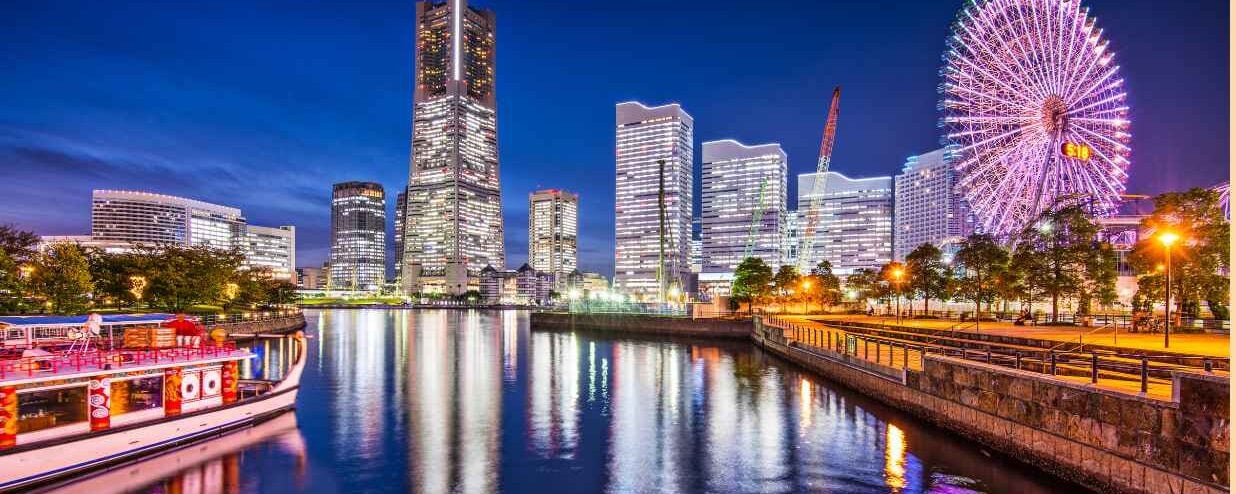


If you’ve decided to finally make a deep dive into mastering your language learning in Japan, you might be considering moving to the capital, Tokyo, or its nearby neighbor, Yokohama. Tokyo is more suited for those who like living at a fast pace and desire to be at the heart of all the action with all the bustling streets and metro lines. Yokohama is a better fit if you appreciate wider streets, a slower pace, ocean views, and more modern infrastructure. Both are big, modern, metropolitan cities offering a high standard of living, yet a very different atmosphere. Coto Academy has had schools in both cities for many years now, so we know all the lifestyle perks, which we will share with you here.
Schools and Classes in Yokohama and Tokyo
Both Tokyo and Yokohama offer plenty of high-quality options for Japanese schools, but two key factors should help you decide. Accreditation and class size. Japan has recently overhauled its language school accreditation requirements to strict new standards. So, it’s best to check whether schools you are interested in have received the MEXT accreditation that will be mandatory by 2029. Class size also has a strong impact on learning, with schools offering different learning objectives and environments. Conversation-focused schools such as Coto Academy cap class sizes at 8 students, while larger schools such as KAI, ARC, and ISI have caps between 16 and 20 students.
Tokyo Japanese Language Schools
| School Name | Class Size | Visa Sponsorship | MEXT Accreditation | Ward / Location |
|---|---|---|---|---|
| Coto Academy | Max 8 | No | No (Not required for non-visa schools) | Multiple (Shinjuku, Shibuya, Minato, Chiyoda) |
| Coto Japanese Institute | 10 to 16 | Yes | Yes | Kokubunji (Western Tokyo) |
| ISI Language School | 15 to 20 | Yes | Yes | Multiple (Shinjuku, Toshima, Shibuya) |
| KAI Japanese Language School | Max 16 | Yes | Yes | Shinjuku |
| Akamonkai Japanese Language School | 15 to 20 | Yes | Yes | Arakawa |
Yokohama Japanese Language Schools
| School Name | Class Size | Visa Sponsorship | MEXT Accreditation | Ward / Location |
|---|---|---|---|---|
| Coto Academy Yokohama | Max 8 | No | No (Not required for non-visa schools) | Yokohama Station Area (Nishi Ward) |
| Yokohama International Education Academy (YIEA) | Approx. 20 | Yes | Yes | Nishi Ward |
| Yokohama Design College (YDC) | Approx. 20 | Yes | Yes | Nishi Ward |
| Japan Language School Yokohama (JALAS) | 15 to 20 | Yes | Yes | Minami Ward |
| Yokohama International Language Institute | 15 to 20 | Yes | Yes | Minami Ward |
Cost of Living in Yokohama vs Tokyo
One of the first things you might consider beyond the schools themselves is the affordability between Tokyo and Yokohama. Tokyo has the highest cost of living in Japan. Yokohama, located in the neighboring Kanagawa prefecture, is 13% cheaper overall, and this applies directly to rent prices. This data is based on apartment listings available to foreigners in all of the wards (区, ku) that Coto Academies are located in.
According to the 2026 SUUMO real estate portal’s reports, monthly apartment rent in Yokohama ranges from ¥45,000 to ¥600,000, with the average being around ¥70,000 (~$440) per month. This rent mostly reflects the port-side Minato-Mirai neighborhood in Yokohama. Here are the differences in rent between the most popular wards in Tokyo and Yokohama.
| Average Rent of Most Popular Wards in Tokyo (1K/1DKRoom) | Average Rent of Most Popular Wards in Kanagawa (1K/1DKRoom) | ||
| Nerima | ¥79,000 | Fujisawa City | ¥68,000 |
| Setagaya | ¥90,000 | Naka, Yokohama | ¥79,000 |
| Shinjuku | ¥107,000 | Kanagawa, Yokohama | ¥78,000 |
| Suginami | ¥85,000 | Tsurimi, Yokohama | ¥77,000 |
| Minato | ¥121,000 | Kawasaki, Kawasaki City | ¥79,000 |
For apartments in central Tokyo, rents range from ¥45,000 to ¥3,600,000, with the average ranging from ¥110,000 to ¥180,000 (~$695-$1137), depending on the neighborhood. According to Numbeo, which uses crowdsourced data on the cost of living across cities, groceries are 11% cheaper and restaurants 8% cheaper in Yokohama compared to Tokyo.
Lifestyle and Daily Life in Tokyo vs Yokohama
Despite their close proximity, Yokohama and Tokyo offer quite distinct lifestyles. So, let’s explore the differences between them and what unique things there are to do.
Daily Life and Things to Do in Tokyo
Tokyo has endless, small, unique neighborhoods. You will find yourself among small, fast-moving, crowded streets, where you can find anything you could imagine. Tokyo never sleeps, perfect for those feeling youthful and seeking the peak of iconic city culture. Just keep in mind, if you are on a budget, lower rent prices will take you far from the city center. So what are some key areas and neighborhoods in Tokyo?
Shibuya, Harajuku, & Shinjuku: A Mix of Tradition and Modern Nightlife
Known for their youth culture, fashion, shopping, and endless food and entertainment options. These areas are home to some of the most popular restaurants in Tokyo, perhaps even Japan. These districts are known for their nightlife, but surprisingly also for some of their traditional attractions. The Meiji Jingu Shrine, located in Harajuku, is one of the most famous in Japan, and is surrounded by a vast evergreen forest. It’s also located next to Yoyogi Park, which is a massive public park that touches both Shibuya and Harajuku, and is a popular destination for hanami (tree viewing) during sakura season, and for sports and club gatherings.
Asakusa & Tokyo Tower: Beautiful Upscale Cityscape Views & Iconic Attractions
If you want to see Tokyo’s more traditional side alongside its skyline, these two landmarks are a great pair. Asakusa is best known for Senso-ji Temple, Tokyo’s oldest temple, which you reach by walking through the giant red Kaminarimon gate and down Nakamise-dori, a shopping street lined with snack stalls and souvenir shops. It’s a fun place to try traditional Japanese sweets, rent a kimono, and take photos. Just across the Sumida River, you can also see the Tokyo Skytree, one of the tallest towers in the world.
Tokyo Tower, on the other hand, is located in the Minato area and has been a symbol of the city since 1958. Its bright orange and white frame looks stunning at night, and the observation decks offer sweeping views of the city. The surrounding area is also home to upscale restaurants, cafes, and nearby Zojoji Temple, so it’s a nice spot for a relaxing day out or a special occasion.
Akihabara & Ikebukuro: Otaku Cultural Hubs
For anime, manga, and gaming fans, these two districts are a must-visit. Akihabara is the most famous otaku hub in Japan, packed with multi-story arcades, retro game shops, figure stores, and electronics shops. It’s also known for its maid cafes, where staff dress up in costume and entertain guests, so it’s a unique experience to try at least once.
Ikebukuro is a bit less touristy but just as fun, especially for fans of anime and manga. It’s home to Otome Road, a street full of shops aimed at female fans, and the large Animate flagship store. Sunshine City, a large shopping complex, also has stores, restaurants, and an aquarium. Both areas are lively, affordable, and great places to meet other fans, which is perfect for students.
Azabu-Juban, Roppongi, & Futako-Tamagawa: Top Picks for Expat Communities
For those who seek expat communities, expensive neighborhoods such as Azabu-Juban, Roppongi, and Futako-Tamagawa offer lots of English support and have many foreign residents. Roppongi in particular is known for its top-shelf eateries, museums, and international clubs.
Daily Life and Things to Do in Yokohama
Yokohama offers a noticeably more relaxed pace of life built around its heritage as a port city. There is a bit more of this old architecture preserved than in Tokyo. There is a fresh ocean breeze, big parks, and wide streets. Minato-mirai has the historic Red Brick Warehouse, a roller coaster park, and a large ocean-facing promenade. For culture, visit Sankeien, a large and beautiful Japanese-style garden. Yokohama, due to its history as an international port city, of course has large foreign communities, such as the largest Chinatown in Japan. Our students from the Yokohama campus often tell us how they appreciate the less crowded sidewalks and relaxing by the ocean.
Part-time Work and Networking in Tokyo vs Yokohama
There are many opportunities for part-time work in either city. To make some pocket change and practice speaking skills at the same time, part-time jobs at restaurants and konbini are plentiful. Tokyo, of course, has more networking opportunities, being the entrepreneurial, political, and technological center of Japan. If your goal is to transition directly into an international company from language school, Tokyo is your best bet. Yokohama has a well-defined manufacturing, shipping, and IT economy. However, most corporate offices for international companies will be in Tokyo.
Getting Around in Tokyo vs Yokohama
One important thing to mention when picking a home base is that you are not necessarily restricted to one city or the other. Yokohama and Tokyo are less than a half hour apart by train. Shibuya is a 27-minute ride from Yokohama, costing only ¥309($1.95) for the trip, making events or viral food spots very accessible. Either city has a well-developed, wide-reaching public transportation system with equivalent pricing. Alternatively, Yokohama is a common weekend getaway for those who get tired of life in the concrete jungle of Tokyo.
Who Should Pick Which: Tokyo vs Yokohama
Picking between living and learning in Tokyo vs Yokohama really comes down to your personality, budget, and career priorities.
You Should Pick Tokyo if:
- You thrive in fast-paced, energetic environments.
- You are comfortable with always crowded streets and transport.
- You are pursuing aggressive career development.
- You have the budget for a higher cost of living.
You Should Pick Yokohama if:
- You are more comfortable with a slower, relaxed pace of life.
- You appreciate a well-planned city, architecture, and history.
- You feel at home living near the ocean.
- You don’t mind an occasional half-hour commute to Tokyo.
Conclusion
Both cities have so much to offer in their own unique ways while maintaining the same high standard of living. Tokyo is one of the world’s top destinations, with the most Michelin-starred restaurants, the coolest neighborhood (Jimbocho), and a never-slowing, chaotic pulse. Yokohama is a beautiful, well-planned city with Western-inspired architecture, easy access to the ocean, and a calm environment.
We at Coto Academy believe your environment shapes your learning. This is why we have campuses in both major cities and try our best to inform and support you as you make this important decision. Whether you want to practice Japanese under the neon glow of Shinjuku or the fresh air of Yokohama’s bayside parks, we have a school and a community waiting for you.
FAQ
Is Yokohama cheaper than Tokyo?
Yes. According to crowdsourced data, Yokohama’s cost of living is about 13% lower than Tokyo’s, including rent.
Is Yokohama good for international students?
Absolutely. Yokohama has a rich culture and history, offers a soft landing and introduction to Japan, and a romantic atmosphere through the Minato-Mirai parks.
How far is Yokohama from Tokyo?
Less than 30 minutes by train. The Toyoko Line connects Shibuya to Yokohama Station in just 27 minutes. Shinagawa is 17 minutes from Yokohama Station by the Keikyu and Tokaido Lines.
Are there fewer Japanese schools in Yokohama?
Yes, compared to Tokyo, Yokohama has fewer language schools. However, at Coto Academy’s Yokohama school, this creates a tighter-knit community.
Which city is better for learning Japanese?
Neither. Both cities speak the exact same standard Kanto dialect. The difference comes down to your lifestyle preferences and what you make of your living situation.
