



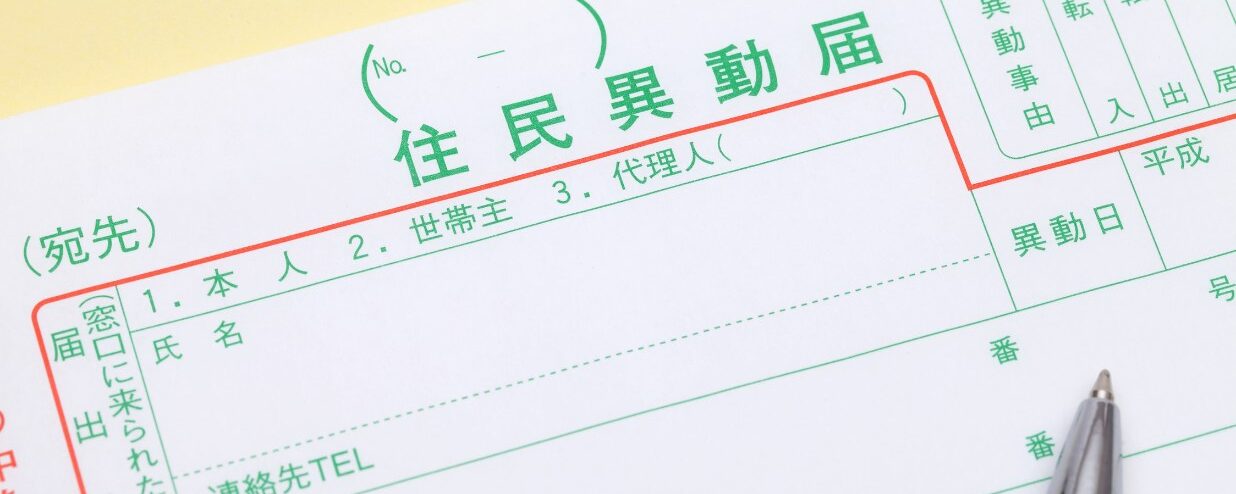


Writing your address in Japanese is essential for living in Japan, from completing administrative procedures at the Japanese city hall to using postal services. The first thing you might notice about Japanese addresses is that they start with the largest unit (region/city) and end with the smallest (street name). So, in order to write an address in Japanese, there are a few things you might need to know when it comes to Japanese street systems and wards.
So, how do you actually write your address, and is it completely different than writing your name in English? Let’s find out everything you need to know!
Japanese Address Converter
So, before we break down how to actually write your address in Japanese, if you’re in a bind, you can use our Japanese address converter below! Simply enter the address you need in English or Romaji, and the converter will provide it in the correct Japanese format.
Whichever address you input will be reordered into proper Japanese format (postal code → prefecture → city/ward → block/house number → building/room), plus a breakdown table. It will also flag anything ambiguous, like a missing postal code.
Wondering how to write your name in Japanese? Check out our blog: What is Your Name? Japanese Name Converter
Are Japanese Addresses Written Differently Compared to English?
When writing addresses in Japanese, there are a few things to keep in mind to prevent confusion. Japanese addresses are written starting with the largest area, generally the city, 都 (to), or the prefecture, 県 (ken). At the end, you write the smallest area, usually your apartment name and room number or house name. In other countries, like the United States, this is the opposite: you start with the smallest area and work up to the largest.
Also, keep in mind that addresses rarely use street names (except for major roads in some cases). This is because Japanese cities are generally divided into blocks and sub-areas, so most addresses use block names rather than road names. Here is how a typical Japanese address might look:
〒151-0073
東京都渋谷区笹塚1-2-3
Now, let’s break down this address piece by piece, starting from the top, so you can learn how it works to write your address as well.
1. Writing Japanese Postal Codes
Postal codes are essentially equivalent to a zip code. However, you usually have to start every address with a postal code, which always starts with the postal symbol, 〒, followed by a 7-digit number separated by a dash after the first 3 digits. Let’s take a look at the example again.
〒151-0073
This is the actual postal code for the Sasazuka district, so every apartment or house in Sasazuka uses it. If you’re unsure what your postal code is, you can simply look up your specific district’s postal code on Google.
To tell people your postal code over the phone, you will need to know Japanese numbers! So, check out our detailed guide: How to Count Numbers in Japanese: 0 – 1,000,000
2. Writing the Prefecture in Japanese Addresses
After entering your postal code, you will need to write the prefecture name, which is similar to entering your state in the United States. If you live in Tokyo, you will need to attach the character 都 (to), as in the earlier example.
東京都
Toukyouto
Tokyo State/Prefecture
都 marks Tokyo specifically; it’s the only place in Japan that uses this character, reflecting its unique status as the capital. Everywhere else, you’ll see one of three other prefecture-level characters instead:
県 (ken) → used for most prefectures, like 熊本県 (Kumamoto-ken)
府 (fu) → used for Osaka and Kyoto, like 大阪府 (Osaka-fu)
道 (dou) → used only for Hokkaido, 北海道 (Hokkaidou).
So, in total, there are four possible prefecture-level characters: 都, 道, 府, and 県. If you ever move from one prefecture to another, it’s important to check which one applies, since using the wrong kanji character (or leaving it off entirely) can cause confusion on forms and deliveries.
3. Writing the Ward in Japanese Addresses
Now we write the ward or city part of the address, so let’s revisit the example once again:
渋谷区
Shibuyaku
Shibuya ward
Shibuya uses the character 区 (ku), meaning “ward.” This is common in Tokyo’s 23 special wards, as well as in other major cities like Osaka, Nagoya, and Yokohama, which are also divided into wards. However, not every city in Japan uses 区. Smaller or less densely populated cities often skip the ward system entirely and use 市 (shi), meaning “city,” on its own instead. Let’s take a look at some examples.
大阪市 (Osaka shi) → Osaka City, with no ward attached, if you’re referring to the city as a whole rather than a specific ward within it
箱根町 (Hakone-machi) → Hakone Town, using 町 (machi), meaning “town”
白川村 (Shirakawa-mura) → Shirakawa Village, using 村 (mura), meaning “village”
So, depending on where you live, your address might use 区, 市, 町, or 村 at this point in the address, and it’s worth double-checking which one applies to you rather than assuming. A good rule of thumb is that the more urban and populous the area, the more likely it is to use 区; smaller cities, towns, and villages generally stick with 市, 町, or 村 instead.
4. Writing the District Town and City Block in Japanese
Finally, we get to the last part of the address:
笹塚1-2-3
Sasazuka ichi no ni no san
Sasazuka 1-2-3
Note: sometimes the address could be written like this:
笹塚1丁目2番3号
Sasazuka ichhoume ni ban san gou
Sasazuka 1-2-3
This part starts with the district or neighborhood name, 笹塚 (Sasazuka) in this case, followed by a set of numbers separated by hyphens. As the second example demonstrates, those numbers aren’t random; they’re shorthand for three separate units:
- 丁目 (choume/chome) → a sub-district or block area
- 番地 (banchi) → a specific block number within that chome
- 号 (gou) → the building or house number within that block
So 笹塚1-2-3 is technically shorthand for 笹塚1丁目2番3号 (Sasazuka Icchoume, 2 banchi, 3 gou). In everyday use, especially on envelopes, forms, and business cards, almost everyone writes it in the shortened hyphenated format rather than spelling out 丁目, 番地, and 号 in full, but it’s useful to know what each number actually represents.
One more regional variation to keep in mind: some older or more rural addresses use 大字 (Ooaza) or 字 (aza) instead of the choume system. These are older land divisions that predate the modern block-numbering system, and you’ll still come across them in more traditional or countryside areas. If your address includes 大字 or 字, the same overall logic applies, largest unit to smallest, but the internal numbering may look a little different from the standard choume-banchi-gou format. Ward name using the 区 character meaning “ward.”
5. Writing Your Apartment/House Name and Room Number
At the very end of the address, you write your apartment building name (or house name, if applicable) followed by your room number. This part comes last because it’s the smallest, most specific unit in the address, narrowing everything down to your exact door.
Example:
笹塚コーポ101
Sasazuka Koopo 101
Sasazuka Corp, Room 101
Here, 笹塚コーポ (Sasazuka Koopo) is the building name, and 101 is the room number. Building names in Japan often borrow English- or French-sounding words like コーポ (koopo, from “corporate/corp”), ハイツ (haitsu, from “heights”), or メゾン (mezon, from the French “maison”), so don’t be surprised if your building name doesn’t look like standard Japanese vocabulary at all.
However, there are a few things to keep in mind for this part of the address. If you live in a house rather than an apartment, you typically won’t have a building name or room number at all. In that case, the address simply ends after the block and house number from the previous section (笹塚1-2-3), with no additional line needed.
If you live in an apartment or mansion (マンション), you’ll almost always need to include both the building name and room number, since multiple households share the same block/house number.
Room numbers often loosely correspond to the floor: for example, 101 usually means “1st floor, room 01,” and 305 would mean “3rd floor, room 05,” though this isn’t a strict rule and can vary by building.
Some older or smaller buildings don’t have an official building name at all. In these cases, you may only need to write the room number, or the block number itself may already be specific enough to identify the address.
Conclusion: Knowing How to Write Addresses in Japanese is Essential!
To live in Japan, being able to write and say your address in Japanese will make your life a whole lot easier! All the Japanese ward, city, and block names might be overwhelming at first, but as you understand how Japanese cities work, you will start remembering your address in no time. But if your address just completely wanders out of your mind, you can always show your address from your residence card or phone! Of course, feel free to use our Japanese Address converter above if you only know the address in English!
Learn How to Write and Say Your Address at Coto Academy!
If you want to learn how to write your address properly, then we highly recommend joining us at Coto Academy! We have courses that will get you reading and writing not only hiragana and katakana but also kanji. But if you’re looking to get real practice speaking Japanese in practical settings, not just from a textbook, our conversation courses also have you covered!
Drop by our campuses in Tokyo and Yokohama, or join us online from anywhere in the world! Simply fill out the form if you’re ready to sign up or if you just want a casual chat for more details!
FAQ:
Do I need to use kanji when writing my address in Japan?
For most official purposes (city hall, banks, delivery services), it is safer to write Japanese addresses in kanji and kana. That said, many postal and delivery services can still process addresses written in romaji, especially for mail coming from overseas, so it’s not always a hard requirement.
Do all Japanese addresses include a building name?
Not always, if you live in a standalone house, you typically won’t have a building name at all, and the address ends after the block and house number. Apartments and mansions almost always require a building name and room number, since multiple households share the same block number.
Is it okay to write my address in the English order (smallest to largest) on forms in Japan?
It’s best to avoid this. Japanese forms and postal systems expect the largest-to-smallest order (postal code → prefecture → ward/city → block → building/room), and writing it in reverse can cause confusion or delivery issues, even if all the individual pieces are correct.
Can I just use the address converter instead of learning the format?
The converter is a great shortcut when you’re in a pinch, but it’s still worth understanding the structure yourself, since you’ll likely need to write your address by hand on forms, at the post office, or when giving it verbally.
