





Japan is one of those countries blessed with not just four seasons, but four amazing ones. Spring brings cherry blossoms, summer lights up with fireworks festivals, autumn glows with vibrant momiji, and finally, winter arrives with powder-soft snow in ski destinations like Hokkaido and sparkling winter illuminations in major cities like Tokyo.
But how do you describe the snow on your ski trip, or talk about plunging temperatures in Japanese? Japan has become one of the most sought-after destinations in recent years, and one of the best ways to appreciate the country even more is by learning to describe it in its own language. If you’re spending winter in Japan, this guide will walk you through useful winter vocabulary in Japanese, snow-related expressions, and everyday phrases to help you navigate Japan’s cold season!
Want to learn Japanese during your trip to Japan? Join short-term, flexible, and fun lessons at Coto Academy!
What is Snow in Japanese?
Let’s start with the basics! In Japanese, snow is called yuki, written as 雪. The kanji uses the radical 雨, which means “rain,” hinting at its connection to weather. The word yuki often appears in place names and is also a popular choice for girls’ names, especially those born in, you guessed it, winter.
From this single kanji, you can create all kinds of useful compound words.
The northern regions, especially Hokkaido, are commonly referred to as yukiguni (雪国), meaning “snow country.” These areas are famous for their yukiyama (雪山), or snow-covered mountains. A few handy related words that use the word yuki include 大雪 (ooyuki; heavy snow) and 雪だまる (yukidamaru; snowman).
Different Types of Snow in Japan
Specific regions in Japan, such as Niseko, are known for the exceptional quality of their snow, thanks to a perfect balance of climate, geography, and temperature. These destinations have become highly coveted among skiers from around the world. And if you’d like to get a little more specific, did you know that Japanese has several unique words to describe different types of snow?
1. Botan yuki (牡丹雪): Peony snow
The word 牡丹 (botan) means peony, a popular flower in Japan that blooms in spring. As its name suggests, botan yuki refers to large, beautiful snowflakes that resemble peony petals. Unlike powder snow, these flakes are large enough that you can clearly see their patterns.
These oversized flakes form because they contain much more moisture than typical snow. Another name for botanyuki is べた雪 (beta yuki), meaning wet, sticky snow.
2. 粉雪(Konayuki): Powder snow
This is the famous light, dry, fluffy snow often called Japow by skiers. It’s common in Hokkaido and high-altitude regions. The kanji consists of 粉, which means powder, and 雪, which means snow. Konayuki falls in fine, dry grains and often blows in the wind. It doesn’t clump or get heavy, which is why skiers and snowboarders love it.
3. Tamayuki (玉雪): Ball of snow
From the word 玉 (tama) meaning “ball,” tamayuki refers to round, pellet-like snowflakes. It’s seen at the beginning or end of winter when temperatures are slightly warmer, causing snow to form into soft, ball-shaped clusters.
4.細雪(Sasameyuki): Fine snow
Sasameyuki consists of delicate, tiny flakes that fall like dust. The term has a poetic nuance and is often used in literature to describe quiet, gentle snowfall. Despite the elegant name, this type of snow contains moisture and can be surprisingly heavy, appearing often in warmer regions with large amounts of precipitation.
5. 灰雪(Haiyuki): Ash-like snow
As the name implies, haiyuki falls in a fluttering motion similar to ash drifting in the wind.
The flakes are relatively thick and cast a faint gray shadow when sunlight hits them, creating a soft, hazy atmosphere.
6. 餅雪 (Mochiyuki): Mochi snow
A charming term that comes from 餅 (mochi), the soft, chewy rice cake. Mochiyuki describes snow that looks like fluffy, stretchy mochi, with a soft, rounded, and slightly sticky structure.
7. 雪花 (Yukibana): Snow flower
These rare, large snowflakes look like delicate flowers, bigger than botanyuki. They form under specific atmospheric conditions, and spotting them is considered special!
What is Winter in Japanese?
On the other hand, winter itself is called fuyu, written as 冬. It’s a simple, commonly used word you’ll hear often during the colder months: in weather forecasts, seasonal greetings, or everyday conversations about the chill in the air.
Winter-Related Japanese Vocabulary
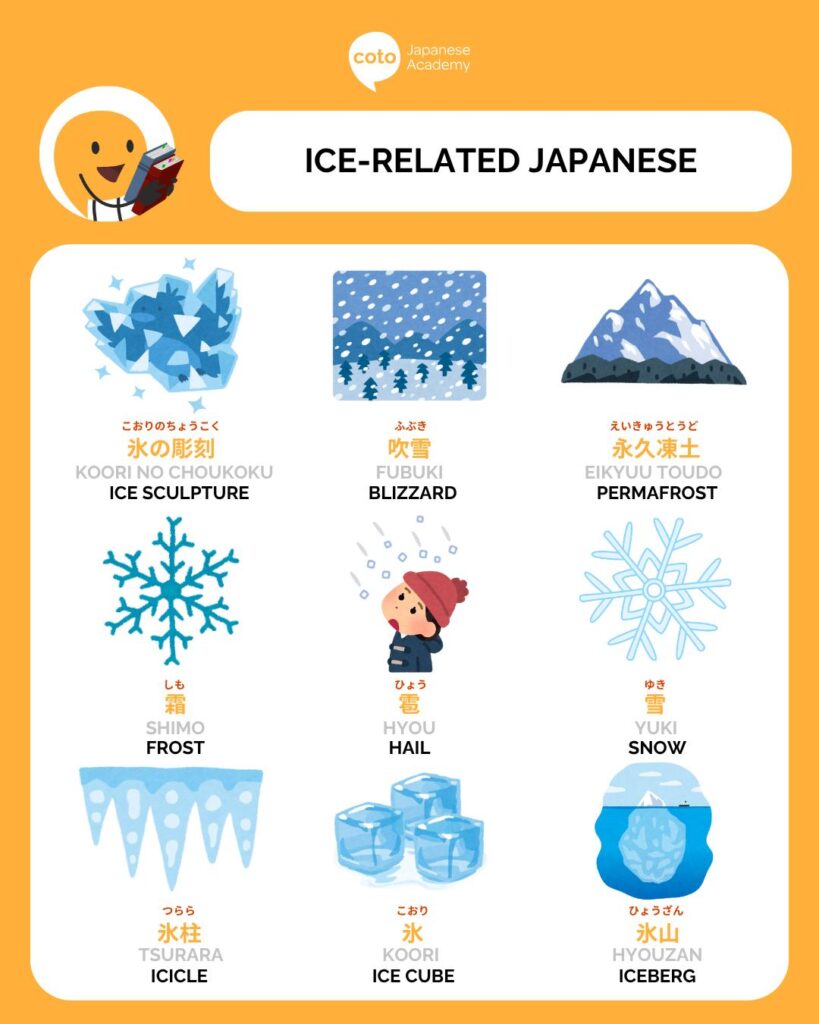
Now that we’ve covered the basics, let’s move on to even more winter-related Japanese vocabulary! The table below includes useful words and phrases to describe winter weather and the activities that come with the season.
| Japanese | Furigana | Romaji | Meaning |
| 氷 | こおり | koori | ice |
| 寒い | さむい | samui | cold |
| 冷たい | つめたい | tsumetai | cold to the touch |
| 霜 | しも | shimo | frost |
| 風 | かぜ | kaze | wind |
| 吹雪 | ふぶき | fubuki | blizzard |
| 氷点下 | ひょうてんか | hyōtenka | below freezing |
| 冬休み | ふゆやすみ | fuyuyasumi | winter break |
| 雪だるま | ゆきだるま | yukidaruma | snowman |
| 除雪 | じょせつ | josetsu | snow removal |
| イルミネーション | — | irumineeshon | winter light displays |
Winter Fashion Vocabulary
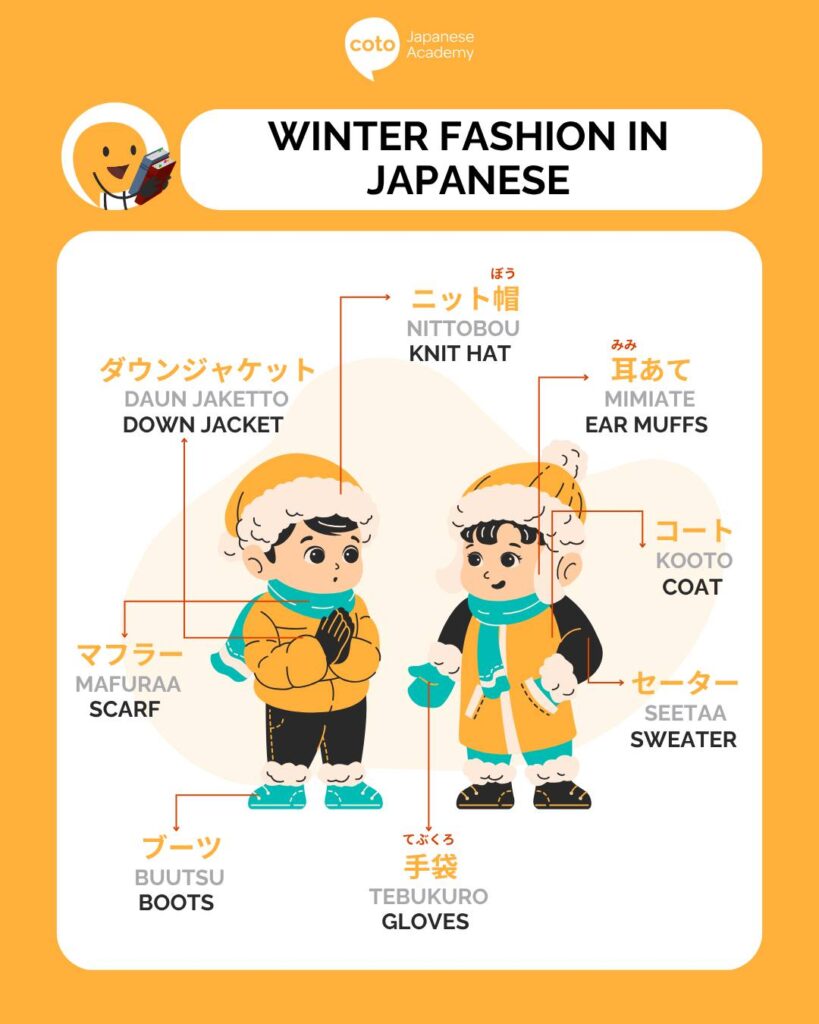
Winter in Japan varies a lot depending on where you are, but as a general rule, the further north you go, the colder it gets. In regions like Hokkaido and Tohoku, temperatures can drop to –5°C to –15°C (23°F to 5°F), and some areas get even colder. Central areas such as Tokyo experience a chilly winter.
No matter where you’re headed, it’s a good idea to layer up. Items like Heattech innerwear will keep you warm, and if you’re visiting snow-heavy regions, be sure to bring waterproof boots and a water-resistant coat to protect yourself from sleet and slush.
| Japanese | Furigana | Romaji | Meaning |
| コート | — | kooto | coat |
| ジャケット | — | jaketto | jacket |
| マフラー | — | mafuraa | scarf |
| 手袋 | てぶくろ | tebukuro | gloves |
| ニット帽 | にっとぼう | nittobou | knit hat / beanie |
| 長靴 | ながぐつ | nagagutsu | boots |
| ブーツ | — | buutsu | winter boots |
| イヤーマフ | — | iyaamafu | earmuffs |
| 厚手の服 | あつでのふく | atsude no fuku | thick/heavy clothing |
| セーター | — | seetaa | sweater |
| ホッカイロ | — | hokkairo | disposable body warmer |
Winter Japanese Vocabulary on Sports
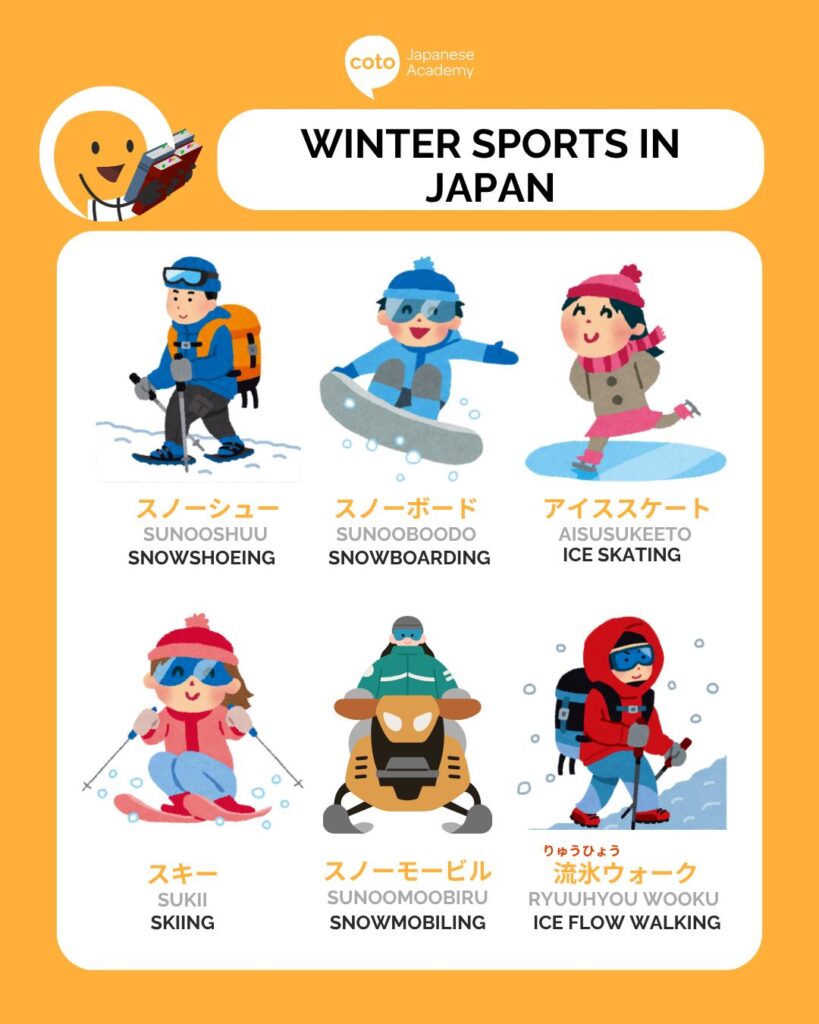
It’s no surprise that Japan has some of the best snow in the world. The northern regions, particularly Hokkaido and the Japan Alps, receive light, dry, and powdery snow, known as konayuki, which is perfect for skiing and snowboarding. Ski resorts like Niseko, Furano, and Hakuba attract visitors from around the world thanks to their deep, fluffy powder, well-maintained slopes, and reliable snowfall.
But what are some popular winter sports in Japan, and what winter sports vocabulary should you know?
| Japanese | Furigana | Romaji | Meaning |
| スキー | — | sukii | skiing |
| スノーボード | — | sunooboodo | snowboarding |
| ゲレンデ | — | gerende | ski slope |
| リフト | — | rifuto | ski lift |
| 雪山 | ゆきやま | yukiyama | snowy mountain |
| 新雪 | しんせつ | shinsetsu | fresh snow / new snow |
| 粉雪 | こなゆき | konayuki | powder snow |
| スキーブーツ | — | sukiibuutsu | ski boots |
| ボードブーツ | — | boodo buutsu | snowboard boots |
| ストック | — | sutokku | ski poles |
| ゴーグル | — | googuru | goggles |
| ウェア | — | wea | ski/snowboard wear |
| レンタル | — | rentaru | rental gear |
Seasonal Things During Winter in Japan
Winter in Japan typically spans December to February. During this time, it’s not just about snow and ice—Japan is filled with unique seasonal activities and celebrations. Here are some key events and words to know:
1. クリスマス (Kurusimasu): Christmas
Yes, Japanese people happen to celebrate Christmas too! Though different from other countries, they typically celebrate it by eating KFC and buying a Christmas cake, typically strawberry shortcake. Don’t forget to learn how to say Merry Christmas in Japanese!
2. 冬至 (Toji): Winter solsitce
Toward the end of December, the North Pole tilts farthest from the sun, making the shortest day and longest night of the year. This is known as the winter solstice. Japan observes traditional customs, such as yuzu baths and eating kabocha (Japanese pumpkin).
3. お正月 (Oshogatsu): New Year
New Year’s is the biggest holiday in Japan, lasting from January 1 – 3. Families gather, enjoy osechi ryori (a set of special dishes with symbolic meanings), and visit shrines or temples. Homes are decorated with kadomatsu (pine decorations) and shimenawa (sacred ropes) to welcome the New Year’s spirits.
4. 初詣(Hatsumde): First shrine visit
While many countries celebrate the first day of the year quietly at home, in Japan, people often go to shrines or temples for Hatsumode to pray for health, happiness, and success in the coming year.
6. 成人の日(Seijin no Hi): Coming of Age Day
Held on the second Monday of January, this holiday celebrates young adults who have turned 20, the age of adulthood in Japan. Those coming of age dress in formal attire, often furisode (long-sleeved kimono) for women and suits or hakama for men, and attend ceremonies at city halls.
Describing the Winter Weather in Japanese
Now that you’ve learned the basics and picked up the essential Japanese winter vocabulary, it’s time to put them into practice! Let’s go through some common phrases and questions you’ll often hear, or might want to ask yourself, when talking about winter in Japan.
今日は寒いですね。
Kyou wa samui desu ne.
It’s cold today, isn’t it?
見て、外は雪が降っています。
Mite, soto wa yuki ga futteimasu.
Look, it’s snowing outside.
外、凍えそう!
Soto, kogoesou!
It’s freezing outside!
山の上は風が強いね。
Yama no ue wa kaze ga tsuyoi ne.
It’s windy up on the mountain, huh?
道、滑りやすいから気をつけてね。
Michi, suberiyasui kara ki o tsukete ne.
The road’s slippery, so be careful!
Learn more about how to describe the weather in Japanese!
Conclusion: Learn Beyond Winter Vocabulary and Speak Japanese with Lessons at Coto Academy
Now that you’ve learned the basics of talking about winter in Japanese, why stop there? There are plenty of other essential skills to master, like introducing yourself or discussing a specific topic in conversation.
If you want to build confidence and start speaking Japanese, consider joining conversation-focused Japanese lessons at Coto Academy. As a top-rated school with campuses in Tokyo and Yokohama, we offer fun and flexible lessons designed around practical, everyday conversation. You’ll learn Japanese that you can use immediately outside the classroom.
We offer intensive Japanese courses as well as part-time options, so whether you want to immerse yourself fully or fit lessons into a busy schedule, there’s something for you. Start your journey to speaking Japanese confidently today!
Why join Coto Academy?
- Over 60+ different Japanese classes over 18 levels
- Small classroom of only up to 8 students for personalized support
- Professional, native Japanese teachers
Ready to get started? Fill out the form below to contact us!
FAQ
What is the word for “winter” in Japanese?
冬(fuyu) is the basic word for winter in Japanese.
How do you say “snow” in Japanese?
Snow in Japanese is 雪 (ゆき, yuki).
What are typical winter foods in Japan?
Typical winter foods include oden, hotpot, sukiyaki, and fugu. Find out about more winter foods in Japan here.