
Looking for halal restaurants in Tokyo?

Food in Japan is a highlight to every tourist and locals themselves — but it’s not just famous for its sushi or ramen. Big cities like Tokyo have become more inclusive to religious groups and those with different dietary needs. You’ll see more halal shops popping up, some of which are also vegetarian and vegan-friendly.

Ramadan 2026 will start on April 1 and last until May 1. For Muslim foreigners living in Japan looking for the right options to break their fast, check out our top halal restaurant recommendations in Tokyo.

Want to know more about Japan and what ticks the city? Check out our guide on the most popular fast-food restaurants in Japan.

What is Defined as Halal in Japan?

A dish that directly contains pork or lard isn’t the only food that is considered haram. In general, all seafood and herbivorous land animals and halal if they are processed ethically and according to the rules of Islam.

However, what constitutes halal food is this: it must not be prepared, processed or contaminated with anything haram. Haram food includes pork, blood and alcohol. Food like tonkatsu is easily a no-no, but what if, in any case, food is essentially halal but is cooked with equipment that touches haram ingredients (like a frying pan used to cook pork meat)? It will be considered haram.

By now, you must have realized that many Japanese ingredients are considered haram. For example, mirin, a basic Japanese rice wine used in cooking, isn’t halal because of its alcohol content. Meanwhile, you’ll find most Japanese staple dishes are made with it: teriyaki sauce, tempura dippings and sushi rice. Most ramen soups in Japan (namely the tonkotsu ramen) are made from pig bone broth, too, and a lot of supermarket shoyu (soy sauce) isn’t certified halal either.

Halal Restaurants in Tokyo You Need to Visit

Regardless of your religion or dietary preference, halal restaurants in Tokyo offer a new gastronomic experience. You’ll fully explore the breadth of Japanese cuisine with unique and exciting renditions. Many of them are also fusions with other regional cuisines, like Southeast Asian-inspired ramen and halal wagyu.

1. Asakusa Sushiken

When in Japan, sushi is not a food you want to miss out on. Asakusa Sushi-Ken is the first halal-certified sushi restaurant in Tokyo. The food found here is halal, including its soy sauce and rice (which is usually added with mirin). Prepared by chefs with the freshest ingredients right in front of you, it is definitely an experience not to be missed in Japan. Order their popular sushi sets or check out other items on their menu, such as the tendon, a rice bowl (donburi) with fried seafood and vegetables (tempura). Here, lunch menus ranging from 1200 yen to 2200 yen can be found. Enjoy a wide variety of sushi in this certified halal Japanese restaurant!

Location: 2-11-4 Asakusa, Taito City, Tokyo

2. Ayam-Ya Okachimachi

A staple of Japanese cuisine, ramen is a must-have when in Japan. Here at Ayam-Ya Okachimachi, ramen is their specialty (10 out of 12 dishes on their menu are all ramen). The name of the restaurant is a wordplay: ‘Ayam’ means chicken, while ‘~ya’ means shop — together, it literally translates to ‘chicken shop’.

One of the few halal restaurants in Tokyo that serve up all its ramen with a chicken-based broth, they still serve a few customizations options. For selected dishes, diners can opt for a shoyu (soy sauce) version or shio (salt) version, depending on personal preference. Dishes such as the Noko Tori Ramen are limited edition, cut to 20 bowls a day. Similarly, the Tori Potage Ramen is limited to only 10 bowls a day. Diners are spoilt for choice here as dry ramen and cold ramen with dipping soup and spicy ramen are all available here. You can even order larger portions of ramen at no extra cost! For those who prefer having rice bowls, there are two options that are rice-based.

Location: 3-10-3 Motoasakusa, Taito City, Tokyo

Want to know more about ramen? Also check out: Top 10 Ramen Restaurants in Tokyo

3. Coco House Ichibanya Curry

Also known as Coco Ichi for short, this is a very popular curry place that has expanded all over the world. With over 1,000 stores in Japan, it is well-loved by many. However, so far there are only two outlets that are halal certified, one being Coco Ichibanya Shinjuku Kabukicho. The other outlet, Curry Coco Ichibanya Akihabara, is the first halal outlet that opened in Japan. Here, customers can also customize their orders with rice size, toppings and spice levels. Even though pork is off the menu, there are still plenty of options available, such as chicken, beef and cheese toppings. For those who are vegetarian or who have vegetable preferences, vegetarian options are available too.

Location: Multiple locations in Tokyo and Japan
Website

4. Luxe Burgers

As the name suggests, Luxe Burgers sells hamburgers. It is the first and only halal-certified burger shop in Japan. As hamburgers restaurants are hard to find in Japan, it is also widely popular amongst the locals. The chefs here prepare everything themselves, from the sauces to the meat patties and dressings. Their patties are 100% halal lamb, but it is not the only thing on the menu. They also have interesting options such as avocado cheeseburgers and grilled chicken burgers. Those with a meatless diet, they are also vegetarian and vegan-friendly. Takeout and delivery are available to make their halal burgers more accessible.

Location: 6-13 Nihonbashikobunacho, Chuo City, Tokyo

Coto recommends: our guide to food delivery services in Tokyo.

5. Gyumon

Perfect for those who want to try out authentic Japanese yakiniku, Gyumon is the place to go. Here, many different beef parts and chicken options are available. Grill your own meal in this cozy halal restaurant in Tokyo. For those looking for wallet-friendly options, fret not because they offer affordable lunch sets from 12 pm! At just 1000 yen, you can order a halal beef bowl that also comes with soup and a salad. Dinner sets starting from 2500 yen are also available. Everything here, including their delicious dipping sauce, is halal, but do note that this restaurant serves alcoholic beverages.

Location: 3-14-5 Shibuya, Shibuya City, Tokyo

Website

6. Wagyu Yakiniku Panga

Another halal yakiniku place, this barbecue restaurant serves premium wagyu meat. With plenty of meat options to select from, including meat seasoned with bulgogi marinade, they offer a mix of Japanese and Korean cuisine. Order their meat platters here to try out all the different meats and cuts to find your favorite! Receive sides such as salad or kimchi to enjoy along with your yakiniku. Affordable lunch sets are also available, with fusion dishes such as a beef bowl in a Korean hot stone bowl (Bibimbap) and Korean udon. There are the kimchi-based broth and classic Japanese udon, amongst many others. Want a taste of alcohol but without the actual alcohol? They serve Suntory’s all-free non-alcoholic malt beverage.

Location: 3-27-9 Taito, Taito City, Tokyo

Website

7. Tokyo Chinese Muslim Restaurant

A Muslim-owned establishment, there is no use of pork in all the dishes served at the Tokyo Chinese Muslim restaurant. Want a Chinese food that is halal? This is the one. As a restaurant that is halal-certified, you can rest assured that even their beef is ethically sourced and processed. Here, you can enjoy popular Chinese food such as mapo tofu which has halal beef instead of the usual pork. Do note that this place does serve alcohol. Aside from that, it is definitely a great place to enjoy the fusion of Chinese and Malay cuisine!

Location: 2-18-6 Kotobashi, Sumida City, Tokyo

Website

8. Cabe Meguro

Cabe is the place if you are looking for Indonesian food. Here, everything is widely influenced by Indonesia, from their decorative ornaments to background songs. The authentic meals are prepared by local Indonesians, giving everyone a taste of their local dishes. Of course, all the ingredients used are halal, including beef. Be it finger foods, main dishes or desserts, if you want it, they have it. Vegetarian and vegan options are also offered here. Popular amongst Indonesians and Japanese, this place is worth trying out.

Location: 3-5-4 Kamiosaki, Shinagawa City, Tokyo

Website

9. Kebab Cafe

As a famous Turkish dish, kebabs are well known all over the world. In Tokyo, look no further as Kebab Cafe is here to satisfy your taste buds with Turkish cuisine. What makes it special is the bread that they use, different from most other kebab shops in Tokyo that use pita bread. Their shop uses Turkish Ekmek, which has a slightly softer texture compared to pita bread. Their lunch set menu starts from 700 yen and comes with authentic Turkish soup and tea, with free-flow rice. With a wide array of kebabs and appetizers to begin your meal, be ready to be spoiled with choices here!

Location: 2-25-10 Dogenzaka, Shibuya City, Tokyo

Website

10. Ashoka Shinjuku

If you are looking to try other cuisines aside from halal Japanese food, check out Ashoka Shinjuku selling Indian cuisine! Well-loved by native Indians, Ashoka is one of the first Indian halal restaurants in Tokyo. They offer a huge variety of authentic Indian delicacies, such as tandoori and curry dishes. Meats such as chicken, fish and lamb are available. If you are craving for Indian cuisine or interested in trying out something new, Ashoka is the place for you!

Location: 6-6-2 Nishishinjuku, Shinjuku City, Tokyo (multiple branches in Tokyo)

Website

11. Bharati Indian Restaurant

A hidden gem located in Shibuya, Bharati Indian Restaurant serves halal food with vegetarian-friendly and vegan options. Their popular dishes are staples of a true mouthwatering feast: butter chicken, chicken Tikka Masala and briyani.

Location: 2-9 Motoyoyogicho, Shibuya-ku, Tokyo

Website

12. Menya Honolu Ebisu

You can’t live or visit Japan without ordering a bowl of ramen — every week, if we can say honestly. Unfortunately, most ramen shops use pork and lard. Menya Honolulu in Ebisu offers a menu that blends Japanese and Southeast-Asian flavors. It’s popular among Muslim people in Japan because they’re one of the very few restaurants that offer halal ramen.

Unmissable offerings include their popular spicy ramen (Spicy Yakiniku BBQ Ramen), fried chicken ramen and, most notably, Tomyum Ramen. They also offer Sosro Teh Botol, a common Indonesian tea drink

Besides that, you can also find a designated prayer room.

Kindly note that not all of their outlets are Halal. Their Ebisu outlet is, but other outlets may serve non-halal meats. Check carefully before visiting one of their outlets to see if they are Halal.

Location: 1-23-1 Ebisuminami, Shibuya-ku, Tokyo

Website

13. Aliya Halal Restaurant Ikebukuro

If you’re craving authentic and Muslim-friendly Chinese food, you can expect one at Aliya Halal Restaurant. Upon first glance, you’ll notice intricate Arabic calligraphy written on the stairs. Outside the main entrance, a Muslim-friendly certificate hangs on the wall.

We can’t recommend this place enough. The dishes are served family-style — meaning, the food is put on large platters meant for sharing, so you order for everyone, rather than yourself. Seatings are ample too, making it a perfect place to dine or break your fast together.

The options are heavily inspired by Chinese-Muslim culture, and you can find all regional staples. From the Mapo Tofu, lamb skewers and fried rice with shrimp. Their interior design evokes Chinese Muslim culture and really lends to their authentic vibe.

Location: 1-43-3 Nishiikebukuro, Toshima-ku, Tokyo

Website

14. Cinta Jawa Cafe

halal restaurants tokyo cinta jawa cafe
Image courtesy of Cinta Jawa Cafe

This is for those of you who miss Indonesian cuisine or are looking to try it out, Cinta Jawa Cafe is a Halal-certified restaurant that offers authentic Indonesian food. Try their nasi padang (Minangkabau steamed rice served with various choices of pre-cooked dishes), mie goreng (Indonesian-style fried noodle) and satay. All their food is packed with spices and flavors.

To end the feast, we recommend the pisang goreng — fried banana dipped in batter.

Location: 13-16 Udagawacho, Shibuya-ku, Tokyo (multiple branches in Tokyo)

Website

15. Naritaya Asakusa

Naritaya Asakusa is one of the few halal ramen places in Tokyo, but you wouldn’t think that. What they provide is so good you would think they were fighting to compete with titans. Their service is excellent and their portions are huge. Customers declare their fried chicken and ramen as some of the best in Tokyo. All this, and it comes very affordably. None of their prices go above 2,000 JPY. Considering how big the portions are, you can fill yourself without needing to upsize.

Location: 2-27-13 Asakusa, Taito-ku, Tokyo

16. Halal Sakura

Halal Sakura got their Halal certification from NAHA (Nippon Asia Halal Association). The restaurant offers a menu that is a mix of Japanese and Uighur cuisine. The owner, being an Uyghur themself, wanted to introduce Ugyhur cuisine to the city. Since most of the population is Muslim, the cuisine often features mutton (lamb), beef, chicken and authentic spices: cumin, star anise and Sichuan.

There’s ramen with a soy sauce and beef base, but we also recommend Uighur hotpot and skewers.

Location:  2-18-11, Negishi, Taito-Ku, Tokyo

Website

17. Menya Kaijin

Most ramen can sit heavy on the stomach because of its thick broth, which is mainly made from chicken or pork. If you’re looking for a lighter and healthier alternative, check out Menya Kaijin. You can find people lining up in front of the store, located just within the outside perimeter of Shinjuku Station.

The store uses a fish-based broth. This creates a unique, pleasantly mellower flavor. The soup is light, almost clear. To top it all off, you can order a rice ball with your ramen — because rice and soup never go wrong.

Menya Kaijin’s is different because they use fish-based broth. The soup is very light and almost similar to the soup used in Hong Kong-style wonton noodles.

Kindly note that not everything on their menu is Halal. They are Muslim-friendly, but not Halal-certified. If you want to make sure your meal is Halal, ask them when ordering.

Location: 3-35-7 Shinjuku, Shinjuku-ku, Tokyo

Website

18. Ko-So Cafe Biorise

Ko-so Cafe Biorise is a vegan cafe located minutes away from Ebisu Station. It’s the perfect choice for not only Muslims but health-conscious people in the city too. Besides not using any animal ingredients, they take pride in serving dishes with seasonal produce and fermented food.  

The cafe got its vegan certification from NPO Veggie Project Japan and halal certification from Malaysian Halal Corporation. They have soybean meat, gluten-free pizza and salad with fermented dressing, but we think the desserts are the true show-stoppers. Their pancakes are topped with generous fresh fruit and cream.

Kindly note that they offer alcohol, so be sure to specify if you want your meal halal.

Location: 3-25-4 Higashi, Shibuya-ku, Tokyo

Website

halal restaurants tokyo kopikalyan tokyo
Image courtesy of Kopikalyan

19. Kopikalyan Tokyo

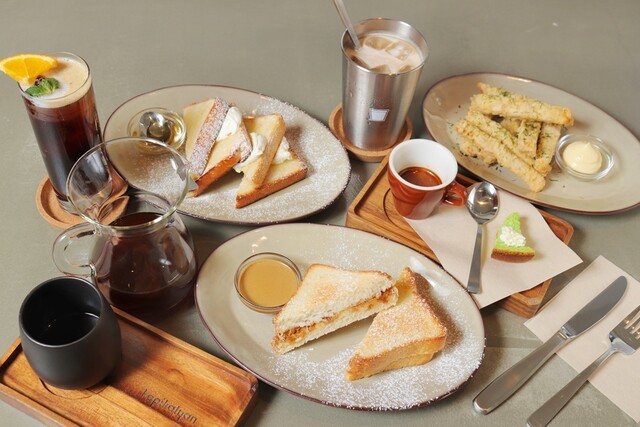
Although not a restaurant (it’s more of a chill, hip cafe), we can’t finish the list off without including Kopikalyan. Hailing from Indonesia, which is one of the largest coffee producers, Kopikalyan delivers regional coffee beans and exceptional drink selections that are heavily inspired by tradition and culture. Their Es Kopikalyan is a sweeter rendition of an iced latte — only, it’s infused with palm sugar.

Because Indonesia has a large Muslim population, the Tokyo branch remains faithful to its roots. All of their food and drinks are halal. You can find fried tempeh, gratin and toast. A designated Wudu area and prayer room are also available for customers.

Website

Want to learn the “real” Japan? Study the Japanese language at Coto Academy.

Free level assessment and consultation are available.

Dining at Japanese restaurants can be a delightful experience, from savoring delicious sushi to enjoying a hot bowl of ramen. However, at the end of the meal, you may find yourself wondering how to ask for the bill.

If you’re traveling or living in Japan, dining out is one of the best ways to experience the culture. But when the meal is over, how do you politely ask for the bill? Unlike in some Western countries, you don’t just wave or shout. In this guide, you’ll learn exactly what to say, when to say it, and the subtle cultural rules to follow. In this blog post, we’ll walk you through the essential phrases, provide a vocabulary table, and quiz your knowledge to ensure you can handle this common dining scenario like a pro.

Let’s dive into how to ask for the bill in Japanese like a local! Before asking for the bill, you first need to know how to place your order correctly! If you’re unsure how to order food or drinks in Japanese, check out our complete guide to ordering at a Japanese restaurant to master the basics before you dine.

Let’s turn your Japanese language goals into reality! Contact us today to get started!

Asking for the Bill in Japan

how to ask for the bill in japanese
Japanese PhrasePronunciationMeaningFormality Level
お愛想OaisoPlease bring me the billVery Informal
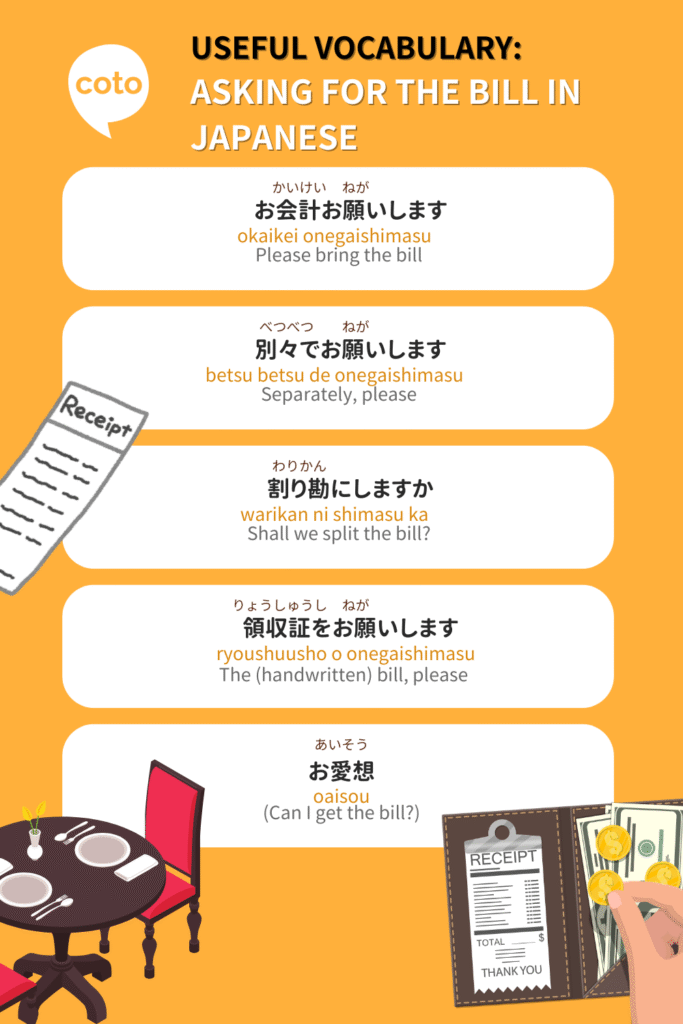
お会計お願いしますOkaikei onegaishimasuPlease check out (the bill)Polite

1. お愛想 (Oaiso)

In certain informal and relaxed dining situations in Japan, you may come across the phrase “お愛想” (Oaiso). While this phrase is very informal, it serves a particular purpose. “お愛想” literally means “Please bring me the bill.” It’s an extremely casual way of asking for the bill and is typically used by regulars at a restaurant or bar. When you’ve built a friendly and familiar relationship with the establishment and the staff, using “お愛想” can signify your comfort and ease in that setting.お愛想’ (Oaiso) literally means ‘a token of affection,’ but in casual restaurants, it’s used to say ‘Can I get the bill?’ It’s common among regulars in small eateries where the atmosphere is friendly and relaxed. This phrase might be employed in local neighborhood spots where everybody knows each other, and it signifies a relaxed and informal atmosphere. It’s important to note that “お愛想” may not be suitable in more formal or unfamiliar dining settings, so it’s best used in places where you’re well-acquainted with the staff and the environment.

2. お会計お願いします (Okaikei onegaishimasu)

When you’re ready to settle the tab, use the phrase “お会計お願いします” (Okaikei onegaishimasu), which translates to “Please bring the bill.” It’s a polite way to signal to your server that you’re ready to conclude your meal and take care of the financial aspect. To make this request, catch your server’s attention, and it’s a good practice to establish eye contact to ensure your message is well-received.

Cultural Tip: In many Japanese restaurants, the bill is brought to your table in a small tray. You then bring it to the register to pay. It’s considered rude to leave money on the table.

3. 領収書おねがいします (Ryoushuusho onegaishimasu)

This isn’t your standard receipt (which in Japanese is called a レシート, or reshiito). A 領収書 (ryoushuusho) is an official receipt, often required for business expenses, work travel, or reimbursement purposes.

A 領収書 usually includes the customer’s name or company name, and there’s often a blank line for that information to be filled in. It’s more formal than a レシート and can even be handwritten in some traditional shops.

4. お勘定 (Okanjo)

Another way to ask for the bill at a restaurant is to say お勘定 (okanjo). It’s a polite and proper word, but in practice, it’s not as commonly used as you might think. 

Part of the reason is that okanjo sounds very similar to a handful of other Japanese words, such as those meaning “emotion,” “aboard a warship,” or even “pouring water on a grave” (a Buddhist ritual). Of course, these won’t cause confusion in most restaurant settings — unless maybe you’re deep in character at a ninja-themed restaurant in Tokyo. 

But for clarity and everyday use, many locals opt for phrases like “お会計お願いします” instead. It’s a bit more straightforward and less likely to cause any unintended double meanings.

5. Cross Your Finger 

Interestingly, there’s also a way to ask for the bill without speaking at all, and that’s by using a simple hand gesture. In busy or noisy izakayas, you’ll often see customers make eye contact with a staff member and cross their index fingers in the shape of an “X.” This non-verbal sign universally means “We’re done” or “Check, please.” 

You can think of it as a way of “cutting off” the tab or politely wrapping up your time at the table. As long as you catch the staff’s eye and give a friendly nod, they’ll know exactly what you mean.

Splitting the Bill in Japanese

Japanese PhrasePronunciationMeaningFormality Level
別々でお願いしますBetsubetsu de onegaishimasuSeparately, pleasePolite
割り勘にしますかWarikan ni shimasu kaShall we split the bill?Casual
割り勘にしましょうWarikan ni shimashouLet’s split the billCasual
割り勘でいいですかWarikan de ii desu kaIs it okay to split the bill?Polite
割り勘してくださいませんかWarikan shite kudasaimasen kaWould you please split the bill?Very Polite/Formal

1. 別々でお願いします (Betsu betsu de onegaishimasu)

Splitting the bill in Japanese is straightforward and accommodating, especially when dining with friends or colleagues. You can employ phrases like “別々でお願いします” (Betsu betsu de onegaishimasu) to the server, which means “Separately, please.” This expression comes in handy when you and your fellow diners prefer to receive individual bills, ensuring everyone pays for their own portion of the meal.

2. 割り勘にしますか (Warikan ni shimasu ka)

When dining with friends or colleagues at a Japanese restaurant, the topic of splitting the bill often arises. To propose this in a casual and friendly manner, you can use the phrase “割り勘にしますか” (Warikan ni shimasu ka), which translates to “Shall we split the bill?”

This phrase is ideal for informal settings, such as hanging out with friends after work or enjoying a casual meal. It’s a relaxed and straightforward way to suggest sharing the expenses, ensuring that everyone pays their fair share.

3. 割り勘にしましょう (Warikan ni shimashou)

If you want to take a slightly more assertive approach to suggest splitting the bill, you can use the phrase “割り勘にしましょう” (Warikan ni shimashou). This means “Let’s split the bill.”

This phrase conveys your readiness to divide the expenses and is a bit more proactive in proposing the idea. It’s well-suited for situations where you’re comfortable with your dining companions and can openly discuss the financial aspects of the meal.

4. 割り勘でいいですか (Warikan de ii desu ka)

In more formal or polite settings, or when you’d like to inquire about splitting the bill in a considerate manner, the phrase “割り勘でいいですか” (Warikan de ii desu ka) comes in handy. This means “Is it okay to split the bill?”

By using this phrase, you’re seeking approval and showing respect for your fellow diners’ preferences. It allows for a courteous discussion about how the bill will be divided, ensuring that everyone is comfortable with the arrangement.

5. 割り勘してくださいませんか (Warikan shite kudasaimasen ka)

When it comes to addressing the bill-splitting in the most polite and formal way, the phrase “割り勘してくださいませんか” (Warikan shite kudasaimasen ka) is the perfect choice. This phrase translates to “Would you please split the bill?”

This exceptionally courteous expression conveys your utmost respect for your dining companions and the establishment. It’s suitable for formal dining settings or occasions when you want to ensure that everyone is comfortable with the financial arrangement. By using this phrase, you’re not just suggesting a division of expenses; you’re making a polite request that reflects your consideration and appreciation for those you’re dining with.

These phrases give you a range of options to propose splitting the bill, catering to the formality and atmosphere of your dining experience. Whether you’re out with friends for a casual evening or in a more formal setting, you can navigate the financial aspects of your meal with ease and consideration.

Check Out This Video!

Want to learn more essential Japanese phrases for your daily life in Japan? Check out our Japanese courses!

Quiz Section

Now, let’s put your knowledge to the test! Try out a free interactive quiz to see if you can master how to ask for a bill in Japanese correctly.

1. How do you ask for the bill in Japanese?

   a) お待ちしております (Omachi shite orimasu)

   b) お会計お願いします (Okaikei onegaishimasu)

   c) どうもありがとう (Doumo arigatou)

2. You and your friend want separate bills. What phrase should you use?

   a) お待ちしております (Omachi shite orimasu)

   b) お会計お願いします (Okaikei onegaishimasu)

   c) 別々にお願いします (Betsu betsu de onegaishimasu)

3. What does the phrase “お会計お願いします” (Okaikei onegaishimasu) mean in Japanese?

a) Please split the bill.

b) Please bring the bill.

c) Please bring the cash.

4. How would you politely ask for the bill in Japanese at a restaurant?

   a) お愛想 (Oaiso)

   b) お勘定お願いします (Okanou onegaishimasu)

   c) 割り勘にしますか (Warikan ni shimasu ka)

5. When is it appropriate to use the phrase “お愛想” (Oaiso) to ask for the bill in a Japanese restaurant?

   a) In formal dining settings

   b) When dining with friends

   c) In informal and relaxed dining situations

6. Which phrase is suitable for suggesting splitting the bill in a casual and friendly manner?

   a) 割り勘にしましょう (Warikan ni shimashou)

   b) 割り勘してくださいませんか (Warikan shite kudasaimasen ka)

   c) お会計お願いします (O-kaikei onegaishimasu)

7. In more formal or polite settings, which phrase can you use to inquire about splitting the bill in a considerate manner?

   a) 割り勘してくださいませんか (Warikan shite kudasaimasen ka)

   b) 別々でお願いします (Betsubetsu de onegaishimasu)

   c) 割り勘にしますか (Warikan ni shimasu ka)

8. When dining with friends and wanting to propose splitting the bill assertively, which phrase is appropriate?

   a) 割り勘にしましょう (Warikan ni shimashou)

   b) 割り勘してくださいませんか (Warikan shite kudasaimasen ka)

   c) お勘定お願いします (Okanjou onegaishimasu)

Here are the answers to the quiz:

1. b) お会計お願いします (Okaikei onegaishimasu)

2. c) 別々にお願いします (Betsu betsu de onegaishimasu)

3. b) Please bring the bill.

4. b) お勘定お願いします

5. c) In informal and relaxed dining situations

6. a) 割り勘にしましょう (Warikan ni shimashou)

7. a) 割り勘してくださいませんか (Warikan shite kudasaimasen ka)

8. a) 割り勘にしましょう (Warikan ni shimashou)

We hope this guide helps you navigate the Japanese dining experience with ease. Practice these phrases, and you’ll be able to ask for the bill like a pro during your next restaurant visit in Japan. 

Here’s a link to our other post about payment methods in Japan.

Curious about how to behave in a Japanese restaurant beyond just the language? Learn more about important do’s and don’ts in Japanese culture with our article on Japanese etiquette and cultural norms – essential reading for anyone planning to dine out in Japan.

Want to study Japanese with us?

FAQ

What is the difference between reshiito and ryoushuusho?

レシート (reshiito) is a standard printed receipt you get after any purchase. 領収書 (ryoushuusho), on the other hand, is a formal or official receipt, often required for business expense reports or reimbursements. It usually includes the payer’s name or company and may be handwritten in some cases.

Is the “X” finger gesture rude in Japan?

Crossing your index fingers into an “X” shape is a casual and accepted way to signal “Check, please” in restaurants — especially in noisy settings like izakaya.

How do you ask for the check in Japan?

The most natural and polite way to ask for the check in Japan is to say: お会計お願いします (Okaikei onegaishimasu).

Craving comfort food, friendly vibes, and budget-friendly options in Japan? Look no further than ファミリーレストラン family restaurant or ファミレス famiresu, the universal family restaurants loved by locals and travelers alike. From juicy hamburg steaks to creamy pasta, famiresu offers a diverse menu catering to all ages and tastes. This blog will introduce a few famiresu in Japan and teach you some useful phrases!

A Quick Jump To…

Most Common Famiresu

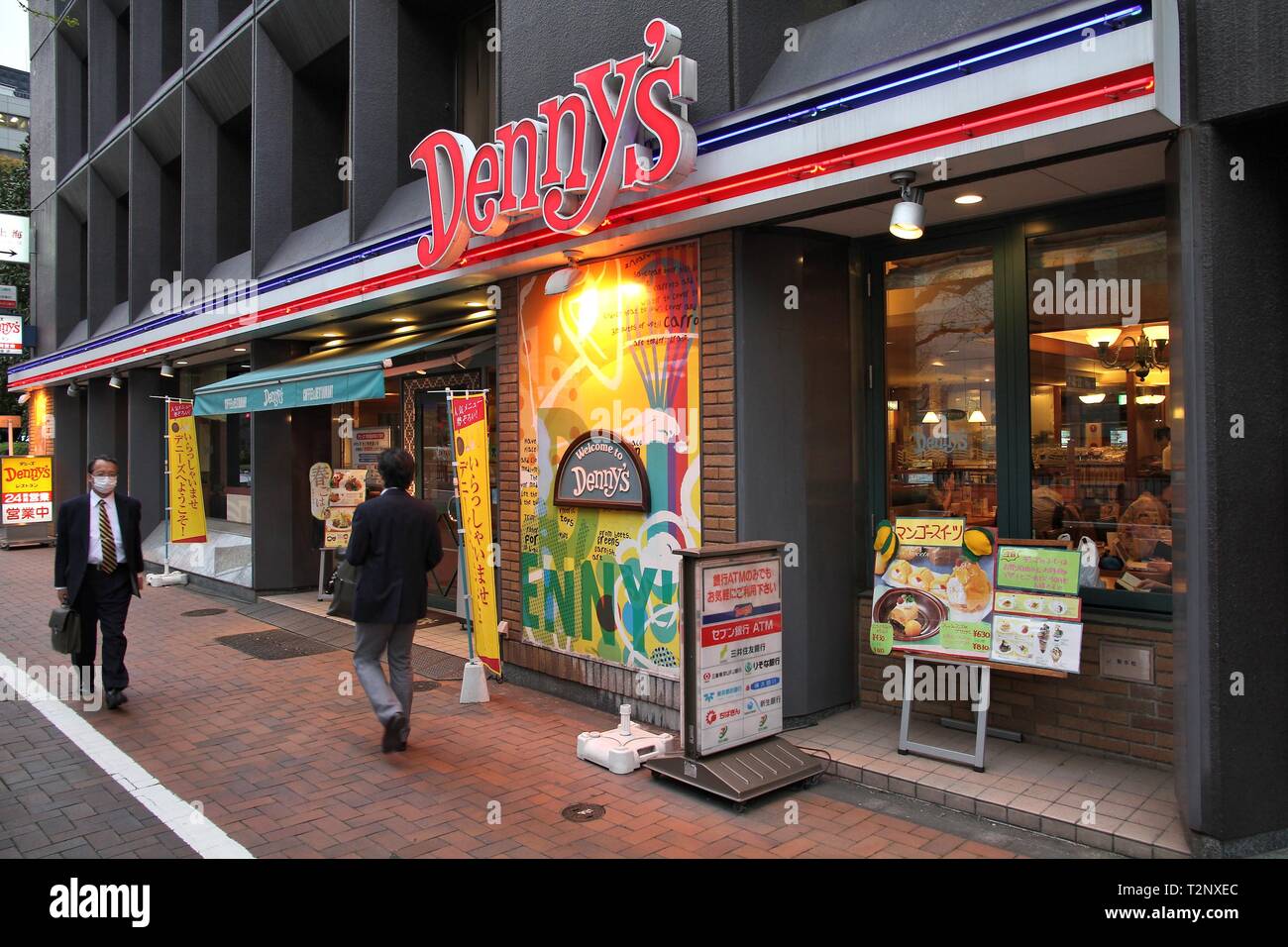
Denny’s

Photo By Alamy

  • Ambiance: American diner vibes with booths and classic decor.
  • Menu: Focuses on American comfort food like pancakes, burgers, and steaks. Wide variety of breakfast options.
  • Price: More expensive than other famiresu, with main dishes averaging around ¥1000-1500.
  • Unique offering: Grand Slam breakfast menu and pancakes known for their fluffiness.
  • Best for: Those craving American-style diner food and a familiar atmosphere.
  • Shop Locator

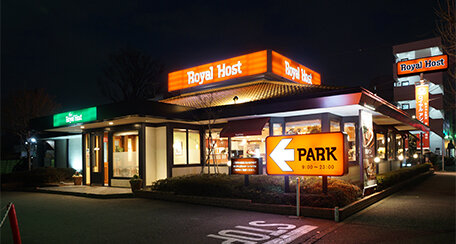
Royal Host

Photo By ロイヤルホスト

  • Ambiance: Relaxed and family-friendly with booth seating and open spaces.
  • Menu: The menu is diverse, with Japanese, Western, and Asian-inspired dishes, including pasta, steak, and curry rice,. There are also strong breakfast offerings.
  • Price: Slightly higher than Saizeriya and Jonathan’s, with main dishes averaging around ¥800-1200.
  • Unique offering: Extensive breakfast menu, known for its Japanese-style breakfast sets.
  • Best for: Families with diverse palates seeking a comfortable and reliable option.
  • Shop Locator

Saizeriya

Photo By トリップアドバイザー

  • Ambiance: Casual and affordable, with a simple and modern aesthetic.
  • Menu: The restaurant’s menu primarily features Italian-inspired dishes like pasta, pizza, and gratins, alongside Japanese options. It is known for its “all-you-can-drink” bar.
  • Price: Very affordable, with main dishes averaging around ¥500-700.
  • Unique offering: “All-you-can-drink” bar at an additional cost, good value for budget-conscious diners.
  • Best for: Those seeking a casual and affordable meal with Italian fare in a relaxed setting.
  • Shop Locator

Jonathan’s

Photo By By Skywing Knights

  • Ambiance: Warm and welcoming, with booth seating and wood accents.
  • Menu: Diverse menu with Western and Japanese dishes, including steaks, pasta, and pizza.
  • Price: Mid-range, with main dishes averaging around ¥800-1200.
  • Unique offering: Large portions, known for its value-for-money steaks and meat dishes.
  • Best for: Those seeking hearty portions of classic Western and Japanese dishes in a friendly atmosphere.
  • Shop Locator

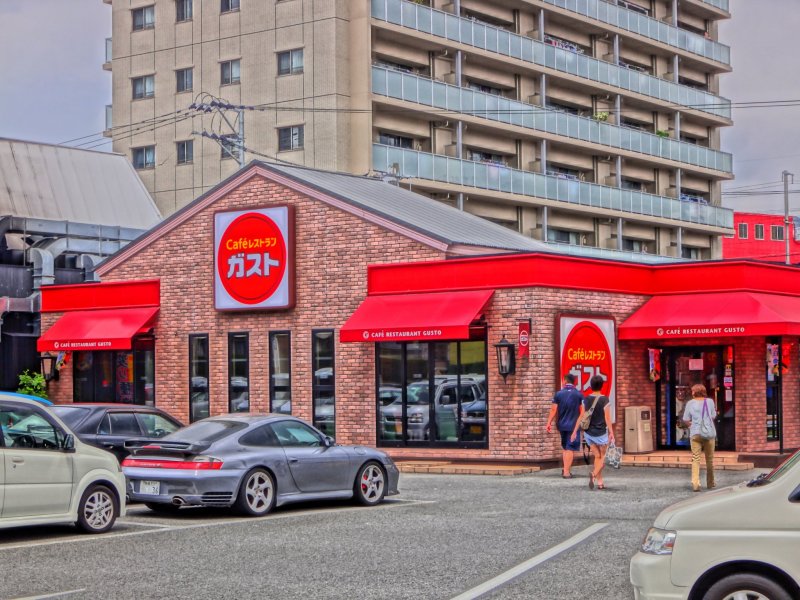
Gusto

Photo By Japan Travel

  • Ambiance: Step into a warm, welcoming space with booth seating, creating a relaxed and inviting atmosphere.
  • Menu: Indulge in a diverse menu featuring both Western and Japanese favorites. From sizzling hamburg to pizzas loaded with toppings, there’s something to tantalize every taste bud.
  • Price: Mid-range, with most main dishes averaging around ¥800-1200.
  • Unique Offering: They are renowned for having both Japanese and Western dishes with great portions. They also have collaborated with famous anime sometimes.
  • Best for: It’s a great option for families, groups of friends, or anyone looking for a good value meal.
  • Shop Locator

Bonus Tip: Famiresu often have private booths, making them ideal for families with young children. They also typically stay open late, offering a convenient option for late-night bites.

Useful Japanese Phrases

  • いただきます。Itadakimasu. – Thank you for the food (said before eating).
  • ごちそうさまでした。Gochisousama deshita! – Thank you for the meal (said after eating).
  • 水をください。Mizu o kudasai. – Can I please have water?
  • [Dish Name]をお願いします。[Dish Name] o onegaishimasu. – Can I please have [Dish Name]?
  • オススメはなんですか?Osusume wa nandesuka? – What do you recommend?
  • もう少し考えてもいいですか?Mō sukoshi kangaete mo ii desu ka? – Can I have a little more time to think?
  • お会計お願いします。Okaikei onegaishimasu. – Can I have the bill, please?
  • 支払いは別々でお願いします。Shiharai wa betsubetsude onegaishimasu. – Can we pay separately?
  • 持ち帰りにできますか? Mochikaeri ni dekimasuka? – Can I take this home?

You Might Be Wondering…

What are common dishes at famiresu?

  • Hamburg steak: A must-try! Savory patties are often topped with a fried egg or demi-glace sauce.
  • Pasta: From creamy carbonara to classic spaghetti Bolognese, pasta is a familiar comfort food.
  • Japanese classics: Tempura, katsu curry, and other popular Japanese dishes also grace the menu.
  • Desserts: Indulge in parfaits, cakes, and ice cream sundaes.

What's the deal with the drink bar?

Many famiresu offer an “all-you-can-drink” bar with soft drinks, juices, and sometimes coffee. It’s a great way to quench your thirst without breaking the bank.

Are there English menus?

Most famiresu have English menus or picture menus, making ordering a breeze. Don’t hesitate to ask staff for help if needed.

How much does it cost?

Famiresu are known for their affordability. Expect to pay around ¥500-1000 for a main dish and ¥200-300 for drinks.


Want to learn and study more about the Japanese language and culture?

Book a free level check consultation with us to join!

Thanksgiving in Japan, also known as 勤労感謝の日きんろうかんしゃひ  (kinrōkanshahi), is one of the national holidays. To celebrate workers in Japan, gifts such as letters and cards are exchanged as gestures of thanks for the hard work they put.

Japanese Thanksgiving always falls on November 23 every year. This is unlike Thanksgiving in America which is celebrated on the third Thursday of November no matter the date.

As we dive deeper into what is Thanksgiving in Japan, we will learn more about how thanksgiving in Japan is celebrated and useful words and phrases. If you want to learn how to say 感謝祭おめでとう (kanshasai omedetō) or ハッピー感謝祭 (happī kanshasai) for “Happy Thanksgiving” in Japanese or other Japanese words and phrases, do check us out at Coto Academy.

What is Japan Thanksgiving?

History of Thanksgiving in Japan

The original name for thanksgiving was known as the ritual of Harvest Festival, 新嘗祭 (Niinamesai). In this ritual, the Emperor made the season’s first offering of freshly harvested rice to the gods and then ate the rice by himself.

The history of Niinamesai goes back hundreds and thousands of years and was first respected in November 678. Niinamesai began on November 23rd during the Meiji era (1868-1912) and was a nationally celebrated event. The holiday first began as a celebration of the fall harvest alongside the harvest ritual carried out by the Japanese emperor and the Royal Court.

It was not until after World War II ended that Niinamesai was re-established as Labour Thanksgiving Day in Japan. With Japan no longer being an agricultural society, traditions changed with the times and it is now celebrated as a day of giving thanks and showing appreciation to people who work hard.

Difference between Japan and Western Thanksgiving

You might be wondering what makes Thanksgiving in Japan unique as compared to Thanksgiving in America. Well, there are a few differences and similarities between the 2 countries.

Thanksgiving in Japan is not lively as compared to how it is celebrated in Western Countries. Unlike usual thanksgiving customs in America where people host big gatherings with tons of food, there are no enormous parades, huge sports games (definitely no turkey!) in Japan. It is a rather simple and quiet national holiday in Japan. Most businesses are still open on Labor Thanksgiving Day, with only government services closed. Thanksgiving day in Japan acts more like a rest day and gives thanks to the labor force.

In recent years, with the growing number of westerners in Japan, people have started to adopt the westernized version of thanksgiving and now host large potluck parties. Similar to Western countries, it is small gatherings with friends and families with traditional Japanese dishes. Scroll below to find out what are some popular restaurants in Tokyo that serve Thanksgiving meals.

Interested to find out more about holidays in Japan? We’ve made a Japanese holiday vocabulary cheat sheet. Check them out here!

Celebrations during Thanksgiving

Gestures of Thanks

More than monetary gifts, people are just simply grateful for the gestures of thanks they get during thanksgiving. For example, you will find elementary school-age children making cards and preparing gifts to give to workers in the labor sector. This includes police officers, firefighters, and hospital staff, in order to celebrate their dedication during the past 365 days. Businesses often take this as an opportunity to review accomplishments and congratulate their workers for their work.

Nagano Labor Festival

Celebrated in the city of Nagano, the Nagano Labor Festival is usually set up by several local labor organizations. The festival is held to raise awareness to the Japanese people regarding issues involving peace, workers and human rights, and being environmentally conscious.

Nagano Ebisuko Fireworks Festival

The Nagano Ebisuko Fireworks Festival is held concurrently with the Nagano Labor Festival. It is held every 23rd November to mark the end of Ebisuko Festival. This event is named after Ebisu, one of the seven lucky gods from the Shinto religion. The Festival is regarded as one of the most stunning fireworks displays in the Japanese calendar year. More than 400,000 people come to watch the fireworks every year and combine the festivities of the two holidays into one big celebration.

Importance of Thanksgiving in Japan

Be Thankful

As simple as it as, Thanksgiving is all about — surprise, surprise! — giving thanks to the community, society and, most importantly, to the people who have earned it. These people have been working hard for the past 365 days to provide for their families. Being thankful for what you have is a part of everyday life.

What can you do?

1. Say a simple word of “Thanks” or “Thank you for your hard work”

A simple word of “Thanks” often goes a long way. There are many ways to say Thank you in Japanese and here are some common ones.

  • ありがとうございます 

Arigatō gozaimasu

The polite way for saying “Thank you” in Japanese.

  • どもありがとうございます

Domo arigatou gozaimasu

Translates to “thank you very much”.

  • ご苦労様

Gokuroosama.

You use this word when you wish to reward or appreciate your subordinates.

  • おそれいります

Osore Irimasu

Saying thank you for special occasions and business situations.

  • 拝謝申し上げます

Haisha Moushiagemasu

If you want to exhibit respect when speaking with the locals.

2. Simple Gestures

Instead of getting monetary gifts for your bosses or employees, why not reward them with a simple gesture. This can come in form of handmade cards and even team dinner meals. Gestures like this act as a way of showing your appreciation for the hard work and dedication people have for their work. Nothing is better than a “Thank you” or “I appreciate all your hard work” on a handwritten card.

Where to get Thanksgiving meals in Tokyo

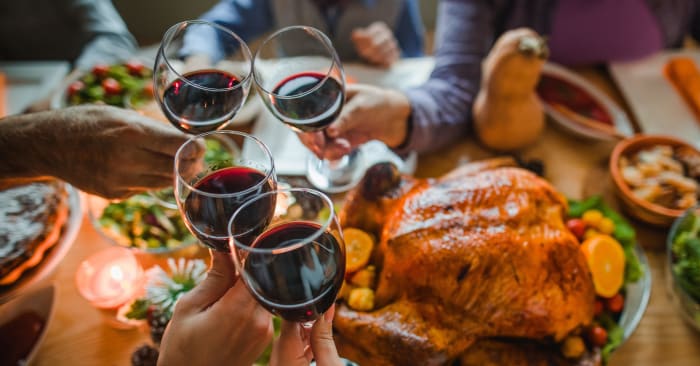
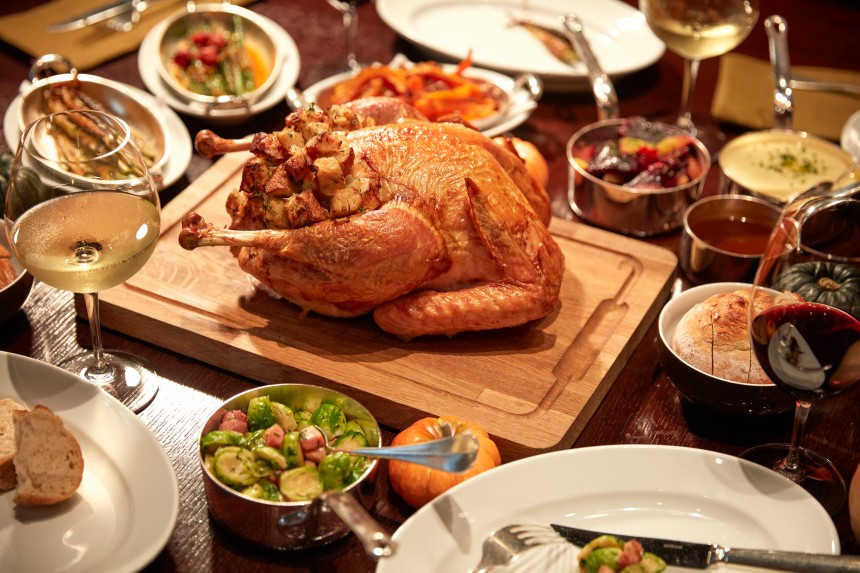
Even though Japan does not really celebrate the western version of Thanksgiving, there are many restaurants out there in Japan that do provide catered Thanksgiving meals. This includes all the dishes that you would usually eat during Thanksgiving in America like turkey, gravy and cranberry jam. You can also try to get out your cooking skills and cook your very own Thanksgiving meal at home. There are plenty of recipes out there that you can try during this festive period. Check out our guide to foreign-friendly supermarkets in Tokyo if you are in need of imported groceries.

1. Bubby’s

Originated from Tribeca, New York, Bubby’s is known for its hearty comfort food. We’re talking homemade pies, grease-laden burgers and your classic pancakes. During this period of Thanksgiving, Bubby’s sell their limited classic Thanksgiving Day dish “Roast Turkey”. It is available for order at all their stores during this period of time.

Address: 1-12-23 Akasaka, Minato-ku

Website: bubbys.jp

2. Bistro Vino

If you’re looking to pair your Thanksgiving turkey with the perfect wine, this is the go-to Italian restaurant to put under your radar. During this thanksgiving period, they are offering their special Thanksgiving dinner menu. Roppongi’s chic Bistro Vino will once again be hosting its traditional ten-day Thanksgiving feast, beginning from November 19 until November 28.  They offer takeaways for the same course as well for those looking to dine at home. You can make a reservation.

Price: Turkey Dinner Course ¥6,500 or Takeout Whole Turkey Dinner ¥22,000

Address: 6-6-9 Roppongi, Minato-ku

Website: bistrovino.com

3. The Oak Door

Splurge a bit this Thanksgiving and treat yourself to a gourmet Thanksgiving dinner at The Oak Door. Diners can look forward to a dishes such as grilled persimmon, king crab, whipped mashed potatoes, brussel sprouts and of course, the Turley. Besides the usual Thanksgiving side dishes such as cranberry jam and spinach gratin, they also offer special Japanese styled dishes like anno imo (orange-fleshed yam).

Period: November 25 – 27 (Dinner Only)

Price: ¥9,900 per person

Website: tokyo.grand.hyat.co.jp

4. T.Y.HARBOR

T.Y. Harbor is known for their stunning view of Tokyo Bay and ambiance. It is one of the most popular restaurants for thanksgiving meals for foreigners in Japan. The full-course menu offers creamy seafood chowder with shrimp, scallops, and mussels, roasted turkey with mushroom gravy, cornbread stuffing, mashed potatoes, green beans, and cranberry relish as a main course. Of course, you can’t have Thanksgiving without a classic pumpkin tart.

Price: Thanksgiving lunch option ¥1,850 or dinner ¥5,500

Address: 2-1-3 Higashishinagawa, Shinagawa-ku

Website: tysons.jp

5. SoulFood House

If you are looking for the typically family-style Thanksgiving meal, SoulFood house is your next destination. Founded by David and LaTonya Whitaker, SoulFood House is well known for its wholesome Southern and Cajun comfort food. Their meal course includes classic Thanksgiving dishes such as honey smoked turkey, cornbread dressing, garlic mashed potatoes, gravy and cranberry sauce, mac and cheese and house dessert.

Price: ¥6,500 

Address: 2-8-10 Azabujuban, Minato-ku

Website: soulfoodhouse.com

Despite the fact that Japan does not celebrate thanksgiving the same way as western countries, it can be good to learn Japanese words and phrases that are related to thanksgiving. This is can useful to you when you are visiting or even living in Japan during this period of thanksgiving.

KanjiPronunciationEnglish
勤労感謝の日kinrō kansha no hiLabor Thanksgiving Day
感謝祭kanshasaiThanksgiving
感謝祭おめでとうkanshasai omedetōHappy Thanksgiving
祝日shukujitsuHoliday
家族kazokuFamily
仕事shigotoJob
感謝kanshaAppreciation
労働rōdōLabor
祝日の飾りつけshukujitsu no kazari tsukeHoliday Decorations
家族の写真kazoku no shashinFamily Picture
プレゼントpurezentoPresent
宴会enkaiFeast
七面鳥 shichimenchouTurkey
クランベリkuranberiiCranberry
パンプキンパイpanpukinpaiPumpkin Pie
グレービーgurēbī Gravy
詰め物tsumemonoStuffing
ロールrōruRolls
アップルサイダーappuru saidāApple cider
マッシュポテトmasshupotetoMashed Potatoes

When going to Japan, trying out the various foods that Japan has to offer is a must. But what’s the first food that comes to the minds of us foreigners? Well, it would definitely be ramen right! With it being so well-known in Japan and also worldwide, it would be no wonder that we’d want to try some delicious bowls of ramen right at its source. Today, we’ll take a look at TOP 10 Ramen Restaurants in Tokyo and some common vocabulary related to ordering and eating piping hot bowls of Ramen right here in Japan!

Want to learn more about the Japanese hiragana behind ramen? Check out our article made by one of our wonderful Coto Japanese teachers, Ayana Nezu!

1. Ramenya Shima らぁ麺や 嶋

Address: 3 Chome-41-11 Honmachi, Shibuya City, Tokyo 151-0071

Phone Number: Not Available

English Menu Availability: X

Business Hours:

11:00AM-4:00PM except Thursday

Average Price: 1000-1500 yen


2. Homemade Ramen 麦苗

Address: 6 Chome-11-10 Minamioi, Shinagawa City, Tokyo 140-0013

Phone Number: Not Available

English Menu Availability: X

Business Hours: 11: 00-15: 30 (except Wednesday, Thursday)

Average Price: 950-1,500 yen


3. Teuchishiki Chuutakansuimen Nonokura 手打式超多加水麺 ののくら 

Address: 〒125-0061 Tokyo, Katsushika City, Kameari, 3 Chome−11−11 マーベラス亀有ビル 1F

Phone Number: 03-6240-7993

English Menu Availability: X

Business Hours: 11:00AM- 3:00 PM (except Sunday, Monday)

Average Price: ~999 yen


4. 迂直  Uchoku

Address: 〒167-0032 Tokyo, Suginami City, Amanuma, 3 Chome−10−16-102

Phone Number: Not Available

English Menu Availability: X

Business Hours:

Tuesday, Wednesday, Friday: 11:30AM-3:00PM

Saturday, Sunday: 11:30AM- 4:00PM

Regular Holidays: Monday, Thursday

Average Price: 1,000-1,500 yen


5. Menson Rage 麺尊 RAGE 

Address: 3 Chome-37-22 Shoan, Suginami City, Tokyo 167-0054

Phone Number: Not Available

English Menu Availability: X

Business Hours:

Monday-Friday: 11:00~15:00 / 18:00~20:00

Saturday, Sunday, Holidays: 11:00〜20:00

Average Price: ¥1,000~¥1,999


6. Shinjiko Shijimi Chuka Soba Kohaku 宍道湖しじみ中華蕎麦 琥珀

Address: 2 Chome-1-3 Nishirokugo, Ota City, Tokyo 144-0056

Phone Number: 03-6690-0893

English Menu Availability: x

Business Hours:

Weekdays: 11:30-14:30 /  18:00-21:00

Regular Holidays: Sat/Sun/Holidays

Average Price: ¥1,000~¥1,999


7. Ramen Shibata (中華そば しば田)

Address: 〒182-0003 Tokyo, Chofu, Wakabacho, 2 Chome−25−20

Phone Number: 080-4001-0233

English Menu Availability: X

Business Hours:

Monday-Saturday: 11:00-15:00

Closed on Sunday

Average Price: ¥1,000~¥1,999


8. Ramen Yamaguchi らぁ麺やまぐち 

Address: 3 Chome-13-4 Nishiwaseda, Shinjuku City, Tokyo 169-0051

Phone Number: 03-3204-5120

English Menu Availability: x

Business Hours:

Monday – Sunday 11:00 – 21:00 (LO 20:50)

The restaurant closes at 20:00 during the emergency declaration.

Average Price: ¥1,000~¥1,999


9. TAKANO  中華そば 多賀野 

Address: 2 Chome-15-10 Nakanobu, Shinagawa City, Tokyo 142-0053

Phone Number: 03-3787-2100

English Menu Availability: X

Business Hours:

Monday – Saturday: 11:30am – 2:30pm

Closed on Sundays

Average Price: ¥1,000~¥1,999


10. らーめんMAIKAGURA 

Address: 1 Chome-38-4 Funabashi, Setagaya City, Tokyo 156-0055

Phone Number: 03-6875-7110

English Menu Availability: X

Business Hours:

11:30 – 15:00 / 18:00 – 20:00 (However, they may close the restaurant when we run out of ingredients.)

Closed on Monday (If Monday is a national holiday, it will be open on the following weekday.)

Average Price: ¥1,000~¥1,999


Useful Vocabulary List when ordering Ramen

Types of Noodles in Japanese

Some Ramen restaurants typically would offer you the option to choose the thickness of your noodles. Usually, you’d choose between Futomen and Hosomen, of which the latter would be the thinner of the two.

  • 太麵 (ふとめん, Futomen)
  • ちじれめん (Chijiremen)
  • 細麵 (ほそめん, Hosomen)

Types of Soup

Moving on, let’s take look at some common soup bases that we can find here in Japan. Here’s a compiled list of what soups there are, how to read it and what they are made of!

  • 醬油 (しょうゆ): Shoyu, a Soy Sauce-based soup that’s light and goes easy on your taste buds.
  • 豚骨 (とんこつ): Tonkotsu, a soup that’s relatively light to heavy depending on how it’s made. It’s typically boiled and made from Pork bones for hours. Sometimes, even days.
  • 煮干し (にぼし): Niboshi, a soup that can also be light or heavy depending on how long it was boiled for. Typically made from dried sardines.
  • 鳥白湯 (とりぱいたん): Basically, a Tonkotsu-esque soup made from Chicken Bones.
  • 塩 (しお): Shio, a Salt-based soup that’s relatively light as well.
  • 味噌 (みそ): Miso, a soup flavoured using a type of fermented bean paste. This is relatively heavy on the palate.

3 Components to Ordering a Personalised Bowl of Ramen in Japanese

After ordering your ramen through vending machine, you will be asked questions regarding your preference of ramen. For example:

お好みはありますか?
Okonomi wa arimasu ka?
Translation: Do you have any preferences?

More or less, they’d typically be referring to the 3 components we’re going to cover. These include the hardness of the noodles, the thickness as well as the oiliness of the soup.

Noodle Hardness 面の硬さ(めんのかたさ, Men no Katasa)

  • Hard – かため
  • Normal – 普通 (ふつう)
  • Soft – 軟らかめ(やわらかめ)

Soup Thickness 味の濃さ (あじのこさ, Aji no Kosa)

  • Thick – こってり/濃いめ (こいめ) (Kotteri/Koime)
  • Normal – 普通 (ふつう)(Futsuu)
  • Light – あっさり/薄め (うすめ) (Assari/Usume)

Oiliness 脂の量 (あぶらのりょう, Abura no Ryou)

  • More – 多め (おおめ)
  • Normal – 普通(ふつう)
  • Less – 少なめ (すくなめ)

Serving Sizes

  • Regular Portion – 並盛り (なみもり, Nami Mori)
  • Medium Portion – 中盛り(なかもり, Naka Mori)
  • Large Portion – 大盛り (おおもり, Oo Mori)
  • Extra Large Portion – 特大(とくだい, Toku Dai)
  • Special – 特製(とくせい, Toku Sei)

Typical Side Orders/Condiments

  • Seaweed: のり, Nori
  • Green Spring Onion: 青ネギ (あおネギ), Aonegi
  • Chashu: チャーシュー, Chaashuu
  • Flavoured Soft Boiled Egg: 味玉卵 (あじたまたまご), Ajitama Tamago
  • Bamboo Shoots: メンマ, Menma
  • Mustard Greens: 高菜 (たかな), Takana
  • Red Pickled Ginger: 紅しょうが (べにしょうが), Beni Shouga
  • Noodle Refill: 替え玉 (かえだま), Kaedama
  • 7 Spice Pepper/Pepper: 七味唐辛子 (しちみとうがらし)/胡椒 (コショウ), Shichimi Tougarashi/Koshou 
  • Vinegar: 酢 (す), Su
  • Chilli Oil:  辣油 (らーゆ), Raayu

Want to improve Japanese? Start taking lessons at Coto Academy!

When thinking about Japanese cuisine, I believe Tonkatsu is one of the dishes you can think of. But can you choose the best Tonkatsu restaurants in Tokyo among thousands of options here?

Tonkatsu, also known as Japanese pork cutlet is a Japanese dish that consists of a breaded, deep-fried pork cutlet. It involves coating slices of pork with panko, frying them in oil, and then serving with rice and shredded cabbage. There are different ways to enjoy tonkatsu but today, let’s try making the most basic tonkatsu.

Today, we would like to recommend the TOP 5 Tonkatsu Restaurants you must try visiting in Tokyo.

1. Narikura とんかつ成蔵

Narikura is very famous among Japanese too that long line was always expected before they started the reservation system. Like a light snowfall, the ultimate pork cutlet has a soft and crunchy texture.

The meat is fluffy and tender, and it’s fried in oil at a very low temperature with fresh breadcrumbs.

After being meticulously fried for 15 minutes, it is removed from the oil and left to finish cooking with residual heat, which is why the cutlet, which is considered one of the best in Tokyo, takes more than 20 minutes to prepare.

Although their prices are high compared to other Tonkatsu restaurants, Narikura ranking 1st in Tabelog will let you make the money worth spending.

Address: 4-33-9, Naritahigashi, Suginami-ku, Tokyo

Phone Number: 03-6882-5214

English Menu Availability: X

Business Hours: Lunch 11:00 am – 2:00 pm *Reservation Required/ Dinner 5:30 pm -8:00 pm *Reservation Required

Average Price: Dinner: 6,000 JPY / Lunch: 6,000 JPY


2. Tonta とん太

Tonta’s tonkatsu is cooked for a longer period of time in low-temperature oil, giving it a distinctive light brown surface and a light but crunchy texture.

The “Special Pork Loin Katsu Set (2160 yen)” is the most popular dish, fried to a gorgeous medium with a still rose-pink center. You can taste the mild sweetness of the high-quality pork if you sample the tonkatsu simply, without any further additions.

Address: 3-17-8 Takada, Toshima, Tokyo

Phone Number: 03-3989-0296

English Menu Availability: O

Business Hours: Tuesday, Wednesday, Friday, and Saturday 18:00-20:30

Average Price: 2000-2990 JPY


3. Ponta Honke ぽん多本家

Founded in 1905 and also known as the origin of Japanese Katsukare, “Fontahonke”.  Streamlined, warmly decorated eatery offering traditional regional dishes for lunch & dinner.

Address:  3 Chome-23-3 Ueno, Taito City, Tokyo 110-0005

Phone Number: 03-3831-2351

English Menu Available: O

Business hours:

[Sunday, holiday] Lunch 11:00-14:00 (Last order 13:45)

[Sunday, holiday] Dinner 16:00~20:00 (Last order 19:45)

[Tuesday-Saturday] Lunch 11:00~14:00 (Last order 13:45)

[Tuesday-Saturday] Dinner 16:30~20:00 (Last order 19:45)

Closed day: Monday

Average price: 4,000 yen for lunch / 4,000 yen for dinner.


4. Sugita すぎ田

Six minutes’ walk from Kuramae Station on the Asakusa Line. In Kuramae, there is a tonkatsu shop called Sugita. The store was founded 38 years ago and current store owner is the second generation of this store.

Recommended menu by the main chef is Ross Katsu- 2,100 yen and you could enjoy Tonkatsu much more by adding Tonjiru (Pork Soup).

Address: 3 Chome-8-3 Kotobuki, Taito City, Tokyo 111-0042

Phone Number: 03-3844-5529

English Menu Availability: O

Business hours:

Mon-Wed, Friday-Sunday, Holiday, and the day before holiday

Lunch 11:30-14:00 (Last Order 13:45)

Dinner 17:00-20:30 (Last order 20:15)

Closed days: Thursday

Average price: 3,000 yen for lunch / 3,000 yen for dinner.

5. Tonkatsu Wako 和幸

This place is known for its delectable tonkatsu (pork cutlets) that are fried till crisp to seal in the meat’s taste. Tonkatsu is offered in a variety of branded pork variants, including Oirase Garlic pork.

This restaurant is on the 12th floor of the Odakyu Department Store, which is readily accessible from the Shinjuku Station West Gate. You may enjoy a view of the Shinjuku cityscape while eating with an outstanding view from the windows.

Address: 12F, Odakyu Department Store, 1-1-3, Nishi Shinjuku, Shinjuku-ku, Tokyo

Phone Number: 03-3343-4889

English Menu Availability: X

Business Hours:

11:00 am – 10:00 pm (Lunch L.O. 4:00 pm, Dinner L.O. 9:15 pm)

Average Price: Dinner: 2,000 JPY / Lunch: 1,500 JPY


If you do not have time to visit the restaurants, try making your own Tonkatsu at home by using our Tonkatsu recipe!

Tonkatsu Related FAQs

What is tonkatsu?

Tonkatsu is the Japanese name for fried pork cutlet. It is deep fried pork loins. Mostly served with rice, but sometimes served with curry as well. 

Where can I find tonkatsu?

Usually for fried cutlet, it is recommended to dine at a restaurant. This article has mentioned a few very popular tonkatsu restaurant in Tokyo, including Narikura とんかつ成蔵 and so on.

How to eat tonkatsu?

Tonkatsu is usually served with miso soup, rice, and salad with goma sauce. People enjoy this dish before exams or important competitions, because the sound of katsu also means winning in Japanese.

What does tonkatsu mean in Japanese?

Ton means pork and katsu means friend cutlet in Japanese. Together they mean fried pork cutlets. 

Want to improve Japanese skills? Start taking lessons at Coto Academy!

Tokyo is home to a large number of Michelin starred restaurants but getting a table can be difficult if you haven’t made a reservation in advance.
Unfortunately most restaurants in Japan are not able to handle online booking so you will have to book your table by phone. We know how challenging making a phone reservation in Japanese can be, so we’ll guide you through everything you need to know to book a restaurant by phone without accident.
https://www.youtube.com/watch?v=nDNq_oIKuqI
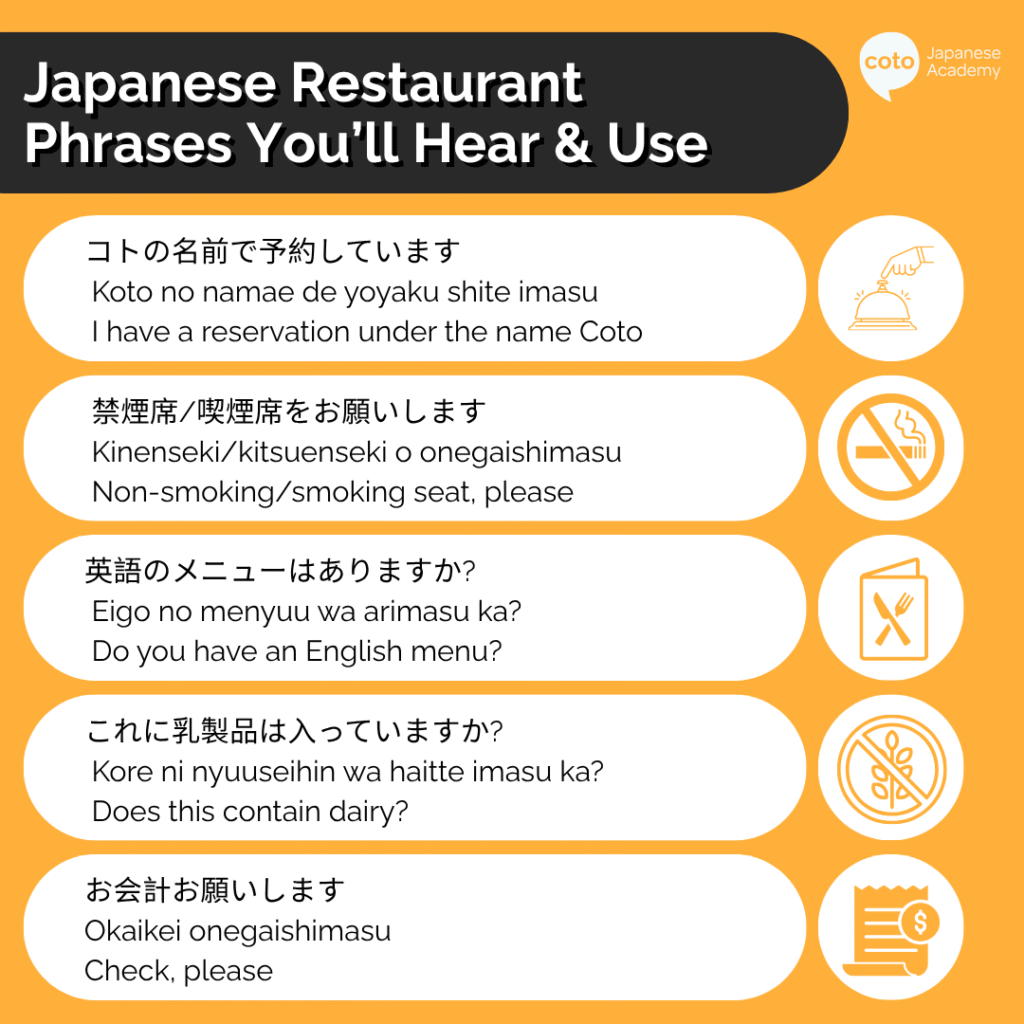
Reservation or booking in Japanese is 予約(よやく) and to book/to make a reservation is 予約をする.  When you call a restaurant, you could start with:
すみません、予約(よやく)をしたいんですが。
Excuse-me, I’d like to make a reservation.
The restaurant staff will follow-up by asking when and from what time you’d like to book. If your reservation is for an exact date such as November 25th, you would say:
11(がつ)25(にち)(よる)です。
For the evening of November 25th.
Or if your dinner plans are for the next day you could say:
明日(あした)の夜です。
Tomorrow’s evening.
明日のランチです。
Tomorrow’s lunch.
To give the time you wish to book, you can say:
6:30からで お(ねが)いしたいんですが。
I’d like to book from 6:30 if possible.
()からお願いします。
From 7 pm please.
The clerk will also ask how many people will come with you. Remember that Japanese language uses various counters and that the counter for people is “(にん)” with the exception of 1 person (ひとり) and 2 people (ふたり).
4人(よんにん)です。
For 4 people.
For more restaurants, the above phrases are enough to complete your reservation. However, depending on the restaurant you’re booking, you could give your seat preference (table, counter, private room), you could ask for a smoking or non-smoking section.
()りごたつ」の(せき) ありますか?
Do you have kotatsu seats?
個室(こしつ)でお願いしたいんですが。
I’d like to have a private room.
カウンター席でお願いします。
I’d like to have counter seats.
テーブル席でお願いします。
I’d like to have table seats.
禁煙席(きんえんせき)でお願いします。
I’d like the non-smoking section.
(しず)かな席 お願いします。
I’d like a quiet seat please.
If they can’t accommodate your needs, you could say:
あ、そうですか。
Oh, I see.
残念(ざんねん)です。
It’s a pity.
まあ、いいか。
Well, whatever.
Once the details of your reservation are decided, the clerk will ask for your name and your phone number. They will also make sure all information are correct and repeat the details.
If an information is wrong, you can correct them using the expression “じゃなくて”:
土曜日(どようび)」じゃなくて、「金曜日(きんようび)」です
Not Saturday, but Friday.
「7時」じゃなくて「8時」です。
Not at 7, but at 8.
Let’s see an example of a phone call to book a restaurant:
店員(てんいん): お電話(でんわ)ありがとうございます。「なになにレストラン」です。
Clerk: This is NaniNani restaurant, thanks for your call.
あなた: あのー、予約(よやく)したいんですが。
You: Well, I’d like to make a reservation.
店員: お()にちはいつでしょうか?(or いつよろしいでしょうか?)
Clerk: When would you like to book?
あなた: 11月25日の 土曜日なんですが。
You: On Saturday, November 25 if possible.
店員: お時間(じかん)何時(なんじ)からですか?(or 何時からでしょうか?)
Clerk: From what time?
あなた: 6:30からで お願いしたいんですが。
You: I’d like from 6:30 pm.
店員: 何名様(なんめいさま)ですか?
Clerk: For how many people?
あなた: 4人なんですけど。
You: For 4 people.
店員: はい、少々 お()ちください。… … お待たせいたしました。
Clerk: Sure, please wait a bit. … … I’m sorry for keeping you waiting.
大丈夫ですよ。それでは、お名前(なまえ)とお電話番号(ばんごう)をお願いします。
It’s fine. Please then let me know your name and phone number.
あなた: ジョン・スミス、080-1234-2578です。
You: John Smith, 080-1234-2578.
店員 : 復唱(ふくしょう)いたします。080-1234-2578ですね?
Clerk: Let me confirm. It’s 080-1234-2578, right?
あなた: はい。あ、個室(こしつ) お願いしたいんですが。
You: Yes. Oh, and I’d like a private room…
店員: (もう)(わけ)ございません。その日は 個室が全部(ぜんぶ)()まっておりまして・・・。 テーブル席でもよろしいでしょうか?
Clerk: I’m really sorry. On that day, all our private rooms are occupied. Are you fine with seats at a table?
あなた: あー、そうですか。じゃ、それでいいです。
You: Oh, I see. It’s fine, yes.
店員 : (おそ)()ります。では、11月25日土曜日6:30から、4名様でお待ちしております。
Clerk: Thank you very much. So, we’ll wait for 4 people, on Saturday, November 25, from 6:30.
あなた:よろしく お願いします。
You: Thanks.
Useful expressions: 
Some restaurants may ask if you already have chosen a course. If you prefer to pick the menu on the day, you can say:
そちらに()ってから()めます。
Or you can precise:
()放題(ほうだい)で お願いします。
All-you-can-drink please.
3,000円の コースで お願いします。
The 3000 yen course please.
If you have found the restaurant reference online, on website like Gurunavi or Hot Pepper, you may have a discount coupon. The clerk might ask:
クーポンお()ちですか?
Do you have a coupon?
You can answer:
ぐるなび / Hot Pepperのクーポンを持ってます。
I have a Gurunavi / Hop Pepper coupon.
Vocabulary: 
日にち: date
名様: polite way to counter people
少々(しょうしょう)()ちください: polite way to ask “please wait a moment”
回復する: to repeat; often used in this contexte to confirm information that were given
個室: private room
禁煙: non-smoking
喫煙(きつえん): smoking
全部埋まる: be all taken
恐れ入ります: very polite way to say thank you

If you’ve decided at the end of the day to not reserve a spot at the restaurant, walking in would still be an option for some restaurants. However, knowing how to ask for what’s on the menu and place orders at a Japanese restaurant can definitely be helpful!

If you are interested in studying Japanese in Tokyo, find out more about our school by filling out the form below.

Coto Japanese Academy is a unique Japanese Language School in Iidabashi Tokyo, we offer relaxed and fun conversational lessons for all levels of Japanese learner. Coto Japanese Academy prides itself on its community atmosphere and fun lessons that focus on creation of opportunities to speak and learn Japanese. If you are interested in studying Japanese in Tokyo – please visit our contact page here.

Despite the reputation as an expensive city, Tokyo is full of cheap fast food type restaurants for you to get a decent cheap meal. Most meals can be had for under ¥1000 and it’s a great way to get a cheap meal and practice ordering at a Japanese fast food restaurant.
Many chain restaurants have a ticket system to purchase your meal. This is where you would buy your meal from something that looks like a vending machine and then take the ticket that you get to the counter person.
The vending machine, 券売機けんばいき is often placed outside the restaurant or just inside the door. You have to select your meal and pay the machine at which time you will receive a meal ticket (食券しょっけん).
Japanese fast food restaurant meal vending machine
Most vending machines require you insert the money first so buttons featuring food light up. Don’t forget to push the おつり button to get your change! As you enter the restaurant, you give your ticket to the waiter.
This system is very common for:

  • たちぐち: stand and eat restaurants
  • そば: soba (buckwheat noddles) restaurants
  • ラーメン: ramen (Chinese-style wheat noodles) restaurants
  • うどん: udon (thick wheat flour noodle) restaurants

Self-service: セルフサービス
It is very common in these types of restaurants that the customer will have to retrieve drinks, seasoning and condiments for themselves as well as return their own tray. Look for this sign for where you have to return your tray.
Japanese fast food restaurant Tray return sign
Portions in Japan tend to be much smaller than what you might be used to so to ask for smaller or bigger portion of food you would say:
なみ – regular size
大盛おおもり – large size
なみ, regular, and 大盛おおもり, large are used to describe the sizing of dish like どんぶり, a Japanese rice bowl dish with various topping such as meat or fish.
If you want to order a large beer rice bowl, you’ll say:
牛丼ぎゅうどん大盛おおもでおねがいします。
(I’ll have a large beef rice bowl please.)
だい, ちゅう, しょう
If you’re in a restaurant that serves noodles such as udon you would say:

  • だい – large
  • ちゅう – regular
  • しょう – small

If you want to order a regular portion of udon, you could say:
うどんのちゅう、おねがいします。(I’ll have a regular bowl of udon, please.)

If you are interested in studying Japanese in Tokyo, find out more about our school by filling out the form below.

[contact-form-7 id=”12634″ title=”Inquiry Form_copy”]


Coto Japanese Academy is a unique Japanese Language School in Iidabashi Tokyo, we offer relaxed and fun conversational lessons for all levels of Japanese learner. Coto Japanese Academy prides itself on its community atmosphere and fun lessons that focus on creation of opportunities to speak and learn Japanese. If you are interested in studying Japanese in Tokyo – please visit our contact page here.