



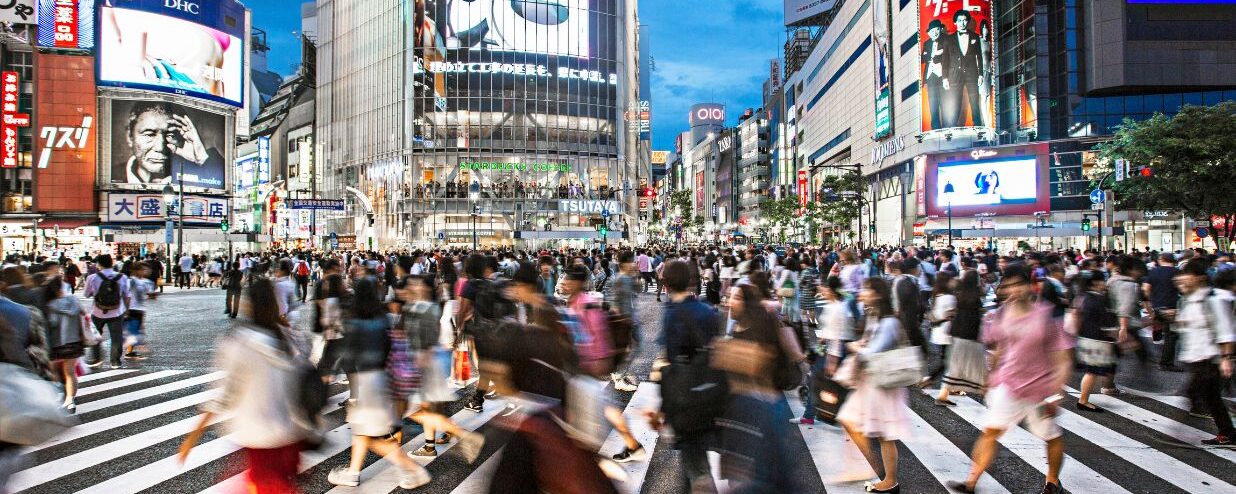


Shibuya is a trendy, hip, and fun-loving ward in Tokyo that never seems to sleep. From shopping and eating gluten-free ramen to seeing an upcoming artist live, there is always something to do. That’s why we have this Shibuya Guide to make sure you have a wonderful experience here.
Compared to other shopping districts in Tokyo, Shibuya is relatively new. A lot of the high-rise buildings have been built over the past few decades, and the developments aren’t done as of today.
As Tokyo’s main entertainment hub for young people and foreigners, the city has come a long way since its early days. Shibuya is also known for being both accessible and affordable.
When it comes to shopping, compared to Ginza, known for its luxury brands, Shibuya offers much more variety. You still have the luxury brands, but there are many more affordable, lesser-known clothing stores in between.
This is a neighborhood guide to Shibuya. We’re here to cover the ward, look at the station, and the different districts that make up Shibuya, and explore how to stay in the loop for all the festivities.
At the heart of Shibuya is the Shibuya Station, infamous for being maze-like and crowded. Here, three major train companies operate lines that run through Shibuya Station: JR (Japan Rail), Keio, and Tokyu.
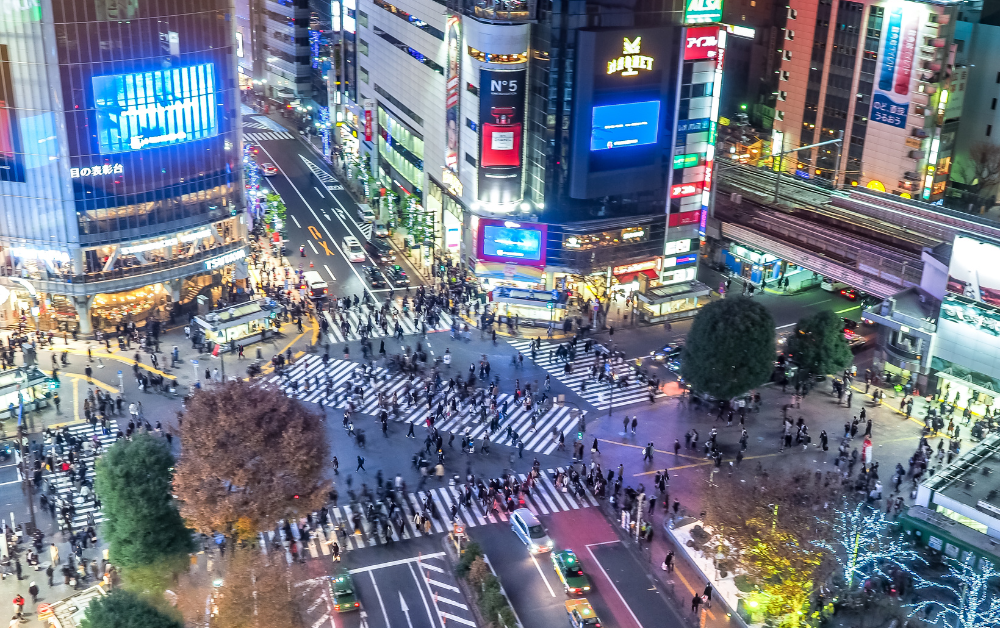
Overall, there are five entrances and exits. If you exit through the Hachiko Gate, you can directly step out into the Shibuya Crossing and see the Hachiko Statue. Fair warning, though — it’s very crowded!
When navigating this station, it is important to note that transferring from one corporation to another requires leaving the ticket gate and entering another.
However, if you are just changing trains within the same corporation, you often don’t need to go through a ticket gate at all. Here is a breakdown of the different lines and what direction they go in:
- JR (Japan Rail): Four JR lines run through Shibuya Station.
- The Yamanote line loops around Tokyo, hitting major stations such as Shinjuku, Ikebukuro, Tokyo, and Shinagawa.
- Next, we have the Saikyo line, which runs north to Saitama.
- The Shonan-Shinjuku line runs along the Shonan coast and into Kanagawa.
- The Narita Express can take you to the airport.
- The Keio Inokashira line can take you to Shimokitazawa and Kichijōji.
- The Denentoshi line, which goes into Kanagawa,
- The Hanzomon line, which is a run-on from the Denentoshi line and goes northeast into Tokyo, towards Otemachi station which is near Tokyo station.
- The Tokyu Toyoko line for Daikanyama, Naka-Meguro, and Yokohama.
- The Ginza line from Shibuya can take you to Ginza and also Asakusa.
- Finally, we have the Fukutoshin line, which stretches to the northwest of Tokyo
Tip: The train station can be overwhelming at times, as there are so many lines and even more exits. If you are coming from a Tokyu train line, one rule of thumb to remember is how to find your way to Hachiko, the dog statue, which is right next to Scramble Square. You just need to look for exit 8; an easy way to remember this is that eight in Japanese is hachi, so follow hachi (8) to get to Hachiko.
Check out: How to Get Around Japan with Public Transportation
Downtown Shibuya: Udagawacho
When people think of downtown Shibuya, the streets of Udagawacho (宇田川町) often come to mind. This is where you can find the iconic Scramble Square, the Hachiko Statue, and an array of large department stores.
One of the main characteristics of Udagawacho is the pedestrian-only street known as Shibuya Center Gai or Basketball Street, which is just across the road from the Hachiko statue. This street is lined with restaurants, both new and old, fashion and cosmetic shops, and game arcades.
Udagawacho is also home to Parco, Loft, and a Mega Don Quijote. Parco is a flagship department store with big brands such as Dior, Gucci, and Dr. Martens. Like many department stores, food can be found underground with options such as sushi, ramen, and even a vegan izakaya. Loft, on the other hand, is a lifestyle-oriented store that has an abundance of cute stationery.
The store in Shibuya is one of the largest and caters to tourists, so it is a perfect place to shop for omiyage (souvenirs). The Mega Don Quijote is a great place to grab a bargain, as products are discounted.
Again, this Mega Don Quijote offers an excellent range of omiyage, as it is located in a popular tourist destination.
If you want to explore other cool neighborhoods in Tokyo besides Shibuya, check out this article!
Explore Shibuya Like a Local by Learning Japanese!
One of the best ways to explore Shibuya like a local is by learning Japanese while you’re here.
Even a small amount of Japanese can go a long way. From ordering food and asking for directions to chatting with shop staff, learning the language helps you connect more naturally with the city and its people.
If you’re visiting Tokyo short term, Coto Academy makes it easy to fit Japanese study into your travel plans. With a school location right in Shibuya, Coto Academy Shibuya offers flexible, short-term Japanese lessons designed specifically for travelers and busy schedules. Classes focus on practical conversation, so you can start using Japanese in real-life situations right away.
Coto Academy is known for its small class sizes, friendly learning environment, and professional native Japanese teachers. Many students are travelers or short-term residents, making it a great place to meet new people while learning something meaningful.
Want to study Japanese with us?
Exploring Dogenzaka: The Love Hotel Hill
If you use Shibuya 109 as your landmark, Dogenzaka Street is to the left, with Bunkamura Street to the right. This area has a cinema and some clothing stores such as Uniqlo.
However, as its nickname “love hotel hill” might suggest, this district is famous for its love hotels.
Originally, love hotels in Japan came about for sex workers to offer their services in a safer environment, but later became popular with the general public as they offered more privacy than a home, as Japanese apartment walls tend to be thin.
This particular area in Shibuya saw a boom in the industry. Under the Shibuya City Love Hotel Architecture Regulation Ordinance enacted in 2006, no more love hotels were allowed to be built, as the industry had a negative connotation, but the hotels that were already there were allowed to remain.
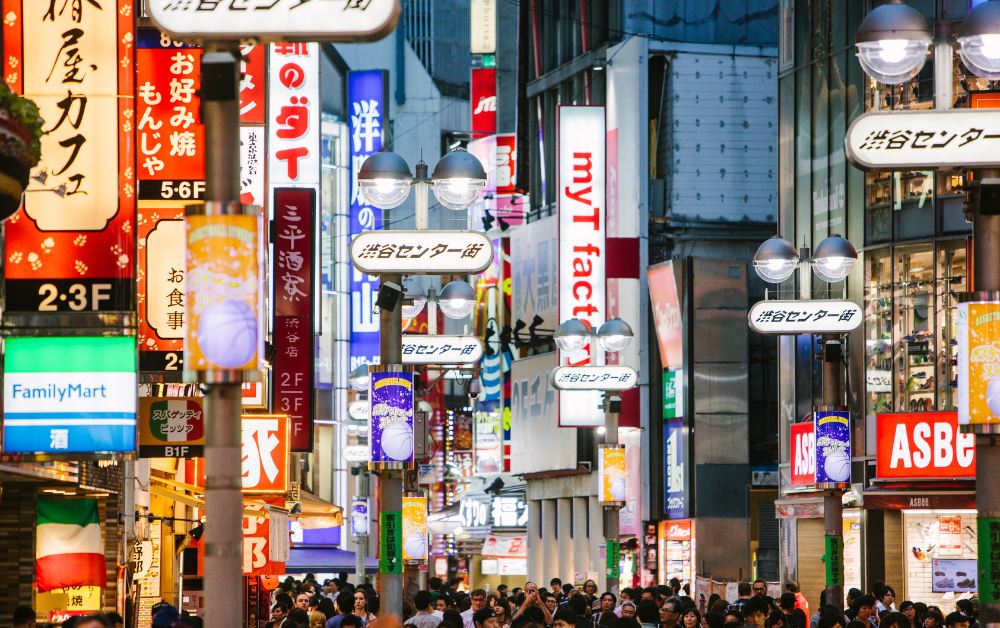
For them to stay in business, they have to be careful with their marketing and look for ways to catch the eyes of passersby. Hence, a trend began: themed love hotels!
At first, a love hotel was built in the shape of a castle called the Meguro Emperor. From there, more outlandish themes have been created.
A walk around Dogenzaka and you can find a sweets-themed hotel offering pick and mix with giant plastic donuts stuck to the walls, whilst others offer more kawaii or elegant exteriors.
Around the Dogenzaka area, these love hotels are hard to miss with their flashy, neon lights offering options to “rest” or “stay” depending on whether you stay just a few hours or overnight.
Aside from love hotels, Dogenzaka boasts a thriving nightlife scene with nightclubs and live music just a three-minute walk away from the station.
Oku-Shibuya
Centered around Kamiyamacho, a popular shopping street, Oku-Shibuya is the calm and quiet side of Shibuya. It’s certainly different. compared to the likes of Center Gai and Dogenzaka.
Here, you can find pretty cafes, laid-back restaurants, and independent vendors. Here’s a tip to go to Oku-Shibuya: use Shibuya 109 as your landmark, instead of going left to Dogenzaka, the road to the right, Bunkamura Street.
It will take you straight to Oku-Shibuya and lead you to Yoyogi Park. Yoyogi Park is particularly famous for their cherry blossoms and autumn leaves.
This part of Shibuya is a bit further from the station and also accessible from Yoyogi Park station. Cafes around this part of the neighborhood have sofas to lounge in, artisan coffee, and lots of vegan options.
Some of the restaurants even allow dogs! It’s also close to Dog Heart Cafe, where you can cuddle with poodles and take them for a walk in Yoyogi Park. (Check out other cool themed cafes in Tokyo here)!
Dining Out in Shibuya
As the upcoming, constantly developing, trendy area of Tokyo, Shibuya has a variety of choices when it comes to dining out — from popular American chains such as the TEXMEX Factory, TGI Fridays, and Taco Bell, to vegan and vegetarian-friendly restaurants such as Izakaya Masaka (serving vegan gyoza)!
We have a few recommendations depending on what you fancy below.
What Else is Near Shibuya?
Within the ward, Shibuya-ku, is Yoyogi Park, a large expanse of nature with sakura trees, a dog park, a pond, a bird sanctuary, and sports facilities such as a basketball court.
Yoyogi Park is the ideal nature escape for those who want to go somewhere close by in the city. It is approximately a 15-minute walk from Shibuya Station, but can also be reached from Yoyogi Station, just one train ride away on the JR Yamanote line.
Harajuku is also a short walk from Shibuya station and home to the shrine Meiji-Jingu and the neighboring Omotesando, where more stylish cafes and department stores can be found.
Daikanyama is a little south of Shibuya and is a bit quieter, with cafes, a bookstore, and the historical Kyu Asakura House, a traditional Taisho-era mansion built in 1919.
Events in Shibuya
Due to its easy access and popularity, Shibuya is often chosen as the prime location for annual events such as Fashion Week and Halloween. This year, in March 2023, Shibuya fashion week saw a runway, a designer market, and a “scramble music show” plus much more.
The Shibuya ward office also organizes a lot of events, from sports activities to art festivals.
In Yoyogi Park, there is almost always something going on, from Women’s runs to international festivals; it is always worth a visit. You can check out their calendar to see what’s taking place and when by following this link. They also have a Twitter account to keep you up to date.
Besides that, a lot of meetups, language exchange events, and volunteer events are usually held in Shibuya.
After all, it’s one of the places where local Japanese and foreigners mingle together. This makes Shibuya a great place for you to make new friends and explore opportunities to speak Japanese with natives!
Want to learn Japanese in Tokyo?
As you wrap up your Shibuya adventure, like exploring buzzing nightlife and trendy cafes, why not take your experience one step further by learning Japanese while you’re here? Studying the language is one of the best ways to connect with local culture and make your time in Tokyo even more meaningful!
With Coto Academy having Shibuya and Shinjuku Japanese language schools, it’s easy to fit Japanese lessons into your travel plans. Our schools offer short-term, flexible classes designed for travelers and busy schedules. You can join for just a week, focus on conversation, and start using Japanese in real-life situations right away.
If you’re looking for a fun, practical, and memorable thing to do in Shibuya, learning Japanese in the heart of Tokyo might be the perfect choice. Take a free Japanese level check and start your language journey today!
Does Coto Academy have a school in Shinjuku?
Yes, Coto Academy has a school located in Shinjuku. This will be their latest campus and fifth location. The school is set to open in April 2026.
What is Shibuya known for?
Shibuya is a popular shopping and entertainment district located in Tokyo, Japan. It’s known for its bustling streets, fashion boutiques, Hachiko Statue, and the Shibuya Crossing, which attracts thousands of visitors every day.
How can I get to Shibuya
There are several ways to get to Shibuya from Tokyo, including taking the train, bus, or taxi. The most popular way is to take the JR Yamanote Line or Tokyo Metro Ginza Line, which will take you directly to Shibuya Station.
What are some popular attractions in Shibuya?
Some of the most popular attractions in Shibuya include Shibuya Crossing, Hachiko Statue, Shibuya 109, and Meiji Jingu Shrine. These attractions offer a glimpse into the district’s unique culture and history.
Where are the best places to eat in Shibuya?
Shibuya is home to a wide range of restaurants serving everything from traditional Japanese cuisine to international dishes. Some of the best places to eat in Shibuya include Ichiran Ramen, Afuri Ramen, Genki Sushi, and Gonpachi.
Why is Shibuya crossing so famous?
Shibuya’s crossing remains the world’s busiest pedestrian crossing, with as many as 3,000 people crossing at one time, and has been featured in many movies around the world. It is also right next to the famous Hachiko dog statue, which is said to have greeted his owner every day when he returned from work. Even after his owner’s sudden death, Hachiko still
went to the station to wait for his owner to return.
Is Shibuya dangerous?
Just like most of Japan, Shibuya is relatively safe. That being said, it is still important not to do anything you wouldn’t do in your home country and ensure you keep your belongings safe and in sight at all times.
Is Coto Academy located in Shibuya?
Yes, Coto Academy has a physical school in Shibuya, which opened in 2023. The school is known for its beginner-friendly, flexible Japanese lessons for short-term visitors, residents, and working professionals in Japan.
How many locations does Coto Academy have?
Coto Academy has several schools located in Tokyo and Yokohama for in-person Japanese language learning. They have campuses in Shibuya, Iidabashi, Yokohama, and Minato. Its fifth in-person school will be in Shinjuku, set to open in April 2026.
