



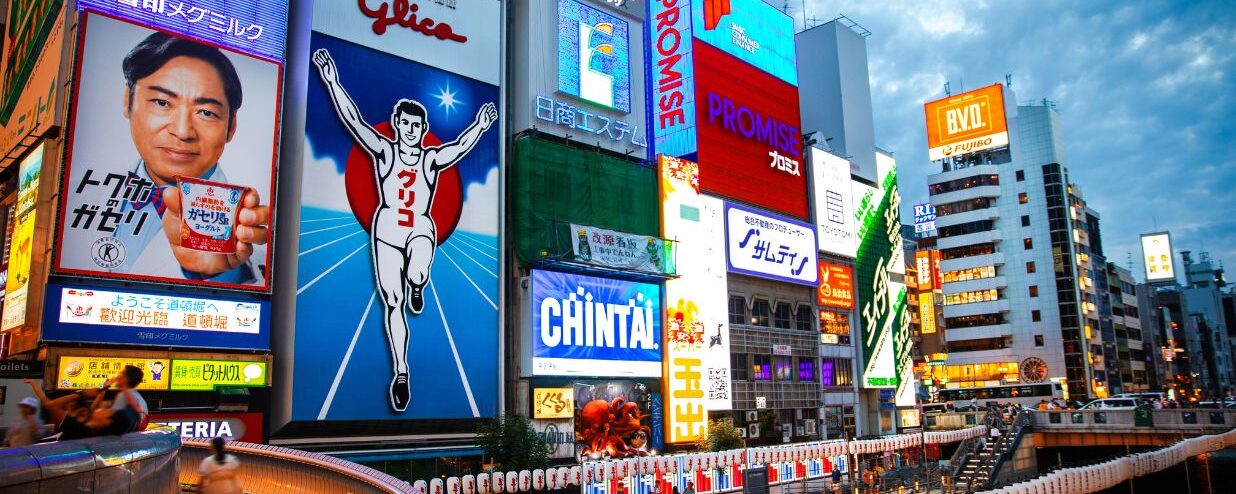


Ever wanted to learn a few Kansai-ben phrases? Kansai-ben is one of Japan’s most recognizable and lively regional dialects, known for its humor, warmth, and expressive flair. Spoken in cities like Osaka, Kyoto, and Kobe, to many of us who don’t speak it, it sounds more casual, playful, and emotional than standard Japanese. In fact, many comedians use Kansai-ben because it just feels funnier and more down-to-earth.
If you’re planning a trip to the Kansai region or just want to understand Japanese pop culture better, learning a few key Kansai-ben phrases will help you connect with locals, catch jokes you’d otherwise miss, and sound a lot more natural in conversation. Let’s learn a few Kansai ben phrases to know!
What is Kansai-Ben?
Kansai-ben is just the dialect of the Kansai region, which includes major cities such as Osaka, Kyoto, and Kobe (famous for their Kobe beef), as well as prefectures like Nara, which boasts many cultural heritage sites. Kansai-ben is characterized by its more expressive nature and its softer sound. For example, in standard Japanese, sentences often end in だ (da), but in Kansai-ben, they end in や (ya), resulting in a softer sound.
You may have already heard that Japan has many regional dialects, which can range from minor changes in pronunciation to completely different vocabulary and grammar. If you’re not familiar with these differences, it can definitely catch you off guard and make you feel like you suddenly can’t understand anything.
Kansai-ben, particularly from Kyoto, is one of the influential dialects in Japan, having strongly influenced Keigo, or Japanese honorific speech. Even outside of formal speech, Kansai-ben phrases have spread into standard Japanese, with words like めっちゃ (meccha) or おもろい (omoroi).
If you want to dive deeper into Kansai-ben, check out our blog: Kansai-Ben and Everything You Need to Know About It.
Top Kansai-ben Phrases to Know
1. なんでやねん (Nande Yanen): Seriously?!
Standard Japanese: なんでだよ(nande da yo)
Meaning: “What are you talking about?” or “Why?”
This is one of the most iconic Kansai-ben phrases, practically the symbol of Kansai humor. You’ll hear it constantly in Osaka, especially in manzai comedy, where one person says something absurd and the other immediately snaps back with “なんでやねん!”
It’s usually used in a playful, joking, or exaggerated way rather than in anger. It’s perfect for expressing disbelief, reacting to someone teasing you, or responding to a silly comment.
It’s also so well-known that even people outside Kansai use it for comedic effect.
Example:
僕は一番有名なスターだよ。
Boku wa ichiban yuumeina sutaa dayo.
I am the most famous superstar.
なんでやねん!
Nandeyanen!
What are you talking about?
2. おおきに (Ookini): Thank you
Standard Japanese: ありがとう (Arigatou)
Meaning: “Thank you.”
おおきに (ookini) is a classic Kansai-ben expression meaning “thank you” in Japanese that carries a warm, charming nuance, reminiscent of old-fashioned Kansai culture. It’s still commonly used in Osaka, Kyoto, and especially in older shopping streets. It has a friendly, nostalgic feel, like something a kind shopkeeper or neighbor might say.
Example:
店員:これ、おまけです。
Tennin: Kore, omake desu.
Shopkeeper: This is a little freebie for you.
あなた: おおきに!
Anata: Ookini!
You: “Thank you so much!”
3. めっちゃ (Meccha): Very or Extremely
Standard Japanese: とても・すごく
Meaning: “Super”, “really”, or “extremely.”
If you speak some Japanese, you might actually already use the Japanese slang めっちゃ (meccha). めっちゃ (meccha) means “very” and is everywhere in Kansai, used by kids, teens, and adults. Everyone uses it casually to express and emphasize just about anything, such as how tasty something is or how horrible the weather is.
As one of the most popular Kansai expressions, it has spread beyond Kansai and become national slang, regularly used nationwide.
Example:
このラーメン、めっちゃおいしいで!
Kono ramen, meccha oishii de!
This ramen is super delicious!
4. ほんま (Honma): Really?
Standard Japanese: 本当 (Hontou)
Meaning: “Really” or “seriously?”
ほんま (honma) by itself expresses genuine surprise or mild disbelief; it’s also used for emphasis. Compared to 本当 (honto), it sounds more casual, softer, and friendlier.
Kansai also uses the stronger version ほんまなん (honmanan) or ほんまかいな (honmakaina) (“No way!”).
Example:
明日、雪が降るらしいで。
Ashita, yuki ga furu rashii de.
I heard it’s going to snow tomorrow.
ほんま?
Honma?
Really?
5. ちゃう・ちゃうねん (Chau/Chaunen): No, actually…
Standard Japanese: 違う・違うんだ (chigau/chigaunda)
Meaning: Soft correction or explanation
If you know anything about Japanese culture, you know they tend to say no indirectly. ちゃう (chau) feels casual and gentle, great for correcting someone without sounding harsh, just like how you can 違う (chigau) in standard Japanese. Adding ねん (nen) to make ちゃうねん adds nuance, similar to: “no, see, that’s not it…” or “it’s not what you think…” You often use this form of the expression when explaining yourself.
Example:
昨日来なかったの、忘れたん?
Kinou konakatta no, wasuretan?
You didn’t come yesterday, did you forget?
ちゃうねん!仕事が長引いてん。
Chaunen! Shigoto ga nagabiiten.
No, it’s not that! Work ran late!
6. あかん (Akan): No Good or Oh No
Standard Japanese: だめ (dame)
Meaning: “No good”, “stop”, “this won’t work”, or “oh no.”
あかん is extremely versatile in Kansa, equivalent to だめ (dame) in standard Japanese. You can use it whenever something won’t work, doesn’t seem possible, or to say something is bad or not allowed. Depending on tone, it can be serious, funny, or dramatic.
Example:
急がなあかんで!電車来るで!
Isogana akan de! Densha kuru de!
“We’ve gotta hurry! The train’s coming!”
Want to get more familiar with Japanese adjectives? Check out our article: A Guide to Japanese Adjectives: Na (な) and I (い) Adjective
7. ほな・ほな、また (Hona / Hona, mata): See you!
Standard Japanese: じゃあね
Meaning: Casual goodbye.
ほな (hona) is a friendly and cheerful way to say “see you.” You’ll hear it in everyday Kansai conversations. ほな、また (hona mata) or “see you again” is especially common.
Example:
今日はありがとう。
Kyou wa arigatou.
“Thanks for today.”
ほな、また!
Hona, mata!
“See you later!”
8. せやな (Seyana): Yeah, that’s true
Standard Japanese: そうだね
Meaning: Agreement with a warm, approving tone.
せやな (seya na) is softer than そうだね (souda ne), which is the standard Japanese equivalent. It sounds friendly, thoughtful, and very Kansai-like. You use it to warmly agree with someone or just to express approval.
Example:
暑いなぁ。
Atsui naa.
“It’s really hot.”
せやな。
Seyana.
“Yeah, it really is.”
9. なんぼ (Nanbo?): How much is it?
Standard Japanese: いくら?
Meaning: “How much is it?”
This is a very practical Kansai phrase often used in markets, shops, and street stalls, especially in Osaka. You can use it to ask for the price of whatever you want to purchase; it’s basically the Kansai-ben equivalent of いくら (ikura) or “how much?”
Example:
これ、なんぼ?
Kore, nanbo?
“How much for this?”
10. どないしたん (Donaishitan?): What’s Wrong?
Standard Japanese: どうしたの?
Meaning: “What’s wrong” or “what happened?”
どない (donai) is Kansai-ben for どうやって (douyatte), which means “how” or “what”, and した or したん (shita/shitan) is the past tense of “to do.” So, the phrase, どないしたん (donaishitan?), means something like “what happened” in English.
You can use this expression to ask someone if something is wrong while expressing care or concern.
Example:
元気ないな。どないしたん?
Genki nai na. Donaishitan?
You seem down. What’s wrong?
Want to study Japanese with us?
11. ~しとる / ~しとんねん (~Shitoru / ~Shitonnen): I’m doing it!
Standard Japanese: ~している / ~しているんだ
Meaning: “I’m doing it!”
It’s the Kansai equivalent of 〜している (~shite iru), meaning “I’m doing it,” but it adds more emphasis, often when responding to someone impatiently. Similar to saying something like this in English, “I AM doing it!”
Example:
早く準備して!
Hayaku junbi shite!
Hurry up and get ready!
もうしとんねん!
Mou shitonnen!
I am getting ready!
12. かまへん (Kamahen): I Don’t Mind / It’s Fine
Standard Japanese: かまわない (Kamawanai)
Meaning: “I don’t mind,” “It’s okay,” “No problem,” “Don’t worry about it.”
かまへん is the Kansai-ben evolution of kamawanai, meaning “I don’t mind”:
kamawanai → kamawahen → kamahen
It’s a very friendly, comforting phrase used to reassure someone who’s apologizing or feeling bad about a small inconvenience. You’ll hear it often among friends, coworkers, and even older Kansai locals.
It feels warmer and relaxed than the Kantou version, 大丈夫 (daijoubu) or 気にしないで (ki ni shinaide).
Example:
行けなくてごめん。
Ikenakute gomen.
Sorry, I can’t make it.
かまへん、かまへん。
Kamahen, kamahen.
It’s fine, don’t worry about it!
13. おもろい (Omoroi): Funny
Standard Japanese: おもしろい (Omoshiroi)
Meaning: “Funny,” “interesting,” “entertaining,” or “amusing.”
おもろい (omoroi) is one of the most recognizable Kansai-ben adjectives. It carries a casual, lively nuance and is used constantly in Osaka, the comedy capital of Japan. Compared to the standard おもしろい (omoshiroi), おもろい feels more expressive, more humorous, and more “Kansai-like.”
People use it to describe funny people, amusing situations, entertaining TV shows, or interesting stories or events. Depending on the situation, the nuance can change with hints of positive or, at times, strange connotations.
Generally, the phrase carries a warm, upbeat emotion that fits Kansai’s reputation for humor and friendliness.
Example:
昨日のバラエティ番組、見た?
Kinou no baraeti bangumi, mita?
Did you watch that variety show yesterday?
見た見た!めっちゃおもろかったで!
Mita mita! Meccha omorokatta de!
Yeah, I did! It was super funny!
14. あんた (Anta): You
Standard Japanese: あなた
Meaning: You (casual)
We know that there are many ways to say “you” in Japanese, and this Kansai phrase is one of them. あんた (anta), the Kansai version of あなた (anata), meaning “you.” It can sound casual or blunt, but it is often affectionate, especially when used with friends. However, just like in anata, the word can be rather direct, so it’s best to avoid it with strangers or on formal occasions.
あんさん (ansan) is an older, polite Kansai form often used by shopkeepers.
Example:
あんた、ほんま優しいな。
Anta, honma yasashiina.
You’re really kind.
15. ~やねん (~Yanen): It’s because…
Standard Japanese: ~なんだよ
Meaning: “because” or for adding emphasis
Rather than being a complete phrase, it’s more of a grammatical point that is used to explain a reason or add emphasis on something.
Example:
今日は行かれへんねん。仕事やねん。
Kyou wa ikarehen nen. Shigoto yanen
I can’t go today. It’s because I have work.
16. はよ (Hayo): Hurry up!
In standard Japanese, the word for “fast” is 早い (hayai), but in Kansai-ben, speakers commonly use はよ (hayo) to mean “quickly,” “hurry up,” or “early.” The phrase はよ originates from the standard Japanese 早く(hayaku), shortened in typical Kansai fashion. While it may sound blunt to non-Kansai speakers, the tone is usually playful and friendly, especially among friends or family, and it rarely comes across as rude in context.
Conclusion: Try Using These Top Kansai-Ben Phrases!
Try to remember these common Kansai-ben phrases, and you’ll quickly see that the dialect isn’t too difficult to understand or use. These expressions highlight just how expressive, warm, and humorous Kansai speech naturally is. By learning them, you get a small glimpse into another side of Japan, one known for its friendly, lively, and casual way of communicating.
Learn More Unique Japanese Phrases by Learning Japanese!
Of course, to truly feel confident speaking Japanese, especially when interacting with people who use different regional dialects, it’s best to practice with professional Japanese teachers who can guide you through real, practical conversations. With the right support, you’ll not only understand Kansai-ben better but also grow more comfortable communicating in Japanese wherever you go.
There’s no other school that provides this better than Coto Academy, where we offer both in-person and online classes that can be tailored to your specific needs! What are you waiting for? Sign up now and start speaking Japanese right away!
FAQ
What is Kansai-ben?
Kansai-ben is the regional dialect spoken in the Kansai area of Japan, which includes Osaka, Kyoto, Kobe, Nara, Wakayama, Shiga, and Hyogo. It’s known for its expressive tone, unique vocabulary, and friendly, humorous feel. Many comedians in Japan use Kansai-ben, which has helped popularize it nationwide.
How is Kansai-ben different from Standard Japanese?
Kansai-ben differs from Standard Japanese in vocabulary, pronunciation, and sentence endings. Some examples include: だ (da) → や (ya), すごく (sugoku) → めっちゃ (meccha), and おもしろい (omoshiroi) → おもろい (omoroi).
Where is Kansai-ben spoken?
It is spoken throughout the Kansai region, especially in major cities like Osaka (known for strong, humorous Kansai-ben) and Kyoto (known for softer, more elegant Kansai-ben). Each area even has slight variations within the dialect.
Should I learn Kansai-ben if I’m traveling to Osaka or Kyoto?
It’s not necessary, but knowing a few phrases will definitely make locals smile! Kansai people are proud of their dialect, and using even one Kansai phrase (like めっちゃ or おおきに) can help you connect more naturally.
Is Kansai-ben considered polite or rude?
It’s not necessarily more polite or rude; it’s just different. However, Kansai-ben can sound stronger or more casual compared to Standard Japanese, so it’s often associated with humor or friendliness rather than formality. Polite Kansai-ben exists, but it’s used less frequently in casual conversation.
What are some fun or funny Kansai-ben phrases?
Kansai-ben is known for humor, so many expressions feel playful or exaggerated. Here are a few iconic ones:
あほ (aho): “Silly or goofy”, similar to ばか (baka) but friendlier
なんでやねん!(Nande yanen!): “What are you talking about?!” / “Seriously?!”
めっちゃ (meccha): “Super / really.”