



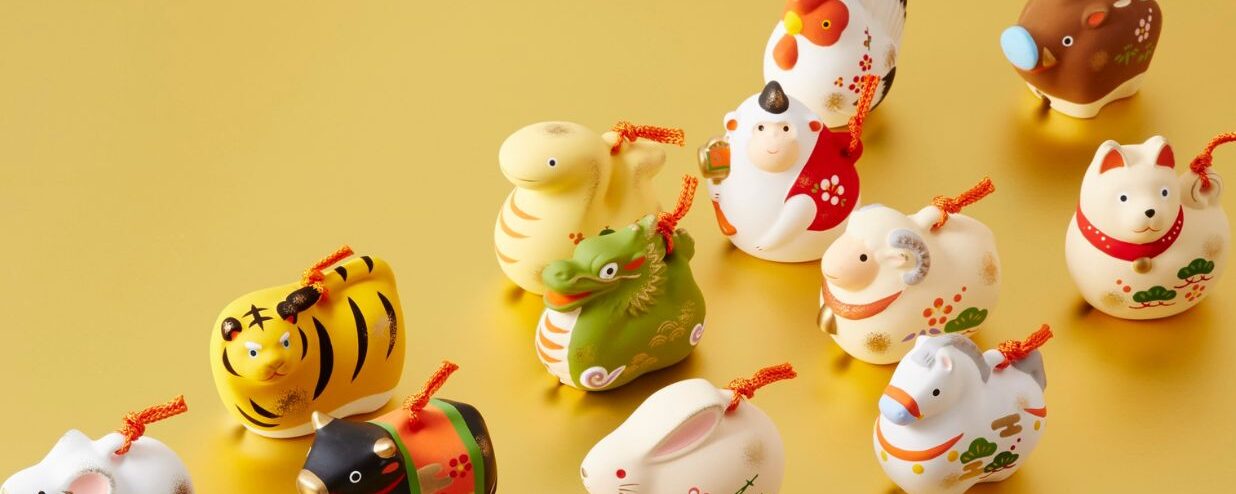


Did you know how the Chinese zodiac signs are adopted in Japan? While the Lunar New Year is not widely celebrated here, the country adopted the Chinese zodiac around the 6th century, and it now has its own unique Japanese spin. There are 12 animals in the zodiac, with each animal having their own unique characteristics. Each year is symbolized by one of the animals, and any person who is born in that year is said to take on some of the traits of the corresponding animal zodiac.
Do you know the Chinese zodiac sign of the year you were born? There’s a chance your Japanese friends may ask you what zodiac sign you are. Here are the Chinese zodiac signs in Japanese, and everything you need to know about them.
What are the Chinese Zodiacs in Japan?
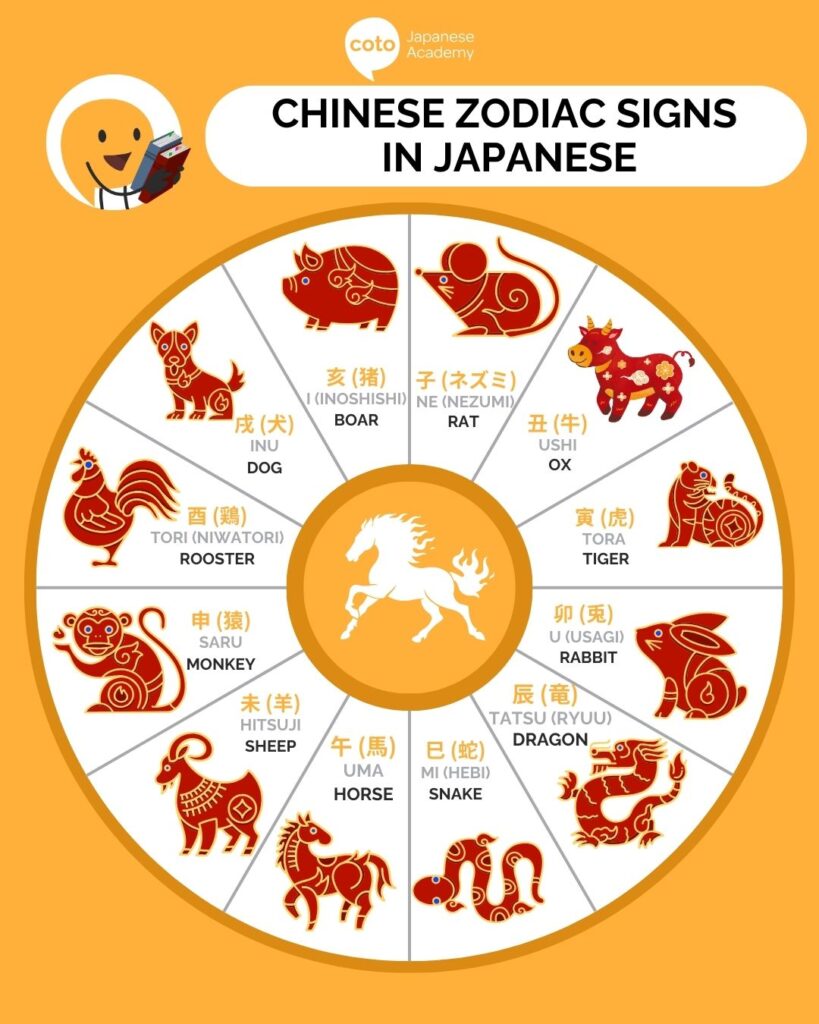
The Chinese zodiacs, or shengxiao, are known in Japanese as 十二支 (juu-ni shi), with 十二 (juu-ni) meaning 12 and 支 (shi) meaning branches. Originally, the 12 zodiac signs were known as branches, but later animals were chosen for their symbolic traits in Chinese culture.
The Chinese zodiac is rooted in ancient astrology. Because Jupiter takes approximately twelve years to complete its orbit, the zodiac was divided into twelve segments. This system of timekeeping was applied not only to years, but also to months, days, and even hours. Animals were assigned to each year of the twelve-year cycle partly to make the system easier for the general population to remember. They were also chosen for their symbolic meanings in Chinese culture, often representing particular personality traits or characteristics.
Both the Chinese zodiac and its Japanese counterpart follow a 12-year cycle, with each year represented by a specific animal. However, the zodiac year does not begin on January 1 like the Western New Year; instead, it follows the Chinese New Year, which typically falls between January 21 and February 20, beginning with the second new moon after the winter solstice.
Difference Between Japanese and Chinese Zodiac Signs
Although Japan’s zodiac system is derived from the Chinese zodiac, it differs in two animal representations. In the Japanese zodiac, the goat is replaced by a sheep, and the pig is replaced by a boar.
The zodiac signs are also primarily a cultural symbol in modern Japan, while remains a factor in major life decisions in China. For example, the Dragon is such a prestigious sign that many families strategically plan births to coincide with its year — that’s why you will see a baby boom during this time. Zodiac signs even influence marriage compatibility; for instance, those born in the Year of the Rat are often discouraged from marrying those born in the Year of the Horse, as both signs are considered too strong-willed to pair well.
In Japan, this cultural connection goes even deeper through syncretism, where each of the 12 zodiac animals is paired with one of the eight Buddhist patron deities (Hachi Shugo Butsu). While there are 12 animals, there are only eight protectors because four of these deities are “double-tasked,” each watching over two different signs. Many Japanese people visit temples specifically dedicated to their birth year’s protector to buy charms (omamori) for good luck and safety.
| Zodiac Animal | Buddhist Patron |
| Rat 子 | Senju Kannon |
| Ox 丑 | Kokuzo Bosatsu |
| Tiger 寅 | Kokuzo Bosatsu |
| Hare 卯 | Monju Bosatsu |
| Dragon 辰 | Fugen Bosatsu |
| Snake 巳 | Fugen Bosatsu |
| Horse 午 | Seishi Bosatsu |
| Sheep 未 | Dainichi Nyorai |
| Monkey 申 | Dainichi Nyorai |
| Rooster 酉 | Fudou Myou-ou |
| Dog 戌 | Amida Nyorai |
| Boar 亥 | Amida Nyorai |
Need to review your vocabulary for the animals in Japanese? Check out our blog: Learn Animal Names in Japanese with drawings.
Want to study Japanese with us?
History of the Chinese Zodiacs in Japan
The Chinese zodiac can be were likely introduced to Japan with the arrival of Buddhism around the mid-6th century. Japanese society readily embraced Buddhist teachings, along with the zodiac-based calendar known as kanshi or eto (干支). By 605 AD, Japan officially adopted the lunar calendar. One of the oldest surviving structures depicting the zodiac is the Kitora Tomb in Nara Prefecture, which was built around the 7th century.
The zodiac calendar reached its peak in popularity during the Edo period, roughly a thousand years later. By that time, each of the twelve animals had come to be associated with one of eight Buddhist patron deities.
In Japan, the lunar calendar was officially abandoned in 1872 in favor of the solar (Gregorian) calendar. However, many temples and shrines still follow the lunar calendar for important festivals and ceremonies.
12 Chinese Zodiac Signs in Japanese
| Zodiac | Japanese | Reading | Example Years |
| Rat | 鼠 | Ne / Nezumi | 1960, 1972, 1984, 1996, 2008, 2020, 2032 |
| Ox | 牛 | Ushi | 1961, 1973, 1985, 1997, 2009, 2021, 2033 |
| Tiger | 虎 | Tora | 1962, 1974, 1986, 1998, 2010, 2022, 2034 |
| Rabbit | 兎 | Usagi | 1963, 1975, 1987, 1999, 2011, 2023, 2035 |
| Dragon | 辰 | Tatsu | 1964, 1976, 1988, 2000, 2012, 2024, 2036 |
| Snake | 巳 / 蛇 | Mi / Hebi | 1965, 1977, 1989, 2001, 2013, 2025, 2037 |
| Horse | 午 / 馬 | Uma | 1966, 1978, 1990, 2002, 2014, 2026, 2038 |
| Goat (Sheep) | 未 / 羊 | Hitsuji | 1967, 1979, 1991, 2003, 2015, 2027, 2039 |
| Monkey | 申 / 猿 | Saru | 1968, 1980, 1992, 2004, 2016, 2028, 2040 |
| Rooster | 酉 / 鶏 | Tori | 1969, 1981, 1993, 2005, 2017, 2029, 2041 |
| Dog | 戌 / 犬 | Inu | 1970, 1982, 1994, 2006, 2018, 2030, 2042 |
| Boar (Pig) | 亥 / 猪 | Inoshishi | 1971, 1983, 1995, 2007, 2019, 2031, 2043 |
According to an ancient Chinese fable, 12 animals raced across a river to reach the Jade Emperor, a sacred figure in Chinese mythology (some versions feature Buddha or other deities instead). The current order of the Chinese zodiac is based on the order of the animals that reached the Jade Emperor first. The story of how each animal raced to the Jade Emperor also revealed some of their individual characteristics.
So, here order (in the Japanese version) of the animals that made it to the emperor.
1. Rat: 鼠 (Nezumi)
The rat was the first to make it to the Jade Emperor by riding on the back of the ox. In some versions, the rat persuades the ox to ride on his back across the river; in other versions, he tricks the ox or rides on the back of another animal.
Based on the fable, you may be able to guess some of the traits of the rat. People born in the year of the rat are considered resourceful and ambitious, which allowed him/her to reach first. However, they can sometimes be seen as greedy or cunning.
2. Ox: 牛 (Ushi)
The ox, or 牛 (ushi), reaches second, since the rat jumped off its back and reached before it. Therefore, the ox is seen as hard-working, strong, patient, and skilled. However, they can also be strong-willed, stubborn, or even naive. Anyone born in the year of the ox may be considered reliable, hard-working, skilled, and strong-willed.
3. Tiger: 虎 (Tora)
The tiger is one of the most significant cultural symbols across Asia, including China and Japan. People born in the year of the tiger are considered passionate, courageous, and wise. They are generally seen as being good leaders; however, they can also be known to have short tempers and to be impulsive.
4. Rabbit: 兎 (Usagi)
According to the legend, they crossed the river by jumping on the rocks but were lucky to grab a floating log that somehow washed up onto the shore. People born in the year of the rabbit are seen as kind, talented, and gentle. They are known to avoid conflict and can sometimes be sensitive. They also might be a bit gullible or easily tricked by others.
5. Dragon: 辰 (Tatsu)
The dragon, which is the only mythical creature not based on a real-life animal in the zodiac, is perhaps one of the most revered cultural symbols in China and Asia. The Dragon only came in fifth since it stopped by a village to give it rain and helped the rabbit, who was struggling to cross the river.
People born in the year of the Dragon are often considered the most fortunate and are often seen as virtuous, strong, confident, and generous. However, like the tiger, they can be short-tempered and unpredictable.
CTA
6. Snake: 蛇 (Hebi)
The snake came in 6th by wrapping itself around the leg of the horse. Upon reaching the shore, the horse jumped back, startled by the snake, allowing the snake to reach it before it. People born in the year of the snake are seen as quiet, intelligent, and thoughtful.
They are seen as having profound wisdom and generally lack most of the negative associations snakes seem to have in the West. However, due to their quiet nature, they can be seen as indifferent or even cold.
7. Horse: 馬 (Uma)
The horse is considered free-spirited, adaptable, sociable, and charismatic. People born in the year of the horse are seen as being good with finances, independent, and for giving compliments, and in some cases, talking too much. They can also be impatient or short-tempered.
8. Sheep: 羊 (Hitsuji)
The sheep, or 羊 (hitsuji), came in 8th, working with the monkey and the rooster, who had found a raft. The sheep are seen as elegant, artistic, and passionate. People born in the year of the sheep are considered gentle, sweet, and group-oriented. They try to avoid conflict, but their peaceful nature can often lead to a lack of conviction.
9. Monkey: 申 (Saru)
The monkey finished in 9th place, working together with the sheep and the rooster to cross the river. Because of this, monkeys are often associated with cleverness and quick thinking. People born in the year of the monkey are seen as lively, curious, and intelligent.
They are often considered adaptable and good at solving problems, but their playful nature can sometimes make them seem mischievous or a little unpredictable.
10. Rooster: 鳥 (Tori)
The rooster arrived in 10th place. In the story, the rooster helped guide the monkey and the sheep across the river by helping them find a raft and working together as a team. People born in the year of the rooster are often described as observant, confident, and hardworking.
They are known for being organized and detail-oriented, but at times, they can be seen as overly blunt or critical when expressing their opinions.
11. Dog: 犬 (Inu)
The dog came in 11th place. Even though dogs are strong swimmers, the dog became distracted while playing in the water during the race, which caused it to arrive later than expected. People born in the year of the dog are often seen as loyal, honest, and dependable.
They are considered caring and protective of those close to them, though they can sometimes be overly cautious or worry more than necessary.
12. Boar: 猪 (Inoshishi)
In the original Chinese fable, which had a pig instead of a boar, the pig finished last since it ate something in the middle of the race and fell asleep. However, in the Chinese zodiac sign in the Japanese version features the boar. The boar finished in 12th since it charged forward with great determination, but overshot the finish line and had to turn back.
People born in the year of the boar are often seen as straightforward, determined, and warm-hearted. They are known for their strong will and sincerity, but their direct nature can sometimes make them seem impulsive or stubborn.
Japan often employs the symbols of animals in proverbs as well. Check out our blog to learn more: Japanese Proverbs & Inspiring Sayings You Need to Know
Conclusion: Which Zodiac Sign Are You?
Japan still uses the Chinese zodiacs until this day, often being used in New Year’s celebrations, traditions, customs, and even New Year’s cards. It’s common to see decorations of the year’s zodiac during the Hatsumode, the first shrine visit of the year. Similar to Western zodiacs, people like to ask about your zodiac and see if it reveals something about your personality.
Learn Japanese with Coto Academy!
Want to do more than just name your zodiac sign? If you want to discuss how your sign actually fits your life and personality, you need to go beyond the textbook.
At Coto Academy, our conversation-focused courses prioritize practical, natural expressions used by native speakers. Join us to move past basic vocabulary and start expressing your true self with confidence. Ready to speak like a native?
Why join Coto Academy?
- Small classrooms with only up to 8 students for personalized support
- Professional native Japanese teachers, all trained to help you succeed
- Over 60 different Japanese classes across 18 levels, tailored to your needs
- School locations in Shibuya, Minato, Iidabashi, and Yokohama, plus a fully online Japanese language school, so that you can learn anywhere, anytime!
FAQ
What is my Japanese/Chinese zodiac?
Your Japanese or Chinese zodiac will depend on which year you were born in the 12-year cycle. For example, if you were born in 1996, you would be born in the year of the rat, the first of the 12 zodiac signs. To find your sign, match your birth year to a zodiac chart like the one in this blog.
Is there a Japanese zodiac? Is it the same as the Chinese zodiac animals?
Japan has a zodiac system called 十二支 (じゅうにし, juunishi), which was originally introduced from China centuries ago. The cycle and animals are almost identical to the Chinese zodiac. One small difference is that Japan commonly uses the boar (猪 / いのしし) instead of the pig, and the sheep (羊 / ひつじ) is often translated as goat or sheep depending on context.
How do you say zodiac in Japanese?
The zodiac is commonly called 十二支 ( juunishi), which translates to the 12-animal zodiac cycle. Another common phrase is 干支 (eto), which is often used in daily conversation, especially around New Year, to refer to the zodiac animal of the year or a person’s birth-year sign.
What are the 12 animals of the Japanese zodiac?
The twelve animals, in order, are: Rat (鼠 / nezumi), Ox (牛 / ushi), Tiger (虎 / tora), Rabbit (兎 / usagi), Dragon (辰 / tatsu), Snake (蛇 / hebi), Horse (馬 / uma), Sheep (羊 / hitsuji), Monkey (猿 / saru), Rooster (鶏 / tori), Dog (犬 / inu), Boar (猪 / inoshishi)