



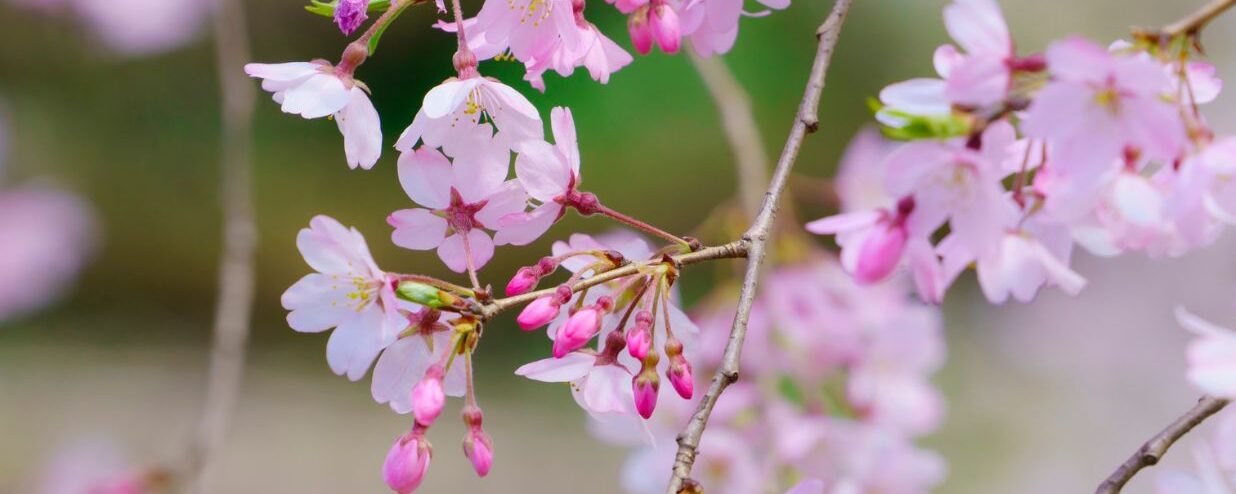


Spring, or haru (春), has arrived in Japan, and that means a few things! The cherry blossoms are blooming, temperatures are warming, and locals and tourists alike have gathered to enjoy and appreciate them. In Japan, the spring season typically lasts from the beginning of March to the end of May, and you know that the season has reached its peak when the cherry blossoms are in full bloom.
While spring in Japan is known for its cherry blossoms, there are many more things that are related to this season, such as seasonal ingredients, mild weather, and new beginnings. What could be a better way to learn about springtime in Japan than to learn essential Japanese spring vocabulary? In this post, we’ve gathered our favorite springtime words that you might come across, whether you’re planning to attend a hanami (花見) or try out new springtime foods.
Let’s get started!
What is Spring in Japanese?
In Japanese, the word for spring is haru (春). This is one of the essential spring-related vocabulary words that you need to learn.
Note that haru is only the kunyomi reading, or native Japanese reading. The onyomi, or the Sino-Japanese reading derived from Chinese, for haru is シュン (shun). For example, to say spring holiday, you would say haruyasumi (春休み), but spring vernal equinox is called shunbun (春分).
Read More: Winter, Spring, Summer, and Fall in Japanese
What are Cherry Blossoms in Japanese?
In Japanese, sakura (桜), which means cherry blossoms. They usually signify the beginning of spring in Japan. Cherry blossom flowers in Japanese are called hanazakura (花桜), with the word hana (花) meaning flowers.
Cherry blossoms bloom in a tree called 桜木 (sakura gi) — sakura tree, where the word gi (木). The reason why it is pronounced as “gi” and not “ki” is that 木 has a nanori reading “gi”. The change from ki to gi usually comes from rendaku (consonant voicing) plus name-specific readings.
Want to learn more Japanese? Join flexible Japanese lessons in Tokyo, Yokohama, or online, at Coto Japanese Academy!
Japanese Vocabulary Related to Cherry Blossoms
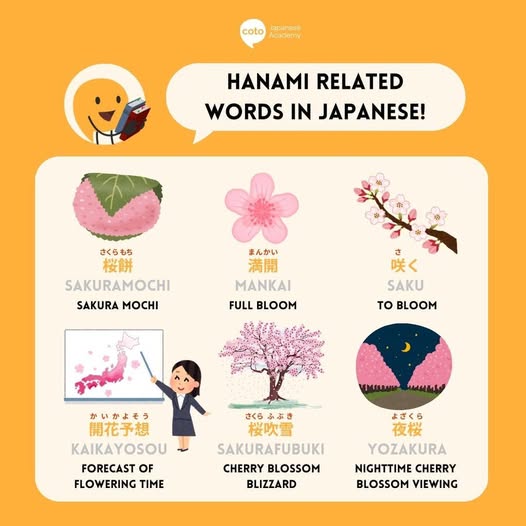
If you live in Japan, chances are you might be going to see the cherry blossoms in full bloom this spring. In this list, we’ve included some of the vocabulary you might need to fully enjoy the cherry blossoms this Spring. We’ve also included some sakura-themed food and drink for you to try as well.
| Japanese | Romaji | English |
|---|---|---|
| 桜 | sakura | Cherry blossom |
| 花見 | hanami | Cherry blossom viewing |
| ピクニック | pikunikku | Picnic |
| 夜桜 | yozakura | Night cherry blossoms |
| 花びら | hanabira | Petals |
| 蕾 | tsubomi | Bud (of a flower) |
| 花 | hana | Flower |
| 桜餅 | sakura mochi | Cherry blossom mochi |
| 花見団子 | hanami dango | Hanami dango (rice flour balls) |
| 桜まじゅう | sakura manjuu | Sakura manjuu (glutinous rice flour sweet) |
| 桜羊羹 | sakura youkan | Sakura jelly |
| 桜たい焼き | sakura taiyaki | Sakura fish-shaped cake |
| いちご大福 | ichigo daifuku | Strawberry rice cakes |
| 咲く | saku | To bloom |
| 開花 | kaika | First blossoms |
| 開花予想 | kaikayosou | Cherry blossom forecast |
| 満開 | mankai | Full bloom (of cherry blossoms) |
| 桜吹雪 | sakura fubuki | Cherry blossom blizzard |
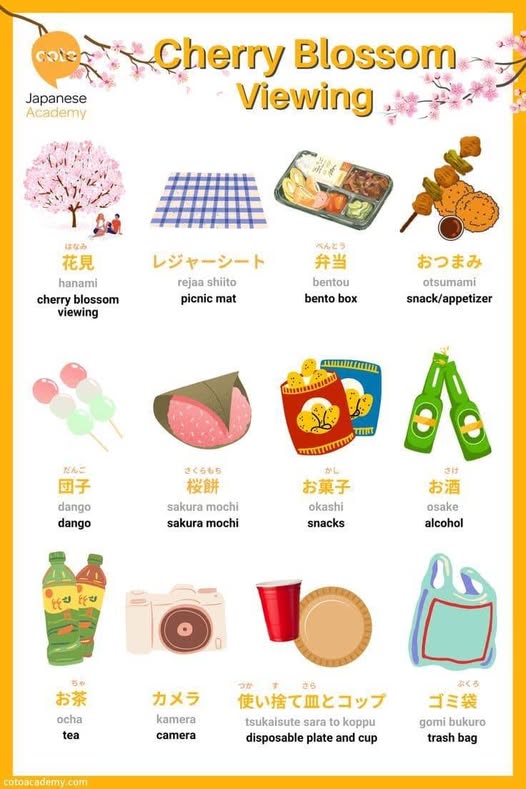
Hanami literally means “flower viewing.” It usually refers to enjoying cherry blossoms with friends, family, or coworkers during spring. This is different from just coincidentally seeing cherry blossoms in Japan. During hanami, you are specifically going out to look for good cherry blossom spots.
That is why, if you are visiting Japan, you might often come across search terms like “best hanami spots.” These are places known for having some of the most beautiful cherry blossoms, often with hundreds or even thousands of trees.
Every year, the Japanese Meteorological Agency releases a cherry blossom forecast. The blooming period, from kaika (開花), meaning the first blossoms, to mankai (満開), meaning full bloom, is fleeting and often lasts only about two weeks. Because of this, timing your visit is important. Typically, cherry blossom season begins in warmer regions and gradually moves north. Colder areas like Hokkaido usually see cherry blossoms bloom the latest.
If you miss the peak blossom season, don’t worry. When the petals begin to fall, there is still a beautiful, almost anime-like moment known as sakura fubuki, which literally means “cherry blossom blizzard.” During this time, petals drift down from the trees and blanket the ground in pale pink and white.
It is especially breathtaking if you visit places with long rows or large numbers of cherry trees. You may see roads, rivers, and sidewalks covered in fallen petals. When the wind picks up, the petals swirl through the air from both the branches and the ground and create a scene that looks almost like spring snow.
Read More: Guide to Hanami in Tokyo
Different Types of Cherry Blossoms in Japan
In Japan, there are many types of cherry blossoms that you can find, whether on the streets of Tokyo or in the wild. Here we have listed several varieties of cherry blossoms, as well as how to differentiate between each type:
1. Yamazakura (山桜): Mountain Cherry Blossom
This type of cherry blossom can be seen growing in the mountains in Japan. They tend to grow in late March to early April, and can be characterized by having five, slightly pink petals.
2. Shidarezakura (枝垂れ桜): Weeping Cherry Blossom
This is one type of cherry blossom tree that is common throughout Japan. They are characterized as having drooping branches and bloom from late March to early April. The number of petals can vary; some Shidarezakura have five petals, while others have more.
3. Somei Yoshino (染井吉野): Somei Yoshino Cherry Blossom
This is another type of well-known type of cherry blossom tree, and probably one of the most well-known throughout Japan. Their flowers have five pale pink petals, and bloom around late March to early April.
4. Yaezaukra (八重桜) – Multi-layered Cherry Blossom
Yaezakura is more of an umbrella term that refers to any cherry blossom that has more than five petals in one flower. Some specific types of yaezakura include the Kanzan (関山), the Ichiyou (一葉), and the Chrysanthemum Cherry Blossom, or Kikuzakura (菊桜) in Japanese. They have varying blooming times, but generally you can see them from mid-April onwards, making them one of the late-blooming varieties of cherry blossoms.
5. Kanzakura (寒桜): Winter Cherry Blossoms
These are one of the earliest blooming varieties of cherry blossom, as they start blooming from late February to mid-March. Compared to its most popular counterpart, the Somei Yoshino, Kanzakura flowers have smaller, pink petals.
Read more: 10 Best Places to See Cherry Blossoms in Tokyo
Want to study Japanese with us?
Japanese Vocabulary Related to Spring
But spring in Japan isn’t just about the cherry blossoms and hanami viewings. There are other words that you need to know that are related to spring.; some are pleasant, others, not so much.
| Japanese | Romaji | English |
|---|---|---|
| 季節 | kisetsu | Season |
| 春 | haru | Spring |
| 春休み | haru yasumi | Spring holiday |
| 春風 | haru kaze | Spring breeze |
| 春先 | harusaki | Beginning of spring |
| 春分 | shunbun | Vernal Equinox/Spring Equinox |
| 公園 | kouen | Park |
| 散歩(する) | sanpo (suru) | To go on a walk |
| (自転車に)乗る | (jitensha ni noru) | To ride a bike |
| 果物狩り | kudamono gari | Fruit picking |
| 田植え | taue | Rice planting |
| 入学 | nyuugaku | Entry into school |
| 入学式 | nyuugaku shiki | School entrance ceremony |
| 卒業 | sotsugyou | Graduation |
| 卒業式 | sotsugyou shiki | Graduation ceremony |
| 新学期 | shingakki | New school term |
| 新年度 | shinnendo | New fiscal year |
| 新生活 | shinseikatsu | New life |
| 花粉症 | kafunshou | Hay fever/pollen allergy |
| 抗ヒスタミン薬 | kouhisutaminyaku | Antihistemines |
Japanese Vocabulary for Spring Food and Ingredients
Spring isn’t just about the cherry blossoms. It’s also about food, especially the ingredients. We’ve compiled a list of foods that you might see on your table during this season.
| Japanese | Romaji | English |
|---|---|---|
| Japanese | Romaji | English |
| 梅 | ume | Plum |
| 梅干し | umeboshi | Pickled plums |
| 若葉 | wakaba | Fresh young leaves |
| 筍 | takenoko | Bamboo shoots |
| いちご | ichigo | Strawberry |
| みかん | mikan | Mikan (Japanese Mandarin) |
| 山菜 | sansai | Mountain vegetables |
| 蕗 | fuki | Butterbur |
| 屈み | kogomi | Ostrich Fern |
| わさび菜 | wasabina | Wasabi Mustard Greens |
| 山独活 | yama udo | Mountain Asparagus |
| 鯛 | tai | Sea bream |
| 漁り | asari | Japanese littleneck clams |
| イカナゴ | ikanago | Japanese sand lance |
How to Talk About Japanese Spring
Although we have a separate guide on how to talk about the weather in Japanese, it’s important that you learn some words to describe the spring weather. Spring in Japan enjoys mild weather, with warmer temperatures compared to winter.
| Japanese | Romaji | English |
|---|---|---|
| 天気 | tenki | Weather |
| 気温 | kion | Temperature |
| 涼しい | suzushii | Cool |
| 暖かい | atatakai | Warm |
| 晴 | hare | Clear |
| 雨 | ame | Rain |
| 曇り | kumori | Cloudy |
| 風 | kaze | Wind |
Describing the Spring Weather in Japanese
Now that you’ve learned the basics and picked up the essential spring vocabulary in Japanese, it’s time to put them into practice! Let’s go through some common phrases and questions you’ll often hear, or might want to ask yourself, when talking about spring in Japan.
春は暖かいです。
Haru wa atatakai desu.
Spring is warm.
桜が咲き始めて、とてもきれいです。
Sakura ga saki hajimete, totemo kirei desu.
The cherry blossoms are starting to bloom, and it’s very beautiful.
春の風は強いですね。
Haru no kaze ga tsuyoi desu ne.
The spring winds are strong.
今日は天気がいいから、外で散歩します。
Tenki ga ii kara, soto de sanpo shimasu.
The weather is great today, so I’ll go on a walk.
Conclusion: Learn Beyond Japanese Spring Vocabulary and Speak Japanese with Lessons at Coto Academy
Now that you’ve learned the basics of talking about the spring in Japanese, why stop there? There are plenty of other essential skills to master, like introducing yourself or discussing a specific topic in conversation.
If you want to build confidence and start speaking Japanese, consider joining conversation-focused Japanese lessons at Coto Academy. As a top-rated school with campuses in Tokyo and Yokohama, we offer fun and flexible lessons designed around practical, everyday conversation.
We offer intensive Japanese courses as well as part-time options, so whether you want to immerse yourself fully or fit lessons into a busy schedule, there’s something for you.
Ready to get started? Fill out the form below to contact us!
FAQ
When can I see cherry blossoms in 2026?
Always check the cherry blossom forecast, or kaikayosou (開花予想). You can then plan your visit from that forecast, but we recommend that you plan your trip early because it’s considered peak traveling season!
What month do the cherry blossoms bloom in Japan?
Generally, the most common types of cherry blossoms tend to start blooming around late-March to early April, but it can depend on the prefecture.
Which month is spring in Japan?
In Japan, spring lasts from the beginning of March to the end of May.