



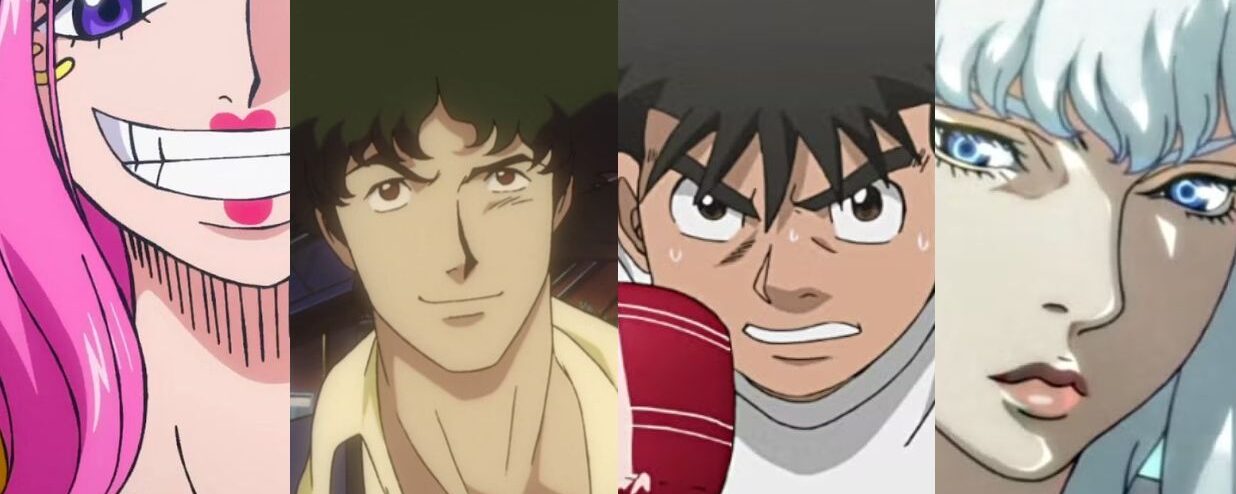


Ever wondered what real-life people inspired our favorite and most memorable anime characters? Every great character takes inspiration from somewhere, and often that inspiration comes from real-life icons we may have heard of. Writers frequently design their characters based on the image, life story, or even personality of real-life people, since sometimes facts can be just as interesting as fiction!
Let’s explore some of the figures that inspired the anime characters that we know and love today!
Often, the setting of anime is just as important as the characters, so to see the places that inspired our favorite anime, check out the 9 Best Places to Go in Japan for Anime Fans!
Is it common for anime creators to base characters on real people?
It’s very common, and perhaps not every character inspired by a real person is ever revealed publicly. Anime creators draw from the real world, including real-life figures, whether it’s a hairstyle, a fighting style, a personality trait, or an entire life story. It’s especially prevalent in long-running series like One Piece, where creator Eiichiro Oda has built an entire cast populated with nods to historical pirates, criminals, and celebrities.
Do creators always publicly admit to using real-life inspirations?
Creators don’t always publicly admit to using real-life inspirations. Some are obvious enough that fans figure them out on their own, for example, Rock Lee and Bruce Lee don’t need any confirmation. Others, like Spike Spiegel’s connection to Yusaku Matsuda or Yoshikage Kira’s likeness to David Bowie, were confirmed by the creators themselves.
How many anime characters were inspired by Bruce Lee?
Bruce Lee might be the single most inspiring figure in anime, and perhaps pop culture overall. The most well-known examples in anime are Rock Lee and Might Guy from Naruto, and Kenshiro from Fist of the North Star. Dragon Ball was also inspired by Bruce Lee films, with creator Akira Toriyama even drawing the title itself from Lee’s Enter the Dragon. There are perhaps countless characters inspired by the late Bruce Lee, and this is perhaps due to the unforgettable image that he forged in his short career.
1. Armored Titan & Eren’s Titan: Brock Lesner & Yushin Okami
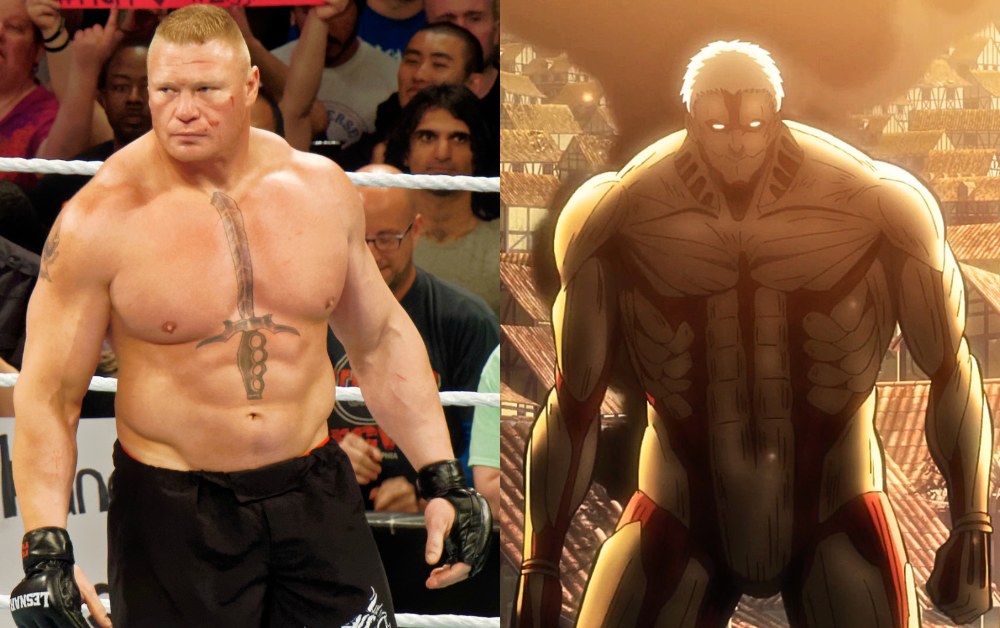
The Titans, being the primary antagonists in Attack on Titan, need to look and feel ferocious, intimidating, and immovable, so who better to take inspiration from than the top mixed martial artists? You might’ve heard that Armored Titan is based on the famous WWE and former UFC champion, Brock Lesnar, and looking at their images side by side, the similarities are undeniable.
But you might not have known that Eren’s titan is also based on a real-life athlete, and he happens to be one of the greatest Japanese MMA fighters in recent history, Yushin Okami. The lean, muscular physique and the combat techniques of the titan are modeled directly from Okami. The titan’s iconic stance and look are all thanks to the fighter lending his likeness. More recently, Okami has supervised a live-action drama adaptation of an MMA-inspired manga called Red Blue.
Want to try learning Japanese manga? Check out the 10 Best Manga to Learn Japanese!
2. Capone Bege (One Piece): Al Capone
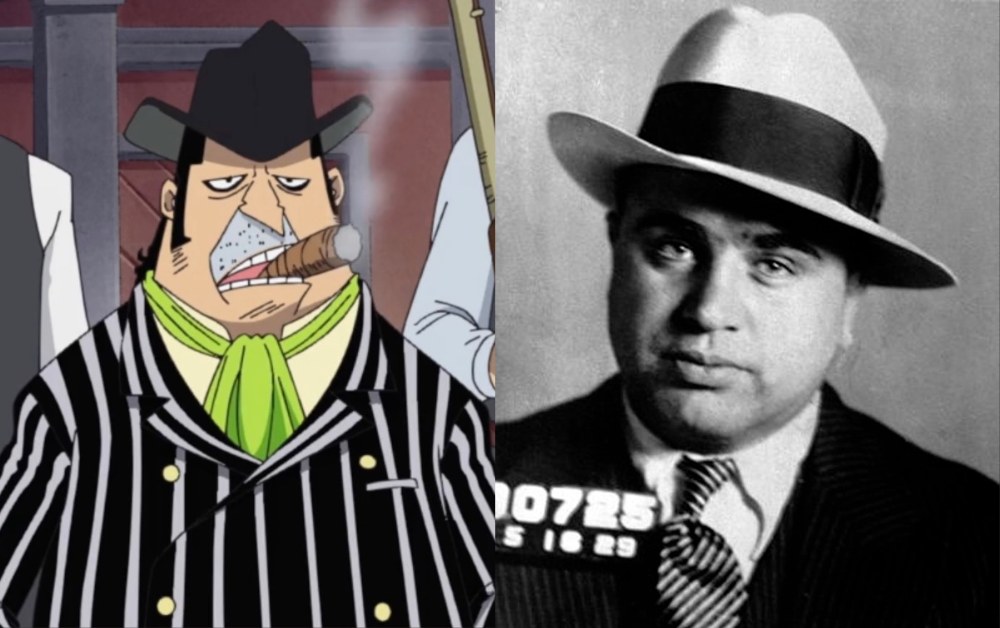
One Piece is famous, perhaps even notorious, for drawing on real people, and Capone Bege is one of its most on-the-nose examples. The mafia boss and captain of the Fire Tank Pirates takes his name and personality wholesale from Al Capone, the famous Chicago crime lord of the 1920s.
Both men command vast criminal organizations, carry themselves with polite manners, and share a taste for fine cooking and the arts. Even the signature cigar is accounted for, being just as central to Capone Bege’s image as it is to Al Capone.
3. Yoshikage Kira (JoJo’s Bizarre Adventure): David Bowie
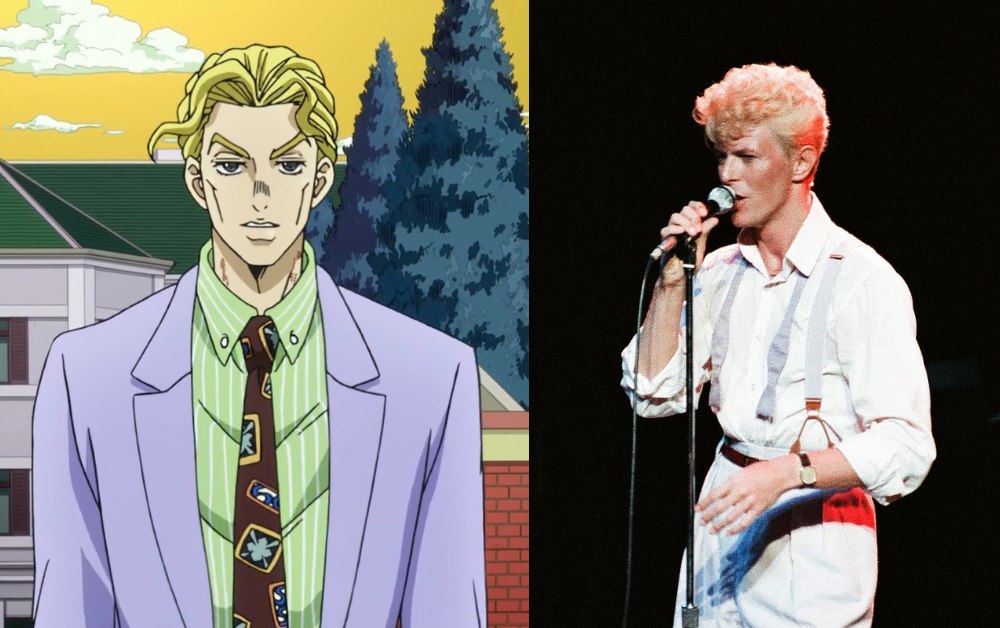
Kira is one of JoJo’s most iconic villains, a serial killer who doesn’t want power or world domination, but simply to live quietly and undisturbed, like a plant. That unsettling ordinariness is what makes him so compelling, and it’s matched by a visual design that is unmistakably lifted from one of music’s greatest icons: David Bowie.
Araki has cited Bowie as a direct inspiration for Kira’s appearance, particularly the sharp, androgynous blonde look Bowie sported during his Aladdin Sane and Station to Station era in the mid-to-late 1970s. The slicked-back hair, the fine bone structure, the almost eerie elegance, it’s all Bowie.
Araki, who is known for drawing heavily from Western fashion and music in his character designs, clearly had a specific image in mind, and the result is a villain who feels genuinely stylish in a way that makes him even more unsettling.
Of course, the similarities are purely aesthetic; Kira’s obsession with severed hands and his murderous need for a “quiet life” have nothing to do with Bowie. But that’s precisely what makes the design choice so interesting. Araki took one of the most charismatic, otherworldly figures in rock history and used that visual aesthetic to dress up something sinister. The result is one of anime’s most stylish villain designs that came to define the Kira we know today.
4. Spike Spiegel (Cowboy Bebop): Yusaku Matsuda (And Bruce Lee)
Fans often admire Spike’s cool, laid-back demeanor that perfectly reflects his character and his calm acceptance of things beyond his control. This might be reminiscent of archetypes we might find in Hollywood genres such as film noir or even in certain westerns. However, Spike was actually modeled after Japanese actor Yusaku Matsuda, particularly his performance in the detective drama Detective Story. His character is very similar to Spike, in not only his snappy attire but also his chill, almost too cool attitude and personality.
Additionally, Spike’s relaxed posture and fluid, improvisational fighting style are drawn from Bruce Lee. In the series, he directly makes references to Bruce Lee’s famous “be like water” quote. So, Spike is a character that draws on multiple influences, from the cool-headed detective played by Matsuda to the relaxed, water-like fighting style of Bruce Lee, rounding out a multi-dimensional yet consistent character we know and love today.
5. Chiyoko Fujiwara (Millennium Actress): Setsuko Hara & Hideko Takamine
Writer Satoshi Kon admitted to drawing from the lives of two critically acclaimed 20th-century Japanese actresses when creating Chiyoko Fujiwara from Millennium Actress. The story was particularly shaped by Hideko Takamine, who lived as a recluse for decades after abruptly quitting her successful career, much like the film’s protagonist, an elderly actress who withdrew entirely from public life. For audiences unfamiliar with golden-age Japanese cinema, this one lands very differently once you know the real story behind it.
6. Doppo Orochi (Baki): Masutatsu Oyama
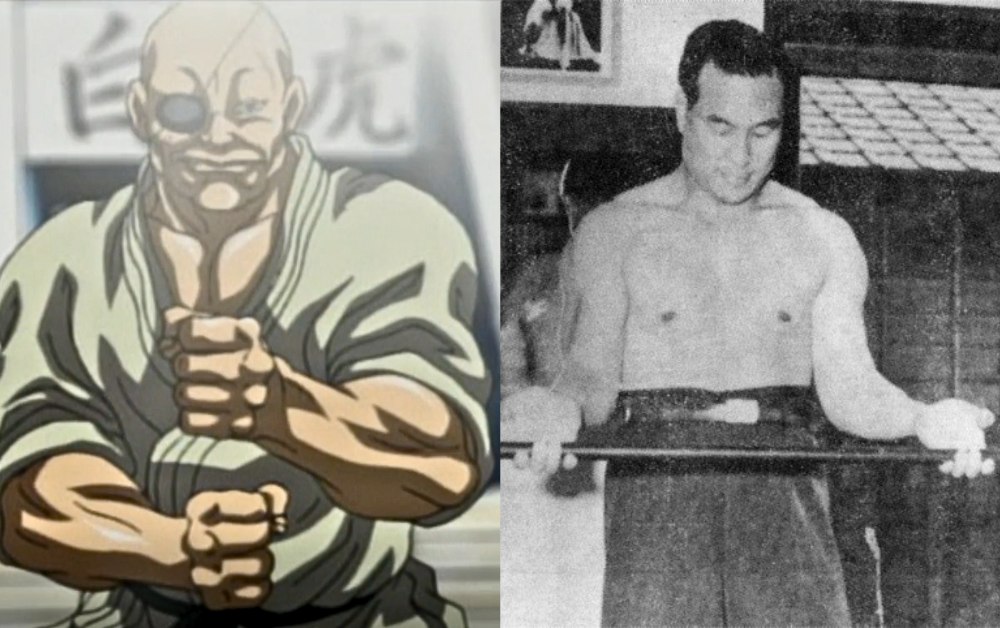
Baki is a series known for its roster of intimidating, powerful martial arts masters. For the karate powerhouse, Doppo Orochi, the creators decided to model him on Masutatsu Oyama, the real-life founder of Kyokushin Karate. References to bare-knuckle tests, bull-fighting challenges, and punishing training regimens directly echo Oyama’s legendary public feats. Kyokushin itself is known for being the most physically demanding karate style, with rigorous training, intense body-hardening conditioning, and full-contact fighting with minimal protective equipment.
Oyama, being the founder of the hardest style of Karate, is why he was chosen as the main source of inspiration for Doppo Orochi. Oyama is a giant in Japanese martial arts history, so this one resonates deeply with domestic audiences who grew up watching Kyokushin representatives in some of the biggest kickboxing matches in recorded history, even if his name doesn’t ring a bell in the West.
7. Jewelry Bonney (One Piece): Anne Bonney
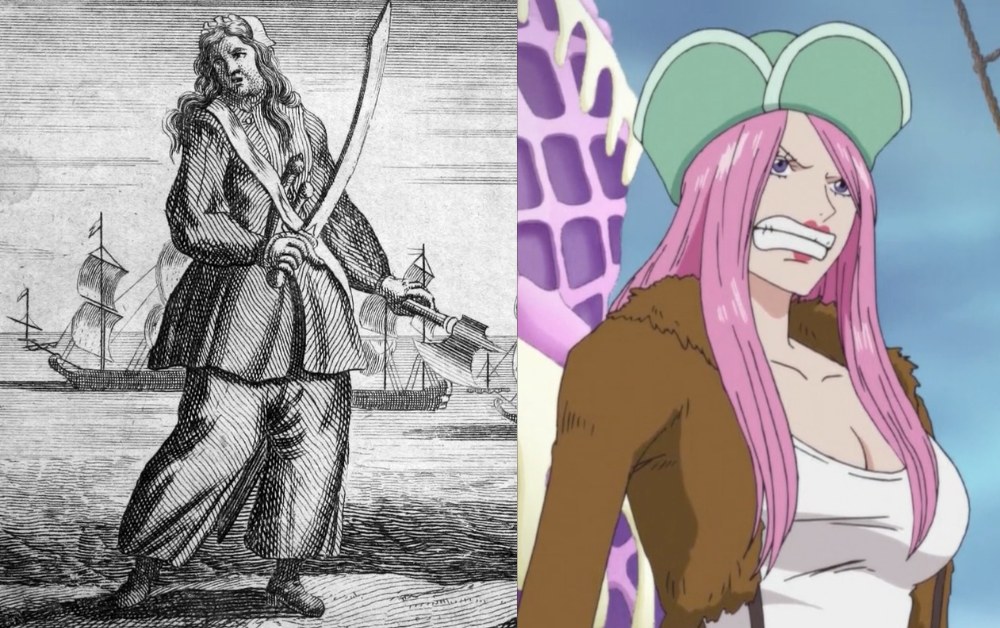
One Piece makes another entry in this list, since the show is full of characters inspired by fascinating real-life figures.
This time, we have to talk about Jewelry Bonney, whose very name is directly inspired by the famous pirate, Anne Bonney. She was an Irish pirate whose brief but ferocious period of marauding the Caribbean during the 18th century enshrined her in legend as one of the few women to have defied the strict prohibition against female pirates.
So, the parallels run deeper than just a shared name. In real life, Anne Bonny was a noblewoman who left everything behind to become a pirate. Similarly, Jewelry Bonney was born a world noble, but chose the life of a pirate to pursue something far more personal, rescuing her adoptive father, Bartholomew Kuma. Both women entered the pirate world out of a fierce, almost reckless devotion to their own sense of justice, rather than out of greed for treasure.
Despite the glaring similarities, Jewelry Bonney is her own unique character, with inspiration from Anne woven naturally into her identity. Bonney’s first name, “Jewelry,” has its own in-universe origin: she suffered from a disease that hardened her skin like stone, and her adoptive father, Kuma, comforted her by calling it a jewel. The real story of Anne Bonny is one of legend outpacing fact; much of what we know about her comes from a single, notoriously dramatized book published in 1724. In a way, Jewelry Bonney fits perfectly into that legacy: a larger-than-life character whose full story keeps unfolding the longer you look.
8. Makunouchi Ippo (Hajime no Ippo): Mike Tyson and Jack Dempsey
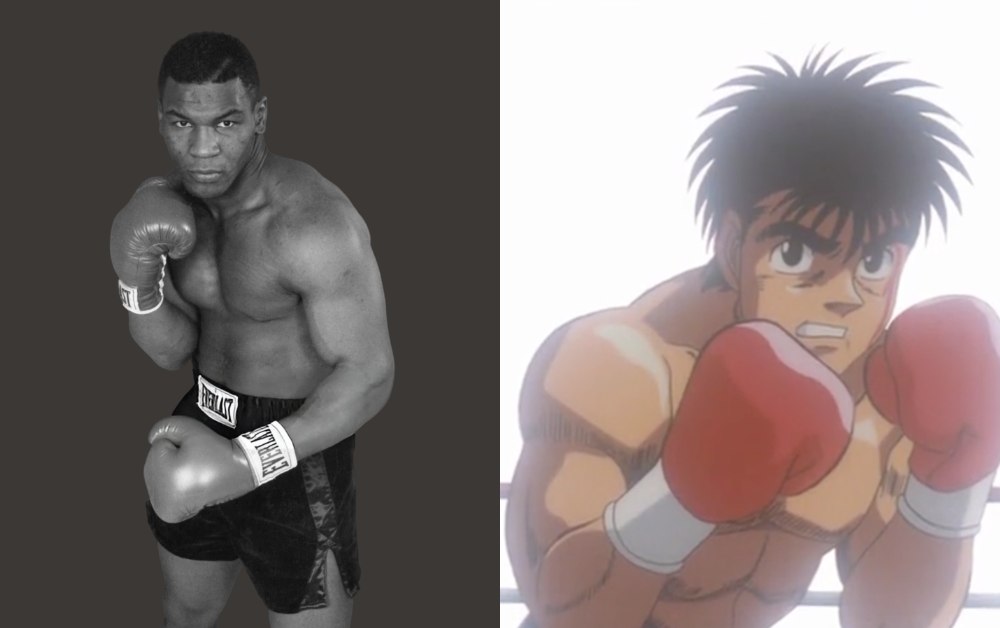
You can’t have an anime that is such a loud tribute to boxing without taking inspiration from real-life boxing figures. The anime pays homage to boxing legends and even uses their names to discuss iconic techniques. The titular character, Makunouchi Ippo, draws from the legendary “Iron” Mike Tyson’s peek-a-boo boxing technique. This is because, like Mike Tyson, Ippo’s stature is rather short compared to other fighters, so the peek-a-boo style is beneficial for ducking under his opponents and getting inside their “pocket” to land devastating punches.
The late Jack Dempsey is another legendary boxer who inspired Ippo. In the series, Ippo learned the iconic “Dempsey Roll,” a boxing technique involving intense bobbing and weaving used to maneuver around an opponent’s attacks while generating momentum to throw powerful hooks. This becomes a huge part of Ippo’s boxing arsenal and was crucial for some of his biggest knockouts. So, it just makes sense to base Ippo’s boxing on Tyson and Dempsey since they both perfectly reflect the character’s physical and even mental traits, often showcasing Ippo’s iron will and perseverance.
9. Rock Lee (Naruto): Bruce Lee
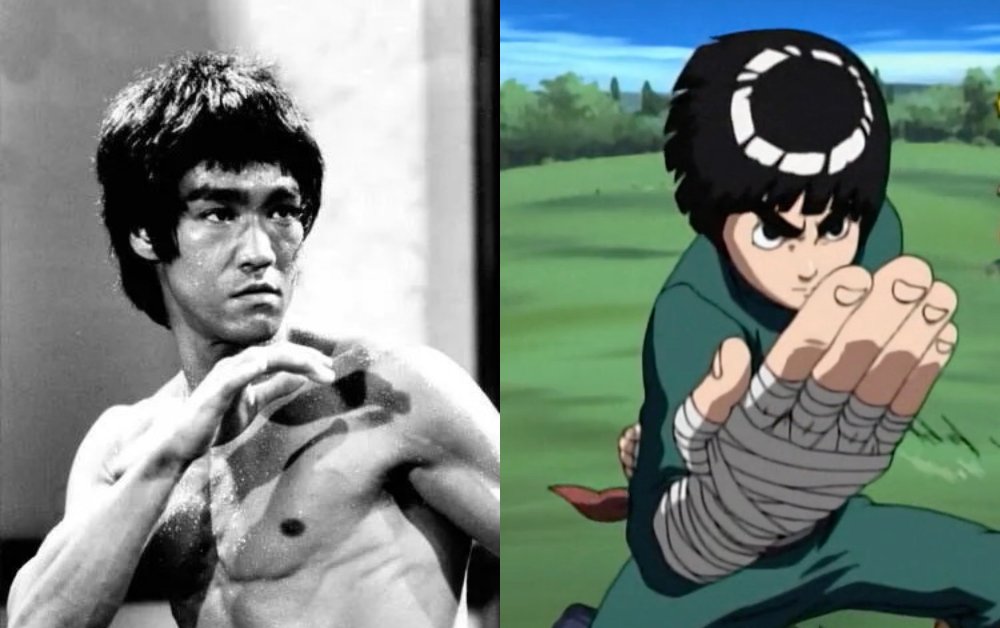
No list about real-life anime character inspirations would be complete without including Rock Lee from the show, Naruto, and his obvious influence from Bruce Lee. His physical design has Bruce Lee written all over it, from his bushy eyebrows to his bowl-cut hairstyle. In terms of his character traits, his focus on martial arts and mastery of nunchucks is very much an homage to Bruce Lee’s fighting style, defined by quick, snappy punches, back fists, and kicks. Rock Lee is known for his lightning-fast movements. He is perhaps the quickest character in the whole series, much like how Bruce Lee would punch and kick faster than anyone in his movies.
Rock Lee is one of many anime characters who were inspired, in whole or in part, by Bruce Lee. He is perhaps one of the most influential figures in pop culture, especially in depicting a character’s mastery of martial arts.
10. Multiple Anime: Björn Andrésen
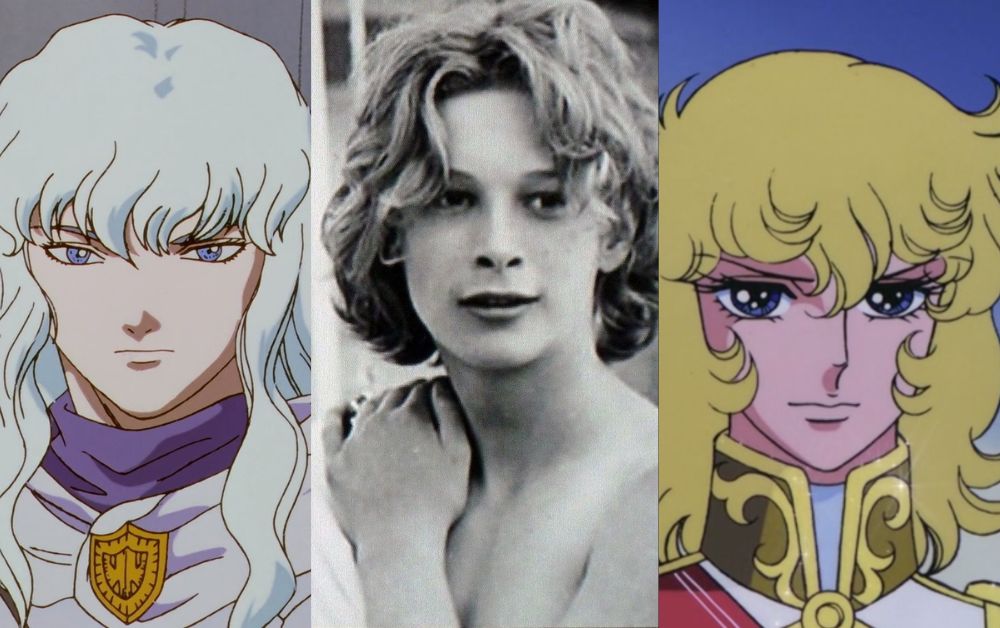
Björn Andrésen is known for his iconic, attractive, and even dreamlike features, which are often described as somewhat androgynous, making him a huge source of inspiration for several anime characters. Björn Andrésen was likely one of the first Western male idols in Japan, and his brand as the “most beautiful boy” in the world really caught the public’s eye in the nation. So, it’s no wonder that he became so influential in the design of a plethora of anime and manga characters, especially since Japan is no stranger to designing male characters with a more androgynous look.
Both male and female characters had based their image on Björn’s likeness, especially his attractive facial features and his iconic wavy hair. The titular character, Lady Oscar, from The Rose of Versailles, is probably one of the first characters that come to mind who took heavy inspiration from Björn. He also inspired the designs of the main villains: Griffith, from the anime Berserk, and Johan Liebert, from the anime Monster. Björn Andrésen’s unique image, which looked attractive and yet distinct from what Japanese people are used to, led to his undeniable influence in the design of so many anime characters.
(Bonus)Vivienne Westwood: Nana
While Vivienne Westwood herself did not inspire the anime, Nana, the Vivienne Westwood brand was extremely influential. All the main characters wear Vivienne Westwood, and the theme of the anime itself is a tribute to Vivienne Westwood’s punk-rock style and legacy. The fashion in Nana played a central role in the character’s identity and aesthetic, and the Vivienne Westwood brand was crucial in establishing the character’s look and self-expression. From the iconic accessories, such as the Vivienne Westwood necklaces, to the “Armor Ring,” they were used to create each of the characters’ fashion choices and thus echo their personalities.
During the time Nana was made, Vivienne Westwood was known for its bold, rebellious fashion, which was exactly what was needed for the characters who were exploring themes of self-identity and non-conformity. The show wanted to borrow and pay tribute to the UK’s punk culture, which was deeply embedded in the show’s aesthetic design, music, and themes. Vivienne Westwood was the epitome of that culture at the time, and the creators used the brand’s products and image to elaborate on the story and characters’ personalities.
Conclusion: Anime is a Reflection of Real-Life People
Anime does not exist by itself; the creators have to look at the world around them to create their worlds and their characters. Many of the anime characters we know and love took inspiration from real-life people whose stories are sometimes just as fantastic as the ones they’ve inspired. Perhaps the reason we love anime so much is due to how the characters feel like real people we can relate to, and that’s because they are rooted in real-life people.
Learn Japanese at Coto Academy
In the mood to watch anime? Try learning Japanese with anime while you’re at it! But to really get a grasp of how to speak Japanese, we recommend learning and practicing with native teachers at Coto Academy who can encourage conversation and coach you to fluency. We offer conversation-focused courses, JLPT preparation classes, and comprehensive Japanese courses covering all areas from reading and writing to listening and speaking.
We have campuses in Shibuya, Shinjuku, Iidabashi, Minato, and Yokohama, but if you’re not in Japan, you can join our classes completely online! Interested? Fill out the form below to get started!
FAQ:
What anime are based on real life?
Many anime are inspired by real life, such as Shouwa Genroku Rakugo Shinjuu (traditional storytelling), Bakuman (manga industry), and Haikyuu!! (realistic sports).
Who says "oi oi oi baka" in anime?
The phrase “oi oi oi, baka” isn’t tied to one specific character but is a common anime expression used by various characters to scold someone playfully or angrily.
Which anime took 7 years to finish?
The anime that took about 7 years to complete is Attack on Titan, which aired from 2013 to 2023.
How many anime characters were inspired by Bruce Lee?
There’s no exact number, but Bruce Lee has inspired countless anime characters, including well-known examples like Rock Lee and Might Guy from Naruto and Kenshiro from Fist of the North Star, with even Dragon Ball drawing influence from his films.