



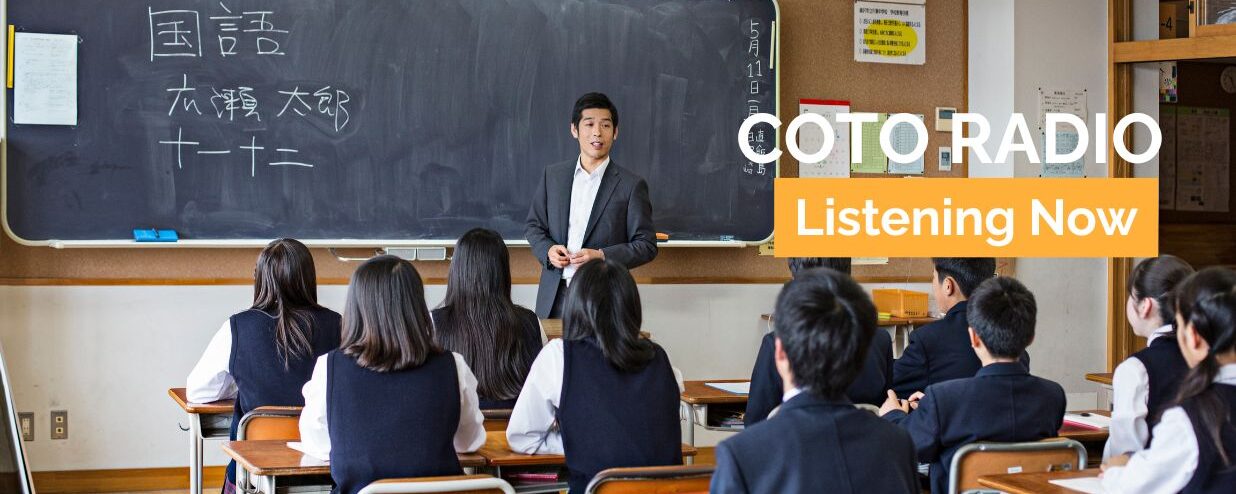


A Coto Radio listener asked a question on why their Japanese friend didn’t say a word while they were enjoying their lunch, prompting the question, “Why are Japanese people so silent?” While Japanese people are known for being well-mannered and polite, their silence at certain times may surprise many non-Japanese. This could lead to cultural misunderstandings, and you might be wondering why people are so quiet despite living in noisy cities.
In today’s podcast episode, Coto Academy’s teachers discuss why Japanese people are quiet during mealtimes and other mannerisms related to noise that might surprise non-Japanese listeners. By the end of this episode, you’ll know why Japanese people are silent most of the time, and why this isn’t necessarily a bad thing.
Welcome to Coto Radio, a Japanese learning podcast by Coto Japanese Academy, Japan’s No. 1 Japanese language school. Each episode, our host combines captivating storytelling with engaging conversations, all delivered in clear, natural Japanese.
Japanese People Are Silent While Eating Meals
To answer the listener’s question, Oikawa-sensei and Kinjo-sensei explained that the listener’s friend not talking while eating is something they learned as children, as it is considered bad manners to talk with your mouth full of food. Not only that, but Oikawa-sensei also says that being absorbed in conversation instead of focusing on the food is considered “disrespectful” to the people who prepared it.
That doesn’t mean Japanese people are always silent at mealtimes; as Oikawa-sensei notes, people do talk before their food arrives and after they finish.
Japanese People Pause Before Answering Questions
This comes from a question asked by Kinjo-sensei’s non-Japanese friend: “Why do Japanese people stay silent when asked a question?” To answer this question, Oikawa-sensei notes that this behavior is common among Japanese people, as it indicates they’re considering how to respond. This, in turn, creates the impression that they are listening and respecting others’ words.
Kinjo-sensei also adds that silence isn’t necessarily a bad thing in Japan; rather, it shows that the listener values the speaker. The concept of “silent time” in Japan can confuse non-Japanese people, as they might value immediate responses to questions.
“Noisy” Cities in Japan Are Normal
Despite Japanese people being seen as quiet, something that might surprise non-Japanese people is how noisy Japanese cities are. From train station announcements in Japan to 5 o’clock chimes being played every evening, the sheer amount of noise might surprise those who visit Japan. Oikawa-sensei and Kinjo-sensei both say that they’ve become accustomed to the noise, so they don’t consider those sounds to be noisy.
In addition, they also say that a possible reason why people are often quiet in public spaces is that they want others to “feel at ease.” This might be why Japanese people are quiet, not because they don’t want to talk, but because they want to follow the rules.
Ready to listen to the full transcript? Brush up your listening skills with Coto Academy!
A big part of becoming fluent in Japanese and speaking with confidence is developing your listening skills, expanding your vocabulary, and practicing natural conversation.
If you want to start speaking Japanese and get better at listening, this is your sign to join conversation-focused, practical lessons at Coto Academy, Tokyo and Yokohama’s top-rated Japanese language school. With campuses in Shibuya, Yokohama, Iidabashi, and Minato, as well as online classes, our courses focus on real, practical Japanese that you can use in daily life.
Want to study Japanese with us?
New Vocabulary from the Podcast
| Japanese | Romaji | English Meaning |
|---|---|---|
| 会話 | kaiwa | conversation |
| 食事 | shokuji | meal |
| 沈黙 | chinmoku | silence |
| 文化 | bunka | culture |
| 友達 | tomodachi | friend |
| 質問 | shitsumon | question |
| 料理 | ryouri | dish |
| 伝える | tsutaeru | To convey |
| 反応 | hannou | reaction |
| 体験 | taiken | experience |
New Grammar from the Podcast
| Grammar Pattern | Romaji | Meaning | Example Sentence |
|---|---|---|---|
| ~ながら | ~nagara | while doing | 音楽を聴きながら勉強します。 |
| ・~たとたん | ~ta totan | as soon as | ドアを開けたとたん、犬が飛び出しました。 |
| ~に慣れる | ~ni nareru | to get used to | 日本の生活に慣れるのは時間がかかります。 |
| ・~に違いない | ~ni chigainai | must be | 彼は忙しいに違いないです。 |
| ・~こともある | ~koto mo aru | sometimes do | 時々遅刻することもあります。 |
| ・~てはいけない | ~te wa ikenai | must not | 会議中に携帯電話を使ってはいけません。 |
| ~なくてはいけない | ~nakute wa ikenai | must do | 明日までにレポートを提出しなくてはいけません。 |
| ~というと | ~toiu to | speaking of | 日本料理というと寿司を思い出します。 |
| ~としたら | ~toshitara | if (hypothetically) | もし億万長者になったとしたら、何をしますか? |
| ~まま | ~mama | as it is | 靴を履いたまま部屋に入らないでください。 |
Podcast Transcript
The following is a transcript from an episode of Coto Radio, a podcast produced by Coto Academy and available on Apple Podcasts and Spotify. For the complete experience, we recommend listening to the original audio. This transcript has been slightly edited for clarity and brevity.
Kinjo-sensei:
こんにちは、みなさん!!お元気ですか。
Konnichiwa, minasan!! Ogenki desuka?
Hello, everyone!! How are you doing?
「Cotoラジオ」、本日も始まりました!!
“Coto rajio,” honjitsu hajimarimashita!!
“Coto Radio” is back today!!
パーソナリティは私(わたくし)金城と、及川先生でお届けしてまいります。
Paasonariti wa watakushi, Kinjo to, Oikawa sensei de otodokeshite mairimasu.
I’m your host, Kinjo, and we’ll be bringing you the show with Oikawa-sensei.
及川先生、よろしくお願いいたします。
Oikawa sensei, yoroshiku onegai itashimasu.
Oikawa-sensei, it’s a pleasure to have you.
Oikawa-sensei:
はい、どうぞよろしくお願いいたします。
Hai, douzo yoroshiku onegai itashimasu.
Pleasure to be here.
Kinjo-sensei:
今日もCotoラジオリスナーの方から質問が届きました。
Kyou mo Coto rajio risunaa no kata kara shitsumon ga todokimashita.
Today, we received a question from a Coto Radio Lister.
Oikawa-sensei:
わぁ、どんな質問ですか。
Waa, donna shitsumon desu ka.
Wow, what kind of question is it?
Kinjo-sensei:
はい、では早速読みたいと思います。
Hai, dewa sassoku yomitai to omoimasu.
Yes, let’s read it right away.
「こんにちは。いつも楽しくCotoラジオを聞いています。私には日本人の友だちがいますが、せっかく一緒にご飯を食べに行ったのに、ぜんぜん話さないんです。
“Konnichiwa. Itsumo tanoshiku Coto rajio wo kiiteimasu. Watashi wa nihonjin no tomodachi ga imasu ga, sekkaku isshouni gohan wo tabe ni itta no ni, zenzen hanasanaindesu.
“Hello. I always enjoy listening to Coto Radio. I have a Japanese friend, but even though we went out to eat together, they hardly spoke at all.
私はご飯を食べながらたくさんおしゃべりしたかったのに、友だちは食事の前はたくさん話しましたが、食べ物がテーブルに来たあとは少し話したら食べて、食べたら少し話してまた食べて…と、ずっとそんな感じだったんです。
Watashi wa gohan wo tabe nagara takusan oshaberishitakatta no ni, tomodachi wa shokuji no mae wa takusan hanashimashita ga, tabemono ga teeburu ni kita ato wa sukoshi hanashitara tabete, tabetara sukoshi hanashite mata tabete… to, zutto sonna kanji dattandesu.
I wanted to chat a lot while eating, but my friend talked a lot before the food arrived. After the food came to the table, they’d talk a little, then eat, then talk a little more, then eat again… it went on like that the whole time.
でも食事中、「おいしいね!」と嬉しそうに言っていたし、帰るとき「今日は楽しかったね。また行こうね!」と言っていたので、つまらなかった訳ではないと思います。どうして日本人は食事のときに話さないんですか。それとも私の友だちが特別なのでしょうか。今度ラジオで教えてください。」
Demo shokujichuu, “oishii ne!!” to ureshisou ni itteitashi, kaeru toki “kyou mo tanoshikatta ne. Mata ikou ne!” to itteita no de, tsumaranakatta wake dewanai to omoimasu. Doushite nihonjin wa shokuji no toki i hanasanain desu ka. Sore tomo watashi no tomodachi ga tokubetsu nano deshouka. Kondo rajio de oshiete kudasai.”
But during the meal, they happily said things like “This is delicious!” and when we left, they said “Today was fun. Let’s do it again!” so I don’t think they were bored. Why don’t Japanese people talk much during meals? Or is my friend just special? Please tell me about it on the radio next time.”
―こんなメールが届いたんです。
–konna meeru ga todoitandesu.
–We received this email.
Oikawa-sensei:
リスナーの方が質問を送ってくださったんですね。嬉しいですね!
Risunaa no kata ga shitsumon wo okutte kudasattan desu ne. Ureshii desu ne!
A listener sent us a question! That’s wonderful!
Kinjo-sensei:
そうですね。たくさんの人が聞いて、このように質問が届いて、リスナーの人たちと一緒に番組を作っていけるのは、いいですね。
Sou desu ne. Takusan no hito ga kiite, kono you ni shitsumon ga todoite, risunaa no hitotachi to isshouni bangou wo tsukutteikeru no wa, ii desu ne.
Yeah. It’s great that so many people are listening, questions like this come in, and we can create the show together with our listeners.
Oikawa-sensei
本当ですね!ところで、私はこのリスナーさんの日本人の友だちの話を聞いて普通だと思いました。金城先生はどうですか。
Hontou desu ne! Tokoro de, watashi wa kono risunaa san no nihonjin no tomodachi no hanashi wo kiite futsuu da to omoimashita. Kinjo sensei wa dou desu ka.
It really is! By the way, when I heard about this listener’s Japanese friend, I thought it sounded normal. What do you think, Kinjo-sensei?
Kinjo-sensei
僕もリスナーさんの友だちが変だとは思いません。
Boku mo risunaa san no tomodachi ga hen da to wa omoimasen.
I thought the listener’s friend wasn’t strange either.
Oikawa-sensei:
じゃあどうしてリスナーさんは不思議に思ったんでしょう。
Jaa doushite risunaa san wa fushigi ni omottan deshou.
Then why did the listener find it strange?
Kinjo-sensei:
そうですね。どうしてなんでしょう。―という事で今日のテーマは…
Sou desu ne. Doushite nandeshou. Touiu koto de kyou noo teema wa…
Exactly. I wonder why. That’s why today’s theme is…
「どうして日本人は沈黙するの?」です。
“Doushite nihonjin wa chinmoku suru no?” desu.
“Why are Japanese people so silent?”
Kinjo-sensei:
では及川先生、誰かと食事に行くとき何も話しませんか。
Dewa Oikawa sensei, dare ka to shokuji ni iku toki nani mo hanashimasen ka.
So Oikawa-sensei, when you go to eat with someone, do you talk at all?
Oikawa-sensei:
いいえ。そんなことありません。もちろん話します!一緒に楽しく食事するために会ったんですから♪
Iie, sonnan koto arimasen. Mochiron hanashimasu! Isshoni tanoshiku shokujisuru tame ni attandesu kara♪
No. Not at all. Of course we talk! We’re meeting to enjoy a meal together, after all♪
Kinjo-sensei:
じゃあ、どんなタイミングで話しますか。
Jaa, donna taimingu de hanashimasuka.
Then, at what time do you talk?
Oikawa-sensei
そうですねぇ…。まずは席に座ってから話して、注文したあと話して、食事が来たら料理について「おいしそうだね!」と話して、食べている間はあまり話しませんが、食べるものが無くなったらまた話します。
Soudesu nee… mazu wa seki ni suwatte kara hanashite, chuumonshita ato hanashite, shokuji ga kitara ryouri ni tsuite “oishisou dane!” to hanashite, tabeteiru aida wa amari hanashimasen ga, taberumono ga nakunattara mata hanashimasu.
Hmm… First, we talk after sitting down. Then we talk after ordering. When the food arrives, we say things like “Looks delicious!” about the dishes. We don’t talk much while eating, but once we finish eating, we start talking again.
Kinjo-sensei:
それです!「食べている間」あまり話さないのは何故ですか。
Sou desu! “Tabeteiru aida” amari hanasanai no wa naze desu ka.
Right! Why don’t we talk much “while eating”?
Oikawa-sensei:
はい。それはもちろん、マナーだからです。食べ物が口に入っているときに話すのはマナー違反、日本語で「行儀が悪い」からです。同じように相手の口に物が入っているときに話しかけることも良くないことです。
Hai. Sore wa mochiron, manaa dakara desu. Tabemono ga kuchi ni haitteiru toki ni hanasu no wa manaa ihan, nihongo de “gyougi ga warui” kara desu. Onaji you ni aite no kuchi ni mono ga haitteiru toki ni hanashi kakeru koto mo yokunai koto desu.
Yes. That’s because it’s manners, of course. Talking with food in your mouth is considered bad manners, or “ill-mannered” in Japanese. Similarly, it’s also considered bad manners to speak to someone while they have food in their mouth.
Kinjo-sensei
そうですね。日本人は自分の口に物が入っているときに話すこと、また相手の口にものが入っているときに話しかけることは「マナー違反」として小さい頃から教えられています。
Sou desu ne. Nihonjin wa jibun no kuchi ni mono ga haitteiru toki ni hanasu koto, mata aite no kuchi ni mono ga haitteiru toki ni hanashi kakeru koto wa “manaa ihan” toshite chiisai koro karra oshierareteimasu.
That’s right. Japanese people are taught from a young age that talking while food is in your own mouth, or talking to someone while food is in their mouth, is a “breach of etiquette.”
だから私たちは何かを食べているときはあまり話さないんです。
Dakara watashitachi nani ka tabeteiru toki wa amari hanasanaindesu.
That’s why we don’t talk much while eating.
Oikawa-sensei:
それともう一つ。「食事中にテーブルの上の食べ物に集中せず、おしゃべりに夢中になることは作った人に“失礼だ”。
Sore tomo hitotsu. “Shokuji chuu ni teeburu no ue no tabemono ni shuuchuu sezu, oshaberi ni muchuu ni naru koto wa tsukutta hito ni “shitsurei da”.
And another thing. We were also taught that getting absorbed in conversation during a meal instead of focusing on the food on the table is ‘disrespectful’ to the person who prepared it.
食事中は食べることを一番にし、話すことに集中するのはそれが終わってから。」、とも教えられました。
Shokuji wa taberu koto wo ichiban ni shi, hanasu koto ni shuuchuu suru no wa sore ga owattekara.” to mo oshieraremashita.
During meals, eating should be the priority, and conversation should wait until afterward.” That’s what I was taught.
Kinjo-sensei:
そうなんです。私たち日本人はこのマナーを大切にしているので、食事中はあまり話さないんです。
Sou nandesu. Watashitachi nihonjin wa kono manaa wo taisestsu ni shiteiru no de, shokuji chuu wa amari hanasanaindesu.
That’s right. We Japanese value this etiquette, so we don’t talk much during meals.
Kinjo-sensei:
では次です。実は僕も外国人の友だちからこんな質問をされたことがあります。
Dewa tsugi desu. Jitsu wa boku mo gaikokujin no tomodachi kara konna shitsumon wo sareta koto ga arimasu.
Next question. Actually, I’ve been asked this by a foreign friend too.
「どうして日本人は僕が質問したとき、すぐに答えないで黙っているの?僕の質問の意味が分からないから?それとも答えたくないから?」
“Doushite nihonjin wa boku ga shitsumonshita toki, sugu ni kotaenaide damatteiru no? Boku no shitsumon no imi ga wakaranai kara? Soretomo kotaetakunai kara?”
“Why do Japanese people stay silent when I ask them a question instead of answering right away? Is it because they don’t understand my question? Or because they don’t want to answer?
及川先生、これについてはいかがですか。
Oikawa-sensei, kore ni tsuite wa ikaga desu ka.
Oikawa-sensei, what are your thoughts?
Oikawa-sensei:
これも変だとは思いません。私も誰かに何かを質問されたとき、どう答えようか考える時は黙りますし、逆に誰かに質問したとき、すぐに答えないで黙っているのを見ると「とてもよく考えてくれているんだな」と思います。
Kore mo henda to omoimasen. Watashi mo dare ka ni shitsumonsareta toki, dou kotae youka kangaeru toki wa damarimasu shi, gyaku ni dare ka ni shitsumonshita toki, sugu ni kotaenaide damatteiru no wo miru to “totemo yoku kangaete kureteirunda na” to omoi masu.
I don’t think this is strange either. When someone asks me a question, I also pause to think about how to respond. Conversely, when I ask someone a question and they pause before answering, I think, “They’re really giving it careful thought.”
Kinjo-sensei:
そうですね。私たち日本人が誰かと話しているときや、プレゼンテーションを聞いたあとに「沈黙する」のは、「考え中」とか「相手の話を尊重している」とか「内容について感動している」ことを表します。
Sou desu ne. Watashitachi nihonjin ga dare ka to hanashiteiru toki ya, purezenteeshon wo kiita ato ni “chinmoku suru” no wa, “kangaechuu” toka “aite no hanashi wo sonchou shiteiru” toka “naiyou ni tsuite kandou shiteiru” koto wo arawashimasu.
Yes. When we Japanese are talking with someone, or after listening to a presentation, “silence” indicates we’re “thinking,” “respecting the other person’s words,” or “feeling moved by the content.”
「沈黙」は決して悪いことではなく、むしろ相手のことを大切にしているサインなんです。
“Chinmoku” wa keshite warui koto dewa naku, mushiro aite no koto taisestsu ni shiteiru sain nandesu.
“Silence” is never a bad thing; rather, it’s a sign that we value the other person.
Oikawa-sensei:
はい。そのとおりです。日本では昔から「間(ま)」という「サイレントタイム」を大切にしていますよね。
Hai. Sou to orimasu. Nihon de wa mukashi kara “ma” toiu “sairento taimu” wo taisetsu ni shiteimasuyo ne.
Yes. That’s exactly right. In Japan, we’ve always valued “ma” – that “silent time.”
Kinjo-sensei:
そうですね。でもこの日本特有の「間(ま)」が、「テンポ」を大切にする外国の人たちには不思議なんでしょうね。
Sou desu ne. Demo kono nihon tokuyuu no “ma” ga, “tenpo” wo taisetsu ni suru gaikoku no hitotachi ni wa fushigi nandeshou ne.
Yes. But this uniquely Japanese concept of “ma” must seem strange to people from countries that value “tempo.”
Kinjo-sensei:
さて、ここでもう一つ。日本に来た外国人がとても驚くことがあるんだそうです。
Sate, koko demou hitotsu. Nihon ni kita gaikokujin ga totemo odoroku koto ga arun darou desu.
Now, here’s another thing. Apparently, there’s something that really surprises foreigners when they come to Japan.
Oikawa-sensei:
どんなことですか。とても興味があります。教えてください!
Donna koto desu ka. Totemo kyomi ga arimasu. Oshiete kudasai!
What is it? I’m very interested. Please tell me!
Kinjo-sensei:
はい、それは「日本の街がうるさいこと」です。
Hai. Sore wa “nihon no machi ga urusai koto” desu.
It’s “how noisy Japanese cities are.”
Oikawa-sensei:
「うるさい」?…うるさいでしょうか。私はそうは思いませんが…。
“Urusai?”… Urusai deshouka. Watashi wa sou wa omoimasen ga…
“Noisy?” Are they noisy? I don’t think so, but…
Kinjo-sensei:
外国の人はまず日本の駅や電車のアナウンスの多さに驚いて、それをとても「うるさい」と感じるそうです。
Gaikokujin wa mazu nihon no eki ya densha no anaunsu no oosa ni odoroite, sore wo totemo “urusai” to kanjiru sou desu.
Foreigners are first struck by the sheer volume of announcements at Japanese stations and on trains, and they find it very “loud.”
他には住宅街でゴミ収集車が大きな音楽や市町村の連絡事項を流しながら走っていたり、毎日夕方5時には街にチャイムが流れ、学校も登下校や給食、そうじの時間に大きな音楽を鳴らし、毎時間始まりと終わりにチャイムを鳴らす。
Hoka ni wa juutakugai de gomishuushuusha ga ookina ongaku ya shichouson no renrakujikou nagashi nagara hashitteitari, mainichi yuugata go ji ni wa machi ni chaimu nagare, gakkou mo tougekou ya kyuushoku , souji no jikan ni ookina ongaku wo narashi, maijikan hajimari to owari ni chaimu wo narasu.
Other examples include garbage trucks driving through residential areas blasting loud music or municipal announcements, chimes sounding throughout the city every day at 5 PM, and schools playing loud music during commutes, lunch, and cleaning times, plus ringing chimes at the start and end of every class period.
スーパーに買い物に行けば、店内アナウンスや売り場の案内放送や宣伝がずっと流れている。とにかく街じゅうどこへ行っても「うるさい(Noisy)」と感じるんだそうです。
Suupaa ni kaimono ni ikeba, tennai anaunsu ya uriba no annai housou ya senden ga zutto nagareru. Toknikaku machijuu doko e ittemo “urusai” to kanjirundasou desu.
When you go shopping at the supermarket, in-store announcements, sales floor guidance broadcasts, and advertisements play constantly. Basically, wherever you go in the city, it apparently feels “noisy.”
Oikawa-sensei:
言われてみればそうですね。毎日の生活の中で当たり前に聞いているので、全然気が付きませんでした。
Iwarete mireba sou desu ne. Mainichi no seikatsu no naka de atarimae ni kiiteiru no de, zenzen ki ga tsukimasen deshita.
Now that you mention it, that’s true. I hear it so routinely in daily life that I never noticed at all.
Kinjo-sensei:
僕も「日常生活(デイリーライフ)」の一部になっているので、「うるさい」と思ったことは一度もありませんでした。
Boku mo “nichijou seikatsu (deirii raifu)” no ichibu ni natteiru no de, “urusai” to omotta koto wa ichido arimasendeshita.
It’s become part of my “daily life” too, so I’ve never once thought it was “noisy.”
Oikawa-sensei:
そうですね。よく「日本人は電車の中でとても“おとなしい“」と外国の人が言っています。たくさんの人がいる場所では、お互いに気持ちよく安心して過ごすために、ルールを聞いてしたがう、というのが習慣になっているのかもしれません。
Sou desu ne. Yoku “nihonjin wa densha no naka de totemo “odonashii” to gaikoku no hito ga itteimasu. Takusan no hito ga iru basho dewa, otagai ni kimochi yoku anshin shite sugosu tameni, ruuru wo kiiteshitagau, toiu no ga shuukan ni natteiru no kamoshiremasen.
Yeah. Foreigners often say, “Japanese people are very ‘quiet’ on trains.” Maybe it’s become a habit to listen to and follow the rules in crowded places so everyone can feel comfortable and at ease.
Kinjo-sensei
あー、そうですね。本当にそうかもしれませんね。
Aa, sou desu ne. Hontou ni sou kamoshiremasen ne.
Ah, yes. That might really be the case.
Oikawa-sensei:
これらも日本文化の面白さだととらえて、「日本人が黙っているのは話したくないからじゃない」、ということがもっと外国の人たちに伝わるといいですね!
Korera mo nihon bunka no omoshirosa da to toraete, “nihonjin damatteiru no wa hanashitakunai kara jaanai,” toiu koto ga motto gaikoku no hitotachi tsutaeru to ii desu ne!
It would be great if foreigners could understand that this is part of the charm of Japanese culture, and that “Japanese people aren’t silent because they don’t want to talk!”
Kinjo-sensei:
そうですね。
Sou desu ne.
That’s right.
はい、というわけで今日の「なぜ、どうして」シリーズ、「どうして日本人は沈黙するの?」は以上となります。
Hai. Toiu wake de kyou no “naze, doushite” shiriizu, “doushite nihonjin wa chinmoku suru no” wa ijou to narimasu.
Alright, that wraps up today’s “Why and How” series: “Why are Japanese people so silent?”
これをお聞きの皆さん、いかがでしたでしょうか。及川先生は、どうでしたか。
Kore wo okiki no minasan, ikagadeshita deshouka. Oikawa-sensei wa, dou deshita ka.
Everybody listening, how did you find it? Oikawa-sensei, how was it?
Oikawa-sensei:
はい。日本語を教えるということは、ボキャブラリーや文型(センテンス・パターン)を教えるだけでなく、こういう日本の文化(カルチャー)も一緒に紹介しないといけないんだな、と思いました。
Hai. Nihongo wo oshietru toiu koto wa, vokyaburarii ya bunkei (sentensu · pataan) wo oshieru dakede naku, kouiu nihon no bunka (karuchaa) mo isshoni shoukai shinai to ikenaindana, toi omoimashita.
Yes. Teaching Japanese isn’t just about vocabulary and sentence patterns; I realized we also need to introduce aspects of Japanese culture like this.
Kinjo-sensei:
そうですね。僕も毎日日本語を教える教師として、とても勉強になりました。この質問をくださったリスナーさんに感謝です!
Sou desu ne. Boku mo mainichi nihongo wo oshieru kyoushi toshite, totemo benkyou ni narimashita. Kono shitsumon wo kudasatta risunaa san ni kansha desu!
That’s right. As a teacher who teaches Japanese every day, I learned a lot too. Thanks to the listener who asked this question!
Oikawa-sensei:
はい!
Hai!
Yes!
Kinjo-sensei:
このラジオでは皆さんが「なぜ?どうして?」と思う事に答えていきたいと思います。
Kono rajio de wa minasan ga “naze? Doushite?” to omou koto ni kotaeteikitai to omoimasu.
On this radio show, we want to answer the things you all wonder about: “Why? How come?”
ぜひみなさんが思った「疑問」をこのラジオに送ってください。
Zehi minasan ga omotta “gimon” wo kono radio ni okutte kudasai.
Please send us any questions related to this radio show.
できるだけお答えしたいと思います。たくさんのご質問、お待ちしております。それではまたお会いしましょう。
Dekiru dake okotaeshitai to omoimasu. Takusan no goshitsumon, omachishite orimasu. Sore de wa mata oaishimashou.
We’ll try our best to answer them. We look forward to receiving lots of questions. See you next time.
及川先生、今日はどうもありがとうございました!!
Oikawa sensei, kyou wa doumo arigatou gozaimashita!!
Oikawa-sensei, thank you so much for today!
Oikawa-sensei:
ありがとうございました!!
Arigatou gozaimashita!
Thank you so much!
Ready to learn Japanese? Fill out the form below to get started!
Start speaking Japanese confidently from day one with Coto Academy’s conversation-focused lessons. With campuses in Tokyo and Yokohama, we provide engaging, flexible classes that focus on practical, everyday Japanese. Whether you prefer intensive or part-time courses, you can find a schedule that works for you and begin using Japanese in real-life situations immediately. To get started, simply complete the inquiry form below, and our team will reach out to you shortly!
If you enjoy this content, check out other Coto Radio transcripts:
FAQ
Do Japanese people not talk on the train?
In general, yes. Japanese people tend to avoid talking loudly on trains, especially in cities like Tokyo and Osaka. They also put their phone on silent mode, and talking on the phone is discouraged.
Are Japanese people naturally quiet?
Not necessarily. Many Japanese people are expressive and talkative with friends and family. However, in public settings, especially in places like Tokyo, social norms encourage calm, low-volume behavior. It’s more about context than personality.
Do Japanese people avoid speaking to strangers?
In many cases, yes. Casual small talk with strangers is less common than in countries like the United States. However, if approached politely, most people are helpful and willing to assist.