



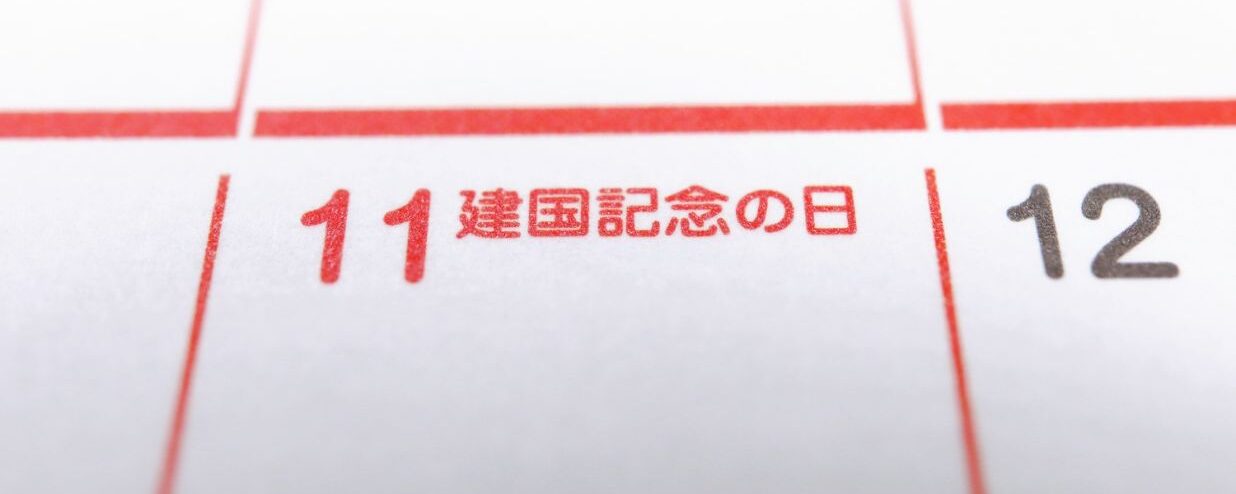


Have you heard of National Foundation Day? It is perhaps one of Japan’s most culturally significant national holidays. In Japanese, it is known as 建国記念の日 (Kenkoku no Kinen no Hi), meaning “a day to commemorate the founding of Japan.” Due to its somewhat controversial origins, National Foundation Day was abolished following the post-war constitution, but it subsequently bounced back 20 years later. So, what is this holiday, and why would the Japanese government try to abolish it? Does it still have the same meaning today? Keep reading to hear more about this fascinating holiday and how it is celebrated today.
What is Japan’s 建国記念の日 (National Foundation Day)?
National Foundation Day (Kenkoku Kinen no Hi, 建国記念の日) is a public holiday that occurs annually on February 11. It commemorates Japan’s founding and reflects on the country’s origins, history, and national identity. Unlike other important national holidays, celebrations tend to be calmer and more reflective, but some shrines and public institutions host ceremonies for the occasion.
As the name implies, National Foundation Day celebrates the foundation of Japan and the ascension of Japan’s first emperor, Emperor Jimmu. According to the legend, Emperor Jimmu is a descendant of the sun goddess Amaterasu and Japan’s first ruler. His accession is traditionally dated to 660 BCE, on the first day of the first month according to the Chinese Lunar Calendar.
Breaking Down 建国記念の日 (Kenkoku Kinen no Hi)
Let’s break down the National Foundation Day in Japanese to better understand what it means. 建国 (kenkoku) translates to the “founding of a nation,” and 記念 (kinen) means “commemoration.” の (no) is a possessive particle similar to “of.” Lastly, 日 (hi) just means “day”.
| Japanese | 建国 | 記念 | の | 日 |
| Romaji | Kenkoku | kinen | no | hi |
| English | Founding of the nation | Commemoration | (possessive particle) | Day |
Putting those together, we have the direct — albeit fairly messy — translation “founding of a nation, commemoration day.”
History of National Foundation Day
The origins of National Foundation Day are bound tightly to the Meiji Restoration (Meiji Ishin, 明治維新), a pivotal period in Japan’s history. The National Foundation Day actually originates from New Year’s Day in Japan’s traditional lunisolar calendar. This is based on the Nihonshoki, Japan’s oldest history book, which chronicles the myth of Emperor Jimmu descending from the Goddess Amaterasu and becoming Japan’s first Emperor.
Though this fact alone doesn’t make the holiday contentious, it was the government’s intent at the time. The joys of modernization came with the Meiji Restoration, but so did massive political, social, and economic changes, including the government’s attempt to link Shinto to the State.
Want to study Japanese with us?
Kigensetsu (紀元節): The Original Name of National Foundation Day
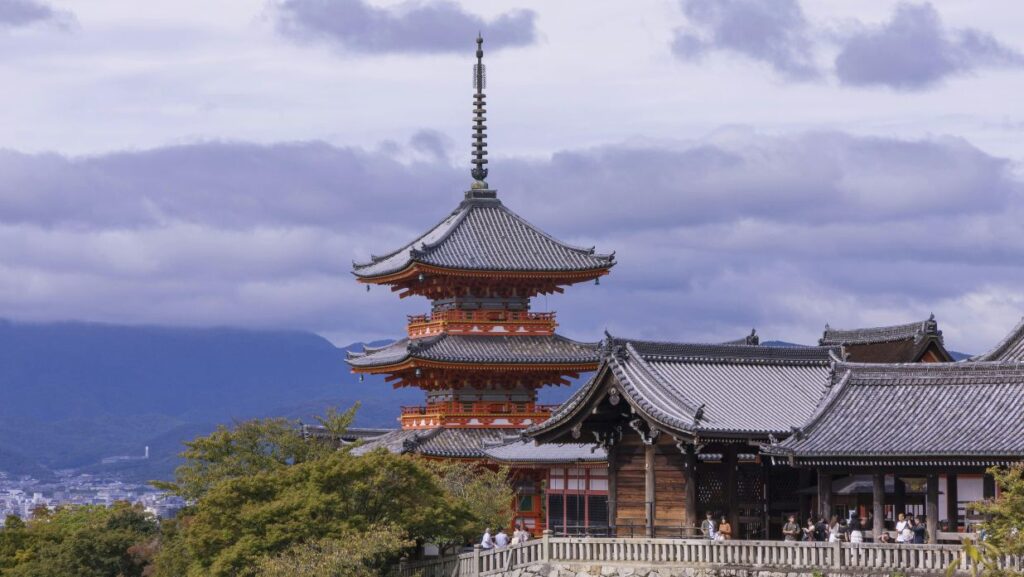
National Foundation Day was originally called 紀元節 (Empire Day). Proclaimed by the Meiji government in 1872, Empire Day was likely created to unify the country under the Imperial family’s rule. That same year, Japan officially adopted the Gregorian calendar, resulting in the holiday being observed on January 29. In 1873, it was finally moved to its current observation date, February 11, coinciding with the drafting of the constitution of the Empire of Japan.
The national holiday “Empire Day” (Kigensetsu, 紀元節) was a direct product of these efforts, and from 1873 until 1945, Kigensetsu was used to commemorate the Emperor as the “one true ruler of Japan,” emphasizing loyalty to the emperor and the nation, closely tying the holiday to the government and Shintoism.
The same year Japan decided to officially adopt the Gregorian calendar was the first time this day was observed on January 29.
This holiday was deemed to be nationalistic in nature, so it was abolished in Japan’s Post-war Constitution. In 1873, Empire Day was moved to the 11 of February.
Indeed, as many Japanese were still observing the Chinese calendar, Empire Day was confused with the New Year celebrations.
Empire Day was abolished after World War II and re-established as National Foundation Day in 1966 after numerous complaints.
Why Does National Foundation Day Fall on February 11?
The legend states that Emperor Jimmu ascended to the throne on the first day of the new year, but until 1873, Japan used the lunisolar calendar.
It was during the modernization of Japan that the Meiji Emperor deemed it necessary to switch from the Lunisolar Calendar to the Gregorian Calendar, which is used in Japan today. Hence, the first day of the Lunisolar Calendar corresponds to February 11 in the Gregorian Calendar.
How is National Foundation Day Celebrated?
The original holiday, Kigensetsu, was once a big occasion in Japan. It was considered to be one of the four most famous holidays, and so the day was marked with celebrations and large parades.
In modern times, however, celebrations for the holiday are much more modest. For most people, National Foundation Day is a day off from school or work, and many local businesses and government buildings are closed. Although you will probably see more Japanese flags, there aren’t many overt displays of patriotism.
However, since most students and workers get the day off for the holiday, people do various things to celebrate National Foundation Day. Here are some of the most common ways it is celebrated (try joining if you’re in Japan too!):
- Visiting shrines, especially Shinto shrines
- Participating in ceremonies, parades, and festivals
- Watching news coverage or special TV programs about Japanese history
- Simply enjoying the day off with family or friends
Throughout the nation, you can also find lectures, public conferences, or gatherings that discuss Japan’s history, giving people a chance to hear expert opinions on Japan’s current state.
Where to Find National Foundation Day Festivities
Although National Foundation Day is commonly observed as a day off without much elaborate celebrations, you can still find some festivals and parades to join in and honor all the contributions of people dating all the way back to Japan’s earliest history. These festivals tend to be calmer celebrations rather than large-scale festive events.
1. Meiji Jingu in Tokyo
One of the most well-known locations for National Foundation Day observances, Meiji Jingu holds a formal Shinto ceremony attended by priests and visitors. People come to pray for the nation’s prosperity, peace, and personal well-being. The shrine’s large, open grounds and solemn atmosphere make it a popular place to visit for the holiday.
2. Ise Grand Shrine in Mie Prefecture
As one of the most sacred Shinto shrines in Japan, Ise Grand Shrine also observes National Foundation Day with special rituals. While ceremonies are not heavily publicized, visitors often come on this day to reflect on Japan’s origins and spiritual traditions.
3. Atsuta Shrine in Nagoya
Atsuta Shrine, which houses one of Japan’s imperial regalia, may hold commemorative prayers and rituals related to national prosperity and tradition. It is a meaningful destination for those interested in Japan’s historical and mythological roots.
4. Heian Shrine in Kyoto
In Kyoto, Heian Shrine sometimes hosts cultural performances such as traditional music or dance around National Foundation Day. These events highlight Japan’s classical heritage rather than political themes.
You can also find small celebrations at local shrines or public places, which may include rituals, traditional drum performances, or portable shrine processions.
Celebrate National Foundation Day This Year!
National Foundation Day falls on February 11 each year, and if it falls on a weekday, you have the day off from work. While it’s not a holiday celebrated with extravagant festivities, it’s still a great time to reflect on Japan’s history, show your love for the country, visit shrines, or simply spend time with your loved ones. The holiday is meant to be a tribute to Japan’s beginnings and history while also encouraging people to look forward to what’s ahead for Japan.
But to make the most out of the National Foundation Day, especially if you’re going to participate in the festive events, knowing a bit of Japanese would be essential. At Coto Academy, we focus on practical Japanese language that you can pick up naturally and start using right away. So, this year, let Coto Academy help you make the most out of the National Foundation Day!
Why join Coto Academy?
- School locations in Shibuya, Minato, Iidabashi, and Yokohama, plus a fully online Japanese language school, so that you can learn anywhere, anytime!
- Small classrooms with only up to 8 students for personalized support
- Professional native Japanese teachers, all trained to help you succeed
- Over 60 different Japanese classes across 18 levels, tailored to your needs
Interested in Japanese culture? For related articles:
- Setsubun: Ultimate Guide to Welcoming a New Season in Japan
- Obon: A Japanese Tradition Honoring The Ancestors’ Spirits
- New Year’s Day (元日): A Time for Tradition
- Culture Day: The Holiday that Commemorates Peace
- Vernal Equinox Day in Japan
When is National Foundation Day in Japan?
National Foundation Day, or Kenkoku Kinen no Hi, falls on February 11 every year. It’s a national holiday in Japan.
What was National Foundation Day first called in Japan?
National Foundation Day was originally called 紀元節 (Empire Day). In 1873, Empire Day was moved to the 11 of February because many Japanese were still observing the Chinese calendar, and Empire Day was confused with the New Year celebrations.
How do Japanese people celebrate National Foundation Day?
These days, it’s less celebrated. During this time, many businesses and government buildings are closed. Although you will probably see more Japanese flags, there aren’t many overt displays of patriotism.
What is National Foundation Day in Japan?
The National Foundation Day in Japan, or 建国記念のひ (kenkoku kinen no hi), is a public holiday that commemorates the beginning of Japan and is meant to reflect on the nation’s history as well as show your love for the country. Most of the Japanese population gets a day off for the holiday.
Are shops open on National Foundation Day?
Many smaller businesses and shops are closed for the holiday, but most large chains such as supermarkets or restaurants are open.