


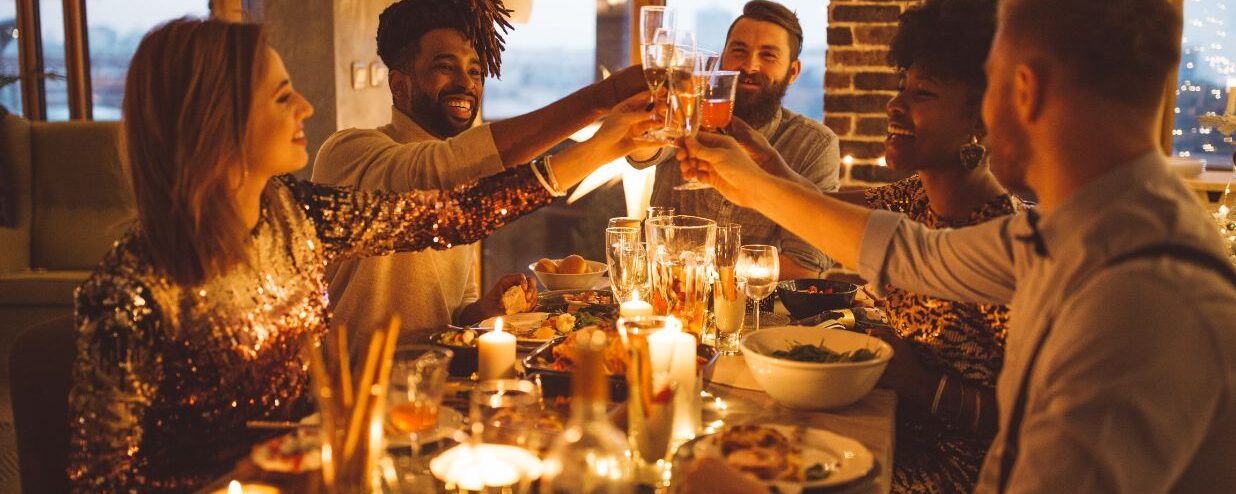


If you work in Japan, chances are you have been invited to and participated in a bonenkai (忘年会)? They are Japan’s high-spirited parties, usually held at bars or izakayas with plenty of drinks, to celebrate the end of the year in Japan. Instead of a family-focused event, it is often the time to celebrate with your comrades, whether it’s colleagues, fellow sports club members, or even a group of friends.
So, how do you get invited to one, and what do you need to know? Keep reading to learn how they work, etiquette to keep in mind, and more!
What is a Bonenkai? Who Do You Do Bonenkai With?
Bonenkai, or 忘年会, literally translates to “forget the year party,” which is not far from its actual purpose. It is time to celebrate and reflect on the hardships of the past year, while moving forward to a fresh start in the new year. So, that’s the “forgetting” part (the drinks sure will help too).
Most of the time, you do bonenkai with your company, sports teams, or any community you’re a part of. In workplaces, it’s common to hold either a company-wide bonenkai or one with your team. Usually, the company covers all the food and drinks at the bonenkai, so you just need to show up!
If you’re part of a sports team, martial arts dojo, or any other community, you’re usually invited to participate in a bonenkai at the end of the year. Since they don’t have the same budget as companies, you typically have to pay yourself. To make things simpler, they usually have you pay for a set menu and a nomihodai (all-you-can-drink).
Bonenkais are usually held at restaurants, bars, or izakayas to celebrate with colleagues, clubmates, or friends. With plenty of food and drinks (most commonly beer or lemon sours), bonenkai are a time to let loose and celebrate together for all the experiences throughout the year.
Bonenkai vs Shinnenkai: What is The Difference?
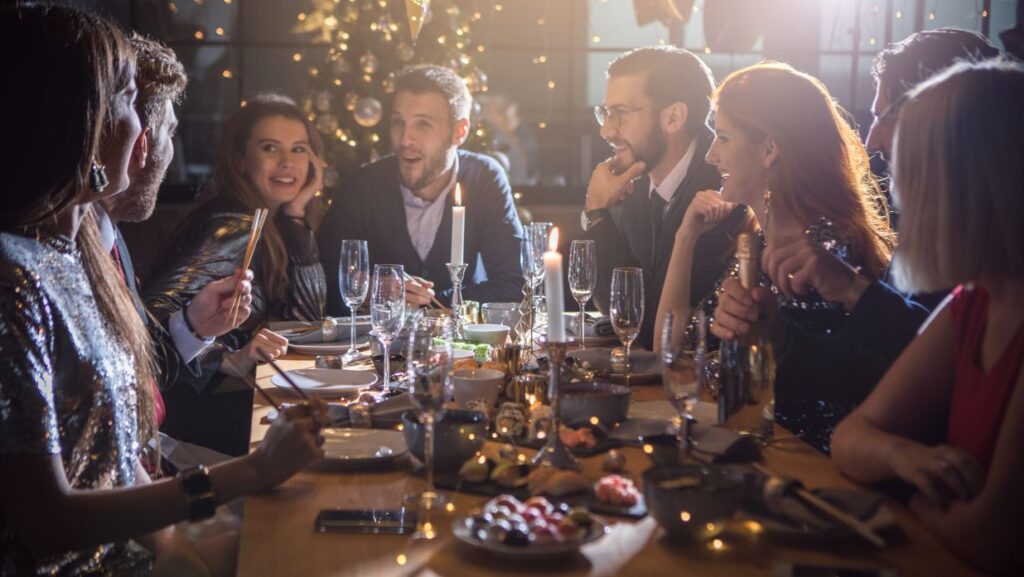
If bonenkai is the “forget-the-year” party used to close out the year, then shinnenkai is its counterpart. Written as 新年会, shinnenkai is a gathering held after the New Year in Japan, typically with colleagues, friends, or clubmates. Similar to bonenkai, there is usually a lot of drinking involved, and neither is actually an official tradition of Japan’s New Year celebration.
At a shinnenkai, elements of the New Year’s Shogatsu celebrations often make an appearance. You might take part in traditions like mochitsuki, where steamed rice is pounded to make fresh mochi, or kagamiwari, a festive ritual in which a sake barrel is cracked open with a wooden mallet and shared among everyone.
History of Bonenkai
Bonenkai is actually a pretty old Japanese tradition that can be traced back to the Samurai in the 15th century, who would hold noukai to celebrate the year’s achievements. Usually, they would be rather formal occasions with poetry and feasts. The Edo period was when Bonenkai started to develop into the more festive occasion we know it as today, with boisterous discussions, indulgent drinking, and entertainment, usually from geisha. Then, in the Meiji era, it was more broadly adopted by the masses, partly due to the period’s modernization and dissolution of the samurai class.
In the post-World War II era, it became increasingly associated with companies, particularly as companies adopted lifetime employment. Bonenkai were seen as a great way to encourage company loyalty and team camaraderie.
However, in recent years, fewer companies have hosted bonenkai. This is likely because employees are participating in nomikai, or company drinking parties, less often overall. Before, there was some unspoken social pressure in Japanese work culture to partake in nomikai, which has changed due to shifting attitudes on work-life balance. But, nomikais are still rather popular for more informal occasions, with a team or a few close colleagues rather than company-wide formalities.
Bonenkai, both formal and informal, is still a popular way to celebrate the end of the year with your community, work, and beyond, dating back centuries in Japan.
Bonenkai Etiquette to Know
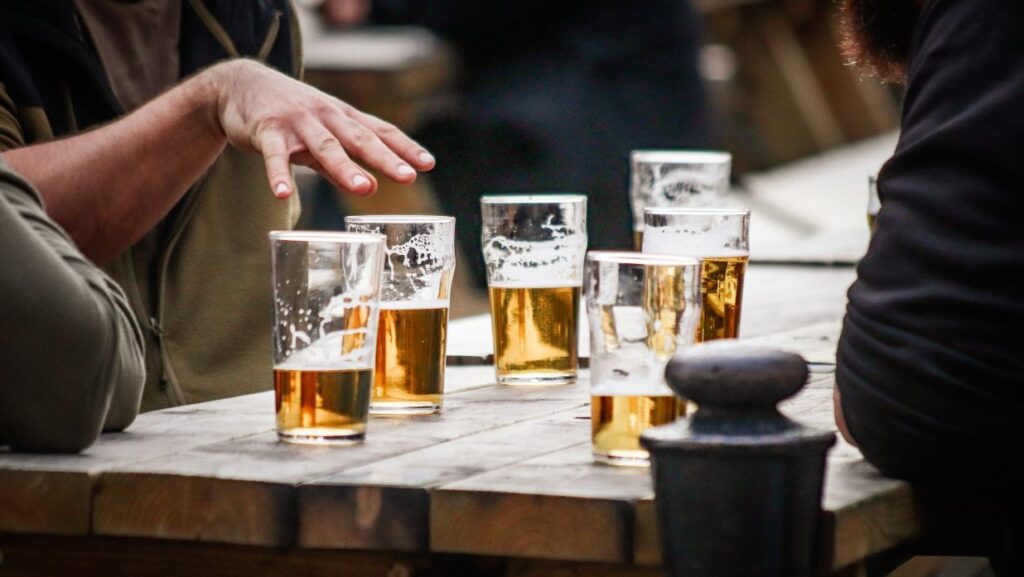
Bonenkai etiquette largely follows the Japanese manners you will find at any drinking or celebratory event.
1. Kanpai
Probably the most important part is that you must wait for everyone to have their drink in hand and then do a kanpai, or a toast, together. Usually, the communal toast follows your boss, leader, or head coach, who gives a brief speech thanking everyone for their hard work and looking forward to the new year ahead.
Once you do the kanpai and clink your glass with those around, you may take a sip of your choice of poison! Also, note that in some cases, there are Japanese superstitions for doing a kanpai with water. Of course, this does not mean you must drink even if you don’t want to, but maybe kanpai with another soft drink, or just simply ask if it’s okay to cheers with your water, your group may not mind!
2. Pouring Drinks for Others
One aspect of Japanese drinking culture that differs from the West is that you often must pour for others while keeping social hierarchy in mind. If you are sharing a table with your boss, sensei, or senpai, you should pour their drinks for them first. It’s common courtesy to keep the bottle label visible while pouring. No one will shame you if you forget to do this, but they will definitely be impressed with your knowledge of Japanese drinking etiquette.
However, these rather strict social rules are mostly becoming more relaxed. Your boss or senpai will likely pour the drink for you even before you have the chance to pour for them first. Don’t worry, it doesn’t matter who is poured first anymore, and as the drinks go by, no one really keeps track. Just be on the alert to top someone’s glass once it’s getting empty!
3. Try Not to Pour for Yourself (First)
If your glass is empty, try to wait for someone else to top you off, and if no one is noticing. Our top tip is to check and see if anyone else needs a drink, pour for them, and then pour for your own glass last. Japanese culture is about consideration for others, so even if you must pour for yourself, keeping others in mind before you do so would communicate your concern and respect for them.
Tips for Attending a Bonenkai
If you find yourself invited to a bonenkai, don’t be nervous. While it is a unique Japanese tradition, many of the same rules that apply to common work parties still apply. Here are a few things you need to watch out for.
1. Don’t overdrink yourself!
We might be tempted to drink away our nervousness with a bit of liquid courage, and drinks like sours or plum liqueurs are especially dangerous because you often don’t feel their effects until it’s too late. It’s fine to enjoy yourself, but pacing is important, particularly at a work-related event. If it’s a company bonenkai, join in the kanpai and have a drink or two, but be careful not to overdo it to the point where you say or do something you’ll regret the next day.
2. Bills tend to be split evenly
If you’re used to splitting the bill based on what you personally order, don’t be surprised if food and drinks are shared at a bonenkai. When the event isn’t paid for in advance or subsidized by the company, the bill is usually split evenly among all attendees. Even if you feel you ate less — or someone else ate much more — try not to dwell on it; that’s simply how these gatherings work. Besides, bonenkai often involves large groups, which makes individual accounting impractical.
3. There might be a second, third, or even fourth round!
Bonenkai is the main party and is often just the first stop of the night. Don’t be surprised if you’re invited to a second party, called a 二次会 (nijikai). From there, the group may proceed to a third or even a fourth round. Be prepared to say yes or no depending on your comfort level, and remember that by the third or fourth venue, you’ll often miss the last train!
How Does Bonenkai Work?
Bonenkai are centered around feasting, drinking, and having a good time. For most bonenkai, especially at large companies, food and drinks are served from a set menu. Usually, beverages are all-you-can-drink, while food courses can vary from all-you-can-eat buffet-style to set-course menus.
In order to make headcounts and paying the bill simple, you usually pay a set course fee that generally ranges from ¥2,500 to ¥5,000, depending on the venue and what the group is willing to pay. Of course, at the company bonenkai, food and drinks are often fully or partially covered by the company.
Keep in mind that since bonenkai tend to be courses reserved ahead of time, you should let the organizers know about any allergies, restrictions, or sensitivities to food ingredients you may have.
What Food is Usually Served at Bonenkai?
Food is often ordered through set courses, which usually consist of Japanese comfort food ideal to pair with alcoholic beverages like beer. Bonenkai are often held at izakayas since they are centered around affordable drinks and shareable food. Popular dishes at izakayas and bonenkai include:
1. Small Dishes
Bonenkai meals often start with small shared plates, perfect for casual conversation:
- 枝豆 (edamame): Boiled soybeans, a classic starter
- 冷奴 (hiyayakko): Chilled tofu with toppings like green onion and ginger
- ポテトサラダ (potato salad): Japanese-style, creamy and slightly sweet
- 漬物 (tsukemono): Pickled vegetables to cleanse the palate
2. Grilled and Fried Favorites
These hearty dishes are Bonenkai staples and go perfectly with beer or highballs:
- 焼き鳥 (yakitori): Grilled chicken skewers (thigh, skin, liver, etc.)
- 焼き肉 (yakiniku): Grilled beef, including beef
- 唐揚げ (karaage): Japanese fried chicken, crispy and juicy
- 串揚げ (kushiage): Deep-fried skewers of meat and vegetables
- サバの塩焼き(sabano shio yaki): Grilled fish with salt
Food can vary by venue; Chinese and Korean cuisine are also popular, but bonenkai are largely about sharing comfort food and enjoying a good time with your colleagues, team members, or friends.
Want to suggest food to eat at the bonenkai? Since they take place during the peak of December, find out about 15 Must-Try Winter Foods in Japan: Nabe, Fugu, Crab & More.
Popular Drinks for Bonenkai
Drinks are the core of Bonenkai culture, primarily since these year-end parties are meant to help people relax, bond, and “forget” the stresses of the past year. Most Bonenkai take place at izakaya or restaurants offering 飲み放題 (nomihoudai), or all-you-can-drink plans, for a fixed amount of time (usually 90–120 minutes).
Beer is usually the go-to starter drink for everyone to kanpai together, even if you switch to another drink later. They are often served in large bottles, called 瓶ビール (bin biiru) in Japanese, which can be shared with multiple people. Just keep in mind the pouring etiquette we mentioned earlier.
But, of course, beer is far from the only option. Most venues with all-you-can-drink menus commonly include:
- ハイボール (Highballs): Whiskey mixed with soda
- 日本酒 (Sake): Traditional Japanese rice wine that can be served either hot or cold
- 焼酎 (Shochu): Distilled spirit made from barley, sweet potato, or rice
- 酎ハイ・サワー(Chuuhai and Sours): Light, flavored alcoholic drinks, with lemon sour being the most common, but grapefruit, ume (plum), and yuzu are also popular
- Simple Cocktails: Cocktails such as gin tonic or cassis orange are popular and often included in all-you-drink menus
- Soft Drinks: Typical soft drink options are also always available for those who don’t want to drink
Want to know how to describe the flavor of the food and drinks you’ll be digging into? Check out our guide on Useful Words to Describe Food in Japanese.
Conclusion: Bonenkai is About Celebration!
Bonenkai is a celebration symbolizing the end of the year. It’s a unique Japanese tradition about letting loose, reflecting on the past year, and looking forward to the new year, so it’s a time to celebrate with your community members, whether it’s colleagues, a team, or your friends. Bonenkai is a great time to socialize and get to know people you worked hard with, allowing you to get closer to them and build a stronger bond in a casual, festive atmosphere.
Bonenkai is also a great chance to practice Japanese conversation in a casual context while also understanding certain nuanced social formalities, like pouring for your boss or coach first. Knowing what to say, when to drink, and how to participate politely can help you feel more confident and included during the celebration.
Study Japanese for Everyday Life in Japan!
At Coto Japanese Academy, we help students go beyond textbooks and learn the Japanese they actually need for everyday life in Japan, from seasonal customs like bonenkai to workplace communication and casual conversation. If you want to deepen your understanding of Japanese culture while improving your speaking skills, Coto’s practical, conversation-focused classes are here to support you.
This Bonenkai season, enjoy the food, the drinks, and the connections — and let Coto help you make the most of every Japanese cultural experience.
Why join Coto Academy?
- Small classrooms with only up to 8 students for personalized support
- Professional native Japanese teachers, all trained to help you succeed
- Over 60 different Japanese classes across 18 levels, tailored to your needs
- School locations in Shibuya, Minato, Iidabashi, and Yokohama, plus a fully online Japanese language school, so that you can learn anywhere, anytime!
FAQ
What is a bonenkai?
A bonenkai (忘年会) is a traditional Japanese year-end party held to “forget the year” and celebrate making it through the past year together. It usually takes place in December with coworkers, friends, or social groups.
What is the difference between a bonenkai and a shinnenkai?
A Bonenkai is held at the end of the year (December) to wrap up the past year, while a Shinnenkai (新年会) is held in January to celebrate the start of the new year.
Who do you usually do bonenkai with?
Bonenkai are commonly held with coworkers, classmates, clubs, or friend groups. Invitations are usually sent by a manager, organizer, or group leader, often through messaging apps or email.
How much do bonenkai usually cost?
Most Bonenkai cost between ¥3,000 and ¥6,000 per person, often as a set course with an all-you-can-drink option. Prices may be higher for company-sponsored or upscale venues. However, if you’re invited to a company-wide bonenkai, it’s common for charges to be covered by your workplace.
Can you drink whatever you want at a bonenkai?
Yes, most bonenkai include 飲み放題 (nomihoudai), allowing you to choose from beer, highballs, sake, wine, and soft drinks. Drinking alcohol is not mandatory, and non-alcoholic options are always acceptable.
What kind of food do people usually eat at bonenkai?
Bonenkai typically feature izakaya-style dishes, such as karaage (fried chicken), sashimi, nabe (hot pot), yakitori, salads, and shared platters meant for group dining.
What etiquette should I know for bonenkai?
Key etiquette includes waiting for everyone before drinking, joining the group 乾杯 (kanpai), pouring drinks for others when appropriate, and tilting your glass when someone pours a drink for you.