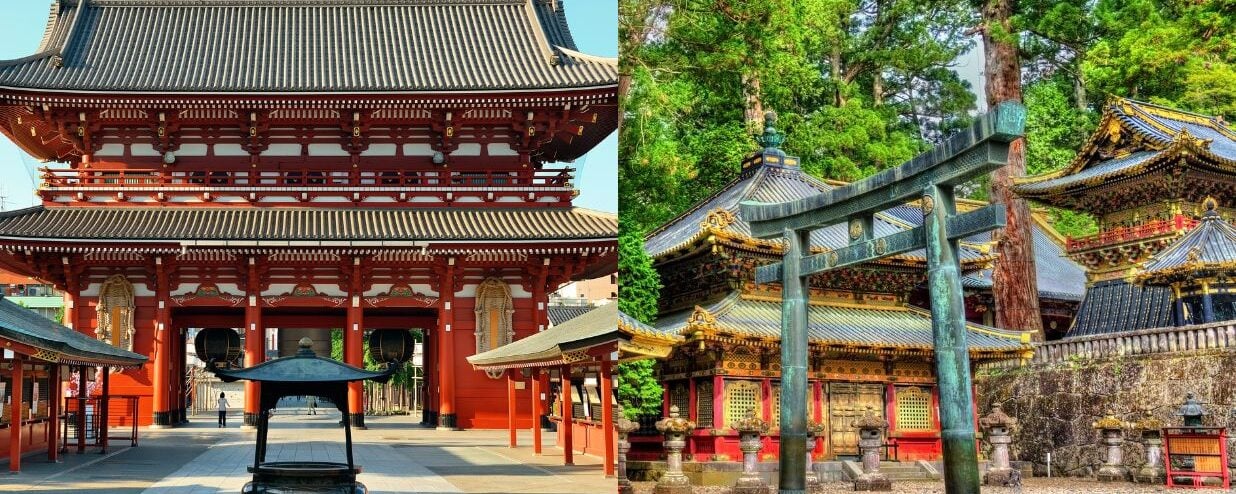


Did you know that Japanese shrines and temples are two different places with two different sets of etiquette? At a Shinto shrine, the standard form is two bows, two claps, then one more bow (nirei nihakushu ichirei). At a Buddhist temple, you press your palms together quietly and don’t clap.
If you’re visiting Japan for the first time, you might be wondering what else you need to know. And if you’ve been before, or even live here, what have you been doing wrong? What other Japanese temple and shrine etiquette should you follow to show respect? This guide covers what to do at each one, from the gate to the offering box, so you can visit with confidence.
Shrines vs. Temples in Japan: What’s the Difference?
Japanese shrines and temples both have long histories and play a key role in religious, spiritual, and sacred practices. While they can look similar, once you know the differences, you will never confuse the two again.
Shrines belong to Shinto, Japan’s native religion, and are home to kami (deities or spirits). Temples belong to Buddhism, which arrived from the Asian mainland around the 6th century, and are places for worshipping Buddha and for memorial rites. The two often sit side by side and share festivals and visitors, which is why they’re so easy to confuse. Until the late 1800s, many were even combined.
Japanese shrines always have a torii (鳥居), the iconic gate you walk under, known for its simplicity. Japanese temples also have gates, called sanmon, which are much larger, more complex, and often multi-storied.
| Shrine (jinja) | Temple (tera / otera) | |
|---|---|---|
| Religion | Shinto | Buddhism |
| Entrance | Torii gate | Sanmon gate |
| Worship | Two bows, two claps, one bow | Palms together, silent |
| Clergy | Priests and miko (shrine maidens) | Monks and nuns |
| Common names | -jinja, -jingu, -taisha | -ji, -dera, -in |
| Associated with | Weddings, New Year’s visits, festivals | Funerals, memorials, graveyards |
So, let’s clearly define Japanese Shrines and Temples before we dive into specific customs and etiquette you should know for each.
神社 (Jinja): What are Japanese Shrines?
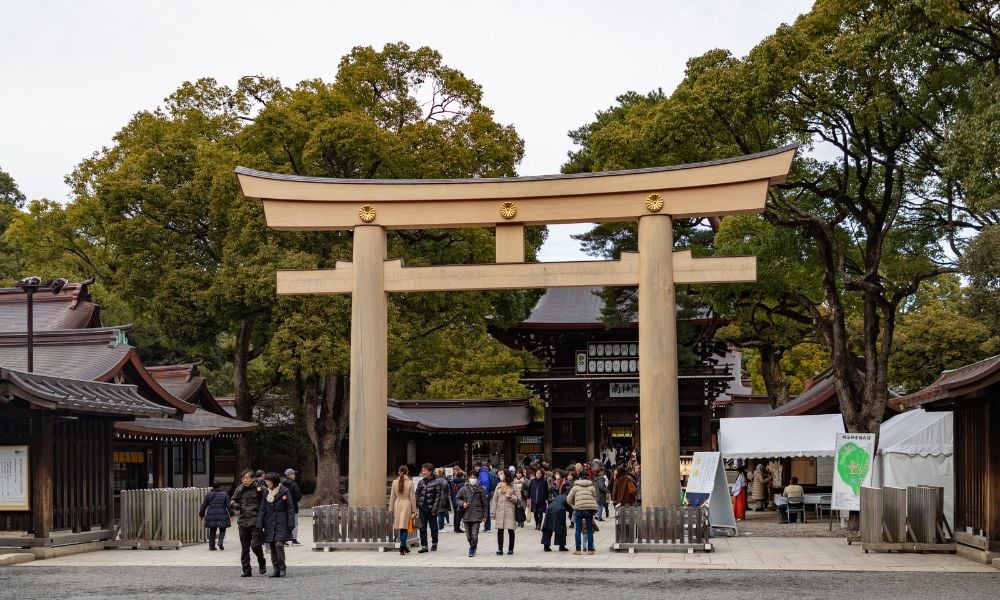
神社 (jinja), or Japanese shrines, are built to honor Shinto traditions, which emphasize nature, certain deities, and torii gates, which represent the boundary between the holy world and our physical one. Jinja can house kami, which are gods often of nature or animals, or deceased influential figures like emperors or shoguns.
Shrines can vary in size and grandeur, ranging from modest to monumental. They usually have statues of animals around them, or you may find a large or ancient tree that is being honored. Usually, objects are enshrined within the jinja itself.
お寺 (Otera): What are Japanese Temples?
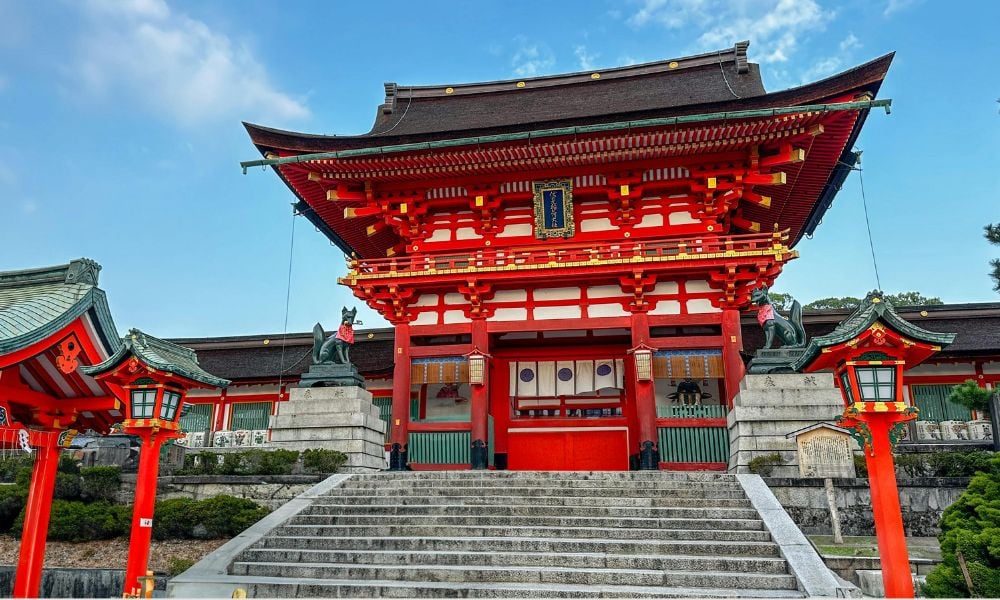
お寺 (otera), or Japanese temples, are Buddhist and known for their large, elaborate sanmon gates and fierce-looking guardians, called nio, who usually stand at the gate and the entrance of the temple to protect it from evil spirits. The purpose of temples is to enshrine Buddha. Buddhism is an imported belief system in Japan, so temples are heavily influenced by Korean and Chinese architecture.
Inside the temple, you will often see objects that enshrine Buddha or other Buddhist deities. Throughout the temple, you will often see motifs, imagery, and sometimes artwork that capture Buddhist teachings and philosophy.
You might often find shrines and torii gates within temple grounds, such as Tanzan Shrine in Nara (originally built as a temple). This is because, after Buddhism was introduced, it largely mixed with the already existing Shinto traditions, which are indigenous to Japan. While Buddhism became the dominant religion, Shinto beliefs and deities were still accepted, so they would often end up on the same sacred grounds as Buddhist temples.
Even to this day, it’s not abnormal to go to both Buddhist temples and Shinto shrines for different life ceremonies like weddings or funerals. Unlike Abrahamic religions, where you generally don’t blend different belief systems, Buddhism and Shintoism don’t have these types of restrictions. So, Japanese Buddhist temples (and Buddhism overall) are unique to Japan for their syncretism with Shinto beliefs and customs.
Customs and Etiquette in Japanese Shrines
Maintaining etiquette and customs is one of the best ways to respect Japanese traditions, and this applies to shrines as well. A shrine visit starts with entering the gate and culminates in showing respect to the deity, who can bring you luck or fortune. So, let’s go through the customs you should know, step-by-step.
1. Entering the Torii Gate
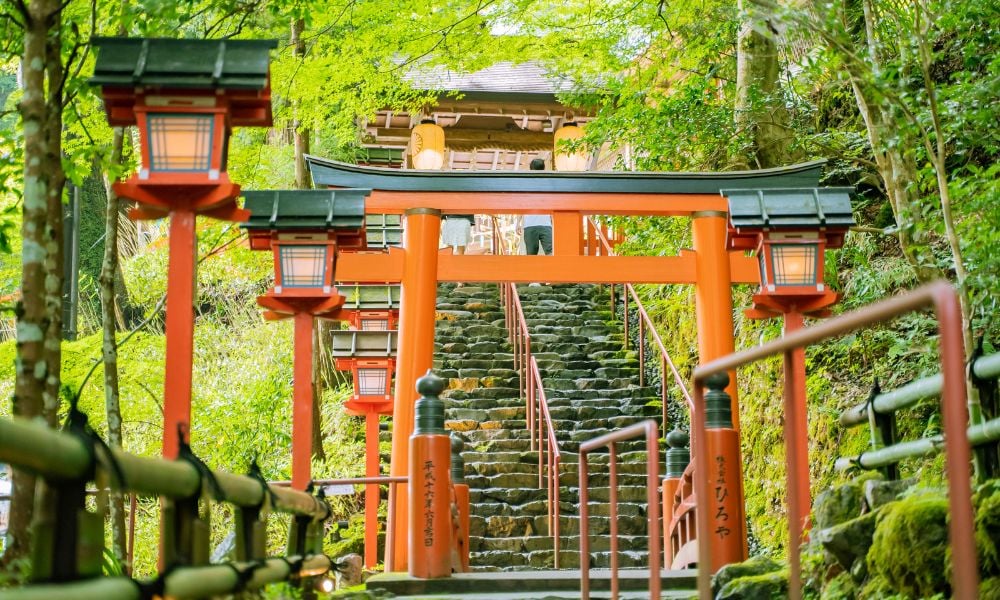
As mentioned, the torii gate is believed to represent the boundary between the physical and spirit world, marking the entrance to a sacred space. So, before entering, you should bow and avoid walking through the center; only walk on the left or right side. This is because the center is where the gods and spirits walk into the shrine.
- Bow before entering the Torii
- Enter from the left or right side, not the center
Wondering about Japanese superstitions? Check out our blog to learn more: 25 Japanese Superstitions Explained: Good & Bad Omens
2. Washing/Purifying Your Hands and Mouth
When you get to the Shrine’s main grounds, you will usually find a water pavilion, called a temizuya, which is where you quickly wash your hands and mouth. You will see a ladle you can use to pour water over your hands. Afterward, quickly rinse your mouth with the water and spit near the fountain, but be sure to use your hands and don’t have your mouth touch the ladle directly.
- Wash your hands by pouring water over them with the ladle.
- Scoop water with your hands and rinse your mouth (do not touch the ladle with your mouth directly)
3. Clapping and Praying at the Shrine
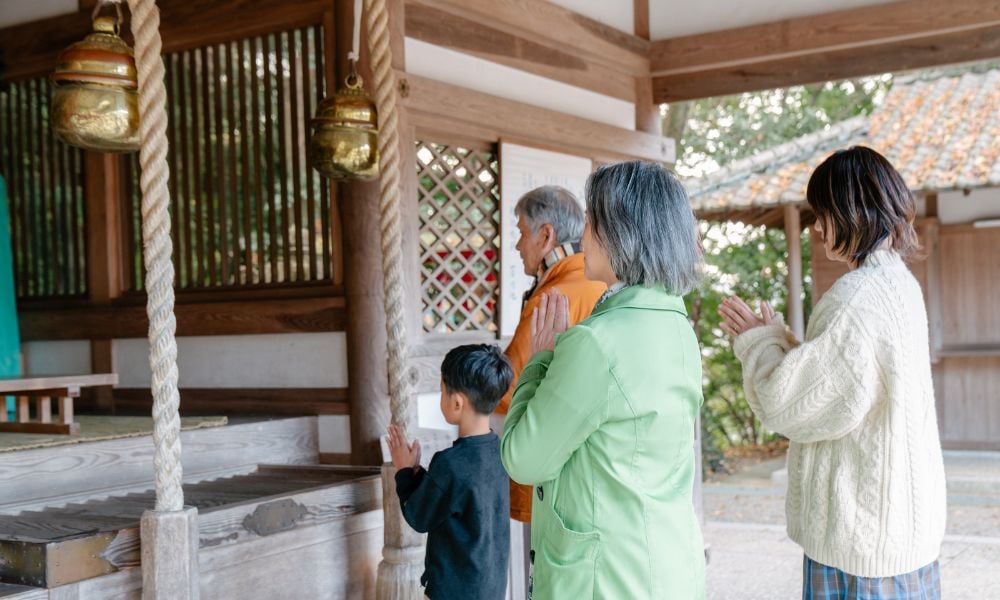
At the main shrine building, you will find an altar where you can throw in a coin; typically, just a 5 yen coin is used since it sounds like goen, meaning “connection,” like you’re connecting to the shrine. If there is a bell (usually attached to a rope), ring it by shaking the rope to greet the deity; just note that not every shrine has a bell.
Then you bow twice in front of the altar. Afterward, clap twice and pray, holding your hands together. Generally, the prayer is just a moment of silence. Then bow once before departing from the altar. This is a standard Shinto sequence for visiting a shrine: bow twice, clap twice, pray, then bow once, known as 二礼二拍手一礼 (Nirei nihakushu ichirei).
- Toss a coin into the altar
- Ring the bell by swinging the attached rope (if there is a bell)
- Stand in front of the altar and bow twice
- Clap twice and pray by keeping your hands together
- Bow just once before leaving
Customs & Etiquette in Japanese Temples
The etiquette in Japanese temples is less rigid compared to shrines, but generally you should be respectful, calm, and avoid being loud. Temples are meant to be a space of peace and tranquility, so making a ruckus would be considered quite disrespectful. Similar to shrines, it is customary to bow before entering the gates and to briefly pray before the deities being honored at the temple.
1. Entering the Sanmon Gate
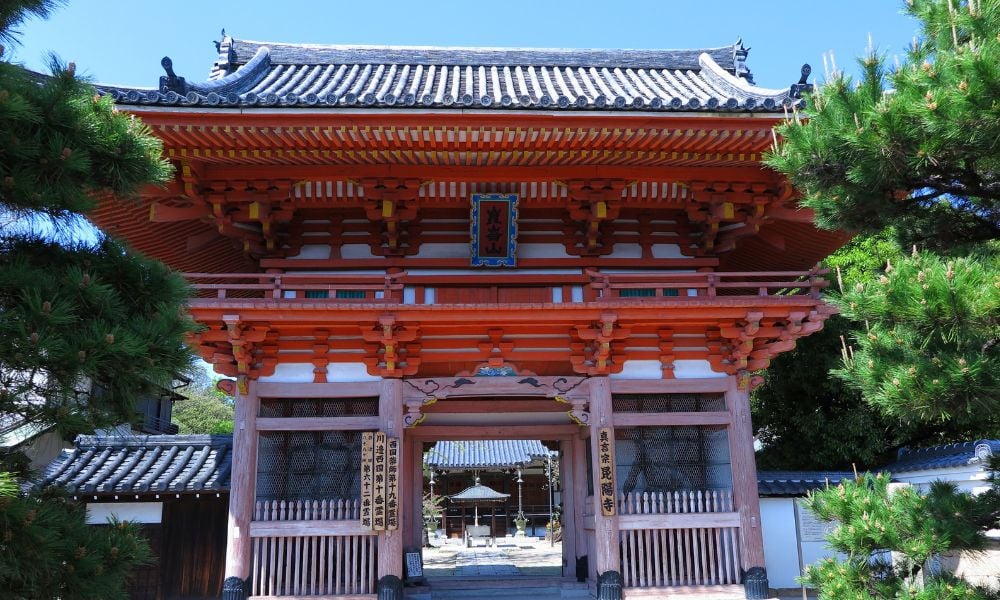
Just like the torii gate at a shrine, the sanmon marks the entrance to a sacred space. Before you walk through, stop for a moment and give a small bow toward the main hall (if you want, you can also put your palms together).
Try not to step on the raised wooden threshold at the bottom of the gate, since it’s considered the “head” of the temple’s guardian; stepping over it instead is a sign of respect. As with shrines, it’s also polite to walk along the sides, rather than down the center of the path.
- Bow with your palms together before entering
- Step over the threshold, not on it
- Walk on the left or right side, not the center
2. Purifying Your Hands and Mouth
Many temples also have a water pavilion for purification, called a chouzuya or temizuya, so you’ll follow the same steps as at a shrine. Wash your hands with the ladle, then rinse your mouth using your hands without touching the ladle with your lips. Just note that not every temple has one, so if you don’t see it, you can simply move on to the main hall.
- Wash each hand by pouring water over it with the ladle
- Rinse your mouth with water from your hands, not the ladle
- Skip this step if the temple doesn’t have a water pavilion
3. Offering Incense
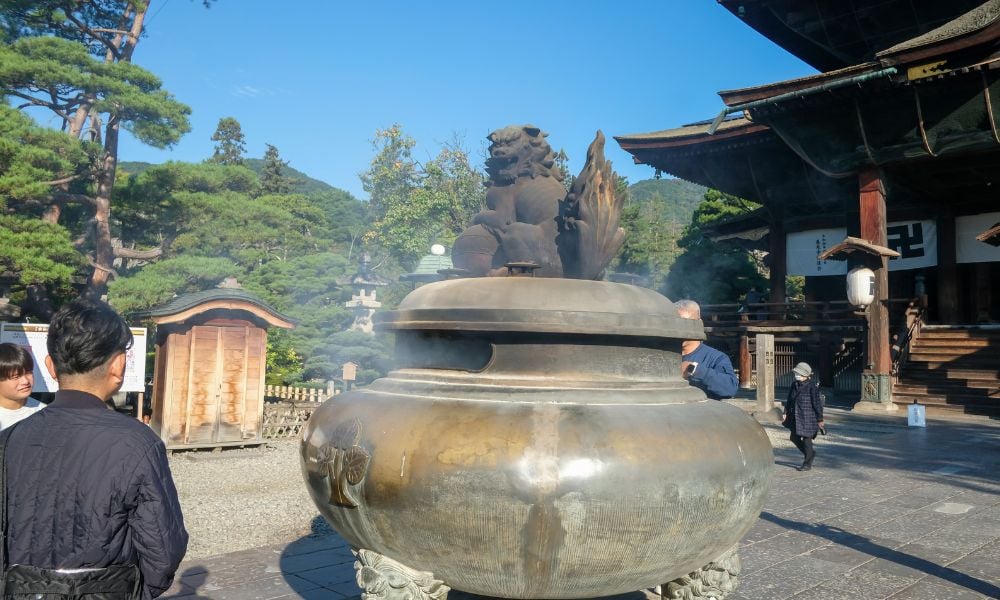
Many temples have a large incense burner called a joukoro, but note that not all temples have one. It is usually located near the main hall and is easy to recognize by the smoke rising from it.
Burning incense is a way to purify yourself and offer a prayer. Light your incense stick from the nearby candle, then put out the flame by waving your hand, not by blowing on it. Place the stick upright in the ashes. Many visitors also fan the smoke toward themselves, since it’s believed to bring good health or healing to the part of the body it touches.
- Light a stick of incense from the candle
- Put out the flame with your hand, never by blowing
- Place the incense upright in the burner
- Fan the smoke toward yourself (optional)
4. Praying at the Main Hall
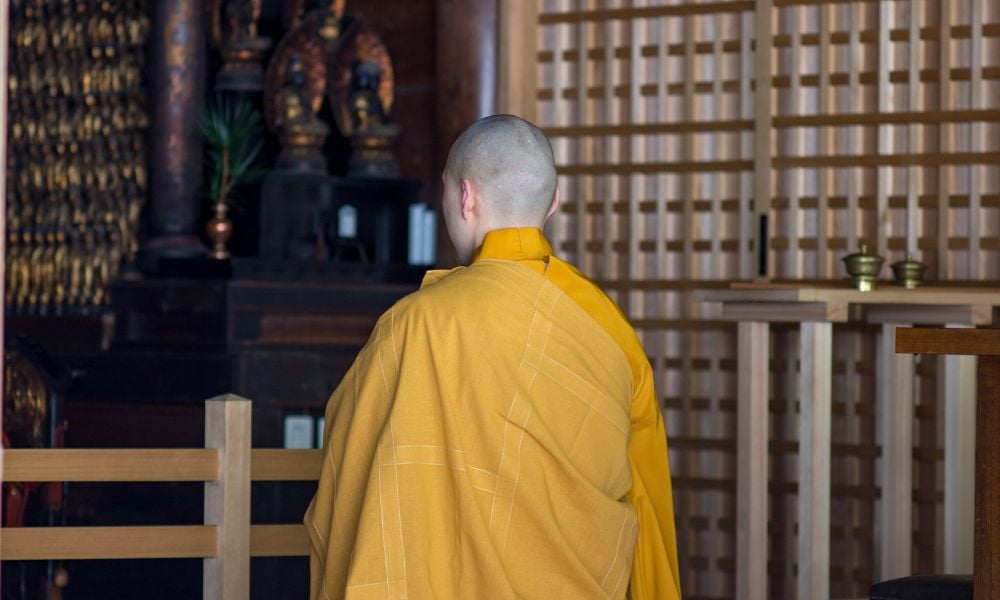
At the main hall, you’ll find an offering box, where you can toss in a coin. A 5 yen coin is a popular choice, since 五円 (goen) sounds like 御縁 (goen), meaning “good connection.” Then, bow slightly and press your palms together in front of your chest in prayer. The big difference from shrines is that you do not clap at a temple. Instead, pray silently and keep your hands still, then bow again before stepping away.
- Toss a coin into the offering box
- Bow slightly and press your palms together
- Pray silently, with no clapping
- Bow again before leaving
Some More Tips for Visiting a Temple in Japan
Some temples have different rules, such as areas where you would need to remove your shoes. So here are some tips to keep in mind:
- Take off your shoes if you enter a building with a raised wooden floor, and look out for shoe racks near the entrance
- Check for signs before taking photos, since many temples don’t allow photography inside the main halls
- Don’t ring large temple bells unless there’s a sign that says you can
What Not to Do at Japanese Shrines or Temples
Shrines and temples are open to the public, meaning anyone can visit them, but know that you are a guest on their sacred grounds. Like being a guest in someone’s home, or rather being in a church, you should treat the place you’re visiting with respect, and you generally shouldn’t touch most things without permission. So, here are the top things not to do in both shrines and temples.
1. Do Not Touch, Write on, or Desecrate Walls or Gates
You might’ve already seen videos condemning people who do pull-ups on torii gates or scratch their names into temple walls. Needless to say, this behavior might get you kicked out of the temple or shrine, at the very least.
Many shrines and temples are very old, even ancient, which may grant them special protective status, meaning these properties must be preserved for their cultural and historic significance. So, anyone who damages or tampers with the property could face legal ramifications.
2. Do Not Move or Touch Any Objects in the Temple
Unless you’ve been given permission, don’t touch statues, lanterns, offerings, or other objects around the grounds. Many are sacred or hundreds of years old, so moving or touching them can damage them. This includes the offerings left by other visitors, like coins, sake, and food, which should never be taken or rearranged.
Some places do have objects that visitors are allowed to touch, like the healing statues at some temples that people rub on the part of the body that hurts. If that’s the case, there will usually be a sign inviting you to do so, so when in doubt, look and don’t touch.
3. Do Not Take Photos Where It Is Prohibited
Photography rules vary a lot from place to place. Many shrines and temples allow photos of the grounds and exterior, but prohibit them inside the main halls or near sacred objects, so keep an eye out for signs with a camera crossed out.
It’s also considered disrespectful to take photos of people while they are praying, or of priests and monks without their permission, since a place of worship isn’t a tourist attraction for those who are there to pray. If you’re not sure, it’s always fine to ask a staff member.
4. Do Not Eat, Drink, Smoke, or Be Loud on the Grounds
As we mentioned, shrines and temples are meant to be calm and quiet. So avoid talking loudly, running around, or playing music on your phone. Eating, drinking, and smoking while walking around the grounds is also considered rude, so save your snack for the designated rest areas, or for the food stalls and tea houses near the entrance, which often have places to sit.
Some places also ask visitors to take off hats and sunglasses when approaching the main hall, so follow the posted signs or the lead of those around you.
5. Do Not Enter Restricted Areas
Some areas on the grounds are only for priests and monks, or are closed to the public to protect them. These are usually marked with signs, ropes, or fences, and sometimes a twisted rope called a shimenawa (注連縄), which marks a sacred boundary.
Don’t cross them, even for a better photo. If you see a sign that says 立入禁止 (tachiiri kinshi), it means “no entry,” so remember this one before you visit.
Shrine and Temple Recommendations in Japan
Finally, to the fun part, let’s go over some of the most iconic Japanese shrines and temples you should visit, whether you’re visiting or living here. Many of these shrines and temples are famous for their historic and cultural significance in Japan, often being known for their aesthetic characteristics and deliberate placement near natural landmarks.
Top Shrines, or Jinja (神社), to Visit
- Meiji Jingu (Tokyo): A peaceful shrine in the middle of a forest next to Harajuku, dedicated to Emperor Meiji.
- Fushimi Inari Taisha (Kyoto): Famous for thousands of red torii gates winding up a mountain.
- Itsukushima Shrine (Miyajima, Hiroshima): Known for its “floating” torii gate in the sea.
- Ise Jingu (Mie): Considered Japan’s most sacred Shinto shrine, dedicated to the sun goddess Amaterasu.
- Nikko Toshogu (Tochigi): An ornate, gold-decorated shrine honoring shogun Tokugawa Ieyasu.
Top Temples, or Otera (お寺, Otera), to Visit
- Senso-ji (Tokyo): Tokyo’s oldest temple, in Asakusa, with the giant red Kaminarimon gate.
- Kinkaku-ji (Kyoto): The Golden Pavilion, covered in gold leaf and reflected in a pond.
- Kiyomizu-dera (Kyoto): A temple with a huge wooden terrace that overlooks the city.
- Todai-ji (Nara): Home to one of the world’s largest bronze Buddha statues.
- Kotoku-in (Kamakura): A temple with a famous outdoor bronze Great Buddha.
Conclusion: Shrine & Temple Etiquette is About Sharing a Serene, Peaceful Space
Whether you live in Japan or plan to visit, you should visit shrines and temples if you want to peek into Japanese culture, history, and the nation’s unique blend of Buddhism and Shintoism. The best part is that most temples and shrines are open to everybody; while some may charge an entrance fee, it’s usually very cheap!
Just remember they are spaces of cultural and religious importance, so it’s best to respect the grounds, follow the rules, and, most importantly, have a great time!
Learn Japanese with Coto Academy!
If you really want to learn the traditions and customs in Japan, learning the language is an essential start! Join Coto Academy to develop a natural instinct for spoken Japanese through our conversation-focused courses. Or sign up for our intensive classes to learn all the basics from scratch, including reading, writing, speaking, and even how to pass the JLPT.
Come visit one of our campuses in Tokyo and Yokohama or join us online from anywhere in the world! Just simply fill out the form, and we will get in touch with you soon to discuss more details!
FAQ:
What’s the difference between a Japanese shrine and a temple?
Shrines (神社, jinja) are Shinto and have a torii gate, while temples (お寺, otera) are Buddhist and have a larger sanmon gate, often with fierce guardian statues called nio. Both are active places of worship.
How do you pray at a Japanese shrine?
Toss a coin into the offering box, ring the bell if there is one, then bow twice, clap twice, pray silently, and bow once more. Before that, bow at the torii gate and purify your hands and mouth at the water pavilion (temizuya).
Do you clap at a Japanese temple?
No. At a temple, bow slightly, press your palms together silently, and pray without clapping. Clapping is only done at shrines.
How much money should I offer?
Any amount is fine, but a 5 yen coin is popular because 五円 (goen) sounds like 御縁 (goen), meaning “good connection.” The offering is about your intention, not the amount.
Can I take photos at shrines and temples?
Usually, yes, on the grounds and outside the buildings. Photography is often prohibited inside the main halls, so look for signs and avoid taking photos of people praying or of priests and monks without permission.
You May Be Interested In:
The Emperor’s Birthday in Japan: When & What To Do
Learning Japanese with Anime: Does it actually work?
How to Express Condolences & Attend Japanese Funerals