





Ever wondered how to celebrate your birthday in Japan and say “happy birthday” in Japanese? In Japan, birthdays are not celebrated the same way they are in Western countries. For many, birthdays are seen as a time of reflection and renewal rather than a time to party. Additionally, children’s birthdays tend to be much more elaborate than those of adults. However, there are quite a few milestone birthdays that are deeply symbolic for Japanese adults.
There are plenty of fun ways to celebrate a birthday while honoring the Japanese tradition and having an amazing time! Here is a guide on how people in Japan celebrate birthdays, as well as how to say Happy Birthday for all the different contexts in Japanese!
How to Celebrate Birthdays in Japan
In Japan, there are actually different birthday celebrations depending on the person’s age and what stage they are at in their lives. Here are some of the most notable birthdays that have special celebrations in Japan.
1. The First Birthday
In Japan, a child’s first birthday is often celebrated with issho mochi —a four-pound piece of mochi that parents help the child carry or step on. This is supposed to bring them good luck. Another tradition on the first birthday is to allow a child to choose an item that will signify his or her future. This is called erabitori, roughly translated as “choose and take”.
2. Shichi Go San for Children
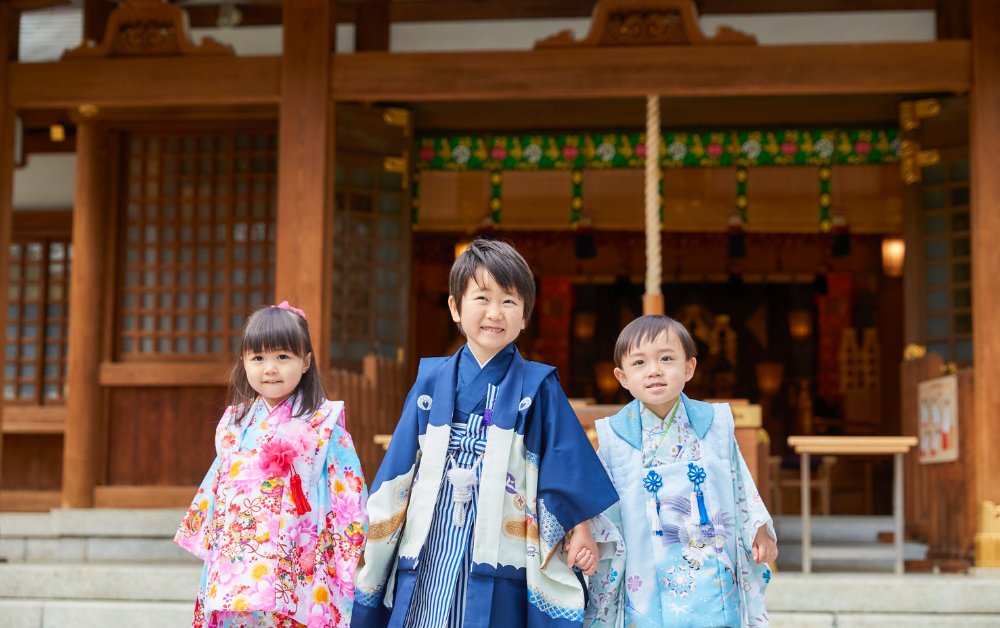
When it comes to celebrations, all the stops are pulled out for children. In fact, certain ages are special in Japanese culture for boys and girls. For girls, the 3rd and 7th birthdays are significant. For boys, the 3rd and 5th birthdays are significant. Overall, there is a holiday called Shichi Go San (7-5-3) that takes place on November 15th. The main event of this festival is dressing up the children in traditional kimonos — usually pink for girls and blue for boys — and taking them to a nearby shrine or temple. Seven, five, and three are auspicious numbers in Japanese culture, and prayers are offered up for the happiness and health of the children of the indicated ages. They dress in traditional clothing like a kimono for the girls and a hakama for the boys, which is ever so adorable, but very meticulous and elaborate. Many parents have professional portraits done of their children to celebrate this holiday as well.
To give a bit of fascinating history, back in the day, infant mortality was high across Japan. Many children did not live to see their 7th birthday. Shichi Go San began as a tradition of wealthy families to thank the gods for allowing their children to reach these ages. Then, in the 17th century, the tradition became more widespread among the whole population in Japan.
3. Seijin Shiki for Adults
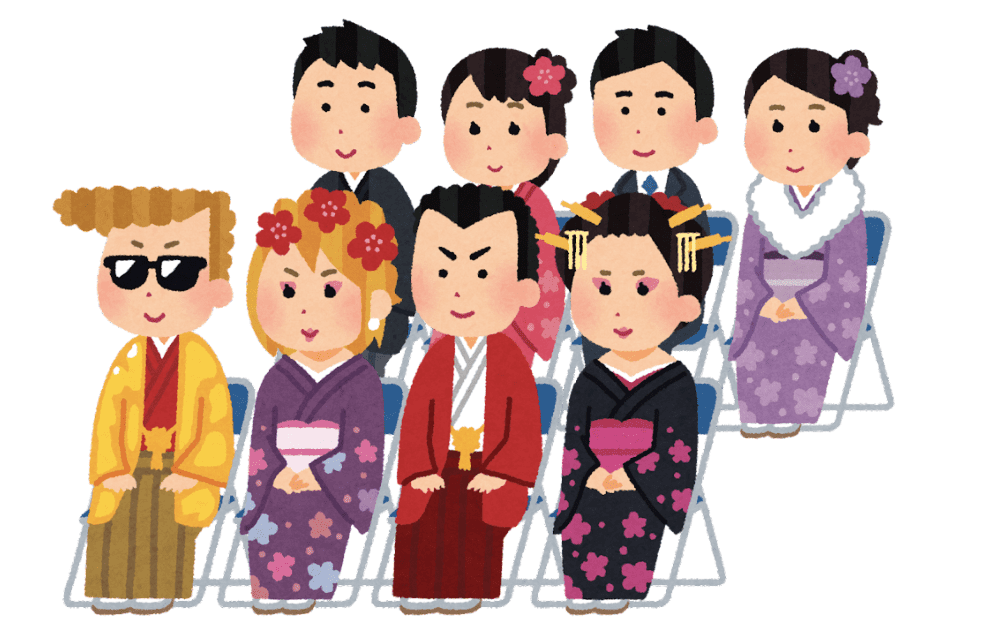
Seijin Shiki is the Coming of Age Festival in Japan, held on the second Monday of January, which celebrates those who turn twenty years old. In 1948, the official Coming of Age Day was established by the Japanese government as a way to recognize those who had turned 20 during the previous year. The young men and women dress up in traditional attire or suits. The ceremonies held during this day are usually quite elaborate and involve speeches from local politicians or celebrities, traditional dances and music performances, and food offerings in honor of those turning 20. Some cities hold parades or fireworks displays as part of their celebrations as well. In the evening, people might go out drinking with their friends or have a special meal with their family.
Seijin Shiki is a meaningful event for many Japanese people because it signifies not only a physical transformation into adulthood but also an emotional one. It marks an important milestone in life where young adults gain more independence and responsibility as they move into their next phase of life. It’s also seen as a time to reflect on their past achievements and plan for their future successes – something that is especially important in Japanese culture.
4. Kanreki
Turning 60 in Japanese culture is a special age as it’s the completion of a lunar cycle and the start of another. A person has gone through the Chinese zodiac cycle five times and is back at their original birth zodiac. The celebration is called kanreki, literally meaning “return calendar”. It’s symbolically a rebirth of sorts. Traditionally, the kanreki celebration is held by a person’s family and consists of a banquet-style meal where the birthday person sits at the head of the table. The attire for them is a red, sleeveless vest (chanchanko), a red bouffant hat (e-boshi), and sometimes a fan. Red is meant to be the color of a newborn baby and symbolizes the person’s rebirth.
There is also a lot of symbolism in the food served at a kanreki celebration. Keeping in line with the significance of the color red, sekihan (red bean rice) is often served to represent good luck and rebirth. Another common dish during Kanreki is Kasane mochi or kagami mochi, which is a large rice cake representing years past, with a smaller one on top representing years to come. An orange is placed at the top to represent longevity for generations to come. Red seabream may also be served to celebrate.
5. Kiju
When a person turns 77 in Japan, this is considered an age of joy and happiness. It’s considered fortunate and a right of passage to live to see this age. The celebration is called kiju, and it generally consists of children and grandchildren gathering to celebrate with a special person. The attire for the birthday person traditionally was a purple vest, but nowadays people may wear another article of clothing that’s purple or skip the purple altogether.
There are quite a few other birthday ages that are considered special in Japanese culture, but for the sake of time, I can’t list them all. You can search online to learn more, but I’d like to talk about how general birthdays that aren’t considered special are celebrated in Japan.
6. General Japanese Birthday Celebrations for Adults
There may not be much fanfare for adult birthdays in Japan like in Western cultures. Interestingly, birthdays in Japan were not really celebrated until after the Second World War, which brought an influx of Western culture. Perhaps before that influence, the Japanese didn’t celebrate birthdays due to their culture of focusing on the group rather than the individual. In fact, in the past, everyone would age one year on New Year’s Day. Of course, now, birthday celebrations are widespread.
Instead of throwing big parties with lots of decorations and noisy games, most people prefer a more low-key affair with friends or family members gathering together for dinner or drinks at home or at a restaurant. Typically, this could be at a traditional Japanese restaurant or an Italian-style café. These restaurants often offer special menus for birthdays, such as a free cake or other small treats. Alternatively, some people reserve rooms at izakayas, which is really fun because there may be an all-you-can-eat-and-drink option for a set price!
It’s important to note that many younger Japanese people are adopting more Westernized ideas and styles. That means you may encounter some people who certainly do have Western-style parties for themselves or their children. And of course, many adults celebrate by partying and having drinks, too!
There are also several customs associated with birthdays in Japan that you should be aware of if you plan on attending one as an outsider. For example, when singing “Happy Birthday,” be aware of how everyone is clapping to the song, and try to copy that. As far as birthday cake goes, often the standard is a white Victoria sponge cake with light whipped cream. It’s pretty simple and something that almost everyone should enjoy.
Gift-giving culture for Birthdays in Japan
Gifts for birthdays tend to be simple yet meaningful. Often, it’s common to give money or small items like handkerchiefs or chocolates. In some cases, people may also give traditional Japanese items like fans or bento boxes as gifts. The gift should be wrapped nicely and include a special card with a heartfelt message. It is also important to remember that the Japanese value quality over quantity, so it is best to give something of good quality rather than something cheap and less meaningful. Gifts are also often accompanied by decorative wrapping paper and origami cranes folded from rice paper with wishes written inside them. If you’re celebrating someone’s birthday in Japan, consider giving them something special that reflects their personality and interests!
Japanese culture is known for its gift-giving etiquette. It is polite for guests to bow when giving a present during a birthday celebration, and the birthday person may not open the gift until everyone has left the room. Unless, however, the person who presented the gift insists that the birthday person open it (this has happened to me, and it’s fine to open it).
If you can’t think of what to buy someone, or maybe you don’t have the time to shop, giving cash as a gift is also an option. In Japan, it’s not uncommon for people to give money instead of physical presents. Traditionally, the amount given is equal to the age of the person being celebrated. For example, someone turning 30 would receive 30,000 yen (approx. $290 USD). But you certainly do not need to give that much. In true Japanese gift-giving fashion, just be sure to get a nice card or decorative envelope and include a heartfelt message inside.
Ways to Say “Happy Birthday” in Japanese
Saying, “Happy Birthday” in Japanese can be tricky for non-native speakers. If you’re looking for a way to wish your friends and family in Japan a nice birthday, then this section has you covered. We’re going to explore some interesting ways to say “happy birthday” in Japanese so that you can truly surprise and delight your loved ones on their special day.
Here’s a list of useful phrases that you can use!
1. Otanjoubi omedetou gozaimasu (お誕生日おめでとうございます)
This is the most basic way to say “happy birthday” in Japanese. The phrase translates directly to “happy birthday”. It’s polite and formal but can also be used informally if necessary.
The word gozaimasu (ございます) is basically a very polite version of the verb ‘to be’, and the o (お) in front of tanjoubi (誕生日) is a prefix used in keigo (敬語) or polite speech!
お誕生日おめでとう!素敵な一日を〜
Otanjoubi omedetou! Suteki na ichi nichi o.
Happy birthday! Have a great day!
2. Tanjoubi omedetou (誕生日おめでとう)
This expression is stripped of the prefix and the word gozaimasu, which makes this more casual than the one above. It should only be used with people who are close to you or whom you feel comfortable speaking to informally.
3. Omedetou (おめでとう)
Omedetou (おめでとう) means ‘congratulations’ or ‘best wishes’. As you may have guessed, this is the shortest and least formal version of how to say happy birthday in Japanese. This can be used amongst your close friends and family, those with whom you can be very casual.
4. Otaome (オタオメ)
If you feel like お誕生日おめでとうございます is too long, you can shorten it even more! Otaome (オタオメ) is a Japanese slang used among close friends and for casual online greetings.
This shortens the word “otanjobi omedetou,” where you take the first three letters of each word and abbreviate them. You may see this written online, via text, or in online chat.
5. Tanome (たんおめ)
Another “birthday” slang in Japanese is tanome. This is another abbreviation that takes the 誕生日おめでとう (tanjoubi omedetou), taking the first three letters.
6. ~sai omedetou (~ 歳おめでとう)
This is a casual way to insert the person’s age into the phrase. For example, if someone is turning 21, you’d say 21歳おめでとう (nijyuu issai omedetou), which is “Happy 21st birthday!”. A more polite way to say this would be:
~歳のお誕生日おめでとうございます
~sai no otanjyoubi omedetou gozaimasu
You can check our full guide on how to count in Japanese from 0 to 100!
7. Suteki na ichinen ni narimasu youni (素敵な一年になりますように)
This expression means “Have a wonderful year”, and it’s usually written in a message. You can use it for anyone, whether your relationship with them is formal or informal.
Like otanjoubi omedetou, you might also want to shorten it. In this case, it would be:
素敵な一日を
sutekina ichinichi o
Have a great day.
8. Tanjoubi o tanoshimimashita! (誕生日を楽しみました)
Tanjoubi o tanoshimimashita (誕生日を楽しみました) translates as “I enjoyed your birthday celebration,” so it works well if you’re attending someone else’s birthday party or event and want to thank them for inviting you!
9. Happii basudee (ハッピーバースデー)
Is the phrase familiar to you? That’s because it is borrowed from the English word “Happy birthday”, and written in katakana! Happii basudee (don’t forget to elongate both the “i” and “e) is the basic greeting phrase — just pronounced with a Japanese accent. It’s a super casual alternative that has a friendly tone, so you should only use this to greet your friends and close family members!
10. Hapiba (ハピバ)
Another uniquely Japanese abbreviation for happy birthday is hapiba. You may also see HBD in English, which is a common abbreviation in text messages. Hapiba is a casual congratulatory expression mainly used on LINE and other social media platforms, and it’s used to convey birthday wishes in a friendly, informal way.
A fun fact is that even though this is slang, it isn’t necessarily a Gen Z-specific Japanese phrase. Among young people, early teens tend not to use it as much, while late teens and young adults are more likely to use it.
11. Umarete kite kurete arigatou (生まれてきてくれてありがとう)
We want to save this Japanese birthday phrase at the end. Although technically it’s not the most polite (there’s no keigo in this phrase), it’s the most intimate. Why? Because the phrase means, “Thank you for being born”.
Umarete kite kurete arigatou is usually used by parents for their children. Sometimes your romantic partner might also say this. In any case, you should only use this for someone truly close to your heart!
Conclusion: Wish Someone a Happy Birthday in Japanese!
So now you know some different ways to say happy birthday in Japanese! Birthdays in Japan offer an opportunity for reflection and renewal rather than just partying—but that doesn’t mean they’re not fun, nor does it mean everyone celebrates the same way. From exchanging gifts to eating sekihan, these customs help create a festive atmosphere for any birthday celebration in Japan. Whether you’re visiting Japan or living there permanently, learning about how people celebrate their birthdays can help deepen your understanding of Japanese culture overall. So if you ever find yourself celebrating your own or someone else’s birthday in Japan, do your best to do it the Japanese way!
If you’re ready to continue your Japanese language journey, why not study at Coto Academy?
Coto Academy offers online and in-person classes (in Tokyo) for Japanese at any level — beginner, intermediate, to advanced. We specialize in short-term courses and fun, practical Japanese lessons! Ready to get started?
Fill out our contact form below to get a free course consultation and level check!
FAQ for Saying Happy Birthday in Japanese
How do you say happy birthday in Japanese?
The most common way to say “Happy Birthday” in Japanese is お誕生日おめでとう (otanjoubi omedetou). This is casual and perfect for friends, family, or people close to you.
For a more polite or formal version, such as for teachers, coworkers, or elders, you can say, お誕生日おめでとうございます (ptanjoubi omedetou gozaimasu).
How do you write happy birthday in Japanese?
“Happy Birthday” in Japanese is written as:
- お誕生日おめでとう (casual)
- お誕生日おめでとうございます (polite)
On birthday cards, messages, or social media, people also commonly write:
- ハッピーバースデー (Happii Baasudee), a katakana version borrowed from English
Is there a Happy Birthday song in Japanese?
Yes, the Happy Birthday song in Japanese is just the Japanese phrase for happy birthday, お誕生日おめでとう (otanjoubi omedetou), sung in the same melody as the English “Happy Birthday” song.
Is it okay to say “Happy Birthday” in English in Japan?
Yes. Saying “Happy Birthday” in English is generally understood in Japan, especially among younger people. However, using Japanese expressions like おめでとう feels more natural and thoughtful.
Do Japanese people celebrate birthdays?
Yes, birthdays are commonly celebrated in Japan, usually with cake, small gifts, and close friends or family. Workplace or school celebrations tend to be more low-key, while celebrations with friends are often casual and fun.