



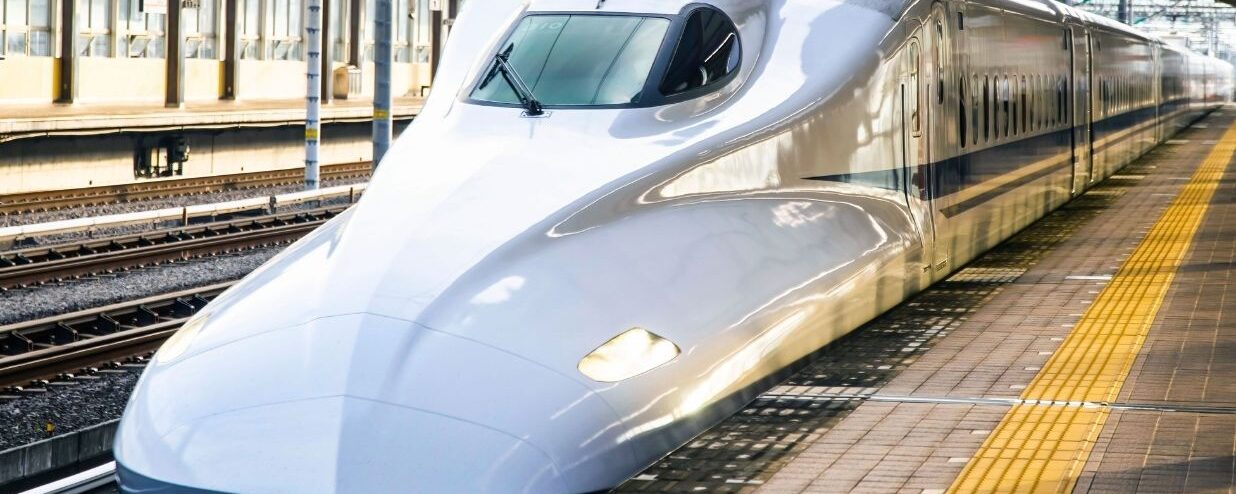


If you’re traveling around Japan by train, it helps to understand some common train announcements. In addition to letting you know the next stop, train conductors often share important updates, such as delays, transfers, or sudden stops due to safety concerns.
That said, while you can survive in Japan without speaking much Japanese, navigating the train system is a whole different challenge. Especially in major cities like Tokyo and Osaka, public transportation is fast and efficient, but also incredibly complex. From 地下鉄 (chikatetsu) subways to 電車 (densha) trains, getting around can feel overwhelming without some basic language skills.
While most central train lines provide English services, many Japanese trains and train stations don’t provide enough English translations for important information. The Tobu Tojo Line, for example, mostly uses Japanese announcements inside the train.
This is why you still need to know all the essential Japanese train announcements or 電車内で耳にするアナウンス (denshanai de mimi suru annaunsu). Wondering what some key Japanese train announcements you’ll likely hear during your trip in Japan? Check out our guide below for help!
Basic Train Announcement Phrases in Japan
In Japan, train announcements are generally split into two categories: automated recordings for routine information and live conductor announcements for real-time updates.
Have you heard of this phrase before?
急停車します。ご注意ください。急停車します。ご注意ください。
きゅうていしゃします。ごちゅういください。きゅうていしゃします。ごちゅういください。
Kyuuteisha shimasu. Gochuui kudasai. Kyuuteisha shimasu. Gochuui kudasai.
If you don’t know the meaning, you risk being jerked by the sudden train stop! The train announcement phrase above means: The train will stop suddenly. Please be careful.
If you’ve just started learning Japanese, train announcements might sound completely unfamiliar. That’s because they often use formal or advanced vocabulary, similar to public announcements in other settings. So even if you already know some basic conversational Japanese, these phrases can still catch you off guard. That’s why we recommend learning a few essential train announcements in advance.
Check out our full Japanese vocabulary cheat sheet here.
Understanding The Train System in Japan
Not all trains in Japan are created equal. There are six major train categories in Japan. Japan’s trains are well-developed, clean, efficient, and punctual, and their extensive rail network covers almost every part of the country. However, train stops are less frequent if you’re at a smaller train station. Depending on where you are staying in the city, some trains might not pass your station.
In general, local trains will stop at every station, while limited express trains will bypass most stations except for major ones, making it an ideal choice for commuters who want to cut commuting time.
| Japanese | Romaji | English Name | Description |
|---|---|---|---|
| 普通列車 | Futsuu | Local | Stops at every station. |
| 準急 | Junkyuu | Semi-express | Skips a few particularly small stations within the train line. |
| 快速 | Kaisoku | Rapid | Skips more stations than the semi-express train. |
| 急行 | Kyuuko | Express | Stops at fewer stations than rapid trains. |
| 特急 | Tokkyu | Limited Express | Stops only at major stations. |
| 新幹線 | Shinkansen | Shinkansen (Bullet Train) | High-speed express train lines. |
Some rapid trains require reserved seating, where you pay a slightly higher train fee. Inside the train, you’ll also find different seating types that you can choose from when purchasing your ticket. While waiting at the platform or for the train to move, a conductor usually checks the tickets to ensure that you use the correct car.
| Japanese | Romaji | English Name | Description |
|---|---|---|---|
| 自由席 | Jiyuu seki | Non-Reserved Seating | No prior reservation required. Usually located in the first three or last three cars of the train. |
| 指定席 | Shitei seki | Reserved Seating | Requires advance reservation at the ticket counter. |
| 優先座席 | Yuusen zaseki | Priority Seating | Reserved for passengers in need, such as the elderly, pregnant women, or people with physical disabilities. |
Basic Vocabulary Related to Trains in Japan
The usual announcements are also frequently made across its speakers to alert passengers to stay safe, the next stop, and which door will open. Here are some common and uncommon announcements you might hear when traveling by train in Japan.
First of all, look at these useful Japanese terms that you may hear on train platforms in Japan.
| Japanese | Romaji | Meaning |
|---|---|---|
| ~行き | ~ yuki | Bound for ~ (place) |
| ~方面 | ~ houmen | For ~ (direction) |
| ~線 | ~ sen | ~ Line |
Japanese Train Announcements You’ll Hear Before Boarding
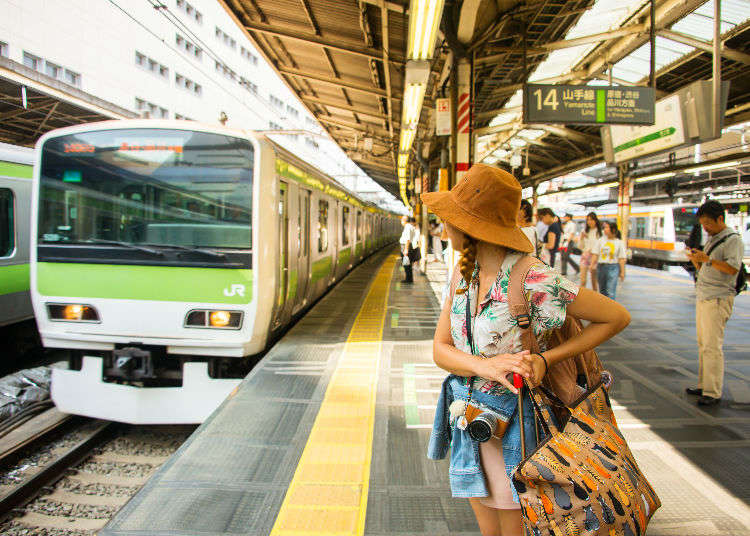
1. Mamonaku, densha ga mairimasu: The train is approaching
まもなく,電車が参ります。
Mamonaku, densha ga mairimasu
Meaning: The train is coming soon
You usually hear this while waiting for the train that is approaching the platform. The word mamonaku means “shortly” or “in a moment.” The phrase densha ga mairimasu literally means “the train is coming,” but mairimasu is a humble and very polite form of “to come.” It’s used in formal announcements to sound respectful. Altogether, the sentence means, “The train will be arriving shortly.”
2. Kiiroi sen no uchigawa ni sagatte omachi kudasai: Please stand behind the yellow line and wait
まもなく3番線に快速◯◯行きがまいります。黄色い線の内側に下がってお待ちください。
Mamonaku sanban-sen-ni kaisoku ◯◯ yuki-ga mairimasu. Kiiroi sen no uchigawa ni sagatte omachi kudasai.
Meaning: The rapid train bound for ◯◯ will be arriving at platform 3 shortly. Please stand back behind the yellow line and wait.
You usually hear this just as the train is about to arrive at the platform. At Japanese train stations, the yellow line is the bright yellow strip painted along the edge of the platform. It marks the safe boundary where passengers should stand while waiting for the train. The line is usually textured with raised bumps to help visually impaired passengers detect the platform edge.
3. Kakekkomi josha wa oyame kudasai: Please stop making a dash
駆け込み乗車は、電車のドアに手などを挟まれ大変危険ですのでおやめください。
Kakekomi josha wa densha no doa ni te nado o hasamare taihen kiken desu node oyame kudasai.
Meaning: Please refrain from rushing onto the train at the last minute, as it is extremely dangerous and may result in your hands or other body parts getting caught in the doors.
Some train stations may repeat this sentence for the safety of their passengers. In Japan, people take being on time very seriously. Because punctuality is such an important part of work culture, especially in big cities, many commuters rush to catch their trains during peak hours.
During the morning and evening rush, you’ll often see them dashing through stations and trying to squeeze into a train at the very last second before the doors close. It can be dangerous, not only for them, but also for nearby passengers who might get pushed or caught in the rush.
Japanese Train Announcements You’ll Hear When You Get on The Train
1. Gojosha, arigatou gozaimasu: Thank you for riding
ご乗車ありがとうございます。
Gojosha arigatou gozaimasu.
Meaning: Thank you for riding this train.
You hear this when you enter the train. This means, “Thank you for riding (with us).” It is usually an automated message played right after departure. The word ご乗車 (gojousha) means “boarding” or “riding,” with ご added to make it polite. ありがとうございます (arigatou gozaimasu) means “thank you” in a formal and respectful way.
2. Kono densha wa ◯◯ yukidesu: This train is bound for ◯◯
この電車は、◯◯ゆきです。
Kono densha wa,◯◯ mei,◯◯ yukidesu.
Meaning: This is a (Line Name) Line train bound for fo (Destination).
You hear this to know which direction the train is heading. Don’t be alarmed if they don’t mention the station you are going to. This announcement refers to the final destination of that particular train, not every stop along the way. Your station may still be one of the intermediate stops before the train reaches its last stop.
3. Kono densha ni wa, yuusen seki ga arimasu: There is a priority seat in this train
Almost all train carriages in Japan have a designated priority seating area. These seats are intended for passengers who may need extra support, including pregnant women, elderly people, individuals with heart conditions or other medical issues, and those traveling with small children. To remind passengers of this, announcements are often made during the journey, encouraging people to offer these seats to those in need.
The announcement can be a bit longer than usual, though. You might hear:
この電車には、優先席があります。お年寄りや、からだの不自由なお客様、妊娠中や、乳幼児をお連れのお客様がいらっしゃいましたら、席をお譲りください。
Kono densha ni wa, yuusen seki ga arimasu. O toshiyori ya, karada no fujiyuuna okyakusama, ninshin-chuu ya, nyuuyouji o otsuure no okyakusama ga irasshaimashitara, seki o o yuzuri kudasai.
Meaning: There are priority seats reserved for elderly and handicapped passengers, expecting mothers, and passengers accompanying small children.
This can be followed by a soft reminder for everyone to give up their seat if they see someone who needs it more than them!
お客様のご協力をお願いします。
Okyakusama no gokyouryoku o onegaishimasu.
Meaning: We thank you for your cooperation.
4. Manaamoodo ni settei no ue, tsuuwa wa o hikae kudasai: Please turn your phone to silent mode and refrain from talking on the phone
One of the things you shouldn’t do in Japan is talk loudly or take phone calls on the train. In Japanese, silent mode is called “manaamoodo” (マナーモード), a loanword that basically means setting your phone to silent out of consideration for others.
You might also hear announcements asking passengers to switch their phones to do-not-disturb mode, and in priority seating areas, they sometimes even ask you to turn your phone off completely. It’s all part of being mindful of the people around you, especially those who may be more sensitive to noise or electronic signals.
お客様にお願いいたします。優先席付近では、携帯電話の電源をお切りください。
Okyakusama ni onegai itashimasu. Yuusen seki fukin de wa, keitaidenwa no dengen o o kiri kudasai.
Meaning: Please switch off your mobile phone when you are near the priority seats.
After that, they might still ask you to put the phone on silent mode!
それ以外の場所では、マナーモードに設定のうえ、通話はお控えください。ご協力をお願いいたします。
Sore igai no bashode wa, manaamoodo ni settei no ue, tsuuwa wa o hikae kudasai. Go kyouryoku o onegai itashimasu.
Meaning: Please set it to silent mode (manner mode) and refrain from talking on the phone in other areas. Thank you for your cooperation.
Japanese Train Announcements You’ll Hear When A Train is Making Stops
1. Mamonaku touchaku shimasu: We will be arriving soon
This announcement lets you know that the train will soon be arriving at a station. It’s probably the moment you need to pay the most attention, especially if you’re not familiar with the route.
When you hear it, make sure to listen carefully so you can confirm whether it’s your stop.
間も無く◯◯ に到着します
Mamonaku ◯◯ touchaku shimasu
Meaning: “We will be reaching (station) soon.”
2. Odeguchi wa, midari/migi-gawa desu: The door will open on the left/right side
まもなく、◯◯ 、◯◯ 。お出口は、右(左)側です。
Mamonaku, ◯◯ , ◯◯ 。O deguchi wa, migi (hidari)-gawadesu.
Meaning: The next station is (Station), (Station)*. The next station is ◯◯ . The doors on the right (left) side will open.
In this phrase, お出口 (odeguchi) means “exit,” and the お is added to make the word more polite. 左 (hidari) means “left,” and 右 (migi) means “right” (learn more about positions in Japanese).
You’ll usually hear this announcement right before the train arrives at a station. It lets passengers know which side the platform will be on, so they can prepare for which doors will open. This is especially helpful during rush hour, when you need to move quickly and position yourself near the correct door to get off smoothly.
Notice how there are two fields in that phrase. This is because the announcer usually repeats the name of the station twice to emphasize the location. For example, if the train is stopping at Ikebukuro, they will say, “Mamonaku, Ikebukuro. Ikebukuro.”
2. Subete no eki ni teisha shimasu: This train stops at every station
Remember our discussion about the different types of trains in Japan? You have to be careful not to get on the wrong one — even if it’s on the same platform.
For example, let’s say you’re at Shibuya Station and you want to go to Daikanyama Station via the Tokyu Toyoko Line. If you accidentally board an express train, you might realize too late that it doesn’t stop at Daikanyama. In that case, you would have needed to take a local train instead.
Some train lines operate this way, where faster trains skip smaller stations. So always pay attention to the train type and listen carefully for announcements. If you hear that the train “stops at every station,” that means it’s a local train!
この列車は◯◯、◯◯、…、◯◯に停まります。◯◯を出た後は、終点◯◯に到着するまですべての駅に停車します。
Kono ressha wa ◯◯, ◯◯,…, ◯◯ ni tomarimasu. ◯◯ o deta nochi wa, shuuten ◯◯ ni touchaku suru made subete no eki ni teisha shimasu.
Meaning: This train will stop at (Station A), (Station B),…., and (Station C). After leaving Station C, it will stop at every station before arriving at (Final Station).
Japanese Train Announcements for Transfers
If your destination is on a different train line, you’ll have to transfer at a station somewhere in between. This is known as norikae (のりかえ・乗り換え).
Here are a few phrases related to train transfers in Japan.
湘南新宿ライン、埼京線、相鉄線への直通運転(の列車)、…は乗り換えです。
Shounan-shinjuku rain, Saikyou-sen, Soutetsu-sen e no chokutsuu unten (no ressha),… wa norikaedesu.
Meaning: Please change here for the Shonan-Shinjuku line, the Saikyo line, through service to the Sotetsu line.
こちらで、埼京線と地下鉄日比谷線に乗り換えてください。
Kochira de, ◯◯-sen to chikatetsu ◯◯ ni norikaete kudasai.
Meaning: Please change to the (Train)-Line and the (Train) Subway Line here.”
◯◯線へ乗り換える乗客は、その駅で乗り換えてください。
◯◯ sen norikaeru joukyaku wa, sono Eki de norikaete kudasai.
Meaning: Passengers changing to the ◯◯ line, please transfer at this station.
名鉄線へ行く乗客は、こちら岐阜羽島で電車を乗り換えてください。
◯◯–sen e iku joukyaku wa, kochira ◯◯ de densha o norikaete kudasai
Meaning: For passengers going to the ◯◯ Line, please change trains here at ◯◯.
The line name may be omitted when transferring to a branch line with only one station.
(私達は)まもなく、◯◯ に到着します。
(Watashitachi wa) mamonaku, ◯◯ ni touchaku shimasu.
Meaning: (We) will soon arrive in ◯◯ Station.
(私達は)まもなく、◯◯で短い停車を行います
(Watashitachi wa) mamonaku, ◯◯ de mijikai teisha o okonaimasu
Meaning: We will soon make a brief stop at◯◯.
Common Japanese Train Announcements For Emergencies
The last thing you want is for the train to come to a sudden stop because of an emergency. This can happen for different reasons. Someone may have pulled the emergency brake, pressed an emergency button at a station, or there may be an accident somewhere along the line.
When this happens, the most important thing you can do is to be prepared and hold onto the handrail or strap! An emergency stop is much more sudden and forceful than a normal stop, so it can really jolt you. It’s also helpful to remember a few common emergency-related phrases, so you can understand what’s going on if an announcement is made.
急停車します。ご注意ください。急停車します。ご注意ください。
Kyuuteisha shimasu. Gochuui kudasai. Kyuuteisha shimasu. Gochuui kudasai.
Meaning: The train will make a sudden stop. Please be careful. The train will make a sudden stop. Please be careful.
Depending on the severity of the delay, you will hear a message to let you know that the train has to change tracks due to an emergency.The train driver will announce this to ask you to be careful while the train is changing tracks.
私達は別の線路へ移ります。もしあなたが立っていたら、つり革か手すりに掴まってください。
Watashitachi wa betsu no senro e utsurimasu. Moshi anata ga tatte itara, tsuri kawa ka tesuri ni tsukamatte kudasai.
Meaning: We will be changing to another track. If you are standing, please hold on to the hand strap or rail.
事故を防ぐために列車が急に止まる必要があるかもしれません。ですので、気をつけてください.
Jiko o fusegu tame ni ressha ga kyuu ni tomaru hitsuyou ga aru kamo shiremasen. Desunode, ki o tsukete kudasai
Meaning: It may be necessary for the train to stop suddenly to prevent an accident, so please be careful.
ご注意ください。緊急ブレーキが用いられました。
Go chuui kudasai. Kinkyuu bure-ki ga mochii raremashita.
Meaning: Attention please, the emergency brake has been applied.
Is there an English translation in Japanese train announcements?
It depends. On major train lines, especially in big cities like Tokyo, announcements are usually made in both Japanese and English. This is particularly common on lines that are heavily used by tourists and international residents. In some cases, you might also hear announcements in Chinese or Korean, since Japan has a large population of residents from those countries.
That said, not all announcements are fully translated. Sometimes, train conductors will make additional explanations in Japanese only, especially during delays or emergencies. Because of that, it’s still a good idea to learn a few key phrases so you’re not completely lost.
If you’d like to improve your Japanese while visiting Tokyo or working here, consider joining flexible Japanese lessons at Coto Academy. Our classes are designed for adults and are available in part-time or intensive formats. Fill out the contact form below, and our friendly staff will be happy to help you get started.
| Japanese | Pronunciation | Meaning |
|---|---|---|
| 電車 | densha | Train |
| 地下鉄 | chikatetsu | Underground Train |
| 鉄道 | tetsudou | Railway |
| 鉄道の駅 | tetsudou no eki | Train Station |
| 入口 | iriguchi | Entrance |
| 出口 | deguchi | Exit |
| 車掌 | shashou | Train Conductor |
| 窓口 | mado guchi | Ticket Window |
| 切符 | kippu | Ticket |
| 片道乗車券 | katamichi jousha ken | One-way Ticket |
| 往復乗車券 | oufuku jousha ken | Round Trip Ticket |
| 指定券 | shitei ken | Reserved Seat Ticket |
| 特急券 | tokkyuu ken | Limited Express Ticket |
| 改札 | kaisatsu | Ticket Gate |
| 乗り場 | noriba | Railway Platform |
| 時刻表 | jikoku hyou | Train Schedule |
| 料金 | ryoukin | Fare |
| 往復料金 | oufuku ryoukin | Fare for Round Trip |
| 子供料金 | kodomo ryoukin | Fare for Children |
| 割引料金 | waribiki ryoukin | Discounted Fare |
| 座席 | zaseki | Seat |
| 座席番号 | zaseki bangou | Seat Number |
| 普通座席 | futsuu zaseki | Standard Seat |
| 指定席 | shitei seki | Reserved Seat |
| 優先席 | yuusen seki | Priority Seat |
| 窓側の席 | mado gawa no seki | Window Seat |
| 通路側の席 | tsuro gawa no seki | Aisle Seat |
| 禁煙車 | kinen sha | Non-Smoking Car |
| 喫煙車 | kitsuen sha | Smoking Car |
| 終点 | shuuten | Last stop |
| 出発時間 | shuppatsu jikan | Departure Time |
| 到着時間 | touchaku jikan | Arrival Time |
| 乗り換え | norikae | Transfer/Change |
Useful Phrases Used on Train Stations in Japan
| Japanese | Pronunciation | Meaning |
|---|---|---|
| 最寄りの鉄道駅はどこですか? | Moyori no tetsudou-eki wa dokodesu ka? | Where is the nearest train station? |
| 〇〇 を往復する旅行をしたいです。 | 〇〇 o oufuku suru ryokō o shitaidesu. | I want a round (back and forth) trip to 〇〇 . |
| 〇〇 に行きたいです。どうしたらいいですか? | 〇〇 ni ikitai desu. Doushitara ii desuka? | I want to go to 〇〇. What should I do? |
| 〇〇 行きの電車はどれですか? | 〇〇 yuki no densha wa dore desuka? | Which is the train heading to 〇〇 |
| 〇〇行きの次の電車は何時ですか? | 〇〇 yuki no tsugi no densha wa nanji desuka? | When is the next train heading to 〇〇? |
| 〇〇まであと何駅ですか? | 〇〇 made ato nan eki desuka? | How many stations until we get to 〇〇? |

What to do when leaving the train in Japan
When getting off the train in Japan its important to be polite and intentional so that you do not shove other people unnecessarily. Let people know that you are getting off the train by saying:
すみません、おります。
Sumimasen, orimasu.
Excuse me, I am getting off.
Bonus: Common Phrases From Train Staff
Usually, train station staff will approach you and say this when you look like you require help. You can respond to them with “Daijoubu desu, arigatou gozaimasu,” which means “I’m alright, thank you” if you do not require help. Japanese staff are often very friendly and ready to help, so do not hesitate when requiring assistance!
何かお困りですか?
Nanika okomari desuka?
Meaning: “Do you need help?”
You seldom hear this in Japan, but if there’s some kind of delay, they will announce it.
電車が遅れています
Densha ga okurete imasu
Meaning: The train is late.
Start Taking Japanese Lessons at Coto Language Academy. Learn Japanese in a Friendly Environment!
At Coto Academy, we focus on practical Japanese you can use every day. Learn in small, fun classes—either online or in person. Choose the pace that suits you: intensive courses or once-a-week lessons. Ready to start? Fill out the form below to find out more about our school and programs!
Want to study Japanese with us?
FAQ
What are Japanese trains called?
They’re generally called 電車 (densha) for regular trains, and 新幹線 (shinkansen) for bullet trains.
How do I buy a JR Pass?
You can purchase it online before arriving in Japan or at major train stations once there, but buying beforehand is usually cheaper and more convenient.
How fast is Japan’s bullet train?
The fastest Shinkansen trains can reach speeds up to about 320 km/h (200 mph).
Is it worth taking the bullet train in Japan?
Yes, especially for long-distance travel, the Shinkansen is fast, reliable, and comfortable. However, it should not be considered as a cheaper alternative, as Shinkansen tickets are more or less the same as airplane tickets.
What does go chui kudasai mean?
It means “please be careful” or “please pay attention.”
Who is the voice of the Japanese train?
Many trains use recorded announcements voiced by professional voice actors or public announcers, varying by region and company.
What happens if Japanese trains are late?
Delays are rare, but when they happen, announcements are made in advance. Train companies often issue delay certificates for passengers, and apologies are made at the station.