
Shibuya vs. Shinjuku: Which Tokyo’s Most Iconic Districts Should You Go?
Two of the most iconic districts in Tokyo that stand out in Tokyo are Shibuya and Shinjuku. When you’re in Japan, which one is better?
Planning fun things to do is just as confusing as navigating through Shinjuku Station. Luckily, we’ve narrowed down all the best activities.
The JLPT N3 grammar 〜かける/かけだ/かけの (kakeru/ kakeda/ kakeno) is a very useful expression to describe when you have started something but haven’t finished, or when you’re in the middle of something. The expression is mostly used to say: Let’s take a look at kakeru, kake no, and kake da, their grammar structure, examples, and notes! […]
The JLPT N3 grammar 〜がち (~gachi) is a phrase you can use to describe something that tends to happen easily or often, closely meaning “tend to,” “frequently,” or ”to do something easily.” The phrase is mostly used in a negative context. The most common situations you can use this phrase: Make Sure to Watch Coto […]
Have you heard of the JLPT N3 phrase 〜て仕方がない (~te shikata ga nai)? It a useful phrase for when you want to describe how something was unavoidable or that the speaker couldn’t help but feel a certain emotion. This phrase most closely translates to the following: Make Sure to Watch Coto Academy’s YouTube Video About […]
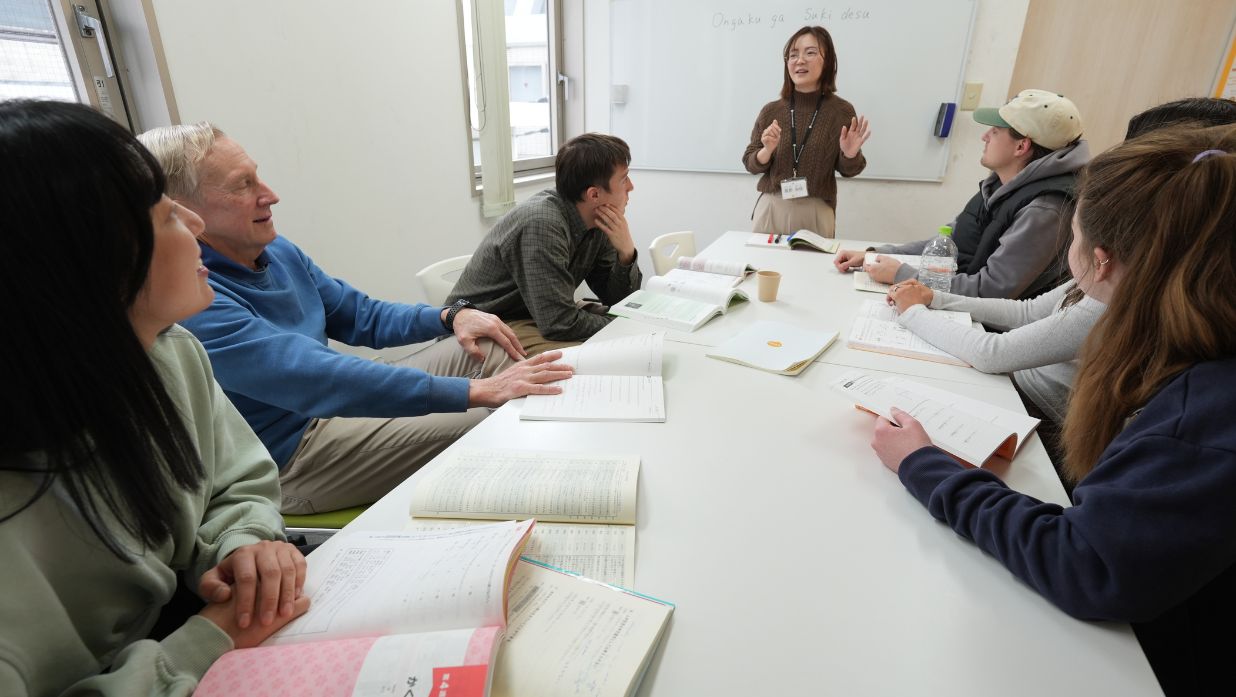
Coto Japanese Academy, one of Tokyo’s leading Japanese-language schools, is pleased to announce the opening of its fifth physical campus in Shinjuku, scheduled for April 2026.
After mastering hiragana, one of the three Japanese writing systems, the natural next step is to learn katakana, the second Japanese syllabary. Commonly used to write loanwords, katakana represent the same set of sounds as hiragana, but they look completely different. Katakana characters are typically boxier and more geometric, with sharp corners, in contrast to […]
The grammar pattern 〜らしい is used to express information that is not directly confirmed by the speaker. In English, it can mean “it seems like,” “apparently,” “I heard that,” or “it looks like.” Although 〜らしい may seem simple at first, it actually has a wide range of meanings and is used in different situations. Depending […]