In this guide to Basic Japanese Grammar, we will explain in broad terms, the most used Japanese sentence patterns and how to alter them to change them from positive statements to negative statements, as well as how to ask questions while using them. We will continue this series with part II – Grammar Particles
Basic Japanese Sentence Patterns
In broad terms, Japanese sentences can be divided into the following three patterns.
Watashi wa Nihon-jin desu.I am a Japanese person. [Noun Phrase] 私は日本人です。 Meari-san wa isogashii desu. Mary-san is busy. [Adjective phrase] メアリーさんは忙しいです。 Tanaka-san wa ramen o tabemasu. Tanaka-san eats ramen. [Verb Phrase] 田中さんはラメンを食べます。
“Desu” has a similar function to “to be” in English, and comes at the end of Noun and Adjective Phrases. Verb Phrases end with [-masu]. “Wa” is a particle that denotes topics and subjects. (The particles “ga” and “mo” can also indicate a subject.
Negative Sentences
Negative Sentences are made by modifying the end of a predicate, which is typically the last part of a sentence. This grammatical structure is the reason that one must listen to the very end of a Japanese sentence to know whether it is negative or affirmative.
Watashi wa Nihon-jin jya-arimasen. I am not a Japanese person. [Neg. Noun Phrase] 私は日本人じゃありません. Meari-San wa isogashiku nai desu. Mary-San is not busy. [Negative Adjective Phrase] メアリーさんは忙しくないです. Tanaka-San wa ramen o tabemasen. Tanaka-San does not eat ramen. [Neg. Verb Phrase] 田中さんはラーメンを食べません.
Interrogative Sentences (Questions)
Attach “ka” to the end of a Declarative Sentence to create an Interrogative Sentence.
Meari-san wa isogashii desu ka.Is Mary san busy? メアリーさんは忙しいですか? Tanaka-san wa ramen o tabemasu ka. Does Tanaka-San eat ramen? 田中さんはラーメンを食べますか?
Coto Japanese Academy is a Japanese school in Tokyo that provides small size group classes in a relaxed and fun environment. If you are looking for a Japanese school in Tokyo that provides speaking focused small group classes – please visit us at www.cotoacademy.com
Start taking Japanese lessons and master basic Japanese grammar!
First, watch Yuka-sensei’s video above about the JLPT N4 Grammar!
If you have been studying Japanese for a while now – there’s a good chance you have come across the Japanese grammar point も (mo).
As we stated in this article on basic Japanese grammar, the particle も is often used to signify similarity and agreement in Japanese. However, it can also be used to add emphasis to quantity or quantities.
In this blog article, we will examine the emphasis use of も, such as how to say “that many?!” This expression may appear on the JLPT N4 as well – so make note of its use!
JLPT N4 Grammar: Using も to Express “That many?”
Since this expression emphasizes quantity, も is used with counters. In Japanese, there are several different counters depending on the shape or matter of the object being counting.
For example, 枚 (まい/mai) is the counter for flat things, such as plates or pieces of paper, and 台 (だい/dai) is used to count machines and motor vehicles.
The structure is: number + counter + も
Example: Food
A: ケーキを30個食べました。 keeki o sanjyuu ko mo tabemashita I ate 30 cakes. B: え、30個も食べたんですか? E, sanjyuu ko mo tabetan desu ka? Eh, you ate that many?
In Yuka-sensei’s example above, the literal translation is something like “you ate as many as 30 cakes?” However for conversation, a more accurate translation of this phrase into natural English would be merely:
Eh, you ate that many?
Saying も after repeating the quantity adds emphasis in Japanese, indicating surprise and/or that something is impressive.
Example: Cars
A: 私の友達は、車を5台持っています! Watashi no tomodachi wa, kuruma o go dai motteimasu I have a friend who owns 5 cars! B: え、5台も持っているんですか? Eh, go dai mo motteirun desu ka? What, they own 5 cars? These expressions often end with んですか?
As Yuka-sensei points out in the video above, this is a way to add more emotion to what you are saying. It conveys interest or even curiosity in what the other party is telling them.
Now you can practice using this yourself either in studying for the JLPT, or in your daily conversations!
Looking for Online Japanese Lessons?
Interested in learning Japanese online? Look no further than Coto’s Online Japanese lessons! Sign up for a free account and browse our teachers!
In Japanese, there are several words that can be used to say “But” or “however” – such as kedo, shikashi, and demo.
Today we will look at the word でも (demo) and how it can be used in a Japanese conversation. It’s one of the most essential JLPT N5 grammar points.
In Japanese, the word for “But” is でも。
It usually appears at the beginning of a sentence after an initial concept.
For example:
日本人ともっと話したいです。でも、私の日本語はあまり上手ではありません。 nihonjin to motto hanashitai desu. demo, watashi no nihongo wa amari jouzu dewa arimasen. I want to speak to Japanese people more. But my Japanese is not so good.
or
スーパーに行きました。でも、閉まっていた。 Suu-paa – ni ikimashita. demo, shmatteita. I went to the supermarket, but it was closed
Demo is often used to start a new sentence or to connect two ideas together.
Grammar Point: でも
でも is a conjunctive particle that is used to connect two clauses. It is similar to the English word “but” in that it is used to contrast two ideas. However, there are a few key differences between the two words.
First, でも can be used at the beginning of a sentence, but “but” cannot. For example:
でも、私は日本語が下手です。 (Demo, watashi wa nihongo ga heta desu.) – But I am not good at Japanese.
Second, でも is more informal than “but.” It is commonly used in everyday conversation, but it is not as appropriate for formal writing.
How to Use でも
でも can be used in a variety of ways to express different shades of meaning. Here are a few examples:
To contrast two ideas:
私は日本語が話せます。でも、日本語が書けません。 (Watashi wa nihongo ga hanasemasu. Demo, nihongo ga kaけません.) – I can speak Japanese, but I cannot write Japanese.
To express a concession:
今日は忙しいです。でも、あなたのために時間を作ります。 (Kyou wa isogashii desu. Demo, anata no tame ni jikan wo tsukurimasu.) – I am busy today, but I will make time for you.
To express a reservation:
私は日本語が上手だと思います。でも、まだまだ勉強が必要です。 (Watashi wa nihongo ga umai to omoimasu. Demo, madamada benkyou ga hitsuyō desu.) – I think I am good at Japanese, but I still need to study.
Examples of でも in Japanese Sentences
Here are a few examples of how でも is used in Japanese sentences:
私は日本語が好きです。でも、漢字が難しいです。 (Watashi wa nihongo ga suki desu. Demo, kanji ga muzukashii desu.) – I like Japanese, but kanji is difficult.
今日は晴れです。でも、風がとても強いです。 (Kyou wa hare desu. Demo, kaze ga totemo tsuyoi desu.) – It is sunny today, but the wind is very strong.
私は日本に行きたいです。でも、お金がありません。 (Watashi wa nihon ni ikitai desu. Demo, okane ga arimasen.) – I want to go to Japan, but I don’t have money.
Conclusion
でも is a very common Japanese word that can be used to express a variety of different meanings. By following the tips in this article, you can learn how to use でも correctly and confidently in your Japanese conversations and writing.
Try it yourself! We’ve compiled 30 other N5 grammar points, so check them out here to prepare the upcoming test!
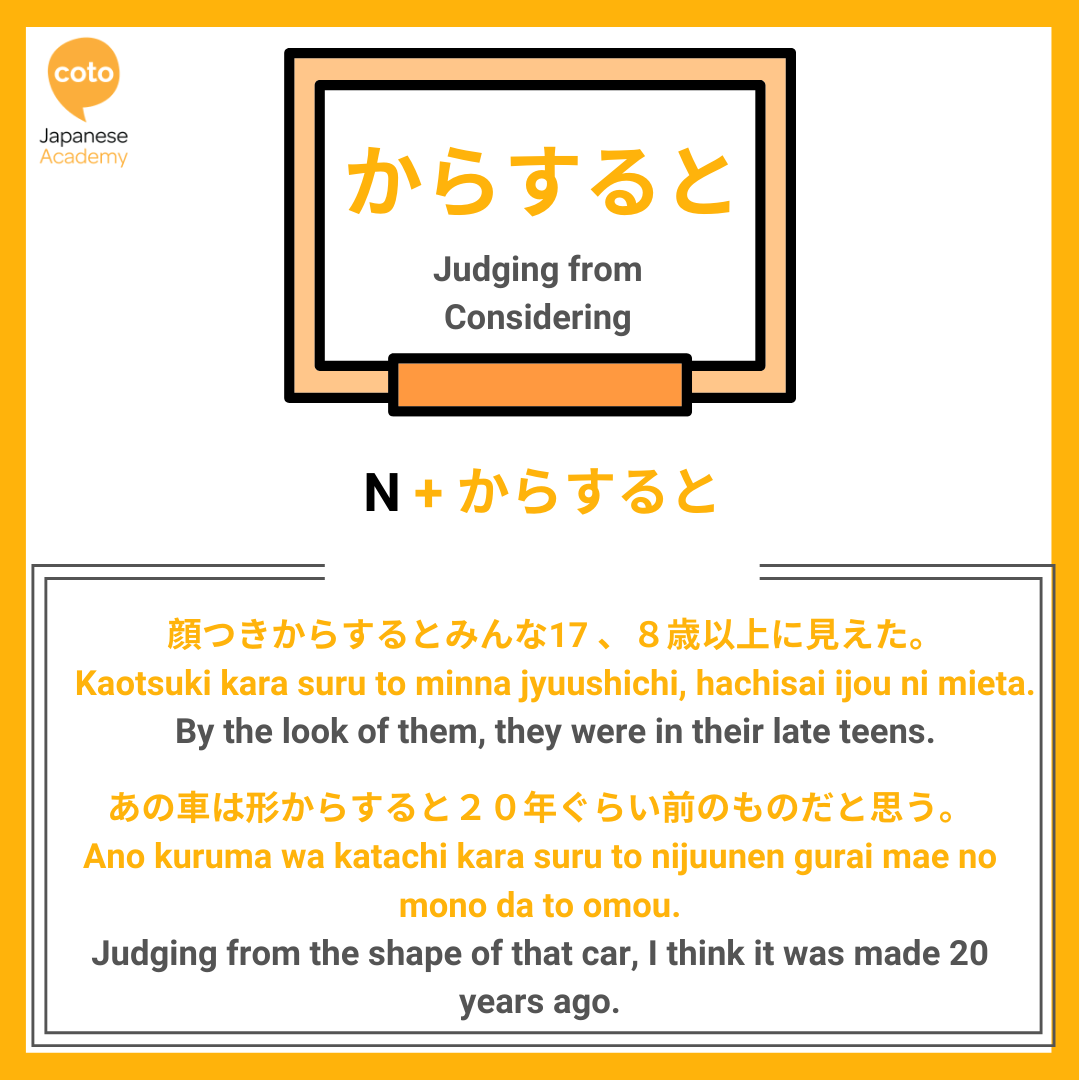
This grammar point is used to infer something based on another. It can be used with nouns only.
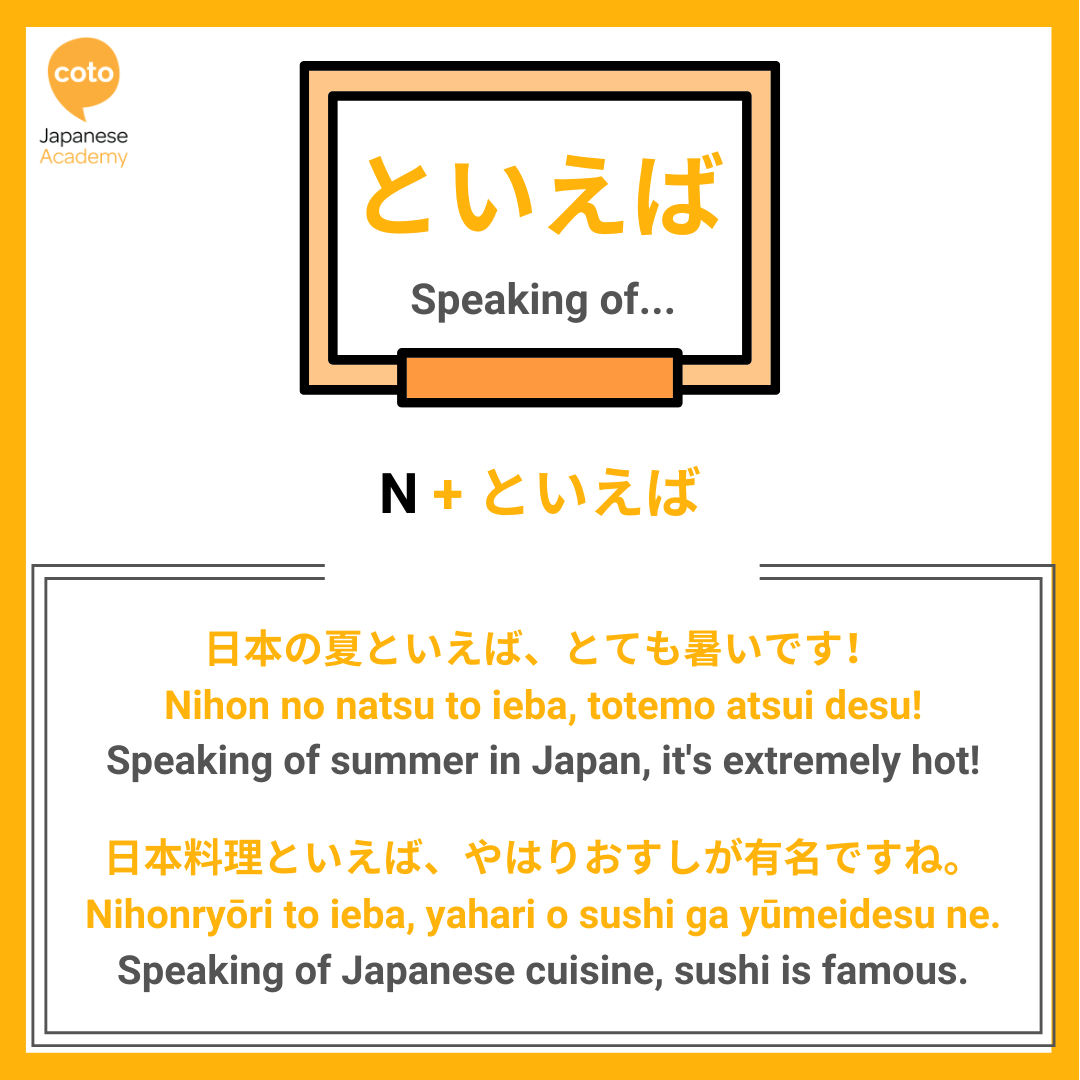
といえば
Grammar Point 2: といえば Toieba
This grammar point means ‘Speaking of…’ and is used when talking about a certain topic. It can be used with nouns.
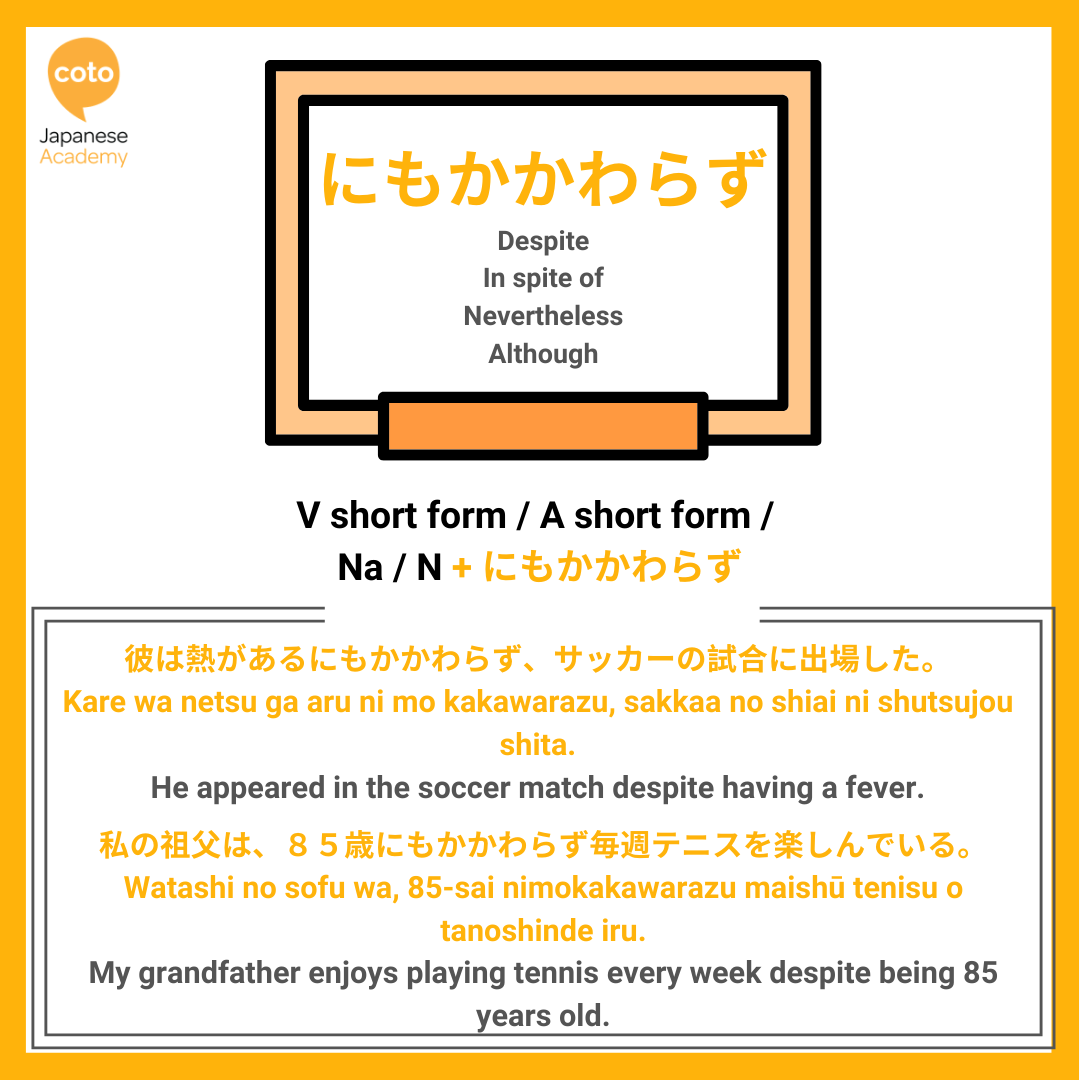
にもかかわらず
Grammar Point 3: にもかかわらず Ni mo kakawarazu
This grammar point means ‘although’, ‘in spite of’, ‘nevertheless’ or ‘although. It can be used by combining with verbs, い-adjectives, な-adjectives, and nouns.
もしない
Grammar Point 4: もしない Moshinai
This grammar point means ‘without even doing’ something. It is used with verbs in Group 1, 2 and 3. Remember to remove the ます or します when combining with the verb!
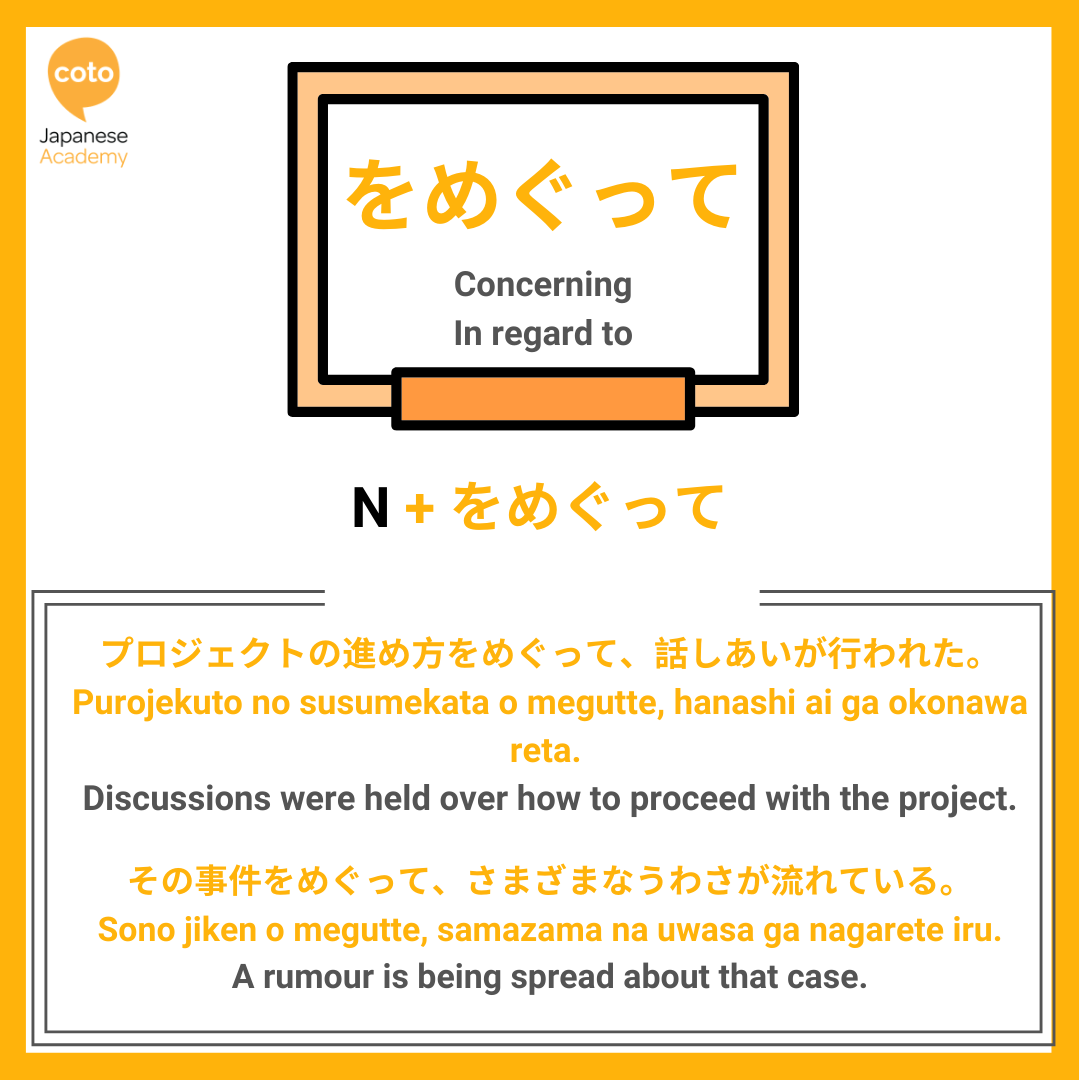
をめぐって
Grammar Point 5: をめぐって O megutte
This grammar point means ‘concerning’ or ‘in regard to’, and is used when referring to something. It is used by combining with either nouns or verbs.
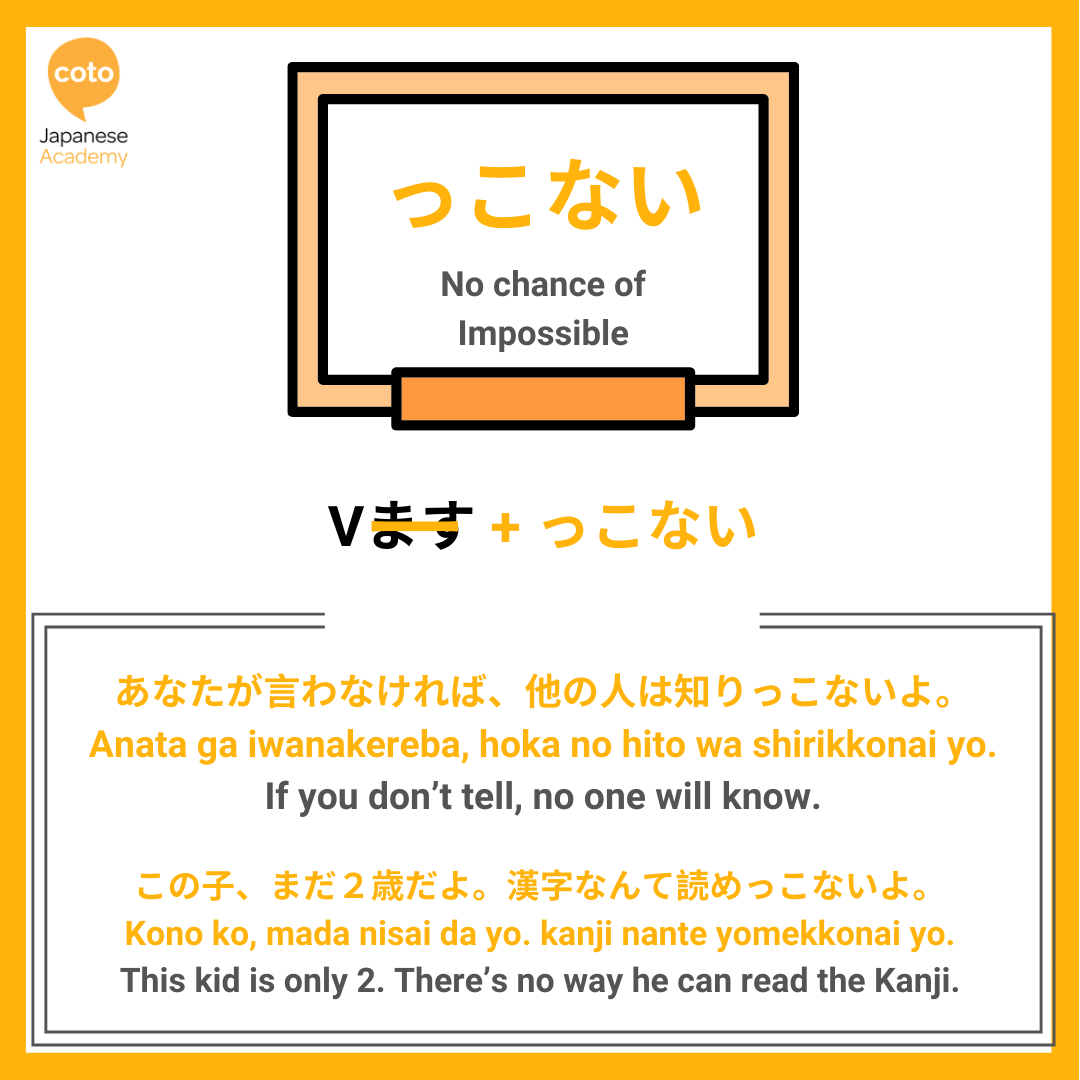
っこない
Grammar Point 6: っこない Kkonai
This grammar point means ‘no chance of’ or ‘impossible’. It is used with verbs with a ます-stem. Be sure to remove the ます when combining with the verb!
というものは
Grammar Point 7: というものは Toiumono wa
This grammar point is used to express the universal behavior on a certain topic. It is usually used to talk about a general idea or objective fact. It can be used by combining with nouns.
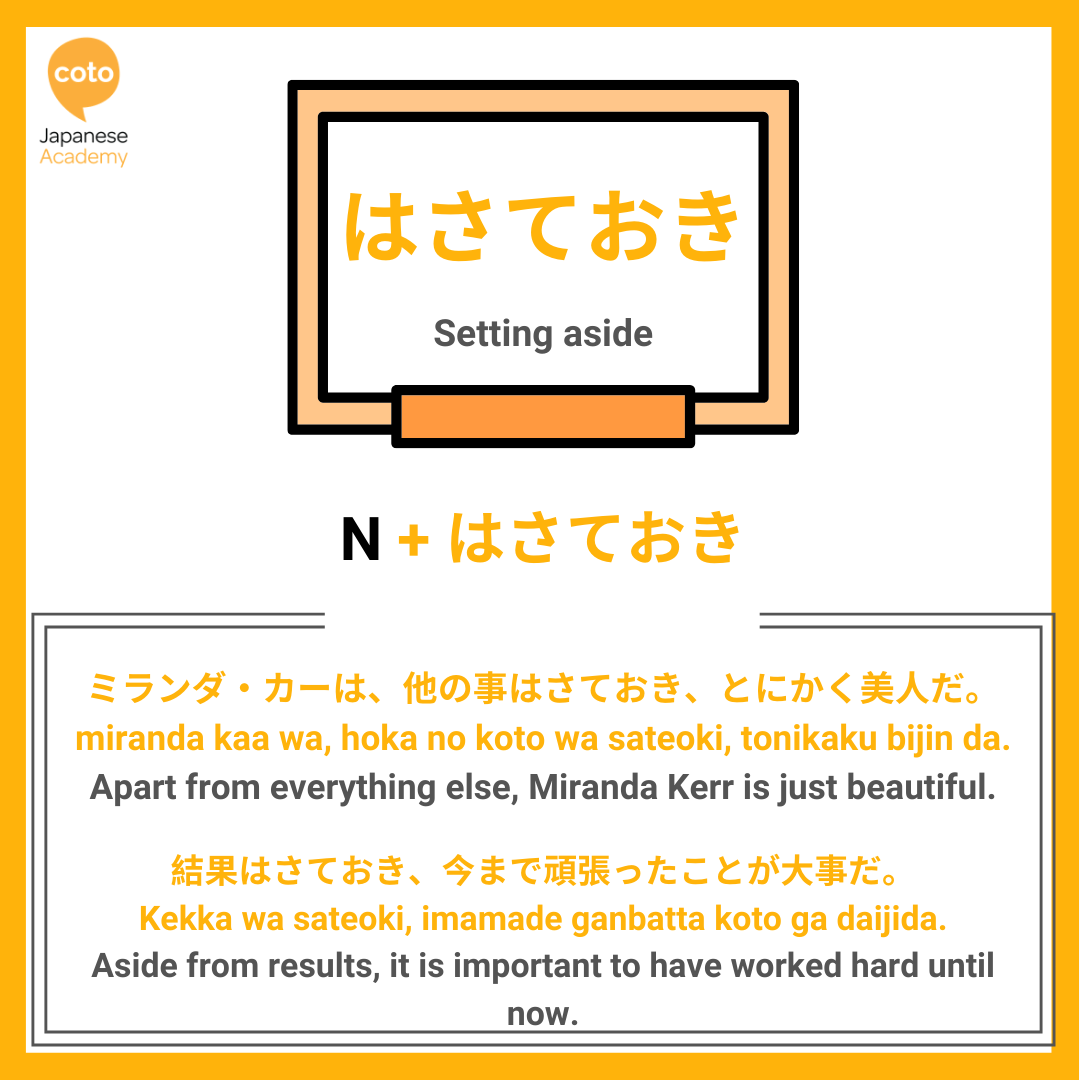
はさておき
Grammar Point 8: はさておき Wa sateoki
This grammar point is used to ‘set aside’ something. It can be used by combining with nouns.
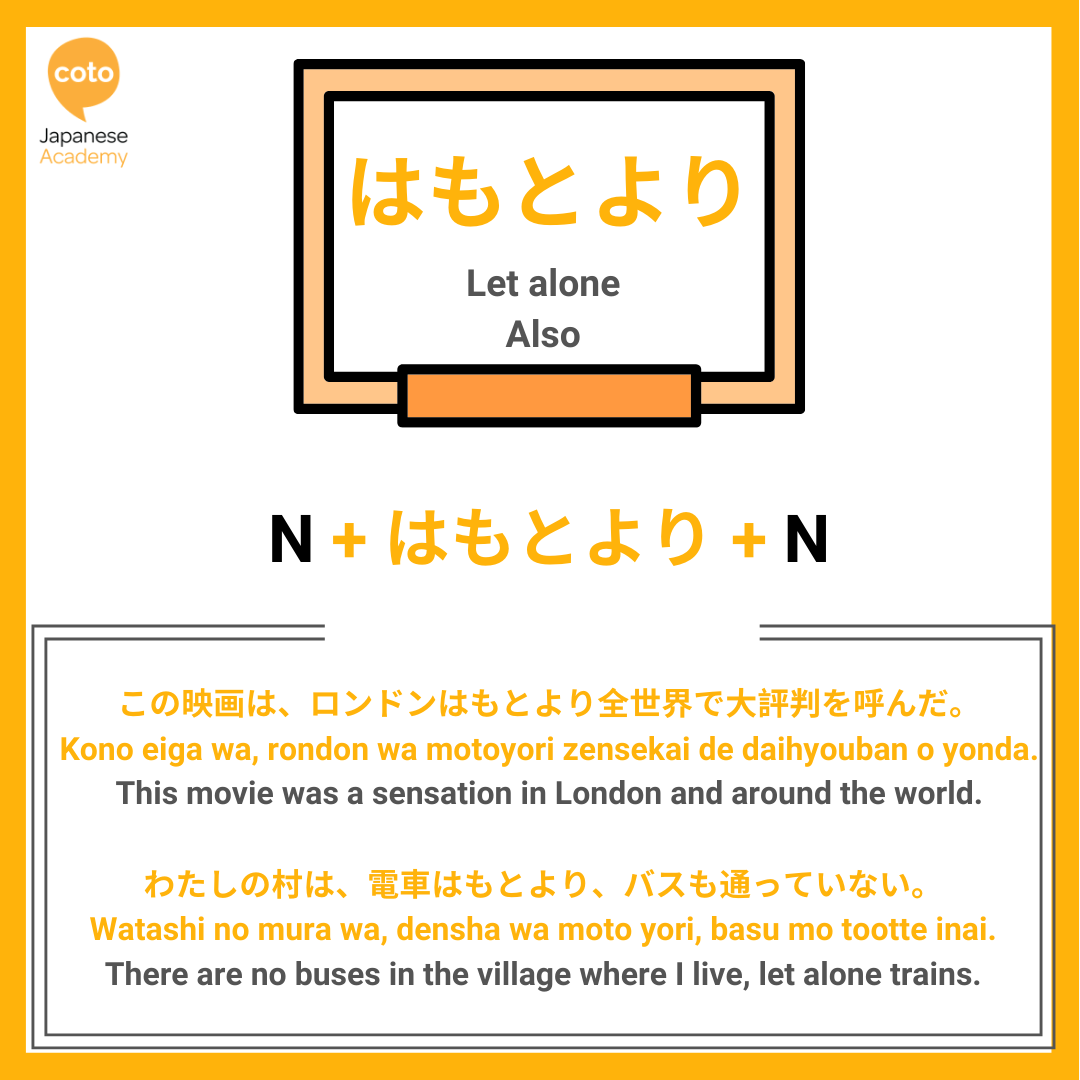
はもとより
Grammar Point 9: はもとより Wa motoyori
This grammar point means ‘let alone’ or ‘also’. It can be used by placing it in between 2 nouns.
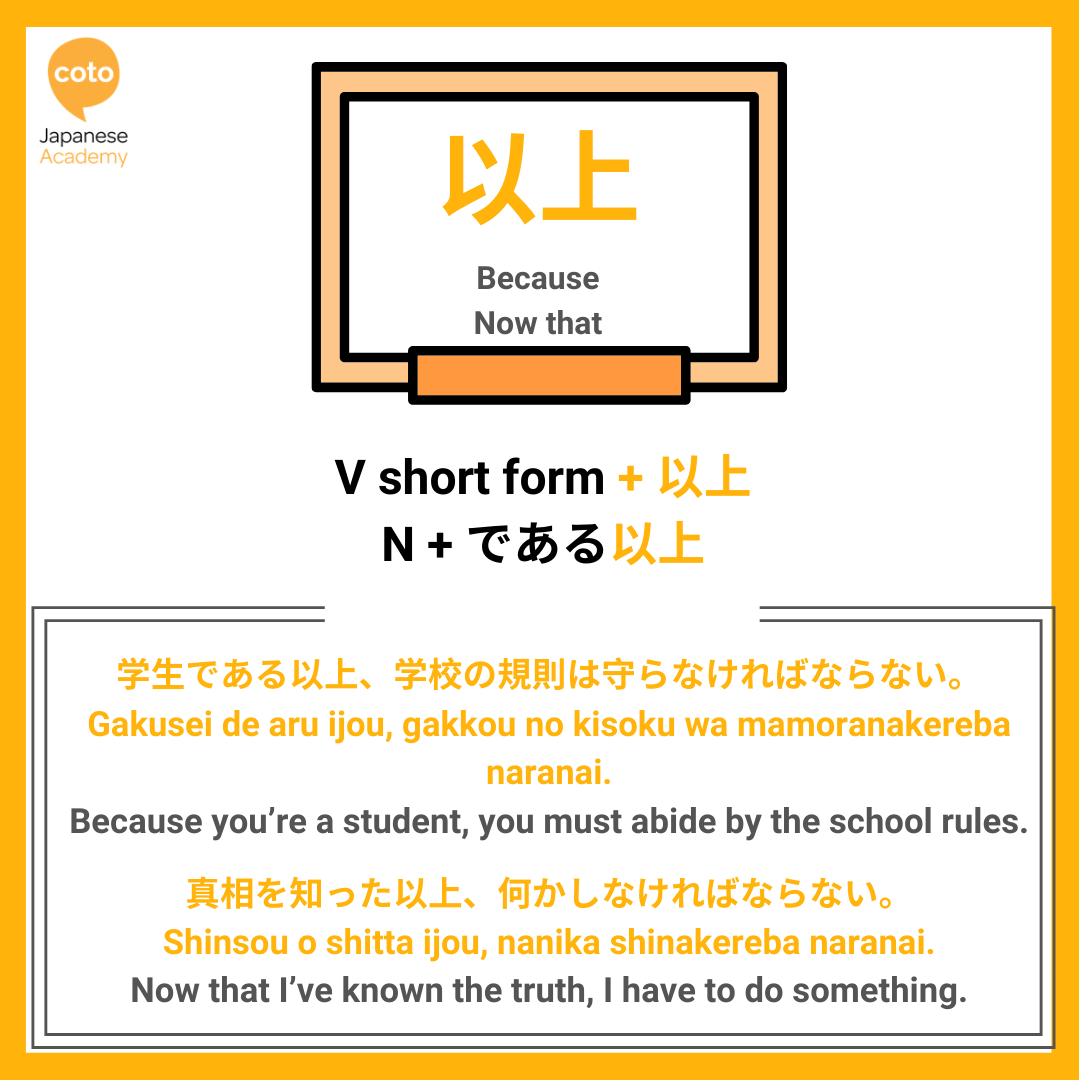
以上
Grammar Point 10: 以上 Ijou
This grammar point means ‘because’ or ‘now that’. It is used by combining either with a verb or noun. When added to a noun, be sure to include である before 以上, so it becomes (Noun)である以上.
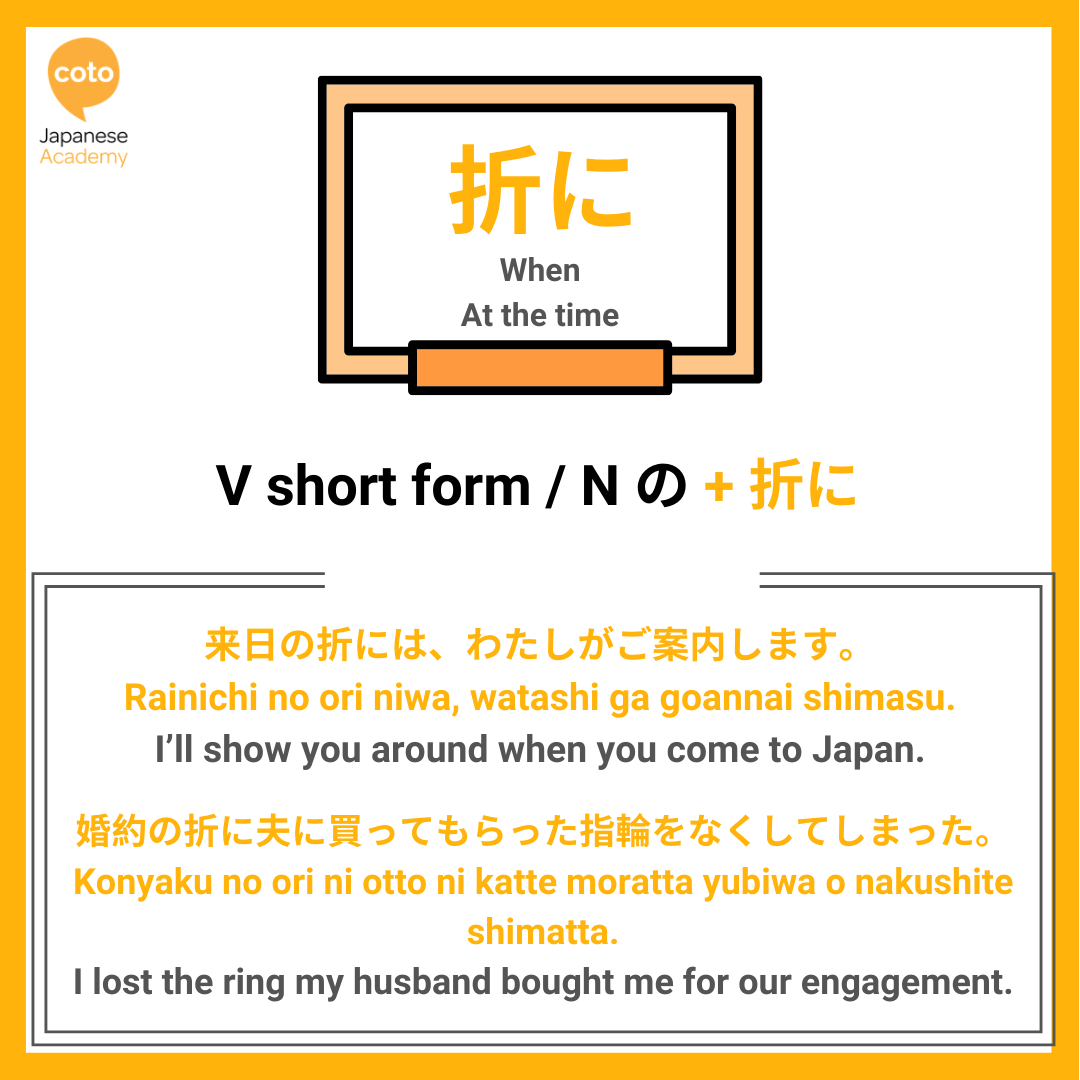
折に
Grammar Point 11: 折に Orini
This grammar point means ‘when’ or ‘at the time’. It can be used by combining with casual verbs or nouns.
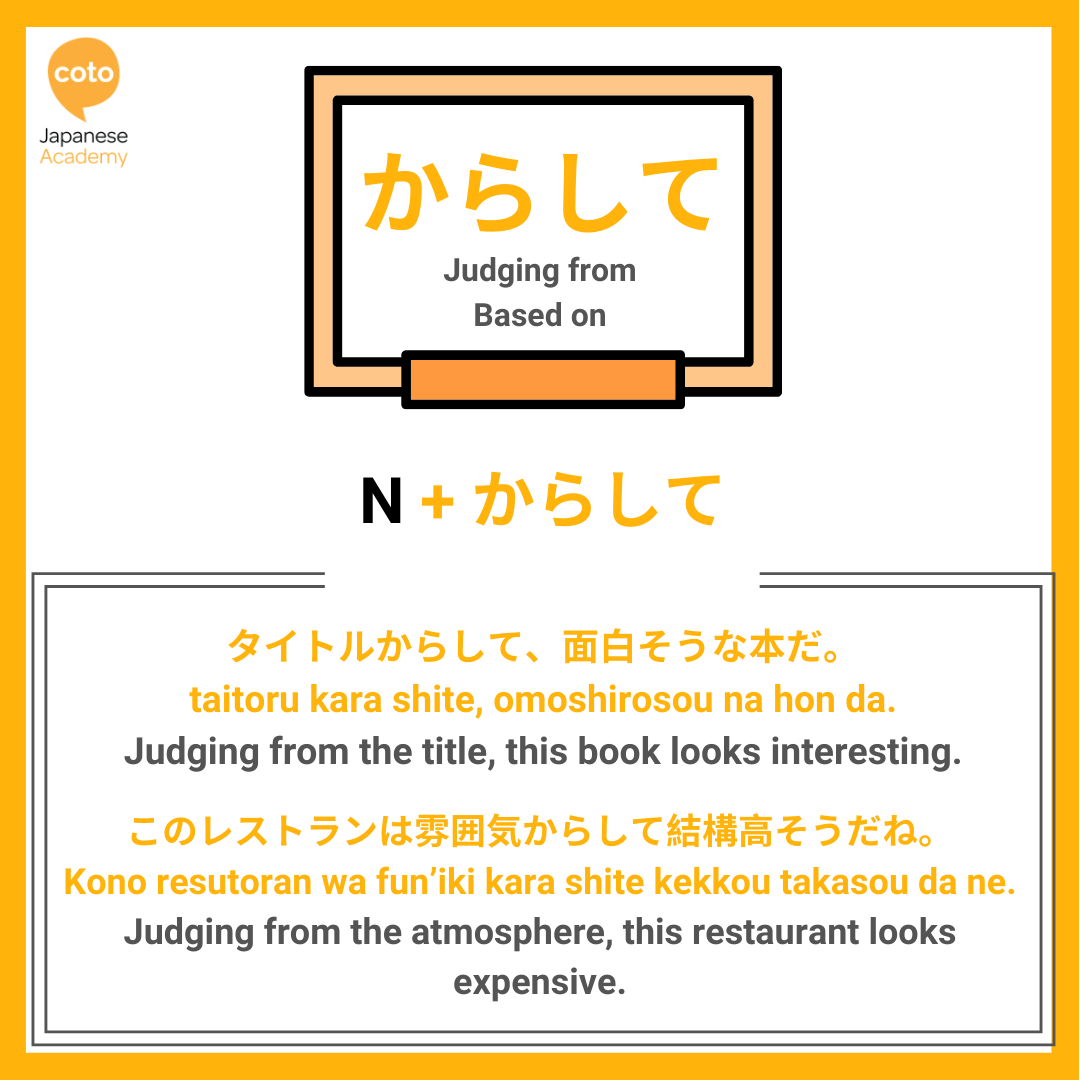
からして
Grammar Point 12: からして Karashite
This grammar point expresses when you are inferring something ‘judging from’ or ‘based on’ something. It can be used by combining with nouns.
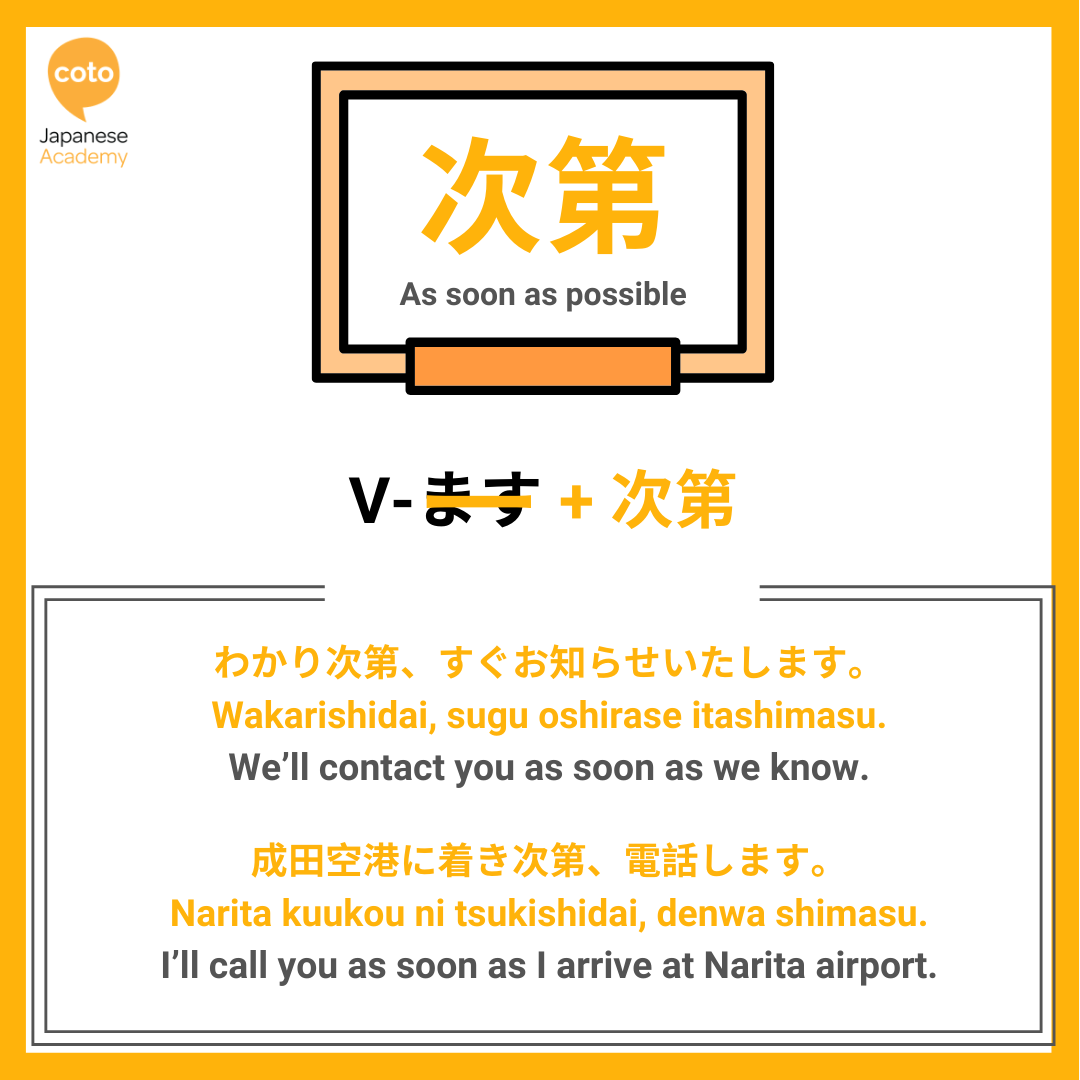
次第
Grammar Point 13: 次第 Shidai
This grammar point means ‘as soon as possible’ and can be combined with verbs with a ます-stem. Be sure to remove the ます at the back!
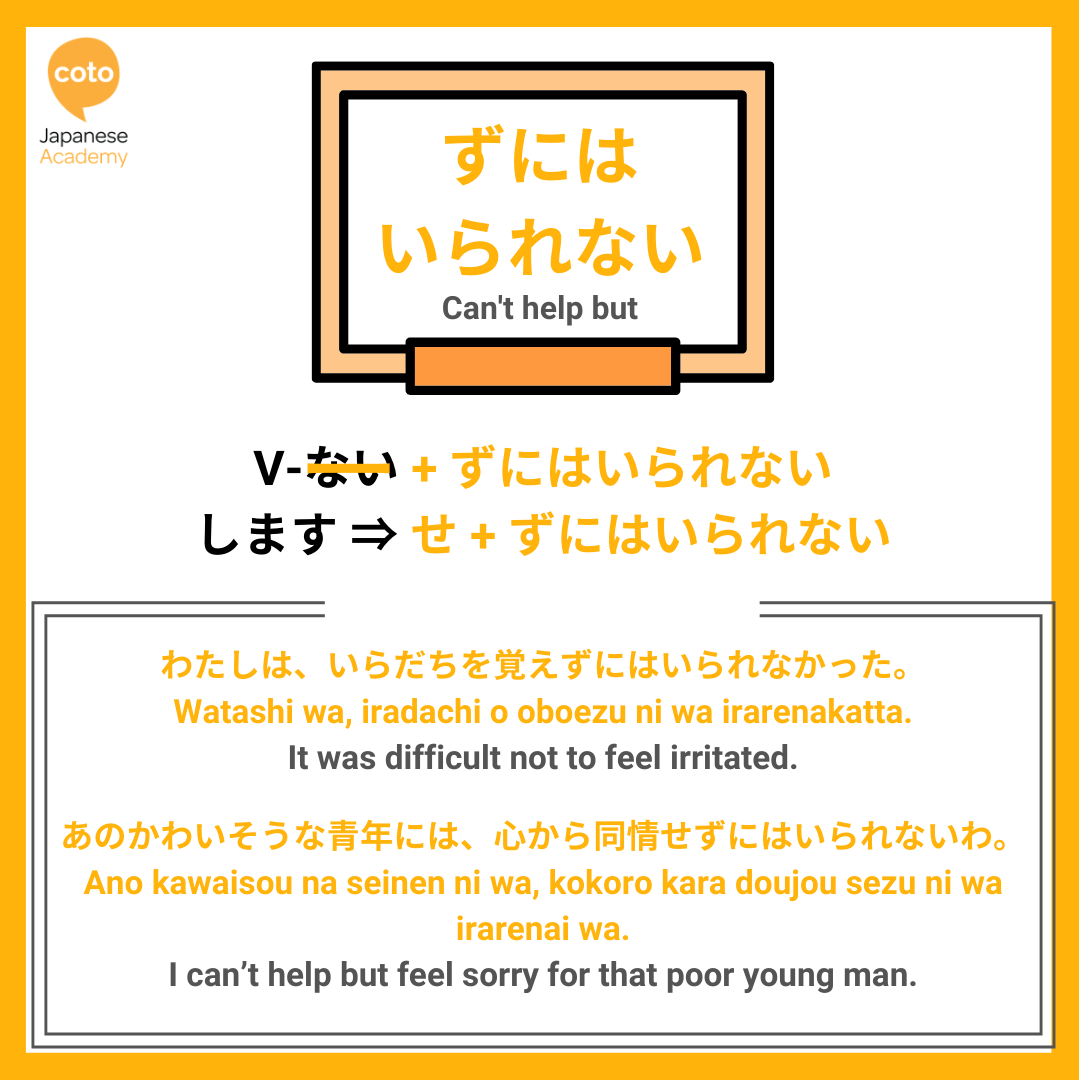
ずにはいられない
Grammar Point 14: ずにはいられない Zuni wa irarenai
This grammar point means ‘can’t help but’. It is used by combining with verbs with a ない-stem. When adding this grammar point to the verb, be sure to remove the ない at the back!
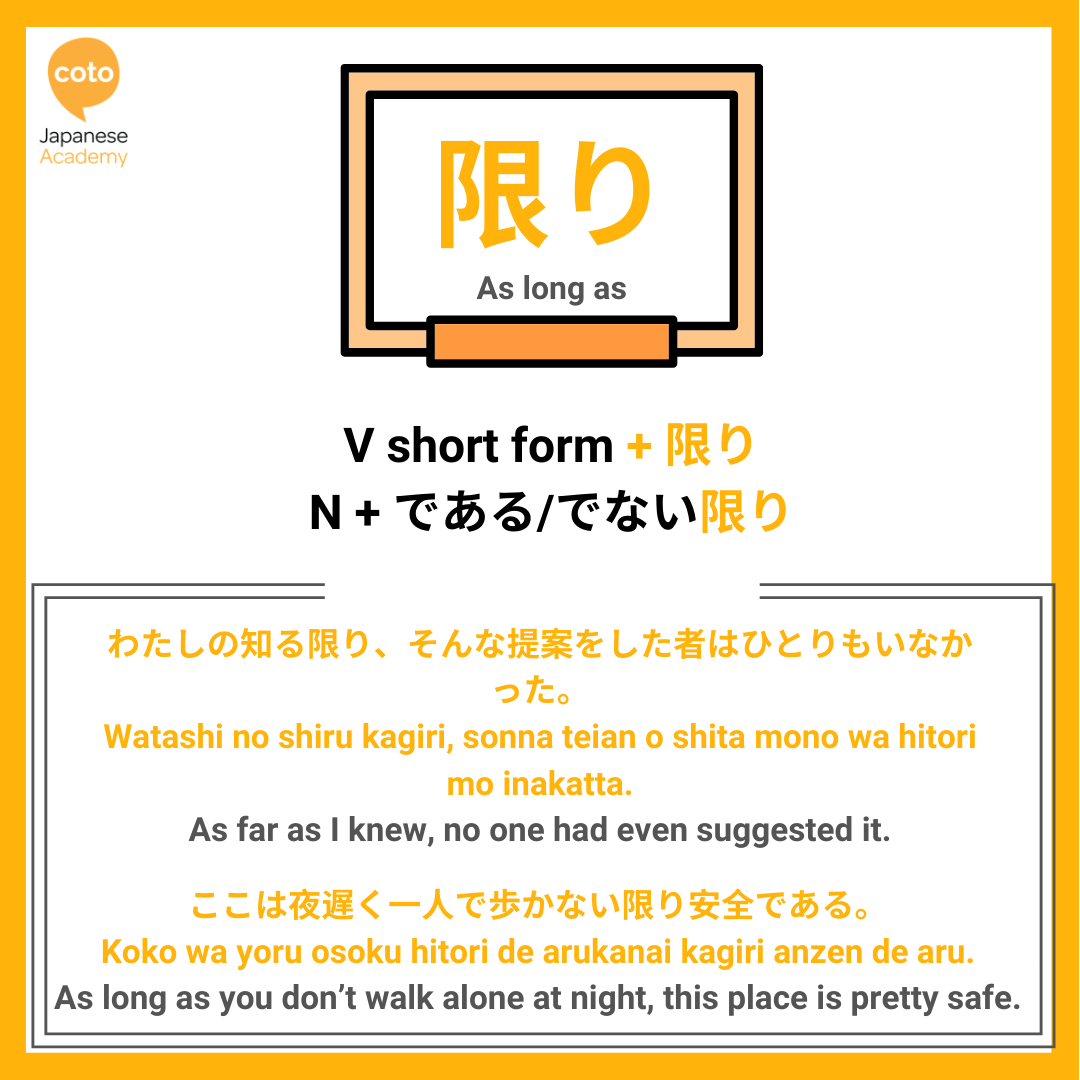
限り
Grammar Point 15: 限り Kagiri
This grammar point means ‘as long as‘. It can be used by combining it with either a verb or a noun. When added to a noun, be sure to include である or でない before 限り, so it becomes (Noun)である/でない限り.
ないものか
Grammar Point 16: ないものか Naimonoka
This grammar point means ‘Can’t we…?’ or ‘Can’t I…?’ and is a particle used in questions. It can be used by combining with verbs with a ない-stem.
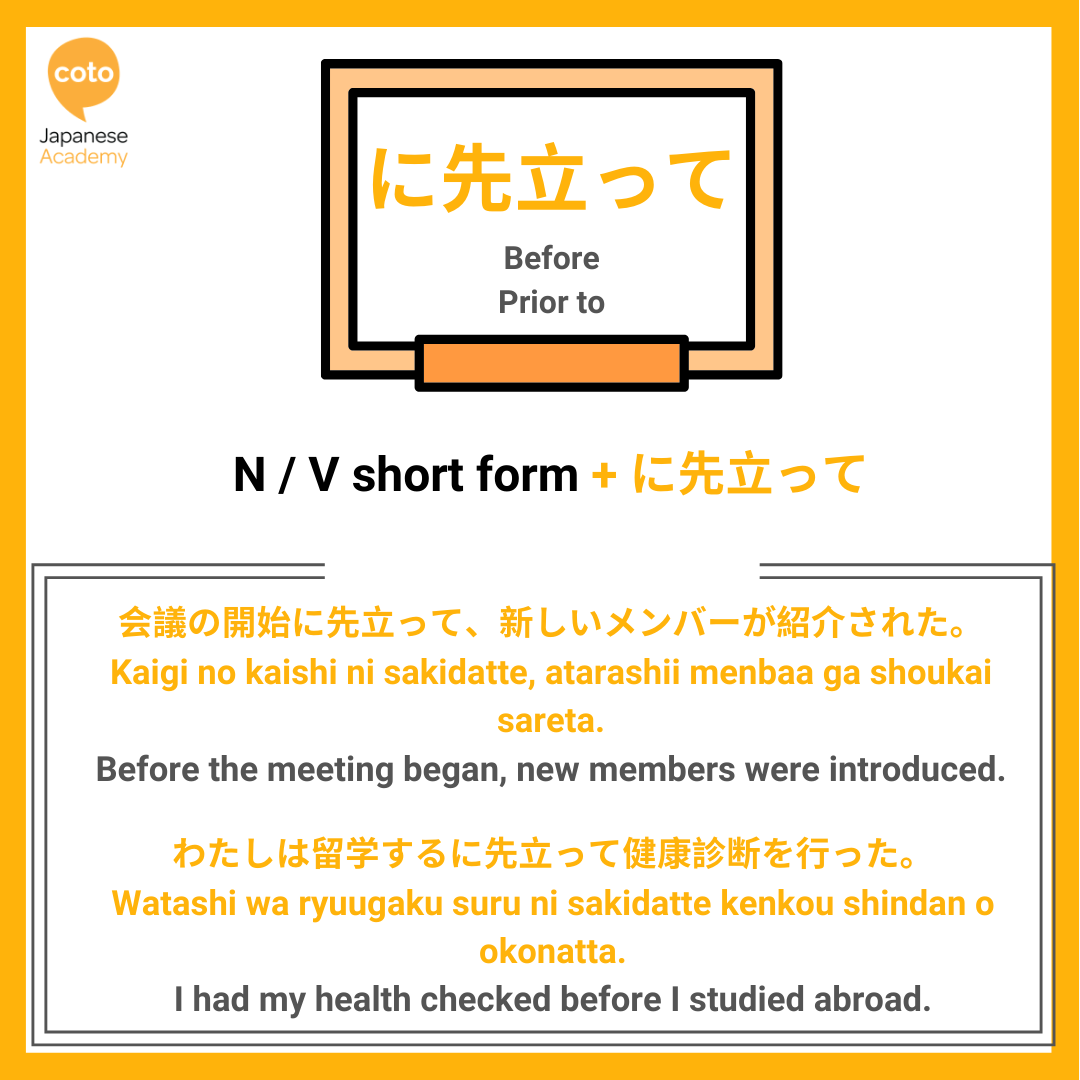
に先立って
Grammar Point 17: に先立って Ni sakidatte
This grammar point is used when you do something before another, or when something happens before another. It can be used by combining it with either nouns or verbs.
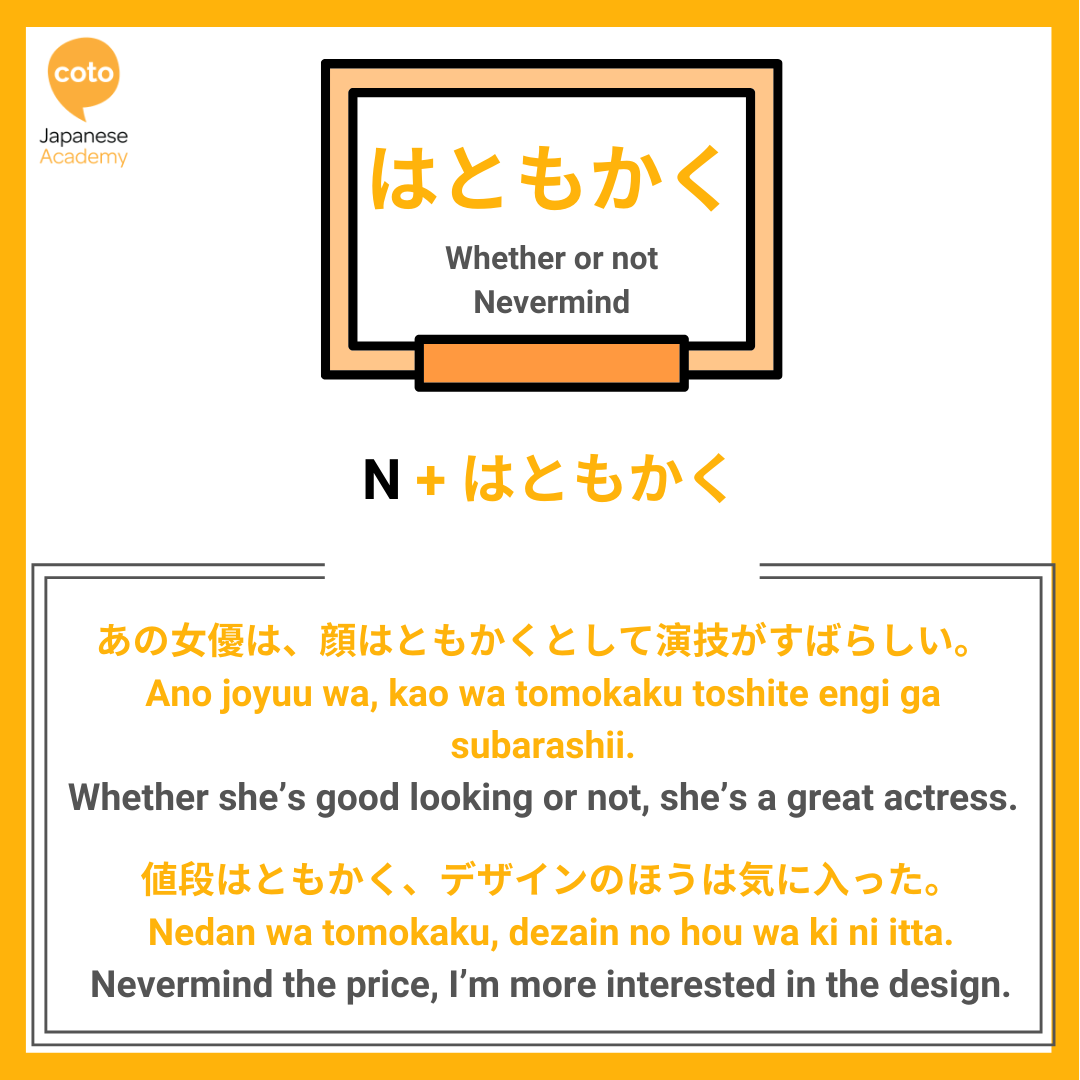
はともかく
Grammar Point 18: はともかく Wa tomokaku
This grammar point means ‘whether or not’ or ‘nevermind’, and can be combined with nouns.
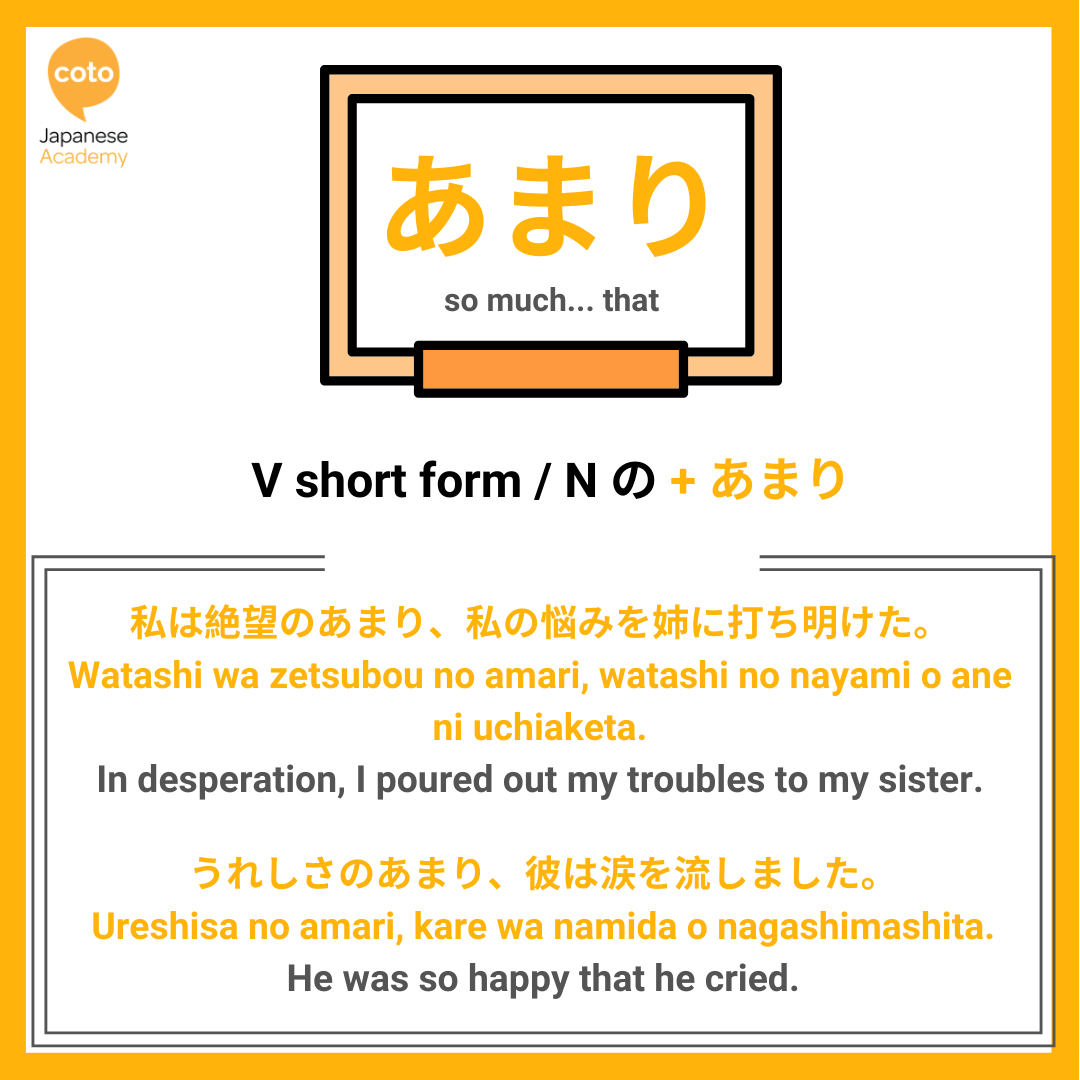
あまり
Grammar Point 19: あまり Amari
This grammar point means ‘so much… that’. It can be used by combining with either verbs or nouns. When added to a noun, be sure to include の after the noun, so it becomes (Noun)のあまり.
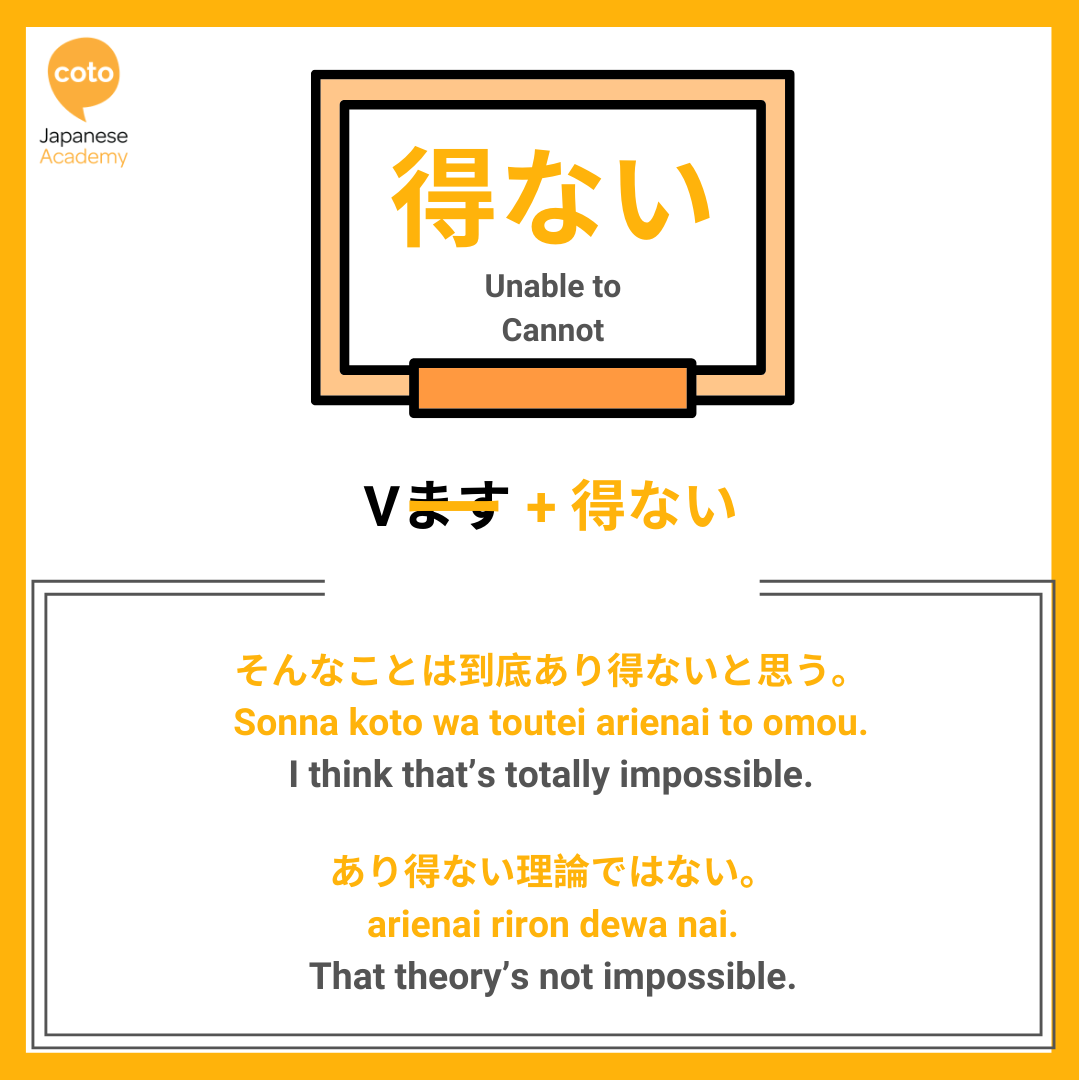
得ない
Grammar Point 20: 得ない Enai
This grammar point expresses something that is impossible to be done. It is used by combining with verbs with a ます-stem. Be sure to remove the ます at the back when adding this grammar point to the verb!
If you are interested in studying Japanese, find out more about our school by filling out the form below.
Are you preparing for test and learning the JLPT N2 grammars now? This article explains to you 20 of the must-know grammar points for JLPT N2! From the meaning to sentence structures and sentence examples!
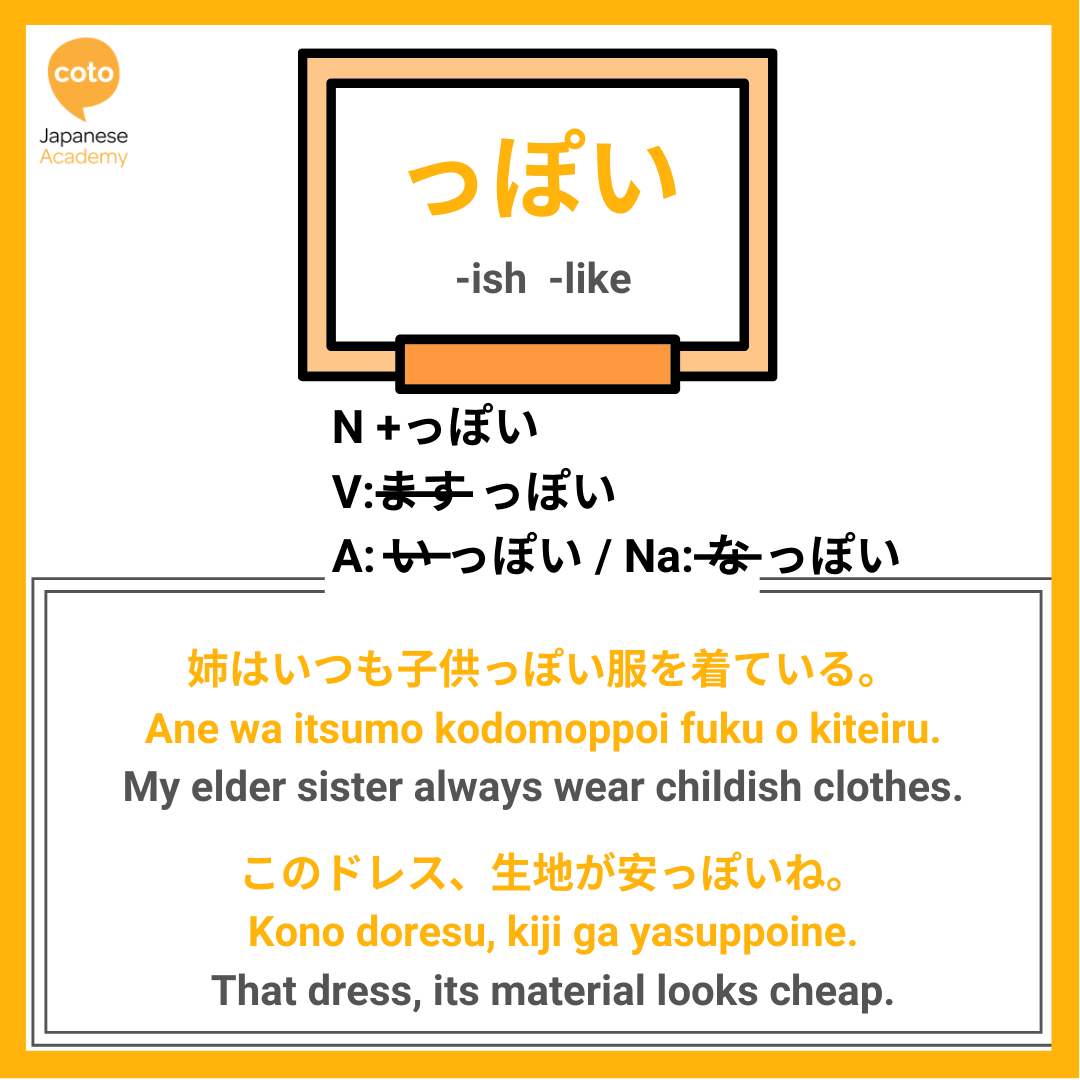
This grammar point is used to express something that “has a strong tendency of~” or simply put, it means “like” or “ish”. For example, you can add this grammar point at the back of the noun-て form to make them adjective-forms.
こども + っぽい = こどもっぽい (Childish)
~がち
Grammar Point 2: がち
がち is usually used for something that is negative or to express a tendency to do something. For example, 疲れがち which means tend to be tired easily as compared to 疲れ which just means tired.
~てならない
Grammar Point 3: ていられない
If you have no time to do something or do not find the activity time-worthy, you may use this grammar point. This grammar point means you “can’t afford” or “can’t” do something.
For example, のんびりしてはいられない means I can’t afford to slack off. You add the noun-て form in front of the grammar point.
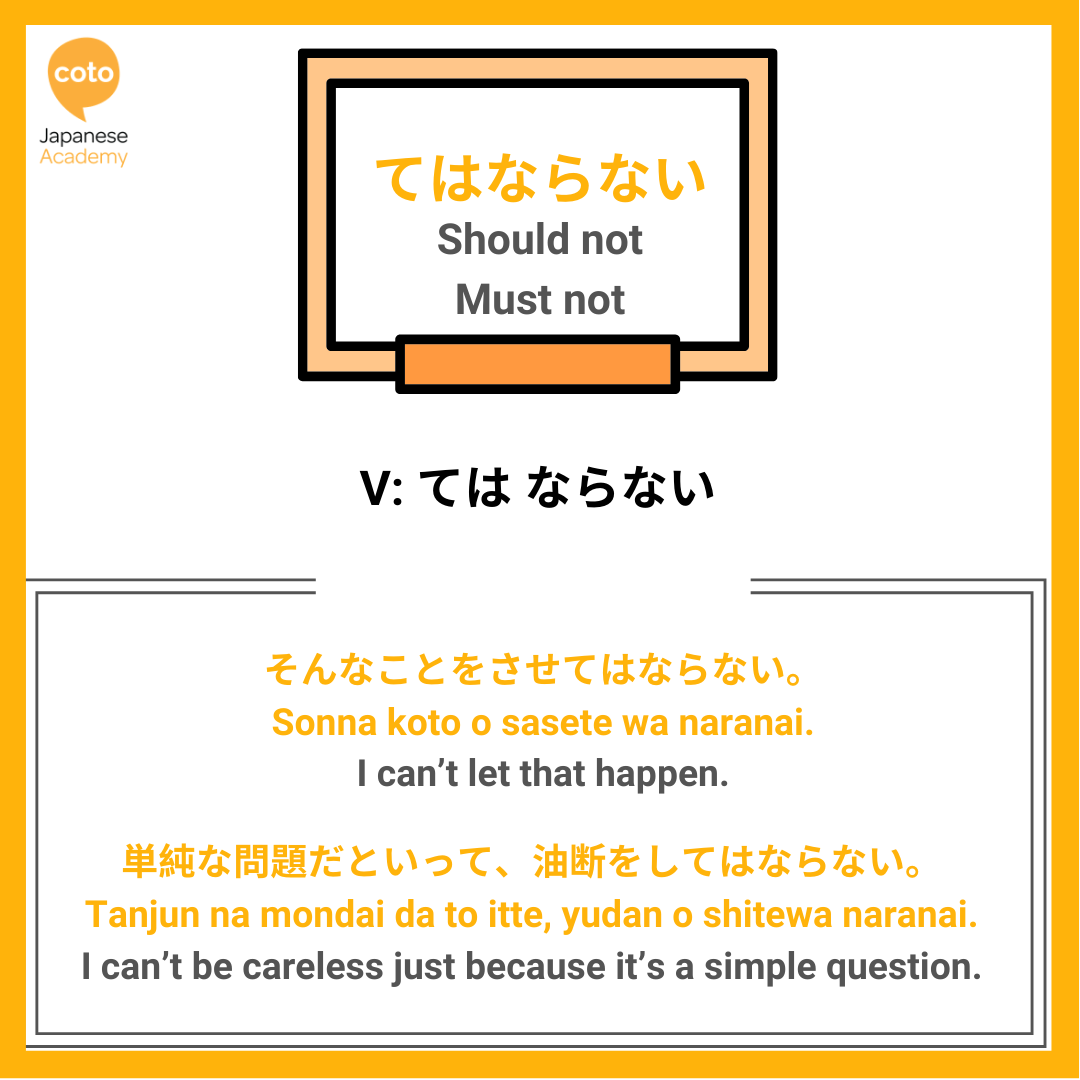
~てはならない
Grammar Point 4: てはならない
てはならない is more subjective. It means must not, cannot or should not. You can use this grammar point with a verb-て form and add the grammar at the back of the verb.
For example, 忘れ+てはならない which means never forget.
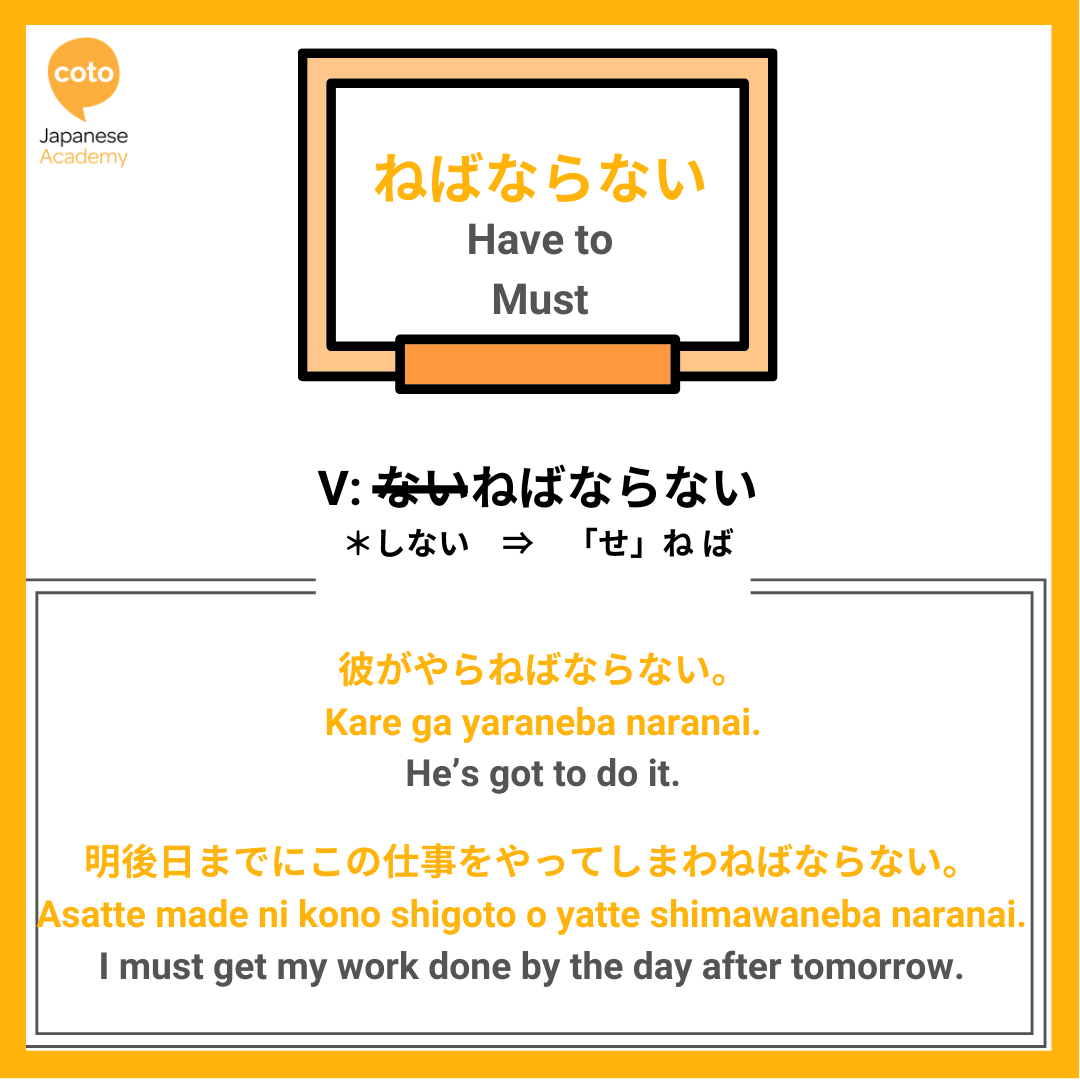
~ねばならない
Grammar Point 5: ねばならない
This grammar point means you have to do something or there is something that you must do. Add this grammar point to a verb-ない form. When you add in the grammar point, be sure to remove the ない at the back of the verb.
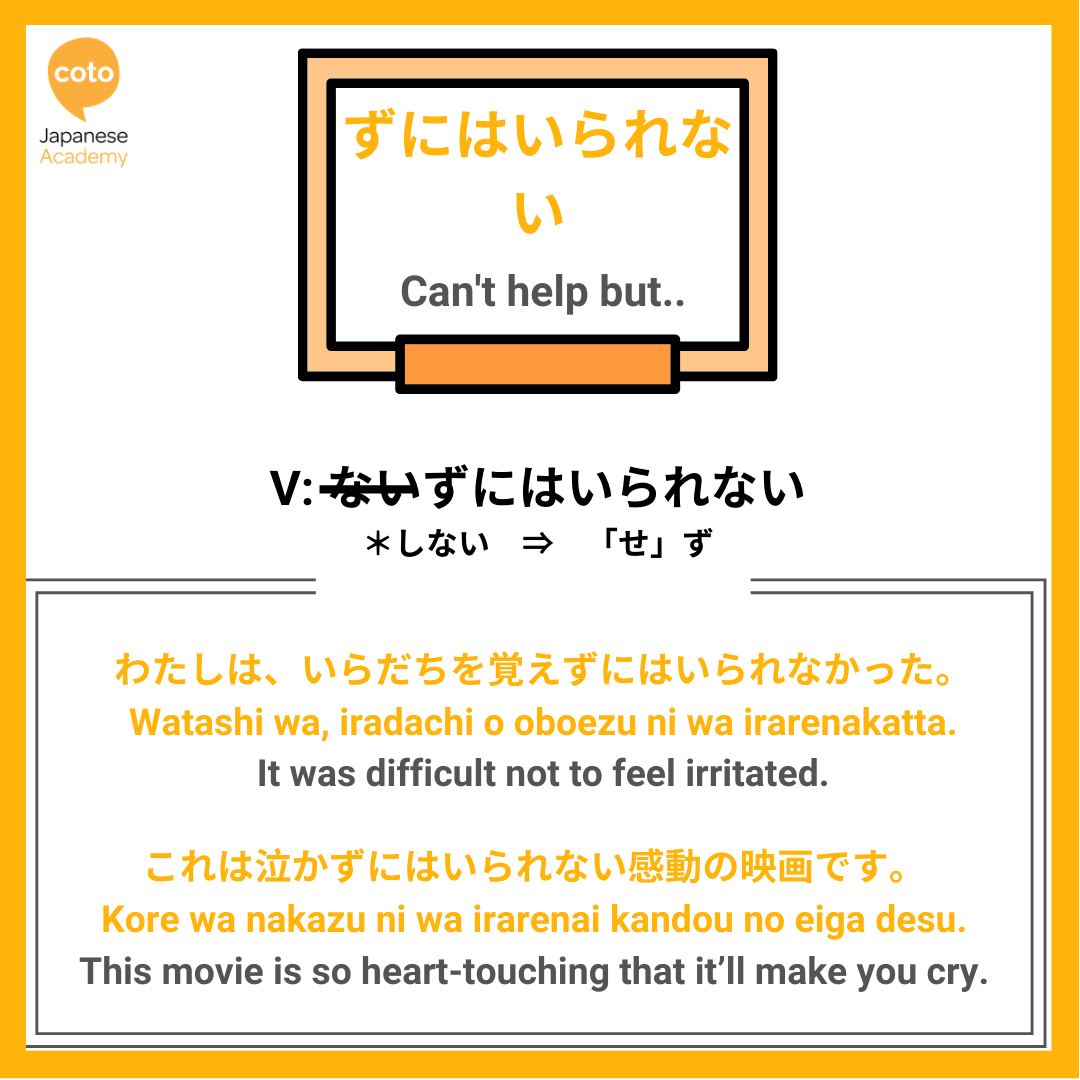
~ずにはいられない
Grammar Point 6: ずにはいられない
This grammar point describes naturally irrepressible actions. It means “can’t help but do something” or “have to do something”. This grammar point can only be used in writing.
When spoken, it is changed to 「…ないではいられない」 instead. This grammar point is being added to a verb-ない form. When placing the grammar point, remove the ない at the back of the verb.
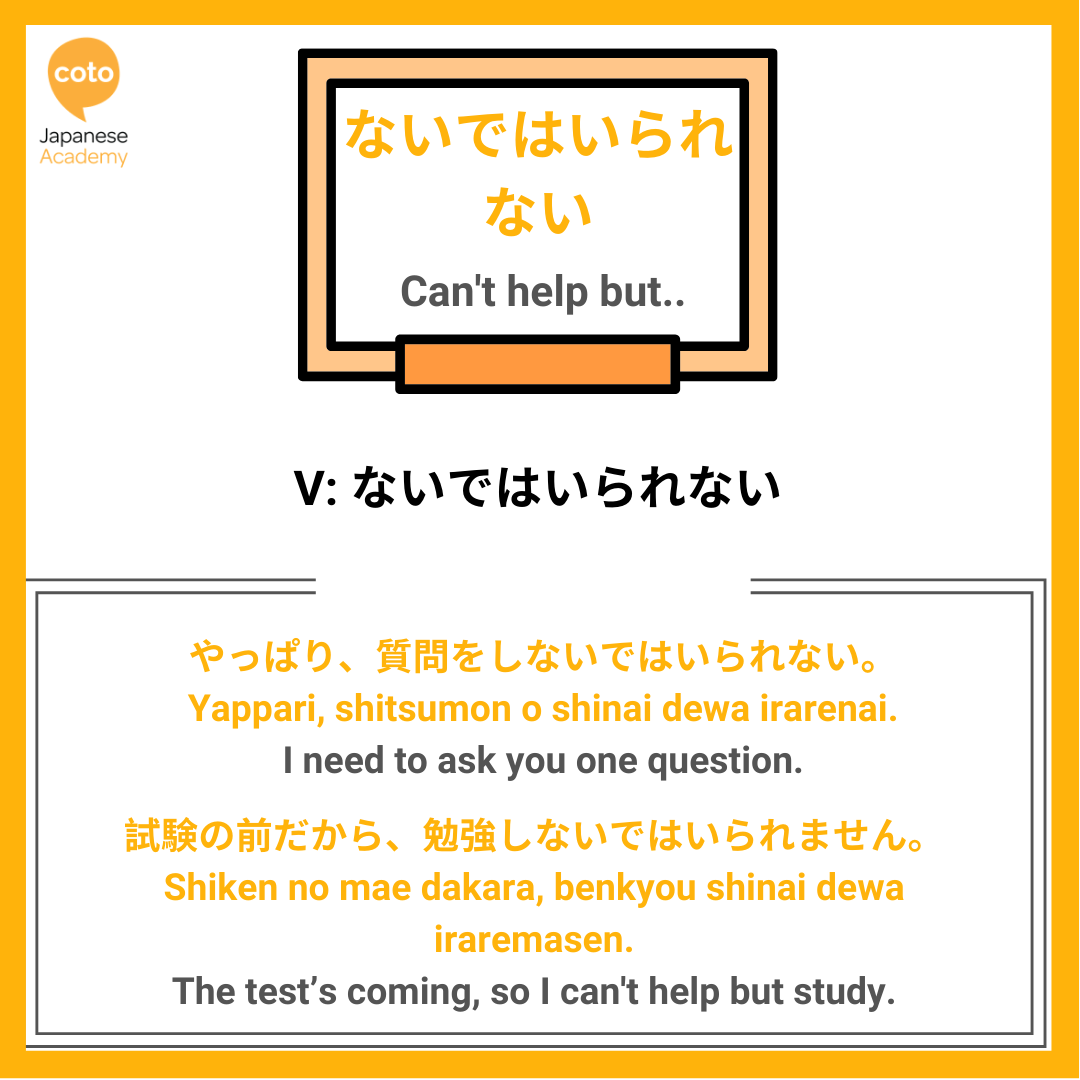
~ないではいられない
Grammar Point 7: ないではいられない
This grammar point means you “can’t help it but feel” or you “can’t help but do”. You need to place this grammar point with a verb-ない form. You do not need to take out the ない when placing the grammar point at the back.
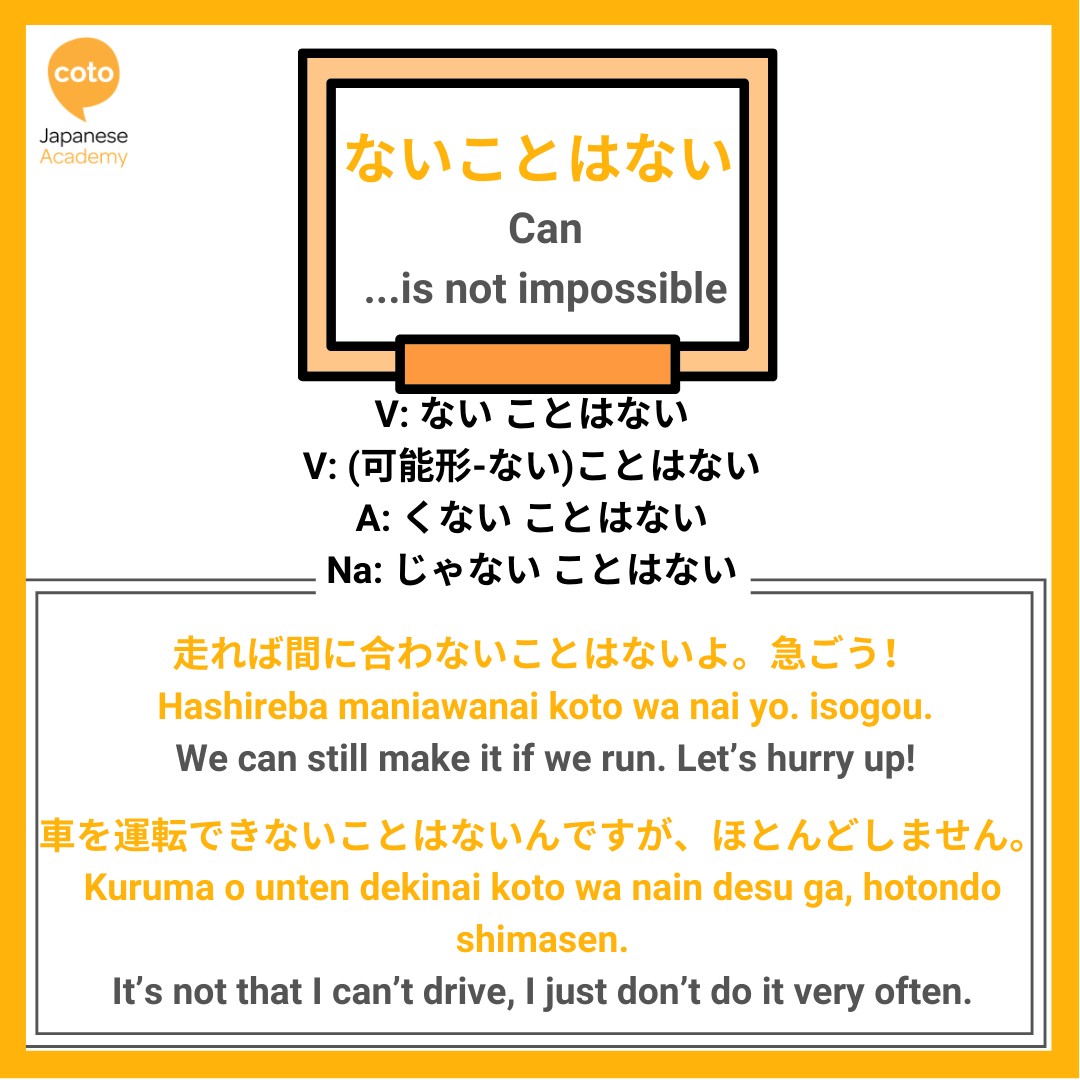
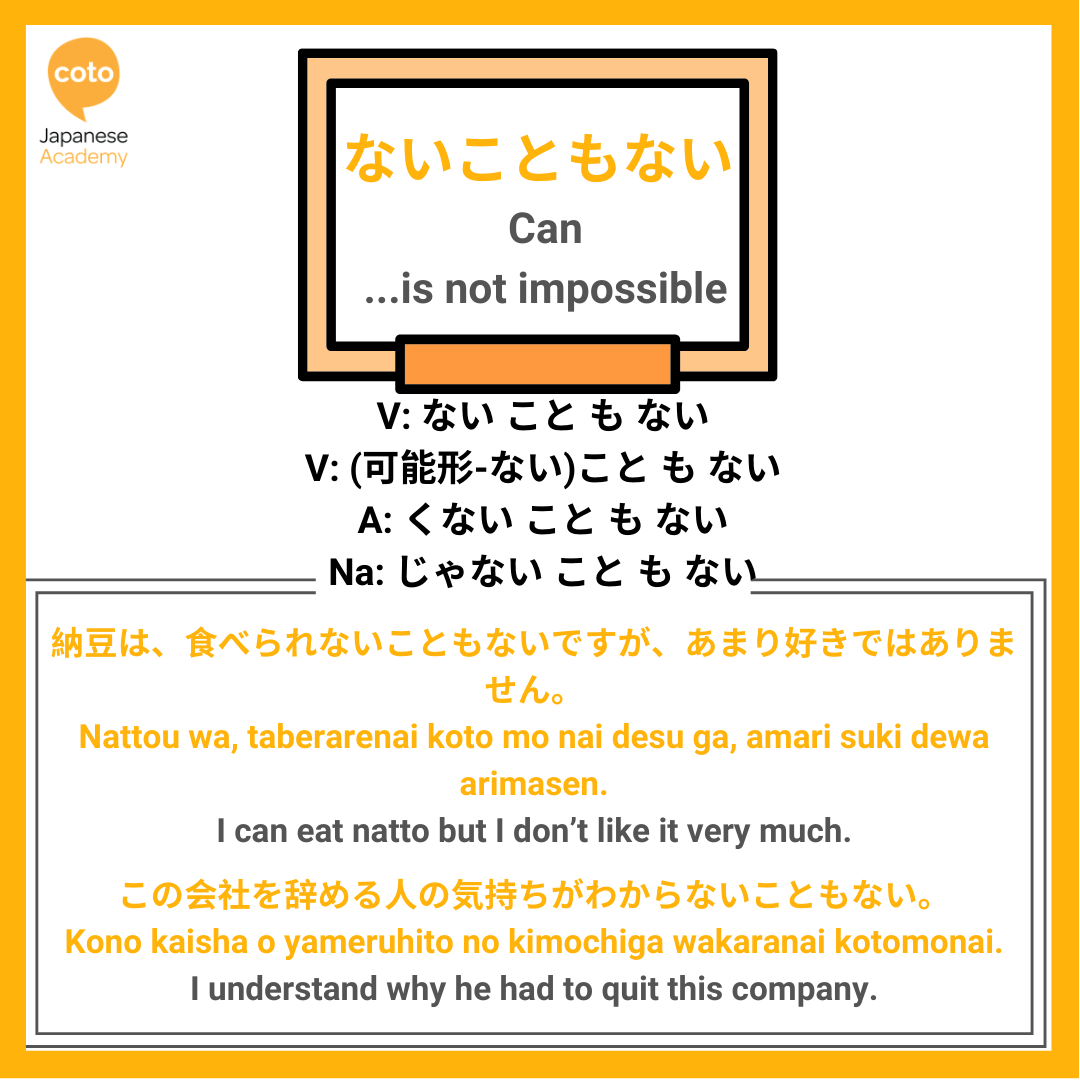
~ないことはない
Grammar Point 8: ないこともない
This means you “can do something”, or “something is not impossible to do”. Another way to put it is “it isn’t the case that ~ not ~”.
For example, I can eat natto but I don’t like it very much. You can eat natto, but if given over another kind of food, you would not pick natto because you don’t like it very much.
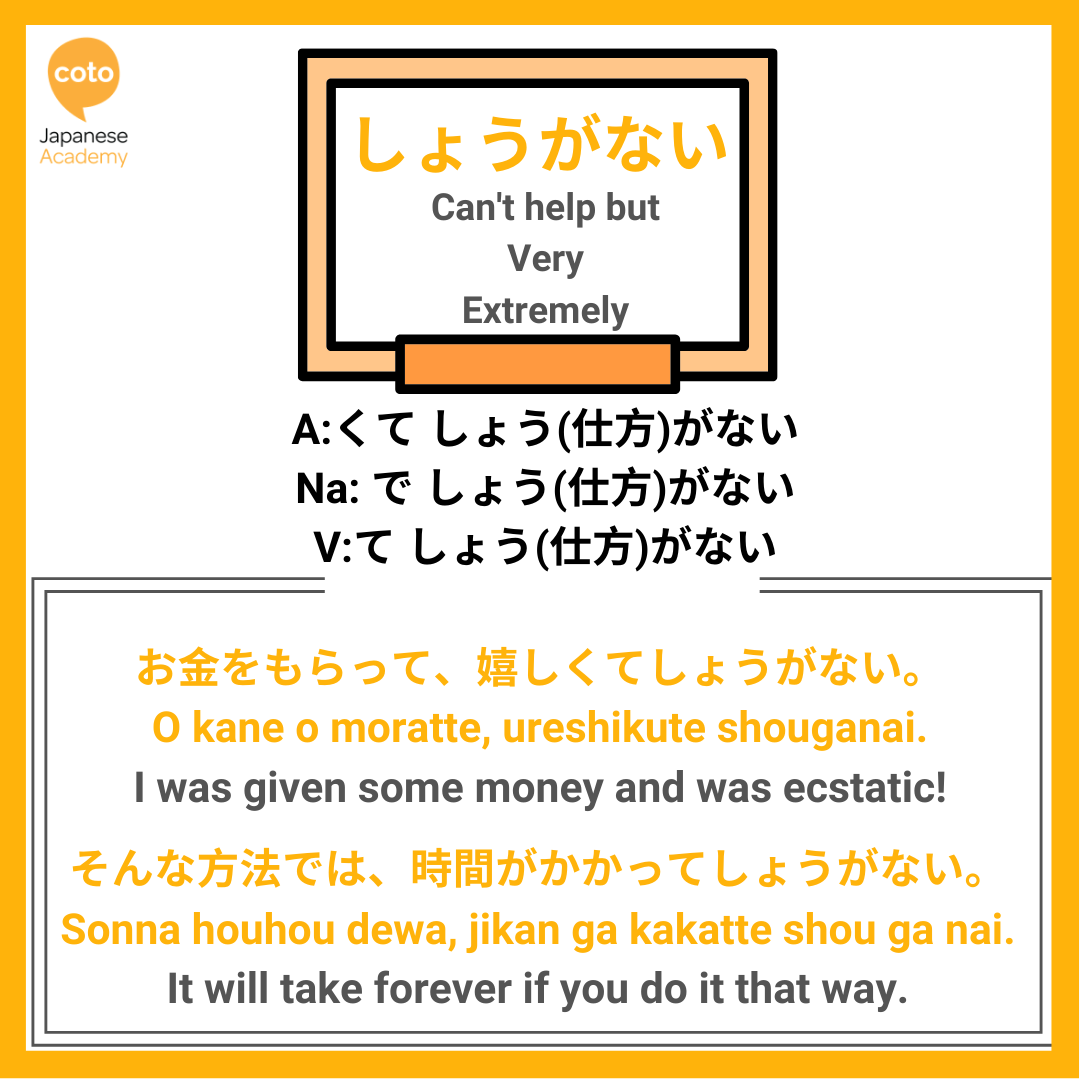
~しょうがない
Grammar Point 9: しょうがない
You may have heard this used in a sentence before in dramas or anime. しょうがない means “there is no other way but…” or “very, extremely”.
Note that しょうがない is a contraction of しようがない which is used in informal spoken conversations.
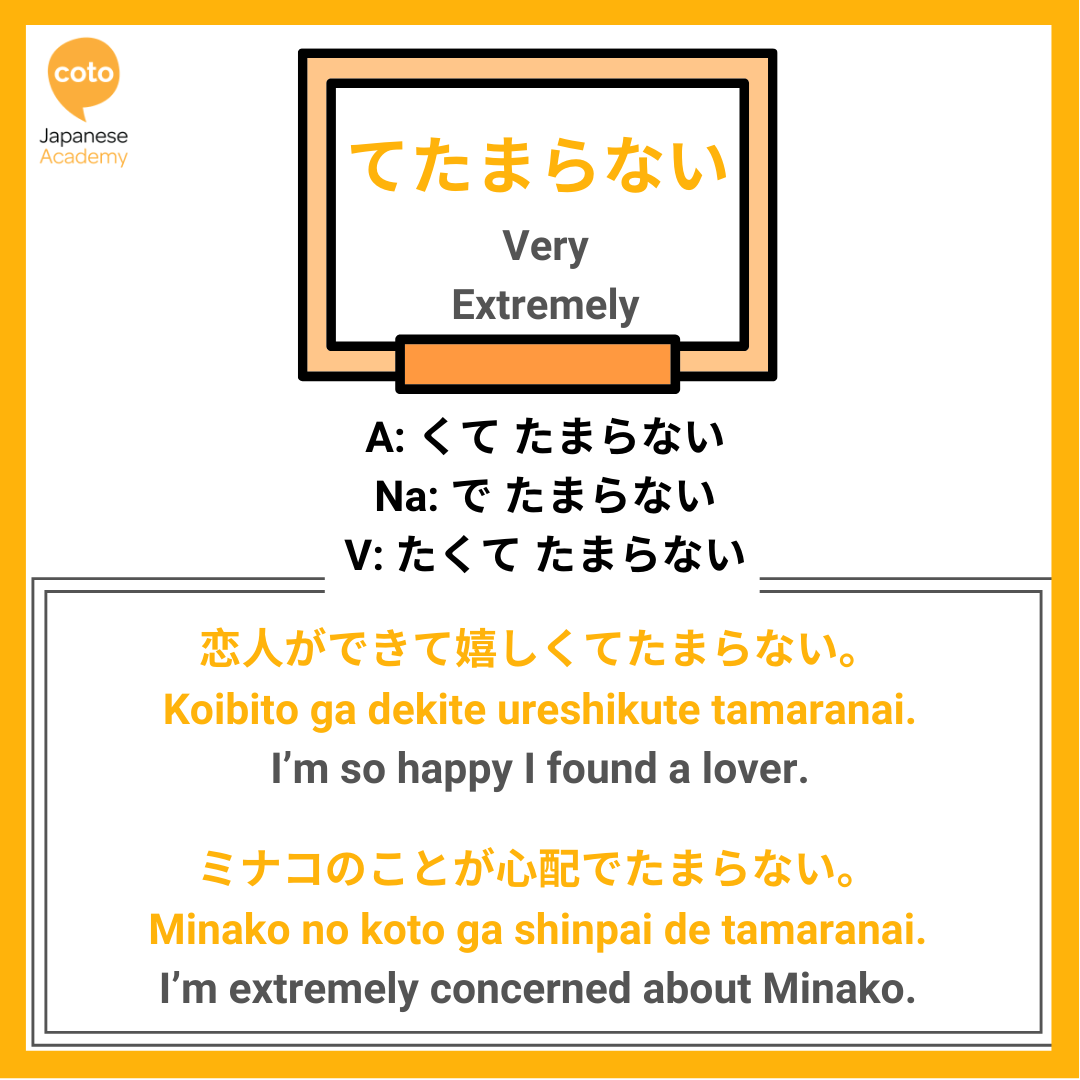
~てたまらない
Grammar Point 10: てたまらない
This grammar point comes from the word たまる which means to endure something. With the ない at the back, the word comes a negative form. This means “cannot endure something”.
Verbs and い adjectives would use the てたまらない while な adjectives would use でたまらない。
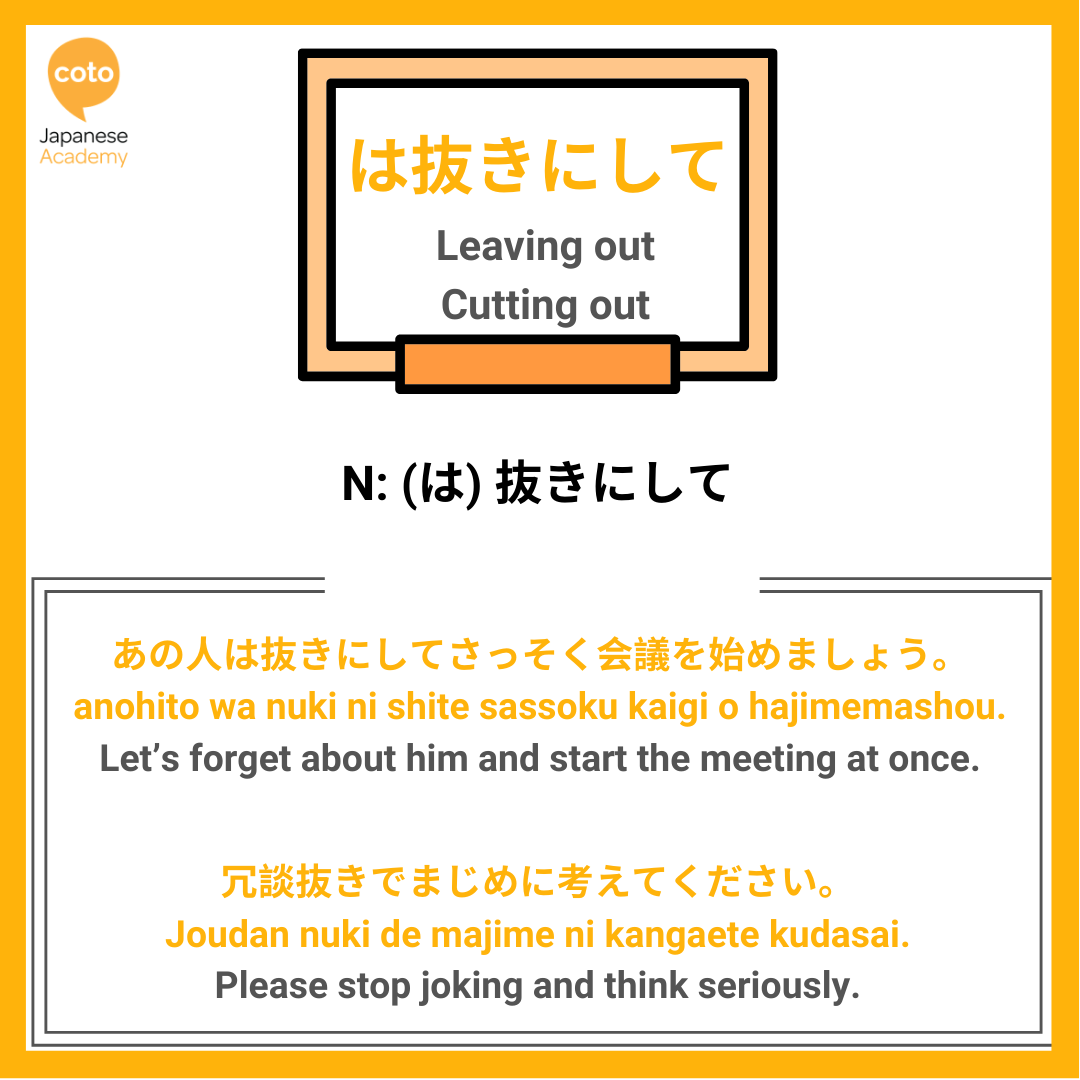
This grammar point is used in both positive and negative situations. For positive situations, rather than は抜きにして, we use 抜きに。As for negative situations, we use 抜きで。
~てばかりはいられない
Grammar Point 12: てばかりはいられない
Based on the word ばかり, we change it into a て form to express that one cannot do something repeatedly. The grammar point can be written in two ways; てばかりはいられない and てばかりもいられない。
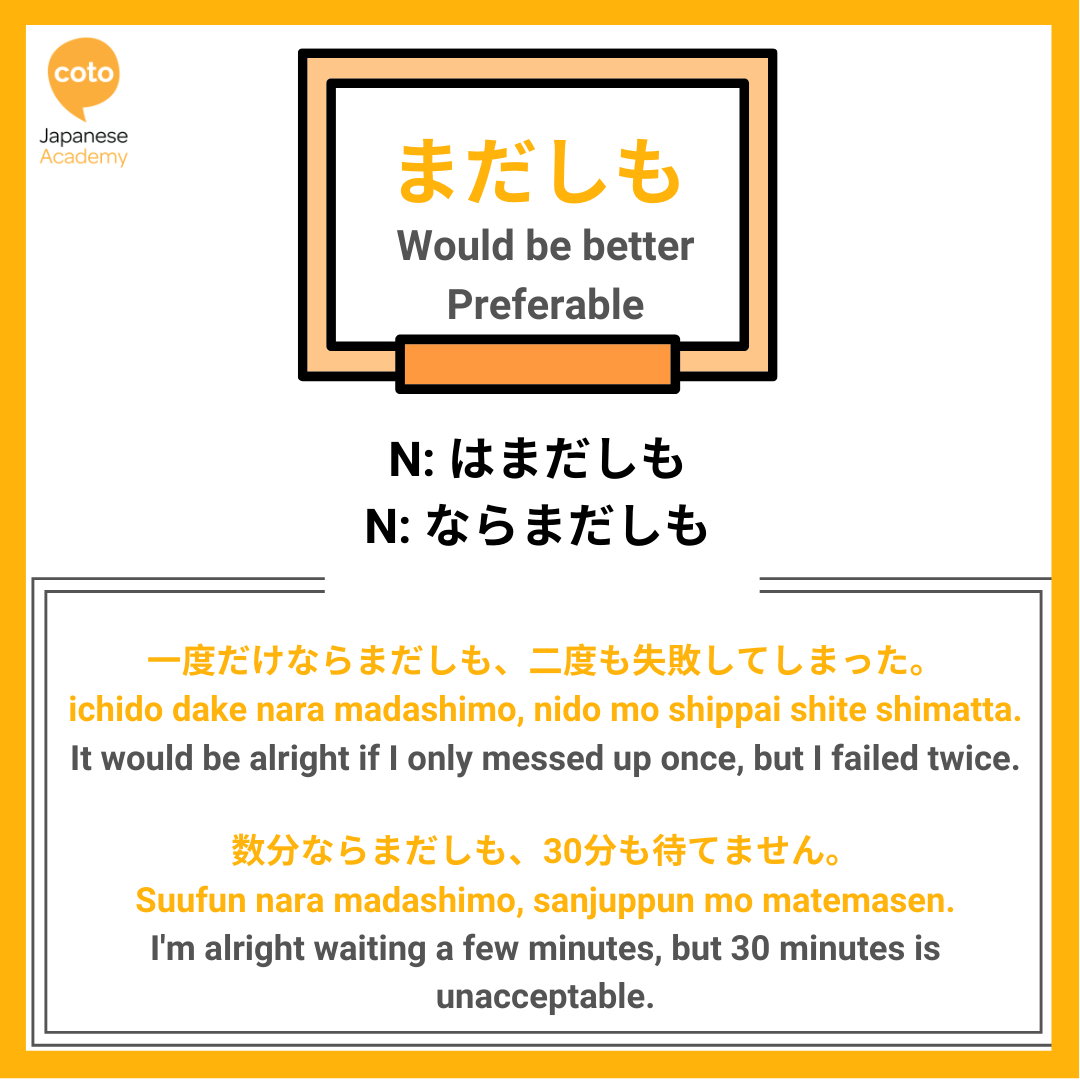
~まだしも
Grammar Point 13:まだしも
This grammar point is used when comparing with different opinions and choosing a better opinion. For example, if we say [A]まだしも, [B], it means [A] is better or more preferred than [B]. Another way we can look at it is [B] is disliked over [A]
~ものの
Grammar Point 14: ものの
This grammar point is normally used to express a contradiction. For example, [A]ものの + [B] means you want to go to [A] but you have something on [B].
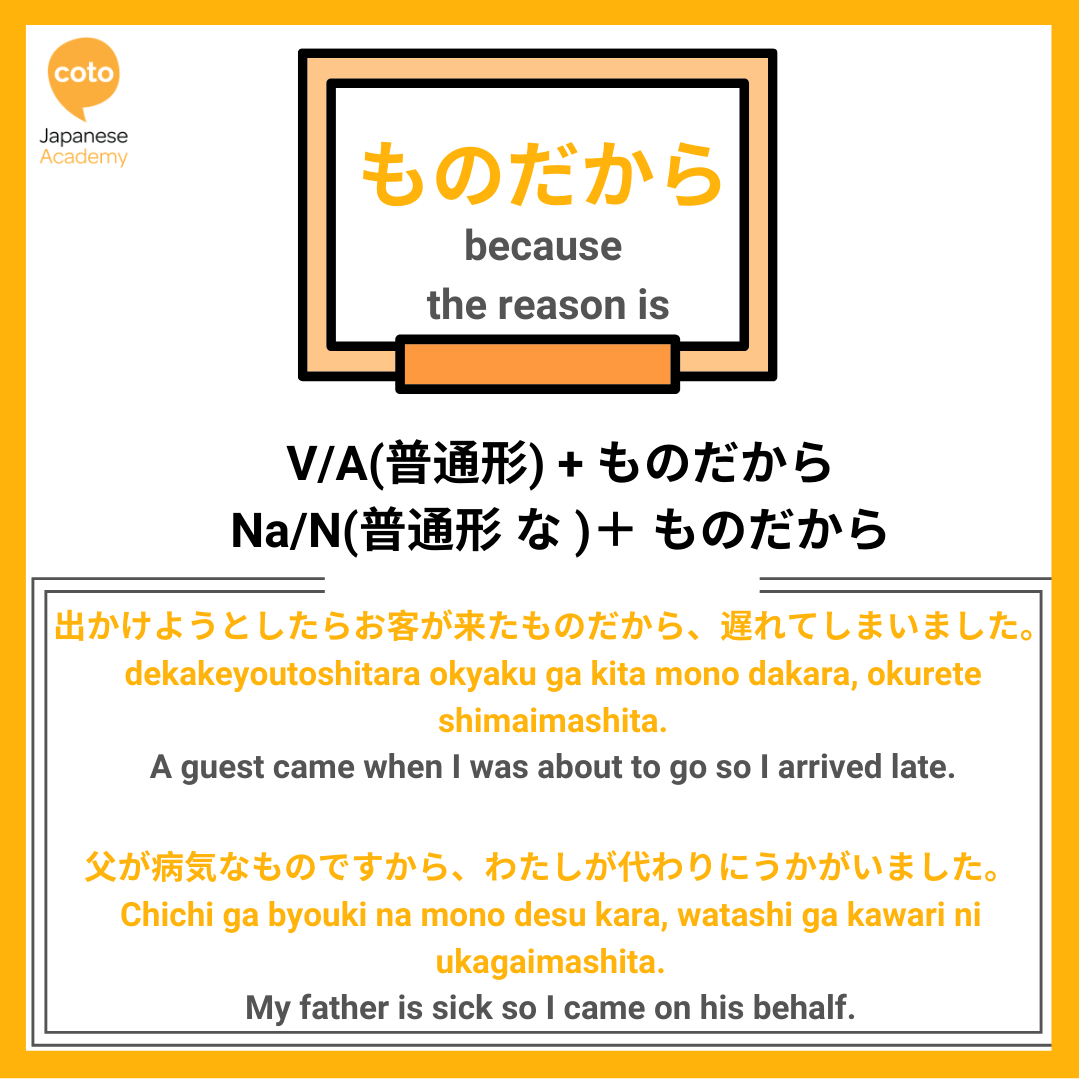
~ものだから
Grammar Point 15: ものだから
ものだから is used when saying the reason is … for something which is unavoidable. For example, “the dog ate my homework, therefore (ものだから), I can’t turn in my homework.”
~ものなら
Grammar Point 16: ものなら
This is used when saying if [A] is possible, then [B]. Simply put, it is either impossible or very unlikely to be done. For example, (if I can go, then..) or (if I can return this, then…).
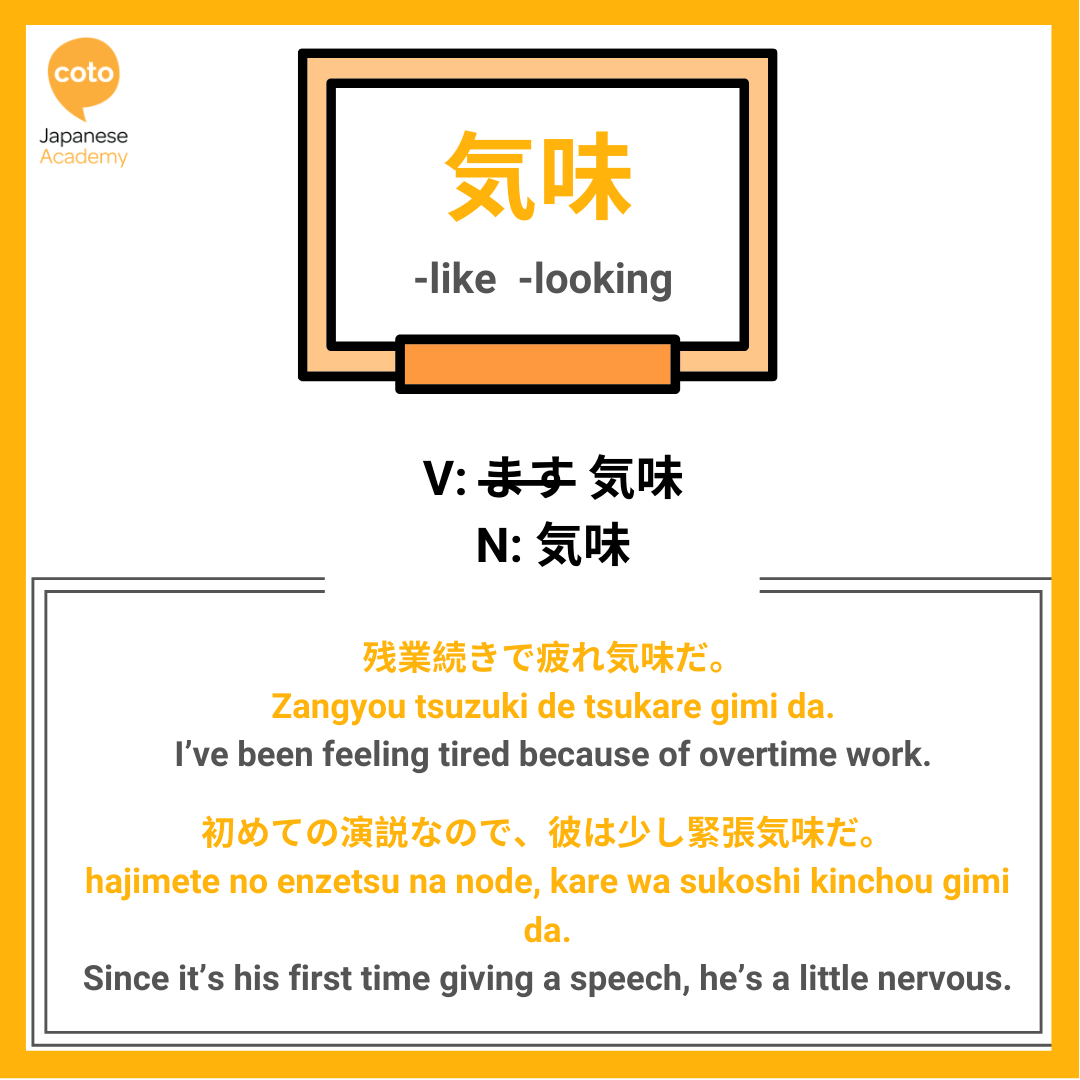
~気味
Grammar Point 17: 気味
気味 means something looks like or seems to be in a certain way.
For example, 疲れ気味 which means seems tired. You can add the grammar point with any noun or verb ます form. When you add 気味 with a verb ます form, be sure to take out ます before adding in.
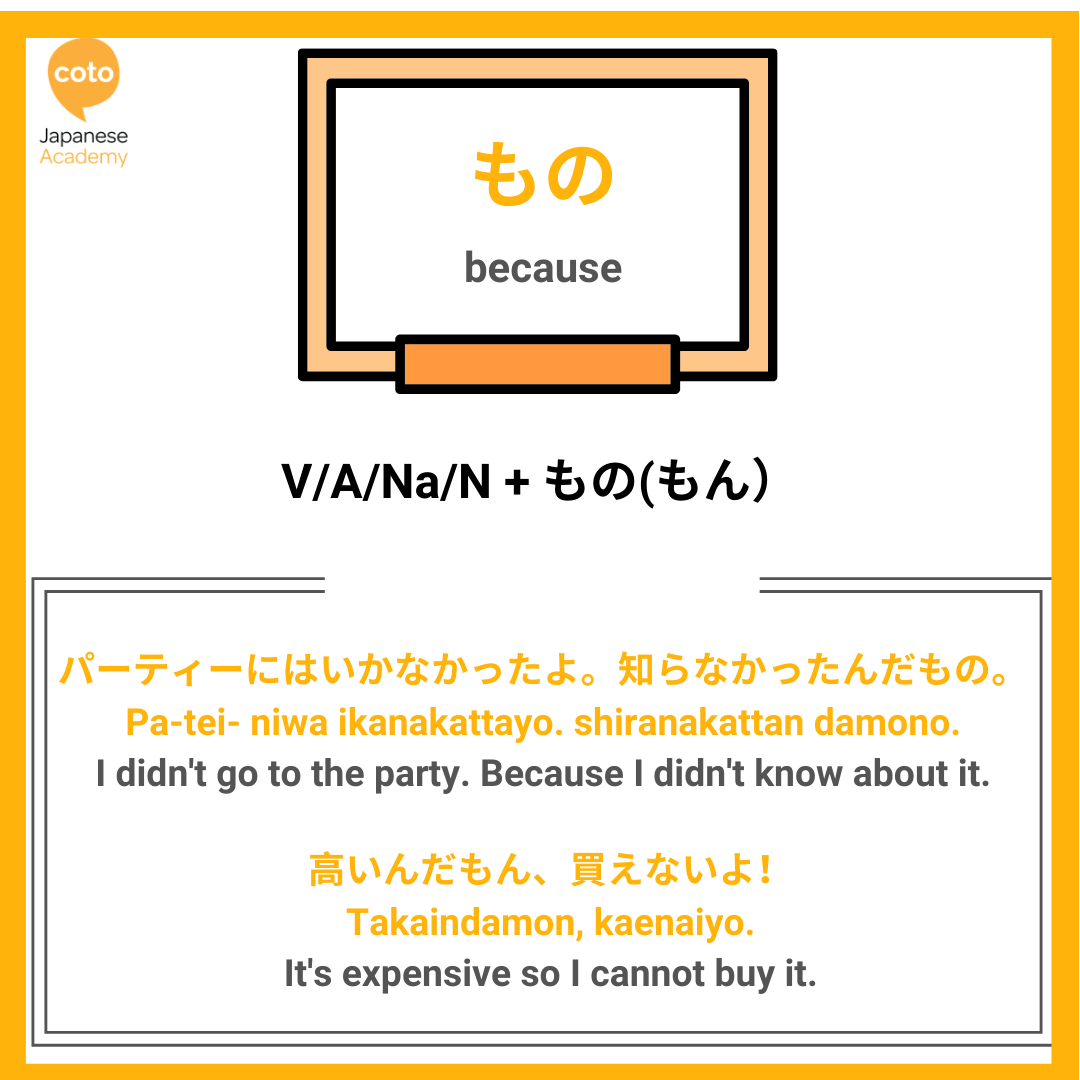
~もの
Grammar Point 18: もの
This is used when you want to explain a reason for something. However, this expression is usually used most by girls and children. You add the reason with もの when you want to justify what you said.
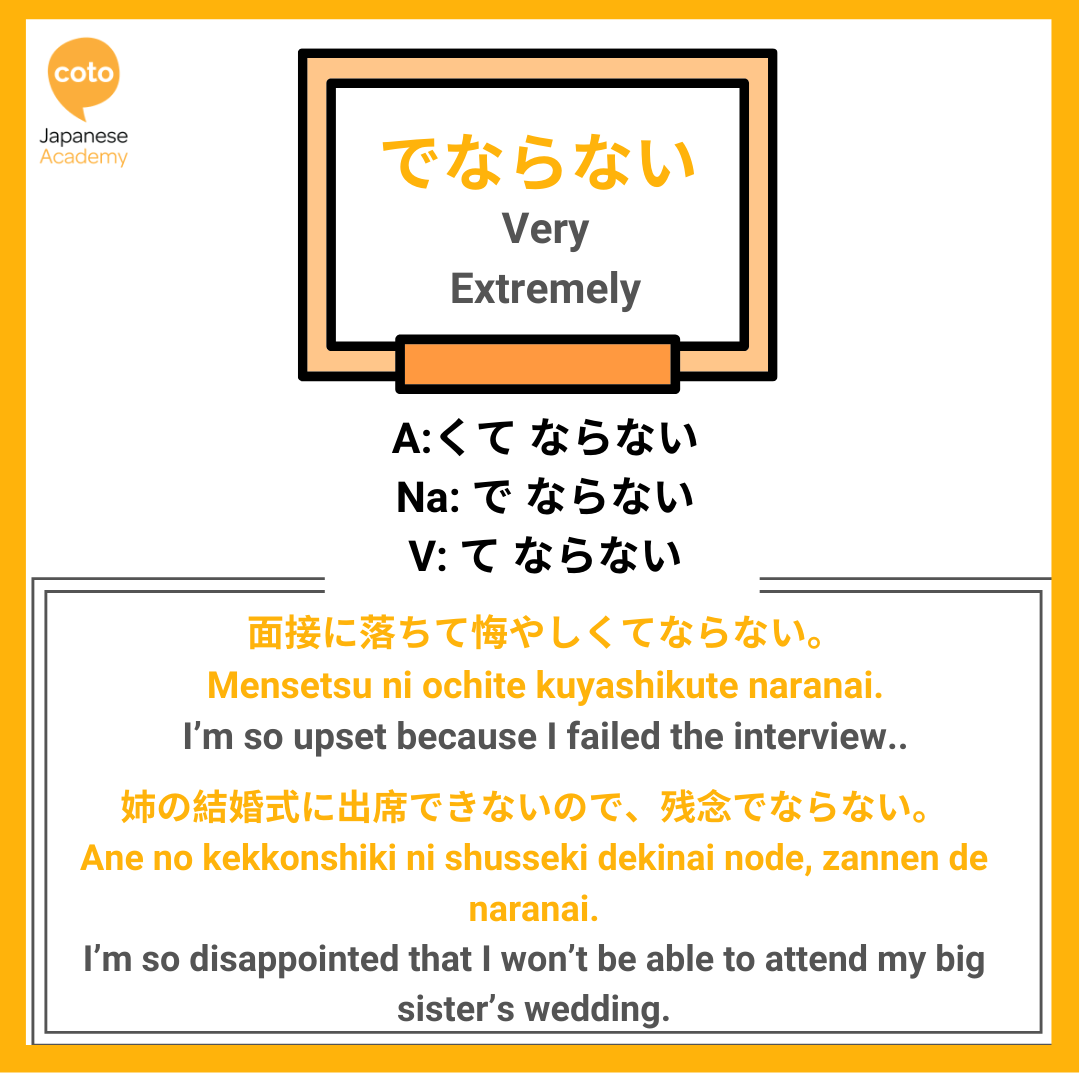
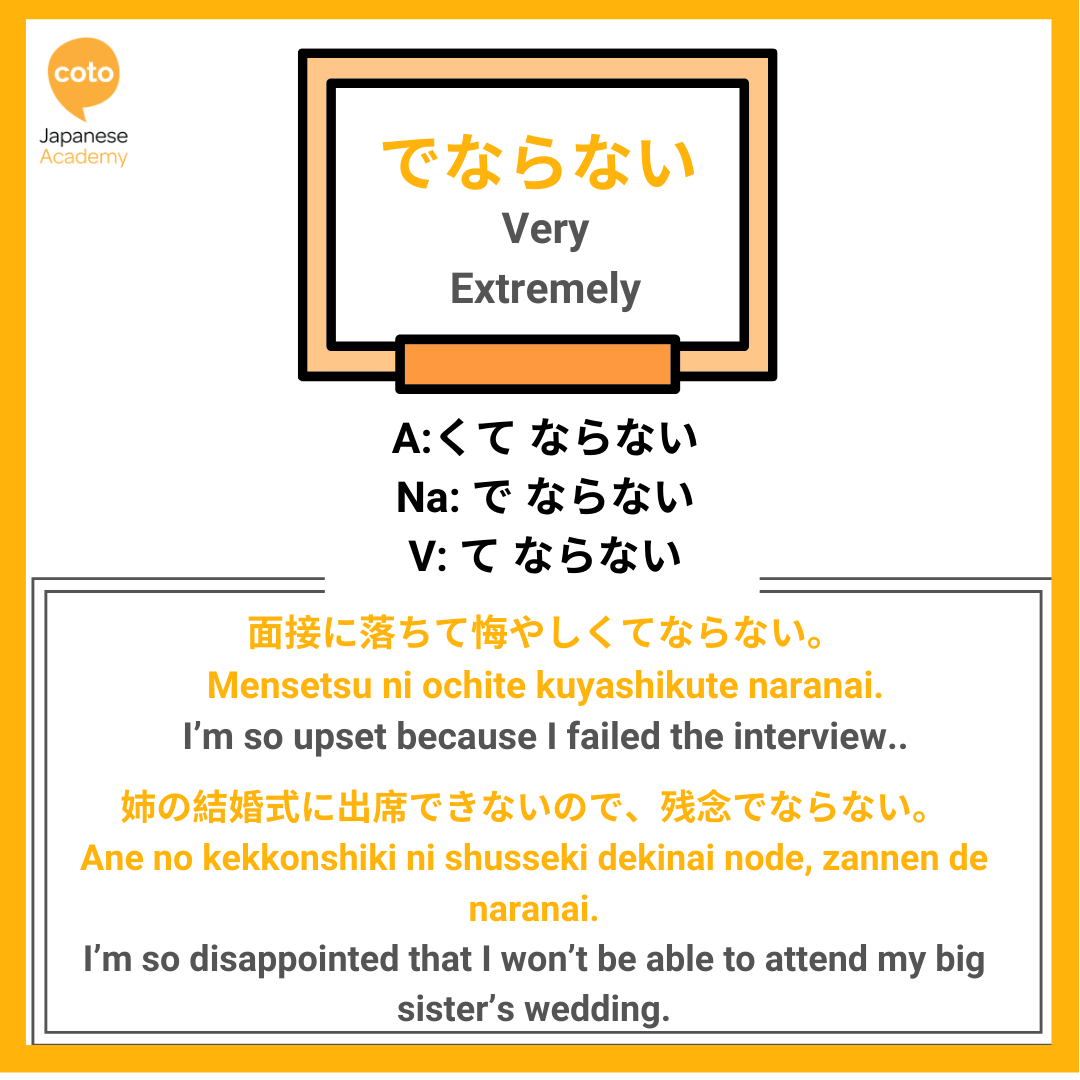
~でならない
Grammar Point 19: でならない
This is used to describe an emotion that is beyond control or used to describe “extremely”. でならない is mostly used for emotions, wishes, and feelings.
The grammar point is usually used in writing and is an old way used in spoken language.
~ないこともない
Grammar Point 20: ないことはない
This grammar point is used when something is not impossible to do. Another meaning would be “it isn’t the case that.. not..”.
For example, in the above example, “it’s not that I can’t drive, I just don’t do it very often”. You can do it, but you just do not do it often.
Start taking Japanese lessons and pass JLPT N2 exam!
Learning Japanese can feel overwhelming at first, but mastering basic greetings and essential vocabulary is a great way to start. Whether you’re planning a trip to Japan, interacting with Japanese speakers, or just curious about the language, these words and phrases will help you build a solid foundation.
At Coto Japanese Academy, we specialize in creating personalized learning experiences for Japanese language learners. Located in the heart of Tokyo, we offer small class sizes, experienced teachers, and a variety of courses tailored to meet your goals—whether you’re looking to improve conversational skills, prepare for the JLPT, or immerse yourself in Japanese culture. Start your language journey with us today!
Mastering Basic Japanese Greetings and Essential Words
Basic Japanese Words for Greetings
Japanese
Pronunciation
Meaning
おはようございます
Ohayou gozaimasu
Good morning (formal)
こんにちは
Konnichiwa
Hello/ good afternoon
こんばんは
Konbanwa
Good evening
おやすみなさい
Oyasuminasai
Goodnight (formal)
ありがとうございます
Arigatou gozaimasu
Thank you
すみません
Sumimasen
Excuse me/ sorry
ごめんなさい
Gomennasai
Sorry (formal)
はい
Hai
Yes
いいえ
Iie
No
Cultural Tip: In Japan, bowing while saying greetings is a common practice and shows respect. Try incorporating a slight bow when greeting people.
Talking About Family in Japanese
Japanese
Pronunciation
Meaning
わたし
Watashi
I/me
あなた
Anata
You
お母さん
おかあさん Okaasan
Mother
お父さん
おとうさん Otousan
Father
お爺さん
おじいさん Ojiisan
Grandfather
お婆さん
おばあさん Obaasan
Grandmother
おじさん
Ojisan
Uncle
おばさん
Obasan
Aunt
お兄さん
おにいさん Oniisan
Older brother
お姉さん
おねえさん Oneesan
Older sister
弟
おとうと Otouto
Younger brother
妹
いもうと Imouto
Younger sister
Did you know? The use of honorifics like “-san” adds politeness and respect to family terms.
Counting in Japanese: Numbers 1-10
Japanese
Pronunciation
Meaning
一
いち Ichi
One
二
に Ni
Two
三
さん San
Three
四
し/よん Shi/yon
Four
五
ご Go
Five
六
ろく Roku
Six
七
しち/なな Shichi/nana
Seven
八
はち Hachi
Eight
九
きゅう Kyuu
Nine
十
じゅう Juu
Ten
Tip: “Shi” (four) is sometimes avoided because it sounds like the word for “death” in Japanese.
Months of the Year in Japanese
Japanese
Pronunciation
Meaning
一月
いちがつ Ichigatsu
January
二月
にがつ Nigatsu
February
三月
さんがつ Sangatsu
March
四月
しがつ Shigatsu
April
五月
ごがつ Gogatsu
May
六月
ろくがつ Rokugatsu
June
七月
しちがつ Shichigatsu
July
八月
はちがつ Hachigatsu
August
九月
くがつ Kugatsu
September
十月
じゅうがつ Juugatsu
October
十一月
じゅういちがつ Juuichigatsu
November
十二月
じゅうにがつ Juunigatsu
December
Days of the Week & Times of the Day in Japanese
Japanese
Pronunciation
Meaning
月曜日
げつようび Getsuyoubi
Monday
火曜日
かようび Kayoubi
Tuesday
水曜日
すいようび Suiyoubi
Wednesday
木曜日
もくようび Mokuyoubi
Thursday
金曜日
きんようび Kinyoubi
Friday
土曜日
どようび Doyoubi
Saturday
日曜日
にちようび Nichiyoubi
Sunday
昨日
きのう Kinou
Yesterday
今日
きょう Kyou
Today
明日
あした Ashita
Tomorrow
朝
あさ Asa
Morning
昼
ひる Hiru
Noon
夕方
ゆうがた Yuugata
Evening
夜
よる Yoru
Night
Quick Fact: The days of the week are named after natural elements such as the moon (Getsu) and fire (Ka).
Must-Know Japanese Adjectives
Japanese
Pronunciation
Meaning
楽しい
たのしい Tanoshii
Happy
悲しい
かなしい Kanashii
Sad
高い
たかい Takai
High/expensive
低い
ひくい Hikui
Low
安い
やすい Yasui
Cheap
早い
はやい Hayai
Fast/early
遅い
おそい Osoi
Slow
忙しい
いそがしい Isogashii
Busy
美味しい
おいしい Oishii
Delicious
不味い
まずい Mazui
Awful
甘い
あまい Amai
Sweet
塩っぱい
しょっぱい Shoppai
Salty
酸っぱい
すっぱい Suppai
Sour
苦い
にがい Nigai
Bitter
辛い
からい Karai
Hot/ spicy
熱い
あつい Atsui
Hot
暖かい
あたたかい Atatakai
Warm
冷たい
つめたい Tsumetai
Cold
明るい
あかるい Akarui
Bright
暗い
くらい Kurai
Dark
Try This: Describe your meal using these adjectives next time you eat Japanese food!
Common Japanese Verbs for Daily Use
Japanese
Pronunciation
Meaning
する
Suru
To do
見る
みる Miru
To see
聞く
きく Kiku
To listen
話す
はなす Hanasu
To talk/speak
言う
いう Iu
To say
書く
かく Kaku
To write
食べる
たべる Taberu
To eat
飲む
のむ Nomu
To drink
歩く
あるく Aruku
To walk
走る
はしる Hashiru
To run
座る
すわる Suwaru
To sit
立つ
たつ Tatsu
To stand
Practice Tip: Create sentences combining verbs with nouns, like “ごはんを食べる” (Gohan o taberu – I eat rice).
Food Japanese Vocabulary
Japanese
Pronunciation
Meaning
食べ物
たべもの Tabemono
Food
飲み物
のみもの Nomimono
Drinks
ご飯
ごはん Gohan
Rice/meal
水
みず Mizu
Water/cold water
お湯
おゆ Oyu
Hot water
肉
にく Niku
Meat
野菜
やさい Yasai
Vegetable
魚
さかな Sakana
Fish
ラーメン
Ra-men
Ramen
寿司
すし Sushi
Sushi
おにぎり
Onigiri
Onigiri
For the next step after learning these basic Japanese words, equip yourself with basic Japanese grammar.
If you wish to have a short-term study in Tokyo, Check out our 3-month intensive Japanese courses. Also, feel free to send us an inquiry if you have any questions!
Start taking Japanese lessons and master these 100 basic Japanese words!
Learn Japanese – What is 大丈夫 (Daijobu / Daijoubu)?
大丈夫 (daijoubu) is a common phrase used in everyday conversations. The word is similar to the words “All right,” “Fine,” or “Okay” in English – but in addition to this, there are many ways that you can use it in Japanese. This article will cover 20 ways to use 大丈夫 (daijoubu) properly.
The Detailed Definition of Daijoubu
As previously mentioned, 大丈夫 (daijoubu) means “okay” or “alright.” To break apart, this phrase derives from the word 大 (dai), which means big, and 丈夫 (jobu), which describes something sturdy, resilient, and durable. To break apart the word 丈夫 (jobu) even more, 丈 is stature, and 夫 is man or husband. Combined with all these literal meanings, it meant big, strong man! It was thought that the phrase was used to refer to a strong man who traditionally provides safety and stability, and it slowly evolved into the phrase we use almost every day!
20 Examples of using Daijoubu
If you injure yourself – you can let people know that you are fine by exclaiming
大丈夫です。Daijobu desu – I’m okay! – Polite/ Formal
大丈夫。 Daijobu – I’m okay! – Casual / Informal
You can ask someone else if they are alright after a fall.
大丈夫ですか? Daijobu desu ka? – Are you alright?
You can confirm appointments by asking if a specific time is “okay.”
月曜日は大丈夫ですか?Getsuyoubi wa daijobu desu ka? – Is Monday okay?
You can ask if someone is alright after being unwell / having something happen to them.
もう大丈夫ですか? Mou daijobu desu ka? – Are you alright now?
You can ask what time you can call someone.
あなたに何時から電話しても大丈夫ですか?Anata ni nan ji kara denwa shi temo daijobu desu ka? – What time is okay to call you?
You can give a range of time that it would be okay to do something (such as call or have a meeting).
私は18時から20時くらいまでなら大丈夫です。Watashi wa jyuu hachi ji kara ni jyuu kurai made nara daijoubu desu. – Any time from 6 – 8 PM is okay for me!
You can ask if it is okay to do something specific – like delete files off of a computer.
これらのファイルを消しても大丈夫ですか?Korera no fairu o keshite mo daijobu desu ka? – Is it okay to delete these files?
You can express that you think something should be alright.
たぶん大丈夫だ。Tabun daijobu da. – It should be alright.
You can reassure someone if they apologize to you for bumping in to you on the train.
Person A – すみません! – Sumimasen Sorry!
Person B – 大丈夫ですよ。– Daijobu desu yo – It’s fine!
You can ask someone if eating a certain food would be okay to eat.
Once you’ve learned the meaning of Daijoubu, we recommend practicing them with immersive Japanese listening conversations. Our Japanese podcasts are a great way to do this. The NHK World Japan Audio Shows also offer excellent listening practice for learners at any level.
FAQ
What does "daijobu" mean?
Daijobu is a versatile Japanese phrase that can be translated to “okay,” “all right,” or “fine.” However, its meaning can vary depending on the context.
How is "daijobu" used?
Daijobu can be used in a variety of situations:
Checking on someone: “Daijobu desu ka?” (Are you okay?)
Reassuring someone: “Daijobu, dekimasu.” (It’s okay, I can do it.)
Expressing relief: “Ah, daijobu da.” (Ah, that’s a relief.)
Are there any cultural nuances to consider when using "daijobu"?
Yes, there are cultural nuances to consider:
Avoiding conflict: Japanese culture values harmony and avoiding conflict. Daijobu can be used to maintain this harmony, even if you’re not entirely okay with it.
Indirect communication: Japanese communication often relies on indirectness. Daijobu can be used to avoid confrontation or negative emotions.
How can I practice using "daijobu"?
To practice using daijobu, try incorporating it into your daily conversations. Here are some tips:
Listen to Japanese media: How native speakers use daijobu in different contexts.
Practice with a language partner: Role-play different scenarios where you can use daijobu.
Use language learning apps: Many language learning apps offer exercises and quizzes to help you practice vocabulary and grammar, including daijobu.
Is daijoubu a formal or informal phrase?
The word daijoubu is informal, but you can add desu, in the end, to make it “dajoubudesu” to make the word formal.
Can I use daijoubu to say I’m fine?
Yes, you can definitely do so. But to say it formally, remember to add desu at the end.
What is the difference between daijoubu and genki?
Daijoubu means “I’m fine”, reassuring someone that they are okay, but genki usually means I’m healthy or energetic enough to inform them about their physical and emotional state.
Learn Japanese conversational phrases and learn to speak fluently with our Japanese courses! Find out more by filling out the form!
Konnichiwa 「こんにちは」 is one of the first words you learn in Japanese. Often times, on social media posts, you may see it spelled as 「こんにちわ」. However, as you may have learned in your studies, the correct spelling is actually 「こんにちは」.
「こんにちは」is usually written in hiragana, but if you write it in kanji, it’s「今日は」, which can also be read as 「きょうは〜, kyo wa〜」 . This directly translates to “today is ~ ”. Originally, people often greeted each other with 「今日は天気が良いですね、kyou wa tenki ga ii desune- Today, the weather is nice.」or「今日は暑いですね、kyou wa atsui desune- Today, it is hot.」. Over time, people began to shorten their greetings by cutting off the latter portions, eventually resulting in 「こんにちは, konnichiwa」.
What Part of Speech is Konnichiwa?
At times, people ask me, “What part of speech is 「こんにちは, konnichiwa- good day」? Is it a noun? Greetings, including 「おはよう,ohayo- good morning」,「こんにちは, konnichiwa- good day, 」, and「こんばんは, konbanwa- good evening」are not nouns, but interjection s. Interjections are words which we use when our hearts are stirred.
For example, the 「わぁー。」in「わぁー。きれいだなぁ。Waa-, kireidanaa- Waa, it’s so beautiful!」, and the 「あっ。」in「あっ。宿題を忘れた。 Aa, shukudai o wasureta- Aa, I forgot my homework!」are interjections. Therefore, greetings are words which encompass the stirring of our hearts when we meet someone, and the feeling of wanting to communicate with the people we meet.
Other Greetings Besides Konnichiwa
When do I use おはよう (Ohayou) then?
Well then, everyone, at what time do you change your greeting from 「おはよう, ohayo- good morning」to「こんにちは, konnichiwa- good day」? This is quite a difficult question! There is actually no fixed rule. The television and radio station NHK, which uses the most correct Japanese in Japan, states that “The greeting「おはよう,ohayo, good morning」is generally acceptable until 9:00 am.
However, you should be cautious when using it after 9:00 am.” In addition, a famous Tokyo hotel states that “For guests, we use 「おはようございます, ohayogozaimasu- good morning (polite)」until around 10:30 am, and after that we use 「いらっしゃいませ, irasshaimase- welcome」.
What about こんばんは (Konbanwa)?
How about the transition from 「こんにちは, konnichiwa- good day」to「こんばんは, konbanwa- good afternoon」? This is actually even more difficult! NHK states that “「こんばんは,konbanwa- good afternoon」is generally used after the sun has gone down and it gets pretty dark. It is better not to use it when the sun is still out.” In short, when you transition greeting is dependent on the season. For me, I think in the summer I switch greetings around 7:00 pm, and in the winter around 5:30 pm.
Japanese greetings allow you to communicate with the people you meet, while also keeping the seasons and time in mind. However, do you ever think that the greetings used by some store clerks in Japan are a little too obnoxious? I think those type of greetings might just be the requirements of the store manual and perhaps aren’t the most sincere.
After having learned all of these, why not try putting these to use by greeting people over the phone? Or, if you have a friend that you haven’t met in awhile, why not try using “Hisashiburi” with them!
“Konnichiwa” is a common Japanese greeting that translates to “Hello.” However, the most appropriate English equivalent can vary depending on the time of day.
When do you use "Konnichiwa"?
“Konnichiwa” is a versatile greeting used in various situations. It’s a polite way to greet someone, especially when meeting someone for the first time or addressing someone of higher status. While it can be used at any time of day, it’s more commonly used as a general greeting.
What's the difference between "Ohayō" and "Konnichiwa"?
“Ohayō” means “Good morning” and is primarily used in the morning. “Konnichiwa” is a more general greeting, but “Ohayō” is considered more appropriate in the morning.
What's the difference between "Konbanwa" and "Konnichiwa"?
“Konbanwa” means “Good evening” and is primarily used in the evening. “Konnichiwa” is a more general greeting, but “Konbanwa” is more appropriate in the evening.