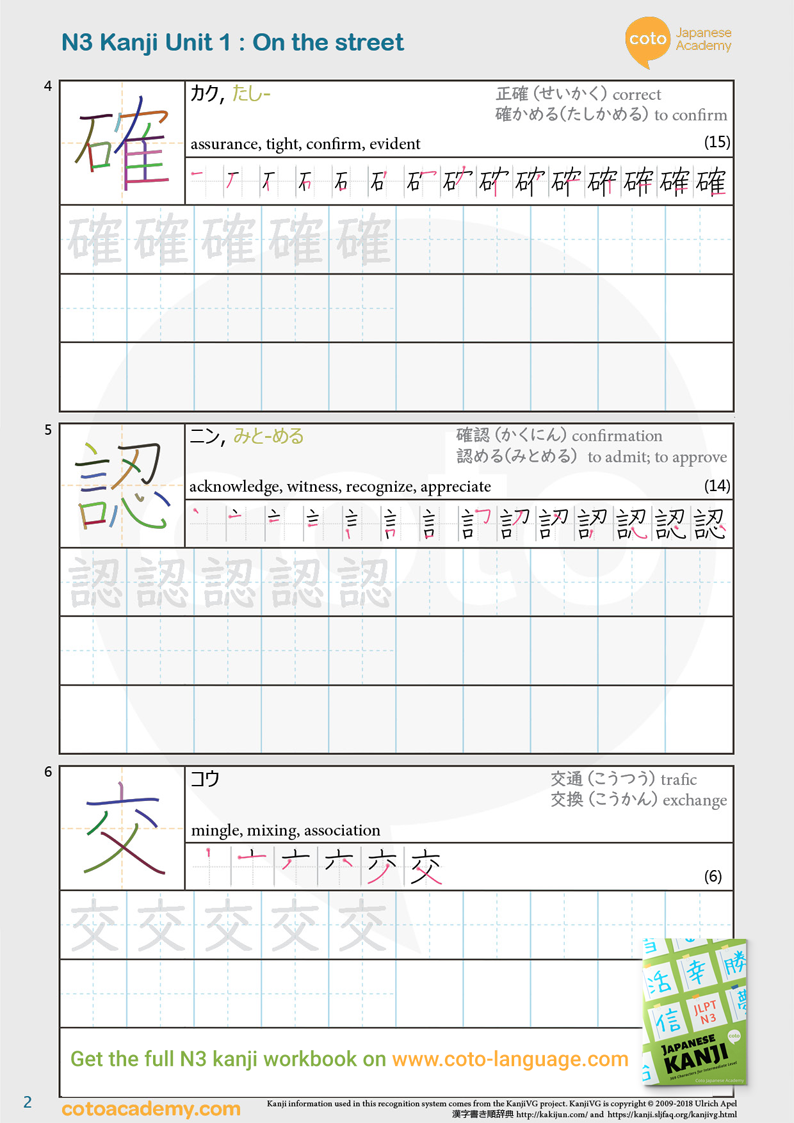
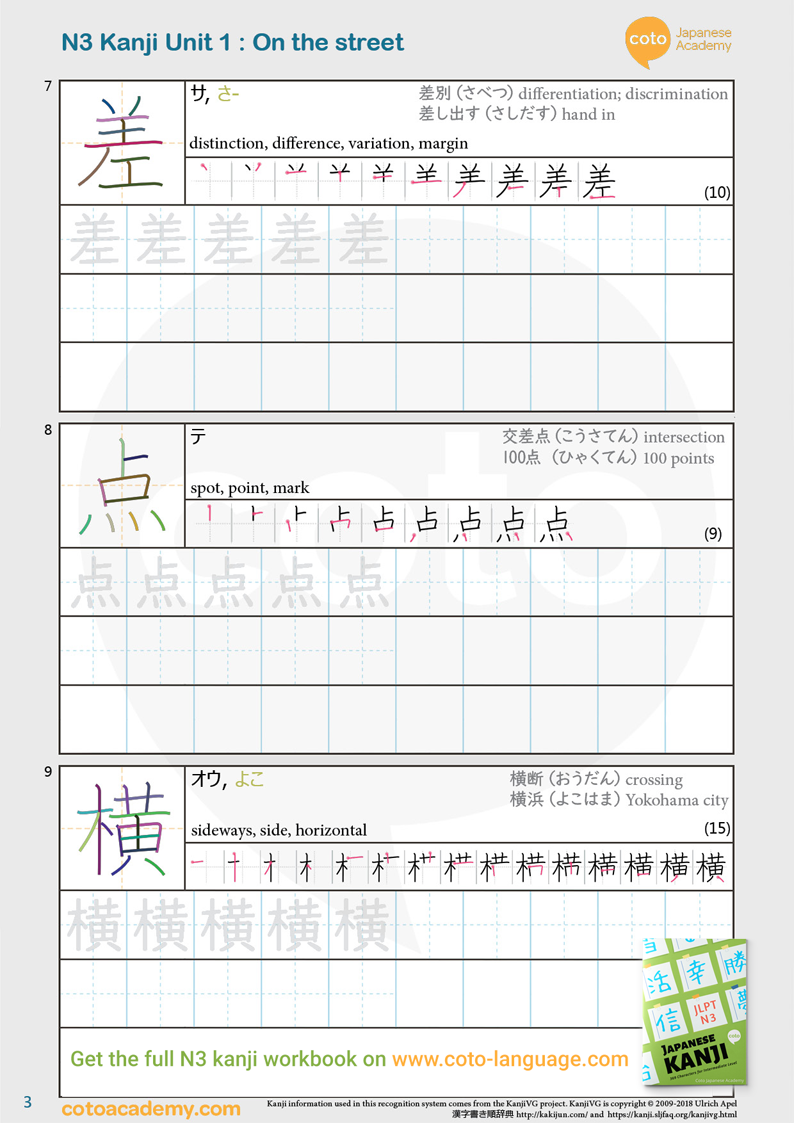
When living in Japan, Kanji can be seen in many places. These various locations include traffic signs, shop signs, restaurant advertisements, etc. Let’s practice using this Kanji Worksheet.
In our N3 kanji Workbook unit one, we’ll be presenting to you common kanji you will see on the street.
After working through ‘Minna no Nihongo’, gloriously passing JLPT levels N5 or N4 and mastering the basic grammar needed to order your favourite sushi, your next step should be to level up to JLPT N3.
This level is described as ‘the ability to understand Japanese used in everyday situations. Looking to pass the easy way? Learn how to pass the JLPT N3 with our JLPT N3 Online Course!
Let’s take a look at what skills are needed to do well on each part, and get some useful tips on how to ace the test! Kanji Vocabulary Grammar Reading Listening
Note: Finding the right JLPT N3 textbook is just as important as studying the subject. That’s why we recommend you check our JLPT N3 textbook recommendations before you continue.
1. Kanji
Bad news: You must know approximately 650 kanji in order to pass. Good news: You should already know around 300 of them, from N5 and N4. You are already halfway there! The kanji is getting progressively more difficult. However, what works best is studying the most common radicals first, as it is easier to find meaning in each kanji. Most importantly, practice, practice practice! A website extremely useful is NHK’s New Web EASY. It is not always easy studying for N3, and I usually need a dictionary, but it is great reading practice. The thing that makes it easier, is that most topics will be familiar to you as they would be news articles. As texts on familiar topics are a lot easier to understand, I’m less likely to give up quickly. Another useful N3 Kanji resource is our JLPT N3 Kanji Writing Workbook! This do-it-yourself PDF workbook is downloadable and will help you master the 369 kanji gap between N4 and N3.
2. Vocabulary
For me, the most difficult part of studying Japanese is expanding my vocabulary. Especially at the beginning, all words sounded very similar to me. It’s getting better, but it is still hard. There was one website that greatly helped me expand my vocabulary, and that is renshuu.org. It is free, and one of the best resources for vocabulary cramming out there. I use it on the train, when waiting in line, and even before going to bed. The words are grouped by JLPT level, and I recommend studying N1 or N2, to be well prepared for N3.
3. Grammar
When it comes to grammar, I prefer books over websites. One book I particularly like is ‘An Integrated Approach to Intermediate Japanese’. This book is not just dry grammar, as it contains interesting information about Japanese culture too. If you understand the grammar in the book, you should already be well prepared to take the JLPT N3 test. Another piece of advice I would like to give is to do mock tests online. Whatever you don’t understand you can look up and include in your studies. However, after studying the book mentioned above there shouldn’t be many unknown words or structures in the test anymore. For reference, the official website has a few practice questions.
4. Reading
For the reading portion of the JLPT test, it should not be too difficult after you followed the advice above. Texts in the tests follow a very similar format every time it is conducted, and the subjects of the texts are never too surprising. Even the kanji mostly have furigana to help you. Common themes are emails from a boss/co-worker, a trip (travel), someone talking about a memory they have, a bulletin with date/time information.
5. Listening
The JLPT N3 listening test is something you can’t learn from books only. The age-old adagio of conversation practice wherever you go comes into play here, and the TV can also be a useful study mate in this case. Listening to comedians making fun of each other can help you get used to the flow and sound of the language, but keep in mind that it will be very different from what you will actually hear during the test. What you will hear during the test is usually spoken quite slowly and clearly, so if you are used to people speaking at a natural speed you may be pleasantly surprised. One of the best ways to practice conversation and work on your specific language issues is to go to a language school. At Coto Japanese Academy, the small class size and professional teachers will help you reach your Japanese language goals, not only to pass the JLPT but also to use in your daily life and work! Click to tweet this Japanese tip to share it with more Japanese learners!
Coto Japanese Academy is a unique Japanese Language School in Iidabashi Tokyo, we offer relaxed and fun conversational lessons for all levels of Japanese learner. Coto Japanese Academy prides itself on its community atmosphere and fun lessons that focus on creation of opportunities to speak and learn Japanese. If you are interested in studying Japanese in Tokyo – please visit our contact page here.
Start taking Japanese lessons and pass JPLT N3 exam!
Do you want to learn to type written Japanese? Are you looking for apps – websites and other tools that will improve your Japanese writing composition skill?
You may never have the time to master the handwriting of each individual kanji – but thanks to computer input methods – you are now able to compose writing in Japanese without the need of a calligraphy brush.
This week we will share a list of tools that we recommend to our students studying with us at our Japanese language school in Tokyo.
Question and Answer Sites (HiNative, Quora)
Community Correction / Notebook Services
Kanji Writing Apps and PDF Worksheet Workbooks
With computers – it has never been easier to be able to compose writing in Japanese. In the old days – you would need to learn each individual kanji and write it by hand.
But no longer! This has lead to many people being able to learn how to write articles and publish blogs in Japanese without having to have thousands of hours of classroom instruction in writing.
This article is all about how you can type written Japanese – and the tools that we recommend to get feedback on your writing and correction.
Japanese Question and Answer Websites
The first tool that we recommend is Question and Answer sites:
If you have been on the internet recently – you may have heard of the website called Quora or Yahoo answers. These websites specialize in crowdsourcing answers for general questions.
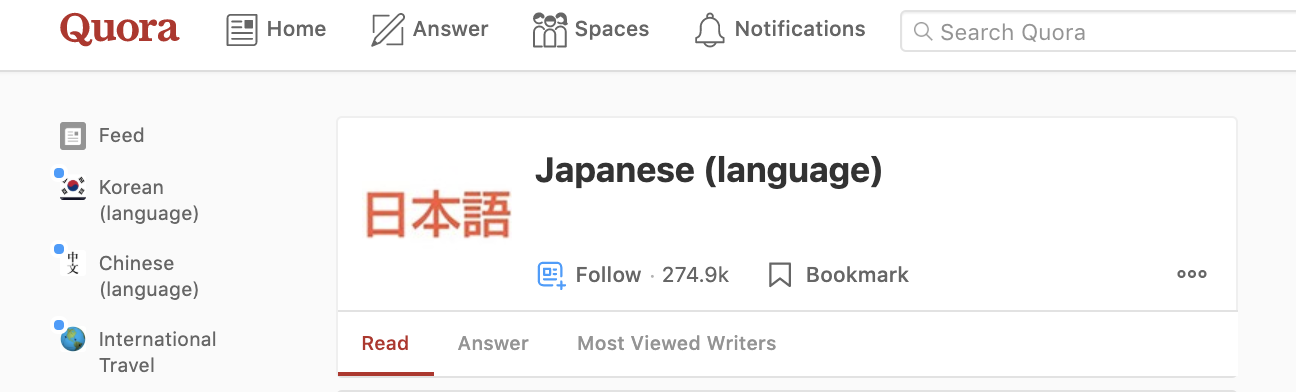
But did you know that Quora has a Japanese language specific section?
Below is a list of Q and A sites with where you can get answers about specific usage of Japanese. And at some of these site syou can even have your Japanese proofed by native speakers.
For example – I could type something in Japanese and on Hi Native – A native Japanese speaker can explain to me the correct usage or nuance of the statement that I am trying to make.
Quora is the largest question and answer site on the internet and their Japanese language section has around 250,000 followers on it. You can ask questions here and also search for questions similar to yours.
A big warning here is that the people answering the question can often be anonymous and might not be a native speaker. So be careful to check the responses that you get with a native speaker.
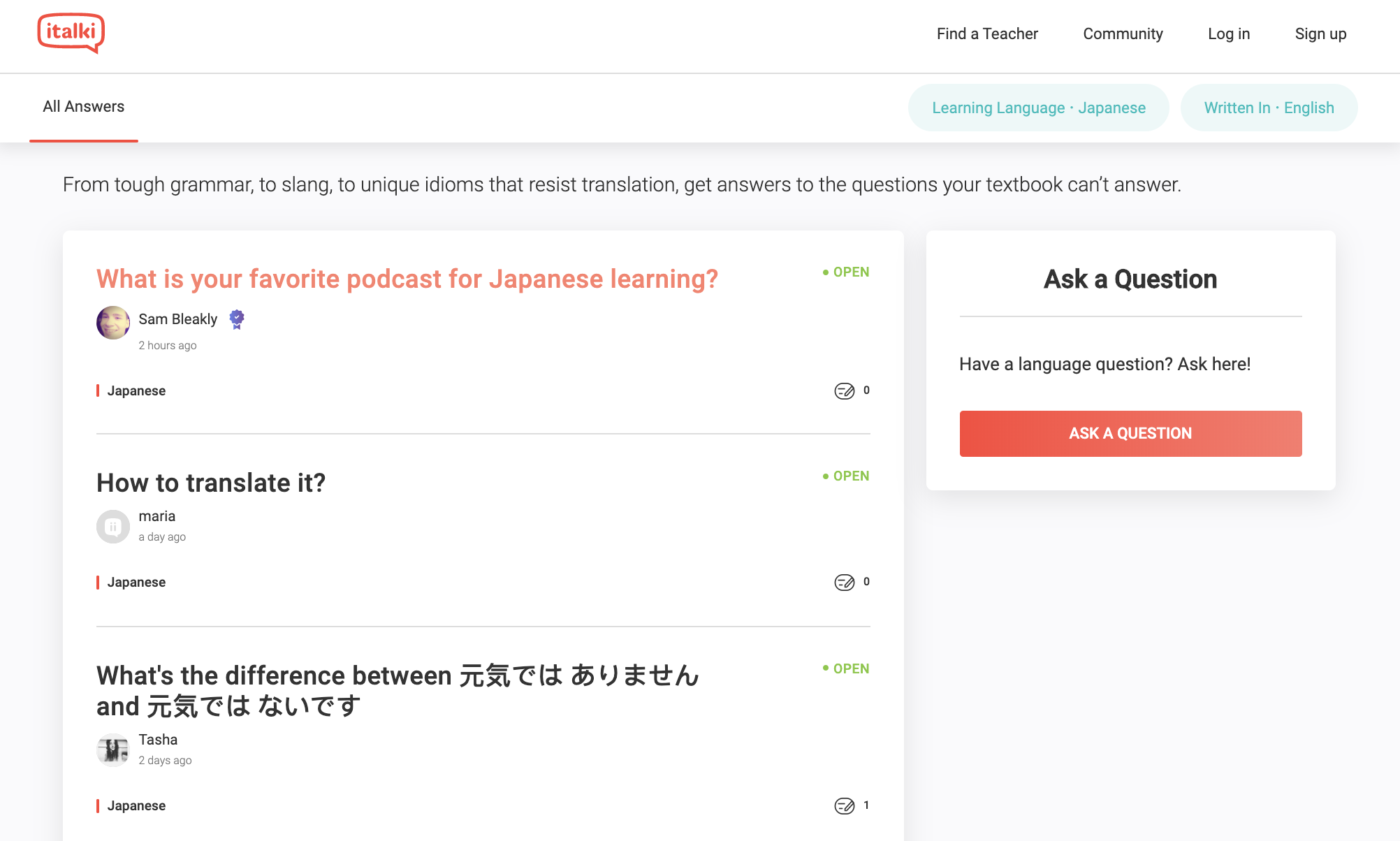
italki.com has a question and answer section that is typically staffed by Japanese teachers that are willing to answer your questions for free! This is a nice tool that you can use.
Community Notebook Tools
There are several websites online that offer a community sourced proofreading solution.
Hinative
Italki
On these websites – you have the ability to write something in Japanese and then have it proofread by native speakers where they will offer you the corrections.
This is different from a question and answer tool in the sense that it allows you to have free correction of your writing. This is a powerful and free way to improve your Japanese writing ability.
Kanji Writing Applications / Workbooks
Many people can obtain a very high level of comprehension in Japanese listening, speaking, reading, and typing – without ever actually learning how to write Kanji characters for themselves.
There are several applications that will help you to write in Japanese by learning the stroke order from scratch.
At Coto – we have also begun producing a series of Japanese Kanji writing workbooks that you can download and print for very low cost!